10 Books Similar to "The Wisdom of Life"
by Arthur Schopenhauer

Essays and Aphorisms

"Essays and Aphorisms" delves into Schopenhauer's core philosophical tenets through a collection of condensed, often provocative, observations and extended reflections. It explores themes of human suffering, the nature of reality, the futility of ambition, and the path to genuine contentment, all presented with his characteristic pessimism and stark intellectual honesty.
This collection shares significant thematic and stylistic common ground with "The Wisdom of Life." Both works distill Schopenhauer's worldview for a broader audience, emphasizing practical philosophy and the pursuit of a well-lived existence despite life's inherent challenges. The essays often feel like expanded aphorisms, and the aphorisms provide concentrated doses of the wisdom found in his longer discourses.
This book will appeal to those seeking penetrating insights into the human condition and a foundational understanding of Schopenhauer's influential philosophy. Its direct, unvarnished style offers profound reflections that encourage introspection and a re-evaluation of established values. Its value lies in providing concentrated wisdom applicable to navigating life's complexities and understanding the source of both our anxieties and potential for peace.
Essays and Aphorisms
"Essays and Aphorisms" delves into Schopenhauer's core philosophical tenets through a collection of condensed, often provocative, observations and extended reflections. It explores themes of human suffering, the nature of reality, the futility of ambition, and the path to genuine contentment, all presented with his characteristic pessimism and stark intellectual honesty.
This collection shares significant thematic and stylistic common ground with "The Wisdom of Life." Both works distill Schopenhauer's worldview for a broader audience, emphasizing practical philosophy and the pursuit of a well-lived existence despite life's inherent challenges. The essays often feel like expanded aphorisms, and the aphorisms provide concentrated doses of the wisdom found in his longer discourses.
This book will appeal to those seeking penetrating insights into the human condition and a foundational understanding of Schopenhauer's influential philosophy. Its direct, unvarnished style offers profound reflections that encourage introspection and a re-evaluation of established values. Its value lies in providing concentrated wisdom applicable to navigating life's complexities and understanding the source of both our anxieties and potential for peace.
On the Suffering of the World

"On the Suffering of the World" directly confronts the pervasive nature of pain and unhappiness in human existence. Schopenhauer argues that suffering is not an aberration but an intrinsic component of life, stemming from the ceaseless striving of the "will." He posits that desire creates a perpetual state of dissatisfaction, momentarily relieved by fleeting pleasures that invariably lead to new desires and renewed suffering. It's a stark, unflinching look at the human condition, challenging optimistic perspectives and offering a philosophical framework for understanding our deepest discontents.
This essay shares "The Wisdom of Life's" foundational premise: understanding the nature of existence is paramount to navigating it. Both works delve into the practical implications of Schopenhauer's broader philosophical system, offering insights into human happiness and misery. While "The Wisdom of Life" explores strategies for individual contentment within a flawed world, "On the Suffering of the World" elaborates on the inherent difficulties of that world, providing the philosophical context for why such strategies are even necessary.
This book will attract those seeking a profound, intellectual exploration of life's hardships. It offers a powerful lens through which to process personal and collective struggles, providing not platitudes, but a rigorous, albeit challenging, philosophical explanation for why life often feels burdensome. Its value lies in its courage to address discomfort head-on, offering a framework for acknowledging and potentially transcending the pervasive reality of suffering.
On the Suffering of the World
"On the Suffering of the World" directly confronts the pervasive nature of pain and unhappiness in human existence. Schopenhauer argues that suffering is not an aberration but an intrinsic component of life, stemming from the ceaseless striving of the "will." He posits that desire creates a perpetual state of dissatisfaction, momentarily relieved by fleeting pleasures that invariably lead to new desires and renewed suffering. It's a stark, unflinching look at the human condition, challenging optimistic perspectives and offering a philosophical framework for understanding our deepest discontents.
This essay shares "The Wisdom of Life's" foundational premise: understanding the nature of existence is paramount to navigating it. Both works delve into the practical implications of Schopenhauer's broader philosophical system, offering insights into human happiness and misery. While "The Wisdom of Life" explores strategies for individual contentment within a flawed world, "On the Suffering of the World" elaborates on the inherent difficulties of that world, providing the philosophical context for why such strategies are even necessary.
This book will attract those seeking a profound, intellectual exploration of life's hardships. It offers a powerful lens through which to process personal and collective struggles, providing not platitudes, but a rigorous, albeit challenging, philosophical explanation for why life often feels burdensome. Its value lies in its courage to address discomfort head-on, offering a framework for acknowledging and potentially transcending the pervasive reality of suffering.
The World as Will and Representation, Volume II

"The World as Will and Representation, Volume II" delves deeper into Schopenhauer's philosophical system, extending the profound insights of its ambitious predecessor. It explores the intricate interplay between the phenomenal world (representation) and the underlying reality of the will, expanding on ethics, aesthetics, and human suffering's ubiquitous role. Here, Schopenhauer systematically applies his core tenets to diverse aspects of human experience, offering a more granular and often pessimistic, yet intellectually rigorous, analysis of our existence.
This volume shares a fundamental philosophical bedrock with "The Wisdom of Life." Both texts dissect the nature of happiness, the inevitability of suffering, and the limitations of human desire, all viewed through Schopenhauer's lens of the all-pervading, irrational Will. While "The Wisdom of Life" offers practical advice for navigating existence, Volume II provides the comprehensive theoretical framework that underpins those prescriptions, presenting the core arguments in a more detailed and academic fashion. The shared themes of pessimism, disillusionment with worldly pursuits, and the search for inner peace connect these two works intrinsically.
The book offers a profound intellectual journey into the human condition. Its systematic exploration of metaphysics, ethics, and aesthetics provides a powerful lens through which to understand one's own experiences and the world at large. For those who appreciate rigorous philosophical inquiry and seek to confront existential questions directly, Schopenhauer's insights into the nature of suffering and the elusive pursuit of contentment remain remarkably relevant and thought-provoking.
The World as Will and Representation, Volume II
"The World as Will and Representation, Volume II" delves deeper into Schopenhauer's philosophical system, extending the profound insights of its ambitious predecessor. It explores the intricate interplay between the phenomenal world (representation) and the underlying reality of the will, expanding on ethics, aesthetics, and human suffering's ubiquitous role. Here, Schopenhauer systematically applies his core tenets to diverse aspects of human experience, offering a more granular and often pessimistic, yet intellectually rigorous, analysis of our existence.
This volume shares a fundamental philosophical bedrock with "The Wisdom of Life." Both texts dissect the nature of happiness, the inevitability of suffering, and the limitations of human desire, all viewed through Schopenhauer's lens of the all-pervading, irrational Will. While "The Wisdom of Life" offers practical advice for navigating existence, Volume II provides the comprehensive theoretical framework that underpins those prescriptions, presenting the core arguments in a more detailed and academic fashion. The shared themes of pessimism, disillusionment with worldly pursuits, and the search for inner peace connect these two works intrinsically.
The book offers a profound intellectual journey into the human condition. Its systematic exploration of metaphysics, ethics, and aesthetics provides a powerful lens through which to understand one's own experiences and the world at large. For those who appreciate rigorous philosophical inquiry and seek to confront existential questions directly, Schopenhauer's insights into the nature of suffering and the elusive pursuit of contentment remain remarkably relevant and thought-provoking.
The World as Will and Representation, Volume I

"The World as Will and Representation, Volume I" presents Schopenhauer's foundational philosophical system. It posits that beneath the world we perceive (representation), lies a single, irrational, striving force: the Will. This Will manifests in everything from gravity to human desire, driving a cycle of endless suffering. The book explores concepts of knowledge, aesthetics, ethics, and the path to liberation from this fundamental will.
This volume is similar to "The Wisdom of Life" in its core subject matter, albeit with a different scope. Both texts grapple with the nature of human existence, happiness, and suffering. While "The Wisdom of Life" offers practical advice for navigating the world, it largely draws upon the profound metaphysical insights fully developed in "The World as Will and Representation," treating these underlying principles as given.
It will appeal to individuals seeking a comprehensive, systematic philosophical understanding of existence and the human condition. Its enduring value lies in its profound insights into motivation, perception, and the persistent challenges of life, offering a powerful framework for self-reflection and a unique perspective on the world's underlying mechanisms.
The World as Will and Representation, Volume I
"The World as Will and Representation, Volume I" presents Schopenhauer's foundational philosophical system. It posits that beneath the world we perceive (representation), lies a single, irrational, striving force: the Will. This Will manifests in everything from gravity to human desire, driving a cycle of endless suffering. The book explores concepts of knowledge, aesthetics, ethics, and the path to liberation from this fundamental will.
This volume is similar to "The Wisdom of Life" in its core subject matter, albeit with a different scope. Both texts grapple with the nature of human existence, happiness, and suffering. While "The Wisdom of Life" offers practical advice for navigating the world, it largely draws upon the profound metaphysical insights fully developed in "The World as Will and Representation," treating these underlying principles as given.
It will appeal to individuals seeking a comprehensive, systematic philosophical understanding of existence and the human condition. Its enduring value lies in its profound insights into motivation, perception, and the persistent challenges of life, offering a powerful framework for self-reflection and a unique perspective on the world's underlying mechanisms.
The Horrors and Absurdities of Religion
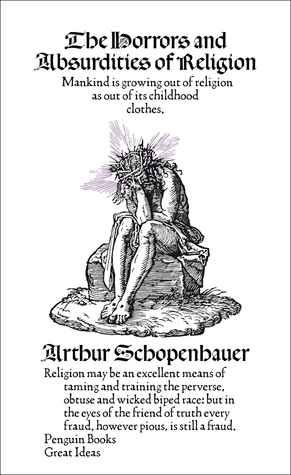
"The Horrors and Absurdities of Religion" dissects the foundations and impacts of religious belief, particularly highlighting what Schopenhauer perceived as its irrationalities, dogmatism, and its detrimental effects on human thought and societal progress. He meticulously dismantles theological claims, exposing their perceived inconsistencies and contrasting them with empirical reality and philosophical reasoning.
This work resonates with "The Wisdom of Life" by sharing Schopenhauer's characteristic philosophical lens and skeptical, often pessimistic, view of human nature and institutions. Both books champion individual intellectual autonomy and a rigorous examination of conventional wisdom, providing sharp, incisive critiques of widely held beliefs, whether they concern personal happiness or collective faith.
Those drawn to clear, uncompromising philosophical inquiry will appreciate this book's intellectual honesty and courage. Its timeless critique of dogma and its advocate for reason offer valuable insights into the enduring human quest for meaning, providing a compelling perspective on the role and influence of religion that extends far beyond its historical context.
The Horrors and Absurdities of Religion
"The Horrors and Absurdities of Religion" dissects the foundations and impacts of religious belief, particularly highlighting what Schopenhauer perceived as its irrationalities, dogmatism, and its detrimental effects on human thought and societal progress. He meticulously dismantles theological claims, exposing their perceived inconsistencies and contrasting them with empirical reality and philosophical reasoning.
This work resonates with "The Wisdom of Life" by sharing Schopenhauer's characteristic philosophical lens and skeptical, often pessimistic, view of human nature and institutions. Both books champion individual intellectual autonomy and a rigorous examination of conventional wisdom, providing sharp, incisive critiques of widely held beliefs, whether they concern personal happiness or collective faith.
Those drawn to clear, uncompromising philosophical inquiry will appreciate this book's intellectual honesty and courage. Its timeless critique of dogma and its advocate for reason offer valuable insights into the enduring human quest for meaning, providing a compelling perspective on the role and influence of religion that extends far beyond its historical context.
Human, All Too Human: A Book for Free Spirits

Friedrich Nietzsche's "Human, All Too Human" offers a meticulous, often provocative, examination of human morality, psychology, and intellect. Through aphorisms and short essays, Nietzsche meticulously deconstructs commonly held beliefs, religious dogma, and philosophical traditions, seeking to understand the purely human origins of our values and motivations. He challenges conventional wisdom, pushing readers to question the foundations of their understanding of society and themselves.
This work resonates strongly with Schopenhauer's "The Wisdom of Life" due to their shared focus on exploring the nature of human existence, happiness, and suffering from a deeply philosophical perspective. Both authors delve into the internal workings of the human mind and the societal pressures that shape our lives, albeit with differing conclusions regarding the ultimate path to contentment or resignation. They both invite introspection and a re-evaluation of life's conventional pursuits.
This book rewards those interested in a rigorous, unsentimental dissection of the human condition and the origins of our moral and intellectual frameworks. Its direct challenge to ingrained assumptions and its demand for independent thought provide a compelling intellectual exercise, prompting profound self-reflection and a more nuanced understanding of humanity's complexities and contradictions.
Human, All Too Human: A Book for Free Spirits
Friedrich Nietzsche's "Human, All Too Human" offers a meticulous, often provocative, examination of human morality, psychology, and intellect. Through aphorisms and short essays, Nietzsche meticulously deconstructs commonly held beliefs, religious dogma, and philosophical traditions, seeking to understand the purely human origins of our values and motivations. He challenges conventional wisdom, pushing readers to question the foundations of their understanding of society and themselves.
This work resonates strongly with Schopenhauer's "The Wisdom of Life" due to their shared focus on exploring the nature of human existence, happiness, and suffering from a deeply philosophical perspective. Both authors delve into the internal workings of the human mind and the societal pressures that shape our lives, albeit with differing conclusions regarding the ultimate path to contentment or resignation. They both invite introspection and a re-evaluation of life's conventional pursuits.
This book rewards those interested in a rigorous, unsentimental dissection of the human condition and the origins of our moral and intellectual frameworks. Its direct challenge to ingrained assumptions and its demand for independent thought provide a compelling intellectual exercise, prompting profound self-reflection and a more nuanced understanding of humanity's complexities and contradictions.
The Art of Always Being Right

"The Art of Always Being Right," also known as "The Art of Controversy," is a practical guide to winning arguments, regardless of the truth. Schopenhauer meticulously dissects various rhetorical tactics and logical fallacies employed to persuade, deflect, and ultimately triumph in a debate, even when one's position is unsound. It’s a cynical yet insightful manual on the darker side of human communication, exposing the often manipulative strategies people use to assert intellectual dominance.
This work resonates with "The Wisdom of Life" by delving into the practical, albeit sometimes Machiavellian, aspects of navigating human interaction. "The Wisdom of Life" explores how to live a contented life in society, often touching upon the realities of human nature and social dynamics. "The Art of Always Being Right" can be seen as an extension of this, focusing intensely on one specific, often challenging, aspect of social engagement: intellectual contestation. Both books offer unvarnished observations on human behavior and provide tools – the former for personal well-being, the latter for intellectual combat.
It will appeal to those who seek a deeper understanding of human nature and the mechanics of persuasion. The insights offered are valuable not only for sharpening one's own argumentative skills, but also for recognizing and defending against manipulative rhetoric. It serves as a potent tool for critical thinking, enabling individuals to discern truth from sophistry in everyday discourse and public debate.
The Art of Always Being Right
"The Art of Always Being Right," also known as "The Art of Controversy," is a practical guide to winning arguments, regardless of the truth. Schopenhauer meticulously dissects various rhetorical tactics and logical fallacies employed to persuade, deflect, and ultimately triumph in a debate, even when one's position is unsound. It’s a cynical yet insightful manual on the darker side of human communication, exposing the often manipulative strategies people use to assert intellectual dominance.
This work resonates with "The Wisdom of Life" by delving into the practical, albeit sometimes Machiavellian, aspects of navigating human interaction. "The Wisdom of Life" explores how to live a contented life in society, often touching upon the realities of human nature and social dynamics. "The Art of Always Being Right" can be seen as an extension of this, focusing intensely on one specific, often challenging, aspect of social engagement: intellectual contestation. Both books offer unvarnished observations on human behavior and provide tools – the former for personal well-being, the latter for intellectual combat.
It will appeal to those who seek a deeper understanding of human nature and the mechanics of persuasion. The insights offered are valuable not only for sharpening one's own argumentative skills, but also for recognizing and defending against manipulative rhetoric. It serves as a potent tool for critical thinking, enabling individuals to discern truth from sophistry in everyday discourse and public debate.
The Philosophy of Art (Volume 58)
Schelling's "The Philosophy of Art" delves into the intricate relationship between art, nature, and the absolute. It argues that art is not merely imitation but a profound revelation of ultimate truth, a bridge between the finite human mind and the infinite. Schelling posits that artistic creation mirrors the divine act of creation itself, embodying universal ideas and reconciling the seeming dualities of the objective and subjective world.
This work shares common ground with Schopenhauer's "The Wisdom of Life" through their shared philosophical idealism and an exploration of the human condition's relationship to a broader, underlying reality. Both texts seek to understand how human experience, whether through aesthetic appreciation or the pursuit of personal well-being, connects to fundamental metaphysical principles. They both offer profound insights into the nature of existence and the pathways to a more fulfilling understanding of life.
This book will attract those interested in the profound philosophical underpinnings of aesthetics and the enduring power of art. Its exploration of art as a conduit for universal truth and a reflection of the absolute offers a rich intellectual journey. It provides a valuable framework for comprehending art’s transformative potential and its role in revealing deeper meanings within the human and natural world.
The Philosophy of Art (Volume 58)
Schelling's "The Philosophy of Art" delves into the intricate relationship between art, nature, and the absolute. It argues that art is not merely imitation but a profound revelation of ultimate truth, a bridge between the finite human mind and the infinite. Schelling posits that artistic creation mirrors the divine act of creation itself, embodying universal ideas and reconciling the seeming dualities of the objective and subjective world.
This work shares common ground with Schopenhauer's "The Wisdom of Life" through their shared philosophical idealism and an exploration of the human condition's relationship to a broader, underlying reality. Both texts seek to understand how human experience, whether through aesthetic appreciation or the pursuit of personal well-being, connects to fundamental metaphysical principles. They both offer profound insights into the nature of existence and the pathways to a more fulfilling understanding of life.
This book will attract those interested in the profound philosophical underpinnings of aesthetics and the enduring power of art. Its exploration of art as a conduit for universal truth and a reflection of the absolute offers a rich intellectual journey. It provides a valuable framework for comprehending art’s transformative potential and its role in revealing deeper meanings within the human and natural world.
The Birth of Tragedy / The Case of Wagner

"The Birth of Tragedy" explores the origins of Greek tragedy, positing that it arose from the interplay of two fundamental artistic impulses: the Apollonian, representing order and rationality, and the Dionysian, embodying chaos and primal emotion. Nietzsche argues that tragedy's greatness lay in its ability to synthesize these opposing forces, offering a profound affirmation of life despite suffering. "The Case of Wagner," a later work, critiques Richard Wagner, whom Nietzsche initially admired, for sacrificing genuine artistic power for superficial melodrama.
Both books delve into the philosophical underpinnings of art, happiness, and human experience. Schopenhauer, in "The Wisdom of Life," offers practical advice on maximizing personal contentment by managing desires and understanding life's inherent suffering. Nietzsche similarly diagnoses cultural ailments and proposes artistic solutions, albeit on a grander scale, to navigate the human condition. Both authors are preoccupied with how individuals can find meaning and resilience in a world often perceived as bleak or chaotic.
This book offers a compelling intellectual journey into the philosophical roots of art and culture. It provides profound insights into human nature and the inherent tension between order and chaos, reason and instinct, that shapes our existence. Its exploration of aesthetic experience and the search for meaning in a complex world gives a valuable framework for understanding not just classical art, but contemporary culture and the individual’s place within it.
The Birth of Tragedy / The Case of Wagner
"The Birth of Tragedy" explores the origins of Greek tragedy, positing that it arose from the interplay of two fundamental artistic impulses: the Apollonian, representing order and rationality, and the Dionysian, embodying chaos and primal emotion. Nietzsche argues that tragedy's greatness lay in its ability to synthesize these opposing forces, offering a profound affirmation of life despite suffering. "The Case of Wagner," a later work, critiques Richard Wagner, whom Nietzsche initially admired, for sacrificing genuine artistic power for superficial melodrama.
Both books delve into the philosophical underpinnings of art, happiness, and human experience. Schopenhauer, in "The Wisdom of Life," offers practical advice on maximizing personal contentment by managing desires and understanding life's inherent suffering. Nietzsche similarly diagnoses cultural ailments and proposes artistic solutions, albeit on a grander scale, to navigate the human condition. Both authors are preoccupied with how individuals can find meaning and resilience in a world often perceived as bleak or chaotic.
This book offers a compelling intellectual journey into the philosophical roots of art and culture. It provides profound insights into human nature and the inherent tension between order and chaos, reason and instinct, that shapes our existence. Its exploration of aesthetic experience and the search for meaning in a complex world gives a valuable framework for understanding not just classical art, but contemporary culture and the individual’s place within it.
System of Transcendental Idealism

Schelling's "System of Transcendental Idealism" endeavors to trace the entire development of reality, from unthinking nature to the highest forms of conscious thought, back to a single, fundamental principle: the "Absolute Ego." It posits that mind and matter are not separate but two aspects of this unified reality, with consciousness actively shaping and understanding the world. This ambitious philosophical synthesis seeks to explain how we arrive at knowledge and meaning from an initial, pre-conscious state.
The similarity to Schopenhauer's "The Wisdom of Life" lies in their shared exploration of subjective experience and the human condition, albeit from different angles. Both philosophers grapple with fundamental questions about consciousness, the nature of reality, and the individual's place within it. While Schopenhauer focuses on practical wisdom and the will's role in suffering, Schelling's work provides a comprehensive metaphysical framework for understanding consciousness's evolution, offering a deeper theoretical underpinning to the subjective reality that both thinkers explore.
This book will appeal to those who appreciate profound philosophical inquiry into the nature of existence and consciousness. It offers a sophisticated framework for understanding the interplay between mind and world, providing intellectual stimulation and a broadened perspective on metaphysical questions. Its value lies in its systematic attempt to bridge the gap between subjective experience and objective reality within a grand philosophical narrative.
System of Transcendental Idealism
Schelling's "System of Transcendental Idealism" endeavors to trace the entire development of reality, from unthinking nature to the highest forms of conscious thought, back to a single, fundamental principle: the "Absolute Ego." It posits that mind and matter are not separate but two aspects of this unified reality, with consciousness actively shaping and understanding the world. This ambitious philosophical synthesis seeks to explain how we arrive at knowledge and meaning from an initial, pre-conscious state.
The similarity to Schopenhauer's "The Wisdom of Life" lies in their shared exploration of subjective experience and the human condition, albeit from different angles. Both philosophers grapple with fundamental questions about consciousness, the nature of reality, and the individual's place within it. While Schopenhauer focuses on practical wisdom and the will's role in suffering, Schelling's work provides a comprehensive metaphysical framework for understanding consciousness's evolution, offering a deeper theoretical underpinning to the subjective reality that both thinkers explore.
This book will appeal to those who appreciate profound philosophical inquiry into the nature of existence and consciousness. It offers a sophisticated framework for understanding the interplay between mind and world, providing intellectual stimulation and a broadened perspective on metaphysical questions. Its value lies in its systematic attempt to bridge the gap between subjective experience and objective reality within a grand philosophical narrative.
More Books to Explore
Discover more titles that expand on these ideas and themes.
Essays and Aphorisms
On the Suffering of the World
The World as Will and Representation, Volume II
The World as Will and Representation, Volume I
The Horrors and Absurdities of Religion
Human, All Too Human: A Book for Free Spirits