10 Books Similar to "The Undercover Economist"
by Tim Harford

Freakonomics: A Rogue Economist Explores the Hidden Side of Everything
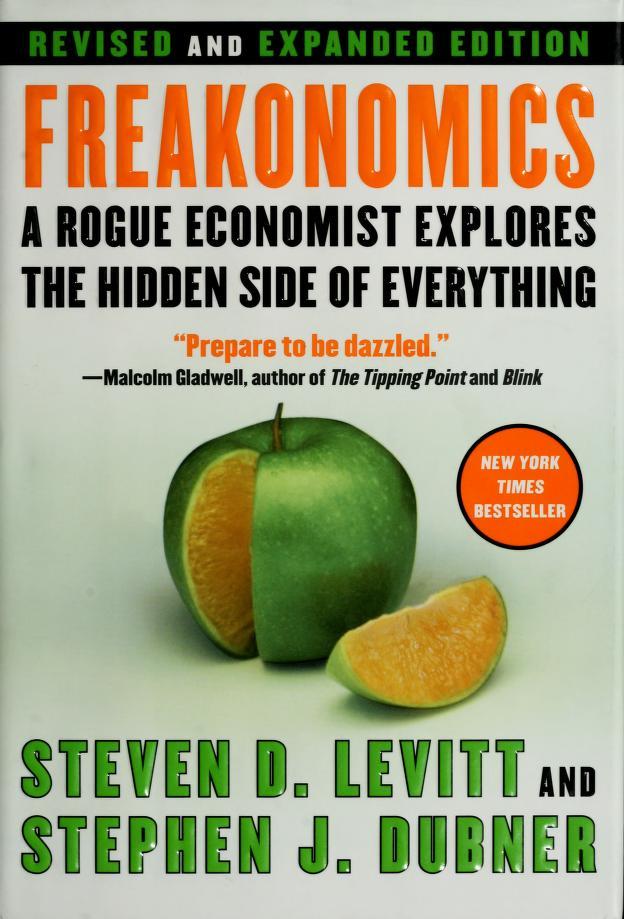
"Freakonomics" explores the often-unseen economic incentives and underlying logic that shape human behavior, from the seemingly mundane to the most complex social phenomena. Authors Steven Levitt and Stephen Dubner delve into diverse topics like the economics of drug dealing, the veracity of real estate agents, and the surprising reasons for fluctuating crime rates, all through the lens of economic analysis.
This book shares a core ambition with "The Undercover Economist": demystifying complex economic principles and applying them to everyday life. Both titles illuminate how rational choices, often driven by self-interest, explain a vast array of human actions and societal structures. They demonstrate that economics isn't solely about finance, but about understanding incentives and their far-reaching consequences.
The book will appeal to those curious about the "why" behind human choices and societal trends, offering a fresh perspective on conventional wisdom. It provides a deeper understanding of incentives, data analysis, and the often-unpredictable outcomes of human interaction, equipping one with a more nuanced view of the world around them.
Freakonomics: A Rogue Economist Explores the Hidden Side of Everything
"Freakonomics" explores the often-unseen economic incentives and underlying logic that shape human behavior, from the seemingly mundane to the most complex social phenomena. Authors Steven Levitt and Stephen Dubner delve into diverse topics like the economics of drug dealing, the veracity of real estate agents, and the surprising reasons for fluctuating crime rates, all through the lens of economic analysis.
This book shares a core ambition with "The Undercover Economist": demystifying complex economic principles and applying them to everyday life. Both titles illuminate how rational choices, often driven by self-interest, explain a vast array of human actions and societal structures. They demonstrate that economics isn't solely about finance, but about understanding incentives and their far-reaching consequences.
The book will appeal to those curious about the "why" behind human choices and societal trends, offering a fresh perspective on conventional wisdom. It provides a deeper understanding of incentives, data analysis, and the often-unpredictable outcomes of human interaction, equipping one with a more nuanced view of the world around them.
The Price of Everything: Solving the Mystery of Why We Pay What We Do
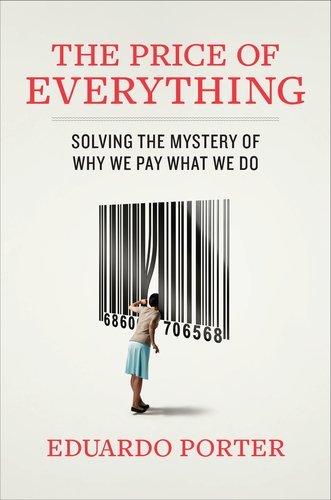
"The Price of Everything: Solving the Mystery of Why We Pay What We Do" by Eduardo Porter delves into the intricate mechanisms that determine the cost of myriad goods and services. It explores how everything from a cup of coffee to the price of healthcare is shaped by a complex interplay of supply and demand, government policies, behavioral economics, and historical factors, ultimately revealing the hidden forces that dictate monetary value in our everyday lives.
This book shares a significant thematic overlap with "The Undercover Economist." Both works demystify the world of economics for a general audience, using engaging narratives and real-world examples to explain complex concepts. They both empower individuals to understand the often-invisible economic principles at play behind common transactions and societal structures, rather than simply accepting prices at face value.
The book offers a compelling exploration of economic forces that directly impact an individual's financial reality and decision-making. Its insights equip one with a more informed perspective on consumer behavior, market dynamics, and global economic influences, fostering a deeper appreciation for the economic logic (or illogic) that underpins much of our modern world.
The Price of Everything: Solving the Mystery of Why We Pay What We Do
"The Price of Everything: Solving the Mystery of Why We Pay What We Do" by Eduardo Porter delves into the intricate mechanisms that determine the cost of myriad goods and services. It explores how everything from a cup of coffee to the price of healthcare is shaped by a complex interplay of supply and demand, government policies, behavioral economics, and historical factors, ultimately revealing the hidden forces that dictate monetary value in our everyday lives.
This book shares a significant thematic overlap with "The Undercover Economist." Both works demystify the world of economics for a general audience, using engaging narratives and real-world examples to explain complex concepts. They both empower individuals to understand the often-invisible economic principles at play behind common transactions and societal structures, rather than simply accepting prices at face value.
The book offers a compelling exploration of economic forces that directly impact an individual's financial reality and decision-making. Its insights equip one with a more informed perspective on consumer behavior, market dynamics, and global economic influences, fostering a deeper appreciation for the economic logic (or illogic) that underpins much of our modern world.
SuperFreakonomics: Global Cooling, Patriotic Prostitutes And Why Suicide Bombers Should Buy Life Insurance
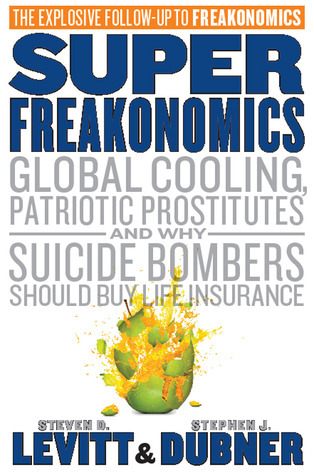
"SuperFreakonomics" delves into unconventional economic analysis, applying statistical rigor to seemingly disparate and often provocative topics. It explores everything from the real-world utility of global cooling technologies to the surprising economic incentives behind suicide bombing, revealing hidden connections and challenging conventional wisdom through data-driven insights.
This book shares a fundamental intellectual DNA with "The Undercover Economist." Both books excel at demystifying complex societal phenomena by employing economic principles and data to uncover the underlying rationales and incentives driving human behavior. They both illustrate how seemingly irrational or obscure decisions can be understood through an economic lens, making abstract concepts accessible and engaging.
The book's appeal lies in its ability to offer fresh perspectives on common assumptions and societal challenges. It provides a unique analytical framework for understanding the world, equipping one with tools to critically evaluate headlines and everyday interactions. Its value lies in fostering a deeper appreciation for the nuanced interplay of incentives and consequences that shape our lives.
SuperFreakonomics: Global Cooling, Patriotic Prostitutes And Why Suicide Bombers Should Buy Life Insurance
"SuperFreakonomics" delves into unconventional economic analysis, applying statistical rigor to seemingly disparate and often provocative topics. It explores everything from the real-world utility of global cooling technologies to the surprising economic incentives behind suicide bombing, revealing hidden connections and challenging conventional wisdom through data-driven insights.
This book shares a fundamental intellectual DNA with "The Undercover Economist." Both books excel at demystifying complex societal phenomena by employing economic principles and data to uncover the underlying rationales and incentives driving human behavior. They both illustrate how seemingly irrational or obscure decisions can be understood through an economic lens, making abstract concepts accessible and engaging.
The book's appeal lies in its ability to offer fresh perspectives on common assumptions and societal challenges. It provides a unique analytical framework for understanding the world, equipping one with tools to critically evaluate headlines and everyday interactions. Its value lies in fostering a deeper appreciation for the nuanced interplay of incentives and consequences that shape our lives.
23 Things They Don't Tell You About Capitalism

"23 Things They Don't Tell You About Capitalism" dissects common assumptions about free-market economics, presenting evidence that often contradicts conventional wisdom. Ha-Joon Chang challenges the idea of a level playing field, exposing the complexities and inherent biases within the global capitalist system, touching on issues from free trade to regulatory frameworks and the roles of government and corporations.
It shares common ground with "The Undercover Economist" by similarly demystifying economic principles for a general audience. Both books employ relatable examples and accessible language to reveal the hidden mechanics behind everyday economic phenomena, encouraging a more critical and nuanced understanding of how markets truly operate beyond simplistic textbook models.
Readers gain profound insights into the real-world implications of economic policies and structures. This book provides a robust framework for understanding global inequalities and the various ways in which capitalism is shaped and manipulated, empowering individuals to critically evaluate economic narratives and make more informed judgments about the systems governing their lives.
23 Things They Don't Tell You About Capitalism
"23 Things They Don't Tell You About Capitalism" dissects common assumptions about free-market economics, presenting evidence that often contradicts conventional wisdom. Ha-Joon Chang challenges the idea of a level playing field, exposing the complexities and inherent biases within the global capitalist system, touching on issues from free trade to regulatory frameworks and the roles of government and corporations.
It shares common ground with "The Undercover Economist" by similarly demystifying economic principles for a general audience. Both books employ relatable examples and accessible language to reveal the hidden mechanics behind everyday economic phenomena, encouraging a more critical and nuanced understanding of how markets truly operate beyond simplistic textbook models.
Readers gain profound insights into the real-world implications of economic policies and structures. This book provides a robust framework for understanding global inequalities and the various ways in which capitalism is shaped and manipulated, empowering individuals to critically evaluate economic narratives and make more informed judgments about the systems governing their lives.
Common Sense Economics: What Everyone Should Know About Wealth and Prosperity
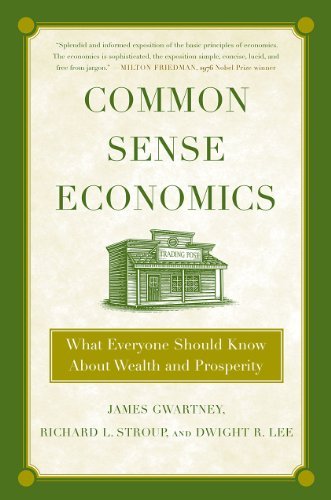
"Common Sense Economics" demystifies fundamental economic principles, explaining how markets function, the role of government, and the drivers of wealth creation. It presents thirteen key elements, illustrating their impact on individual prosperity and societal well-being with clear, accessible language, making complex concepts understandable for a general audience.
Both books excel at translating intricate economic theories into practical, relatable insights. Just as "The Undercover Economist" reveals the economic forces at play in everyday scenarios, "Common Sense Economics" illuminates the underlying principles shaping our financial world, fostering a deeper understanding of economic landscapes without jargon.
This book offers a framework for comprehending world events and personal financial decisions, empowering individuals with economic literacy. Its straightforward approach provides actionable knowledge, useful for navigating an economy increasingly influenced by complex global dynamics.
Common Sense Economics: What Everyone Should Know About Wealth and Prosperity
"Common Sense Economics" demystifies fundamental economic principles, explaining how markets function, the role of government, and the drivers of wealth creation. It presents thirteen key elements, illustrating their impact on individual prosperity and societal well-being with clear, accessible language, making complex concepts understandable for a general audience.
Both books excel at translating intricate economic theories into practical, relatable insights. Just as "The Undercover Economist" reveals the economic forces at play in everyday scenarios, "Common Sense Economics" illuminates the underlying principles shaping our financial world, fostering a deeper understanding of economic landscapes without jargon.
This book offers a framework for comprehending world events and personal financial decisions, empowering individuals with economic literacy. Its straightforward approach provides actionable knowledge, useful for navigating an economy increasingly influenced by complex global dynamics.
Basic Economics: A Citizen's Guide to the Economy

"Basic Economics: A Citizen's Guide to the Economy" meticulously breaks down fundamental economic principles, making complex concepts accessible to a general audience. Sowell utilizes real-world examples and historical contexts to illustrate how supply and demand, pricing, labor markets, and international trade function, revealing the often unseen forces that shape our daily lives and broader society. It’s a comprehensive yet understandable exploration of economic thought without relying on jargon.
This work resonates with "The Undercover Economist" by sharing a common goal: demystifying economics for the everyday person. Both books excel at showing how economic principles impact seemingly mundane aspects of life, from coffee prices to traffic jams. They empower the reader to think critically about economic decisions and policies, moving beyond superficial explanations to grasp underlying mechanisms.
The book will appeal to anyone seeking a clearer understanding of the economic landscape that governs their world. Its value lies in equipping individuals with a robust framework for analyzing economic news, policy debates, and personal financial choices, fostering a more informed and engaged citizenry capable of discerning genuine economic realities from political rhetoric.
Basic Economics: A Citizen's Guide to the Economy
"Basic Economics: A Citizen's Guide to the Economy" meticulously breaks down fundamental economic principles, making complex concepts accessible to a general audience. Sowell utilizes real-world examples and historical contexts to illustrate how supply and demand, pricing, labor markets, and international trade function, revealing the often unseen forces that shape our daily lives and broader society. It’s a comprehensive yet understandable exploration of economic thought without relying on jargon.
This work resonates with "The Undercover Economist" by sharing a common goal: demystifying economics for the everyday person. Both books excel at showing how economic principles impact seemingly mundane aspects of life, from coffee prices to traffic jams. They empower the reader to think critically about economic decisions and policies, moving beyond superficial explanations to grasp underlying mechanisms.
The book will appeal to anyone seeking a clearer understanding of the economic landscape that governs their world. Its value lies in equipping individuals with a robust framework for analyzing economic news, policy debates, and personal financial choices, fostering a more informed and engaged citizenry capable of discerning genuine economic realities from political rhetoric.
How Markets Fail: The Logic of Economic Calamities
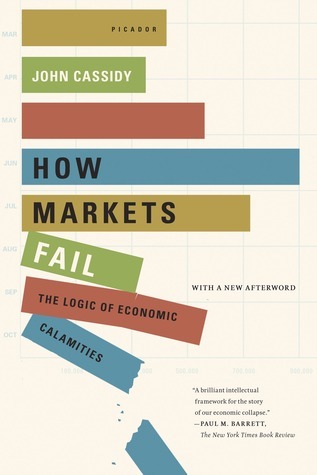
"How Markets Fail" meticulously dissects the mechanisms behind economic collapses, from the dot-com bust to the 2008 financial crisis. John Cassidy explores how neoclassical economic theories, particularly the belief in rational actors and efficient markets, often overlook crucial human biases and systemic flaws, leading to catastrophic outcomes. The book highlights the tension between free-market ideology and the necessity for thoughtful regulation, using historical examples and insightful analysis to reveal the inherent vulnerabilities of complex financial systems.
This work echoes "The Undercover Economist" in its accessible demystification of economic principles and real-world applications. Both books translate complex economic concepts into understandable narratives, showing how seemingly abstract theories play out in everyday life and on a grand scale. While Harford often uses microeconomic examples to illustrate efficiency, Cassidy delves into macroeconomics and market failures, but both share a commitment to illuminating the hidden forces shaping our economic landscape.
The book will appeal to those seeking a deeper understanding of why economies falter and how policy decisions impact societal well-being. It offers a critical perspective on mainstream economic thought, providing valuable insights into the interconnections between individual behavior, market structures, and regulatory frameworks. This analysis equips individuals with a more nuanced view of financial news and calls for a more pragmatic approach to economic governance.
How Markets Fail: The Logic of Economic Calamities
"How Markets Fail" meticulously dissects the mechanisms behind economic collapses, from the dot-com bust to the 2008 financial crisis. John Cassidy explores how neoclassical economic theories, particularly the belief in rational actors and efficient markets, often overlook crucial human biases and systemic flaws, leading to catastrophic outcomes. The book highlights the tension between free-market ideology and the necessity for thoughtful regulation, using historical examples and insightful analysis to reveal the inherent vulnerabilities of complex financial systems.
This work echoes "The Undercover Economist" in its accessible demystification of economic principles and real-world applications. Both books translate complex economic concepts into understandable narratives, showing how seemingly abstract theories play out in everyday life and on a grand scale. While Harford often uses microeconomic examples to illustrate efficiency, Cassidy delves into macroeconomics and market failures, but both share a commitment to illuminating the hidden forces shaping our economic landscape.
The book will appeal to those seeking a deeper understanding of why economies falter and how policy decisions impact societal well-being. It offers a critical perspective on mainstream economic thought, providing valuable insights into the interconnections between individual behavior, market structures, and regulatory frameworks. This analysis equips individuals with a more nuanced view of financial news and calls for a more pragmatic approach to economic governance.
Applied Economics: Thinking Beyond Stage One
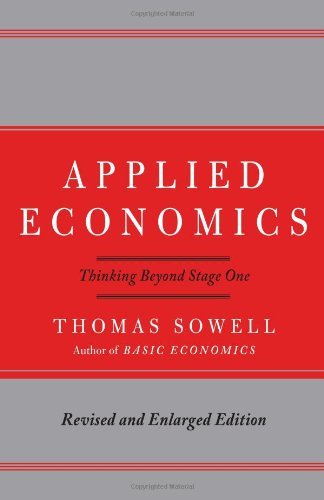
"Applied Economics: Thinking Beyond Stage One" by Thomas Sowell dissects complex economic issues, urging a deeper analysis beyond immediate appearances. Sowell meticulously illustrates how policies and decisions often yield unforeseen, negative consequences because their ripple effects aren't adequately considered. He equips the reader with a framework for evaluating economic arguments and outcomes based on real-world impact, rather than just stated intentions.
This book shares a core philosophy with "The Undercover Economist": both demystify economics by applying its principles to everyday scenarios. Harford uses anecdotes to reveal hidden economic forces, while Sowell uses rigorous analysis to expose the hidden costs and long-term implications of various economic policies and beliefs. Both authors empower the reader to interpret the world through an economic lens, moving beyond surface-level understanding.
Engaging with Sowell’s work will be highly rewarding for those seeking to sharpen their critical thinking about economic and social policies. It offers an invaluable perspective for understanding why certain interventions fail or produce counterproductive results, fostering a more nuanced and informed view of the world’s complexities. The book provides intellectual tools for genuine comprehension, not just memorization.
Applied Economics: Thinking Beyond Stage One
"Applied Economics: Thinking Beyond Stage One" by Thomas Sowell dissects complex economic issues, urging a deeper analysis beyond immediate appearances. Sowell meticulously illustrates how policies and decisions often yield unforeseen, negative consequences because their ripple effects aren't adequately considered. He equips the reader with a framework for evaluating economic arguments and outcomes based on real-world impact, rather than just stated intentions.
This book shares a core philosophy with "The Undercover Economist": both demystify economics by applying its principles to everyday scenarios. Harford uses anecdotes to reveal hidden economic forces, while Sowell uses rigorous analysis to expose the hidden costs and long-term implications of various economic policies and beliefs. Both authors empower the reader to interpret the world through an economic lens, moving beyond surface-level understanding.
Engaging with Sowell’s work will be highly rewarding for those seeking to sharpen their critical thinking about economic and social policies. It offers an invaluable perspective for understanding why certain interventions fail or produce counterproductive results, fostering a more nuanced and informed view of the world’s complexities. The book provides intellectual tools for genuine comprehension, not just memorization.
Think Like a Freak

"Think Like a Freak" demystifies complex problems by demonstrating how to approach them with unconventional, often counterintuitive, logic. It encourages a departure from traditional thinking, emphasizing the importance of questioning assumptions, identifying incentives, and embracing humility in problem-solving. Through engaging anecdotes and real-world examples, it equips individuals with a framework to analyze situations from fresh perspectives, ultimately leading to more effective and innovative solutions.
This book shares a core intellectual DNA with "The Undercover Economist" in its commitment to illuminating the hidden forces shaping our world. Both books excel at using economic principles and logical reasoning to dissect everyday phenomena, revealing the underlying incentives and structures that drive behavior and outcomes, often in surprising ways. They empower readers to see beyond superficial appearances and understand the true mechanics at play.
Individuals who appreciate insightful analysis and a willingness to challenge conventional wisdom will find this book highly resonant. Its value lies in its practical application: by adopting the "freakonomics" mindset, one gains a powerful toolkit for navigating personal and professional challenges, making more informed decisions, and understanding the world with greater clarity.
Think Like a Freak
"Think Like a Freak" demystifies complex problems by demonstrating how to approach them with unconventional, often counterintuitive, logic. It encourages a departure from traditional thinking, emphasizing the importance of questioning assumptions, identifying incentives, and embracing humility in problem-solving. Through engaging anecdotes and real-world examples, it equips individuals with a framework to analyze situations from fresh perspectives, ultimately leading to more effective and innovative solutions.
This book shares a core intellectual DNA with "The Undercover Economist" in its commitment to illuminating the hidden forces shaping our world. Both books excel at using economic principles and logical reasoning to dissect everyday phenomena, revealing the underlying incentives and structures that drive behavior and outcomes, often in surprising ways. They empower readers to see beyond superficial appearances and understand the true mechanics at play.
Individuals who appreciate insightful analysis and a willingness to challenge conventional wisdom will find this book highly resonant. Its value lies in its practical application: by adopting the "freakonomics" mindset, one gains a powerful toolkit for navigating personal and professional challenges, making more informed decisions, and understanding the world with greater clarity.
Economic Facts and Fallacies
"Economic Facts and Fallacies" by Thomas Sowell dissects common economic assumptions and policies, revealing their underlying flaws through rigorous data and logical analysis. Sowell challenges widely held beliefs across various domains, from income inequality and urban living to education and affirmative action, exposing how emotion or ideology often overshadows empirical evidence in public discourse.
This book shares "The Undercover Economist's" core mission: demystifying complex economic concepts for a general audience. Both authors skillfully employ real-world examples and accessible language to illustrate how economic principles operate in everyday life, helping individuals think more critically about the world around them. They dismantle misconceptions, offering clarity where many perceive confusion.
The book will appeal to those seeking a deeper, evidence-based understanding of societal issues. Its value lies in equipping individuals with a robust framework for evaluating policy claims and media narratives, fostering informed opinions rather than passively accepting conventional wisdom. It promotes intellectual independence by encouraging readers to look beyond superficial explanations and demand substantiation for economic arguments.
Economic Facts and Fallacies
"Economic Facts and Fallacies" by Thomas Sowell dissects common economic assumptions and policies, revealing their underlying flaws through rigorous data and logical analysis. Sowell challenges widely held beliefs across various domains, from income inequality and urban living to education and affirmative action, exposing how emotion or ideology often overshadows empirical evidence in public discourse.
This book shares "The Undercover Economist's" core mission: demystifying complex economic concepts for a general audience. Both authors skillfully employ real-world examples and accessible language to illustrate how economic principles operate in everyday life, helping individuals think more critically about the world around them. They dismantle misconceptions, offering clarity where many perceive confusion.
The book will appeal to those seeking a deeper, evidence-based understanding of societal issues. Its value lies in equipping individuals with a robust framework for evaluating policy claims and media narratives, fostering informed opinions rather than passively accepting conventional wisdom. It promotes intellectual independence by encouraging readers to look beyond superficial explanations and demand substantiation for economic arguments.
More Books to Explore
Discover more titles that expand on these ideas and themes.
Freakonomics: A Rogue Economist Explores the Hidden Side of Everything
The Price of Everything: Solving the Mystery of Why We Pay What We Do
SuperFreakonomics: Global Cooling, Patriotic Prostitutes And Why Suicide Bombers Should Buy Life Insurance
23 Things They Don't Tell You About Capitalism
Common Sense Economics: What Everyone Should Know About Wealth and Prosperity
Basic Economics: A Citizen's Guide to the Economy