10 Books Similar to "The Tipping Point: How Little Things Can Make a Big Difference"
by Malcolm Gladwell

Revenge of the Tipping Point: Overstories, Superspreaders, and the Rise of Social Engineering
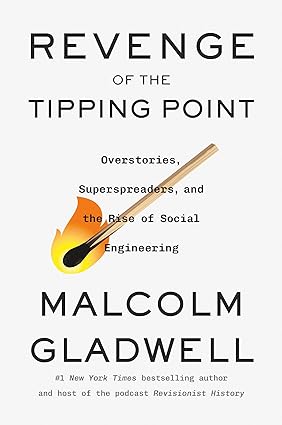
"Revenge of the Tipping Point" delves into the often-unseen forces that shape our beliefs and behaviors, exploring how seemingly isolated events can cascade into widespread social phenomena. It examines the mechanisms of "overstories"—dominant narratives that frame public understanding—and the influence of "superspreaders" who amplify these narratives, often through modern digital channels. The book ultimately unpacks the intricate ways our social fabric can be engineered, sometimes subtly, sometimes overtly.
This new work builds directly on the foundational concepts introduced in "The Tipping Point." Both books dissect how ideas, trends, and messages gain traction and spread through populations, moving beyond simple explanation to reveal the underlying architecture of social change. "Revenge" acts as a contemporary lens on these established principles, updating them for an era saturated with information and complex social interactions.
The book offers a compelling exploration of contemporary societal dynamics, providing invaluable insights into how information spreads and shapes collective action. Its analysis of narrative influence and the role of key individuals in shaping public discourse will resonate with anyone seeking to understand the often-invisible levers of social and cultural evolution.
Revenge of the Tipping Point: Overstories, Superspreaders, and the Rise of Social Engineering
"Revenge of the Tipping Point" delves into the often-unseen forces that shape our beliefs and behaviors, exploring how seemingly isolated events can cascade into widespread social phenomena. It examines the mechanisms of "overstories"—dominant narratives that frame public understanding—and the influence of "superspreaders" who amplify these narratives, often through modern digital channels. The book ultimately unpacks the intricate ways our social fabric can be engineered, sometimes subtly, sometimes overtly.
This new work builds directly on the foundational concepts introduced in "The Tipping Point." Both books dissect how ideas, trends, and messages gain traction and spread through populations, moving beyond simple explanation to reveal the underlying architecture of social change. "Revenge" acts as a contemporary lens on these established principles, updating them for an era saturated with information and complex social interactions.
The book offers a compelling exploration of contemporary societal dynamics, providing invaluable insights into how information spreads and shapes collective action. Its analysis of narrative influence and the role of key individuals in shaping public discourse will resonate with anyone seeking to understand the often-invisible levers of social and cultural evolution.
Outliers: The Story of Success

"Outliers: The Story of Success" challenges the conventional narrative of individual achievement, arguing that success is not solely a product of innate talent or hard work. Instead, Gladwell meticulously unpacks the often-overlooked environmental, cultural, and sociological factors – like birth cohorts, family background, and timely opportunities – that profoundly shape a person's trajectory towards extraordinary accomplishment. It's a deep dive into the hidden advantages and systemic influences underpinning exceptional performance.
This book shares significant DNA with "The Tipping Point" in its central premise: seemingly minor or intricate details, when understood and analyzed, can have disproportionately large effects. Both works deconstruct complex phenomena (epidemic social change in *Tipping Point*, individual success in *Outliers*) into their constituent, often subtle, yet critical elements. They highlight how context and environment are not merely backdrops but active, powerful forces.
Anyone fascinated by human potential and the real mechanics of achievement will find "Outliers" compelling. It offers a new lens through which to view biography, history, and current events, empowering a more nuanced understanding of why some individuals and groups thrive. The insights provide a valuable framework for reconsidering systems, opportunities, and the very definition of success itself.
Outliers: The Story of Success
"Outliers: The Story of Success" challenges the conventional narrative of individual achievement, arguing that success is not solely a product of innate talent or hard work. Instead, Gladwell meticulously unpacks the often-overlooked environmental, cultural, and sociological factors – like birth cohorts, family background, and timely opportunities – that profoundly shape a person's trajectory towards extraordinary accomplishment. It's a deep dive into the hidden advantages and systemic influences underpinning exceptional performance.
This book shares significant DNA with "The Tipping Point" in its central premise: seemingly minor or intricate details, when understood and analyzed, can have disproportionately large effects. Both works deconstruct complex phenomena (epidemic social change in *Tipping Point*, individual success in *Outliers*) into their constituent, often subtle, yet critical elements. They highlight how context and environment are not merely backdrops but active, powerful forces.
Anyone fascinated by human potential and the real mechanics of achievement will find "Outliers" compelling. It offers a new lens through which to view biography, history, and current events, empowering a more nuanced understanding of why some individuals and groups thrive. The insights provide a valuable framework for reconsidering systems, opportunities, and the very definition of success itself.
Blink: The Power of Thinking Without Thinking

"Blink" explores the power and pitfalls of rapid cognition, the instantaneous judgments and decisions we make without conscious thought. Gladwell delves into how our brains make split-second assessments, often with surprising accuracy, drawing on examples from art, medicine, and business to illustrate the profound impact of these "thin slices" of experience. It unpacks the unconscious mental processes that shape our understanding of the world.
This book shares foundational similarities with "The Tipping Point" in its meticulous examination of often-overlooked phenomena that exert significant influence. Both works analyze complex social and psychological dynamics, demonstrating how seemingly minor, intangible forces can lead to disproportionately large outcomes or drive human behavior in unexpected ways. Gladwell’s signature style of interweaving compelling anecdotes with scientific research is also prominent in both titles.
A deep appeal lies in Blink's ability to demystify intuition, offering a framework for understanding and even improving our snap judgments. It challenges conventional notions of decision-making, offering insights into personal effectiveness, professional interactions, and broader societal trends. The ability to grasp the nuances of fast thinking provides practical value in navigating daily life and complex situations.
Blink: The Power of Thinking Without Thinking
"Blink" explores the power and pitfalls of rapid cognition, the instantaneous judgments and decisions we make without conscious thought. Gladwell delves into how our brains make split-second assessments, often with surprising accuracy, drawing on examples from art, medicine, and business to illustrate the profound impact of these "thin slices" of experience. It unpacks the unconscious mental processes that shape our understanding of the world.
This book shares foundational similarities with "The Tipping Point" in its meticulous examination of often-overlooked phenomena that exert significant influence. Both works analyze complex social and psychological dynamics, demonstrating how seemingly minor, intangible forces can lead to disproportionately large outcomes or drive human behavior in unexpected ways. Gladwell’s signature style of interweaving compelling anecdotes with scientific research is also prominent in both titles.
A deep appeal lies in Blink's ability to demystify intuition, offering a framework for understanding and even improving our snap judgments. It challenges conventional notions of decision-making, offering insights into personal effectiveness, professional interactions, and broader societal trends. The ability to grasp the nuances of fast thinking provides practical value in navigating daily life and complex situations.
Contagious: Why Things Catch On

"Contagious: Why Things Catch On" delves into the science behind social transmission, explaining why certain products, ideas, and behaviors become popular while others falter. Jonah Berger identifies six key principles (Social Currency, Triggers, Emotion, Public, Practical Value, and Stories) that make anything "contagious." He illustrates these concepts with compelling case studies, offering a practical framework for understanding and increasing virality in the market and social spheres.
The book shares significant thematic overlap with "The Tipping Point" by exploring the underlying mechanisms of how ideas and trends spread through populations. Both books analyze the "why" and "how" of widespread adoption, moving beyond anecdotal observation to offer structured, actionable insights into social influence. While Gladwell focuses on the critical mass needed for an idea to "tip," Berger provides a detailed toolkit for engineering that initial spread.
This work offers a compelling read for anyone interested in marketing, social dynamics, or understanding the invisible forces driving public opinion and consumer behavior. It provides a robust analytical lens for deciphering what makes something "catch on," offering valuable takeaways for strategists, entrepreneurs, and those simply curious about the modern world's rapid shifts in popularity.
Contagious: Why Things Catch On
"Contagious: Why Things Catch On" delves into the science behind social transmission, explaining why certain products, ideas, and behaviors become popular while others falter. Jonah Berger identifies six key principles (Social Currency, Triggers, Emotion, Public, Practical Value, and Stories) that make anything "contagious." He illustrates these concepts with compelling case studies, offering a practical framework for understanding and increasing virality in the market and social spheres.
The book shares significant thematic overlap with "The Tipping Point" by exploring the underlying mechanisms of how ideas and trends spread through populations. Both books analyze the "why" and "how" of widespread adoption, moving beyond anecdotal observation to offer structured, actionable insights into social influence. While Gladwell focuses on the critical mass needed for an idea to "tip," Berger provides a detailed toolkit for engineering that initial spread.
This work offers a compelling read for anyone interested in marketing, social dynamics, or understanding the invisible forces driving public opinion and consumer behavior. It provides a robust analytical lens for deciphering what makes something "catch on," offering valuable takeaways for strategists, entrepreneurs, and those simply curious about the modern world's rapid shifts in popularity.
Talking to Strangers: What We Should Know About the People We Don't Know
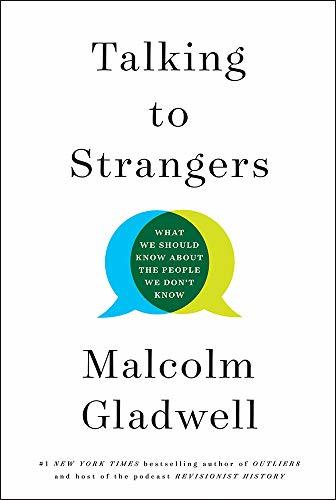
"Talking to Strangers" delves into the profound complexities and inherent challenges we face when encountering unfamiliar individuals. Gladwell explores how our default assumptions, shaped by the "truth default theory," often lead us astray, causing us to misinterpret intentions, overlook deception, and misjudge character. He dissects real-world incidents, from high-profile espionage cases to everyday police encounters, to illustrate the mechanisms behind these misunderstandings and their often devastating consequences.
This book shares foundational similarities with "The Tipping Point" in its meticulous examination of often-overlooked social phenomena that exert significant, widespread influence. Both books dissect seemingly idiosyncratic human behaviors and interactions, revealing underlying patterns and systemic factors. Gladwell masterfully employs compelling anecdotes and research to illuminate how small, critical elements – be it a specific personality type in "The Tipping Point" or a cognitive bias in "Talking to Strangers" – can dramatically alter outcomes and shape our understanding of the world.
The book will resonate deeply with anyone seeking a richer comprehension of human interaction and the often-fraught process of evaluating others. It offers powerful insights into why we frequently misjudge strangers, providing a framework to critically re-evaluate our own initial assumptions and observe with greater nuance. This invaluable perspective can enhance personal relationships, inform professional interactions, and ultimately foster a more insightful approach to navigating our complex social landscape.
Talking to Strangers: What We Should Know About the People We Don't Know
"Talking to Strangers" delves into the profound complexities and inherent challenges we face when encountering unfamiliar individuals. Gladwell explores how our default assumptions, shaped by the "truth default theory," often lead us astray, causing us to misinterpret intentions, overlook deception, and misjudge character. He dissects real-world incidents, from high-profile espionage cases to everyday police encounters, to illustrate the mechanisms behind these misunderstandings and their often devastating consequences.
This book shares foundational similarities with "The Tipping Point" in its meticulous examination of often-overlooked social phenomena that exert significant, widespread influence. Both books dissect seemingly idiosyncratic human behaviors and interactions, revealing underlying patterns and systemic factors. Gladwell masterfully employs compelling anecdotes and research to illuminate how small, critical elements – be it a specific personality type in "The Tipping Point" or a cognitive bias in "Talking to Strangers" – can dramatically alter outcomes and shape our understanding of the world.
The book will resonate deeply with anyone seeking a richer comprehension of human interaction and the often-fraught process of evaluating others. It offers powerful insights into why we frequently misjudge strangers, providing a framework to critically re-evaluate our own initial assumptions and observe with greater nuance. This invaluable perspective can enhance personal relationships, inform professional interactions, and ultimately foster a more insightful approach to navigating our complex social landscape.
David and Goliath: Underdogs, Misfits, and the Art of Battling Giants

"David and Goliath" explores the surprising advantages found in adversity. Gladwell examines historical and contemporary examples where seemingly weaker individuals or groups overcome powerful opponents, often by redefining their limitations as strengths. It's an insightful look at how disadvantages can, counterintuitively, foster innovation, resilience, and novel strategies for success.
The similarity to "The Tipping Point" lies in Gladwell's characteristic approach: identifying subtle, often overlooked mechanisms that drive significant outcomes. Both books deconstruct conventional wisdom, revealing that seemingly minor factors can dramatically alter power dynamics and lead to unforeseen transformations. He consistently probes beyond superficial appearances to uncover underlying principles.
This book will appeal due to its empowering message and intellectual stimulus. It encourages a re-evaluation of perceived weaknesses and offers frameworks for understanding how underdogs can indeed prevail. The narrative provides not just compelling stories, but also practical insights into resilience, strategy, and the often-misunderstood nature of strength.
David and Goliath: Underdogs, Misfits, and the Art of Battling Giants
"David and Goliath" explores the surprising advantages found in adversity. Gladwell examines historical and contemporary examples where seemingly weaker individuals or groups overcome powerful opponents, often by redefining their limitations as strengths. It's an insightful look at how disadvantages can, counterintuitively, foster innovation, resilience, and novel strategies for success.
The similarity to "The Tipping Point" lies in Gladwell's characteristic approach: identifying subtle, often overlooked mechanisms that drive significant outcomes. Both books deconstruct conventional wisdom, revealing that seemingly minor factors can dramatically alter power dynamics and lead to unforeseen transformations. He consistently probes beyond superficial appearances to uncover underlying principles.
This book will appeal due to its empowering message and intellectual stimulus. It encourages a re-evaluation of perceived weaknesses and offers frameworks for understanding how underdogs can indeed prevail. The narrative provides not just compelling stories, but also practical insights into resilience, strategy, and the often-misunderstood nature of strength.
Influencer: The Power to Change Anything
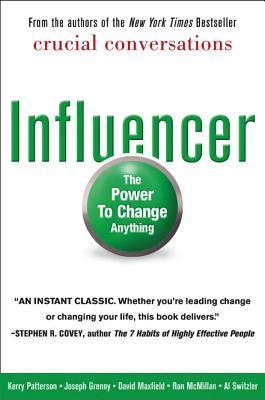
"Influencer: The Power to Change Anything" by Kerry Patterson et al., delves into the science of systematic and sustainable behavioral change for individuals and organizations. It outlines a six-source model for influencing behavior, emphasizing how to isolate critical behaviors, diagnose their underlying causes, and apply strategic interventions across personal, social, and structural motivations and abilities. This practical approach provides a roadmap for achieving significant, lasting impact.
This book shares a core premise with "The Tipping Point": both explore how seemingly small, targeted actions can lead to widespread, transformative results. While Gladwell dissects the mechanisms of social epidemics, Patterson offers a prescriptive methodology for actively engineering such changes. Both books illuminate the power of leverage points in driving broader shifts, whether those points are specific "connectors" or carefully designed influence strategies.
Individuals seeking to understand and implement effective change will find "Influencer" immensely valuable. It offers actionable frameworks for everything from improving personal habits to driving organizational transformation. The clear, evidence-based strategies empower one to move beyond simply wishing for change to systematically making it happen, fostering a profound sense of agency and efficacy.
Influencer: The Power to Change Anything
"Influencer: The Power to Change Anything" by Kerry Patterson et al., delves into the science of systematic and sustainable behavioral change for individuals and organizations. It outlines a six-source model for influencing behavior, emphasizing how to isolate critical behaviors, diagnose their underlying causes, and apply strategic interventions across personal, social, and structural motivations and abilities. This practical approach provides a roadmap for achieving significant, lasting impact.
This book shares a core premise with "The Tipping Point": both explore how seemingly small, targeted actions can lead to widespread, transformative results. While Gladwell dissects the mechanisms of social epidemics, Patterson offers a prescriptive methodology for actively engineering such changes. Both books illuminate the power of leverage points in driving broader shifts, whether those points are specific "connectors" or carefully designed influence strategies.
Individuals seeking to understand and implement effective change will find "Influencer" immensely valuable. It offers actionable frameworks for everything from improving personal habits to driving organizational transformation. The clear, evidence-based strategies empower one to move beyond simply wishing for change to systematically making it happen, fostering a profound sense of agency and efficacy.
What the Dog Saw and Other Adventures

"What the Dog Saw and Other Adventures" gathers a diverse collection of Malcolm Gladwell's essays, originally published in The New Yorker. The book explores an eclectic range of subjects, from canine expertise and the psychology of choking under pressure to the secrets of ketchup and the rise and fall of marketing gurus. Each piece delves into seemingly ordinary phenomena, uncovering the hidden systems, human behaviors, and surprising insights that shape our world.
This collection shares a foundational kinship with "The Tipping Point" through its analytical curiosity. Both works demonstrate Gladwell's signature approach of identifying patterns and uncovering non-obvious connections within complex systems. The essays in "What the Dog Saw", much like "The Tipping Point," dissect seemingly disparate topics to reveal underlying social, psychological, or historical forces at play, often challenging conventional wisdom with compelling narrative and research.
The book offers a compelling exploration of human ingenuity and folly, stimulating intellectual curiosity across various fields. Its value lies in providing fresh perspectives on everyday experiences and exposing the intricate mechanics behind societal trends and individual predilections. It provokes thought, broadens understanding, and offers a refined lens through which to observe the complexities of modern life.
What the Dog Saw and Other Adventures
"What the Dog Saw and Other Adventures" gathers a diverse collection of Malcolm Gladwell's essays, originally published in The New Yorker. The book explores an eclectic range of subjects, from canine expertise and the psychology of choking under pressure to the secrets of ketchup and the rise and fall of marketing gurus. Each piece delves into seemingly ordinary phenomena, uncovering the hidden systems, human behaviors, and surprising insights that shape our world.
This collection shares a foundational kinship with "The Tipping Point" through its analytical curiosity. Both works demonstrate Gladwell's signature approach of identifying patterns and uncovering non-obvious connections within complex systems. The essays in "What the Dog Saw", much like "The Tipping Point," dissect seemingly disparate topics to reveal underlying social, psychological, or historical forces at play, often challenging conventional wisdom with compelling narrative and research.
The book offers a compelling exploration of human ingenuity and folly, stimulating intellectual curiosity across various fields. Its value lies in providing fresh perspectives on everyday experiences and exposing the intricate mechanics behind societal trends and individual predilections. It provokes thought, broadens understanding, and offers a refined lens through which to observe the complexities of modern life.
The Power of Habit: Why We Do What We Do in Life and Business
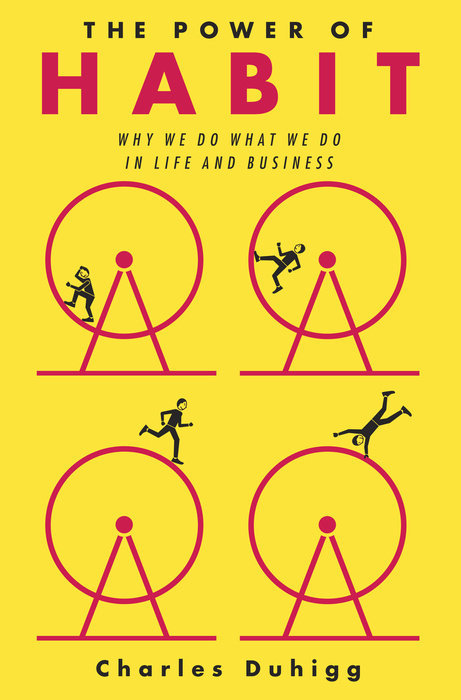
"The Power of Habit" deconstructs the science behind habit formation – how ingrained behaviors, from individual routines to organizational patterns, are formed, function, and can be changed. Charles Duhigg explains the "habit loop" (cue, routine, reward) and illustrates its pervasive influence across various aspects of life, business, and society.
This book resonates with "The Tipping Point" through its exploration of how seemingly small, incremental changes can lead to large-scale, transformative outcomes. Both books delve into the invisible forces that drive behavior and societal trends, offering frameworks to understand and, potentially, manipulate these dynamics for desired results. Both highlight the interconnectedness of micro and macro phenomena.
Individuals seeking to understand and modify their own behaviors, or influence organizational culture, will find immense value. It offers practical insights into leveraging the power of habits for personal growth, improving productivity, and fostering positive social change, making complex psychological concepts accessible and actionable.
The Power of Habit: Why We Do What We Do in Life and Business
"The Power of Habit" deconstructs the science behind habit formation – how ingrained behaviors, from individual routines to organizational patterns, are formed, function, and can be changed. Charles Duhigg explains the "habit loop" (cue, routine, reward) and illustrates its pervasive influence across various aspects of life, business, and society.
This book resonates with "The Tipping Point" through its exploration of how seemingly small, incremental changes can lead to large-scale, transformative outcomes. Both books delve into the invisible forces that drive behavior and societal trends, offering frameworks to understand and, potentially, manipulate these dynamics for desired results. Both highlight the interconnectedness of micro and macro phenomena.
Individuals seeking to understand and modify their own behaviors, or influence organizational culture, will find immense value. It offers practical insights into leveraging the power of habits for personal growth, improving productivity, and fostering positive social change, making complex psychological concepts accessible and actionable.
Made to Stick: Why Some Ideas Survive and Others Die

"Made to Stick" dissects the anatomy of impactful ideas, exploring why some messages resonate and endure while others fade away. The Heath brothers introduce the "SUCCESs" framework (Simple, Unexpected, Concrete, Credible, Emotional, Stories) to demonstrate how these principles make information memorable and actionable, offering practical strategies for crafting messages that truly stick.
This book shares a significant kinship with "The Tipping Point" in its exploration of how phenomena spread and gain traction. Both works delve into the mechanisms behind widespread influence, with Gladwell focusing on the social dynamics that catalyze sudden change, and the Heaths providing a framework for designing inherent "stickiness" that contributes to that spread.
The book's insights empower anyone seeking to communicate more effectively, whether in business, education, or personal life. It provides a foundational understanding of persuasive communication, enabling individuals to craft messages that not only inform but inspire action and leave a lasting impression. Its practical framework offers a valuable toolkit for mastering the art of impactful communication.
Made to Stick: Why Some Ideas Survive and Others Die
"Made to Stick" dissects the anatomy of impactful ideas, exploring why some messages resonate and endure while others fade away. The Heath brothers introduce the "SUCCESs" framework (Simple, Unexpected, Concrete, Credible, Emotional, Stories) to demonstrate how these principles make information memorable and actionable, offering practical strategies for crafting messages that truly stick.
This book shares a significant kinship with "The Tipping Point" in its exploration of how phenomena spread and gain traction. Both works delve into the mechanisms behind widespread influence, with Gladwell focusing on the social dynamics that catalyze sudden change, and the Heaths providing a framework for designing inherent "stickiness" that contributes to that spread.
The book's insights empower anyone seeking to communicate more effectively, whether in business, education, or personal life. It provides a foundational understanding of persuasive communication, enabling individuals to craft messages that not only inform but inspire action and leave a lasting impression. Its practical framework offers a valuable toolkit for mastering the art of impactful communication.
More Books to Explore
Discover more titles that expand on these ideas and themes.
Revenge of the Tipping Point: Overstories, Superspreaders, and the Rise of Social Engineering
Outliers: The Story of Success
Blink: The Power of Thinking Without Thinking
Contagious: Why Things Catch On
Talking to Strangers: What We Should Know About the People We Don't Know
David and Goliath: Underdogs, Misfits, and the Art of Battling Giants