10 Books Similar to "The Social Animal"
by Elliot Aronson
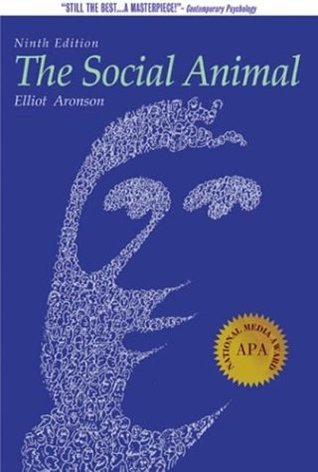
The Social Animal: The Hidden Sources of Love, Character, and Achievement

David Brooks’ "The Social Animal: The Hidden Sources of Love, Character, and Achievement" explores the subconscious forces shaping human behavior, emphasizing that our choices and identities are largely driven by non-rational processes. It weaves together neuroscience, psychology, and sociology to illustrate how social interactions, emotional intelligence, and deeply ingrained biases influence everything from career success to personal relationships, offering a compelling narrative of human development from infancy through adulthood.
Both books, despite their differing authors, share a common thread in dissecting the multifaceted nature of human sociality. Elliot Aronson's "The Social Animal" delves into the principles of social psychology, explaining how individuals think about, influence, and relate to one another. Brooks’ work builds upon this foundational understanding by focusing specifically on the unconscious mechanisms and hidden social cues that govern our lives, providing a complementary, depth-oriented perspective on the very subject Aronson illuminates: the human as a profoundly social creature.
This book will appeal to those curious about the underlying motivations behind human actions and the often-invisible architecture of love, character, and achievement. It offers profound insights into personal growth and societal dynamics, providing a framework for understanding not just *what* people do, but *why* they do it. The synthesis of scientific data and compelling storytelling makes complex ideas accessible, offering new lenses through which to view human potential and social connection.
The Social Animal: The Hidden Sources of Love, Character, and Achievement
David Brooks’ "The Social Animal: The Hidden Sources of Love, Character, and Achievement" explores the subconscious forces shaping human behavior, emphasizing that our choices and identities are largely driven by non-rational processes. It weaves together neuroscience, psychology, and sociology to illustrate how social interactions, emotional intelligence, and deeply ingrained biases influence everything from career success to personal relationships, offering a compelling narrative of human development from infancy through adulthood.
Both books, despite their differing authors, share a common thread in dissecting the multifaceted nature of human sociality. Elliot Aronson's "The Social Animal" delves into the principles of social psychology, explaining how individuals think about, influence, and relate to one another. Brooks’ work builds upon this foundational understanding by focusing specifically on the unconscious mechanisms and hidden social cues that govern our lives, providing a complementary, depth-oriented perspective on the very subject Aronson illuminates: the human as a profoundly social creature.
This book will appeal to those curious about the underlying motivations behind human actions and the often-invisible architecture of love, character, and achievement. It offers profound insights into personal growth and societal dynamics, providing a framework for understanding not just *what* people do, but *why* they do it. The synthesis of scientific data and compelling storytelling makes complex ideas accessible, offering new lenses through which to view human potential and social connection.
Social Psychology

Solomon Asch’s "Social Psychology" delves into the intricate ways individuals are influenced by their social environments. It explores foundational concepts like conformity, group dynamics, attitudes, and perception, examining how our thoughts, feelings, and behaviors are shaped by the presence of others, both real and imagined. This work establishes a framework for understanding human interaction and its underlying psychological mechanisms.
The similarity to Aronson's "The Social Animal" lies in their shared exploration of core social psychological principles. Both books dissect the pervasive influence of social forces on individual behavior, addressing topics such as persuasion, cognitive dissonance, and interpersonal attraction. They both aim to illuminate why people act the way they do in social contexts, offering accessible yet rigorous explanations of complex phenomena.
This book will appeal to those curious about the hidden forces that govern human society and individual conduct. Its insights help deconstruct everyday social interactions, fostering a deeper understanding of phenomena from groupthink to prejudice. The material enhances critical thinking about social influence and provides valuable tools for navigating the complexities of human relationships and societal structures.
Social Psychology
Solomon Asch’s "Social Psychology" delves into the intricate ways individuals are influenced by their social environments. It explores foundational concepts like conformity, group dynamics, attitudes, and perception, examining how our thoughts, feelings, and behaviors are shaped by the presence of others, both real and imagined. This work establishes a framework for understanding human interaction and its underlying psychological mechanisms.
The similarity to Aronson's "The Social Animal" lies in their shared exploration of core social psychological principles. Both books dissect the pervasive influence of social forces on individual behavior, addressing topics such as persuasion, cognitive dissonance, and interpersonal attraction. They both aim to illuminate why people act the way they do in social contexts, offering accessible yet rigorous explanations of complex phenomena.
This book will appeal to those curious about the hidden forces that govern human society and individual conduct. Its insights help deconstruct everyday social interactions, fostering a deeper understanding of phenomena from groupthink to prejudice. The material enhances critical thinking about social influence and provides valuable tools for navigating the complexities of human relationships and societal structures.
Social Intelligence: The New Science of Human Relationships

Daniel Goleman's "Social Intelligence" explores the intricate ways our brains are wired for connection. It delves into the neurological underpinnings of empathy, social intuition, and how our interactions profoundly shape our emotions and even our biology. Goleman argues that social intelligence is a distinct, measurable form of intelligence, crucial for navigating the complexities of human relationships and achieving both personal and collective well-being.
This book shares significant common ground with Aronson's "The Social Animal" by examining the fundamental forces that govern human social behavior. Both authors explore the psychological mechanisms behind influence, conformity, and intergroup relations, albeit "Social Intelligence" often focuses more on the biological and neurological foundations of these phenomena. They both underscore the powerful, often unconscious, impact others have on our thoughts, feelings, and actions.
The insights offered provide a compelling understanding of our social nature, empowering individuals to improve their relationships and better comprehend the dynamics of groups and communities. It’s an invaluable resource for anyone seeking to enhance their interpersonal skills, foster more meaningful connections, and gain a scientific perspective on the human social experience.
Social Intelligence: The New Science of Human Relationships
Daniel Goleman's "Social Intelligence" explores the intricate ways our brains are wired for connection. It delves into the neurological underpinnings of empathy, social intuition, and how our interactions profoundly shape our emotions and even our biology. Goleman argues that social intelligence is a distinct, measurable form of intelligence, crucial for navigating the complexities of human relationships and achieving both personal and collective well-being.
This book shares significant common ground with Aronson's "The Social Animal" by examining the fundamental forces that govern human social behavior. Both authors explore the psychological mechanisms behind influence, conformity, and intergroup relations, albeit "Social Intelligence" often focuses more on the biological and neurological foundations of these phenomena. They both underscore the powerful, often unconscious, impact others have on our thoughts, feelings, and actions.
The insights offered provide a compelling understanding of our social nature, empowering individuals to improve their relationships and better comprehend the dynamics of groups and communities. It’s an invaluable resource for anyone seeking to enhance their interpersonal skills, foster more meaningful connections, and gain a scientific perspective on the human social experience.
Knowing People: The Personal Use of Social Psychology
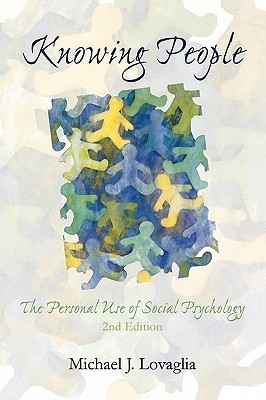
"Knowing People: The Personal Use of Social Psychology" by Michael J. Lovaglia acts as a practical guide to understanding human behavior using the principles of social psychology. It demystifies complex concepts, illustrating how our thoughts, feelings, and actions are shaped by social contexts. The book provides actionable insights for navigating everyday interactions, from improving communication to influencing others and making more informed decisions in personal and professional life.
This book shares a fundamental objective with Elliot Aronson's "The Social Animal": both aim to illuminate the invisible forces of social influence that govern human behavior. While "The Social Animal" provides a foundational academic overview, Lovaglia's work translates these rigorous concepts into direct, applicable strategies. Both authors strip away jargon to reveal how social psychology can explain societal phenomena and individual experiences, fostering a deeper self-awareness and understanding of others.
The book's appeal lies in its immediate utility. Individuals seeking to improve their relationships, enhance their leadership skills, or simply decipher the motivations behind people's actions will find its guidance invaluable. It offers a framework for critical thinking about social situations, empowering one to anticipate reactions, resolve conflicts more effectively, and build stronger connections, ultimately leading to greater personal and social competence.
Knowing People: The Personal Use of Social Psychology
"Knowing People: The Personal Use of Social Psychology" by Michael J. Lovaglia acts as a practical guide to understanding human behavior using the principles of social psychology. It demystifies complex concepts, illustrating how our thoughts, feelings, and actions are shaped by social contexts. The book provides actionable insights for navigating everyday interactions, from improving communication to influencing others and making more informed decisions in personal and professional life.
This book shares a fundamental objective with Elliot Aronson's "The Social Animal": both aim to illuminate the invisible forces of social influence that govern human behavior. While "The Social Animal" provides a foundational academic overview, Lovaglia's work translates these rigorous concepts into direct, applicable strategies. Both authors strip away jargon to reveal how social psychology can explain societal phenomena and individual experiences, fostering a deeper self-awareness and understanding of others.
The book's appeal lies in its immediate utility. Individuals seeking to improve their relationships, enhance their leadership skills, or simply decipher the motivations behind people's actions will find its guidance invaluable. It offers a framework for critical thinking about social situations, empowering one to anticipate reactions, resolve conflicts more effectively, and build stronger connections, ultimately leading to greater personal and social competence.
Influence: The Psychology of Persuasion
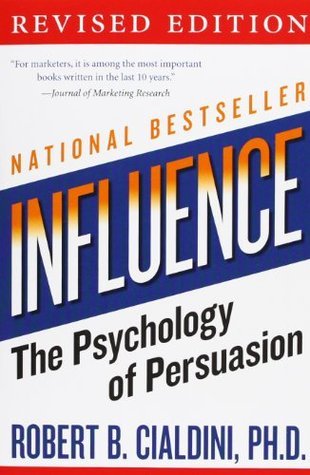
"Influence: The Psychology of Persuasion" delves into the fundamental psychological principles that drive compliance and agreement in everyday interactions. Cialdini identifies six universal triggers – reciprocity, commitment and consistency, social proof, authority, liking, and scarcity – explaining how these potent forces can be consciously and unconsciously deployed to sway decisions. It’s a compelling exploration of why we say "yes" and how understanding these mechanisms can empower us to navigate the persuasive landscape more effectively.
This book shares a significant kinship with "The Social Animal" by Elliot Aronson in their mutual commitment to illuminating the underlying psychological dynamics of human behavior in social contexts. Both authors expertly dissect complex social phenomena into understandable components, demonstrating how individual actions and beliefs are shaped by the broader social environment and the intricate web of interpersonal influence. They both reveal the often-hidden mechanisms that guide our instincts and decisions in group settings.
This work offers profound insights into human decision-making and interaction. It serves as an invaluable resource for understanding the subtle and overt mechanisms of persuasion, whether in marketing, negotiation, or personal relationships. The practical knowledge contained within its pages equips individuals to both identify persuasive tactics used on them and to ethically employ these principles themselves, fostering stronger communication and more informed choices.
Influence: The Psychology of Persuasion
"Influence: The Psychology of Persuasion" delves into the fundamental psychological principles that drive compliance and agreement in everyday interactions. Cialdini identifies six universal triggers – reciprocity, commitment and consistency, social proof, authority, liking, and scarcity – explaining how these potent forces can be consciously and unconsciously deployed to sway decisions. It’s a compelling exploration of why we say "yes" and how understanding these mechanisms can empower us to navigate the persuasive landscape more effectively.
This book shares a significant kinship with "The Social Animal" by Elliot Aronson in their mutual commitment to illuminating the underlying psychological dynamics of human behavior in social contexts. Both authors expertly dissect complex social phenomena into understandable components, demonstrating how individual actions and beliefs are shaped by the broader social environment and the intricate web of interpersonal influence. They both reveal the often-hidden mechanisms that guide our instincts and decisions in group settings.
This work offers profound insights into human decision-making and interaction. It serves as an invaluable resource for understanding the subtle and overt mechanisms of persuasion, whether in marketing, negotiation, or personal relationships. The practical knowledge contained within its pages equips individuals to both identify persuasive tactics used on them and to ethically employ these principles themselves, fostering stronger communication and more informed choices.
A Social Ontology
"A Social Ontology" meticulously dissects the fundamental nature of social existence, moving beyond individual psychology to explore the structures and principles that govern how communities, institutions, and societies are formed and sustained. Weissman posits that social reality isn't merely an aggregation of individual minds, but possesses its own distinct reality and causal powers, shaped by shared understandings, roles, and historical trajectories.
Both books delve into the profound influence of others on our thoughts, feelings, and behaviors, albeit from different vantage points. While Aronson’s "The Social Animal" often examines social phenomena through the lens of individual psychological processes and experiments, Weissman’s "A Social Ontology" offers a grander theoretical framework, providing a philosophical bedrock for understanding the very fabric of social interaction and collective being. Each book, in its own way, illuminates the intricate dance between the individual and the social world.
This book offers a profound intellectual journey into the architecture of society itself. Its rigorous analysis of social structures and their historical evolution provides a deeper comprehension of contemporary issues, from political polarization to economic inequality. The intricate arguments presented allow for a more nuanced understanding of how collective beliefs and institutions shape our lives, empowering a more informed and engaged perspective on the social world around us.
A Social Ontology
"A Social Ontology" meticulously dissects the fundamental nature of social existence, moving beyond individual psychology to explore the structures and principles that govern how communities, institutions, and societies are formed and sustained. Weissman posits that social reality isn't merely an aggregation of individual minds, but possesses its own distinct reality and causal powers, shaped by shared understandings, roles, and historical trajectories.
Both books delve into the profound influence of others on our thoughts, feelings, and behaviors, albeit from different vantage points. While Aronson’s "The Social Animal" often examines social phenomena through the lens of individual psychological processes and experiments, Weissman’s "A Social Ontology" offers a grander theoretical framework, providing a philosophical bedrock for understanding the very fabric of social interaction and collective being. Each book, in its own way, illuminates the intricate dance between the individual and the social world.
This book offers a profound intellectual journey into the architecture of society itself. Its rigorous analysis of social structures and their historical evolution provides a deeper comprehension of contemporary issues, from political polarization to economic inequality. The intricate arguments presented allow for a more nuanced understanding of how collective beliefs and institutions shape our lives, empowering a more informed and engaged perspective on the social world around us.
Games People Play

"Games People Play" by Eric Berne introduces Transactional Analysis, a framework for understanding human interaction. Berne posits that individuals engage in predictable, often unconscious "games" – social exchanges with hidden motives and ulterior outcomes. These games, driven by ego states (Parent, Adult, Child), serve to fulfill psychological needs, avoid genuine intimacy, or maintain familiar patterns, even if those patterns are ultimately destructive. The book deconstructs numerous common "games," revealing their underlying dynamics and psychological payoffs.
This work resonates with "The Social Animal" due to their shared exploration of fundamental human social behavior and the psychological forces influencing our interactions. Both books delve into the often-unseen mechanisms driving how people relate to one another, albeit from different theoretical angles. While Aronson examines cognitive biases and social influence, Berne focuses on the structured, often manipulative, patterns within interpersonal communication. Both illuminate the hidden scripts that guide our social lives.
The book offers a practical lens for decoding complex social dynamics and improving communication. Understanding the "games" people play, including one's own, provides invaluable insight into relational patterns, power struggles, and unmet psychological needs. This awareness can empower individuals to break free from unhelpful scripts, foster more authentic connections, and navigate social environments with greater clarity and intention. It's a foundational text for anyone seeking to master the art of interpersonal insight.
Games People Play
"Games People Play" by Eric Berne introduces Transactional Analysis, a framework for understanding human interaction. Berne posits that individuals engage in predictable, often unconscious "games" – social exchanges with hidden motives and ulterior outcomes. These games, driven by ego states (Parent, Adult, Child), serve to fulfill psychological needs, avoid genuine intimacy, or maintain familiar patterns, even if those patterns are ultimately destructive. The book deconstructs numerous common "games," revealing their underlying dynamics and psychological payoffs.
This work resonates with "The Social Animal" due to their shared exploration of fundamental human social behavior and the psychological forces influencing our interactions. Both books delve into the often-unseen mechanisms driving how people relate to one another, albeit from different theoretical angles. While Aronson examines cognitive biases and social influence, Berne focuses on the structured, often manipulative, patterns within interpersonal communication. Both illuminate the hidden scripts that guide our social lives.
The book offers a practical lens for decoding complex social dynamics and improving communication. Understanding the "games" people play, including one's own, provides invaluable insight into relational patterns, power struggles, and unmet psychological needs. This awareness can empower individuals to break free from unhelpful scripts, foster more authentic connections, and navigate social environments with greater clarity and intention. It's a foundational text for anyone seeking to master the art of interpersonal insight.
The Naked Ape

"The Naked Ape" offers a direct, zoological examination of human behavior, viewing our species primarily through the lens of our evolutionary past. Desmond Morris strips away cultural overlays to analyze fundamental human actions and social structures as direct outgrowths of our primate heritage, focusing on innate biological predispositions rather than learned behaviors.
This book resonates with "The Social Animal" through their shared objective: to illuminate the underlying mechanisms driving human social interaction. Both authors delve into the foundational aspects of why we behave the way we do in group settings, albeit from different starting points—Morris from biology and Aronson from psychology. They both seek to demystify complex social phenomena by identifying core, often unconscious, influences.
Its appeal lies in its provocative, yet accessible, re-framing of human nature. This perspective can profoundly shift one's understanding of everyday social dynamics, relationships, and even societal norms, offering a fresh, often humorous, yet always insightful lens through which to view ourselves and others. The book provides a valuable framework for understanding the deep-seated instincts that continue to shape our social world.
The Naked Ape
"The Naked Ape" offers a direct, zoological examination of human behavior, viewing our species primarily through the lens of our evolutionary past. Desmond Morris strips away cultural overlays to analyze fundamental human actions and social structures as direct outgrowths of our primate heritage, focusing on innate biological predispositions rather than learned behaviors.
This book resonates with "The Social Animal" through their shared objective: to illuminate the underlying mechanisms driving human social interaction. Both authors delve into the foundational aspects of why we behave the way we do in group settings, albeit from different starting points—Morris from biology and Aronson from psychology. They both seek to demystify complex social phenomena by identifying core, often unconscious, influences.
Its appeal lies in its provocative, yet accessible, re-framing of human nature. This perspective can profoundly shift one's understanding of everyday social dynamics, relationships, and even societal norms, offering a fresh, often humorous, yet always insightful lens through which to view ourselves and others. The book provides a valuable framework for understanding the deep-seated instincts that continue to shape our social world.
The Evolution of Cooperation

"The Evolution of Cooperation" by Robert Axelrod explores why cooperation emerges in a world often characterized by self-interest and competition. Through game theory, particularly the Prisoner's Dilemma, it demonstrates how seemingly simple strategies can lead to stable, mutually beneficial outcomes in repeated interactions, even among non-altruistic individuals. It's a fundamental look at the mechanics of reciprocity and trust-building in complex systems.
This work resonates with "The Social Animal" because both books delve into the fundamental principles governing human social behavior. While Aronson’s work focuses on social psychology's broader landscape—persuasion, conformity, prejudice—Axelrod provides a theoretical framework for understanding the very origins and stability of cooperative behaviors that are essential for many of the social dynamics Aronson examines. Both seek to demystify complex social phenomena.
Those who appreciate understanding the underlying mechanisms of human interaction will find this book invaluable. It offers a powerful, logical model for how cooperation can thrive, providing insights applicable to anything from international relations to personal relationships. It deepens comprehension of why certain social strategies succeed and others fail, offering a foundational perspective on collective action and the emergence of prosocial behavior.
The Evolution of Cooperation
"The Evolution of Cooperation" by Robert Axelrod explores why cooperation emerges in a world often characterized by self-interest and competition. Through game theory, particularly the Prisoner's Dilemma, it demonstrates how seemingly simple strategies can lead to stable, mutually beneficial outcomes in repeated interactions, even among non-altruistic individuals. It's a fundamental look at the mechanics of reciprocity and trust-building in complex systems.
This work resonates with "The Social Animal" because both books delve into the fundamental principles governing human social behavior. While Aronson’s work focuses on social psychology's broader landscape—persuasion, conformity, prejudice—Axelrod provides a theoretical framework for understanding the very origins and stability of cooperative behaviors that are essential for many of the social dynamics Aronson examines. Both seek to demystify complex social phenomena.
Those who appreciate understanding the underlying mechanisms of human interaction will find this book invaluable. It offers a powerful, logical model for how cooperation can thrive, providing insights applicable to anything from international relations to personal relationships. It deepens comprehension of why certain social strategies succeed and others fail, offering a foundational perspective on collective action and the emergence of prosocial behavior.
The Upside of Irrationality: The Unexpected Benefits of Defying Logic at Work and at Home
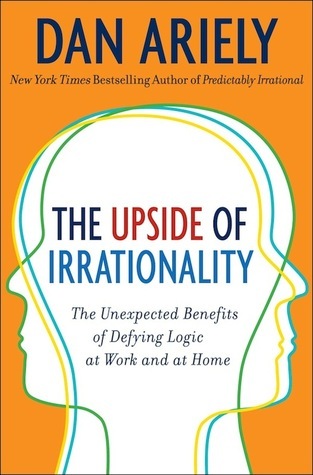
"The Upside of Irrationality" delves into the fascinating ways our minds deviate from purely logical decision-making, exploring how these "irrational" tendencies, often rooted in our psychology and emotions, impact our lives. Dan Ariely showcases through engaging experiments and real-world examples how these predictable deviations influence our work habits, relationships, and even our financial choices, revealing both the pitfalls and surprising advantages they can offer. It's a journey into understanding the counterintuitive forces shaping human behavior.
This book shares significant common ground with "The Social Animal" by examining the underlying psychological mechanisms that drive human behavior. Both authors dissect how situational factors and intrinsic biases, rather than solely objective thought, dictate our actions and beliefs. While Aronson broadly explores social psychology, Ariely focuses specifically on the *irrational* aspect of our decision-making, offering a deeper dive into the "why" behind our often illogical choices, just as Aronson illuminates the social pressures shaping conformity and attitude change.
This work offers profound insights into personal and professional decision-making. Its accessible explanations of complex psychological principles empower individuals to better understand themselves and others, fostering improved communication, more effective leadership, and a greater appreciation for the subtle forces at play in everyday interactions. The practical implications for navigating workplaces, interpersonal relationships, and even self-improvement are substantial.
The Upside of Irrationality: The Unexpected Benefits of Defying Logic at Work and at Home
"The Upside of Irrationality" delves into the fascinating ways our minds deviate from purely logical decision-making, exploring how these "irrational" tendencies, often rooted in our psychology and emotions, impact our lives. Dan Ariely showcases through engaging experiments and real-world examples how these predictable deviations influence our work habits, relationships, and even our financial choices, revealing both the pitfalls and surprising advantages they can offer. It's a journey into understanding the counterintuitive forces shaping human behavior.
This book shares significant common ground with "The Social Animal" by examining the underlying psychological mechanisms that drive human behavior. Both authors dissect how situational factors and intrinsic biases, rather than solely objective thought, dictate our actions and beliefs. While Aronson broadly explores social psychology, Ariely focuses specifically on the *irrational* aspect of our decision-making, offering a deeper dive into the "why" behind our often illogical choices, just as Aronson illuminates the social pressures shaping conformity and attitude change.
This work offers profound insights into personal and professional decision-making. Its accessible explanations of complex psychological principles empower individuals to better understand themselves and others, fostering improved communication, more effective leadership, and a greater appreciation for the subtle forces at play in everyday interactions. The practical implications for navigating workplaces, interpersonal relationships, and even self-improvement are substantial.
More Books to Explore
Discover more titles that expand on these ideas and themes.
The Social Animal: The Hidden Sources of Love, Character, and Achievement
Social Psychology
Social Intelligence: The New Science of Human Relationships
Knowing People: The Personal Use of Social Psychology
Influence: The Psychology of Persuasion
A Social Ontology