10 Books Similar to "The Road to Character"
by David Brooks

The Social Animal: The Hidden Sources of Love, Character, and Achievement

"The Social Animal: The Hidden Sources of Love, Character, and Achievement" explores the subconscious forces, biases, and social interactions that profoundly shape our identities, relationships, and life trajectories. Through a fictional narrative following two characters, Harold and Erica, from birth to old age, Brooks illustrates how seemingly irrational behaviors and deep-seated emotional drives are often the very foundations of human connection, moral development, and success. It's a journey into the hidden architecture of human decision-making and flourishing.
This book shares with "The Road to Character" a fundamental preoccupation with human character and moral formation. Both works delve into the often-unexamined aspects of human nature that contribute to a meaningful life, moving beyond superficial achievements to probe the internal qualities and ethical frameworks that truly define us. While "The Road to Character" uses biographical examples, "The Social Animal" employs a narrative approach to explore similar thematic territory.
This book will appeal to those interested in the psychological and sociological underpinnings of human behavior and development. Its engaging storytelling makes complex ideas about neuroscience, sociology, and ethics accessible, offering profound insights into the nature of love, virtue, and accomplishment. It provides a deeper understanding of oneself and others, enriching one's perspective on what truly constitutes a well-lived life.
The Social Animal: The Hidden Sources of Love, Character, and Achievement
"The Social Animal: The Hidden Sources of Love, Character, and Achievement" explores the subconscious forces, biases, and social interactions that profoundly shape our identities, relationships, and life trajectories. Through a fictional narrative following two characters, Harold and Erica, from birth to old age, Brooks illustrates how seemingly irrational behaviors and deep-seated emotional drives are often the very foundations of human connection, moral development, and success. It's a journey into the hidden architecture of human decision-making and flourishing.
This book shares with "The Road to Character" a fundamental preoccupation with human character and moral formation. Both works delve into the often-unexamined aspects of human nature that contribute to a meaningful life, moving beyond superficial achievements to probe the internal qualities and ethical frameworks that truly define us. While "The Road to Character" uses biographical examples, "The Social Animal" employs a narrative approach to explore similar thematic territory.
This book will appeal to those interested in the psychological and sociological underpinnings of human behavior and development. Its engaging storytelling makes complex ideas about neuroscience, sociology, and ethics accessible, offering profound insights into the nature of love, virtue, and accomplishment. It provides a deeper understanding of oneself and others, enriching one's perspective on what truly constitutes a well-lived life.
How to Know a Person: The Art of Seeing Others Deeply and Being Deeply Seen

"How to Know a Person: The Art of Seeing Others Deeply and Being Deeply Seen" delves into the crucial skill of truly understanding other people and, in turn, being authentically understood yourself. It explores the barriers to genuine connection in a fragmented world, offering practical insights and a framework for developing empathy, attentive listening, and the ability to perceive the inner lives of those around us.
This book shares a foundational ethos with "The Road to Character." Both works by Brooks champion a shift from a culture of outward-facing achievement (resumé virtues) to one that prioritizes inner growth, moral development, and meaningful relationships (eulogy virtues). While "The Road to Character" focused on individual moral formation, this new book extends that wisdom into the interpersonal realm, emphasizing how character is both built and revealed through our interactions with others.
This book will appeal to those seeking deeper, more authentic connections in their personal and professional lives. It provides a toolkit for navigating complex social landscapes, fostering stronger relationships, and building a more compassionate society. Its practical wisdom offers tangible ways to enhance one's capacity for empathy and understanding, leading to a richer and more fulfilling existence.
How to Know a Person: The Art of Seeing Others Deeply and Being Deeply Seen
"How to Know a Person: The Art of Seeing Others Deeply and Being Deeply Seen" delves into the crucial skill of truly understanding other people and, in turn, being authentically understood yourself. It explores the barriers to genuine connection in a fragmented world, offering practical insights and a framework for developing empathy, attentive listening, and the ability to perceive the inner lives of those around us.
This book shares a foundational ethos with "The Road to Character." Both works by Brooks champion a shift from a culture of outward-facing achievement (resumé virtues) to one that prioritizes inner growth, moral development, and meaningful relationships (eulogy virtues). While "The Road to Character" focused on individual moral formation, this new book extends that wisdom into the interpersonal realm, emphasizing how character is both built and revealed through our interactions with others.
This book will appeal to those seeking deeper, more authentic connections in their personal and professional lives. It provides a toolkit for navigating complex social landscapes, fostering stronger relationships, and building a more compassionate society. Its practical wisdom offers tangible ways to enhance one's capacity for empathy and understanding, leading to a richer and more fulfilling existence.
How Will You Measure Your Life?

"How Will You Measure Your Life?" distills principles of business strategy into a framework for personal fulfillment. Clayton Christensen, a renowned Harvard Business School professor, examines why highly successful people sometimes find themselves unhappy or unfulfilled, and offers practical advice on how to build a life rich in meaning and purpose, rather than just professional achievement. It's about consciously designing your life for sustained happiness and ethical conduct.
Both books delve into the cultivation of inner character and the pursuit of a meaningful life beyond typical metrics of success. While Brooks focuses on historical figures and virtues, Christensen offers a more analytical, often business-oriented, approach to personal ethics and life choices. They both challenge conventional notions of achievement, urging a deeper consideration of one's legacy and values.
This book offers a compelling roadmap for individuals seeking to align their daily decisions with their deepest aspirations. It provides actionable insights directly applicable to career, family, and personal integrity, helping individuals navigate life's complexities with greater intentionality. Its value lies in equipping people with tools to construct a life that is both successful and deeply satisfying.
How Will You Measure Your Life?
"How Will You Measure Your Life?" distills principles of business strategy into a framework for personal fulfillment. Clayton Christensen, a renowned Harvard Business School professor, examines why highly successful people sometimes find themselves unhappy or unfulfilled, and offers practical advice on how to build a life rich in meaning and purpose, rather than just professional achievement. It's about consciously designing your life for sustained happiness and ethical conduct.
Both books delve into the cultivation of inner character and the pursuit of a meaningful life beyond typical metrics of success. While Brooks focuses on historical figures and virtues, Christensen offers a more analytical, often business-oriented, approach to personal ethics and life choices. They both challenge conventional notions of achievement, urging a deeper consideration of one's legacy and values.
This book offers a compelling roadmap for individuals seeking to align their daily decisions with their deepest aspirations. It provides actionable insights directly applicable to career, family, and personal integrity, helping individuals navigate life's complexities with greater intentionality. Its value lies in equipping people with tools to construct a life that is both successful and deeply satisfying.
Emerson, the Stoics, and Me: Timeless Wisdom for Living an Authentic Life
"Emerson, the Stoics, and Me" explores how ancient and historical wisdom, specifically from Ralph Waldo Emerson and Stoic philosophy, can be applied to navigate modern life and cultivate personal integrity. Matousek shares his own journey of self-discovery and the practical lessons learned from these traditions, aiming to guide individuals toward a more principled and meaningful existence. It's a blend of philosophical exploration, personal narrative, and practical advice for authentic living.
This book resonates with "The Road to Character" by David Brooks due to its shared emphasis on internal moral development over external achievement. Both works champion the cultivation of "eulogy virtues" – qualities like courage, honesty, and kindness – as paramount to a well-lived life, rather than mere "resume virtues" like wealth or status. They each utilize a framework of wisdom traditions and personal reflection to encourage a deeper, more ethical self.
Individuals interested in personal growth, ethical living, and timeless wisdom will find this book particularly enriching. It offers concrete pathways for self-reflection and actionable principles for building a life of substance and purpose. The integration of personal experience with profound philosophical insights makes the concepts relatable and inspiring, providing enduring guidance for navigating life's complexities and forging a robust inner character.
Emerson, the Stoics, and Me: Timeless Wisdom for Living an Authentic Life
"Emerson, the Stoics, and Me" explores how ancient and historical wisdom, specifically from Ralph Waldo Emerson and Stoic philosophy, can be applied to navigate modern life and cultivate personal integrity. Matousek shares his own journey of self-discovery and the practical lessons learned from these traditions, aiming to guide individuals toward a more principled and meaningful existence. It's a blend of philosophical exploration, personal narrative, and practical advice for authentic living.
This book resonates with "The Road to Character" by David Brooks due to its shared emphasis on internal moral development over external achievement. Both works champion the cultivation of "eulogy virtues" – qualities like courage, honesty, and kindness – as paramount to a well-lived life, rather than mere "resume virtues" like wealth or status. They each utilize a framework of wisdom traditions and personal reflection to encourage a deeper, more ethical self.
Individuals interested in personal growth, ethical living, and timeless wisdom will find this book particularly enriching. It offers concrete pathways for self-reflection and actionable principles for building a life of substance and purpose. The integration of personal experience with profound philosophical insights makes the concepts relatable and inspiring, providing enduring guidance for navigating life's complexities and forging a robust inner character.
The Road Less Traveled: A New Psychology of Love, Traditional Values and Spiritual Growth
"The Road Less Traveled" by M. Scott Peck is a seminal work exploring the arduous journey of spiritual growth and personal maturity. Peck posits that life's inherent difficulties are not obstacles to be avoided, but rather essential catalysts for self-improvement and genuine well-being. He delves into the nature of discipline, love, and grace, arguing that true fulfillment arises from confronting pain, embracing commitment, and continually expanding one's understanding of self and the world. It’s a pragmatic yet profound guide to living a more authentic and purposeful life.
This book shares a significant kinship with "The Road to Character" in its fundamental assertion that genuine character and inner peace are not achieved through comfort or convenience, but through the deliberate embrace of challenges and the cultivation of virtuous habits. Both authors champion the idea that a meaningful life is constructed through conscious striving, self-reflection, and a willingness to overcome personal limitations, rather than solely pursuing external successes or immediate gratification. They both encourage readers to look inward and cultivate a robust moral and spiritual foundation.
Individuals drawn to thoughtful explorations of personal development and ethical living will find immense value in this book. Its enduring popularity stems from its clear articulation of universal human struggles and its practical guidance on navigating them with integrity and resilience. It offers a framework for understanding and resolving life's complexities, fostering a deeper sense of purpose and a more robust approach to personal and interpersonal relationships.
The Road Less Traveled: A New Psychology of Love, Traditional Values and Spiritual Growth
"The Road Less Traveled" by M. Scott Peck is a seminal work exploring the arduous journey of spiritual growth and personal maturity. Peck posits that life's inherent difficulties are not obstacles to be avoided, but rather essential catalysts for self-improvement and genuine well-being. He delves into the nature of discipline, love, and grace, arguing that true fulfillment arises from confronting pain, embracing commitment, and continually expanding one's understanding of self and the world. It’s a pragmatic yet profound guide to living a more authentic and purposeful life.
This book shares a significant kinship with "The Road to Character" in its fundamental assertion that genuine character and inner peace are not achieved through comfort or convenience, but through the deliberate embrace of challenges and the cultivation of virtuous habits. Both authors champion the idea that a meaningful life is constructed through conscious striving, self-reflection, and a willingness to overcome personal limitations, rather than solely pursuing external successes or immediate gratification. They both encourage readers to look inward and cultivate a robust moral and spiritual foundation.
Individuals drawn to thoughtful explorations of personal development and ethical living will find immense value in this book. Its enduring popularity stems from its clear articulation of universal human struggles and its practical guidance on navigating them with integrity and resilience. It offers a framework for understanding and resolving life's complexities, fostering a deeper sense of purpose and a more robust approach to personal and interpersonal relationships.
Character Is Destiny: Inspiring Stories Every Young Person Should Know and Every Adult Should Remember
"Character Is Destiny" by John McCain offers a collection of biographical sketches showcasing individuals who exemplified virtues like courage, integrity, and perseverance. Through these narratives, often drawn from military history and public service, McCain illustrates how deliberate choices and adherence to a moral compass profoundly shape one's life and legacy, advocating for a return to fundamental ethical principles.
The book shares "The Road to Character's" central premise: that a life well-lived is built upon the cultivation of inner virtues rather than external achievements. Both authors emphasize the importance of identifying and striving for moral excellence, using historical figures as exemplars to guide contemporary readers in their personal journeys of character development, contrasting resume virtues with eulogy virtues.
This book will resonate with individuals seeking concrete examples of moral fortitude and a practical framework for ethical living. Its focus on inspiring stories provides a compelling and accessible entry point for understanding how character translates into meaningful action and a purposeful existence, serving as a reminder of timeless values essential for personal and societal flourishing.
Character Is Destiny: Inspiring Stories Every Young Person Should Know and Every Adult Should Remember
"Character Is Destiny" by John McCain offers a collection of biographical sketches showcasing individuals who exemplified virtues like courage, integrity, and perseverance. Through these narratives, often drawn from military history and public service, McCain illustrates how deliberate choices and adherence to a moral compass profoundly shape one's life and legacy, advocating for a return to fundamental ethical principles.
The book shares "The Road to Character's" central premise: that a life well-lived is built upon the cultivation of inner virtues rather than external achievements. Both authors emphasize the importance of identifying and striving for moral excellence, using historical figures as exemplars to guide contemporary readers in their personal journeys of character development, contrasting resume virtues with eulogy virtues.
This book will resonate with individuals seeking concrete examples of moral fortitude and a practical framework for ethical living. Its focus on inspiring stories provides a compelling and accessible entry point for understanding how character translates into meaningful action and a purposeful existence, serving as a reminder of timeless values essential for personal and societal flourishing.
A Million Miles in a Thousand Years: What I Learned While Editing My Life

"A Million Miles in a Thousand Years" chronicles Donald Miller's journey of self-discovery as he grapples with the realization that his life, as lived, lacked the narrative arc and meaning he desired. Dissatisfied with mundane existence, he embarks on an intentional quest to edit his life into a compelling story, actively seeking adventure, deeper relationships, and a purpose-driven existence. It's a memoir about turning introspection into action and reshaping one's personal narrative.
This book resonates with "The Road to Character" by virtue of its deep exploration of personal values and the construction of a meaningful life. Both authors advocate for a shift from a "resume virtues" focus (external achievements) to "eulogy virtues" (internal character and relationships). While Brooks provides a theoretical framework through historical figures, Miller offers a relatable, contemporary, and personal account of this same journey towards internal depth and ethical living.
People seeking to live more intentionally, craft a meaningful personal narrative, or simply reflect on the direction and purpose of their lives will find this book particularly rewarding. Its candid exploration of existential questions, coupled with practical insights on how to transform one's life into a richer, more impactful story, offers both inspiration and a gentle challenge for personal growth and character development.
A Million Miles in a Thousand Years: What I Learned While Editing My Life
"A Million Miles in a Thousand Years" chronicles Donald Miller's journey of self-discovery as he grapples with the realization that his life, as lived, lacked the narrative arc and meaning he desired. Dissatisfied with mundane existence, he embarks on an intentional quest to edit his life into a compelling story, actively seeking adventure, deeper relationships, and a purpose-driven existence. It's a memoir about turning introspection into action and reshaping one's personal narrative.
This book resonates with "The Road to Character" by virtue of its deep exploration of personal values and the construction of a meaningful life. Both authors advocate for a shift from a "resume virtues" focus (external achievements) to "eulogy virtues" (internal character and relationships). While Brooks provides a theoretical framework through historical figures, Miller offers a relatable, contemporary, and personal account of this same journey towards internal depth and ethical living.
People seeking to live more intentionally, craft a meaningful personal narrative, or simply reflect on the direction and purpose of their lives will find this book particularly rewarding. Its candid exploration of existential questions, coupled with practical insights on how to transform one's life into a richer, more impactful story, offers both inspiration and a gentle challenge for personal growth and character development.
Everyday Greatness: Inspiration for a Meaningful Life

"Everyday Greatness: Inspiration for a Meaningful Life" distills wisdom from a diverse array of individuals, offering practical insights and inspirational stories focused on living with purpose. It emphasizes that meaningful achievement isn't exclusive to extraordinary figures but is accessible through consistent, values-driven action in our daily lives. Covey provides a framework for cultivating personal integrity, contributing positively, and finding fulfillment through small, impactful choices.
This book shares thematic DNA with "The Road to Character" by exploring what constitutes a well-lived life beyond material success. Both works delve into the cultivation of inner virtues—what Brooks calls "eulogy virtues"—and prompt reflection on how one's actions align with deeply held values. They move beyond superficial definitions of achievement to examine the ethical and spiritual foundations of enduring personal greatness.
Individuals seeking guidance on personal development and ethical living will appreciate its accessible approach. Its emphasis on practical application and real-world examples makes the pursuit of a virtuous and impactful life feel attainable, offering concrete strategies for cultivating integrity and making a difference in one's sphere of influence. This book provides a valuable compass for navigating the complexities of modern life with purpose and principle.
Everyday Greatness: Inspiration for a Meaningful Life
"Everyday Greatness: Inspiration for a Meaningful Life" distills wisdom from a diverse array of individuals, offering practical insights and inspirational stories focused on living with purpose. It emphasizes that meaningful achievement isn't exclusive to extraordinary figures but is accessible through consistent, values-driven action in our daily lives. Covey provides a framework for cultivating personal integrity, contributing positively, and finding fulfillment through small, impactful choices.
This book shares thematic DNA with "The Road to Character" by exploring what constitutes a well-lived life beyond material success. Both works delve into the cultivation of inner virtues—what Brooks calls "eulogy virtues"—and prompt reflection on how one's actions align with deeply held values. They move beyond superficial definitions of achievement to examine the ethical and spiritual foundations of enduring personal greatness.
Individuals seeking guidance on personal development and ethical living will appreciate its accessible approach. Its emphasis on practical application and real-world examples makes the pursuit of a virtuous and impactful life feel attainable, offering concrete strategies for cultivating integrity and making a difference in one's sphere of influence. This book provides a valuable compass for navigating the complexities of modern life with purpose and principle.
Howard's Gift: Uncommon Wisdom to Inspire Your Life's Work
"Howard's Gift" is a narrative built around the life and wisdom of Howard Stevenson, a revered Harvard Business School professor. Through Stevenson's mentorship of the author, the book distills practical, profound insights on navigating professional and personal life. It explores themes of purpose, managing ambition, fostering meaningful relationships, and embracing ethical leadership, all grounded in Stevenson's personal experiences and advice.
This book resonates with "The Road to Character" by focusing on the cultivation of inner virtues over external success. Both works challenge readers to consider their eulogy virtues – who they aspire to be – rather than just their resume virtues – what they achieve. They emphasize the ongoing, often difficult, process of moral development and the importance of humility, self-awareness, and integrity in building a meaningful life.
This book will appeal to individuals seeking guidance on ethical leadership, personal growth, and crafting a purposeful existence beyond mere achievement. Its practical wisdom, presented through a compelling personal story, offers tangible frameworks for making considered life choices and fostering a deeper sense of fulfillment in one's work and relationships.
Howard's Gift: Uncommon Wisdom to Inspire Your Life's Work
"Howard's Gift" is a narrative built around the life and wisdom of Howard Stevenson, a revered Harvard Business School professor. Through Stevenson's mentorship of the author, the book distills practical, profound insights on navigating professional and personal life. It explores themes of purpose, managing ambition, fostering meaningful relationships, and embracing ethical leadership, all grounded in Stevenson's personal experiences and advice.
This book resonates with "The Road to Character" by focusing on the cultivation of inner virtues over external success. Both works challenge readers to consider their eulogy virtues – who they aspire to be – rather than just their resume virtues – what they achieve. They emphasize the ongoing, often difficult, process of moral development and the importance of humility, self-awareness, and integrity in building a meaningful life.
This book will appeal to individuals seeking guidance on ethical leadership, personal growth, and crafting a purposeful existence beyond mere achievement. Its practical wisdom, presented through a compelling personal story, offers tangible frameworks for making considered life choices and fostering a deeper sense of fulfillment in one's work and relationships.
Fortitude: American Resilience in the Era of Outrage
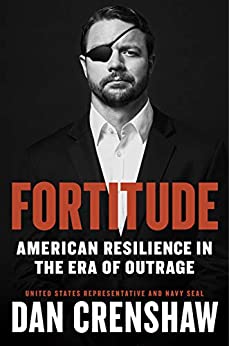
"Fortitude: American Resilience in the Era of Outrage" by Dan Crenshaw advocates for a return to core virtues like courage, discipline, and emotional regulation in a society increasingly prone to self-pity and performative grievance. Crenshaw argues that true resilience isn't about avoiding discomfort, but about embracing challenge, developing a strong inner compass, and cultivating a stoic mindset to navigate a chaotic world. He presents a blueprint for individual development grounded in personal responsibility and tough-minded optimism.
The book shares a profound thematic kinship with "The Road to Character" through their mutual exploration of moral formation and the cultivation of inner strength. Both authors contend that a life of meaning and impact is built not on external validation, but on the deliberate development of character — what Brooks calls "eulogy virtues." They both call for an internal revolution, urging individuals to look beyond superficial success to build enduring personal fortitude and purpose.
This insightful work offers a compelling antidote to contemporary self-indulgence, providing a practical guide for cultivating a more robust and purposeful self. It offers a framework for personal growth and societal engagement, urging individuals to rise above the fray and embrace a demanding yet ultimately more fulfilling path. The book’s clear-eyed assessment of modern challenges, coupled with its actionable advice, makes it a valuable resource for anyone seeking to build resilience and contribute meaningfully to their communities.
Fortitude: American Resilience in the Era of Outrage
"Fortitude: American Resilience in the Era of Outrage" by Dan Crenshaw advocates for a return to core virtues like courage, discipline, and emotional regulation in a society increasingly prone to self-pity and performative grievance. Crenshaw argues that true resilience isn't about avoiding discomfort, but about embracing challenge, developing a strong inner compass, and cultivating a stoic mindset to navigate a chaotic world. He presents a blueprint for individual development grounded in personal responsibility and tough-minded optimism.
The book shares a profound thematic kinship with "The Road to Character" through their mutual exploration of moral formation and the cultivation of inner strength. Both authors contend that a life of meaning and impact is built not on external validation, but on the deliberate development of character — what Brooks calls "eulogy virtues." They both call for an internal revolution, urging individuals to look beyond superficial success to build enduring personal fortitude and purpose.
This insightful work offers a compelling antidote to contemporary self-indulgence, providing a practical guide for cultivating a more robust and purposeful self. It offers a framework for personal growth and societal engagement, urging individuals to rise above the fray and embrace a demanding yet ultimately more fulfilling path. The book’s clear-eyed assessment of modern challenges, coupled with its actionable advice, makes it a valuable resource for anyone seeking to build resilience and contribute meaningfully to their communities.
More Books to Explore
Discover more titles that expand on these ideas and themes.
The Social Animal: The Hidden Sources of Love, Character, and Achievement
How to Know a Person: The Art of Seeing Others Deeply and Being Deeply Seen
How Will You Measure Your Life?
Emerson, the Stoics, and Me: Timeless Wisdom for Living an Authentic Life
The Road Less Traveled: A New Psychology of Love, Traditional Values and Spiritual Growth
Character Is Destiny: Inspiring Stories Every Young Person Should Know and Every Adult Should Remember