10 Books Similar to "The Neutronium Alchemist 2: Conflict"
by Peter F. Hamilton

The Neutronium Alchemist 1: Consolidation

"The Neutronium Alchemist 1: Consolidation" plunges into a vast, intricate future, primarily following Quinn Dexter, a remorseless satanic cult leader, and Joshua Calvert, a rogue starship captain entangled in galactic politics and burgeoning conflicts. It’s a dense tapestry weaving together advanced technologies, deep-seated religious fanaticism, and the political machinations of various alien and human factions as a dormant, cataclysmic threat begins to awaken, hinting at the potential end of civilization.
"The Neutronium Alchemist 2: Conflict" continues this epic narrative directly. It is not merely similar but a direct continuation, picking up the interwoven plotlines and character arcs from its predecessor. The escalating threats introduced in "Consolidation"—the rise of the Prime, the deepening schism within humanity, and the relentless pursuit of various factions for power and survival—are intensified and brought closer to a head. The core cast, the complex political landscape, and the distinct prose style remain entirely consistent, making it an organic progression.
This series appeals to those who appreciate sprawling, complex space operas with extensive world-building and morally ambiguous characters. Its meticulous attention to scientific detail, combined with philosophical and theological explorations, offers a rich intellectual experience. The narrative's ambition to portray a galaxy-spanning civilization on the brink of profound change provides both engaging escapism and thought-provoking commentary on belief, power, and destiny.
The Neutronium Alchemist 1: Consolidation
"The Neutronium Alchemist 1: Consolidation" plunges into a vast, intricate future, primarily following Quinn Dexter, a remorseless satanic cult leader, and Joshua Calvert, a rogue starship captain entangled in galactic politics and burgeoning conflicts. It’s a dense tapestry weaving together advanced technologies, deep-seated religious fanaticism, and the political machinations of various alien and human factions as a dormant, cataclysmic threat begins to awaken, hinting at the potential end of civilization.
"The Neutronium Alchemist 2: Conflict" continues this epic narrative directly. It is not merely similar but a direct continuation, picking up the interwoven plotlines and character arcs from its predecessor. The escalating threats introduced in "Consolidation"—the rise of the Prime, the deepening schism within humanity, and the relentless pursuit of various factions for power and survival—are intensified and brought closer to a head. The core cast, the complex political landscape, and the distinct prose style remain entirely consistent, making it an organic progression.
This series appeals to those who appreciate sprawling, complex space operas with extensive world-building and morally ambiguous characters. Its meticulous attention to scientific detail, combined with philosophical and theological explorations, offers a rich intellectual experience. The narrative's ambition to portray a galaxy-spanning civilization on the brink of profound change provides both engaging escapism and thought-provoking commentary on belief, power, and destiny.
The Neutronium Alchemist

"The Neutronium Alchemist" (Book 1 of the duology) plunges into a vast, intricate future, exploring a galactic empire grappling with existential threats. At its core, the narrative tracks an unprecedented interstellar war spurred by a rogue artificial intelligence and the emergence of an ancient, destructive alien entity. The story weaves together multiple character perspectives, from powerful political figures and military commanders to ordinary citizens caught in the conflict, all facing the terrifying implications of advanced technology and profound moral dilemmas.
This first installment shares fundamental similarities with "The Neutronium Alchemist 2: Conflict" because it is, quite literally, the first half of the same overarching story. Both books feature the identical ensemble of characters, the unified galactic threat, and the continuation of the same intricate plotlines. Book 1 establishes the universe, introduces the intricate political landscape, and sets the stage for the escalating conflict that "Conflict" further explores and ultimately resolves. They are two halves of a single, continuous epic.
This book will appeal to those who appreciate expansive, detailed science fiction sagas. Its value lies in its masterful world-building, complex character development, and the ambitious scope of its narrative. The novel offers a deep dive into philosophical questions about sentience, war, and humanity's place in a dangerous cosmos, providing both thrilling action and stimulating intellectual engagement for discerning readers.
The Neutronium Alchemist
"The Neutronium Alchemist" (Book 1 of the duology) plunges into a vast, intricate future, exploring a galactic empire grappling with existential threats. At its core, the narrative tracks an unprecedented interstellar war spurred by a rogue artificial intelligence and the emergence of an ancient, destructive alien entity. The story weaves together multiple character perspectives, from powerful political figures and military commanders to ordinary citizens caught in the conflict, all facing the terrifying implications of advanced technology and profound moral dilemmas.
This first installment shares fundamental similarities with "The Neutronium Alchemist 2: Conflict" because it is, quite literally, the first half of the same overarching story. Both books feature the identical ensemble of characters, the unified galactic threat, and the continuation of the same intricate plotlines. Book 1 establishes the universe, introduces the intricate political landscape, and sets the stage for the escalating conflict that "Conflict" further explores and ultimately resolves. They are two halves of a single, continuous epic.
This book will appeal to those who appreciate expansive, detailed science fiction sagas. Its value lies in its masterful world-building, complex character development, and the ambitious scope of its narrative. The novel offers a deep dive into philosophical questions about sentience, war, and humanity's place in a dangerous cosmos, providing both thrilling action and stimulating intellectual engagement for discerning readers.
The Night's Dawn Trilogy

"The Night's Dawn Trilogy" is an epic space opera exploring humanity's struggle against an ancient, malevolent alien intelligence. It weaves together multiple narrative threads across vast cosmic distances, featuring a sprawling cast of characters, advanced technology, and profound philosophical questions about life, death, and the nature of consciousness. The core conflict arises from the return of the dead, possessing the living and threatening all sentient life.
This trilogy resonates strongly with "The Neutronium Alchemist 2: Conflict" due to their shared author and signature style. Both works immerse readers in expansive, crisis-driven narratives within meticulously crafted universes. Expect intricate world-building, morally complex characters grappling with existential threats, and a relentless, high-stakes plot that forces humanity to confront its limitations and potentialities. The scale of conflict, the detailed scientific concepts, and the interwoven character arcs are hallmarks of both.
These books offer a deeply engaging experience for those who appreciate grand-scale science fiction. They provide not just thrilling adventure and intricate mysteries, but also thoughtful explorations of societal structures, technological ethics, and the human condition when pushed to its breaking point. The narrative ambition and sheer imaginative scope deliver a richly rewarding and thought-provoking journey.
The Night's Dawn Trilogy
"The Night's Dawn Trilogy" is an epic space opera exploring humanity's struggle against an ancient, malevolent alien intelligence. It weaves together multiple narrative threads across vast cosmic distances, featuring a sprawling cast of characters, advanced technology, and profound philosophical questions about life, death, and the nature of consciousness. The core conflict arises from the return of the dead, possessing the living and threatening all sentient life.
This trilogy resonates strongly with "The Neutronium Alchemist 2: Conflict" due to their shared author and signature style. Both works immerse readers in expansive, crisis-driven narratives within meticulously crafted universes. Expect intricate world-building, morally complex characters grappling with existential threats, and a relentless, high-stakes plot that forces humanity to confront its limitations and potentialities. The scale of conflict, the detailed scientific concepts, and the interwoven character arcs are hallmarks of both.
These books offer a deeply engaging experience for those who appreciate grand-scale science fiction. They provide not just thrilling adventure and intricate mysteries, but also thoughtful explorations of societal structures, technological ethics, and the human condition when pushed to its breaking point. The narrative ambition and sheer imaginative scope deliver a richly rewarding and thought-provoking journey.
The Naked God

"The Naked God" concludes the "Night's Dawn" trilogy, a sprawling space opera where humanity faces an existential threat from an ancient, malevolent consciousness, the "Beyond." Its narrative weaves together numerous character arcs, ranging from military commanders and political leaders to resurrected aliens and individuals encountering the supernatural, all grappling with the implications of advanced technology, differing ideologies, and the very nature of existence.
This novel shares a striking similarity with "The Neutronium Alchemist 2: Conflict" in its ambitious scope and intricate character tapestry. Both books are mid-series entries in epic sagas, deepening established conflicts and expanding the perspectives of a large ensemble cast. They escalate the overarching stakes, introduce significant plot twists, and explore the moral ambiguities inherent in desperate situations, demanding tough choices from their characters.
It will appeal to those who appreciate expansive, multi-layered science fiction that doesn't shy away from philosophical depth. Its exploration of artificial intelligence, alien encounters, and the intersection of technology with spirituality offers a rich tapestry of ideas. The compelling character development and high-stakes narrative ensure a deeply engaging and thought-provoking experience, highly valuable for fans of complex world-building and character-driven epic adventures.
The Naked God
"The Naked God" concludes the "Night's Dawn" trilogy, a sprawling space opera where humanity faces an existential threat from an ancient, malevolent consciousness, the "Beyond." Its narrative weaves together numerous character arcs, ranging from military commanders and political leaders to resurrected aliens and individuals encountering the supernatural, all grappling with the implications of advanced technology, differing ideologies, and the very nature of existence.
This novel shares a striking similarity with "The Neutronium Alchemist 2: Conflict" in its ambitious scope and intricate character tapestry. Both books are mid-series entries in epic sagas, deepening established conflicts and expanding the perspectives of a large ensemble cast. They escalate the overarching stakes, introduce significant plot twists, and explore the moral ambiguities inherent in desperate situations, demanding tough choices from their characters.
It will appeal to those who appreciate expansive, multi-layered science fiction that doesn't shy away from philosophical depth. Its exploration of artificial intelligence, alien encounters, and the intersection of technology with spirituality offers a rich tapestry of ideas. The compelling character development and high-stakes narrative ensure a deeply engaging and thought-provoking experience, highly valuable for fans of complex world-building and character-driven epic adventures.
The Reality Dysfunction Part 2: Expansion

"The Reality Dysfunction Part 2: Expansion" continues the epic saga of humanity's struggle against the "possessed," incorporeal entities from outside our reality that have begun to infest and then inhabit human bodies, twisting them into grotesque, malevolent parodies of their former selves. The narrative expands across multiple star systems, delving deeper into the origins and motivations of these terrifying invaders while introducing new factions, technologies, and moral dilemmas for the beleaguered human race. It's a grand-scale depiction of a desperate fight for survival, where hope is a fleeting commodity.
This second installment mirrors "The Neutronium Alchemist 2: Conflict" in its intricate world-building and the sheer scope of its unfolding war. Both books are mid-series turning points, escalating the core conflict beyond initial encounters into full-blown, galaxy-spanning crises. The signature Hamilton elements are present: complex characters navigating impossible choices, advanced technologies, and a narrative that masterfully balances personal struggles with interstellar geopolitics, all against a backdrop of existential threat. The sustained tension and the exploration of humanity's resilience in the face of insurmountable odds are strong parallels.
It offers a deeply immersive reading experience for those who appreciate sprawling space opera with a strong emphasis on character development and intricate plotlines. The exploration of cosmic horror alongside grounded human drama creates a compelling tapestry, prompting reflection on the nature of consciousness and survival. For enthusiasts of detailed, ambitious science fiction, "Expansion" provides both intellectual stimulation and high-stakes adventure, rewarding investment with a rich and thought-provoking narrative journey.
The Reality Dysfunction Part 2: Expansion
"The Reality Dysfunction Part 2: Expansion" continues the epic saga of humanity's struggle against the "possessed," incorporeal entities from outside our reality that have begun to infest and then inhabit human bodies, twisting them into grotesque, malevolent parodies of their former selves. The narrative expands across multiple star systems, delving deeper into the origins and motivations of these terrifying invaders while introducing new factions, technologies, and moral dilemmas for the beleaguered human race. It's a grand-scale depiction of a desperate fight for survival, where hope is a fleeting commodity.
This second installment mirrors "The Neutronium Alchemist 2: Conflict" in its intricate world-building and the sheer scope of its unfolding war. Both books are mid-series turning points, escalating the core conflict beyond initial encounters into full-blown, galaxy-spanning crises. The signature Hamilton elements are present: complex characters navigating impossible choices, advanced technologies, and a narrative that masterfully balances personal struggles with interstellar geopolitics, all against a backdrop of existential threat. The sustained tension and the exploration of humanity's resilience in the face of insurmountable odds are strong parallels.
It offers a deeply immersive reading experience for those who appreciate sprawling space opera with a strong emphasis on character development and intricate plotlines. The exploration of cosmic horror alongside grounded human drama creates a compelling tapestry, prompting reflection on the nature of consciousness and survival. For enthusiasts of detailed, ambitious science fiction, "Expansion" provides both intellectual stimulation and high-stakes adventure, rewarding investment with a rich and thought-provoking narrative journey.
The Night's Dawn Trilogy: The Reality Dysfunction, The Neutronium Alchemist, and The Naked God
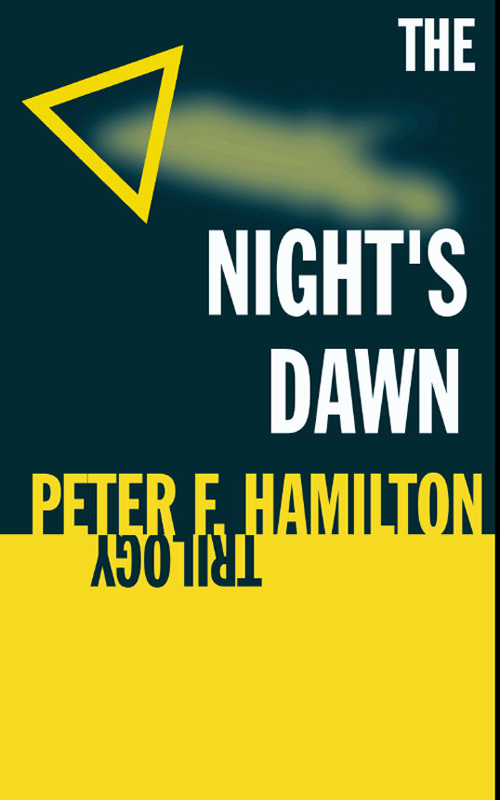
"The Night's Dawn Trilogy" unfolds an epic science fiction narrative where humanity, having colonized a vast swathe of the galaxy, faces an unprecedented existential threat: the dead are returning. These "possessors" displace the living, manifesting their individual personalities and collective hunger for violent chaos, spreading like a plague. Against this backdrop, advanced human factions, alien species, and powerful technologies clash, exploring themes of morality, religion, artificial intelligence, and the very nature of existence. It's a grand-scale space opera, rich with intricate world-building and complex character arcs.
"The Neutronium Alchemist 2: Conflict" is intrinsically similar because it is directly the second book, and second arc, of the Trilogy. It continues the grand narrative of humanity's struggle against the possessors, deepening the exploration of the conflict's ramifications across diverse planetary systems and cultures. The same array of characters, technologies, and pressing themes from the first book are further developed, maintaining the overarching plot, character development, and Hamilton's distinctive narrative style.
The trilogy's appeal lies in its immersive world-building and the sheer ambition of its scope. It provides a vast, compelling universe populated by multifaceted characters, grappling with profound philosophical questions amidst thrilling action and intricate political maneuvering. Its exploration of advanced technology, galactic-scale conflict, and the human condition in the face of ultimate horror offers a deeply engaging and thought-provoking experience, making it a cornerstone for anyone seeking expansive and intelligent science fiction.
The Night's Dawn Trilogy: The Reality Dysfunction, The Neutronium Alchemist, and The Naked God
"The Night's Dawn Trilogy" unfolds an epic science fiction narrative where humanity, having colonized a vast swathe of the galaxy, faces an unprecedented existential threat: the dead are returning. These "possessors" displace the living, manifesting their individual personalities and collective hunger for violent chaos, spreading like a plague. Against this backdrop, advanced human factions, alien species, and powerful technologies clash, exploring themes of morality, religion, artificial intelligence, and the very nature of existence. It's a grand-scale space opera, rich with intricate world-building and complex character arcs.
"The Neutronium Alchemist 2: Conflict" is intrinsically similar because it is directly the second book, and second arc, of the Trilogy. It continues the grand narrative of humanity's struggle against the possessors, deepening the exploration of the conflict's ramifications across diverse planetary systems and cultures. The same array of characters, technologies, and pressing themes from the first book are further developed, maintaining the overarching plot, character development, and Hamilton's distinctive narrative style.
The trilogy's appeal lies in its immersive world-building and the sheer ambition of its scope. It provides a vast, compelling universe populated by multifaceted characters, grappling with profound philosophical questions amidst thrilling action and intricate political maneuvering. Its exploration of advanced technology, galactic-scale conflict, and the human condition in the face of ultimate horror offers a deeply engaging and thought-provoking experience, making it a cornerstone for anyone seeking expansive and intelligent science fiction.
The Naked God 1: Flight

"The Naked God 1: Flight" is the concluding volume of Peter F. Hamilton’s *Night's Dawn* trilogy, picking up directly from the catastrophic events of the previous novel. Humanity, fractured and under siege by the possessed, struggles to reconcile the profound scientific and metaphysical revelations of the void and the afterlife. The story details desperate defensive actions, the exploration of new technologies, and a desperate search for solutions as the scale of the cosmic threat becomes horrifyingly clear. Intertwined are the personal journeys of various characters – politicians, soldiers, psychics, and resurrected figures – all grappling with the potential annihilation of their species.
This volume shares significant thematic and structural DNA with "The Neutronium Alchemist 2: Conflict." Both books are vital middle or concluding sections within sprawling, multi-perspective space operas. They feature numerous interwoven plotlines, a vast cast of characters spread across multiple star systems, and a pervasive sense of existential threat. The narratives in both are driven by high-stakes conflicts, often involving powerful, enigmatic entities, and a blend of hard science fiction, psychological exploration, and philosophical inquiry into the nature of consciousness and existence.
This novel will appeal to those who appreciate epic-scale science fiction that isn't afraid to delve into complex philosophical questions while delivering thrilling action and intricate world-building. Its value lies in its intricate character development, the breathtaking scope of its galactic conflict, and its ambitious exploration of advanced concepts regarding technology, society, and the afterlife. It offers a deeply immersive experience for those who enjoy sustained engagement with a richly imagined universe and its high-stakes drama.
The Naked God 1: Flight
"The Naked God 1: Flight" is the concluding volume of Peter F. Hamilton’s *Night's Dawn* trilogy, picking up directly from the catastrophic events of the previous novel. Humanity, fractured and under siege by the possessed, struggles to reconcile the profound scientific and metaphysical revelations of the void and the afterlife. The story details desperate defensive actions, the exploration of new technologies, and a desperate search for solutions as the scale of the cosmic threat becomes horrifyingly clear. Intertwined are the personal journeys of various characters – politicians, soldiers, psychics, and resurrected figures – all grappling with the potential annihilation of their species.
This volume shares significant thematic and structural DNA with "The Neutronium Alchemist 2: Conflict." Both books are vital middle or concluding sections within sprawling, multi-perspective space operas. They feature numerous interwoven plotlines, a vast cast of characters spread across multiple star systems, and a pervasive sense of existential threat. The narratives in both are driven by high-stakes conflicts, often involving powerful, enigmatic entities, and a blend of hard science fiction, psychological exploration, and philosophical inquiry into the nature of consciousness and existence.
This novel will appeal to those who appreciate epic-scale science fiction that isn't afraid to delve into complex philosophical questions while delivering thrilling action and intricate world-building. Its value lies in its intricate character development, the breathtaking scope of its galactic conflict, and its ambitious exploration of advanced concepts regarding technology, society, and the afterlife. It offers a deeply immersive experience for those who enjoy sustained engagement with a richly imagined universe and its high-stakes drama.
The Reality Dysfunction

*The Reality Dysfunction* initiates the Night's Dawn Trilogy, depicting an interstellar civilization grappling with the sudden, inexplicable emergence of the 'possessed' – deceased souls reanimating bodies with malevolent intent, capable of spreading their influence. This cosmic horror plunges humanity into an existential struggle, forcing them to confront not only a terrifying external threat but also profound questions about life, death, and the very fabric of reality. The narrative spans multiple star systems, following a diverse cast of characters as they uncover the sinister origins and devastating implications of this supernatural plague.
The similarity to *The Neutronium Alchemist 2: Conflict* lies in their shared exploration of grand-scale, galaxy-spanning threats that fundamentally alter the state of humanity. Both novels feature the universe being irrevocably changed by an emergent, powerful, and often terrifying phenomenon that drives complex geopolitical and personal conflicts. They both delve into intricate world-building, multiple character perspectives, and a sense of encroaching doom that demands innovation and ultimate sacrifice from their protagonists. Hamilton's distinctive style of blending hard science fiction elements with a sense of the sublime and the horrific is also a strong common thread.
This novel will appeal to those who appreciate epic science fiction that doesn't shy away from dark themes, moral ambiguity, and genuinely world-altering stakes. It offers an extensive, immersive universe filled with advanced technology, diverse societies, and a truly unique antagonist that redefines the parameters of conflict. The sophisticated plotting, character development, and thought-provoking exploration of consciousness and survival ensures a deeply engaging and intellectually stimulating experience for anyone seeking a weighty, imaginative, and enduring space opera.
The Reality Dysfunction
*The Reality Dysfunction* initiates the Night's Dawn Trilogy, depicting an interstellar civilization grappling with the sudden, inexplicable emergence of the 'possessed' – deceased souls reanimating bodies with malevolent intent, capable of spreading their influence. This cosmic horror plunges humanity into an existential struggle, forcing them to confront not only a terrifying external threat but also profound questions about life, death, and the very fabric of reality. The narrative spans multiple star systems, following a diverse cast of characters as they uncover the sinister origins and devastating implications of this supernatural plague.
The similarity to *The Neutronium Alchemist 2: Conflict* lies in their shared exploration of grand-scale, galaxy-spanning threats that fundamentally alter the state of humanity. Both novels feature the universe being irrevocably changed by an emergent, powerful, and often terrifying phenomenon that drives complex geopolitical and personal conflicts. They both delve into intricate world-building, multiple character perspectives, and a sense of encroaching doom that demands innovation and ultimate sacrifice from their protagonists. Hamilton's distinctive style of blending hard science fiction elements with a sense of the sublime and the horrific is also a strong common thread.
This novel will appeal to those who appreciate epic science fiction that doesn't shy away from dark themes, moral ambiguity, and genuinely world-altering stakes. It offers an extensive, immersive universe filled with advanced technology, diverse societies, and a truly unique antagonist that redefines the parameters of conflict. The sophisticated plotting, character development, and thought-provoking exploration of consciousness and survival ensures a deeply engaging and intellectually stimulating experience for anyone seeking a weighty, imaginative, and enduring space opera.
Judas Unchained
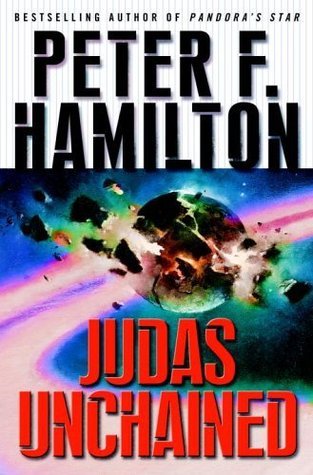
"Judas Unchained" plunges humanity into a desperate interstellar war against the advanced alien race known as the Prime. As the conflict escalates, threatening to extinguish all human life, desperate measures are taken. The narrative explores the ethical and strategic dilemmas faced by a civilization pushed to its absolute limits, revealing ancient secrets and shocking truths about both species and the fate of the galaxy. It’s a story of survival, sacrifice, and the blurred lines between hero and monster on a cosmic scale.
This novel shares a remarkable resemblance to "The Neutronium Alchemist 2: Conflict" through its expansive, multi-perspective narrative structure, dealing with galaxy-spanning existential threats. Both books feature intricate political maneuvering within vast human civilizations, compelling alien encounters, and a deep dive into the moral complexities of war and survival. The signature blend of hard science fiction, intense action, and philosophical inquiry, often with a large ensemble cast, is a defining characteristic in both works.
It will appeal to those who appreciate epic space opera, intricate world-building, and high-stakes narratives. The exploration of humanity's resilience in the face of overwhelming odds, coupled with sophisticated scientific concepts and thought-provoking ethical questions, offers a deeply engaging and intellectually stimulating experience. It provides valuable insight into the potential extremes of interstellar conflict and the enduring human spirit.
Judas Unchained
"Judas Unchained" plunges humanity into a desperate interstellar war against the advanced alien race known as the Prime. As the conflict escalates, threatening to extinguish all human life, desperate measures are taken. The narrative explores the ethical and strategic dilemmas faced by a civilization pushed to its absolute limits, revealing ancient secrets and shocking truths about both species and the fate of the galaxy. It’s a story of survival, sacrifice, and the blurred lines between hero and monster on a cosmic scale.
This novel shares a remarkable resemblance to "The Neutronium Alchemist 2: Conflict" through its expansive, multi-perspective narrative structure, dealing with galaxy-spanning existential threats. Both books feature intricate political maneuvering within vast human civilizations, compelling alien encounters, and a deep dive into the moral complexities of war and survival. The signature blend of hard science fiction, intense action, and philosophical inquiry, often with a large ensemble cast, is a defining characteristic in both works.
It will appeal to those who appreciate epic space opera, intricate world-building, and high-stakes narratives. The exploration of humanity's resilience in the face of overwhelming odds, coupled with sophisticated scientific concepts and thought-provoking ethical questions, offers a deeply engaging and intellectually stimulating experience. It provides valuable insight into the potential extremes of interstellar conflict and the enduring human spirit.
The Reality Dysfunction 1: Emergence

"The Reality Dysfunction 1: Emergence" plunges humanity into a cataclysmic conflict with an ancient, malevolent force. The dead, or rather, soulless entities, begin to reanimate, possessing the living and amplifying their darkest impulses. This cosmic horror unfolds across a vast, intricate future history, exploring the philosophical ramifications of consciousness, morality, and the very nature of existence when faced with an insurmountable, otherworldly threat.
This novel shares a deep structural and thematic kinship with "The Neutronium Alchemist 2: Conflict" through its expansive, multi-POV narrative, grand-scale cosmic stakes, and exploration of humanity's resilience against seemingly unstoppable alien forces. Both books meticulously build complex societies, then systematically dismantle them under the relentless pressure of an existential menace, forcing characters to confront profound ethical dilemmas amidst widespread chaos and destruction.
The deep dive into intricate world-building, compelling character arcs, and high-stakes survival against overwhelming odds offers a truly immersive experience. The philosophical underpinnings regarding life, death, and the soul, coupled with the visceral action and suspense, provide both intellectual stimulation and thrilling escapism. This makes it a valuable read for those seeking epic science fiction that pushes boundaries and explores fundamental human questions.
The Reality Dysfunction 1: Emergence
"The Reality Dysfunction 1: Emergence" plunges humanity into a cataclysmic conflict with an ancient, malevolent force. The dead, or rather, soulless entities, begin to reanimate, possessing the living and amplifying their darkest impulses. This cosmic horror unfolds across a vast, intricate future history, exploring the philosophical ramifications of consciousness, morality, and the very nature of existence when faced with an insurmountable, otherworldly threat.
This novel shares a deep structural and thematic kinship with "The Neutronium Alchemist 2: Conflict" through its expansive, multi-POV narrative, grand-scale cosmic stakes, and exploration of humanity's resilience against seemingly unstoppable alien forces. Both books meticulously build complex societies, then systematically dismantle them under the relentless pressure of an existential menace, forcing characters to confront profound ethical dilemmas amidst widespread chaos and destruction.
The deep dive into intricate world-building, compelling character arcs, and high-stakes survival against overwhelming odds offers a truly immersive experience. The philosophical underpinnings regarding life, death, and the soul, coupled with the visceral action and suspense, provide both intellectual stimulation and thrilling escapism. This makes it a valuable read for those seeking epic science fiction that pushes boundaries and explores fundamental human questions.
More Books to Explore
Discover more titles that expand on these ideas and themes.
The Neutronium Alchemist 1: Consolidation
The Neutronium Alchemist
The Night's Dawn Trilogy
The Naked God
The Reality Dysfunction Part 2: Expansion
The Night's Dawn Trilogy: The Reality Dysfunction, The Neutronium Alchemist, and The Naked God