10 Books Similar to "The Invisible Man"
by H.G. Wells
The War of the Worlds
"The War of the Worlds" depicts an unexpected alien invasion of Earth by Martians, technologically superior beings who unleash devastating heat-rays and black smoke, systematically conquering humanity. The narrative chronicles the horrifying experience of an unnamed protagonist as he navigates the widespread destruction and societal collapse, highlighting the vulnerability of mankind against an overwhelming, indifferent force.
Both novels explore themes of societal disruption and the unforeseen consequences of scientific advancement or encounters with the unknown. In "The War of the Worlds," the Martians represent a powerful, alien intelligence that throws human civilization into chaos, much like Griffin's invisibility in "The Invisible Man" disrupts the fabric of everyday life and social order, leading to paranoia and violence. Both protagonists, in their own ways, become agents of disruption, forcing society to confront its limitations and vulnerabilities.
This novel will resonate with those who appreciate classic science fiction that delves into profound societal anxieties and the human response to existential threats. Its enduring relevance lies in its exploration of imperialism, the precariousness of perceived superiority, and our place in the cosmic order, offering a potent reflection on humanity's resilience and capacity for both terror and unexpected hope in the face of overwhelming adversity.
The War of the Worlds
"The War of the Worlds" depicts an unexpected alien invasion of Earth by Martians, technologically superior beings who unleash devastating heat-rays and black smoke, systematically conquering humanity. The narrative chronicles the horrifying experience of an unnamed protagonist as he navigates the widespread destruction and societal collapse, highlighting the vulnerability of mankind against an overwhelming, indifferent force.
Both novels explore themes of societal disruption and the unforeseen consequences of scientific advancement or encounters with the unknown. In "The War of the Worlds," the Martians represent a powerful, alien intelligence that throws human civilization into chaos, much like Griffin's invisibility in "The Invisible Man" disrupts the fabric of everyday life and social order, leading to paranoia and violence. Both protagonists, in their own ways, become agents of disruption, forcing society to confront its limitations and vulnerabilities.
This novel will resonate with those who appreciate classic science fiction that delves into profound societal anxieties and the human response to existential threats. Its enduring relevance lies in its exploration of imperialism, the precariousness of perceived superiority, and our place in the cosmic order, offering a potent reflection on humanity's resilience and capacity for both terror and unexpected hope in the face of overwhelming adversity.
The Food of the Gods and How It Came to Earth
"The Food of the Gods and How It Came to Earth" explores the accidental discovery of a growth-accelerating substance called "Herakleophorbia IV," which, when consumed, causes plants, animals, and eventually humans to grow to gigantic proportions. The narrative follows the societal challenges and ethical dilemmas that arise as the "Giant Children" mature, grappling with their place in a world designed for smaller beings and the inevitable conflict between the old order and the new.
Both novels delve into the disruptive impact of scientific innovation on society. Like the invisibility formula in "The Invisible Man," Herakleophorbia IV introduces a radical alteration to the natural order, forcing humanity to confront unprecedented consequences. Each story features a central scientific discovery that fundamentally redefines the protagonists' existence and sets them at odds with conventional society, highlighting themes of isolation, power, and the ethical responsibilities of scientific advancement.
This novel will appeal to those who enjoy speculative fiction that poses profound questions about human nature and societal evolution when faced with extraordinary circumstances. Its exploration of generational conflict, the ethics of genetic engineering, and the struggle for adaptation offers significant intellectual value, prompting reflection on social anxieties and the potential ramifications of unchecked progress, much like "The Invisible Man" illuminated the dangers of unchecked scientific ambition.
The Food of the Gods and How It Came to Earth
"The Food of the Gods and How It Came to Earth" explores the accidental discovery of a growth-accelerating substance called "Herakleophorbia IV," which, when consumed, causes plants, animals, and eventually humans to grow to gigantic proportions. The narrative follows the societal challenges and ethical dilemmas that arise as the "Giant Children" mature, grappling with their place in a world designed for smaller beings and the inevitable conflict between the old order and the new.
Both novels delve into the disruptive impact of scientific innovation on society. Like the invisibility formula in "The Invisible Man," Herakleophorbia IV introduces a radical alteration to the natural order, forcing humanity to confront unprecedented consequences. Each story features a central scientific discovery that fundamentally redefines the protagonists' existence and sets them at odds with conventional society, highlighting themes of isolation, power, and the ethical responsibilities of scientific advancement.
This novel will appeal to those who enjoy speculative fiction that poses profound questions about human nature and societal evolution when faced with extraordinary circumstances. Its exploration of generational conflict, the ethics of genetic engineering, and the struggle for adaptation offers significant intellectual value, prompting reflection on social anxieties and the potential ramifications of unchecked progress, much like "The Invisible Man" illuminated the dangers of unchecked scientific ambition.
When the Sleeper Wakes

"When the Sleeper Wakes" plunges a man who fell into a coma for two centuries into a future London transformed by technological advancements and social upheaval. He awakens to discover his inherited wealth has made him the richest man on Earth, making him a figurehead for a global capitalist empire he never intended to create, and a pawn in the machinations of powerful individuals vying for control.
Similar to "The Invisible Man," this novel explores the dangers of unchecked power and the corrupting influence of isolation. Both protagonists become outcasts due to extraordinary circumstances – one through literal invisibility, the other through a temporal leap and immense, unintended power. They struggle with their altered realities and are ultimately consumed by forces beyond their control.
This narrative holds significant appeal due to its prescient vision of a technologically advanced, class-divided future. It offers a thought-provoking critique of capitalism, surveillance, and social manipulation, issues that remain profoundly relevant today. The novel provides valuable insights into the human response to radical social change and the ethical implications of scientific progress.
When the Sleeper Wakes
"When the Sleeper Wakes" plunges a man who fell into a coma for two centuries into a future London transformed by technological advancements and social upheaval. He awakens to discover his inherited wealth has made him the richest man on Earth, making him a figurehead for a global capitalist empire he never intended to create, and a pawn in the machinations of powerful individuals vying for control.
Similar to "The Invisible Man," this novel explores the dangers of unchecked power and the corrupting influence of isolation. Both protagonists become outcasts due to extraordinary circumstances – one through literal invisibility, the other through a temporal leap and immense, unintended power. They struggle with their altered realities and are ultimately consumed by forces beyond their control.
This narrative holds significant appeal due to its prescient vision of a technologically advanced, class-divided future. It offers a thought-provoking critique of capitalism, surveillance, and social manipulation, issues that remain profoundly relevant today. The novel provides valuable insights into the human response to radical social change and the ethical implications of scientific progress.
The War of the Worlds/The Invisible Man/The Time Machine
This collection compiles three seminal works by H.G. Wells, presenting a profound exploration of scientific advancement, societal introspection, and humanity's often-fraught relationship with the unknown. "The War of the Worlds" depicts an alien invasion and the fragility of human civilization, "The Invisible Man" delves into the moral decay born from unfettered power, and "The Time Machine" offers a chilling glimpse into humanity's distant future and its potential downfall.
Both the source book, "The Invisible Man," and this collection share Wells's distinctive brand of speculative fiction, using fantastical premises to dissect profound human dilemmas. The themes of isolation, the corrupting influence of power, and the societal implications of scientific discovery are central to both the standalone novel and its inclusion within this broader anthology. The overarching narrative style, marked by its scientific realism and philosophical underpinnings, remains consistent.
This compendium will resonate with those who appreciate classic science fiction that thoughtfully examines existential questions and societal structures. Its enduring value lies in its prescient ideas and Wells's master craftsmanship in weaving compelling narratives that continue to provoke and entertain, offering timeless commentary on human nature and progress.
The War of the Worlds/The Invisible Man/The Time Machine
This collection compiles three seminal works by H.G. Wells, presenting a profound exploration of scientific advancement, societal introspection, and humanity's often-fraught relationship with the unknown. "The War of the Worlds" depicts an alien invasion and the fragility of human civilization, "The Invisible Man" delves into the moral decay born from unfettered power, and "The Time Machine" offers a chilling glimpse into humanity's distant future and its potential downfall.
Both the source book, "The Invisible Man," and this collection share Wells's distinctive brand of speculative fiction, using fantastical premises to dissect profound human dilemmas. The themes of isolation, the corrupting influence of power, and the societal implications of scientific discovery are central to both the standalone novel and its inclusion within this broader anthology. The overarching narrative style, marked by its scientific realism and philosophical underpinnings, remains consistent.
This compendium will resonate with those who appreciate classic science fiction that thoughtfully examines existential questions and societal structures. Its enduring value lies in its prescient ideas and Wells's master craftsmanship in weaving compelling narratives that continue to provoke and entertain, offering timeless commentary on human nature and progress.
The Time Machine / The War of the Worlds

"The Time Machine / The War of the Worlds" presents two foundational science fiction narratives. "The Time Machine" chronicles a Victorian scientist's journey to the year 802,701, where humanity has diverged into two distinct species, exploring themes of societal decay and evolution. "The War of the Worlds" depicts a devastating Martian invasion of Earth, a chilling first-contact scenario that examines colonialism, survival, and the fragility of human dominance.
These novels resonate with "The Invisible Man" through their shared exploration of scientific advancements leading to unforeseen and often destructive consequences. All three works grapple with the ethics of discovery, the isolation of the extraordinary, and the potential for technological progress to disrupt societal norms or unleash terrifying forces. Each protagonist, whether an invisible man, a time traveler, or humanity facing alien invaders, confronts existential dilemmas and the limits of human understanding.
This collection offers a profound journey into the origins of modern science fiction, showcasing Wells's visionary imagination and incisive social commentary. It provides a valuable opportunity to engage with enduring questions about progress, human nature, and the unknown, inviting reflection on humanity's place in the universe and the responsibilities that accompany scientific power. The narratives are not only thrilling but also deeply thought-provoking.
The Time Machine / The War of the Worlds
"The Time Machine / The War of the Worlds" presents two foundational science fiction narratives. "The Time Machine" chronicles a Victorian scientist's journey to the year 802,701, where humanity has diverged into two distinct species, exploring themes of societal decay and evolution. "The War of the Worlds" depicts a devastating Martian invasion of Earth, a chilling first-contact scenario that examines colonialism, survival, and the fragility of human dominance.
These novels resonate with "The Invisible Man" through their shared exploration of scientific advancements leading to unforeseen and often destructive consequences. All three works grapple with the ethics of discovery, the isolation of the extraordinary, and the potential for technological progress to disrupt societal norms or unleash terrifying forces. Each protagonist, whether an invisible man, a time traveler, or humanity facing alien invaders, confronts existential dilemmas and the limits of human understanding.
This collection offers a profound journey into the origins of modern science fiction, showcasing Wells's visionary imagination and incisive social commentary. It provides a valuable opportunity to engage with enduring questions about progress, human nature, and the unknown, inviting reflection on humanity's place in the universe and the responsibilities that accompany scientific power. The narratives are not only thrilling but also deeply thought-provoking.
The First Men in the Moon

"The First Men in the Moon" chronicles the eccentric scientist Cavor's invention of an anti-gravitational substance, Cavorite, and his subsequent journey to the Moon with the pragmatic Bedofrd. Their lunar expedition uncovers a complex, hierarchical society of insectoid beings known as Selenites, leading to both scientific discovery and unexpected peril as they navigate this alien civilization.
This work shares a thematic kinship with "The Invisible Man" through its exploration of scientific hubris and isolation. Both novels feature brilliant but socially maladroit protagonists—Griffin and Cavor—whose groundbreaking discoveries lead them to profound alienation and confrontational encounters with society, be it terrestrial or extraterrestrial. The inherent dangers and unintended consequences arising from radical scientific advancement form a central narrative thread in both texts, underscoring Wells's cautionary perspective on unchecked progress.
This novel will appeal to those drawn to classic science fiction that combines imaginative world-building with thoughtful commentary on human nature and scientific ethics. Its intricate depiction of an alien society offers a compelling precursor to modern speculative fiction, while its examination of ambition, discovery, and the responsibilities accompanying scientific power provides enduring relevance. It's a valuable read for appreciating Wells's foundational contributions to the genre and his insights into the human condition when confronted with the unknown.
The First Men in the Moon
"The First Men in the Moon" chronicles the eccentric scientist Cavor's invention of an anti-gravitational substance, Cavorite, and his subsequent journey to the Moon with the pragmatic Bedofrd. Their lunar expedition uncovers a complex, hierarchical society of insectoid beings known as Selenites, leading to both scientific discovery and unexpected peril as they navigate this alien civilization.
This work shares a thematic kinship with "The Invisible Man" through its exploration of scientific hubris and isolation. Both novels feature brilliant but socially maladroit protagonists—Griffin and Cavor—whose groundbreaking discoveries lead them to profound alienation and confrontational encounters with society, be it terrestrial or extraterrestrial. The inherent dangers and unintended consequences arising from radical scientific advancement form a central narrative thread in both texts, underscoring Wells's cautionary perspective on unchecked progress.
This novel will appeal to those drawn to classic science fiction that combines imaginative world-building with thoughtful commentary on human nature and scientific ethics. Its intricate depiction of an alien society offers a compelling precursor to modern speculative fiction, while its examination of ambition, discovery, and the responsibilities accompanying scientific power provides enduring relevance. It's a valuable read for appreciating Wells's foundational contributions to the genre and his insights into the human condition when confronted with the unknown.
The Country of the Blind and Other Science-Fiction Stories

"The Country of the Blind and Other Science-Fiction Stories" offers a curated collection of H.G. Wells's pioneering short fiction. The titular story explores a sighted man's attempt to integrate into a remote valley inhabited solely by blind individuals, encountering profound resistance to his perceived advantage. Other tales delve into themes like technological advancement, societal upheaval, and the startling consequences of human ambition, showcasing Wells's visionary capacity to imagine alternate realities and their philosophical implications.
This collection shares striking thematic parallels with "The Invisible Man." Both works explore the isolating and corrupting effects of extraordinary physical attributes or scientific breakthroughs. Griffin's invisibility mirrors the sighted man's unique perception in a world that cannot comprehend it, leading to alienation and conflict. Wells consistently examines how power, whether scientific or inherent, can disrupt societal norms and expose the darker aspects of human nature.
The book's appeal lies in its incisive exploration of human nature, societal structures, and the ethical dilemmas inherent in scientific progress. It provokes thought on perception, difference, and the boundaries of human understanding. The collection serves as an excellent entry point into Wells's diverse speculative fiction, offering a concentrated dose of his intellectual prowess and narrative skill, invaluable for anyone interested in the foundational works of science fiction and their enduring social commentary.
The Country of the Blind and Other Science-Fiction Stories
"The Country of the Blind and Other Science-Fiction Stories" offers a curated collection of H.G. Wells's pioneering short fiction. The titular story explores a sighted man's attempt to integrate into a remote valley inhabited solely by blind individuals, encountering profound resistance to his perceived advantage. Other tales delve into themes like technological advancement, societal upheaval, and the startling consequences of human ambition, showcasing Wells's visionary capacity to imagine alternate realities and their philosophical implications.
This collection shares striking thematic parallels with "The Invisible Man." Both works explore the isolating and corrupting effects of extraordinary physical attributes or scientific breakthroughs. Griffin's invisibility mirrors the sighted man's unique perception in a world that cannot comprehend it, leading to alienation and conflict. Wells consistently examines how power, whether scientific or inherent, can disrupt societal norms and expose the darker aspects of human nature.
The book's appeal lies in its incisive exploration of human nature, societal structures, and the ethical dilemmas inherent in scientific progress. It provokes thought on perception, difference, and the boundaries of human understanding. The collection serves as an excellent entry point into Wells's diverse speculative fiction, offering a concentrated dose of his intellectual prowess and narrative skill, invaluable for anyone interested in the foundational works of science fiction and their enduring social commentary.
The Complete Science Fiction Treasury of H.G. Wells
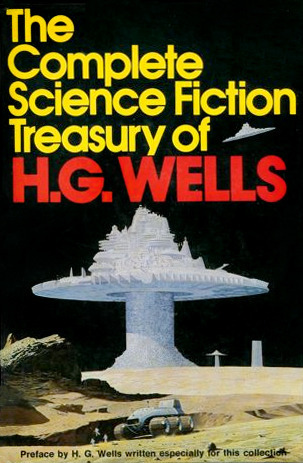
"The Complete Science Fiction Treasury of H.G. Wells" is a comprehensive anthology gathering a significant portion of Wells's groundbreaking speculative fiction. It typically includes seminal novels like "The War of the Worlds," "The Time Machine," and "The Island of Doctor Moreau," alongside numerous shorter stories. The collection offers a panoramic view of Wells's visionary ideas, social commentary, and masterful storytelling across a spectrum of futuristic and fantastical scenarios.
This treasury shares an intrinsic link with "The Invisible Man" through its exploration of scientific ethical dilemmas, societal impact of technological advancement, and human nature's darker impulses. Both works showcase Wells's recurring themes of scientific hubris, the isolation of genius, and the potential for scientific discovery to unravel societal norms. The collection presents these themes in varied forms, broadening the scope beyond a single narrative.
This compilation holds immense appeal as it presents a foundational understanding of science fiction's origins and enduring relevance. It allows for a deeper appreciation of the intellectual currents that shaped the genre, offering insights into human progress, ethical boundaries, and the perennial struggle between ambition and morality. Owning this treasury is possessing a cornerstone of literary and scientific thought, consistently providing engaging and thought-provoking narratives.
The Complete Science Fiction Treasury of H.G. Wells
"The Complete Science Fiction Treasury of H.G. Wells" is a comprehensive anthology gathering a significant portion of Wells's groundbreaking speculative fiction. It typically includes seminal novels like "The War of the Worlds," "The Time Machine," and "The Island of Doctor Moreau," alongside numerous shorter stories. The collection offers a panoramic view of Wells's visionary ideas, social commentary, and masterful storytelling across a spectrum of futuristic and fantastical scenarios.
This treasury shares an intrinsic link with "The Invisible Man" through its exploration of scientific ethical dilemmas, societal impact of technological advancement, and human nature's darker impulses. Both works showcase Wells's recurring themes of scientific hubris, the isolation of genius, and the potential for scientific discovery to unravel societal norms. The collection presents these themes in varied forms, broadening the scope beyond a single narrative.
This compilation holds immense appeal as it presents a foundational understanding of science fiction's origins and enduring relevance. It allows for a deeper appreciation of the intellectual currents that shaped the genre, offering insights into human progress, ethical boundaries, and the perennial struggle between ambition and morality. Owning this treasury is possessing a cornerstone of literary and scientific thought, consistently providing engaging and thought-provoking narratives.
H.G. Wells Classic Collection I

"H.G. Wells Classic Collection I" compiles several foundational works from the pioneering science fiction author, likely including "The Time Machine," "The War of the Worlds," and potentially other early novels or short stories. This collection showcases Wells's imaginative prowess and his insightful commentary on society, scientific ethics, and the human condition, all presented through compelling narratives.
It shares its DNA with "The Invisible Man" as both are integral parts of Wells's early canon, exploring themes of scientific hubris, unintended consequences, and the societal impact of technological advancement. The collection offers a broader spectrum of these concerns, presenting variations on Wells's quintessential blend of thrilling narrative and thoughtful speculation that defines the individual novel.
This compilation holds significant appeal and value. It provides a comprehensive view of Wells's early genius, allowing for a deeper appreciation of the themes and narrative styles that characterized the nascent science fiction genre. For those who enjoyed the intellectual thrill and moral dilemmas presented in "The Invisible Man," this collection offers an expanded journey into the visionary mind of one of literature's most enduring figures.
H.G. Wells Classic Collection I
"H.G. Wells Classic Collection I" compiles several foundational works from the pioneering science fiction author, likely including "The Time Machine," "The War of the Worlds," and potentially other early novels or short stories. This collection showcases Wells's imaginative prowess and his insightful commentary on society, scientific ethics, and the human condition, all presented through compelling narratives.
It shares its DNA with "The Invisible Man" as both are integral parts of Wells's early canon, exploring themes of scientific hubris, unintended consequences, and the societal impact of technological advancement. The collection offers a broader spectrum of these concerns, presenting variations on Wells's quintessential blend of thrilling narrative and thoughtful speculation that defines the individual novel.
This compilation holds significant appeal and value. It provides a comprehensive view of Wells's early genius, allowing for a deeper appreciation of the themes and narrative styles that characterized the nascent science fiction genre. For those who enjoyed the intellectual thrill and moral dilemmas presented in "The Invisible Man," this collection offers an expanded journey into the visionary mind of one of literature's most enduring figures.
Dr. Jekyll and Mr. Hyde

"Dr. Jekyll and Mr. Hyde" explores the duality of human nature through the seemingly respectable Dr. Jekyll, who creates a potion to separate his good and evil impulses. This unleashes Edward Hyde, a depraved, violent alter-ego, embodying Jekyll's darkest desires. The novel charts Jekyll's losing battle for control as Hyde's wickedness escalates, ultimately leading to tragic self-destruction and revealing the perilous consequences of suppressing moral responsibility.
Like "The Invisible Man," "Dr. Jekyll and Mr. Hyde" delves into the corrupting influence of unchecked power and scientific discovery misused. Both protagonists gain an extraordinary ability – invisibility and the capacity to shed one's moral self – which initially seems liberating but ultimately isolates them and fuels their descent into villainy. The narratives serve as cautionary tales about the destructive potential within individuals when societal restraints and personal ethics erode.
This work offers a compelling examination of identity, morality, and the human psyche. Its enduring relevance lies in its exploration of the internal conflicts we all face and the societal implications when individuals succumb to their baser instincts. Engaging with this story provides profound insights into the nature of good and evil, the responsibility that comes with knowledge, and the intricate balance required for a stable self.
Dr. Jekyll and Mr. Hyde
"Dr. Jekyll and Mr. Hyde" explores the duality of human nature through the seemingly respectable Dr. Jekyll, who creates a potion to separate his good and evil impulses. This unleashes Edward Hyde, a depraved, violent alter-ego, embodying Jekyll's darkest desires. The novel charts Jekyll's losing battle for control as Hyde's wickedness escalates, ultimately leading to tragic self-destruction and revealing the perilous consequences of suppressing moral responsibility.
Like "The Invisible Man," "Dr. Jekyll and Mr. Hyde" delves into the corrupting influence of unchecked power and scientific discovery misused. Both protagonists gain an extraordinary ability – invisibility and the capacity to shed one's moral self – which initially seems liberating but ultimately isolates them and fuels their descent into villainy. The narratives serve as cautionary tales about the destructive potential within individuals when societal restraints and personal ethics erode.
This work offers a compelling examination of identity, morality, and the human psyche. Its enduring relevance lies in its exploration of the internal conflicts we all face and the societal implications when individuals succumb to their baser instincts. Engaging with this story provides profound insights into the nature of good and evil, the responsibility that comes with knowledge, and the intricate balance required for a stable self.
More Books to Explore
Discover more titles that expand on these ideas and themes.
The War of the Worlds
The Food of the Gods and How It Came to Earth
When the Sleeper Wakes
The War of the Worlds/The Invisible Man/The Time Machine
The Time Machine / The War of the Worlds
The First Men in the Moon