10 Books Similar to "The Intelligent Investor"
by Benjamin Graham
Security Analysis: The Classic 1951 Edition
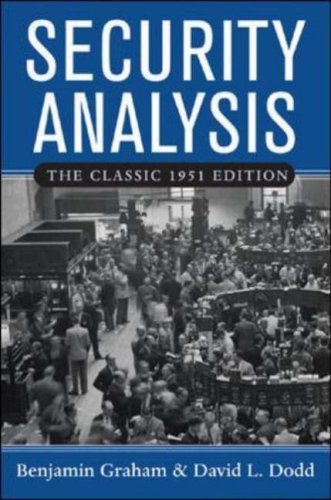
"Security Analysis: The Classic 1951 Edition" is a foundational text delineating the principles and methodologies for evaluating the intrinsic value of securities. It meticulously dissects financial statements, industry conditions, and management quality to help investors make informed decisions, emphasizing the analytical rigor required to separate sound investments from speculative ventures.
This work parallels "The Intelligent Investor" in its core philosophy of value investing and its profound influence on generations of financial professionals. Both books advocate for long-term investing, a margin of safety, and treating stocks not as mere ticker symbols, but as fractional ownership in businesses. While "The Intelligent Investor" is more accessible, *Security Analysis* provides the exhaustive technical bedrock for many of the concepts introduced there.
Those seeking a deeply comprehensive and authoritative guide to fundamental analysis will appreciate this book. It equips individuals with the tools to perform thorough due diligence and develop a robust framework for investment decision-making, offering insights that remain profoundly relevant in contemporary markets despite its age.
Security Analysis: The Classic 1951 Edition
"Security Analysis: The Classic 1951 Edition" is a foundational text delineating the principles and methodologies for evaluating the intrinsic value of securities. It meticulously dissects financial statements, industry conditions, and management quality to help investors make informed decisions, emphasizing the analytical rigor required to separate sound investments from speculative ventures.
This work parallels "The Intelligent Investor" in its core philosophy of value investing and its profound influence on generations of financial professionals. Both books advocate for long-term investing, a margin of safety, and treating stocks not as mere ticker symbols, but as fractional ownership in businesses. While "The Intelligent Investor" is more accessible, *Security Analysis* provides the exhaustive technical bedrock for many of the concepts introduced there.
Those seeking a deeply comprehensive and authoritative guide to fundamental analysis will appreciate this book. It equips individuals with the tools to perform thorough due diligence and develop a robust framework for investment decision-making, offering insights that remain profoundly relevant in contemporary markets despite its age.
Value Investing: From Graham to Buffett and Beyond

"Value Investing: From Graham to Buffett and Beyond" meticulously dissects the core principles of value investing, illustrating how to identify undervalued companies and minimize risk. It moves beyond theoretical concepts, offering a practical framework for analyzing financial statements, understanding competitive advantages, and determining intrinsic value. The book features case studies of iconic investors and companies, providing real-world application of these enduring strategies.
This book's similarity to "The Intelligent Investor" lies in its foundational adherence to Benjamin Graham's philosophy. It builds directly upon Graham's emphasis on margin of safety, treating stocks as ownership in a business, and eschewing speculation for disciplined, long-term analysis. Greenwald and his co-authors effectively modernize and expand upon Graham's original concepts, demonstrating their continued relevance in contemporary markets.
The book will appeal to those seeking a rigorous, actionable guide to wealth creation. Its clear explanations and detailed examples empower individuals to make informed investment decisions, fostering a deeper understanding of market dynamics and business valuation. It promises to equip aspiring investors with the analytical tools and strategic mindset necessary to navigate financial markets successfully.
Value Investing: From Graham to Buffett and Beyond
"Value Investing: From Graham to Buffett and Beyond" meticulously dissects the core principles of value investing, illustrating how to identify undervalued companies and minimize risk. It moves beyond theoretical concepts, offering a practical framework for analyzing financial statements, understanding competitive advantages, and determining intrinsic value. The book features case studies of iconic investors and companies, providing real-world application of these enduring strategies.
This book's similarity to "The Intelligent Investor" lies in its foundational adherence to Benjamin Graham's philosophy. It builds directly upon Graham's emphasis on margin of safety, treating stocks as ownership in a business, and eschewing speculation for disciplined, long-term analysis. Greenwald and his co-authors effectively modernize and expand upon Graham's original concepts, demonstrating their continued relevance in contemporary markets.
The book will appeal to those seeking a rigorous, actionable guide to wealth creation. Its clear explanations and detailed examples empower individuals to make informed investment decisions, fostering a deeper understanding of market dynamics and business valuation. It promises to equip aspiring investors with the analytical tools and strategic mindset necessary to navigate financial markets successfully.
The Most Important Thing: Uncommon Sense for the Thoughtful Investor

Howard Marks' "The Most Important Thing" distills his legendary memos on investment philosophy into key principles. It’s an accessible guide to navigating the complexities of the market, focusing on aspects often overlooked by conventional wisdom. Marks emphasizes understanding market cycles, being contrarian when appropriate, recognizing the power of second-level thinking, and rigorously managing risk to achieve long-term success.
This book shares a deep philosophical kinship with Benjamin Graham's "The Intelligent Investor." Both works champion a disciplined, rational approach to investing, urging readers to think critically rather than follow fads. They prioritize understanding intrinsic value, exercising patience, and maintaining emotional resilience in the face of volatility, fundamentally advocating for a thoughtful, rather than reactive, engagement with financial markets.
Anyone seeking to cultivate a robust and enduring investment philosophy will greatly appreciate "The Most Important Thing." It offers practical frameworks for making sound decisions, fostering a deeper understanding of market dynamics, and equipping investors with the intellectual tools to avoid common pitfalls and enhance their long-term financial outcomes.
The Most Important Thing: Uncommon Sense for the Thoughtful Investor
Howard Marks' "The Most Important Thing" distills his legendary memos on investment philosophy into key principles. It’s an accessible guide to navigating the complexities of the market, focusing on aspects often overlooked by conventional wisdom. Marks emphasizes understanding market cycles, being contrarian when appropriate, recognizing the power of second-level thinking, and rigorously managing risk to achieve long-term success.
This book shares a deep philosophical kinship with Benjamin Graham's "The Intelligent Investor." Both works champion a disciplined, rational approach to investing, urging readers to think critically rather than follow fads. They prioritize understanding intrinsic value, exercising patience, and maintaining emotional resilience in the face of volatility, fundamentally advocating for a thoughtful, rather than reactive, engagement with financial markets.
Anyone seeking to cultivate a robust and enduring investment philosophy will greatly appreciate "The Most Important Thing." It offers practical frameworks for making sound decisions, fostering a deeper understanding of market dynamics, and equipping investors with the intellectual tools to avoid common pitfalls and enhance their long-term financial outcomes.
Margin of Safety: Risk-Averse Value Investing Strategies for the Thoughtful Investor

"Margin of Safety" by Seth Klarman champions a disciplined, value-oriented investment philosophy. It systematically outlines how to identify undervalued assets and construct portfolios that prioritize capital preservation over speculative gains, emphasizing a deep understanding of intrinsic value and a skeptical approach to market fads.
This book shares foundational principles with "The Intelligent Investor," particularly the central tenet of buying assets for less than their true worth. Both authors stress the importance of investor temperament, comprehensive analysis, and a long-term perspective, viewing the market as a servant to be leveraged, not a master to be followed.
This book will appeal to those seeking a robust framework for navigating market volatility and building lasting wealth. Its practical insights and emphasis on risk mitigation offer a valuable counterpoint to short-term thinking, equipping investors with the intellectual tools to make sound, independent decisions.
Margin of Safety: Risk-Averse Value Investing Strategies for the Thoughtful Investor
"Margin of Safety" by Seth Klarman champions a disciplined, value-oriented investment philosophy. It systematically outlines how to identify undervalued assets and construct portfolios that prioritize capital preservation over speculative gains, emphasizing a deep understanding of intrinsic value and a skeptical approach to market fads.
This book shares foundational principles with "The Intelligent Investor," particularly the central tenet of buying assets for less than their true worth. Both authors stress the importance of investor temperament, comprehensive analysis, and a long-term perspective, viewing the market as a servant to be leveraged, not a master to be followed.
This book will appeal to those seeking a robust framework for navigating market volatility and building lasting wealth. Its practical insights and emphasis on risk mitigation offer a valuable counterpoint to short-term thinking, equipping investors with the intellectual tools to make sound, independent decisions.
A Random Walk Down Wall Street: The Time-Tested Strategy for Successful Investing
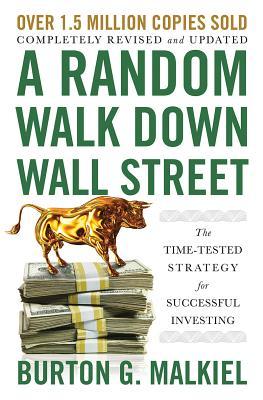
"A Random Walk Down Wall Street" meticulously explores the efficient market hypothesis, asserting that stock prices reflect all available information, making it difficult for active investors to consistently outperform the market. Malkiel advocates for a passive, diversified investment approach, primarily through low-cost index funds, as the most effective strategy for long-term wealth accumulation. The book debunks various investing fads and strategies, offering a grounded, research-backed perspective on successful investing.
This work echoes "The Intelligent Investor" in its fundamental commitment to informed, disciplined investing over speculative ventures. Both authors emphasize long-term perspectives, risk management, and the avoidance of emotional decision-making. While Graham provides a framework for active value investing, Malkiel offers a compelling argument for embracing market efficiency through passive strategies, demonstrating a shared objective of protecting capital and achieving reasonable returns.
This book offers a clear, accessible guide to navigating the complexities of financial markets. Its insights into market efficiency and the benefits of passive investing provide a powerful antidote to the often-confusing world of financial advice. Anyone seeking to build a robust investment strategy founded on sound economic principles will find its advice invaluable, fostering financial literacy and confidence.
A Random Walk Down Wall Street: The Time-Tested Strategy for Successful Investing
"A Random Walk Down Wall Street" meticulously explores the efficient market hypothesis, asserting that stock prices reflect all available information, making it difficult for active investors to consistently outperform the market. Malkiel advocates for a passive, diversified investment approach, primarily through low-cost index funds, as the most effective strategy for long-term wealth accumulation. The book debunks various investing fads and strategies, offering a grounded, research-backed perspective on successful investing.
This work echoes "The Intelligent Investor" in its fundamental commitment to informed, disciplined investing over speculative ventures. Both authors emphasize long-term perspectives, risk management, and the avoidance of emotional decision-making. While Graham provides a framework for active value investing, Malkiel offers a compelling argument for embracing market efficiency through passive strategies, demonstrating a shared objective of protecting capital and achieving reasonable returns.
This book offers a clear, accessible guide to navigating the complexities of financial markets. Its insights into market efficiency and the benefits of passive investing provide a powerful antidote to the often-confusing world of financial advice. Anyone seeking to build a robust investment strategy founded on sound economic principles will find its advice invaluable, fostering financial literacy and confidence.
The Bogleheads' Guide to Investing
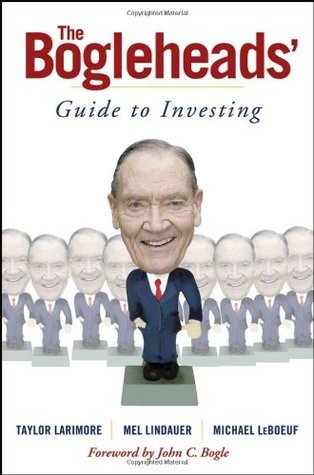
"The Bogleheads' Guide to Investing" demystifies the world of personal finance, advocating for a simple, low-cost, and diversified investment strategy primarily utilizing index funds. It breaks down complex financial concepts into actionable advice, focusing on long-term wealth building through consistent contributions and minimal intervention, all while minimizing fees and taxes.
This guide shares a fundamental philosophical alignment with "The Intelligent Investor" by Benjamin Graham: both emphasize a disciplined, long-term approach to investing, prioritizing risk avoidance and capital preservation over speculative gains. They both champion the idea of the "intelligent investor" who approaches the market with rationality, understanding that emotional decisions often lead to suboptimal outcomes. Both books distill investment success to foundational principles rather than fleeting fads.
For those navigating the complexities of personal investing, this book offers a clear, actionable roadmap. Its practical advice on portfolio construction, asset allocation, and managing investment behavior provides immense value, empowering individuals to take control of their financial future with confidence and a well-reasoned strategy.
The Bogleheads' Guide to Investing
"The Bogleheads' Guide to Investing" demystifies the world of personal finance, advocating for a simple, low-cost, and diversified investment strategy primarily utilizing index funds. It breaks down complex financial concepts into actionable advice, focusing on long-term wealth building through consistent contributions and minimal intervention, all while minimizing fees and taxes.
This guide shares a fundamental philosophical alignment with "The Intelligent Investor" by Benjamin Graham: both emphasize a disciplined, long-term approach to investing, prioritizing risk avoidance and capital preservation over speculative gains. They both champion the idea of the "intelligent investor" who approaches the market with rationality, understanding that emotional decisions often lead to suboptimal outcomes. Both books distill investment success to foundational principles rather than fleeting fads.
For those navigating the complexities of personal investing, this book offers a clear, actionable roadmap. Its practical advice on portfolio construction, asset allocation, and managing investment behavior provides immense value, empowering individuals to take control of their financial future with confidence and a well-reasoned strategy.
The Essays of Warren Buffett : Lessons for Corporate America

"The Essays of Warren Buffett: Lessons for Corporate America" compiles Buffett's brilliant letters to Berkshire Hathaway shareholders, offering unparalleled insights into his investment philosophy, business principles, and management wisdom. It's a masterclass in clear thinking, value investing, and ethical business practices, presented directly from the mind of one of history's greatest capitalists.
This collection bears a strong resemblance to "The Intelligent Investor" because both books distill the core tenets of value investing. Buffett, a devoted student of Graham, applies and expands upon Graham's foundational concepts of buying businesses below their intrinsic value, understanding market irrationality, and maintaining a long-term perspective. Both emphasize treating stocks as ownership stakes in businesses, not mere paper symbols.
Anyone interested in sound financial stewardship, ethical leadership, or profound investment wisdom will find immense value in Buffett's collected thoughts. It provides practical lessons applicable not just to investing, but to business management, corporate governance, and decision-making in general, offering a rare glimpse into the strategies that built extraordinary wealth and enduring companies.
The Essays of Warren Buffett : Lessons for Corporate America
"The Essays of Warren Buffett: Lessons for Corporate America" compiles Buffett's brilliant letters to Berkshire Hathaway shareholders, offering unparalleled insights into his investment philosophy, business principles, and management wisdom. It's a masterclass in clear thinking, value investing, and ethical business practices, presented directly from the mind of one of history's greatest capitalists.
This collection bears a strong resemblance to "The Intelligent Investor" because both books distill the core tenets of value investing. Buffett, a devoted student of Graham, applies and expands upon Graham's foundational concepts of buying businesses below their intrinsic value, understanding market irrationality, and maintaining a long-term perspective. Both emphasize treating stocks as ownership stakes in businesses, not mere paper symbols.
Anyone interested in sound financial stewardship, ethical leadership, or profound investment wisdom will find immense value in Buffett's collected thoughts. It provides practical lessons applicable not just to investing, but to business management, corporate governance, and decision-making in general, offering a rare glimpse into the strategies that built extraordinary wealth and enduring companies.
You Can Be a Stock Market Genius: Uncover the Secret Hiding Places of Stock Market Profits

Joel Greenblatt's "You Can Be a Stock Market Genius" provides a practical guide to uncovering highly profitable investment opportunities often overlooked by mainstream analysts and institutional investors. Greenblatt focuses on specific event-driven situations like spin-offs, mergers, bankruptcies, and rights offerings, explaining how to identify undervalued companies during these transitional periods. The book breaks down complex situations into actionable strategies, emphasizing the importance of detailed research and understanding the underlying business.
This book resonates with the core principles of "The Intelligent Investor" due to its foundational emphasis on value investing and a dispassionate, analytical approach to the market. Both authors advocate for buying a "dollar for fifty cents," focusing on intrinsic value over market sentiment or speculative trends. Greenblatt, like Graham, teaches investors to think like business owners, meticulously examining company fundamentals during periods of market inefficiency.
This work appeals to anyone seeking a tangible edge in the market, offering concrete strategies beyond traditional stock picking. It equips investors with the knowledge to exploit market dislocations, demonstrating that significant returns are achievable by looking in less obvious places. The value lies in its actionable advice and its reinforcement of investment discipline, proving that rigorous analysis coupled with unconventional thinking can lead to exceptional results.
You Can Be a Stock Market Genius: Uncover the Secret Hiding Places of Stock Market Profits
Joel Greenblatt's "You Can Be a Stock Market Genius" provides a practical guide to uncovering highly profitable investment opportunities often overlooked by mainstream analysts and institutional investors. Greenblatt focuses on specific event-driven situations like spin-offs, mergers, bankruptcies, and rights offerings, explaining how to identify undervalued companies during these transitional periods. The book breaks down complex situations into actionable strategies, emphasizing the importance of detailed research and understanding the underlying business.
This book resonates with the core principles of "The Intelligent Investor" due to its foundational emphasis on value investing and a dispassionate, analytical approach to the market. Both authors advocate for buying a "dollar for fifty cents," focusing on intrinsic value over market sentiment or speculative trends. Greenblatt, like Graham, teaches investors to think like business owners, meticulously examining company fundamentals during periods of market inefficiency.
This work appeals to anyone seeking a tangible edge in the market, offering concrete strategies beyond traditional stock picking. It equips investors with the knowledge to exploit market dislocations, demonstrating that significant returns are achievable by looking in less obvious places. The value lies in its actionable advice and its reinforcement of investment discipline, proving that rigorous analysis coupled with unconventional thinking can lead to exceptional results.
Warren Buffett Speaks: Wit and Wisdom from the World's Greatest Investor
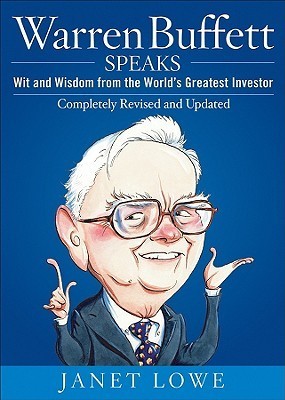
"Warren Buffett Speaks" distills the core investing philosophy and life lessons of one of history's most successful investors through a curated collection of his quotes, speeches, and writings. It offers direct insights into his thinking on business analysis, valuation, risk management, and the psychological discipline essential for long-term financial success. The book is structured thematically, allowing for easy access to Buffett's perspective on various aspects of investing and corporate management.
This collection shares a foundational lineage with "The Intelligent Investor" because Buffett himself is a renowned disciple of Benjamin Graham. Both works champion value investing, emphasizing the importance of intrinsic value, a margin of safety, and treating stocks as fractional ownership in a business rather than speculative chips. Buffett's insights often serve as practical applications and modern interpretations of Graham's timeless principles.
Individuals seeking practical, time-tested guidance for navigating financial markets will appreciate this book. Its direct quotes provide actionable wisdom and a clear understanding of the mindset required for successful, long-term wealth creation. It offers encouragement and strategies for disciplined investing, making it an invaluable resource for both novice and experienced market participants.
Warren Buffett Speaks: Wit and Wisdom from the World's Greatest Investor
"Warren Buffett Speaks" distills the core investing philosophy and life lessons of one of history's most successful investors through a curated collection of his quotes, speeches, and writings. It offers direct insights into his thinking on business analysis, valuation, risk management, and the psychological discipline essential for long-term financial success. The book is structured thematically, allowing for easy access to Buffett's perspective on various aspects of investing and corporate management.
This collection shares a foundational lineage with "The Intelligent Investor" because Buffett himself is a renowned disciple of Benjamin Graham. Both works champion value investing, emphasizing the importance of intrinsic value, a margin of safety, and treating stocks as fractional ownership in a business rather than speculative chips. Buffett's insights often serve as practical applications and modern interpretations of Graham's timeless principles.
Individuals seeking practical, time-tested guidance for navigating financial markets will appreciate this book. Its direct quotes provide actionable wisdom and a clear understanding of the mindset required for successful, long-term wealth creation. It offers encouragement and strategies for disciplined investing, making it an invaluable resource for both novice and experienced market participants.
F Wall Street: Joe Ponzio's No-Nonsense Approach to Value Investing For the Rest of Us
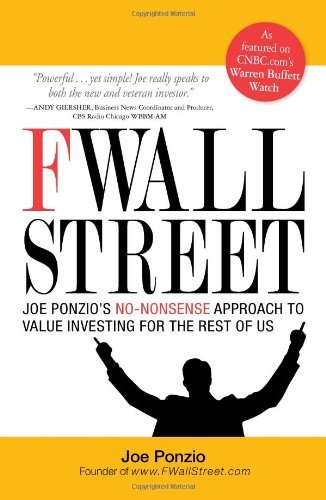
"F Wall Street" distills value investing principles into an actionable framework for the everyday investor, stripping away academic jargon. Joe Ponzio emphasizes fundamental analysis, focusing on understanding business operations, financial statements, and intrinsic value to identify undervalued companies, much like a business owner would. He advocates for patience, discipline, and a contrarian mindset, encouraging investors to think independently of market noise.
This book echoes "The Intelligent Investor" by championing the core tenets of value investing established by Benjamin Graham. Both authors stress the importance of treating stock investing as buying a portion of a business, not merely trading paper. They advocate for a "margin of safety" – purchasing assets for significantly less than their intrinsic worth – as a primary defense against adverse market movements and human error.
The practical, direct language makes complex financial concepts accessible, empowering individuals to make informed investment decisions without relying on professional advisors. Its actionable advice and real-world examples offer a tangible path to financial independence through sound, long-term investing strategies.
F Wall Street: Joe Ponzio's No-Nonsense Approach to Value Investing For the Rest of Us
"F Wall Street" distills value investing principles into an actionable framework for the everyday investor, stripping away academic jargon. Joe Ponzio emphasizes fundamental analysis, focusing on understanding business operations, financial statements, and intrinsic value to identify undervalued companies, much like a business owner would. He advocates for patience, discipline, and a contrarian mindset, encouraging investors to think independently of market noise.
This book echoes "The Intelligent Investor" by championing the core tenets of value investing established by Benjamin Graham. Both authors stress the importance of treating stock investing as buying a portion of a business, not merely trading paper. They advocate for a "margin of safety" – purchasing assets for significantly less than their intrinsic worth – as a primary defense against adverse market movements and human error.
The practical, direct language makes complex financial concepts accessible, empowering individuals to make informed investment decisions without relying on professional advisors. Its actionable advice and real-world examples offer a tangible path to financial independence through sound, long-term investing strategies.
More Books to Explore
Discover more titles that expand on these ideas and themes.
Security Analysis: The Classic 1951 Edition
Value Investing: From Graham to Buffett and Beyond
The Most Important Thing: Uncommon Sense for the Thoughtful Investor
Margin of Safety: Risk-Averse Value Investing Strategies for the Thoughtful Investor
A Random Walk Down Wall Street: The Time-Tested Strategy for Successful Investing
The Bogleheads' Guide to Investing