10 Books Similar to "The Floating Opera / The End of the Road"
by John Barth

The Floating Opera

"The Floating Opera," John Barth's debut novel, follows Todd Andrews, a cynical and analytical lawyer, across a single day in 1937. As he contemplates suicide, Andrews meticulously dissects his life and the motivations behind his decisions, revealing his philosophical outlook on existence, morality, and the arbitrary nature of human values. The narrative is a witty and intellectual exploration of nihilism and the search for meaning in a seemingly meaningless world, often delivered through Andrews's digressive and self-aware narration.
The similarity between "The Floating Opera" and "The Floating Opera / The End of the Road" is that the latter is a dual-publication containing the entire text of the former, alongside another significant work by Barth. Therefore, any reader engaging with the combined volume will be reading "The Floating Opera" in its entirety, experiencing the same narrative, characters, and thematic complexities. The two are identical in content for the specific novel in question.
This novel will appeal
The Floating Opera
"The Floating Opera," John Barth's debut novel, follows Todd Andrews, a cynical and analytical lawyer, across a single day in 1937. As he contemplates suicide, Andrews meticulously dissects his life and the motivations behind his decisions, revealing his philosophical outlook on existence, morality, and the arbitrary nature of human values. The narrative is a witty and intellectual exploration of nihilism and the search for meaning in a seemingly meaningless world, often delivered through Andrews's digressive and self-aware narration.
The similarity between "The Floating Opera" and "The Floating Opera / The End of the Road" is that the latter is a dual-publication containing the entire text of the former, alongside another significant work by Barth. Therefore, any reader engaging with the combined volume will be reading "The Floating Opera" in its entirety, experiencing the same narrative, characters, and thematic complexities. The two are identical in content for the specific novel in question.
This novel will appeal
Lost in the Funhouse

"Lost in the Funhouse" is a collection of metafictional short stories, focusing on the act of storytelling itself and the construction of narrative. Barth experiments with form and perspective, often featuring narrators aware of their own fictionality or grappling with the conventions of literature. Themes of existentialism, identity, and the limitations of language are explored through these self-referential tales.
This collection shares a foundational kinship with "The Floating Opera" and "The End of the Road" through its sophisticated exploration of philosophical dilemmas and profound self-consciousness. All three works delve into characters' internal struggles and their attempts to impose meaning on an often absurd world, while simultaneously questioning the very nature of those explorations. Barth’s distinctive intellectual humor and meticulous prose are evident across these texts.
Engaging with "Lost in the Funhouse" offers a uniquely enriching intellectual experience. It challenges conventional notions of narrative and invites a deeper appreciation for literary artistry. This book serves as a cornerstone for understanding postmodern literature, providing insights into structural innovation and the ongoing dialogue between author, text, and reader.
Lost in the Funhouse
"Lost in the Funhouse" is a collection of metafictional short stories, focusing on the act of storytelling itself and the construction of narrative. Barth experiments with form and perspective, often featuring narrators aware of their own fictionality or grappling with the conventions of literature. Themes of existentialism, identity, and the limitations of language are explored through these self-referential tales.
This collection shares a foundational kinship with "The Floating Opera" and "The End of the Road" through its sophisticated exploration of philosophical dilemmas and profound self-consciousness. All three works delve into characters' internal struggles and their attempts to impose meaning on an often absurd world, while simultaneously questioning the very nature of those explorations. Barth’s distinctive intellectual humor and meticulous prose are evident across these texts.
Engaging with "Lost in the Funhouse" offers a uniquely enriching intellectual experience. It challenges conventional notions of narrative and invites a deeper appreciation for literary artistry. This book serves as a cornerstone for understanding postmodern literature, providing insights into structural innovation and the ongoing dialogue between author, text, and reader.
Chimera

"Chimera" reimagines classic myths through three interconnected novellas, each exploring a protagonist's attempt to achieve immortal fame or "chimerical" perfection. From a narcissistic Perseus grappling with his heroic identity to Bellerophon contemplating his legend and a modern female poet striving for literary immortality, the book delves into the nature of storytelling, identity, and the elusive quest for lasting significance.
The similarity to "The Floating Opera / The End of the Road" lies in Barth’s signature postmodern playfulness and intellectual dissection of narrative. Both works feature protagonists who are deeply self-aware, prone to philosophical rumination, and who often deconstruct their own stories as they unfold. The exploration of existential dilemmas, the unreliable narrator, and a metafictional approach to reality and fiction are strong thematic and stylistic commonalities.
This work appeals through its clever wit, intricate narrative structures, and profound engagement with literary tradition. It offers a sophisticated intellectual exercise, inviting contemplation on the power of myth, the construction of identity, and the ways in which stories shape our understanding of the world. Its value resides in challenging conventional narrative forms and offering a rich, multi-layered reading experience for those who appreciate literary innovation and a deep dive into the craft of storytelling.
Chimera
"Chimera" reimagines classic myths through three interconnected novellas, each exploring a protagonist's attempt to achieve immortal fame or "chimerical" perfection. From a narcissistic Perseus grappling with his heroic identity to Bellerophon contemplating his legend and a modern female poet striving for literary immortality, the book delves into the nature of storytelling, identity, and the elusive quest for lasting significance.
The similarity to "The Floating Opera / The End of the Road" lies in Barth’s signature postmodern playfulness and intellectual dissection of narrative. Both works feature protagonists who are deeply self-aware, prone to philosophical rumination, and who often deconstruct their own stories as they unfold. The exploration of existential dilemmas, the unreliable narrator, and a metafictional approach to reality and fiction are strong thematic and stylistic commonalities.
This work appeals through its clever wit, intricate narrative structures, and profound engagement with literary tradition. It offers a sophisticated intellectual exercise, inviting contemplation on the power of myth, the construction of identity, and the ways in which stories shape our understanding of the world. Its value resides in challenging conventional narrative forms and offering a rich, multi-layered reading experience for those who appreciate literary innovation and a deep dive into the craft of storytelling.
Sixty Stories

Donald Barthelme's "Sixty Stories" is a collection of extremely short, often surreal, and distinctly postmodern narratives. These pieces frequently abandon traditional plot structures, instead focusing on language play, cultural commentary, and a fragmented, collage-like approach to storytelling. They explore the absurdities of modern life and the nature of fiction itself.
The similarity to Barth's "The Floating Opera / The End of the Road" lies in their shared embrace of postmodern metafiction and a playful, yet intellectually rigorous, approach to narrative. Both authors challenge conventional storytelling, exhibiting a keen awareness of the artificiality of language and the constructed nature of reality within their fiction. They delight in philosophical inquiry and a self-conscious examination of the author's role.
This collection holds appeal for those who appreciate literary experimentation, sharp wit, and a challenging engagement with narrative form. It offers a masterclass in compressed storytelling and the power of suggestion, providing a valuable experience for anyone interested in the possibilities of short fiction and the evolution of the novel as a genre.
Sixty Stories
Donald Barthelme's "Sixty Stories" is a collection of extremely short, often surreal, and distinctly postmodern narratives. These pieces frequently abandon traditional plot structures, instead focusing on language play, cultural commentary, and a fragmented, collage-like approach to storytelling. They explore the absurdities of modern life and the nature of fiction itself.
The similarity to Barth's "The Floating Opera / The End of the Road" lies in their shared embrace of postmodern metafiction and a playful, yet intellectually rigorous, approach to narrative. Both authors challenge conventional storytelling, exhibiting a keen awareness of the artificiality of language and the constructed nature of reality within their fiction. They delight in philosophical inquiry and a self-conscious examination of the author's role.
This collection holds appeal for those who appreciate literary experimentation, sharp wit, and a challenging engagement with narrative form. It offers a masterclass in compressed storytelling and the power of suggestion, providing a valuable experience for anyone interested in the possibilities of short fiction and the evolution of the novel as a genre.
The Sot-Weed Factor

"The Sot-Weed Factor" reimagines the historical epic, following Ebenezer Cooke, a naive, aspiring poet who journeys from England to colonial Maryland in the late 17th century. His quest is to compose an epic poem, "The Marylandiad," while simultaneously inheriting and protecting his family's tobacco plantation. The novel becomes a sprawling, picaresque adventure replete with mistaken identities, philosophical debates, and a satirical exploration of history, myth, and the very nature of storytelling itself.
Like "The Floating Opera / The End of the Road," "The Sot-Weed Factor" delves deeply into philosophical quandaries and the absurdities of existence. Barth’s signature postmodernism is evident in its self-referential narrative, unreliable narrators, and the questioning of absolute truths. Both works showcase a masterful command of language and a penchant for intricate, labyrinthine plots that challenge conventional notions of reality and morality, albeit with "Sot-Weed Factor" operating on a grander, more outwardly historical canvas.
This novel will appeal to those who appreciate intellectual humor, historical pastiche, and a profound engagement with literary tradition. Its exploration of narrative as a construct, coupled with its biting satire and lush prose, offers a rich, rewarding, and often hilarious reading experience. It is a valuable work for understanding the development of postmodern literature and its capacity to deconstruct and re-imagine historical narratives.
The Sot-Weed Factor
"The Sot-Weed Factor" reimagines the historical epic, following Ebenezer Cooke, a naive, aspiring poet who journeys from England to colonial Maryland in the late 17th century. His quest is to compose an epic poem, "The Marylandiad," while simultaneously inheriting and protecting his family's tobacco plantation. The novel becomes a sprawling, picaresque adventure replete with mistaken identities, philosophical debates, and a satirical exploration of history, myth, and the very nature of storytelling itself.
Like "The Floating Opera / The End of the Road," "The Sot-Weed Factor" delves deeply into philosophical quandaries and the absurdities of existence. Barth’s signature postmodernism is evident in its self-referential narrative, unreliable narrators, and the questioning of absolute truths. Both works showcase a masterful command of language and a penchant for intricate, labyrinthine plots that challenge conventional notions of reality and morality, albeit with "Sot-Weed Factor" operating on a grander, more outwardly historical canvas.
This novel will appeal to those who appreciate intellectual humor, historical pastiche, and a profound engagement with literary tradition. Its exploration of narrative as a construct, coupled with its biting satire and lush prose, offers a rich, rewarding, and often hilarious reading experience. It is a valuable work for understanding the development of postmodern literature and its capacity to deconstruct and re-imagine historical narratives.
Giles Goat-Boy

"Giles Goat-Boy" is a sprawling, satirical epic that re-imagines the modern university as a microcosm of the entire universe. It follows George Giles, a young man raised as a goat on a research farm, who is eventually introduced to human society and tasked with becoming the next Messiah for a world teetering on the brink of nuclear annihilation. Through elaborate allegories and philosophical debates, the novel explores themes of identity, belief systems, and the nature of truth within a deeply ironic and often absurd narrative.
This novel shares a strong thematic and stylistic lineage with "The Floating Opera / The End of the Road." All three works exemplify Barth's early postmodern sensibility, employing self-conscious narration, philosophical inquiry, and a dark, cerebral humor. They feature protagonists grappling with existential questions, dissecting meaning, and often finding themselves paralyzed by the very act of intellectual analysis. The works also demonstrate a shared commitment to metafiction and an elaborate, sometimes labyrinthine, prose style.
The book will appeal to those who enjoy intellectually challenging fiction that melds satire with profound philosophical questions. Its intricate structure and complex characters offer a rich ground for analysis and reflection, making it a valuable exploration of human nature, societal constructs, and the search for meaning in a chaotic world. It provides a unique blend of humor and insight, offering both entertainment and a deeper understanding of the absurdist elements of existence.
Giles Goat-Boy
"Giles Goat-Boy" is a sprawling, satirical epic that re-imagines the modern university as a microcosm of the entire universe. It follows George Giles, a young man raised as a goat on a research farm, who is eventually introduced to human society and tasked with becoming the next Messiah for a world teetering on the brink of nuclear annihilation. Through elaborate allegories and philosophical debates, the novel explores themes of identity, belief systems, and the nature of truth within a deeply ironic and often absurd narrative.
This novel shares a strong thematic and stylistic lineage with "The Floating Opera / The End of the Road." All three works exemplify Barth's early postmodern sensibility, employing self-conscious narration, philosophical inquiry, and a dark, cerebral humor. They feature protagonists grappling with existential questions, dissecting meaning, and often finding themselves paralyzed by the very act of intellectual analysis. The works also demonstrate a shared commitment to metafiction and an elaborate, sometimes labyrinthine, prose style.
The book will appeal to those who enjoy intellectually challenging fiction that melds satire with profound philosophical questions. Its intricate structure and complex characters offer a rich ground for analysis and reflection, making it a valuable exploration of human nature, societal constructs, and the search for meaning in a chaotic world. It provides a unique blend of humor and insight, offering both entertainment and a deeper understanding of the absurdist elements of existence.
Come Back, Dr. Caligari

Donald Barthelme's "Come Back, Dr. Caligari" is a collection of experimental short stories marked by their fragmented narratives, distinctive prose, and often surreal, satirical take on modern life. Characters grapple with mundane anxieties and existential dilemmas, frequently expressed through absurd scenarios and unconventional storytelling techniques. Themes of alienation, the breakdown of communication, and the elusive nature of reality emerge consistently across the varied pieces.
This collection shares a striking kinship with John Barth’s "The Floating Opera" and "The End of the Road" through their shared lineage in postmodern literature. Both authors employ metafiction, dark humor, and an intellectual, self-aware narrative voice to dissect societal norms and philosophical quandaries. The protagonists in these works often navigate a world where traditional meaning and moral frameworks have dissolved, leading to a sense of detachment and ironic observation.
It will appeal to those who appreciate literature that challenges conventional forms and delves into deeper philosophical undercurrents. This collection offers a captivating exploration of the human condition through a lens of wit and unconventional artistry, providing a rich, thought-provoking experience for anyone interested in the boundaries of storytelling and the complexities of contemporary existence.
Come Back, Dr. Caligari
Donald Barthelme's "Come Back, Dr. Caligari" is a collection of experimental short stories marked by their fragmented narratives, distinctive prose, and often surreal, satirical take on modern life. Characters grapple with mundane anxieties and existential dilemmas, frequently expressed through absurd scenarios and unconventional storytelling techniques. Themes of alienation, the breakdown of communication, and the elusive nature of reality emerge consistently across the varied pieces.
This collection shares a striking kinship with John Barth’s "The Floating Opera" and "The End of the Road" through their shared lineage in postmodern literature. Both authors employ metafiction, dark humor, and an intellectual, self-aware narrative voice to dissect societal norms and philosophical quandaries. The protagonists in these works often navigate a world where traditional meaning and moral frameworks have dissolved, leading to a sense of detachment and ironic observation.
It will appeal to those who appreciate literature that challenges conventional forms and delves into deeper philosophical undercurrents. This collection offers a captivating exploration of the human condition through a lens of wit and unconventional artistry, providing a rich, thought-provoking experience for anyone interested in the boundaries of storytelling and the complexities of contemporary existence.
Amateurs

Donald Barthelme's "Amateurs" is a collection of short stories that playfully deconstruct conventional narratives and societal expectations. Through a fragmented, often absurd, and meticulously crafted prose, Barthelme explores themes of love, art, technology, and the anxieties of modern life. The characters, often bewildered by their circumstances, stumble through a series of darkly humorous and existentially tinged encounters, challenging the very notion of meaning and coherence.
This collection shares a striking kinship with John Barth's "The Floating Opera / The End of the Road" due to its embrace of postmodern literary techniques and its sardonic, intellectual wit. Both authors dissect the inherent artifice of storytelling and the ambiguities of human experience, albeit with different stylistic inflections. Barth's philosophical narrators and Barthelme's experimental vignettes both exhibit a profound skepticism towards grand narratives and a keen awareness of language's limitations and possibilities.
"Amateurs" offers a compelling experience for those appreciative of literature that transcends traditional boundaries and probes deeper into the complexities of existence. Its innovative structure and incisive commentary on contemporary culture provide a thought-provoking and intellectually stimulating read, rewarding close attention with fresh perspectives on the human condition and the nature of artistic expression.
Amateurs
Donald Barthelme's "Amateurs" is a collection of short stories that playfully deconstruct conventional narratives and societal expectations. Through a fragmented, often absurd, and meticulously crafted prose, Barthelme explores themes of love, art, technology, and the anxieties of modern life. The characters, often bewildered by their circumstances, stumble through a series of darkly humorous and existentially tinged encounters, challenging the very notion of meaning and coherence.
This collection shares a striking kinship with John Barth's "The Floating Opera / The End of the Road" due to its embrace of postmodern literary techniques and its sardonic, intellectual wit. Both authors dissect the inherent artifice of storytelling and the ambiguities of human experience, albeit with different stylistic inflections. Barth's philosophical narrators and Barthelme's experimental vignettes both exhibit a profound skepticism towards grand narratives and a keen awareness of language's limitations and possibilities.
"Amateurs" offers a compelling experience for those appreciative of literature that transcends traditional boundaries and probes deeper into the complexities of existence. Its innovative structure and incisive commentary on contemporary culture provide a thought-provoking and intellectually stimulating read, rewarding close attention with fresh perspectives on the human condition and the nature of artistic expression.
Forty Stories
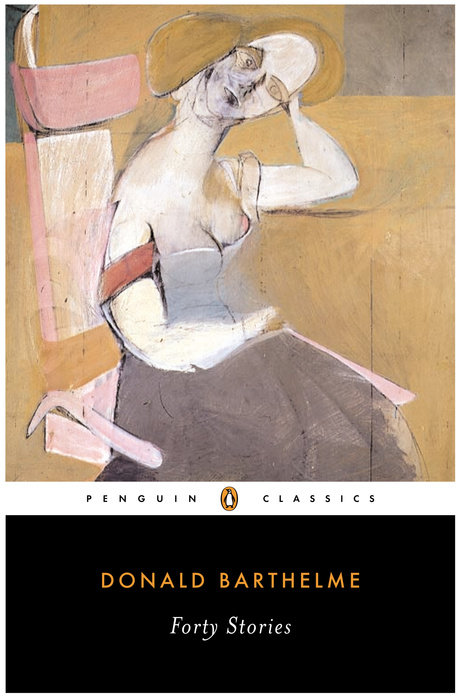
"Forty Stories" is a collection of concise, often surreal narratives that play with conventional storytelling. Barthelme employs a distinctive, fragmented style, crafting vignettes that are less concerned with linear plot and more with exploring language, ideas, and the absurdities of modern life. These stories function almost like literary collages, juxtaposing disparate elements to create new meanings and emotional textures, frequently without clear resolutions.
The significant similarity to Barth's "The Floating Opera / The End of the Road" lies in their shared embrace of postmodern techniques and an intellectual, self-aware approach to fiction. Both authors challenge narrative conventions, presenting characters and situations that are deeply introspective, often alienated, and engaged in philosophical wrestling with their own existence and the structures around them. The humor in both works is often dark, ironic, and derived from intellectual play.
This collection offers substantial appeal to those who appreciate experimental fiction and a sharp, witty engagement with language. It provides a valuable experience for anyone seeking to explore the boundaries of narrative, delve into incisive social commentary presented through unconventional lenses, and encounter precise, artful prose that stimulates both thought and imagination.
Forty Stories
"Forty Stories" is a collection of concise, often surreal narratives that play with conventional storytelling. Barthelme employs a distinctive, fragmented style, crafting vignettes that are less concerned with linear plot and more with exploring language, ideas, and the absurdities of modern life. These stories function almost like literary collages, juxtaposing disparate elements to create new meanings and emotional textures, frequently without clear resolutions.
The significant similarity to Barth's "The Floating Opera / The End of the Road" lies in their shared embrace of postmodern techniques and an intellectual, self-aware approach to fiction. Both authors challenge narrative conventions, presenting characters and situations that are deeply introspective, often alienated, and engaged in philosophical wrestling with their own existence and the structures around them. The humor in both works is often dark, ironic, and derived from intellectual play.
This collection offers substantial appeal to those who appreciate experimental fiction and a sharp, witty engagement with language. It provides a valuable experience for anyone seeking to explore the boundaries of narrative, delve into incisive social commentary presented through unconventional lenses, and encounter precise, artful prose that stimulates both thought and imagination.
Bluebeard
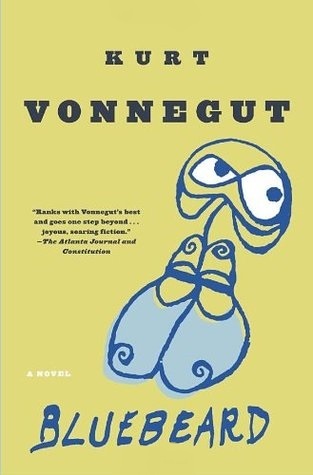
Kurt Vonnegut Jr.'s "Bluebeard" is the fictional autobiography of Rabo Karabekian, an elderly abstract expressionist painter with an artificial eye. Karabekian recounts his unconventional life, from his impoverished Armenian-American childhood to his artistic successes and failures, all while grappling with the elusive nature of truth and beauty in art. The narrative culminates in the reveal of a hidden room, echoing the fable of Bluebeard, where Karabekian safeguards a monumental, and controversially empty, final masterpiece.
This novel shares a striking affinity with "The Floating Opera / The End of the Road" in its exploration of protagonists who are deeply philosophical, frequently unreliable, and profoundly existential. Both Barth's Todd Andrews and Jake Horner, and Vonnegut's Karabekian, are intelligent, cynical observers of humanity, meticulously dissecting their own choices and the absurdities of their worlds. The works employ dark humor and ironic detachment to navigate complex moral dilemmas and the search for meaning in a seemingly meaningless existence.
The appeal of "Bluebeard" lies in its profound yet accessible philosophical inquiry into art, identity, and the human condition. It offers a thought-provoking journey into the mind of an idiosyncratic artist, prompting contemplation on the values we assign to creativity, integrity, and memory. The engaging prose and unique narrative voice promise a rich experience, encouraging a re-examination of personal truths and the subjective nature of perception.
Bluebeard
Kurt Vonnegut Jr.'s "Bluebeard" is the fictional autobiography of Rabo Karabekian, an elderly abstract expressionist painter with an artificial eye. Karabekian recounts his unconventional life, from his impoverished Armenian-American childhood to his artistic successes and failures, all while grappling with the elusive nature of truth and beauty in art. The narrative culminates in the reveal of a hidden room, echoing the fable of Bluebeard, where Karabekian safeguards a monumental, and controversially empty, final masterpiece.
This novel shares a striking affinity with "The Floating Opera / The End of the Road" in its exploration of protagonists who are deeply philosophical, frequently unreliable, and profoundly existential. Both Barth's Todd Andrews and Jake Horner, and Vonnegut's Karabekian, are intelligent, cynical observers of humanity, meticulously dissecting their own choices and the absurdities of their worlds. The works employ dark humor and ironic detachment to navigate complex moral dilemmas and the search for meaning in a seemingly meaningless existence.
The appeal of "Bluebeard" lies in its profound yet accessible philosophical inquiry into art, identity, and the human condition. It offers a thought-provoking journey into the mind of an idiosyncratic artist, prompting contemplation on the values we assign to creativity, integrity, and memory. The engaging prose and unique narrative voice promise a rich experience, encouraging a re-examination of personal truths and the subjective nature of perception.
More Books to Explore
Discover more titles that expand on these ideas and themes.
The Floating Opera
Lost in the Funhouse
Chimera
Sixty Stories
The Sot-Weed Factor
Giles Goat-Boy