10 Books Similar to "The Devil's Alternative"
by Frederick Forsyth

The Negotiator
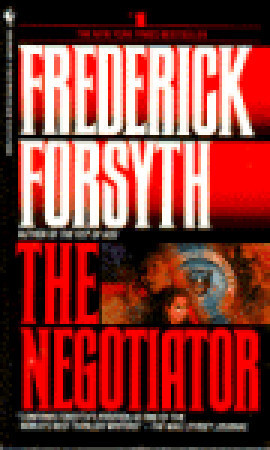
"The Negotiator" centers on the abduction of the American President's son, setting off a high-stakes diplomatic crisis. The protagonist, Quinn, is a skilled negotiator called upon to navigate a treacherous web of international intrigue, shadowy figures, and geopolitical maneuvers to secure the hostage's release. The narrative unfolds with intricate plotting, global surveillance, and unexpected twists as Quinn uncovers a conspiracy far grander and more dangerous than a simple kidnapping.
This novel shares a strong kinship with "The Devil's Alternative" through its intricate espionage, high-stakes global politics, and a resourceful, often solitary, protagonist thrust into an impossible situation. Both books meticulously detail the mechanics of international crises, showcasing Forsyth's signature blend of authentic operational procedures, political machinations, and compelling, suspenseful narratives where the fate of nations or prominent individuals hangs precariously in the balance.
The book offers a compelling narrative for those who appreciate intricate thrillers woven from believable geopolitical scenarios and meticulously researched details. It delivers a masterclass in suspense, revealing how individual courage and strategic thinking can confront vast conspiracies. The value lies in its intelligent exploration of power dynamics, intelligence gathering, and the human element within complex international conflicts.
The Negotiator
"The Negotiator" centers on the abduction of the American President's son, setting off a high-stakes diplomatic crisis. The protagonist, Quinn, is a skilled negotiator called upon to navigate a treacherous web of international intrigue, shadowy figures, and geopolitical maneuvers to secure the hostage's release. The narrative unfolds with intricate plotting, global surveillance, and unexpected twists as Quinn uncovers a conspiracy far grander and more dangerous than a simple kidnapping.
This novel shares a strong kinship with "The Devil's Alternative" through its intricate espionage, high-stakes global politics, and a resourceful, often solitary, protagonist thrust into an impossible situation. Both books meticulously detail the mechanics of international crises, showcasing Forsyth's signature blend of authentic operational procedures, political machinations, and compelling, suspenseful narratives where the fate of nations or prominent individuals hangs precariously in the balance.
The book offers a compelling narrative for those who appreciate intricate thrillers woven from believable geopolitical scenarios and meticulously researched details. It delivers a masterclass in suspense, revealing how individual courage and strategic thinking can confront vast conspiracies. The value lies in its intelligent exploration of power dynamics, intelligence gathering, and the human element within complex international conflicts.
The Fourth Protocol

"The Fourth Protocol" delves into a chilling Cold War scenario where a rogue element within the Soviet Union plans to detonate a nuclear device on British soil. Its objective is to trigger a political upheaval that would dismantle NATO and install a pro-Soviet government in the UK. MI5 agent John Preston races against time to uncover this plot and prevent global catastrophe, navigating a labyrinth of espionage, betrayal, and high-stakes international intrigue.
Both novels exemplify Forsyth's masterful command of intricate plots driven by geopolitical tension and the meticulous execution of a highly illegal, covert operation. Similar to "The Devil's Alternative," which centers on a complex Soviet defection and kidnapping, "The Fourth Protocol" involves a clandestine Soviet initiative designed to undermine the West. Both feature an ordinary yet exceptionally capable protagonist pitted against powerful, hidden forces, operating with little official support and facing immense personal risk.
This novel offers a deeply immersive experience for those who appreciate meticulously researched thrillers grounded in realistic political and espionage frameworks. Its detailed procedural elements, authentic character motivations, and suspenseful narrative provide an intellectually stimulating escape. The historical context resonates with the enduring appeal of Cold War narratives, offering a valuable insight into the anxieties and strategic maneuvers of that era, all wrapped in a consistently engaging package.
The Fourth Protocol
"The Fourth Protocol" delves into a chilling Cold War scenario where a rogue element within the Soviet Union plans to detonate a nuclear device on British soil. Its objective is to trigger a political upheaval that would dismantle NATO and install a pro-Soviet government in the UK. MI5 agent John Preston races against time to uncover this plot and prevent global catastrophe, navigating a labyrinth of espionage, betrayal, and high-stakes international intrigue.
Both novels exemplify Forsyth's masterful command of intricate plots driven by geopolitical tension and the meticulous execution of a highly illegal, covert operation. Similar to "The Devil's Alternative," which centers on a complex Soviet defection and kidnapping, "The Fourth Protocol" involves a clandestine Soviet initiative designed to undermine the West. Both feature an ordinary yet exceptionally capable protagonist pitted against powerful, hidden forces, operating with little official support and facing immense personal risk.
This novel offers a deeply immersive experience for those who appreciate meticulously researched thrillers grounded in realistic political and espionage frameworks. Its detailed procedural elements, authentic character motivations, and suspenseful narrative provide an intellectually stimulating escape. The historical context resonates with the enduring appeal of Cold War narratives, offering a valuable insight into the anxieties and strategic maneuvers of that era, all wrapped in a consistently engaging package.
The Deceiver

"The Deceiver" is a captivating anthology of four distinct espionage tales, each focusing on a different facet of the British Secret Service's operations and the extraordinary agent, Sam McCready, who masterminds them. From thwarting an IRA arms deal to uncovering a dangerous Eastern Bloc defector and discrediting a Middle Eastern terrorist, the book meticulously details the intricate planning, political maneuvering, and high-stakes execution inherent in the world of intelligence.
Like "The Devil's Alternative," "The Deceiver" excels in its masterful depiction of complex geopolitical scenarios and the moral ambiguities faced by those operating within them. Both novels showcase Forsyth's signature style of blending meticulous research with thrilling, multi-layered plots, where international crises are resolved through a combination of strategic brilliance, covert operations, and sometimes, desperate improvisation. The emphasis on dedicated, highly skilled protagonists navigating a world of shadows and deceit is a strong common thread.
This collection offers an immersive experience for those who appreciate meticulously crafted thrillers grounded in realistic political and intelligence operations. It provides insight into the ethical dilemmas and personal sacrifices demanded by national security, delivering an intellectual challenge alongside compelling suspense. The book's appeal lies in its authentic portrayal of espionage, making it a valuable exploration of hidden global conflicts and the individuals who shape their outcomes.
The Deceiver
"The Deceiver" is a captivating anthology of four distinct espionage tales, each focusing on a different facet of the British Secret Service's operations and the extraordinary agent, Sam McCready, who masterminds them. From thwarting an IRA arms deal to uncovering a dangerous Eastern Bloc defector and discrediting a Middle Eastern terrorist, the book meticulously details the intricate planning, political maneuvering, and high-stakes execution inherent in the world of intelligence.
Like "The Devil's Alternative," "The Deceiver" excels in its masterful depiction of complex geopolitical scenarios and the moral ambiguities faced by those operating within them. Both novels showcase Forsyth's signature style of blending meticulous research with thrilling, multi-layered plots, where international crises are resolved through a combination of strategic brilliance, covert operations, and sometimes, desperate improvisation. The emphasis on dedicated, highly skilled protagonists navigating a world of shadows and deceit is a strong common thread.
This collection offers an immersive experience for those who appreciate meticulously crafted thrillers grounded in realistic political and intelligence operations. It provides insight into the ethical dilemmas and personal sacrifices demanded by national security, delivering an intellectual challenge alongside compelling suspense. The book's appeal lies in its authentic portrayal of espionage, making it a valuable exploration of hidden global conflicts and the individuals who shape their outcomes.
Avenger

"Avenger" centers on Calvin Dexter, a retired Special Forces operative turned lawyer, who undertakes a personal mission of retribution. He's contracted by a billionaire to track down a Serbian war criminal responsible for atrocities against Bosnian civilians, including the billionaire's grandson. Dexter embarks on a complex, international manhunt, navigating geopolitical machinations and confronting the moral ambiguities of vengeance.
This novel shares "The Devil's Alternative's" hallmark blend of intricate geopolitical plotting, high-stakes espionage, and a protagonist driven by a powerful, often personal, sense of justice. Both books meticulously detail clandestine operations and feature characters operating within morally grey areas, forcing difficult choices with global ramifications. The narrative craftsmanship in constructing a layered, suspenseful international incident is a strong commonality.
Those who enjoyed "The Devil's Alternative" will appreciate "Avenger" for its compelling narrative, authentic-feeling operational details, and exploration of profound ethical dilemmas. Its value lies in offering a gripping, intel-driven thriller that provokes thought on justice, international accountability, and the long shadow of past conflicts, all delivered with Forsyth's signature authoritative prose.
Avenger
"Avenger" centers on Calvin Dexter, a retired Special Forces operative turned lawyer, who undertakes a personal mission of retribution. He's contracted by a billionaire to track down a Serbian war criminal responsible for atrocities against Bosnian civilians, including the billionaire's grandson. Dexter embarks on a complex, international manhunt, navigating geopolitical machinations and confronting the moral ambiguities of vengeance.
This novel shares "The Devil's Alternative's" hallmark blend of intricate geopolitical plotting, high-stakes espionage, and a protagonist driven by a powerful, often personal, sense of justice. Both books meticulously detail clandestine operations and feature characters operating within morally grey areas, forcing difficult choices with global ramifications. The narrative craftsmanship in constructing a layered, suspenseful international incident is a strong commonality.
Those who enjoyed "The Devil's Alternative" will appreciate "Avenger" for its compelling narrative, authentic-feeling operational details, and exploration of profound ethical dilemmas. Its value lies in offering a gripping, intel-driven thriller that provokes thought on justice, international accountability, and the long shadow of past conflicts, all delivered with Forsyth's signature authoritative prose.
The Fist of God

"The Fist of God" meticulously details a covert British intelligence operation during the 1990-91 Gulf War. It follows Major Mike Martin, a special forces operative, as he infiltrates Iraq to uncover the elusive "Fist of God," believed to be Saddam Hussein's superweapon. The narrative skillfully interweaves geopolitical tensions, espionage, and military strategy as nations scramble to prevent a devastating escalation.
Both novels exemplify Forsyth's signature approach to geopolitical thrillers. They share a complex, multi-layered plot driven by real-world political landscapes, featuring high-stakes espionage and detailed operational planning. The protagonists are often resourceful, solitary figures operating in perilous environments, and both books exhibit Forsyth's remarkable ability to blend meticulous research with pulse-pounding suspense.
This book offers a compelling deep dive into military intelligence and the intricacies of wartime decision-making. Its well-researched portrayal of the Gulf War era, combined with an intricately crafted plot and morally ambiguous characters, provides a sophisticated and gripping reading experience. It appeals to those who appreciate a narrative firmly grounded in historical context yet propelled by thrilling suspense and strategic twists.
The Fist of God
"The Fist of God" meticulously details a covert British intelligence operation during the 1990-91 Gulf War. It follows Major Mike Martin, a special forces operative, as he infiltrates Iraq to uncover the elusive "Fist of God," believed to be Saddam Hussein's superweapon. The narrative skillfully interweaves geopolitical tensions, espionage, and military strategy as nations scramble to prevent a devastating escalation.
Both novels exemplify Forsyth's signature approach to geopolitical thrillers. They share a complex, multi-layered plot driven by real-world political landscapes, featuring high-stakes espionage and detailed operational planning. The protagonists are often resourceful, solitary figures operating in perilous environments, and both books exhibit Forsyth's remarkable ability to blend meticulous research with pulse-pounding suspense.
This book offers a compelling deep dive into military intelligence and the intricacies of wartime decision-making. Its well-researched portrayal of the Gulf War era, combined with an intricately crafted plot and morally ambiguous characters, provides a sophisticated and gripping reading experience. It appeals to those who appreciate a narrative firmly grounded in historical context yet propelled by thrilling suspense and strategic twists.
The Cobra
"The Cobra" details a meticulously planned global operation orchestrated by a retiring US President. His objective: dismantle the entrenched South American drug cartels that have evaded conventional law enforcement for decades. Utilizing unprecedented resources and a covert team led by a former CIA operative, the narrative unfolds as a brutal, high-stakes campaign of disruption and assassination, pushing ethical boundaries to achieve a decisive, if controversial, victory against the narco-trade.
Both "The Cobra" and "The Devil's Alternative" showcase Forsyth's signature intricate plotting and deep dives into geopolitical machinations. They share a core theme of extraordinary measures taken by powerful figures to address seemingly intractable global crises. The meticulous research into international security, intelligence operations, and the sheer scale of the threats involved resonate directly between these two works, demonstrating Forsyth's mastery of the global thriller genre.
This book offers a compelling exploration of executive power, moral compromise, and the desperate fight against organized crime on an international stage. Its detailed depiction of covert operations and the sophisticated strategies employed provides a gripping and thought-provoking narrative, appealing to those who appreciate high-stakes political thrillers with a strong sense of realism and complex ethical dilemmas.
The Cobra
"The Cobra" details a meticulously planned global operation orchestrated by a retiring US President. His objective: dismantle the entrenched South American drug cartels that have evaded conventional law enforcement for decades. Utilizing unprecedented resources and a covert team led by a former CIA operative, the narrative unfolds as a brutal, high-stakes campaign of disruption and assassination, pushing ethical boundaries to achieve a decisive, if controversial, victory against the narco-trade.
Both "The Cobra" and "The Devil's Alternative" showcase Forsyth's signature intricate plotting and deep dives into geopolitical machinations. They share a core theme of extraordinary measures taken by powerful figures to address seemingly intractable global crises. The meticulous research into international security, intelligence operations, and the sheer scale of the threats involved resonate directly between these two works, demonstrating Forsyth's mastery of the global thriller genre.
This book offers a compelling exploration of executive power, moral compromise, and the desperate fight against organized crime on an international stage. Its detailed depiction of covert operations and the sophisticated strategies employed provides a gripping and thought-provoking narrative, appealing to those who appreciate high-stakes political thrillers with a strong sense of realism and complex ethical dilemmas.
No Comebacks

"No Comebacks" is a collection of ten short stories, each a self-contained venture into the world of espionage, crime, and meticulous planning. These narratives often feature ordinary individuals caught in extraordinary circumstances, or professionals executing complex schemes, always with consequences that twist unexpectedly. From diamond smuggling to assassinations, the plots are diverse but unified by a sharp focus on human cunning and vulnerability.
This collection shares a striking kinship with "The Devil's Alternative" primarily through Forsyth's signature style: intricate plotting, detailed procedural elements, and a pervasive sense of moral ambiguity. Both works excel at presenting scenarios where characters face impossible choices, weighing ethical dilemmas against survival or mission success. The themes of political intrigue, high stakes, and the cold logic of espionage are recurrent in both, showcasing Forsyth's mastery of the thriller genre from a broad to a granular scale.
The precision of the narratives and the consistent tension will draw in those who appreciate tight, intelligent thrillers. The book's appeal lies in Forsyth's ability to create believable, high-stakes situations without relying on implausible heroics. It offers a satisfying dive into human psychology under pressure and the consequences of calculated risk, providing both entertainment and a nuanced perspective on the dark underbelly of human endeavor.
No Comebacks
"No Comebacks" is a collection of ten short stories, each a self-contained venture into the world of espionage, crime, and meticulous planning. These narratives often feature ordinary individuals caught in extraordinary circumstances, or professionals executing complex schemes, always with consequences that twist unexpectedly. From diamond smuggling to assassinations, the plots are diverse but unified by a sharp focus on human cunning and vulnerability.
This collection shares a striking kinship with "The Devil's Alternative" primarily through Forsyth's signature style: intricate plotting, detailed procedural elements, and a pervasive sense of moral ambiguity. Both works excel at presenting scenarios where characters face impossible choices, weighing ethical dilemmas against survival or mission success. The themes of political intrigue, high stakes, and the cold logic of espionage are recurrent in both, showcasing Forsyth's mastery of the thriller genre from a broad to a granular scale.
The precision of the narratives and the consistent tension will draw in those who appreciate tight, intelligent thrillers. The book's appeal lies in Forsyth's ability to create believable, high-stakes situations without relying on implausible heroics. It offers a satisfying dive into human psychology under pressure and the consequences of calculated risk, providing both entertainment and a nuanced perspective on the dark underbelly of human endeavor.
The Afghan
"The Afghan" centers on an unprecedented joint operation between MI6 and the CIA to prevent a catastrophic al-Qaeda attack targeting the West. A British Pathan operative, a "ghost" from the past with intimate knowledge of the organization, is sent deep undercover to infiltrate the network, navigating treacherous political landscapes and a relentless race against time to uncover the plot's full scope before it's too late.
The similarity to "The Devil's Alternative" lies in Forsyth's masterful construction of complex, multi-layered global thrillers where the fate of nations hinges on the actions of a few key individuals. Both novels feature high-stakes geopolitical crises, intricate webs of intelligence gathering, and a meticulous exploration of the moral ambiguities inherent in spycraft and international relations. They share a core narrative of a race against an imminent, devastating threat, demanding extraordinary measures and often unconventional solutions.
This book will appeal to those who appreciate meticulously researched and intricately plotted thrillers with a strong sense of realism. It offers an engaging narrative rich in geopolitical intrigue, espionage, and the strategic maneuvering of intelligence agencies. The detailed portrayal of intelligence operations and the chillingly plausible scenario provide both entertainment and a thought-provoking glimpse into the complexities of global security challenges.
The Afghan
"The Afghan" centers on an unprecedented joint operation between MI6 and the CIA to prevent a catastrophic al-Qaeda attack targeting the West. A British Pathan operative, a "ghost" from the past with intimate knowledge of the organization, is sent deep undercover to infiltrate the network, navigating treacherous political landscapes and a relentless race against time to uncover the plot's full scope before it's too late.
The similarity to "The Devil's Alternative" lies in Forsyth's masterful construction of complex, multi-layered global thrillers where the fate of nations hinges on the actions of a few key individuals. Both novels feature high-stakes geopolitical crises, intricate webs of intelligence gathering, and a meticulous exploration of the moral ambiguities inherent in spycraft and international relations. They share a core narrative of a race against an imminent, devastating threat, demanding extraordinary measures and often unconventional solutions.
This book will appeal to those who appreciate meticulously researched and intricately plotted thrillers with a strong sense of realism. It offers an engaging narrative rich in geopolitical intrigue, espionage, and the strategic maneuvering of intelligence agencies. The detailed portrayal of intelligence operations and the chillingly plausible scenario provide both entertainment and a thought-provoking glimpse into the complexities of global security challenges.
The Odessa File

"The Odessa File" plunges into a relentless post-World War II hunt for a former SS concentration camp commander. A young, determined German journalist stumbles upon a lead that takes him deep into the chilling underground network of ODESSA, a clandestine organization dedicated to protecting ex-SS members. He meticulously uncovers a conspiracy reaching the highest echelons, risking his life to bring a monster to justice and expose the sinister attempts to revive Nazi ideology.
Both novels exemplify Forsyth's mastery of the meticulously researched thriller. Like "The Devil's Alternative," "The Odessa File" features a lone protagonist facing overwhelming odds and a vast, intricate conspiracy. They share a focus on high-stakes geopolitical maneuvering, a complex network of characters with hidden agendas, and a relentless pace driven by mounting tension and revelation. The narratives are deeply rooted in real-world historical context, lending a chilling authenticity to their fictional stakes.
This novel offers an immersive journey into a crucial historical period, shedding light on the continued struggle against extremist ideologies. Its intricate plotting, compelling character development, and unflinching exploration of justice versus impunity provide a thought-provoking and utterly engrossing experience. The story's relevance endures, serving as a powerful reminder of how past atrocities can continue to cast long shadows.
The Odessa File
"The Odessa File" plunges into a relentless post-World War II hunt for a former SS concentration camp commander. A young, determined German journalist stumbles upon a lead that takes him deep into the chilling underground network of ODESSA, a clandestine organization dedicated to protecting ex-SS members. He meticulously uncovers a conspiracy reaching the highest echelons, risking his life to bring a monster to justice and expose the sinister attempts to revive Nazi ideology.
Both novels exemplify Forsyth's mastery of the meticulously researched thriller. Like "The Devil's Alternative," "The Odessa File" features a lone protagonist facing overwhelming odds and a vast, intricate conspiracy. They share a focus on high-stakes geopolitical maneuvering, a complex network of characters with hidden agendas, and a relentless pace driven by mounting tension and revelation. The narratives are deeply rooted in real-world historical context, lending a chilling authenticity to their fictional stakes.
This novel offers an immersive journey into a crucial historical period, shedding light on the continued struggle against extremist ideologies. Its intricate plotting, compelling character development, and unflinching exploration of justice versus impunity provide a thought-provoking and utterly engrossing experience. The story's relevance endures, serving as a powerful reminder of how past atrocities can continue to cast long shadows.
The Veteran: Five Heart-Stopping Stories

"The Veteran: Five Heart-Stopping Stories" is a collection of five novellas by Frederick Forsyth, showcasing his masterful storytelling across diverse geopolitical landscapes and criminal enterprises. Each standalone narrative presents a meticulously crafted plot, often centering on intricate espionage, calculated assassinations, or morally complex situations demanding extraordinary resolutions. Characters are typically seasoned professionals operating within shadowy worlds of international intrigue and high-stakes maneuvering.
This collection shares thematic DNA with "The Devil's Alternative" through Forsyth's signature style: complex, meticulously researched plots, often involving geopolitical crises, detailed procedural accuracy, and a cast of highly professional, often morally ambiguous characters. Both works delve into the intricate mechanics of intelligence operations, political machinations, and the human element under immense pressure, be it a hijacked supertanker or the personal motivations behind covert actions. The focus remains on precise execution and the consequences of pivotal decisions.
The book will appeal to those who appreciate sophisticated thrillers built on rigorous detail and plausible scenarios. It offers the satisfaction of witnessing expert protagonists navigate seemingly insurmountable challenges through wit, skill, and sometimes ruthless efficiency. The varied settings and plots ensure continuous engagement, and the exploration of ethical dilemmas within high-stakes environments provides thought-provoking depth beyond mere action, proving valuable for its intricate narratives and insight into the clandestine world.
The Veteran: Five Heart-Stopping Stories
"The Veteran: Five Heart-Stopping Stories" is a collection of five novellas by Frederick Forsyth, showcasing his masterful storytelling across diverse geopolitical landscapes and criminal enterprises. Each standalone narrative presents a meticulously crafted plot, often centering on intricate espionage, calculated assassinations, or morally complex situations demanding extraordinary resolutions. Characters are typically seasoned professionals operating within shadowy worlds of international intrigue and high-stakes maneuvering.
This collection shares thematic DNA with "The Devil's Alternative" through Forsyth's signature style: complex, meticulously researched plots, often involving geopolitical crises, detailed procedural accuracy, and a cast of highly professional, often morally ambiguous characters. Both works delve into the intricate mechanics of intelligence operations, political machinations, and the human element under immense pressure, be it a hijacked supertanker or the personal motivations behind covert actions. The focus remains on precise execution and the consequences of pivotal decisions.
The book will appeal to those who appreciate sophisticated thrillers built on rigorous detail and plausible scenarios. It offers the satisfaction of witnessing expert protagonists navigate seemingly insurmountable challenges through wit, skill, and sometimes ruthless efficiency. The varied settings and plots ensure continuous engagement, and the exploration of ethical dilemmas within high-stakes environments provides thought-provoking depth beyond mere action, proving valuable for its intricate narratives and insight into the clandestine world.
More Books to Explore
Discover more titles that expand on these ideas and themes.
The Negotiator
The Fourth Protocol
The Deceiver
Avenger
The Fist of God
The Cobra