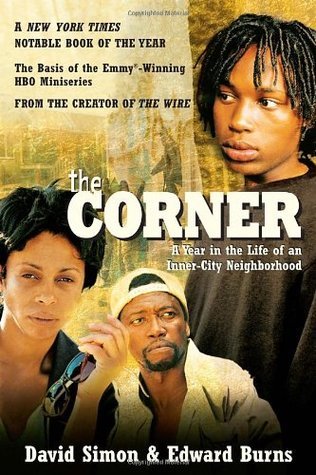
10 Books Similar to "The Corner: A Year in the Life of an Inner-City Neighborhood"
by David Simon
Homicide: A Year on the Killing Streets
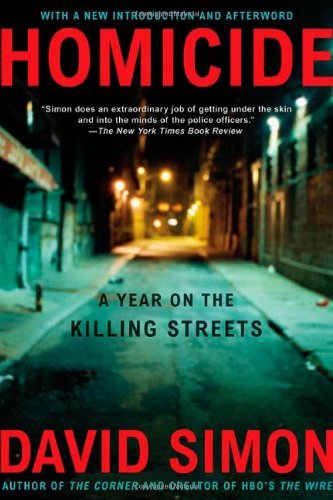
"Homicide: A Year on the Killing Streets" offers an unflinching, granular account of life within a Baltimore Police Department homicide unit. Simon, embedded with detectives for a year, meticulously details their daily grind: the relentless pursuit of leads, the emotional toll of horrific crimes, the bureaucratic frustrations, and the dark humor employed as a coping mechanism. It's a deep dive into the practicalities and philosophies of urban policing at its most intense.
This work resonates strongly with "The Corner" due to Simon's consistent narrative approach and thematic focus. Both books employ immersive, ethnographic journalism to dissect the intricate societal structures of inner-city Baltimore. They share a profound commitment to portraying the human cost of systemic issues, whether through the lens of drug addiction and poverty on Franklin Avenue or the relentless struggle for justice on the Homicide Unit's streets. Simon's signature style – rich in character development, sharp dialogue, and a powerful sense of place – binds these narratives together.
The book’s compelling nature stems from its raw authenticity and the profound insights it offers into the criminal justice system. It will appeal to those seeking a sophisticated understanding of urban sociology, law enforcement, and the complex interplay of poverty, crime, and human resilience. Its value lies in its ability to humanize the often-abstract concepts of justice and inequality, fostering a deeper, more nuanced perspective on the challenges facing contemporary cities and the individuals trying to navigate them.
Homicide: A Year on the Killing Streets
"Homicide: A Year on the Killing Streets" offers an unflinching, granular account of life within a Baltimore Police Department homicide unit. Simon, embedded with detectives for a year, meticulously details their daily grind: the relentless pursuit of leads, the emotional toll of horrific crimes, the bureaucratic frustrations, and the dark humor employed as a coping mechanism. It's a deep dive into the practicalities and philosophies of urban policing at its most intense.
This work resonates strongly with "The Corner" due to Simon's consistent narrative approach and thematic focus. Both books employ immersive, ethnographic journalism to dissect the intricate societal structures of inner-city Baltimore. They share a profound commitment to portraying the human cost of systemic issues, whether through the lens of drug addiction and poverty on Franklin Avenue or the relentless struggle for justice on the Homicide Unit's streets. Simon's signature style – rich in character development, sharp dialogue, and a powerful sense of place – binds these narratives together.
The book’s compelling nature stems from its raw authenticity and the profound insights it offers into the criminal justice system. It will appeal to those seeking a sophisticated understanding of urban sociology, law enforcement, and the complex interplay of poverty, crime, and human resilience. Its value lies in its ability to humanize the often-abstract concepts of justice and inequality, fostering a deeper, more nuanced perspective on the challenges facing contemporary cities and the individuals trying to navigate them.
Random Family: Love, Drugs, Trouble, and Coming of Age in the Bronx

"Random Family" intimately chronicles the intertwined lives of two Bronx women, Jessica and Coco, over a decade. It delves into their struggles with poverty, drug addiction within their families, turbulent relationships, and their persistent efforts to build meaningful lives amidst systemic challenges. LeBlanc immerses herself in their daily existence, offering a raw, unflinching portrait of love, resilience, and survival in a community often overlooked.
The similarity to "The Corner" lies in their shared journalistic methodology and thematic focus. Both books employ immersive, long-form reporting to provide an unvarnished look at inner-city life, foregoing judgment for deep understanding. They meticulously portray how societal structures, economic hardship, and the drug trade impact individuals and families, highlighting the profound human costs and the enduring human spirit in environments often dismissed as hopeless.
This book offers a powerful human-centered perspective on urban poverty and its generational impacts. It provides a vital counter-narrative to caricatures, fostering empathy and deeper understanding of complex social issues. Its detailed narrative allows for rich contemplation of resilience, familial bonds under extreme pressure, and the intricate web of choices and constraints shaping lives.
Random Family: Love, Drugs, Trouble, and Coming of Age in the Bronx
"Random Family" intimately chronicles the intertwined lives of two Bronx women, Jessica and Coco, over a decade. It delves into their struggles with poverty, drug addiction within their families, turbulent relationships, and their persistent efforts to build meaningful lives amidst systemic challenges. LeBlanc immerses herself in their daily existence, offering a raw, unflinching portrait of love, resilience, and survival in a community often overlooked.
The similarity to "The Corner" lies in their shared journalistic methodology and thematic focus. Both books employ immersive, long-form reporting to provide an unvarnished look at inner-city life, foregoing judgment for deep understanding. They meticulously portray how societal structures, economic hardship, and the drug trade impact individuals and families, highlighting the profound human costs and the enduring human spirit in environments often dismissed as hopeless.
This book offers a powerful human-centered perspective on urban poverty and its generational impacts. It provides a vital counter-narrative to caricatures, fostering empathy and deeper understanding of complex social issues. Its detailed narrative allows for rich contemplation of resilience, familial bonds under extreme pressure, and the intricate web of choices and constraints shaping lives.
A Prayer for the City
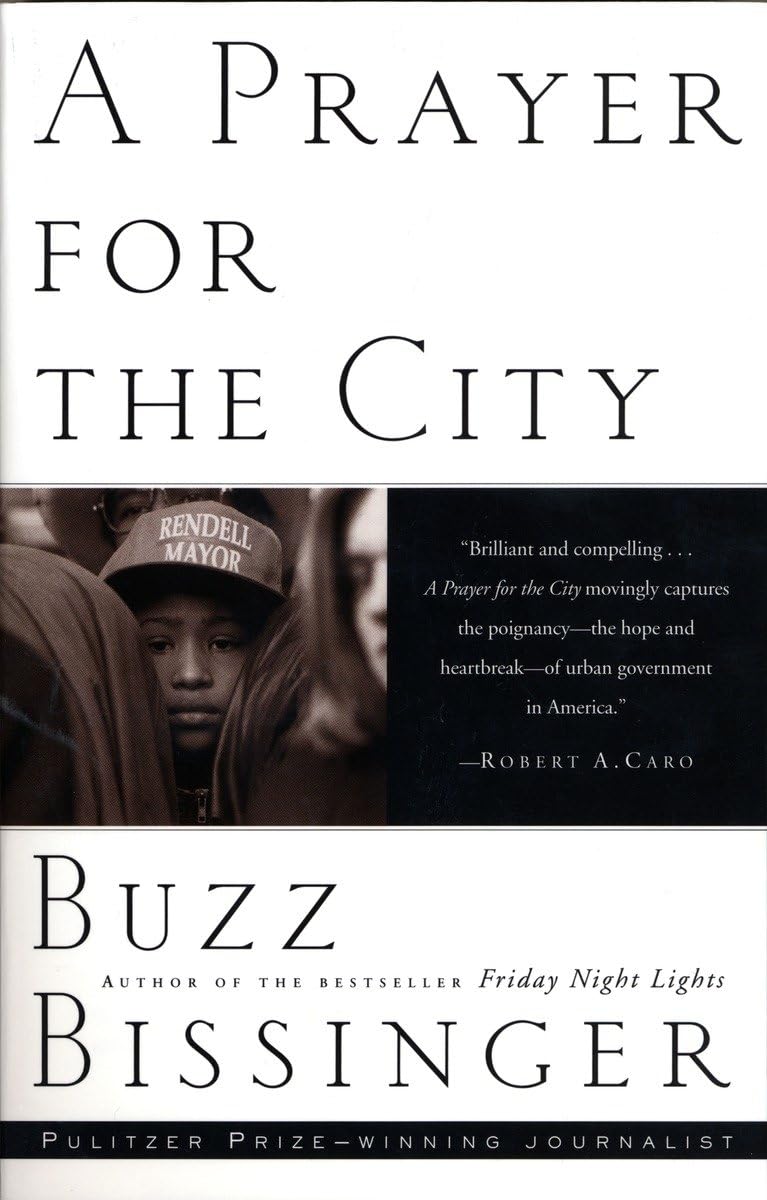
"A Prayer for the City" immerses itself in the tumultuous inner workings of Philadelphia's government under Mayor Ed Rendell during the mid-1990s. Bissinger meticulously chronicles Rendell's frantic, often desperate, attempts to salvage the city from the brink of financial collapse and deep-seated systemic issues. It's a granular look at urban politics, policy, and the relentless personal toll of leadership.
This book shares significant thematic and stylistic commonalities with "The Corner." Both are deeply immersive, journalistic narratives. Where Simon focuses on the micro-level struggles of a single Baltimore corner, Bissinger broadens the scope to an entire city's fight for survival, yet with the same unflinching honesty and multi-faceted perspective on poverty, governance, and human resilience. Both authors embed themselves, providing an intimate, almost ethnographic, portrayal.
This book will appeal to those interested in urban studies, political non-fiction, and the lived experience of systemic challenges. Its value lies in its candid portrayal of the complexities of municipal leadership and the formidable obstacles faced by American cities. It offers profound insights into the mechanics of urban decay and the monumental effort required to reverse it, presenting a human story behind policy and budgets.
A Prayer for the City
"A Prayer for the City" immerses itself in the tumultuous inner workings of Philadelphia's government under Mayor Ed Rendell during the mid-1990s. Bissinger meticulously chronicles Rendell's frantic, often desperate, attempts to salvage the city from the brink of financial collapse and deep-seated systemic issues. It's a granular look at urban politics, policy, and the relentless personal toll of leadership.
This book shares significant thematic and stylistic commonalities with "The Corner." Both are deeply immersive, journalistic narratives. Where Simon focuses on the micro-level struggles of a single Baltimore corner, Bissinger broadens the scope to an entire city's fight for survival, yet with the same unflinching honesty and multi-faceted perspective on poverty, governance, and human resilience. Both authors embed themselves, providing an intimate, almost ethnographic, portrayal.
This book will appeal to those interested in urban studies, political non-fiction, and the lived experience of systemic challenges. Its value lies in its candid portrayal of the complexities of municipal leadership and the formidable obstacles faced by American cities. It offers profound insights into the mechanics of urban decay and the monumental effort required to reverse it, presenting a human story behind policy and budgets.
Gang Leader for a Day: A Rogue Sociologist Takes to the Streets
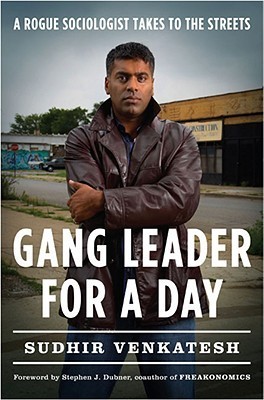
*Gang Leader for a Day* chronicles sociologist Sudhir Venkatesh's immersion into a Chicago housing project. Initially intending to survey poverty, he found himself drawn into the complexities of a notorious crack-dealing gang, spending years observing their operations, economic structures, and social dynamics. It's a first-person account of navigating an illicit economy and the surprising human relationships within it.
This work resonates with *The Corner* through its intense, ethnographic deep dive into marginalized urban communities. Both books offer unflinching, ground-level perspectives on poverty, drug economies, and systemic disadvantage, meticulously detailing the daily lives, struggles, and resilience of individuals often overlooked or demonized. They eschew simplistic narratives for nuanced portrayals of survival and adaptation.
This book delivers a profoundly insightful examination of urban poverty and illicit economies, challenging preconceived notions about gang life. It offers a rare window into the social fabric of a community shaped by difficult circumstances, providing a vital human perspective often missing from mainstream discourse. Its value lies in fostering a deeper understanding of economic desperation and the ingenuity, however illicit, employed to overcome it.
Gang Leader for a Day: A Rogue Sociologist Takes to the Streets
*Gang Leader for a Day* chronicles sociologist Sudhir Venkatesh's immersion into a Chicago housing project. Initially intending to survey poverty, he found himself drawn into the complexities of a notorious crack-dealing gang, spending years observing their operations, economic structures, and social dynamics. It's a first-person account of navigating an illicit economy and the surprising human relationships within it.
This work resonates with *The Corner* through its intense, ethnographic deep dive into marginalized urban communities. Both books offer unflinching, ground-level perspectives on poverty, drug economies, and systemic disadvantage, meticulously detailing the daily lives, struggles, and resilience of individuals often overlooked or demonized. They eschew simplistic narratives for nuanced portrayals of survival and adaptation.
This book delivers a profoundly insightful examination of urban poverty and illicit economies, challenging preconceived notions about gang life. It offers a rare window into the social fabric of a community shaped by difficult circumstances, providing a vital human perspective often missing from mainstream discourse. Its value lies in fostering a deeper understanding of economic desperation and the ingenuity, however illicit, employed to overcome it.
There are No Children Here: The Story of Two Boys Growing Up in the Other America
"There Are No Children Here" chronicles the lives of Lafeyette and Pharoah Rivers, two young brothers growing up in Chicago's Henry Horner Homes public housing project during the late 1980s. Kotlowitz intimately portrays their daily struggles with poverty, violence, and institutional neglect, offering a visceral look at childhood innocence lost amidst systemic hardship.
This book shares thematic and stylistic commonalities with "The Corner." Both are meticulously reported non-fiction narratives that immerse the reader in the socio-economic realities of neglected urban communities. They eschew grand sociological pronouncements in favor of deeply personal, long-form journalism, focusing on the human toll of poverty and marginalization through the experiences of a few central figures. Each author achieves a profound level of empathy and understanding by spending extensive time embedded in the lives of their subjects.
Its value lies in its unflinching honesty and humanizing perspective. It fosters a deeper understanding of the complex challenges faced by those living in concentrated poverty, moving beyond headlines to reveal the resilience, vulnerabilities, and aspirations of individuals. It serves as a powerful testament to the enduring impact of environment on identity and opportunity.
There are No Children Here: The Story of Two Boys Growing Up in the Other America
"There Are No Children Here" chronicles the lives of Lafeyette and Pharoah Rivers, two young brothers growing up in Chicago's Henry Horner Homes public housing project during the late 1980s. Kotlowitz intimately portrays their daily struggles with poverty, violence, and institutional neglect, offering a visceral look at childhood innocence lost amidst systemic hardship.
This book shares thematic and stylistic commonalities with "The Corner." Both are meticulously reported non-fiction narratives that immerse the reader in the socio-economic realities of neglected urban communities. They eschew grand sociological pronouncements in favor of deeply personal, long-form journalism, focusing on the human toll of poverty and marginalization through the experiences of a few central figures. Each author achieves a profound level of empathy and understanding by spending extensive time embedded in the lives of their subjects.
Its value lies in its unflinching honesty and humanizing perspective. It fosters a deeper understanding of the complex challenges faced by those living in concentrated poverty, moving beyond headlines to reveal the resilience, vulnerabilities, and aspirations of individuals. It serves as a powerful testament to the enduring impact of environment on identity and opportunity.
Ghettoside: A True Story of Murder in America

"Ghettoside" meticulously chronicles the investigation of a single murder in South Los Angeles, using this specific case as a lens to explore the epidemic of unsolved homicides within the city’s Black communities. Jill Leovy, a journalist, embeds herself within the LAPD's homicide division, revealing the systemic challenges, resource shortages, and societal indifference that often consign these cases to cold storage, leaving victims' families without justice.
The similarity to "The Corner" lies in their shared unflinching gaze at urban blight and its human cost. Both books offer intimate, granular portraits of communities trapped in cycles of violence and poverty, illuminated by detailed reportage rather than sensationalism. They each demonstrate how institutional failures and societal neglect compound individual tragedies, providing deep insights into the lived realities of their subjects.
This book will appeal to those seeking a profound understanding of urban crime, policing, and social justice. Its value lies in its potent blend of investigative journalism and compelling narrative, offering critical perspectives on race, class, and the justice system. It fosters a deeper appreciation for the complex interplay of factors that shape the lives within marginalized communities.
Ghettoside: A True Story of Murder in America
"Ghettoside" meticulously chronicles the investigation of a single murder in South Los Angeles, using this specific case as a lens to explore the epidemic of unsolved homicides within the city’s Black communities. Jill Leovy, a journalist, embeds herself within the LAPD's homicide division, revealing the systemic challenges, resource shortages, and societal indifference that often consign these cases to cold storage, leaving victims' families without justice.
The similarity to "The Corner" lies in their shared unflinching gaze at urban blight and its human cost. Both books offer intimate, granular portraits of communities trapped in cycles of violence and poverty, illuminated by detailed reportage rather than sensationalism. They each demonstrate how institutional failures and societal neglect compound individual tragedies, providing deep insights into the lived realities of their subjects.
This book will appeal to those seeking a profound understanding of urban crime, policing, and social justice. Its value lies in its potent blend of investigative journalism and compelling narrative, offering critical perspectives on race, class, and the justice system. It fosters a deeper appreciation for the complex interplay of factors that shape the lives within marginalized communities.
Evicted: Poverty and Profit in the American City

"Evicted: Poverty and Profit in the American City" meticulously chronicles the lives of eight Milwaukee families grappling with eviction. Matthew Desmond, a sociologist, embeds himself within their communities, revealing the brutal mechanics of the low-income housing market, the emotional and practical fallout of losing one's home, and the systemic forces that trap individuals in cycles of poverty exacerbated by housing instability.
This powerful work resonates deeply with "The Corner" through its immersive, ethnographic approach to understanding urban hardship. Both books offer an unflinching, intimate portrayal of specific, often marginalized, communities, allowing character-driven narratives to illuminate broader societal issues. The focus on the daily struggles, resilience, and interconnectedness of individuals within a confined geographic and social space creates a shared sense of authenticity and human vulnerability.
This book will appeal to those seeking a profound understanding of contemporary urban poverty and its systemic underpinnings. Its detailed qualitative research provides unparalleled insight into housing insecurity as both a cause and consequence of disadvantage, offering a crucial lens through which to examine social justice, economic inequality, and public policy. It is a vital and empathetic examination of America's housing crisis.
Evicted: Poverty and Profit in the American City
"Evicted: Poverty and Profit in the American City" meticulously chronicles the lives of eight Milwaukee families grappling with eviction. Matthew Desmond, a sociologist, embeds himself within their communities, revealing the brutal mechanics of the low-income housing market, the emotional and practical fallout of losing one's home, and the systemic forces that trap individuals in cycles of poverty exacerbated by housing instability.
This powerful work resonates deeply with "The Corner" through its immersive, ethnographic approach to understanding urban hardship. Both books offer an unflinching, intimate portrayal of specific, often marginalized, communities, allowing character-driven narratives to illuminate broader societal issues. The focus on the daily struggles, resilience, and interconnectedness of individuals within a confined geographic and social space creates a shared sense of authenticity and human vulnerability.
This book will appeal to those seeking a profound understanding of contemporary urban poverty and its systemic underpinnings. Its detailed qualitative research provides unparalleled insight into housing insecurity as both a cause and consequence of disadvantage, offering a crucial lens through which to examine social justice, economic inequality, and public policy. It is a vital and empathetic examination of America's housing crisis.
No Matter How Loud I Shout: A Year in the Life of Juvenile Court

"No Matter How Loud I Shout" offers an unvarnished, immersive look into the Los Angeles juvenile court system over a year. Edward Humes deeply explores the lives of various participants – the young offenders, their families, judges, prosecutors, public defenders, and social workers – showcasing the systemic failures, moments of compassion, and the often-tragic trajectories of children caught in the legal net. It presents a stark, humanizing portrait of a critical institution.
The book resonates with "The Corner" due to their shared commitment to deep-dive, ethnographic journalism within marginalized, struggling communities. Both narratives meticulously chronicle a year in a specific, often overlooked, social arena (an inner-city neighborhood vs. juvenile court), revealing the complex interplay of poverty, crime, systemic pressures, and individual choices. Both authors eschew simple answers, instead presenting a nuanced, ground-level reality.
Anyone interested in social justice, urban sociology, or the human condition under duress will appreciate this book. It sheds light on the origins and consequences of youth crime, revealing the immense challenges faced by those attempting to intervene. Its value lies in offering profound insights into institutional impact on vulnerable populations, serving as a powerful call for understanding and reform rather than mere condemnation.
No Matter How Loud I Shout: A Year in the Life of Juvenile Court
"No Matter How Loud I Shout" offers an unvarnished, immersive look into the Los Angeles juvenile court system over a year. Edward Humes deeply explores the lives of various participants – the young offenders, their families, judges, prosecutors, public defenders, and social workers – showcasing the systemic failures, moments of compassion, and the often-tragic trajectories of children caught in the legal net. It presents a stark, humanizing portrait of a critical institution.
The book resonates with "The Corner" due to their shared commitment to deep-dive, ethnographic journalism within marginalized, struggling communities. Both narratives meticulously chronicle a year in a specific, often overlooked, social arena (an inner-city neighborhood vs. juvenile court), revealing the complex interplay of poverty, crime, systemic pressures, and individual choices. Both authors eschew simple answers, instead presenting a nuanced, ground-level reality.
Anyone interested in social justice, urban sociology, or the human condition under duress will appreciate this book. It sheds light on the origins and consequences of youth crime, revealing the immense challenges faced by those attempting to intervene. Its value lies in offering profound insights into institutional impact on vulnerable populations, serving as a powerful call for understanding and reform rather than mere condemnation.
No Shame in My Game: The Working Poor in the Inner City
"No Shame in My Game" offers an intimate ethnographic look into the lives of working-poor individuals in Harlem during the late 20th century. Through extensive interviews and observations, Katherine Newman challenges conventional narratives about poverty, revealing the resilience, work ethic, and deeply held aspirations of those striving for economic stability despite systemic barriers in low-wage job markets. It’s a powerful examination of the dignity and moral frameworks guiding individuals often dismissed as part of an underclass.
The book shares a profound commitment with "The Corner" to presenting unvarnished, human-centered portrayals of inner-city life. Both works immerse themselves in a specific community, rejecting simplistic explanations for poverty and crime by foregrounding the complex individual experiences, economic pressures, and social dynamics at play. They both demand that the audience look beyond headlines and stereotypes to understand the intricate realities of urban marginalization.
The insights provided are invaluable for anyone seeking a deeper understanding of urban poverty, labor market dynamics, and the human spirit's endurance. It provides a corrective to prevalent misconceptions, fostering empathy and offering a highly nuanced perspective on the challenges faced by working-class communities. The book also serves as a crucial historical document, detailing the socio-economic landscape of a significant American demographic.
No Shame in My Game: The Working Poor in the Inner City
"No Shame in My Game" offers an intimate ethnographic look into the lives of working-poor individuals in Harlem during the late 20th century. Through extensive interviews and observations, Katherine Newman challenges conventional narratives about poverty, revealing the resilience, work ethic, and deeply held aspirations of those striving for economic stability despite systemic barriers in low-wage job markets. It’s a powerful examination of the dignity and moral frameworks guiding individuals often dismissed as part of an underclass.
The book shares a profound commitment with "The Corner" to presenting unvarnished, human-centered portrayals of inner-city life. Both works immerse themselves in a specific community, rejecting simplistic explanations for poverty and crime by foregrounding the complex individual experiences, economic pressures, and social dynamics at play. They both demand that the audience look beyond headlines and stereotypes to understand the intricate realities of urban marginalization.
The insights provided are invaluable for anyone seeking a deeper understanding of urban poverty, labor market dynamics, and the human spirit's endurance. It provides a corrective to prevalent misconceptions, fostering empathy and offering a highly nuanced perspective on the challenges faced by working-class communities. The book also serves as a crucial historical document, detailing the socio-economic landscape of a significant American demographic.
Amazing Grace: The Lives of Children and the Conscience of a Nation

"Amazing Grace" delves into the lives of children and families residing in the Mott Haven section of the South Bronx, exploring the devastating impact of poverty, neglect, and systemic inequalities on their daily existence. Jonathan Kozol, through intimate interviews and observations, exposes the stark realities faced by these young people – inadequate housing, failing schools, prevalent drug abuse, and a pervasive sense of hopelessness, all while revealing their enduring spirit and resilience.
This book shares thematic and methodological parallels with "The Corner." Both works employ immersive, observational journalism to present a granular, unflinching portrait of a specific inner-city community grappling with severe social and economic challenges. They prioritize giving voice to the marginalized, allowing their experiences to illustrate the systemic failures that perpetuate cycles of poverty and societal disenfranchisement. Both authors serve as guides through worlds often unseen or misunderstood by mainstream society.
"Amazing Grace" offers a powerful, empathetic deep dive into the human cost of inequality, forcing a confrontation with uncomfortable truths about American society. It provides a vital perspective on urban poverty, fostering a deeper understanding of its complexities and the resilient individuals navigating them. The book’s lasting impact lies in its ability to humanize statistics and provoke meaningful reflection on social responsibility and justice.
Amazing Grace: The Lives of Children and the Conscience of a Nation
"Amazing Grace" delves into the lives of children and families residing in the Mott Haven section of the South Bronx, exploring the devastating impact of poverty, neglect, and systemic inequalities on their daily existence. Jonathan Kozol, through intimate interviews and observations, exposes the stark realities faced by these young people – inadequate housing, failing schools, prevalent drug abuse, and a pervasive sense of hopelessness, all while revealing their enduring spirit and resilience.
This book shares thematic and methodological parallels with "The Corner." Both works employ immersive, observational journalism to present a granular, unflinching portrait of a specific inner-city community grappling with severe social and economic challenges. They prioritize giving voice to the marginalized, allowing their experiences to illustrate the systemic failures that perpetuate cycles of poverty and societal disenfranchisement. Both authors serve as guides through worlds often unseen or misunderstood by mainstream society.
"Amazing Grace" offers a powerful, empathetic deep dive into the human cost of inequality, forcing a confrontation with uncomfortable truths about American society. It provides a vital perspective on urban poverty, fostering a deeper understanding of its complexities and the resilient individuals navigating them. The book’s lasting impact lies in its ability to humanize statistics and provoke meaningful reflection on social responsibility and justice.
More Books to Explore
Discover more titles that expand on these ideas and themes.
Homicide: A Year on the Killing Streets
Random Family: Love, Drugs, Trouble, and Coming of Age in the Bronx
A Prayer for the City
Gang Leader for a Day: A Rogue Sociologist Takes to the Streets
There are No Children Here: The Story of Two Boys Growing Up in the Other America
Ghettoside: A True Story of Murder in America