10 Books Similar to "The Alchemist"
by Paulo Coelho

The Pilgrimage

"The Pilgrimage" chronicles Paulo Coelho's real-life journey along the Camino de Santiago in 1986. Tasked by his mysterious spiritual master to undertake this arduous trek as a penance, Coelho encounters cryptic guides and faces profound challenges designed to strip away his ego and deepen his understanding of himself and the world. It’s a spiritual autobiography disguised as a quest narrative, exploring the nature of faith, self-discovery, and the power of intention.
Much like "The Alchemist," "The Pilgrimage" is fundamentally a journey of self-discovery, where the protagonist leaves the familiar to pursue a deeper truth. Both books frame physical travel as a metaphor for an internal spiritual quest, introducing mystical elements and philosophical reflections along the way. They emphasize the importance of listening to one's intuition, overcoming internal obstacles, and the idea that profound lessons are often hidden in plain sight, accessible through perseverance and an open mind.
This book will appeal to those seeking inspiration for personal growth and spiritual introspection. Its valuable insights into overcoming fear, embracing vulnerability, and the transformative power of a determined pursuit of meaning can resonate deeply. It offers a practical, albeit metaphorical, guide to navigating one's own life path with purpose and a renewed sense of belief in the unseen forces guiding us.
The Pilgrimage
"The Pilgrimage" chronicles Paulo Coelho's real-life journey along the Camino de Santiago in 1986. Tasked by his mysterious spiritual master to undertake this arduous trek as a penance, Coelho encounters cryptic guides and faces profound challenges designed to strip away his ego and deepen his understanding of himself and the world. It’s a spiritual autobiography disguised as a quest narrative, exploring the nature of faith, self-discovery, and the power of intention.
Much like "The Alchemist," "The Pilgrimage" is fundamentally a journey of self-discovery, where the protagonist leaves the familiar to pursue a deeper truth. Both books frame physical travel as a metaphor for an internal spiritual quest, introducing mystical elements and philosophical reflections along the way. They emphasize the importance of listening to one's intuition, overcoming internal obstacles, and the idea that profound lessons are often hidden in plain sight, accessible through perseverance and an open mind.
This book will appeal to those seeking inspiration for personal growth and spiritual introspection. Its valuable insights into overcoming fear, embracing vulnerability, and the transformative power of a determined pursuit of meaning can resonate deeply. It offers a practical, albeit metaphorical, guide to navigating one's own life path with purpose and a renewed sense of belief in the unseen forces guiding us.
Brida
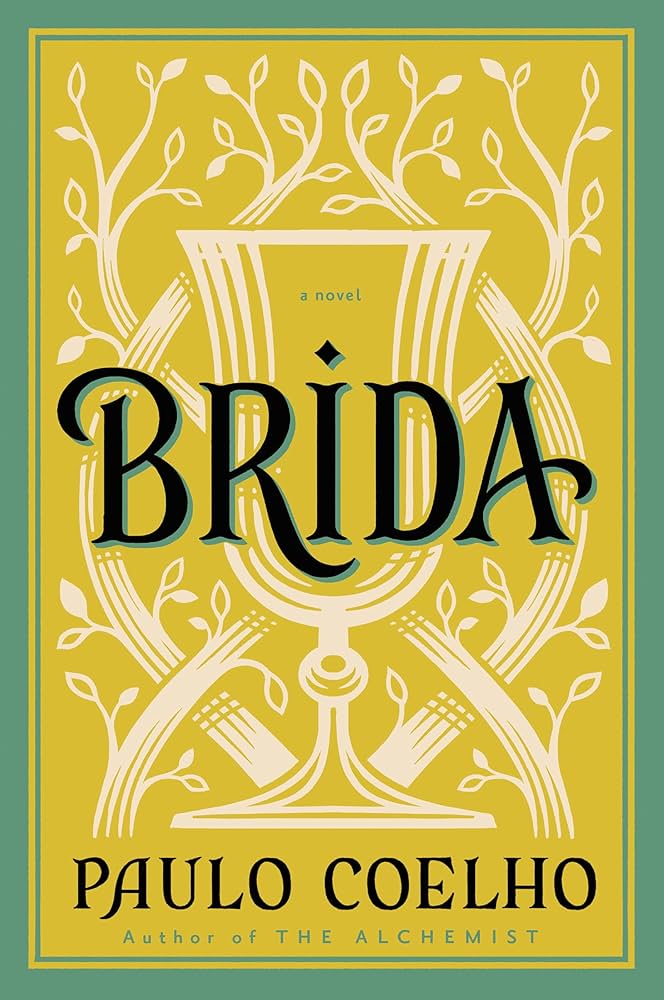
"Brida" tells the story of a young Irish woman's spiritual journey to discover her true self through a captivating exploration of magic and ancient traditions. She seeks out two different teachers – a Magician who teaches her about the mysteries of the universe, and a Witch who introduces her to the traditions of the Moon. This dual mentorship guides Brida through the complexities of love, destiny, and the spiritual path, as she grapples with the choices that shape her existence.
Both "Brida" and "The Alchemist" share a core thematic focus on personal legend and the pursuit of destiny. Like Santiago's quest for treasure, Brida's journey is an inner one, a pilgrimage to uncover profound self-knowledge and connect with a larger spiritual reality. Coelho's signature accessible, allegorical style is present in both, weaving spiritual teachings into a relatable narrative of self-discovery and the power of belief.
This book will appeal to those seeking a deeper understanding of self and spirit, offering a thought-provoking exploration of love, faith, and the unseen forces that guide our lives. Its valuable insight lies in its articulation of the choices we make and the commitment required to truly live our personal truths, making it a compelling read for anyone on a journey of introspection and growth.
Brida
"Brida" tells the story of a young Irish woman's spiritual journey to discover her true self through a captivating exploration of magic and ancient traditions. She seeks out two different teachers – a Magician who teaches her about the mysteries of the universe, and a Witch who introduces her to the traditions of the Moon. This dual mentorship guides Brida through the complexities of love, destiny, and the spiritual path, as she grapples with the choices that shape her existence.
Both "Brida" and "The Alchemist" share a core thematic focus on personal legend and the pursuit of destiny. Like Santiago's quest for treasure, Brida's journey is an inner one, a pilgrimage to uncover profound self-knowledge and connect with a larger spiritual reality. Coelho's signature accessible, allegorical style is present in both, weaving spiritual teachings into a relatable narrative of self-discovery and the power of belief.
This book will appeal to those seeking a deeper understanding of self and spirit, offering a thought-provoking exploration of love, faith, and the unseen forces that guide our lives. Its valuable insight lies in its articulation of the choices we make and the commitment required to truly live our personal truths, making it a compelling read for anyone on a journey of introspection and growth.
The Valkyries

"The Valkyries" narrates Paulo Coelho’s personal journey of self-discovery and spiritual awakening, undertaken with his wife, Christina. They travel to the Mojave Desert to communicate with angels, a quest initiated as part of his initiation into a mystical order. The narrative follows their encounters with various spiritual guides and delves into themes of fear, destiny, and the pursuit of one's truest self, blending autobiography with mystical exploration.
Its similarity to "The Alchemist" lies in their shared thematic core: the pursuit of one's personal legend or destiny. Both books feature protagonists embarking on physical journeys that mirror internal transformations, guided by spiritual mentors and facing internal and external obstacles. A central tenet in both is the belief in omens and the universe conspiring to help those pursuing their true path, emphasizing the importance of listening to one's intuition.
This book offers a compelling narrative for those interested in spiritual exploration, personal growth, and the intersection of autobiography and mysticism. It provides practical insights into overcoming fear and embracing one's calling, presented through a deeply personal and reflective lens. The journey depicted encourages introspection and offers a unique perspective on faith, courage, and the universal search for meaning.
The Valkyries
"The Valkyries" narrates Paulo Coelho’s personal journey of self-discovery and spiritual awakening, undertaken with his wife, Christina. They travel to the Mojave Desert to communicate with angels, a quest initiated as part of his initiation into a mystical order. The narrative follows their encounters with various spiritual guides and delves into themes of fear, destiny, and the pursuit of one's truest self, blending autobiography with mystical exploration.
Its similarity to "The Alchemist" lies in their shared thematic core: the pursuit of one's personal legend or destiny. Both books feature protagonists embarking on physical journeys that mirror internal transformations, guided by spiritual mentors and facing internal and external obstacles. A central tenet in both is the belief in omens and the universe conspiring to help those pursuing their true path, emphasizing the importance of listening to one's intuition.
This book offers a compelling narrative for those interested in spiritual exploration, personal growth, and the intersection of autobiography and mysticism. It provides practical insights into overcoming fear and embracing one's calling, presented through a deeply personal and reflective lens. The journey depicted encourages introspection and offers a unique perspective on faith, courage, and the universal search for meaning.
Warrior of the Light

"Warrior of the Light" is a philosophical and inspirational text, structured as a collection of short parables and meditations. It outlines the journey of an individual, referred to as the "Warrior," who strives for personal enlightenment and purpose amidst life's challenges. The book serves as a guide for living authentically, embracing one's destiny, and overcoming internal and external obstacles with courage and faith.
The similarity to "The Alchemist" lies in their shared exploration of core Coelho themes: personal legend, following one's dreams, the importance of listening to one's heart, and the spiritual journey embedded in everyday life. Both books employ allegorical narratives to convey profound spiritual and philosophical lessons, encouraging self-discovery and the pursuit of a meaningful existence. They share a distinctive, accessible style that distills complex wisdom into relatable insights.
This book offers a potent source of introspection and motivation. Its aphoristic nature means each passage can be contemplated independently, providing immediate practical wisdom for navigating personal struggles, making difficult decisions, and cultivating resilience. It acts as a concise manual for living a purposeful life, resonating with anyone seeking encouragement, spiritual direction, or a philosophical framework for personal growth.
Warrior of the Light
"Warrior of the Light" is a philosophical and inspirational text, structured as a collection of short parables and meditations. It outlines the journey of an individual, referred to as the "Warrior," who strives for personal enlightenment and purpose amidst life's challenges. The book serves as a guide for living authentically, embracing one's destiny, and overcoming internal and external obstacles with courage and faith.
The similarity to "The Alchemist" lies in their shared exploration of core Coelho themes: personal legend, following one's dreams, the importance of listening to one's heart, and the spiritual journey embedded in everyday life. Both books employ allegorical narratives to convey profound spiritual and philosophical lessons, encouraging self-discovery and the pursuit of a meaningful existence. They share a distinctive, accessible style that distills complex wisdom into relatable insights.
This book offers a potent source of introspection and motivation. Its aphoristic nature means each passage can be contemplated independently, providing immediate practical wisdom for navigating personal struggles, making difficult decisions, and cultivating resilience. It acts as a concise manual for living a purposeful life, resonating with anyone seeking encouragement, spiritual direction, or a philosophical framework for personal growth.
The Zahir
"The Zahir" chronicles a renowned author's desperate search for his vanished wife. Her unexplained disappearance plunges him into an obsessive quest to understand her, himself, and the nature of love and connection. He grapples with societal expectations, personal ambition, and the profound questions of identity that emerge when a fundamental part of one's life is abruptly removed. The narrative explores themes of commitment, spiritual awakening, and the sometimes painful path to self-discovery, often blurring the lines between reality and internal monologue.
This novel shares a core philosophical DNA with "The Alchemist." Both protagonists embark on a journey, physical and metaphorical, to understand a profound internal yearning. Where Santiago seeks his Personal Legend, the narrator of "The Zahir" seeks the meaning behind his wife's absence, which becomes his own "personal legend" of understanding. Both books emphasize destiny, the power of persistent belief, and the idea that the answers to life's biggest questions are often found within.
The exploration of love, loss, and the relentless pursuit of meaning offers a compelling narrative. It delves into the complexities of human relationships and the search for spiritual fulfillment beyond conventional success, providing a reflective opportunity for those grappling with similar themes in their own lives. The introspective quality and the journey of self-discovery are particularly resonant, affirming the importance of emotional and spiritual growth even amidst profound uncertainty.
The Zahir
"The Zahir" chronicles a renowned author's desperate search for his vanished wife. Her unexplained disappearance plunges him into an obsessive quest to understand her, himself, and the nature of love and connection. He grapples with societal expectations, personal ambition, and the profound questions of identity that emerge when a fundamental part of one's life is abruptly removed. The narrative explores themes of commitment, spiritual awakening, and the sometimes painful path to self-discovery, often blurring the lines between reality and internal monologue.
This novel shares a core philosophical DNA with "The Alchemist." Both protagonists embark on a journey, physical and metaphorical, to understand a profound internal yearning. Where Santiago seeks his Personal Legend, the narrator of "The Zahir" seeks the meaning behind his wife's absence, which becomes his own "personal legend" of understanding. Both books emphasize destiny, the power of persistent belief, and the idea that the answers to life's biggest questions are often found within.
The exploration of love, loss, and the relentless pursuit of meaning offers a compelling narrative. It delves into the complexities of human relationships and the search for spiritual fulfillment beyond conventional success, providing a reflective opportunity for those grappling with similar themes in their own lives. The introspective quality and the journey of self-discovery are particularly resonant, affirming the importance of emotional and spiritual growth even amidst profound uncertainty.
The Fifth Mountain

"The Fifth Mountain" reimagines the biblical story of the prophet Elijah, focusing on his exile and trials in the Phoenician city of Zarephath. It explores themes of faith, destiny, perseverance in adversity, and the profound discomfort of being called to a purpose that challenges one's very understanding of self and the world. Elijah's journey is one of immense personal struggle and reluctant spiritual growth amidst political upheaval and natural disaster.
This novel shares a profound thematic kinship with "The Alchemist." Both stories center on an individual's intense spiritual journey to fulfill a personal destiny or "Personal Legend," encountering significant tests of faith and resolve along the way. Both protagonists are outsiders in their circumstances, guided by internal wisdom and external signs, ultimately discovering universal truths through their experiences rather than solely through doctrine. The narrative style in both is parabolic, emphasizing allegorical lessons over strict realism.
The appeal of "The Fifth Mountain" lies in its compelling exploration of how one finds strength and meaning when faced with overwhelming odds. It offers a powerful reflection on accepting one's path, even when it demands sacrifice and pushes one beyond perceived limits. The narrative encourages introspection on courage, resilience, and the nature of divine guidance, providing a rich, thought-provoking experience for those who appreciate stories of profound personal transformation and spiritual awakening.
The Fifth Mountain
"The Fifth Mountain" reimagines the biblical story of the prophet Elijah, focusing on his exile and trials in the Phoenician city of Zarephath. It explores themes of faith, destiny, perseverance in adversity, and the profound discomfort of being called to a purpose that challenges one's very understanding of self and the world. Elijah's journey is one of immense personal struggle and reluctant spiritual growth amidst political upheaval and natural disaster.
This novel shares a profound thematic kinship with "The Alchemist." Both stories center on an individual's intense spiritual journey to fulfill a personal destiny or "Personal Legend," encountering significant tests of faith and resolve along the way. Both protagonists are outsiders in their circumstances, guided by internal wisdom and external signs, ultimately discovering universal truths through their experiences rather than solely through doctrine. The narrative style in both is parabolic, emphasizing allegorical lessons over strict realism.
The appeal of "The Fifth Mountain" lies in its compelling exploration of how one finds strength and meaning when faced with overwhelming odds. It offers a powerful reflection on accepting one's path, even when it demands sacrifice and pushes one beyond perceived limits. The narrative encourages introspection on courage, resilience, and the nature of divine guidance, providing a rich, thought-provoking experience for those who appreciate stories of profound personal transformation and spiritual awakening.
The Way of the Bow

"The Way of the Bow" explores the timeless wisdom of archery, using the metaphor of the bow and arrow to illuminate lessons about discipline, focus, and self-discovery. It tells the story of an master archer, Tetsuya, who imparts profound philosophical insights through his mastery of the art, guiding a young man and, by extension, the reader, towards understanding their own potential and purpose.
This work resonates deeply with "The Alchemist" through its shared thematic core: the pursuit of one's personal legend or true calling. Both books employ parables and allegories to convey universal truths about resilience, listening to one's intuition, and overcoming obstacles on the path to self-realization. They emphasize that the journey itself is as significant as the destination.
The appeal of "The Way of the Bow" lies in its ability to offer practical wisdom for navigating life's challenges, presented through an elegant and accessible narrative. Its exploration of commitment, the importance of present-moment awareness, and the internal struggle to achieve mastery provides inspiring guidance relevant to anyone seeking deeper meaning and personal growth.
The Way of the Bow
"The Way of the Bow" explores the timeless wisdom of archery, using the metaphor of the bow and arrow to illuminate lessons about discipline, focus, and self-discovery. It tells the story of an master archer, Tetsuya, who imparts profound philosophical insights through his mastery of the art, guiding a young man and, by extension, the reader, towards understanding their own potential and purpose.
This work resonates deeply with "The Alchemist" through its shared thematic core: the pursuit of one's personal legend or true calling. Both books employ parables and allegories to convey universal truths about resilience, listening to one's intuition, and overcoming obstacles on the path to self-realization. They emphasize that the journey itself is as significant as the destination.
The appeal of "The Way of the Bow" lies in its ability to offer practical wisdom for navigating life's challenges, presented through an elegant and accessible narrative. Its exploration of commitment, the importance of present-moment awareness, and the internal struggle to achieve mastery provides inspiring guidance relevant to anyone seeking deeper meaning and personal growth.
The Witch of Portobello
"The Witch of Portobello" explores the life and spiritual journey of Athena, a mysterious woman who challenges conventional societal norms and redefines spirituality through dance, passion, and personal freedom. Told through a series of interviews and testimonials from those who knew her, the novel reconstructs Athena's origins, her adoption by Lebanese parents, her travels, and her evolution into a controversial spiritual leader, ultimately revealing the multifaceted nature of truth and identity.
Both novels share a profound exploration of an individual's destiny and spiritual quest. Like Santiago's pursuit of his Personal Legend in "The Alchemist," Athena embarks on a deeply personal journey of self-discovery and enlightenment, guided by intuition and an unconventional understanding of faith. They both emphasize the importance of listening to one's heart, embracing challenges, and recognizing the interconnectedness of all things in achieving profound fulfillment.
This narrative offers a compelling meditation on purpose, unconventional spirituality, and the courage to forge one's own path. Its unique multi-perspective structure provides a rich, nuanced understanding of its protagonist and her impact on others, inviting introspection and broadening perspectives on what it means to live authentically and meaningfully in a complex world.
The Witch of Portobello
"The Witch of Portobello" explores the life and spiritual journey of Athena, a mysterious woman who challenges conventional societal norms and redefines spirituality through dance, passion, and personal freedom. Told through a series of interviews and testimonials from those who knew her, the novel reconstructs Athena's origins, her adoption by Lebanese parents, her travels, and her evolution into a controversial spiritual leader, ultimately revealing the multifaceted nature of truth and identity.
Both novels share a profound exploration of an individual's destiny and spiritual quest. Like Santiago's pursuit of his Personal Legend in "The Alchemist," Athena embarks on a deeply personal journey of self-discovery and enlightenment, guided by intuition and an unconventional understanding of faith. They both emphasize the importance of listening to one's heart, embracing challenges, and recognizing the interconnectedness of all things in achieving profound fulfillment.
This narrative offers a compelling meditation on purpose, unconventional spirituality, and the courage to forge one's own path. Its unique multi-perspective structure provides a rich, nuanced understanding of its protagonist and her impact on others, inviting introspection and broadening perspectives on what it means to live authentically and meaningfully in a complex world.
By the River Piedra I Sat Down and Wept

"By the River Piedra I Sat Down and Wept" centers on Pilar, a woman rediscovering her lost love, a man now a charismatic spiritual teacher. She grapples with his unconventional path and her own suppressed desires, ultimately embarking on a journey of self-discovery, faith, and the true meaning of love, confronting societal expectations and personal limitations along the way.
This novel shares a deep thematic resonance with "The Alchemist." Both narratives explore the pursuit of one's "Personal Legend" – a destiny that requires courage, faith, and the willingness to abandon conventional comforts. They feature protagonists on a transformative journey, guided by spiritual wisdom and the profound power of love, demonstrating that true fulfillment lies in listening to one's heart and embracing the unexpected.
This book will appeal to individuals seeking narratives that blend romance with spiritual exploration and personal growth. It offers a compelling examination of commitment, faith, and the often-challenging path to self-acceptance, providing valuable insights into the complexities of human relationships and the pursuit of a meaningful life.
By the River Piedra I Sat Down and Wept
"By the River Piedra I Sat Down and Wept" centers on Pilar, a woman rediscovering her lost love, a man now a charismatic spiritual teacher. She grapples with his unconventional path and her own suppressed desires, ultimately embarking on a journey of self-discovery, faith, and the true meaning of love, confronting societal expectations and personal limitations along the way.
This novel shares a deep thematic resonance with "The Alchemist." Both narratives explore the pursuit of one's "Personal Legend" – a destiny that requires courage, faith, and the willingness to abandon conventional comforts. They feature protagonists on a transformative journey, guided by spiritual wisdom and the profound power of love, demonstrating that true fulfillment lies in listening to one's heart and embracing the unexpected.
This book will appeal to individuals seeking narratives that blend romance with spiritual exploration and personal growth. It offers a compelling examination of commitment, faith, and the often-challenging path to self-acceptance, providing valuable insights into the complexities of human relationships and the pursuit of a meaningful life.
Like the Flowing River

"Like the Flowing River" is a collection of Paulo Coelho's essays and reflections, offering insights into his personal philosophy, experiences, and various global events. It touches upon themes of self-discovery, embracing change, the pursuit of dreams, and the inherent interconnectedness of humanity, often presented through parables and personal anecdotes.
Its similarity to "The Alchemist" lies in its persistent exploration of universal spiritual and philosophical truths. Both works encourage introspection, emphasize the importance of listening to one's heart, and advocate for courage in pursuing one's destiny. The introspective, wisdom-filled narrative style and the focus on individual spiritual journeys are strong common threads.
This book will appeal to those who appreciate thoughtful contemplation on life's deeper meanings. Its concise reflections offer moments of inspiration and a renewed perspective on navigating personal challenges and understanding the world around them. The value lies in its gentle guidance toward self-awareness and living a more authentic life.
Like the Flowing River
"Like the Flowing River" is a collection of Paulo Coelho's essays and reflections, offering insights into his personal philosophy, experiences, and various global events. It touches upon themes of self-discovery, embracing change, the pursuit of dreams, and the inherent interconnectedness of humanity, often presented through parables and personal anecdotes.
Its similarity to "The Alchemist" lies in its persistent exploration of universal spiritual and philosophical truths. Both works encourage introspection, emphasize the importance of listening to one's heart, and advocate for courage in pursuing one's destiny. The introspective, wisdom-filled narrative style and the focus on individual spiritual journeys are strong common threads.
This book will appeal to those who appreciate thoughtful contemplation on life's deeper meanings. Its concise reflections offer moments of inspiration and a renewed perspective on navigating personal challenges and understanding the world around them. The value lies in its gentle guidance toward self-awareness and living a more authentic life.
More Books to Explore
Discover more titles that expand on these ideas and themes.
The Pilgrimage
Brida
The Valkyries
Warrior of the Light
The Zahir
The Fifth Mountain