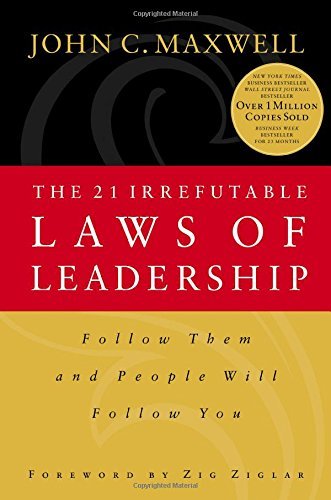
10 Books Similar to "The 21 Irrefutable Laws of Leadership: Follow Them and People Will Follow You"
by John C. Maxwell
The 21 Indispensable Qualities of a Leader: Becoming the Person Others Will Want to Follow

"The 21 Indispensable Qualities of a Leader" delves into the internal attributes that make someone an effective leader. Instead of focusing on external actions or strategies, Maxwell dissects the character traits and personal development necessary to inspire and guide others. He examines qualities like character, charisma, commitment, communication, and courage, providing practical insights and actionable steps to cultivate each one. The book emphasizes that true leadership emanates from who you are, not just what you do.
This book is inherently similar to "The 21 Irrefutable Laws of Leadership" due to their shared author and foundational premise. While "Irrefutable Laws" outlines principles for effective leadership *actions*, "Indispensable Qualities" focuses on the *person* embodying those actions. Both explore the architecture of successful leadership, with "Qualities" serving as a deeper dive into the inner life and personal growth that underpins the outward application of the "Laws." They are complementary perspectives on the same leadership landscape.
Anyone seeking to enhance their personal influence and leadership capacity will find immense value in this book. It offers a clear roadmap for self-improvement, presenting leadership not as a series of techniques but as a journey of personal transformation. By understanding and developing these indispensable qualities, individuals can become more authentic, respected, and ultimately, more compelling leaders, fostering stronger teams and achieving greater impact.
The 21 Indispensable Qualities of a Leader: Becoming the Person Others Will Want to Follow
"The 21 Indispensable Qualities of a Leader" delves into the internal attributes that make someone an effective leader. Instead of focusing on external actions or strategies, Maxwell dissects the character traits and personal development necessary to inspire and guide others. He examines qualities like character, charisma, commitment, communication, and courage, providing practical insights and actionable steps to cultivate each one. The book emphasizes that true leadership emanates from who you are, not just what you do.
This book is inherently similar to "The 21 Irrefutable Laws of Leadership" due to their shared author and foundational premise. While "Irrefutable Laws" outlines principles for effective leadership *actions*, "Indispensable Qualities" focuses on the *person* embodying those actions. Both explore the architecture of successful leadership, with "Qualities" serving as a deeper dive into the inner life and personal growth that underpins the outward application of the "Laws." They are complementary perspectives on the same leadership landscape.
Anyone seeking to enhance their personal influence and leadership capacity will find immense value in this book. It offers a clear roadmap for self-improvement, presenting leadership not as a series of techniques but as a journey of personal transformation. By understanding and developing these indispensable qualities, individuals can become more authentic, respected, and ultimately, more compelling leaders, fostering stronger teams and achieving greater impact.
The Leadership Challenge

"The Leadership Challenge" by Kouzes and Posner is a foundational text dissecting the practices and behaviors of exemplary leaders. It synthesizes extensive research into five core practices: Model the Way, Inspire a Shared Vision, Challenge the Process, Enable Others to Act, and Encourage the Heart. The book provides actionable strategies and real-world examples, offering a practical framework for anyone seeking to enhance their leadership capabilities and foster positive organizational change.
Like Maxwell’s "21 Irrefutable Laws," "The Leadership Challenge" offers a pragmatic, principle-based approach to effective leadership. Both books distill complex leadership concepts into understandable, actionable frameworks, moving beyond theoretical ideals to provide concrete guidance on how to inspire, motivate, and guide others. They share a focus on observable behaviors and repeatable actions that cultivate influence and achieve results.
This book will appeal to those who seek a research-backed, practical guide for developing their leadership skills. Its emphasis on observable practices and relatable insights makes it an invaluable resource for individuals at all stages of their professional journey, from emerging leaders to seasoned executives, empowering them to become more effective at inspiring commitment and driving positive outcomes within their teams and organizations.
The Leadership Challenge
"The Leadership Challenge" by Kouzes and Posner is a foundational text dissecting the practices and behaviors of exemplary leaders. It synthesizes extensive research into five core practices: Model the Way, Inspire a Shared Vision, Challenge the Process, Enable Others to Act, and Encourage the Heart. The book provides actionable strategies and real-world examples, offering a practical framework for anyone seeking to enhance their leadership capabilities and foster positive organizational change.
Like Maxwell’s "21 Irrefutable Laws," "The Leadership Challenge" offers a pragmatic, principle-based approach to effective leadership. Both books distill complex leadership concepts into understandable, actionable frameworks, moving beyond theoretical ideals to provide concrete guidance on how to inspire, motivate, and guide others. They share a focus on observable behaviors and repeatable actions that cultivate influence and achieve results.
This book will appeal to those who seek a research-backed, practical guide for developing their leadership skills. Its emphasis on observable practices and relatable insights makes it an invaluable resource for individuals at all stages of their professional journey, from emerging leaders to seasoned executives, empowering them to become more effective at inspiring commitment and driving positive outcomes within their teams and organizations.
The 16 Undeniable Laws of Communication: Apply Them and Make the Most of Your Message

"The 16 Undeniable Laws of Communication" dissects the fundamental principles that govern effective message delivery and reception. Maxwell presents these "laws" as essential truths, revealing how successful communication isn't accidental, but rather the result of understanding and applying specific, actionable strategies. It covers aspects from intent and connection to clarity and impact, offering a comprehensive framework for improving how one expresses ideas and influences others.
This book mirrors "The 21 Irrefutable Laws of Leadership" in its didactic approach: both distill complex subjects into easily digestible, numbered "laws" designed for practical application. Maxwell's signature style of using anecdotes, historical examples, and clear explanations to illustrate each principle is evident in both works. The core similarity lies in their shared premise that mastery in a critical skill (be it leadership or communication) is achieved through understanding and practicing universal, unchanging rules.
The book will appeal to anyone seeking to enhance their interpersonal, professional, or public communication skills. Its value lies in providing a clear roadmap for articulating ideas, building rapport, and ultimately achieving desired outcomes through more effective interaction. Applying these communication laws promises to elevate one's ability to connect with audiences and ensure messages resonate meaningfully.
The 16 Undeniable Laws of Communication: Apply Them and Make the Most of Your Message
"The 16 Undeniable Laws of Communication" dissects the fundamental principles that govern effective message delivery and reception. Maxwell presents these "laws" as essential truths, revealing how successful communication isn't accidental, but rather the result of understanding and applying specific, actionable strategies. It covers aspects from intent and connection to clarity and impact, offering a comprehensive framework for improving how one expresses ideas and influences others.
This book mirrors "The 21 Irrefutable Laws of Leadership" in its didactic approach: both distill complex subjects into easily digestible, numbered "laws" designed for practical application. Maxwell's signature style of using anecdotes, historical examples, and clear explanations to illustrate each principle is evident in both works. The core similarity lies in their shared premise that mastery in a critical skill (be it leadership or communication) is achieved through understanding and practicing universal, unchanging rules.
The book will appeal to anyone seeking to enhance their interpersonal, professional, or public communication skills. Its value lies in providing a clear roadmap for articulating ideas, building rapport, and ultimately achieving desired outcomes through more effective interaction. Applying these communication laws promises to elevate one's ability to connect with audiences and ensure messages resonate meaningfully.
Be All You Can Be

"Be All You Can Be" by John C. Maxwell serves as a practical guide to personal development, urging individuals to unlock their full potential. It explores various facets of character, discipline, and growth, encouraging a proactive approach to self-improvement. The book emphasizes that fulfilling one's purpose is an active journey, not a static destination, providing actionable frameworks for introspection and positive change.
This book shares significant thematic overlap with "The 21 Irrefutable Laws of Leadership." Both works stem from Maxwell's core philosophy that effective leadership, whether of oneself or others, is built upon a foundation of fundamental principles. While "Laws of Leadership" focuses on influencing others, "Be All You Can Be" applies many of those same principles – like self-discipline, vision, and continuous learning – to individual empowerment and personal mastery. Both dissect leadership into understandable, actionable components.
Individuals seeking practical strategies for personal growth and maximizing their capabilities will find this book highly appealing. Its clear, principle-based approach offers a structured path for those committed to self-improvement and developing a stronger sense of purpose. The book's value lies in its ability to translate abstract concepts of potential into tangible steps, helping people build a more intentional and impactful life.
Be All You Can Be
"Be All You Can Be" by John C. Maxwell serves as a practical guide to personal development, urging individuals to unlock their full potential. It explores various facets of character, discipline, and growth, encouraging a proactive approach to self-improvement. The book emphasizes that fulfilling one's purpose is an active journey, not a static destination, providing actionable frameworks for introspection and positive change.
This book shares significant thematic overlap with "The 21 Irrefutable Laws of Leadership." Both works stem from Maxwell's core philosophy that effective leadership, whether of oneself or others, is built upon a foundation of fundamental principles. While "Laws of Leadership" focuses on influencing others, "Be All You Can Be" applies many of those same principles – like self-discipline, vision, and continuous learning – to individual empowerment and personal mastery. Both dissect leadership into understandable, actionable components.
Individuals seeking practical strategies for personal growth and maximizing their capabilities will find this book highly appealing. Its clear, principle-based approach offers a structured path for those committed to self-improvement and developing a stronger sense of purpose. The book's value lies in its ability to translate abstract concepts of potential into tangible steps, helping people build a more intentional and impactful life.
Life@work: Marketplace Success For People Of Faith
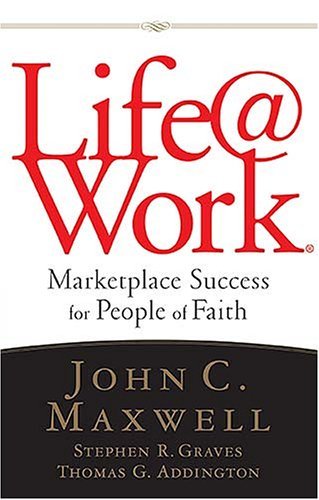
"Life@work: Marketplace Success For People Of Faith" explores how individuals of faith can integrate their spiritual values and beliefs into their professional lives to achieve success and make a meaningful impact. It delves into principles like integrity, purpose, and service, demonstrating how these tenets form a foundation for ethical conduct, positive influence, and ultimately, professional fulfillment within the workplace.
This book shares foundational similarities with "The 21 Irrefutable Laws of Leadership" because both works are rooted in practical, principle-based guidance for achieving positive outcomes. While one focuses on general leadership, the other applies those leadership-adjacent principles specifically to faith-based individuals navigating the professional world, emphasizing character, influence, and the impact of one's guiding beliefs. Both books distill complex ideas into actionable frameworks.
Individuals seeking to align their faith with their career, or those looking for business wisdom grounded in strong ethical principles, will find this book particularly compelling. It offers a practical roadmap for navigating workplace challenges and opportunities with purpose, fostering a sense of authenticity and impact that transcends conventional success metrics, ultimately leading to a more integrated and meaningful professional life.
Life@work: Marketplace Success For People Of Faith
"Life@work: Marketplace Success For People Of Faith" explores how individuals of faith can integrate their spiritual values and beliefs into their professional lives to achieve success and make a meaningful impact. It delves into principles like integrity, purpose, and service, demonstrating how these tenets form a foundation for ethical conduct, positive influence, and ultimately, professional fulfillment within the workplace.
This book shares foundational similarities with "The 21 Irrefutable Laws of Leadership" because both works are rooted in practical, principle-based guidance for achieving positive outcomes. While one focuses on general leadership, the other applies those leadership-adjacent principles specifically to faith-based individuals navigating the professional world, emphasizing character, influence, and the impact of one's guiding beliefs. Both books distill complex ideas into actionable frameworks.
Individuals seeking to align their faith with their career, or those looking for business wisdom grounded in strong ethical principles, will find this book particularly compelling. It offers a practical roadmap for navigating workplace challenges and opportunities with purpose, fostering a sense of authenticity and impact that transcends conventional success metrics, ultimately leading to a more integrated and meaningful professional life.
Talent Is Never Enough: Discover the Choices That Will Take You Beyond Your Talent
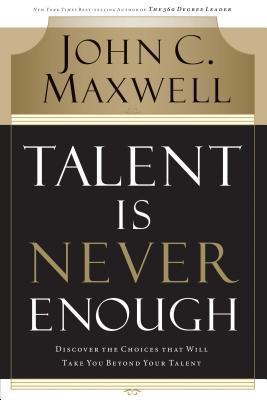
"Talent Is Never Enough" argues that innate ability, while foundational, is insufficient for sustained success. Instead, Maxwell outlines 13 critical choices—like character, initiative, focus, and teachability—that individuals must consistently make to maximize their potential and achieve true fulfillment. It's a practical guide on cultivating habits and mindsets that transcend natural gifts.
This book shares conceptual DNA with "The 21 Irrefutable Laws of Leadership" by emphasizing actionable principles for personal and professional growth. Both works dissect complex topics into digestible, numbered "laws" or "choices," providing a systematic framework for improvement. They underscore that achievement isn’t accidental but results from deliberate application of proven strategies.
This book offers substantial value because it empowers individuals to take ownership of their development. It provides a clear roadmap for anyone feeling stuck despite their abilities, or those seeking to elevate their performance irrespective of their field. The practical, principle-based approach offers enduring insights for personal mastery and impactful leadership.
Talent Is Never Enough: Discover the Choices That Will Take You Beyond Your Talent
"Talent Is Never Enough" argues that innate ability, while foundational, is insufficient for sustained success. Instead, Maxwell outlines 13 critical choices—like character, initiative, focus, and teachability—that individuals must consistently make to maximize their potential and achieve true fulfillment. It's a practical guide on cultivating habits and mindsets that transcend natural gifts.
This book shares conceptual DNA with "The 21 Irrefutable Laws of Leadership" by emphasizing actionable principles for personal and professional growth. Both works dissect complex topics into digestible, numbered "laws" or "choices," providing a systematic framework for improvement. They underscore that achievement isn’t accidental but results from deliberate application of proven strategies.
This book offers substantial value because it empowers individuals to take ownership of their development. It provides a clear roadmap for anyone feeling stuck despite their abilities, or those seeking to elevate their performance irrespective of their field. The practical, principle-based approach offers enduring insights for personal mastery and impactful leadership.
How Successful People Think: Change Your Thinking, Change Your Life
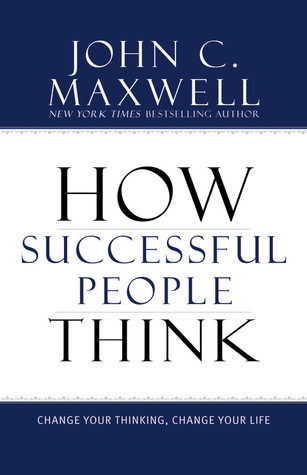
"How Successful People Think" by John C. Maxwell delves into the mental processes and frameworks employed by high achievers across various fields. It unpacks practical thinking strategies, from big-picture contemplation and focused thinking to creative problem-solving and ethical consideration, demonstrating how these cognitive habits directly impact success and personal growth. The book essentially provides a mental toolkit for improving decision-making and achieving aspirations.
This book shares significant thematic and methodological overlap with "The 21 Irrefutable Laws of Leadership." Both works, authored by Maxwell, distill complex subjects (leadership in one, successful thinking in the other) into accessible, principle-based frameworks. They both propose that success isn't random but rather a consequence of adopting specific, learnable behaviors, whether those are leadership laws or thinking disciplines. The overarching message in both is that intentional action, guided by proven principles, is the pathway to desired outcomes.
The book will appeal to individuals seeking concrete methods for personal and professional development. It offers actionable insights that can be immediately applied to enhance one's cognitive approach to challenges and opportunities. Its value lies in providing a clear roadmap for cultivating the mindset associated with success, offering tangible strategies for improving thought patterns and, consequently, one's life trajectory.
How Successful People Think: Change Your Thinking, Change Your Life
"How Successful People Think" by John C. Maxwell delves into the mental processes and frameworks employed by high achievers across various fields. It unpacks practical thinking strategies, from big-picture contemplation and focused thinking to creative problem-solving and ethical consideration, demonstrating how these cognitive habits directly impact success and personal growth. The book essentially provides a mental toolkit for improving decision-making and achieving aspirations.
This book shares significant thematic and methodological overlap with "The 21 Irrefutable Laws of Leadership." Both works, authored by Maxwell, distill complex subjects (leadership in one, successful thinking in the other) into accessible, principle-based frameworks. They both propose that success isn't random but rather a consequence of adopting specific, learnable behaviors, whether those are leadership laws or thinking disciplines. The overarching message in both is that intentional action, guided by proven principles, is the pathway to desired outcomes.
The book will appeal to individuals seeking concrete methods for personal and professional development. It offers actionable insights that can be immediately applied to enhance one's cognitive approach to challenges and opportunities. Its value lies in providing a clear roadmap for cultivating the mindset associated with success, offering tangible strategies for improving thought patterns and, consequently, one's life trajectory.
The Leader in Me: How Schools and Parents Around the World Are Inspiring Greatness, One Child At a Time

"The Leader in Me" by Stephen R. Covey explores how schools and families worldwide are cultivating leadership skills in children by applying principles from "The 7 Habits of Highly Effective People." It's essentially a framework for empowering young people to take initiative, set goals, and solve problems, fostering a sense of personal responsibility and collaboration from an early age. The book showcases real-world examples of how this approach transforms educational environments and individual lives.
This book shares a core philosophy with John C. Maxwell's "The 21 Irrefutable Laws of Leadership" in its fundamental belief that leadership is a learnable set of principles, not merely an innate trait. Both authors present actionable insights and frameworks intended to develop and refine leadership abilities, whether in adult professionals or nascent leaders in school settings. They both emphasize the power of intentional practice and character development as foundations for effective influence.
This book offers immense value by providing practical strategies for nurturing essential life skills and a leadership mindset in the next generation. It inspires educators and parents with a proven methodology for building confident, proactive, and engaged individuals, preparing them for future success and positive contributions to society. Its focus on proactive development holds significant appeal.
The Leader in Me: How Schools and Parents Around the World Are Inspiring Greatness, One Child At a Time
"The Leader in Me" by Stephen R. Covey explores how schools and families worldwide are cultivating leadership skills in children by applying principles from "The 7 Habits of Highly Effective People." It's essentially a framework for empowering young people to take initiative, set goals, and solve problems, fostering a sense of personal responsibility and collaboration from an early age. The book showcases real-world examples of how this approach transforms educational environments and individual lives.
This book shares a core philosophy with John C. Maxwell's "The 21 Irrefutable Laws of Leadership" in its fundamental belief that leadership is a learnable set of principles, not merely an innate trait. Both authors present actionable insights and frameworks intended to develop and refine leadership abilities, whether in adult professionals or nascent leaders in school settings. They both emphasize the power of intentional practice and character development as foundations for effective influence.
This book offers immense value by providing practical strategies for nurturing essential life skills and a leadership mindset in the next generation. It inspires educators and parents with a proven methodology for building confident, proactive, and engaged individuals, preparing them for future success and positive contributions to society. Its focus on proactive development holds significant appeal.
Start with Why: How Great Leaders Inspire Everyone to Take Action
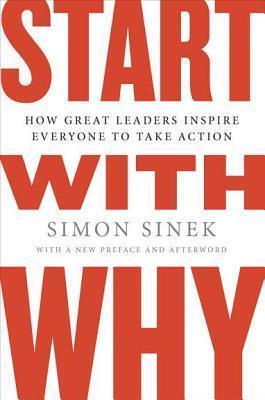
"Start with Why" unpacks the profound impact of understanding *why* an organization or individual exists and operates, rather than solely focusing on *what* they do or *how* they do it. Sinek argues that truly inspiring leaders and successful organizations begin with a clear sense of purpose, which then naturally informs their actions and outcomes, fostering deep loyalty and engagement.
Both books fundamentally address the qualities and principles that drive effective leadership and influence. While Maxwell’s "21 Irrefutable Laws" provides a comprehensive framework of actionable traits and practices for leaders, Sinek’s work delves into the foundational ideological element – purpose – that underpins all successful leadership endeavors, making it a complementary, rather than contradictory, perspective.
The book offers a compelling roadmap for cultivating authentic leadership and building enduring success. It helps individuals and organizations articulate their core beliefs, differentiate themselves in crowded markets, and inspire genuine commitment, ultimately leading to greater impact and fulfillment.
Start with Why: How Great Leaders Inspire Everyone to Take Action
"Start with Why" unpacks the profound impact of understanding *why* an organization or individual exists and operates, rather than solely focusing on *what* they do or *how* they do it. Sinek argues that truly inspiring leaders and successful organizations begin with a clear sense of purpose, which then naturally informs their actions and outcomes, fostering deep loyalty and engagement.
Both books fundamentally address the qualities and principles that drive effective leadership and influence. While Maxwell’s "21 Irrefutable Laws" provides a comprehensive framework of actionable traits and practices for leaders, Sinek’s work delves into the foundational ideological element – purpose – that underpins all successful leadership endeavors, making it a complementary, rather than contradictory, perspective.
The book offers a compelling roadmap for cultivating authentic leadership and building enduring success. It helps individuals and organizations articulate their core beliefs, differentiate themselves in crowded markets, and inspire genuine commitment, ultimately leading to greater impact and fulfillment.
The Difference Maker: Making Your Attitude Your Greatest Asset

"The Difference Maker" fundamentally argues that one's attitude is the most potent factor in determining personal and professional success. Maxwell dissects various aspects of attitude, from its influence on problem-solving and relationships to its impact on individual drive and resilience. It's a comprehensive guide to understanding, cultivating, and leveraging a positive and proactive mindset to achieve desired outcomes.
This book shares thematic DNA with "The 21 Irrefutable Laws of Leadership" by emphasizing the internal qualities crucial for effectiveness. While "Laws of Leadership" focuses on external principles for guiding others, "The Difference Maker" zeroes in on the internal foundation – attitude – that underpins successful leadership and personal achievement. Both books highlight the importance of intentional self-development as a prerequisite for impact.
This analysis of attitude will resonate because it addresses a universal truth: our internal state profoundly shapes our external reality. It offers actionable insights and a compelling framework for personal growth, enabling individuals to unlock greater potential, navigate challenges more effectively, and ultimately become more influential in all aspects of their lives. The practical wisdom within its pages offers a clear path to enhanced personal and professional agency.
The Difference Maker: Making Your Attitude Your Greatest Asset
"The Difference Maker" fundamentally argues that one's attitude is the most potent factor in determining personal and professional success. Maxwell dissects various aspects of attitude, from its influence on problem-solving and relationships to its impact on individual drive and resilience. It's a comprehensive guide to understanding, cultivating, and leveraging a positive and proactive mindset to achieve desired outcomes.
This book shares thematic DNA with "The 21 Irrefutable Laws of Leadership" by emphasizing the internal qualities crucial for effectiveness. While "Laws of Leadership" focuses on external principles for guiding others, "The Difference Maker" zeroes in on the internal foundation – attitude – that underpins successful leadership and personal achievement. Both books highlight the importance of intentional self-development as a prerequisite for impact.
This analysis of attitude will resonate because it addresses a universal truth: our internal state profoundly shapes our external reality. It offers actionable insights and a compelling framework for personal growth, enabling individuals to unlock greater potential, navigate challenges more effectively, and ultimately become more influential in all aspects of their lives. The practical wisdom within its pages offers a clear path to enhanced personal and professional agency.
More Books to Explore
Discover more titles that expand on these ideas and themes.
The 21 Indispensable Qualities of a Leader: Becoming the Person Others Will Want to Follow
The Leadership Challenge
The 16 Undeniable Laws of Communication: Apply Them and Make the Most of Your Message
Be All You Can Be
Life@work: Marketplace Success For People Of Faith
Talent Is Never Enough: Discover the Choices That Will Take You Beyond Your Talent