10 Books Similar to "The 16 Undeniable Laws of Communication: Apply Them and Make the Most of Your Message"
by John C. Maxwell

The 21 Irrefutable Laws of Leadership: Follow Them and People Will Follow You
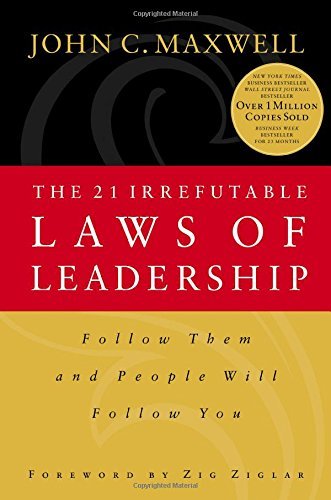
"The 21 Irrefutable Laws of Leadership" distills the essence of effective leadership into actionable principles. Maxwell presents a comprehensive framework, explaining that true leadership isn't about position, but about influence. Each "law" unpacks a different facet of leading people, from the Law of the Lid (leadership ability determines a person's level of effectiveness) to the Law of the Inner Circle (a leader's potential is determined by those closest to him). It's a practical guide for anyone seeking to understand and cultivate genuine influence.
This book shares foundational similarities with "The 16 Undeniable Laws of Communication." Both titles meticulously break down complex human interactions – communication and leadership – into distinct, universal principles. They are structured as accessible handbooks, offering clear explanations and real-world examples to illustrate how these "laws" operate, providing readers with transferable frameworks for improvement. Both emphasize the practical application of these principles for tangible results.
This book offers immense value by providing a tested blueprint for leadership development. It helps individuals understand the dynamics of guiding others, fostering growth not just in their professional roles but in any situation requiring influence. It equips one with the tools to become a more effective, respected, and inspiring presence, ultimately enhancing their ability to achieve collective goals and positively impact those around them.
The 21 Irrefutable Laws of Leadership: Follow Them and People Will Follow You
"The 21 Irrefutable Laws of Leadership" distills the essence of effective leadership into actionable principles. Maxwell presents a comprehensive framework, explaining that true leadership isn't about position, but about influence. Each "law" unpacks a different facet of leading people, from the Law of the Lid (leadership ability determines a person's level of effectiveness) to the Law of the Inner Circle (a leader's potential is determined by those closest to him). It's a practical guide for anyone seeking to understand and cultivate genuine influence.
This book shares foundational similarities with "The 16 Undeniable Laws of Communication." Both titles meticulously break down complex human interactions – communication and leadership – into distinct, universal principles. They are structured as accessible handbooks, offering clear explanations and real-world examples to illustrate how these "laws" operate, providing readers with transferable frameworks for improvement. Both emphasize the practical application of these principles for tangible results.
This book offers immense value by providing a tested blueprint for leadership development. It helps individuals understand the dynamics of guiding others, fostering growth not just in their professional roles but in any situation requiring influence. It equips one with the tools to become a more effective, respected, and inspiring presence, ultimately enhancing their ability to achieve collective goals and positively impact those around them.
The 21 Indispensable Qualities of a Leader: Becoming the Person Others Will Want to Follow

"The 21 Indispensable Qualities of a Leader" distills leadership effectiveness down to 21 core personal attributes. Maxwell meticulously defines each quality, like character, charisma, and commitment, illustrating their importance through anecdotes and practical advice. It's essentially a guidebook for personal development, arguing that genuine leadership emanates from who you are, not just what you do. The book encourages introspection and intentional cultivation of these traits to inspire others.
Its similarity to "The 16 Undeniable Laws of Communication" lies in its foundational approach. Both books present a structured framework—a set of "laws" or "qualities"—that Maxwell believes are non-negotiable for success in their respective domains. They both offer clear, actionable principles, breaking down complex topics into digestible, self-contained lessons. Both emphasize that mastery comes from understanding and applying these fundamental tenets.
This book will appeal to individuals seeking to enhance their influence and inspire others. Its value stems from providing a practical roadmap for personal growth, asserting that leadership is a learnable skill built on observable, achievable qualities. Anyone aspiring to lead, whether in a formal role or through personal impact, will discover actionable insights and a compelling invitation to become the kind of person others naturally gravitate towards and follow.
The 21 Indispensable Qualities of a Leader: Becoming the Person Others Will Want to Follow
"The 21 Indispensable Qualities of a Leader" distills leadership effectiveness down to 21 core personal attributes. Maxwell meticulously defines each quality, like character, charisma, and commitment, illustrating their importance through anecdotes and practical advice. It's essentially a guidebook for personal development, arguing that genuine leadership emanates from who you are, not just what you do. The book encourages introspection and intentional cultivation of these traits to inspire others.
Its similarity to "The 16 Undeniable Laws of Communication" lies in its foundational approach. Both books present a structured framework—a set of "laws" or "qualities"—that Maxwell believes are non-negotiable for success in their respective domains. They both offer clear, actionable principles, breaking down complex topics into digestible, self-contained lessons. Both emphasize that mastery comes from understanding and applying these fundamental tenets.
This book will appeal to individuals seeking to enhance their influence and inspire others. Its value stems from providing a practical roadmap for personal growth, asserting that leadership is a learnable skill built on observable, achievable qualities. Anyone aspiring to lead, whether in a formal role or through personal impact, will discover actionable insights and a compelling invitation to become the kind of person others naturally gravitate towards and follow.
Exactly What to Say: The Magic Words for Influence and Impact

"Exactly What to Say" distills communication into actionable phrases and mental frameworks designed to generate specific responses. It’s a practical guide offering precise wordings and techniques to influence conversations, overcome objections, and foster agreement in various professional and personal contexts, focusing on the immediate impact of your language choices.
Both books fundamentally aim to empower individuals to master their verbal interactions. While Maxwell approaches communication from a principles-based, foundational perspective, Jones offers direct, prescriptive tools. The common thread is the belief that intentional and well-crafted communication is a learnable skill that directly correlates with achieving desired outcomes and building stronger relationships.
This book speaks to the desire for practical, immediate improvement in communication effectiveness. It provides tangible scripts and strategies that can be integrated into daily interactions, offering a clear path to becoming more persuasive and impactful. Its value lies in its direct applicability, equipping individuals with the "magic words" to navigate challenging conversations and lead interactions more effectively.
Exactly What to Say: The Magic Words for Influence and Impact
"Exactly What to Say" distills communication into actionable phrases and mental frameworks designed to generate specific responses. It’s a practical guide offering precise wordings and techniques to influence conversations, overcome objections, and foster agreement in various professional and personal contexts, focusing on the immediate impact of your language choices.
Both books fundamentally aim to empower individuals to master their verbal interactions. While Maxwell approaches communication from a principles-based, foundational perspective, Jones offers direct, prescriptive tools. The common thread is the belief that intentional and well-crafted communication is a learnable skill that directly correlates with achieving desired outcomes and building stronger relationships.
This book speaks to the desire for practical, immediate improvement in communication effectiveness. It provides tangible scripts and strategies that can be integrated into daily interactions, offering a clear path to becoming more persuasive and impactful. Its value lies in its direct applicability, equipping individuals with the "magic words" to navigate challenging conversations and lead interactions more effectively.
Always Know What To Say - Easy Ways To Approach And Talk To Anyone
*Always Know What To Say* offers a practical guide to mastering everyday conversations. It dismantles anxieties around social interaction, providing actionable strategies for initiating discussions, maintaining engaging dialogue, and navigating various social scenarios with confidence. The book focuses on practical techniques for overcoming shyness and improving verbal fluency, ensuring individuals can connect effectively in diverse situations, from professional networking to casual encounters.
This book shares common ground with *The 16 Undeniable Laws of Communication* by emphasizing the crucial role of intentional communication. Both works advocate for a deliberate approach to verbal exchanges, aiming to enhance clarity, impact, and connection. While Maxwell presents overarching principles of effective communication, Murphy provides the granular, tactical advice on *how* to implement those principles in real-time conversations, offering practical applications for many of Maxwell's laws, such as the Law of Clarity or the Law of Connection.
It will appeal to those seeking to refine their interpersonal skills and boost their self-assurance in social settings. The clear, step-by-step methods allow for immediate application, empowering individuals to transform awkward silences into meaningful interactions. The value lies in its ability to equip anyone with the tools to confidently express themselves and build stronger relationships, both personally and professionally.
Always Know What To Say - Easy Ways To Approach And Talk To Anyone
*Always Know What To Say* offers a practical guide to mastering everyday conversations. It dismantles anxieties around social interaction, providing actionable strategies for initiating discussions, maintaining engaging dialogue, and navigating various social scenarios with confidence. The book focuses on practical techniques for overcoming shyness and improving verbal fluency, ensuring individuals can connect effectively in diverse situations, from professional networking to casual encounters.
This book shares common ground with *The 16 Undeniable Laws of Communication* by emphasizing the crucial role of intentional communication. Both works advocate for a deliberate approach to verbal exchanges, aiming to enhance clarity, impact, and connection. While Maxwell presents overarching principles of effective communication, Murphy provides the granular, tactical advice on *how* to implement those principles in real-time conversations, offering practical applications for many of Maxwell's laws, such as the Law of Clarity or the Law of Connection.
It will appeal to those seeking to refine their interpersonal skills and boost their self-assurance in social settings. The clear, step-by-step methods allow for immediate application, empowering individuals to transform awkward silences into meaningful interactions. The value lies in its ability to equip anyone with the tools to confidently express themselves and build stronger relationships, both personally and professionally.
How to Talk to Anyone: 92 Little Tricks for Big Success in Relationships
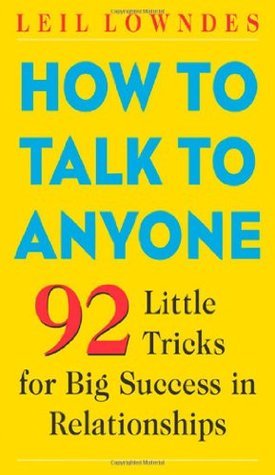
"How to Talk to Anyone" is a practical guide offering concrete strategies to enhance social interactions and build rapport. It dissects foundational communication principles into actionable "tricks," covering everything from making strong first impressions to navigating conversations and projecting confidence. The book emphasizes observable behaviors and psychological nuances to improve one's social fluency in various settings.
Both "How to Talk to Anyone" and "The 16 Undeniable Laws of Communication" share the core objective of improving interpersonal effectiveness through structured advice. While Maxwell presents overarching laws, Lowndes breaks down similar concepts into granular, tactical behaviors. Both authors understand that successful messaging and relational success aren't accidental but rather the result of understanding and applying specific communication techniques.
This book will appeal to those seeking tangible, immediate ways to refine their communication skills for personal and professional growth. Its accessible format and focus on specific, implementable actions mean individuals can quickly experiment with and integrate these techniques into their daily lives, leading to more successful and fulfilling interactions. The clear, direct advice offers instant applicability and measurable improvement.
How to Talk to Anyone: 92 Little Tricks for Big Success in Relationships
"How to Talk to Anyone" is a practical guide offering concrete strategies to enhance social interactions and build rapport. It dissects foundational communication principles into actionable "tricks," covering everything from making strong first impressions to navigating conversations and projecting confidence. The book emphasizes observable behaviors and psychological nuances to improve one's social fluency in various settings.
Both "How to Talk to Anyone" and "The 16 Undeniable Laws of Communication" share the core objective of improving interpersonal effectiveness through structured advice. While Maxwell presents overarching laws, Lowndes breaks down similar concepts into granular, tactical behaviors. Both authors understand that successful messaging and relational success aren't accidental but rather the result of understanding and applying specific communication techniques.
This book will appeal to those seeking tangible, immediate ways to refine their communication skills for personal and professional growth. Its accessible format and focus on specific, implementable actions mean individuals can quickly experiment with and integrate these techniques into their daily lives, leading to more successful and fulfilling interactions. The clear, direct advice offers instant applicability and measurable improvement.
The Difference Maker: Making Your Attitude Your Greatest Asset

"The Difference Maker: Making Your Attitude Your Greatest Asset" by John C. Maxwell explores the profound impact of one's attitude on personal and professional success. Maxwell argues that attitude isn't merely a mood but a fundamental choice that shapes perspectives, actions, and ultimately, outcomes. He dismantles common misconceptions about attitude, offering practical strategies to cultivate a positive, resilient mindset, thereby transforming challenges into opportunities and elevating individual performance.
This book shares fundamental DNA with "The 16 Undeniable Laws of Communication" in its focus on actionable principles that empower individuals to enhance their effectiveness. Both works delve into the internal frameworks that drive external results. While one addresses how we convey messages, the other examines the internal lens through which we process and react to the world, ultimately influencing how those messages are received and how we engage in communication. Both offer a structured approach to self-improvement through identifiable "laws" or principles.
This work will appeal to individuals seeking to gain a competitive edge and optimize their personal growth trajectory. Its practical advise on shifting perspective, embracing challenges, and fostering a growth mindset offers tangible tools for navigating life's complexities. The book's value lies in its power to reframe internal narratives, empowering individuals to take ownership of their emotional landscape and, in turn, exert a more positive influence on their environments and interactions.
The Difference Maker: Making Your Attitude Your Greatest Asset
"The Difference Maker: Making Your Attitude Your Greatest Asset" by John C. Maxwell explores the profound impact of one's attitude on personal and professional success. Maxwell argues that attitude isn't merely a mood but a fundamental choice that shapes perspectives, actions, and ultimately, outcomes. He dismantles common misconceptions about attitude, offering practical strategies to cultivate a positive, resilient mindset, thereby transforming challenges into opportunities and elevating individual performance.
This book shares fundamental DNA with "The 16 Undeniable Laws of Communication" in its focus on actionable principles that empower individuals to enhance their effectiveness. Both works delve into the internal frameworks that drive external results. While one addresses how we convey messages, the other examines the internal lens through which we process and react to the world, ultimately influencing how those messages are received and how we engage in communication. Both offer a structured approach to self-improvement through identifiable "laws" or principles.
This work will appeal to individuals seeking to gain a competitive edge and optimize their personal growth trajectory. Its practical advise on shifting perspective, embracing challenges, and fostering a growth mindset offers tangible tools for navigating life's complexities. The book's value lies in its power to reframe internal narratives, empowering individuals to take ownership of their emotional landscape and, in turn, exert a more positive influence on their environments and interactions.
You Say More Than You Think: Use the New Body Language to Get What You Want!, the 7-day Plan

"You Say More Than You Think" by Janine Driver offers practical insights into decoding and utilizing nonverbal communication. It breaks down the subtle cues we transmit and receive through body language, facial expressions, and gestures, providing a structured, actionable plan for improving communication effectiveness in various personal and professional contexts. The book emphasizes how understanding these unspoken signals can empower individuals to better convey their intentions and interpret those of others.
This book shares thematic commonalities with Maxwell's "The 16 Undeniable Laws of Communication" in its fundamental focus on improving how one communicates and is understood. Both works aim to equip individuals with tools to maximize the impact and clarity of their messages, albeit through different lenses—Maxwell through broader communication principles, and Driver specifically through the nuances of nonverbal cues. Essentially, both books are guides to becoming more effective and influential communicators.
The direct approach and practical advice will resonate deeply with those seeking tangible improvements in their social and professional interactions. Individuals wishing to gain a competitive edge in negotiations, build stronger relationships, or simply better understand the people around them will find immense value. It provides a toolkit for self-awareness and improved interpersonal dynamics.
You Say More Than You Think: Use the New Body Language to Get What You Want!, the 7-day Plan
"You Say More Than You Think" by Janine Driver offers practical insights into decoding and utilizing nonverbal communication. It breaks down the subtle cues we transmit and receive through body language, facial expressions, and gestures, providing a structured, actionable plan for improving communication effectiveness in various personal and professional contexts. The book emphasizes how understanding these unspoken signals can empower individuals to better convey their intentions and interpret those of others.
This book shares thematic commonalities with Maxwell's "The 16 Undeniable Laws of Communication" in its fundamental focus on improving how one communicates and is understood. Both works aim to equip individuals with tools to maximize the impact and clarity of their messages, albeit through different lenses—Maxwell through broader communication principles, and Driver specifically through the nuances of nonverbal cues. Essentially, both books are guides to becoming more effective and influential communicators.
The direct approach and practical advice will resonate deeply with those seeking tangible improvements in their social and professional interactions. Individuals wishing to gain a competitive edge in negotiations, build stronger relationships, or simply better understand the people around them will find immense value. It provides a toolkit for self-awareness and improved interpersonal dynamics.
Talent Is Never Enough: Discover the Choices That Will Take You Beyond Your Talent
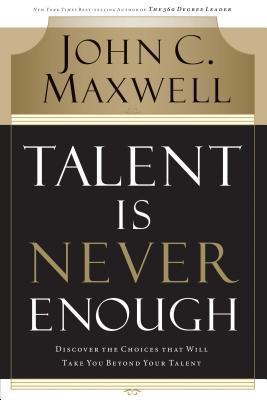
"Talent Is Never Enough" argues that innate ability, while a strong start, is insufficient for sustained success. Instead, Maxwell outlines a series of intentional choices and attributes, such as passion, initiative, focus, preparation, and teachability, that enable individuals to maximize their potential and ultimately overachieve. It's a practical guide for moving beyond natural aptitude to truly impactful results.
Both books, though addressing different core subjects, share Maxwell's characteristic approach: breaking down complex ideas into actionable "laws" or "choices" that foster personal and professional growth. They both emphasize that excellence isn't solely inherent but rather cultivated through deliberate effort, strategic thinking, and consistent application of foundational principles. The underlying message in both is about intentional mastery.
This book offers a compelling roadmap for anyone feeling capped by their current achievements or seeking to unlock a higher level of performance. It provides tangible strategies to translate potential into tangible progress, making it highly valuable for individuals striving for personal and career advancement who understand that continuous development extends beyond initial giftedness.
Talent Is Never Enough: Discover the Choices That Will Take You Beyond Your Talent
"Talent Is Never Enough" argues that innate ability, while a strong start, is insufficient for sustained success. Instead, Maxwell outlines a series of intentional choices and attributes, such as passion, initiative, focus, preparation, and teachability, that enable individuals to maximize their potential and ultimately overachieve. It's a practical guide for moving beyond natural aptitude to truly impactful results.
Both books, though addressing different core subjects, share Maxwell's characteristic approach: breaking down complex ideas into actionable "laws" or "choices" that foster personal and professional growth. They both emphasize that excellence isn't solely inherent but rather cultivated through deliberate effort, strategic thinking, and consistent application of foundational principles. The underlying message in both is about intentional mastery.
This book offers a compelling roadmap for anyone feeling capped by their current achievements or seeking to unlock a higher level of performance. It provides tangible strategies to translate potential into tangible progress, making it highly valuable for individuals striving for personal and career advancement who understand that continuous development extends beyond initial giftedness.
Life@work: Marketplace Success For People Of Faith
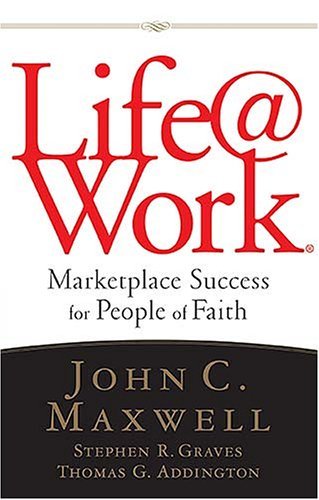
"Life@work: Marketplace Success For People Of Faith" explores how individuals of faith can integrate their spiritual beliefs and values into their professional lives, not just for personal success, but to make a positive impact in the workplace. It provides actionable principles to navigate career challenges, build ethical relationships, and lead with integrity, all while honoring one's spiritual convictions.
Both books, while distinct in their primary focus, share a foundational commitment to Maxwell's core philosophy of personal growth and impactful influence. "Life@work" applies principles of integrity and purpose, much like how "The 16 Undeniable Laws of Communication" outlines strategies for effective message delivery. The underlying thread is about intentional living and leadership, whether it's through communication or marketplace conduct rooted in one's values.
This book offers concrete guidance for those seeking to bridge the gap between their faith and their professional ambitions. It empowers individuals to view their work not merely as a job, but as an opportunity for spiritual expression and positive societal contribution, making their daily efforts more meaningful and purposeful.
Life@work: Marketplace Success For People Of Faith
"Life@work: Marketplace Success For People Of Faith" explores how individuals of faith can integrate their spiritual beliefs and values into their professional lives, not just for personal success, but to make a positive impact in the workplace. It provides actionable principles to navigate career challenges, build ethical relationships, and lead with integrity, all while honoring one's spiritual convictions.
Both books, while distinct in their primary focus, share a foundational commitment to Maxwell's core philosophy of personal growth and impactful influence. "Life@work" applies principles of integrity and purpose, much like how "The 16 Undeniable Laws of Communication" outlines strategies for effective message delivery. The underlying thread is about intentional living and leadership, whether it's through communication or marketplace conduct rooted in one's values.
This book offers concrete guidance for those seeking to bridge the gap between their faith and their professional ambitions. It empowers individuals to view their work not merely as a job, but as an opportunity for spiritual expression and positive societal contribution, making their daily efforts more meaningful and purposeful.
Be All You Can Be

"Be All You Can Be" by John C. Maxwell is a practical guide centered on personal growth and maximizing one's potential across various life domains. Maxwell outlines key principles and actionable steps to help individuals identify their strengths, overcome limitations, and pursue success and fulfillment by understanding and applying timeless truths about leadership, attitude, and purpose. It's about empowering individuals to live up to their highest capabilities.
This book shares foundational similarities with "The 16 Undeniable Laws of Communication" in its structured approach to self-improvement. Both titles distill complex topics into accessible, "law-like" principles, emphasizing that mastering these core ideas is essential for impactful living. They both champion the idea that personal excellence and effective interaction are not accidental but the result of intentional practice and adherence to proven methodologies.
This book will appeal to individuals seeking concrete strategies for self-improvement and aspiring for greater effectiveness in their personal and professional lives. Its clear, direct advice and emphasis on actionable steps offer a tangible pathway to growth, providing tools for cultivating a resilient mindset and achieving meaningful outcomes. It proves valuable by offering a blueprint for unlocking dormant potential and fostering consistent progress.
Be All You Can Be
"Be All You Can Be" by John C. Maxwell is a practical guide centered on personal growth and maximizing one's potential across various life domains. Maxwell outlines key principles and actionable steps to help individuals identify their strengths, overcome limitations, and pursue success and fulfillment by understanding and applying timeless truths about leadership, attitude, and purpose. It's about empowering individuals to live up to their highest capabilities.
This book shares foundational similarities with "The 16 Undeniable Laws of Communication" in its structured approach to self-improvement. Both titles distill complex topics into accessible, "law-like" principles, emphasizing that mastering these core ideas is essential for impactful living. They both champion the idea that personal excellence and effective interaction are not accidental but the result of intentional practice and adherence to proven methodologies.
This book will appeal to individuals seeking concrete strategies for self-improvement and aspiring for greater effectiveness in their personal and professional lives. Its clear, direct advice and emphasis on actionable steps offer a tangible pathway to growth, providing tools for cultivating a resilient mindset and achieving meaningful outcomes. It proves valuable by offering a blueprint for unlocking dormant potential and fostering consistent progress.
More Books to Explore
Discover more titles that expand on these ideas and themes.
The 21 Irrefutable Laws of Leadership: Follow Them and People Will Follow You
The 21 Indispensable Qualities of a Leader: Becoming the Person Others Will Want to Follow
Exactly What to Say: The Magic Words for Influence and Impact
Always Know What To Say - Easy Ways To Approach And Talk To Anyone
How to Talk to Anyone: 92 Little Tricks for Big Success in Relationships
The Difference Maker: Making Your Attitude Your Greatest Asset