10 Books Similar to "Talking to Strangers: What We Should Know About the People We Don't Know"
by Malcolm Gladwell
Revenge of the Tipping Point: Overstories, Superspreaders, and the Rise of Social Engineering
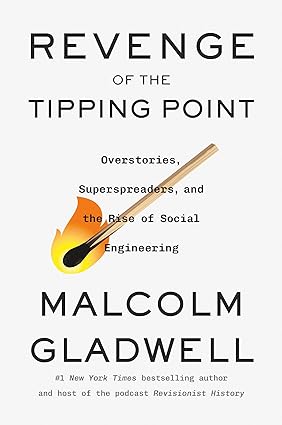
"Revenge of the Tipping Point" delves into the often-unseen forces that shape our understanding of the world, exploring how seemingly isolated events or individuals ("superspreaders" and "overstories") can dramatically alter collective perception and behavior. It examines the insidious ways information spreads, how narratives are constructed, and the often-unintended consequences of these "social engineering" processes, highlighting the profound impact on societal beliefs and actions.
This book shares a core investigative curiosity with "Talking to Strangers." Both works meticulously peel back layers of conventional wisdom to reveal the hidden complexities beneath human interactions and societal phenomena. They each challenge readers to re-evaluate their assumptions about how people and information operate, uncovering the often flawed mental models we employ to navigate our social world.
The insights offered in "Revenge of the Tipping Point" are both compelling and relevant. Its exploration of narrative formation and social contagion provides a crucial lens through which to understand contemporary issues, offering a heightened awareness of how information influences decision-making. Thinking critically about these dynamics can empower a more discerning engagement with the pervasive narratives that define our age.
Revenge of the Tipping Point: Overstories, Superspreaders, and the Rise of Social Engineering
"Revenge of the Tipping Point" delves into the often-unseen forces that shape our understanding of the world, exploring how seemingly isolated events or individuals ("superspreaders" and "overstories") can dramatically alter collective perception and behavior. It examines the insidious ways information spreads, how narratives are constructed, and the often-unintended consequences of these "social engineering" processes, highlighting the profound impact on societal beliefs and actions.
This book shares a core investigative curiosity with "Talking to Strangers." Both works meticulously peel back layers of conventional wisdom to reveal the hidden complexities beneath human interactions and societal phenomena. They each challenge readers to re-evaluate their assumptions about how people and information operate, uncovering the often flawed mental models we employ to navigate our social world.
The insights offered in "Revenge of the Tipping Point" are both compelling and relevant. Its exploration of narrative formation and social contagion provides a crucial lens through which to understand contemporary issues, offering a heightened awareness of how information influences decision-making. Thinking critically about these dynamics can empower a more discerning engagement with the pervasive narratives that define our age.
Blink: The Power of Thinking Without Thinking

*Blink: The Power of Thinking Without Thinking* explores the surprising power and perils of rapid cognition – the snap judgments and instantaneous decisions we make daily. Gladwell delves into instances where our unconscious minds process vast amounts of information in seconds, leading to accurate insights, and equally, to significant errors. It's an examination of intuition, biases, and the immediate impressions that color our understanding of the world.
This book shares a fundamental curiosity with *Talking to Strangers* regarding how we perceive and interact with others, particularly in situations where information is incomplete or ambiguous. Both books dissect the mechanisms behind our interpretations of people and events, highlighting the often-hidden cognitive shortcuts and assumptions we employ, for better or worse. Both challenge the notion that more information always leads to better understanding.
The book offers a compelling lens through which to understand our own decision-making processes and the often-unseen forces influencing our perceptions. It provides valuable insight into the nature of expertise, the origins of prejudice, and the surprising accuracy of gut feelings, making it a thought-provoking read for anyone interested in psychology, human behavior, and leadership.
Blink: The Power of Thinking Without Thinking
*Blink: The Power of Thinking Without Thinking* explores the surprising power and perils of rapid cognition – the snap judgments and instantaneous decisions we make daily. Gladwell delves into instances where our unconscious minds process vast amounts of information in seconds, leading to accurate insights, and equally, to significant errors. It's an examination of intuition, biases, and the immediate impressions that color our understanding of the world.
This book shares a fundamental curiosity with *Talking to Strangers* regarding how we perceive and interact with others, particularly in situations where information is incomplete or ambiguous. Both books dissect the mechanisms behind our interpretations of people and events, highlighting the often-hidden cognitive shortcuts and assumptions we employ, for better or worse. Both challenge the notion that more information always leads to better understanding.
The book offers a compelling lens through which to understand our own decision-making processes and the often-unseen forces influencing our perceptions. It provides valuable insight into the nature of expertise, the origins of prejudice, and the surprising accuracy of gut feelings, making it a thought-provoking read for anyone interested in psychology, human behavior, and leadership.
The Tipping Point: How Little Things Can Make a Big Difference

"The Tipping Point" explores how seemingly minor actions or ideas achieve critical mass, spreading rapidly like an epidemic and creating significant societal shifts. Gladwell dissects this phenomenon, identifying the key individuals (Connectors, Mavens, Salesmen) and conditions (the Law of the Few, the Stickiness Factor, the Power of Context) that trigger these "tipping points," transforming niche trends into widespread movements.
Both books delve into the hidden mechanisms that govern human behavior and social interactions, applying a forensic lens to everyday phenomena. They share Gladwell’s signature narrative style, weaving together diverse anecdotes, research, and psychological insights to illuminate complex concepts. Both seek to uncover the underlying rules that dictate how we understand, misunderstand, and influence the world around us.
This book offers a compelling framework for understanding how trends emerge, ideas propagate, and social change unfolds. Its insights are invaluable for anyone interested in marketing, social dynamics, or simply comprehending the often-unseen forces shaping our world. Its accessible yet profound analysis provides a powerful lens through which to analyze and possibly even instigate significant impact.
The Tipping Point: How Little Things Can Make a Big Difference
"The Tipping Point" explores how seemingly minor actions or ideas achieve critical mass, spreading rapidly like an epidemic and creating significant societal shifts. Gladwell dissects this phenomenon, identifying the key individuals (Connectors, Mavens, Salesmen) and conditions (the Law of the Few, the Stickiness Factor, the Power of Context) that trigger these "tipping points," transforming niche trends into widespread movements.
Both books delve into the hidden mechanisms that govern human behavior and social interactions, applying a forensic lens to everyday phenomena. They share Gladwell’s signature narrative style, weaving together diverse anecdotes, research, and psychological insights to illuminate complex concepts. Both seek to uncover the underlying rules that dictate how we understand, misunderstand, and influence the world around us.
This book offers a compelling framework for understanding how trends emerge, ideas propagate, and social change unfolds. Its insights are invaluable for anyone interested in marketing, social dynamics, or simply comprehending the often-unseen forces shaping our world. Its accessible yet profound analysis provides a powerful lens through which to analyze and possibly even instigate significant impact.
What the Dog Saw and Other Adventures

"What the Dog Saw and Other Adventures" compiles some of Malcolm Gladwell's most compelling essays for The New Yorker. It delves into an eclectic array of subjects, from the nuanced world of professional dog whisperers and the psychology behind homelessness to the evolution of haute couture and the critical role of predicting failure. At its core, the book explores hidden patterns, unexpected connections, and the often-overlooked forces shaping our world, revealing the extraordinary in the seemingly ordinary.
This collection shares Gladwell's signature analytical style familiar from "Talking to Strangers." Both books dissect complex human behaviors and societal phenomena using engaging narratives and rigorous research, challenging conventional wisdom. They explore how perception can be flawed, how assumptions guide our interactions, and how seemingly disparate elements contribute to larger truths. The underlying theme in both is the scrutiny of how we interpret information and the profound implications of those interpretations.
The explorations within "What the Dog Saw" offer fresh perspectives on familiar concepts, fostering a deeper understanding of human nature and societal structures. The diverse topics and Gladwell's incisive commentary stimulate critical thinking, encouraging a re-evaluation of everyday experiences. Its value lies in its ability to broaden one's intellectual landscape, providing tools for more insightful observations about the world and the people within it.
What the Dog Saw and Other Adventures
"What the Dog Saw and Other Adventures" compiles some of Malcolm Gladwell's most compelling essays for The New Yorker. It delves into an eclectic array of subjects, from the nuanced world of professional dog whisperers and the psychology behind homelessness to the evolution of haute couture and the critical role of predicting failure. At its core, the book explores hidden patterns, unexpected connections, and the often-overlooked forces shaping our world, revealing the extraordinary in the seemingly ordinary.
This collection shares Gladwell's signature analytical style familiar from "Talking to Strangers." Both books dissect complex human behaviors and societal phenomena using engaging narratives and rigorous research, challenging conventional wisdom. They explore how perception can be flawed, how assumptions guide our interactions, and how seemingly disparate elements contribute to larger truths. The underlying theme in both is the scrutiny of how we interpret information and the profound implications of those interpretations.
The explorations within "What the Dog Saw" offer fresh perspectives on familiar concepts, fostering a deeper understanding of human nature and societal structures. The diverse topics and Gladwell's incisive commentary stimulate critical thinking, encouraging a re-evaluation of everyday experiences. Its value lies in its ability to broaden one's intellectual landscape, providing tools for more insightful observations about the world and the people within it.
Outliers: The Story of Success

"Outliers: The Story of Success" challenges the conventional narrative of individual achievement, arguing that extraordinary success isn't solely a product of innate talent or relentless effort. Instead, Gladwell meticulously uncovers the hidden advantages, cultural legacies, and opportune circumstances that often lie beneath the surface of remarkable accomplishments, from hockey players to legendary computer programmers.
This book shares Gladwell's signature approach with "Talking to Strangers," as both dismantle common assumptions and reveal the invisible structures shaping human interactions and outcomes. Both works dissect complex social phenomena by presenting compelling anecdotes and research, encouraging readers to look beyond superficial interpretations for deeper, often counterintuitive, explanations.
The book will resonate with anyone curious about the true drivers of success and the profound impact of environment on individual potential. It offers a fresh perspective on human achievement, prompting a re-evaluation of personal narratives and a deeper understanding of the societal factors that contribute to who gets ahead and why.
Outliers: The Story of Success
"Outliers: The Story of Success" challenges the conventional narrative of individual achievement, arguing that extraordinary success isn't solely a product of innate talent or relentless effort. Instead, Gladwell meticulously uncovers the hidden advantages, cultural legacies, and opportune circumstances that often lie beneath the surface of remarkable accomplishments, from hockey players to legendary computer programmers.
This book shares Gladwell's signature approach with "Talking to Strangers," as both dismantle common assumptions and reveal the invisible structures shaping human interactions and outcomes. Both works dissect complex social phenomena by presenting compelling anecdotes and research, encouraging readers to look beyond superficial interpretations for deeper, often counterintuitive, explanations.
The book will resonate with anyone curious about the true drivers of success and the profound impact of environment on individual potential. It offers a fresh perspective on human achievement, prompting a re-evaluation of personal narratives and a deeper understanding of the societal factors that contribute to who gets ahead and why.
David and Goliath: Underdogs, Misfits, and the Art of Battling Giants
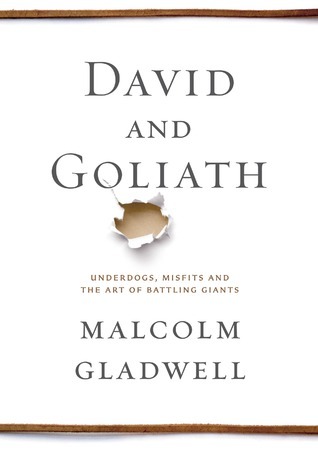
"David and Goliath" explores the unexpected advantages found in apparent disadvantages. Gladwell challenges our preconceived notions about strength, weakness, and what it truly takes to succeed against overwhelming odds. Through compelling anecdotes and historical accounts, he reveals how underdogs and perceived misfits often possess unique perspectives and strategies that allow them to overcome seemingly insurmountable challenges, turning weaknesses into strengths.
This book is similar to "Talking to Strangers" in its core methodology: both rigorously dissect seemingly obvious situations to expose hidden truths and counter-intuitive insights. Gladwell consistently demonstrates how our initial assumptions about people, power dynamics, or social interactions are frequently flawed. Both books utilize real-world examples to illustrate complex psychological and societal phenomena, urging the reader to look beyond surface appearances.
The appeal of "David and Goliath" lies in its empowering message and its profound re-evaluation of what constitutes a true advantage. It offers a refreshing perspective on challenge and adversity, encouraging a deeper understanding of human potential and resilience. This book provides a valuable framework for re-thinking personal struggles, organizational dynamics, and historical narratives, offering hope and strategic insight into navigating difficulties.
David and Goliath: Underdogs, Misfits, and the Art of Battling Giants
"David and Goliath" explores the unexpected advantages found in apparent disadvantages. Gladwell challenges our preconceived notions about strength, weakness, and what it truly takes to succeed against overwhelming odds. Through compelling anecdotes and historical accounts, he reveals how underdogs and perceived misfits often possess unique perspectives and strategies that allow them to overcome seemingly insurmountable challenges, turning weaknesses into strengths.
This book is similar to "Talking to Strangers" in its core methodology: both rigorously dissect seemingly obvious situations to expose hidden truths and counter-intuitive insights. Gladwell consistently demonstrates how our initial assumptions about people, power dynamics, or social interactions are frequently flawed. Both books utilize real-world examples to illustrate complex psychological and societal phenomena, urging the reader to look beyond surface appearances.
The appeal of "David and Goliath" lies in its empowering message and its profound re-evaluation of what constitutes a true advantage. It offers a refreshing perspective on challenge and adversity, encouraging a deeper understanding of human potential and resilience. This book provides a valuable framework for re-thinking personal struggles, organizational dynamics, and historical narratives, offering hope and strategic insight into navigating difficulties.
The Blindspots Between Us: How to Overcome Unconscious Cognitive Bias and Build Better Relationships

"The Blindspots Between Us" by Gleb Tsipursky explores the insidious ways unconscious cognitive biases hinder our interactions and relationships. It unpacks various distortions in thinking – from confirmation bias to fundamental attribution error – demonstrating how these inherent mental shortcuts prevent us from accurately perceiving others and their intentions. Tsipursky then offers practical, evidence-based strategies for recognizing and mitigating these biases, ultimately leading to more effective communication and stronger connections in both personal and professional spheres.
This book shares thematic roots with "Talking to Strangers" through its examination of human judgment and misjudgment when confronting the unfamiliar. Both texts delve into the inherent difficulties of understanding those outside our immediate experience, highlighting how our default assumptions and mental frameworks often lead to flawed interpretations and ultimately, conflict or misunderstanding. Where Gladwell dissects societal failures stemming from these misinterpretations, Tsipursky provides a more direct, actionable toolkit for individual improvement.
This analysis of cognitive bias offers immense value. Anyone seeking to enhance their interpersonal skills, reduce conflict, or simply gain a deeper understanding of human behavior will find its insights compelling. It empowers individuals to critically examine their own thought processes, leading to more objective assessments and ultimately, fostering a greater capacity for empathy and effective collaboration.
The Blindspots Between Us: How to Overcome Unconscious Cognitive Bias and Build Better Relationships
"The Blindspots Between Us" by Gleb Tsipursky explores the insidious ways unconscious cognitive biases hinder our interactions and relationships. It unpacks various distortions in thinking – from confirmation bias to fundamental attribution error – demonstrating how these inherent mental shortcuts prevent us from accurately perceiving others and their intentions. Tsipursky then offers practical, evidence-based strategies for recognizing and mitigating these biases, ultimately leading to more effective communication and stronger connections in both personal and professional spheres.
This book shares thematic roots with "Talking to Strangers" through its examination of human judgment and misjudgment when confronting the unfamiliar. Both texts delve into the inherent difficulties of understanding those outside our immediate experience, highlighting how our default assumptions and mental frameworks often lead to flawed interpretations and ultimately, conflict or misunderstanding. Where Gladwell dissects societal failures stemming from these misinterpretations, Tsipursky provides a more direct, actionable toolkit for individual improvement.
This analysis of cognitive bias offers immense value. Anyone seeking to enhance their interpersonal skills, reduce conflict, or simply gain a deeper understanding of human behavior will find its insights compelling. It empowers individuals to critically examine their own thought processes, leading to more objective assessments and ultimately, fostering a greater capacity for empathy and effective collaboration.
The Invisible Gorilla: And Other Ways Our Intuitions Deceive Us

"The Invisible Gorilla" delves into the fascinating world of cognitive illusions, revealing how our perceptions and intuitions often lead us astray. Through engaging experiments and real-world examples, it exposes the blind spots in our minds, demonstrating why we fail to see what's right in front of us, make faulty judgments, and misinterpret situations, even when we believe we're being fully attentive. It's a journey into the mechanics of human attention, memory, and reasoning.
This book shares a core thematic resonance with "Talking to Strangers" in its exploration of how readily human minds misinterpret and misjudge. Like Gladwell's investigation into our flawed assumptions about unfamiliar people, Chabris and Simons expose the systemic errors in our individual perception and understanding. Both works illuminate the inherent limitations of human cognition and how these limitations profoundly impact our interactions with the world and others.
This analytical work offers a profound re-evaluation of how we process information daily. It equips individuals with a heightened awareness of their own cognitive biases, which can translate into more critical thinking and a deeper understanding of human behavior. Engaging with these insights can lead to better decision-making and a more empathetic appreciation for why others might see the world differently.
The Invisible Gorilla: And Other Ways Our Intuitions Deceive Us
"The Invisible Gorilla" delves into the fascinating world of cognitive illusions, revealing how our perceptions and intuitions often lead us astray. Through engaging experiments and real-world examples, it exposes the blind spots in our minds, demonstrating why we fail to see what's right in front of us, make faulty judgments, and misinterpret situations, even when we believe we're being fully attentive. It's a journey into the mechanics of human attention, memory, and reasoning.
This book shares a core thematic resonance with "Talking to Strangers" in its exploration of how readily human minds misinterpret and misjudge. Like Gladwell's investigation into our flawed assumptions about unfamiliar people, Chabris and Simons expose the systemic errors in our individual perception and understanding. Both works illuminate the inherent limitations of human cognition and how these limitations profoundly impact our interactions with the world and others.
This analytical work offers a profound re-evaluation of how we process information daily. It equips individuals with a heightened awareness of their own cognitive biases, which can translate into more critical thinking and a deeper understanding of human behavior. Engaging with these insights can lead to better decision-making and a more empathetic appreciation for why others might see the world differently.
Everybody Lies: Big Data, New Data, and What the Internet Can Tell Us About Who We Really Are

"Everybody Lies" explores how vast amounts of internet data – from Google searches to social media posts – reveal human behavior and hidden truths about ourselves and society that we often don't admit in surveys or direct conversations. Stephens-Davidowitz argues that this "new data" offers an unprecedented, often unfiltered, look into our deepest desires, fears, prejudices, and interests, challenging conventional wisdom and traditional research methods.
This book shares a core investigative spirit with "Talking to Strangers." Both authors delve into how we misunderstanding human behavior, but from different angles. While Gladwell examines the cognitive biases and flawed assumptions that lead us astray when interacting with unfamiliar individuals, Stephens-Davidowitz reveals the unseen realities exposed by our digital footprints, highlighting discrepancies between what we say and what we do online. Both works aim to peel back layers of superficial understanding to expose deeper, often surprising, truths.
The insights offered are genuinely compelling. This book offers a fresh perspective on human nature, leveraging unprecedented datasets to offer unique revelations about societal trends, individual psychology, and even taboo subjects. It’s a fascinating journey into the hidden corners of the human psyche, illuminated by the candid confessions and uninhibited explorations we make online. This book equips one with a powerful new lens for understanding the complex world we inhabit.
Everybody Lies: Big Data, New Data, and What the Internet Can Tell Us About Who We Really Are
"Everybody Lies" explores how vast amounts of internet data – from Google searches to social media posts – reveal human behavior and hidden truths about ourselves and society that we often don't admit in surveys or direct conversations. Stephens-Davidowitz argues that this "new data" offers an unprecedented, often unfiltered, look into our deepest desires, fears, prejudices, and interests, challenging conventional wisdom and traditional research methods.
This book shares a core investigative spirit with "Talking to Strangers." Both authors delve into how we misunderstanding human behavior, but from different angles. While Gladwell examines the cognitive biases and flawed assumptions that lead us astray when interacting with unfamiliar individuals, Stephens-Davidowitz reveals the unseen realities exposed by our digital footprints, highlighting discrepancies between what we say and what we do online. Both works aim to peel back layers of superficial understanding to expose deeper, often surprising, truths.
The insights offered are genuinely compelling. This book offers a fresh perspective on human nature, leveraging unprecedented datasets to offer unique revelations about societal trends, individual psychology, and even taboo subjects. It’s a fascinating journey into the hidden corners of the human psyche, illuminated by the candid confessions and uninhibited explorations we make online. This book equips one with a powerful new lens for understanding the complex world we inhabit.
Think Again: The Power of Knowing What You Don't Know
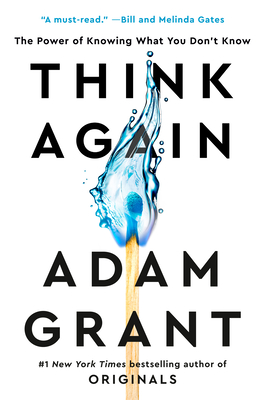
"Think Again" by Adam Grant champions the vital skill of rethinking—actively questioning our beliefs and assumptions to update our perspectives and knowledge. It encourages intellectual humility, demonstrating how curiosity, open-mindedness, and a willingness to admit being wrong can lead to personal growth and more effective decisions.
Much like "Talking to Strangers," "Think Again" probes the complexities of human interaction and judgment. While Gladwell dissects how we misunderstand strangers due to ingrained default truths, Grant focuses on the internal mechanisms that prevent us from seeing our own limitations and the value in others' differing viewpoints. Both books ultimately advocate for a more nuanced and less presumptive approach to understanding the world and the people within it.
This book offers a compelling argument for embracing lifelong learning and intellectual agility. It provides actionable insights into how to foster a culture of rethinking in our personal lives and professional spheres, empowering individuals to navigate an ever-changing world with greater wisdom and adaptability. Its practical guidance and thought-provoking examples make it an invaluable resource for anyone seeking to sharpen their critical thinking and improve their relationships.
Think Again: The Power of Knowing What You Don't Know
"Think Again" by Adam Grant champions the vital skill of rethinking—actively questioning our beliefs and assumptions to update our perspectives and knowledge. It encourages intellectual humility, demonstrating how curiosity, open-mindedness, and a willingness to admit being wrong can lead to personal growth and more effective decisions.
Much like "Talking to Strangers," "Think Again" probes the complexities of human interaction and judgment. While Gladwell dissects how we misunderstand strangers due to ingrained default truths, Grant focuses on the internal mechanisms that prevent us from seeing our own limitations and the value in others' differing viewpoints. Both books ultimately advocate for a more nuanced and less presumptive approach to understanding the world and the people within it.
This book offers a compelling argument for embracing lifelong learning and intellectual agility. It provides actionable insights into how to foster a culture of rethinking in our personal lives and professional spheres, empowering individuals to navigate an ever-changing world with greater wisdom and adaptability. Its practical guidance and thought-provoking examples make it an invaluable resource for anyone seeking to sharpen their critical thinking and improve their relationships.
More Books to Explore
Discover more titles that expand on these ideas and themes.
Revenge of the Tipping Point: Overstories, Superspreaders, and the Rise of Social Engineering
Blink: The Power of Thinking Without Thinking
The Tipping Point: How Little Things Can Make a Big Difference
What the Dog Saw and Other Adventures
Outliers: The Story of Success
David and Goliath: Underdogs, Misfits, and the Art of Battling Giants