10 Books Similar to "Smarter Faster Better: The Secrets of Being Productive in Life and Business"
by Charles Duhigg

The Power of Habit: Why We Do What We Do in Life and Business
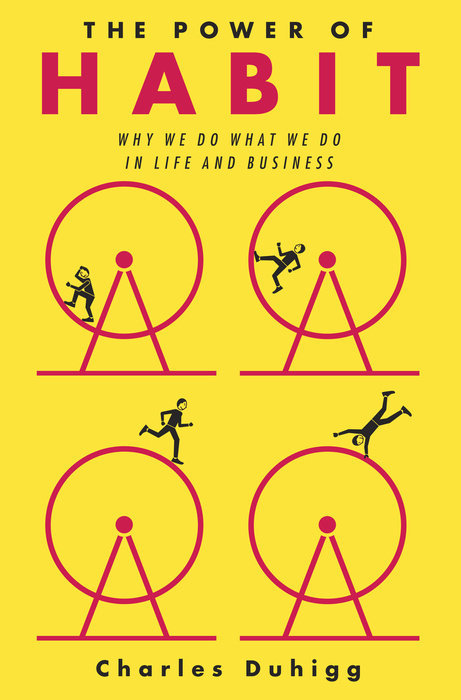
"The Power of Habit" demystifies why we act as we do, both individually and within organizations. It explores the neurological loops that form habits – the cue, routine, and reward – and how understanding these components allows for profound change, from personal improvement to corporate transformation. Duhigg provides compelling anecdotes and scientific research to illustrate how ingrained patterns shape our lives, often without conscious thought, and how these patterns can be leveraged or altered.
The book shares a core investigative approach with "Smarter Faster Better." Both delve into the underlying mechanisms that drive human behavior and productivity, dissecting complex concepts into actionable insights. Where "Smarter Faster Better" focuses on the conscious choices and systems that lead to effectiveness, "The Power of Habit" lays the foundational understanding of the subconscious forces that often dictate those choices and whether new systems stick. Both aim to reveal the "how" behind successful outcomes.
This work appeals to anyone seeking to understand and influence behavior. Its value lies in providing a practical framework for identifying, modifying, or creating habits, offering a powerful tool for personal growth, leadership, and organizational change. The insights empower individuals to break detrimental patterns and cultivate beneficial ones, leading to more intentional and productive lives and environments.
The Power of Habit: Why We Do What We Do in Life and Business
"The Power of Habit" demystifies why we act as we do, both individually and within organizations. It explores the neurological loops that form habits – the cue, routine, and reward – and how understanding these components allows for profound change, from personal improvement to corporate transformation. Duhigg provides compelling anecdotes and scientific research to illustrate how ingrained patterns shape our lives, often without conscious thought, and how these patterns can be leveraged or altered.
The book shares a core investigative approach with "Smarter Faster Better." Both delve into the underlying mechanisms that drive human behavior and productivity, dissecting complex concepts into actionable insights. Where "Smarter Faster Better" focuses on the conscious choices and systems that lead to effectiveness, "The Power of Habit" lays the foundational understanding of the subconscious forces that often dictate those choices and whether new systems stick. Both aim to reveal the "how" behind successful outcomes.
This work appeals to anyone seeking to understand and influence behavior. Its value lies in providing a practical framework for identifying, modifying, or creating habits, offering a powerful tool for personal growth, leadership, and organizational change. The insights empower individuals to break detrimental patterns and cultivate beneficial ones, leading to more intentional and productive lives and environments.
Tools of Titans: The Tactics, Routines, and Habits of Billionaires, Icons, and World-Class Performers

"Tools of Titans" is a vast compendium of insights, strategies, and daily practices gleaned from hundreds of interviews with top performers across diverse fields—from entrepreneurs and athletes to artists and scientists. It's essentially a condensed playbook of what exceptionally successful individuals do to optimize their lives and work, covering everything from morning routines and exercise habits to mental models and recommended books.
This book shares common ground with "Smarter Faster Better" in its deep dive into the practical application of effective principles for achieving peak performance. Both works demystify success by breaking it down into actionable insights and repeatable behaviors, rather than relying on innate talent. They both emphasize data-driven approaches and real-world examples to illustrate how intentional choices lead to enhanced productivity and superior outcomes.
The appeal of "Tools of Titans" lies in its direct, unfiltered access to the wisdom of extraordinary individuals. Its comprehensive nature and proven advice from a multitude of perspectives provide a rich source of inspiration and tangible methods for personal and professional development. Anyone seeking to refine their own habits and strategic thinking will find it immensely valuable for practical implementation.
Tools of Titans: The Tactics, Routines, and Habits of Billionaires, Icons, and World-Class Performers
"Tools of Titans" is a vast compendium of insights, strategies, and daily practices gleaned from hundreds of interviews with top performers across diverse fields—from entrepreneurs and athletes to artists and scientists. It's essentially a condensed playbook of what exceptionally successful individuals do to optimize their lives and work, covering everything from morning routines and exercise habits to mental models and recommended books.
This book shares common ground with "Smarter Faster Better" in its deep dive into the practical application of effective principles for achieving peak performance. Both works demystify success by breaking it down into actionable insights and repeatable behaviors, rather than relying on innate talent. They both emphasize data-driven approaches and real-world examples to illustrate how intentional choices lead to enhanced productivity and superior outcomes.
The appeal of "Tools of Titans" lies in its direct, unfiltered access to the wisdom of extraordinary individuals. Its comprehensive nature and proven advice from a multitude of perspectives provide a rich source of inspiration and tangible methods for personal and professional development. Anyone seeking to refine their own habits and strategic thinking will find it immensely valuable for practical implementation.
The Happiness Advantage: The Seven Principles of Positive Psychology That Fuel Success and Performance at Work

"The Happiness Advantage" argues that cultivating positive emotions isn't merely a byproduct of success, but a precursor to it. Shawn Achor presents seven actionable principles, grounded in neuroscience and positive psychology, demonstrating how practices like gratitude, meditation, and social connection can rewire the brain for greater innovation, resilience, and productivity in professional and personal life. It's a practical guide to leveraging happiness as a strategic advantage.
Both books delve into the science behind optimizing human potential to achieve better outcomes. While Duhigg explores the mechanisms of productivity through habits and decision-making, Achor focuses on the foundational role of a positive mindset in enabling those productive behaviors and superior performance. They share a core belief that understanding and applying psychological principles can lead to significant improvements in our ability to perform and thrive.
Individuals seeking to enhance their professional effectiveness and overall well-being will find this book highly compelling. It offers a refreshing perspective, shifting the focus from striving solely for external achievements to building an internal foundation of positivity that naturally fuels success. The practical strategies and evidence-based insights provide a clear roadmap for anyone looking to unlock greater potential and experience more fulfilling work and life.
The Happiness Advantage: The Seven Principles of Positive Psychology That Fuel Success and Performance at Work
"The Happiness Advantage" argues that cultivating positive emotions isn't merely a byproduct of success, but a precursor to it. Shawn Achor presents seven actionable principles, grounded in neuroscience and positive psychology, demonstrating how practices like gratitude, meditation, and social connection can rewire the brain for greater innovation, resilience, and productivity in professional and personal life. It's a practical guide to leveraging happiness as a strategic advantage.
Both books delve into the science behind optimizing human potential to achieve better outcomes. While Duhigg explores the mechanisms of productivity through habits and decision-making, Achor focuses on the foundational role of a positive mindset in enabling those productive behaviors and superior performance. They share a core belief that understanding and applying psychological principles can lead to significant improvements in our ability to perform and thrive.
Individuals seeking to enhance their professional effectiveness and overall well-being will find this book highly compelling. It offers a refreshing perspective, shifting the focus from striving solely for external achievements to building an internal foundation of positivity that naturally fuels success. The practical strategies and evidence-based insights provide a clear roadmap for anyone looking to unlock greater potential and experience more fulfilling work and life.
Drive: The Surprising Truth About What Motivates Us
"Drive" dismantles conventional wisdom regarding motivation, arguing that traditional reward-and-punishment systems are often ineffective and even detrimental. Instead, Daniel Pink champions "Motivation 3.0," built on three intrinsic pillars: autonomy (the desire to direct our own lives), mastery (the urge to improve at something that matters), and purpose (the longing to do what we do in the service of something larger than ourselves). The book provides compelling evidence for this paradigm shift and offers practical strategies for fostering a more self-driven, engaged workforce and individual.
Both "Drive" and "Smarter Faster Better" delve into the underlying psychological mechanisms that influence productivity and performance. While Duhigg explores the cognitive processes and choices behind effective work, Pink focuses on the foundational drivers that inspire individuals to apply themselves with greater focus and dedication. They both challenge assumptions about how we achieve our goals, offering research-backed insights into optimizing human potential beyond superficial task management.
This book will appeal to anyone seeking a deeper understanding of human motivation, whether in a leadership role, pursuing personal development, or simply curious about what truly ignites passion and commitment. Its exploration of intrinsic motivators offers a powerful framework for fostering engagement, creativity, and lasting satisfaction, providing actionable principles for improving both personal well-being and organizational success.
Drive: The Surprising Truth About What Motivates Us
"Drive" dismantles conventional wisdom regarding motivation, arguing that traditional reward-and-punishment systems are often ineffective and even detrimental. Instead, Daniel Pink champions "Motivation 3.0," built on three intrinsic pillars: autonomy (the desire to direct our own lives), mastery (the urge to improve at something that matters), and purpose (the longing to do what we do in the service of something larger than ourselves). The book provides compelling evidence for this paradigm shift and offers practical strategies for fostering a more self-driven, engaged workforce and individual.
Both "Drive" and "Smarter Faster Better" delve into the underlying psychological mechanisms that influence productivity and performance. While Duhigg explores the cognitive processes and choices behind effective work, Pink focuses on the foundational drivers that inspire individuals to apply themselves with greater focus and dedication. They both challenge assumptions about how we achieve our goals, offering research-backed insights into optimizing human potential beyond superficial task management.
This book will appeal to anyone seeking a deeper understanding of human motivation, whether in a leadership role, pursuing personal development, or simply curious about what truly ignites passion and commitment. Its exploration of intrinsic motivators offers a powerful framework for fostering engagement, creativity, and lasting satisfaction, providing actionable principles for improving both personal well-being and organizational success.
Getting Things Done: The Art of Stress-Free Productivity

"Getting Things Done" by David Allen presents a widely adopted methodology for managing tasks and commitments. It focuses on the idea of capturing all open loops—anything vying for your attention—into a trusted system, processing them into actionable steps, and then organizing these steps for effective execution. The core principle is achieving a state of "mind like water," where clarity and control replace overwhelm.
This book shares significant common ground with Charles Duhigg's "Smarter Faster Better" through their mutual exploration of productivity and effective performance. Both authors delve into the underlying mechanisms and strategies that drive better outcomes in work and life, emphasizing deliberate choices over simple industry. While Allen provides a specific system for task management, Duhigg examines the cognitive and systemic factors that enable individuals and organizations to work more intelligently, with both ultimately aiming for enhanced personal and professional efficacy.
The pragmatic advice and systematic approach offered by "Getting Things Done" hold substantial appeal. It provides a structured pathway to reducing stress, improving focus, and consistently making progress on meaningful work by bringing order to the constant deluge of information and demands. Its practical framework empowers individuals to reclaim control over their time and attention, fostering a more productive and calmer existence.
Getting Things Done: The Art of Stress-Free Productivity
"Getting Things Done" by David Allen presents a widely adopted methodology for managing tasks and commitments. It focuses on the idea of capturing all open loops—anything vying for your attention—into a trusted system, processing them into actionable steps, and then organizing these steps for effective execution. The core principle is achieving a state of "mind like water," where clarity and control replace overwhelm.
This book shares significant common ground with Charles Duhigg's "Smarter Faster Better" through their mutual exploration of productivity and effective performance. Both authors delve into the underlying mechanisms and strategies that drive better outcomes in work and life, emphasizing deliberate choices over simple industry. While Allen provides a specific system for task management, Duhigg examines the cognitive and systemic factors that enable individuals and organizations to work more intelligently, with both ultimately aiming for enhanced personal and professional efficacy.
The pragmatic advice and systematic approach offered by "Getting Things Done" hold substantial appeal. It provides a structured pathway to reducing stress, improving focus, and consistently making progress on meaningful work by bringing order to the constant deluge of information and demands. Its practical framework empowers individuals to reclaim control over their time and attention, fostering a more productive and calmer existence.
How to Have a Good Day: Harness the Power of Behavioral Science to Transform Your Working Life
"How to Have a Good Day" by Caroline Webb explores how small behavioral shifts, informed by scientific research, can profoundly improve daily work experiences and overall productivity. It dissects common workplace challenges and offers practical strategies rooted in psychology and neuroscience to navigate them more effectively, leading to greater satisfaction and achievement.
This book aligns with "Smarter Faster Better" in its core premise: that understanding the underlying mechanisms of human behavior and decision-making is key to unlocking greater personal and professional effectiveness. Both books move beyond superficial tips, delving into cognitive science to explain *why* certain approaches work, empowering individuals to master their own productivity and well-being through informed choices.
Individuals seeking actionable, evidence-based methods to enhance their work life will find this book highly appealing and valuable. It provides concrete techniques for managing attention, making better decisions, fostering constructive interactions, and cultivating resilience, ultimately equipping one with the tools to consistently create more positive and productive days.
How to Have a Good Day: Harness the Power of Behavioral Science to Transform Your Working Life
"How to Have a Good Day" by Caroline Webb explores how small behavioral shifts, informed by scientific research, can profoundly improve daily work experiences and overall productivity. It dissects common workplace challenges and offers practical strategies rooted in psychology and neuroscience to navigate them more effectively, leading to greater satisfaction and achievement.
This book aligns with "Smarter Faster Better" in its core premise: that understanding the underlying mechanisms of human behavior and decision-making is key to unlocking greater personal and professional effectiveness. Both books move beyond superficial tips, delving into cognitive science to explain *why* certain approaches work, empowering individuals to master their own productivity and well-being through informed choices.
Individuals seeking actionable, evidence-based methods to enhance their work life will find this book highly appealing and valuable. It provides concrete techniques for managing attention, making better decisions, fostering constructive interactions, and cultivating resilience, ultimately equipping one with the tools to consistently create more positive and productive days.
Eat That Frog! 21 Great Ways to Stop Procrastinating and Get More Done in Less Time
"Eat That Frog!" by Brian Tracy is a direct, action-oriented guide to overcoming procrastination and maximizing productivity. Its core philosophy revolves around tackling your most important, often unpleasant, task first ("eating the frog") to build momentum and ensure critical work gets done. The book then outlines 21 practical strategies, ranging from setting clear goals to organizing your workspace, all designed to help individuals prioritize effectively and execute tasks efficiently.
This book shares a fundamental objective with "Smarter Faster Better": enhancing personal and professional productivity. Both works advocate for structured approaches to work, emphasizing the power of intentional choices over sheer effort. While Duhigg explores the science behind motivational triggers and cognitive shortcuts, Tracy focuses on tangible, immediate techniques for self-management and task completion, viewing consistent action as the bedrock of success.
Individuals seeking immediate, actionable advice to combat procrastination and boost output will find immense value. The clear, concise format makes the strategies easily digestible and applicable in daily life, offering practical solutions for common productivity hurdles. It empowers people to gain control over their workdays and achieve more significant results by systematically addressing their most challenging tasks.
Eat That Frog! 21 Great Ways to Stop Procrastinating and Get More Done in Less Time
"Eat That Frog!" by Brian Tracy is a direct, action-oriented guide to overcoming procrastination and maximizing productivity. Its core philosophy revolves around tackling your most important, often unpleasant, task first ("eating the frog") to build momentum and ensure critical work gets done. The book then outlines 21 practical strategies, ranging from setting clear goals to organizing your workspace, all designed to help individuals prioritize effectively and execute tasks efficiently.
This book shares a fundamental objective with "Smarter Faster Better": enhancing personal and professional productivity. Both works advocate for structured approaches to work, emphasizing the power of intentional choices over sheer effort. While Duhigg explores the science behind motivational triggers and cognitive shortcuts, Tracy focuses on tangible, immediate techniques for self-management and task completion, viewing consistent action as the bedrock of success.
Individuals seeking immediate, actionable advice to combat procrastination and boost output will find immense value. The clear, concise format makes the strategies easily digestible and applicable in daily life, offering practical solutions for common productivity hurdles. It empowers people to gain control over their workdays and achieve more significant results by systematically addressing their most challenging tasks.
Limitless: Upgrade Your Brain, Learn Anything Faster, and Unlock Your Exceptional Life

"Limitless" by Jim Kwik offers a practical guide to optimizing cognitive function and accelerating learning. It delves into strategies for improving memory, focus, and reading speed, aiming to help individuals unlock their full mental potential and achieve personal and professional milestones through enhanced brain performance.
The book shares a kinship with "Smarter Faster Better" in its core philosophy: both explore the underlying mechanisms of effective performance and productivity. While Duhigg focuses on habits and systemic productivity, Kwik centers on individual cognitive tools and learning methodologies, yet both ultimately provide actionable frameworks to achieve mastery and improve output, whether through optimized individual brainpower or more efficient work habits.
This book will appeal to individuals seeking concrete methods for self-improvement and skill acquisition. Its value lies in providing accessible techniques to overcome common learning challenges, offering a roadmap to significantly enhance one's capacity for absorbing information, problem-solving, and ultimately, realizing untapped potential in all aspects of life.
Limitless: Upgrade Your Brain, Learn Anything Faster, and Unlock Your Exceptional Life
"Limitless" by Jim Kwik offers a practical guide to optimizing cognitive function and accelerating learning. It delves into strategies for improving memory, focus, and reading speed, aiming to help individuals unlock their full mental potential and achieve personal and professional milestones through enhanced brain performance.
The book shares a kinship with "Smarter Faster Better" in its core philosophy: both explore the underlying mechanisms of effective performance and productivity. While Duhigg focuses on habits and systemic productivity, Kwik centers on individual cognitive tools and learning methodologies, yet both ultimately provide actionable frameworks to achieve mastery and improve output, whether through optimized individual brainpower or more efficient work habits.
This book will appeal to individuals seeking concrete methods for self-improvement and skill acquisition. Its value lies in providing accessible techniques to overcome common learning challenges, offering a roadmap to significantly enhance one's capacity for absorbing information, problem-solving, and ultimately, realizing untapped potential in all aspects of life.
Making Ideas Happen: Overcoming the Obstacles Between Vision and Reality
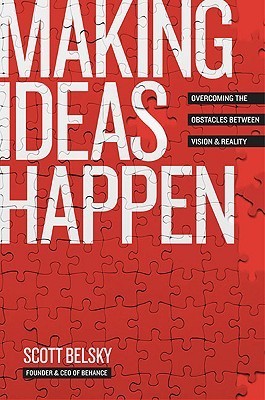
"Making Ideas Happen" by Scott Belsky delves into the practical strategies and mental frameworks necessary to translate creative visions into tangible results. It examines why many brilliant ideas fail to launch and provides actionable insights, drawing from numerous case studies, on how to build the organizational and individual habits that bridge the gap between intention and execution.
This book shares conceptual DNA with Duhigg's "Smarter Faster Better" by focusing on the mechanics of achievement. Both texts dissect the underlying cognitive and operational processes that drive productivity and successful outcomes, moving beyond mere motivation to explore the "how-to" of effective action rather than just the "why." They both offer evidence-based perspectives on optimizing performance.
Anyone seeking to move beyond mere ideation to concrete accomplishment will find this book immensely appealing. Its value lies in offering a clear, methodical approach to overcoming common implementation hurdles, equipping individuals and teams with the tools to systematically deconstruct projects, foster accountability, and maintain momentum, ultimately leading to greater impact and realized potential.
Making Ideas Happen: Overcoming the Obstacles Between Vision and Reality
"Making Ideas Happen" by Scott Belsky delves into the practical strategies and mental frameworks necessary to translate creative visions into tangible results. It examines why many brilliant ideas fail to launch and provides actionable insights, drawing from numerous case studies, on how to build the organizational and individual habits that bridge the gap between intention and execution.
This book shares conceptual DNA with Duhigg's "Smarter Faster Better" by focusing on the mechanics of achievement. Both texts dissect the underlying cognitive and operational processes that drive productivity and successful outcomes, moving beyond mere motivation to explore the "how-to" of effective action rather than just the "why." They both offer evidence-based perspectives on optimizing performance.
Anyone seeking to move beyond mere ideation to concrete accomplishment will find this book immensely appealing. Its value lies in offering a clear, methodical approach to overcoming common implementation hurdles, equipping individuals and teams with the tools to systematically deconstruct projects, foster accountability, and maintain momentum, ultimately leading to greater impact and realized potential.
Smart Thinking: Three Essential Keys to Solve Problems, Innovate, and Get Things Done
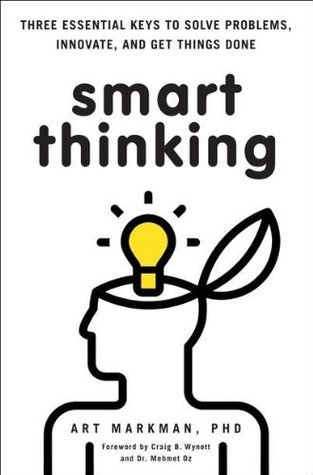
"Smart Thinking" by Art Markman concisely outlines three cognitive processes—perception, memory, and reasoning—as fundamental to effective problem-solving and innovation. It demystifies how our minds navigate challenges, offering practical strategies to refine these mental tools for better decision-making and execution in both personal and professional spheres.
This book shares a core philosophy with "Smarter Faster Better": both delve into the mechanisms behind successful action and productivity. Where Duhigg explores systems and habits, Markman focuses on the underlying cognitive architecture. They both equip individuals with actionable insights to optimize their thinking and output.
The book's appeal lies in its clear, accessible breakdown of complex cognitive science into immediately applicable techniques. It offers a tangible framework for improving intellectual performance, enabling individuals to proactively tackle obstacles, generate novel ideas, and efficiently achieve their objectives.
Smart Thinking: Three Essential Keys to Solve Problems, Innovate, and Get Things Done
"Smart Thinking" by Art Markman concisely outlines three cognitive processes—perception, memory, and reasoning—as fundamental to effective problem-solving and innovation. It demystifies how our minds navigate challenges, offering practical strategies to refine these mental tools for better decision-making and execution in both personal and professional spheres.
This book shares a core philosophy with "Smarter Faster Better": both delve into the mechanisms behind successful action and productivity. Where Duhigg explores systems and habits, Markman focuses on the underlying cognitive architecture. They both equip individuals with actionable insights to optimize their thinking and output.
The book's appeal lies in its clear, accessible breakdown of complex cognitive science into immediately applicable techniques. It offers a tangible framework for improving intellectual performance, enabling individuals to proactively tackle obstacles, generate novel ideas, and efficiently achieve their objectives.
More Books to Explore
Discover more titles that expand on these ideas and themes.
The Power of Habit: Why We Do What We Do in Life and Business
Tools of Titans: The Tactics, Routines, and Habits of Billionaires, Icons, and World-Class Performers
The Happiness Advantage: The Seven Principles of Positive Psychology That Fuel Success and Performance at Work
Drive: The Surprising Truth About What Motivates Us
Getting Things Done: The Art of Stress-Free Productivity
How to Have a Good Day: Harness the Power of Behavioral Science to Transform Your Working Life