10 Books Similar to "Smart Thinking: Three Essential Keys to Solve Problems, Innovate, and Get Things Done"
by Art Markman
Use Your Head
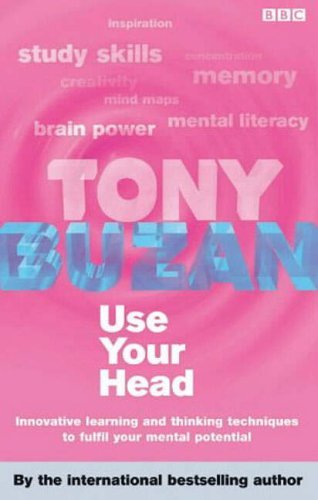
"Use Your Head" by Tony Buzan is a seminal work that introduces the concept of Mind Mapping, a revolutionary technique for organizing thoughts, improving memory, and fostering creative problem-solving. Buzan meticulously outlines how brains naturally process information in non-linear ways and provides actionable methods to harness this inherent capacity through visual and spatial organization. It's a foundational guide to optimizing mental faculties for learning, recalling information, and generating new ideas.
This book shares significant thematic overlap with Art Markman's "Smart Thinking." Both texts emphasize the importance of understanding cognitive processes to enhance problem-solving and innovation. "Use Your Head" offers a practical framework (Mind Mapping) for externalizing and structuring thoughts, directly addressing problem formulation and solution generation, much like Markman's focus on structured thinking for effective action. Both advocate for a proactive, deliberate approach to mental engagement.
The appeal of "Use Your Head" lies in its timeless and universally applicable strategies for cognitive improvement. Its practical, hands-on techniques, particularly Mind Mapping, empower individuals to think more clearly, learn more efficiently, and innovate more effectively. It equips anyone seeking to unlock their full intellectual potential with concrete tools to enhance daily thinking, decision-making, and creative output across personal and professional spheres.
Use Your Head
"Use Your Head" by Tony Buzan is a seminal work that introduces the concept of Mind Mapping, a revolutionary technique for organizing thoughts, improving memory, and fostering creative problem-solving. Buzan meticulously outlines how brains naturally process information in non-linear ways and provides actionable methods to harness this inherent capacity through visual and spatial organization. It's a foundational guide to optimizing mental faculties for learning, recalling information, and generating new ideas.
This book shares significant thematic overlap with Art Markman's "Smart Thinking." Both texts emphasize the importance of understanding cognitive processes to enhance problem-solving and innovation. "Use Your Head" offers a practical framework (Mind Mapping) for externalizing and structuring thoughts, directly addressing problem formulation and solution generation, much like Markman's focus on structured thinking for effective action. Both advocate for a proactive, deliberate approach to mental engagement.
The appeal of "Use Your Head" lies in its timeless and universally applicable strategies for cognitive improvement. Its practical, hands-on techniques, particularly Mind Mapping, empower individuals to think more clearly, learn more efficiently, and innovate more effectively. It equips anyone seeking to unlock their full intellectual potential with concrete tools to enhance daily thinking, decision-making, and creative output across personal and professional spheres.
The Art of Thinking Clearly

"The Art of Thinking Clearly" unpacks a multitude of cognitive biases and logical fallacies that routinely trip up human judgment. Each chapter succinctly describes a distinct mental shortcut or error, offering real-world examples to illustrate how these ingrained patterns of thought can lead to poor decisions in business, personal life, and societal contexts. Dobelli’s approach is direct, aiming to equip individuals with the awareness needed to identify and circumvent these common pitfalls.
This book shares foundational similarities with "Smart Thinking" by Art Markman. Both texts emphasize the improvement of one's decision-making and problem-solving abilities by enhancing awareness of mental processes. While Markman focuses on building effective intellectual habits, Dobelli delves into recognizing and neutralizing the *disabling* habits of thought. Both authors ultimately strive to empower individuals to think more effectively and rationally, albeit through slightly different lenses—one proactive, the other diagnostic.
This book will appeal to anyone seeking to sharpen their critical thinking skills and avoid common intellectual traps. Its concise, standalone chapters make it ideal for busy professionals or those interested in a quick, impactful intellectual self-improvement read. Gaining insight into these pervasive biases offers a practical advantage, leading to more informed choices and a better understanding of human behavior, both in oneself and others.
The Art of Thinking Clearly
"The Art of Thinking Clearly" unpacks a multitude of cognitive biases and logical fallacies that routinely trip up human judgment. Each chapter succinctly describes a distinct mental shortcut or error, offering real-world examples to illustrate how these ingrained patterns of thought can lead to poor decisions in business, personal life, and societal contexts. Dobelli’s approach is direct, aiming to equip individuals with the awareness needed to identify and circumvent these common pitfalls.
This book shares foundational similarities with "Smart Thinking" by Art Markman. Both texts emphasize the improvement of one's decision-making and problem-solving abilities by enhancing awareness of mental processes. While Markman focuses on building effective intellectual habits, Dobelli delves into recognizing and neutralizing the *disabling* habits of thought. Both authors ultimately strive to empower individuals to think more effectively and rationally, albeit through slightly different lenses—one proactive, the other diagnostic.
This book will appeal to anyone seeking to sharpen their critical thinking skills and avoid common intellectual traps. Its concise, standalone chapters make it ideal for busy professionals or those interested in a quick, impactful intellectual self-improvement read. Gaining insight into these pervasive biases offers a practical advantage, leading to more informed choices and a better understanding of human behavior, both in oneself and others.
How Successful People Think: Change Your Thinking, Change Your Life
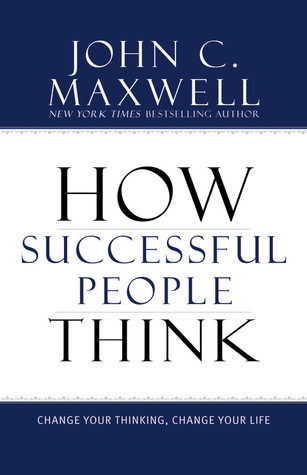
"How Successful People Think" by John C. Maxwell delves into eleven distinct ways high achievers approach problems, opportunities, and their daily lives. It outlines practical, actionable thinking habits such as big-picture thinking, focused thinking, creative thinking, and shared thinking, illustrating how adopting these patterns can lead to enhanced personal and professional effectiveness. The book is essentially a blueprint for upgrading one's mental operating system.
This book shares significant common ground with Art Markman's "Smart Thinking." Both works fundamentally argue that success isn't solely about innate talent or sheer effort; rather, it's deeply rooted in *how* one thinks. Markman breaks down smart thinking into acquiring knowledge, structuring it effectively, and applying it strategically. Maxwell offers a complementary perspective, emphasizing specific modes of thought that facilitate problem-solving, innovation, and ultimately, getting things done, aligning perfectly with Markman's core tenets.
This analysis of successful thinking appeals because it offers tangible strategies for improvement rather than abstract philosophical concepts. It empowers individuals by demonstrating that mental habits are malleable and that by consciously cultivating better thinking patterns, they can unlock greater potential, overcome challenges more effectively, and achieve their aspirations. The insights provide a clear path for personal growth and professional advancement, proving highly valuable to anyone seeking to elevate their performance.
How Successful People Think: Change Your Thinking, Change Your Life
"How Successful People Think" by John C. Maxwell delves into eleven distinct ways high achievers approach problems, opportunities, and their daily lives. It outlines practical, actionable thinking habits such as big-picture thinking, focused thinking, creative thinking, and shared thinking, illustrating how adopting these patterns can lead to enhanced personal and professional effectiveness. The book is essentially a blueprint for upgrading one's mental operating system.
This book shares significant common ground with Art Markman's "Smart Thinking." Both works fundamentally argue that success isn't solely about innate talent or sheer effort; rather, it's deeply rooted in *how* one thinks. Markman breaks down smart thinking into acquiring knowledge, structuring it effectively, and applying it strategically. Maxwell offers a complementary perspective, emphasizing specific modes of thought that facilitate problem-solving, innovation, and ultimately, getting things done, aligning perfectly with Markman's core tenets.
This analysis of successful thinking appeals because it offers tangible strategies for improvement rather than abstract philosophical concepts. It empowers individuals by demonstrating that mental habits are malleable and that by consciously cultivating better thinking patterns, they can unlock greater potential, overcome challenges more effectively, and achieve their aspirations. The insights provide a clear path for personal growth and professional advancement, proving highly valuable to anyone seeking to elevate their performance.
Mastermind: How to Think Like Sherlock Holmes

"Mastermind: How to Think Like Sherlock Holmes" delves into the psychology of the iconic detective to extract practical strategies for improved thinking. Konnikova dissects Holmes's methods of observation, deduction, and information processing, offering a framework for sharpening our own cognitive abilities. It's essentially a guide to mastering mindfulness and critical analysis to navigate everyday challenges more effectively.
This book shares significant common ground with "Smart Thinking." Both texts emphasize the importance of deliberate cognitive effort and structured approaches to problem-solving. While Markman focuses on a broader framework of problem-solving, innovation, and execution, Konnikova uses Holmes as a compelling archetype to illustrate similar principles of careful observation, logical reasoning, and strategic memory recall. Both aim to equip individuals with the mental tools to tackle complexity.
Anyone interested in enhancing their analytical skills and decision-making will find this book highly valuable. It offers actionable techniques for cultivating focus, organizing thoughts, and drawing insightful conclusions, presented through an engaging lens of literary analysis and cognitive psychology. It provides a practical and enjoyable pathway to developing a more disciplined and effective mind.
Mastermind: How to Think Like Sherlock Holmes
"Mastermind: How to Think Like Sherlock Holmes" delves into the psychology of the iconic detective to extract practical strategies for improved thinking. Konnikova dissects Holmes's methods of observation, deduction, and information processing, offering a framework for sharpening our own cognitive abilities. It's essentially a guide to mastering mindfulness and critical analysis to navigate everyday challenges more effectively.
This book shares significant common ground with "Smart Thinking." Both texts emphasize the importance of deliberate cognitive effort and structured approaches to problem-solving. While Markman focuses on a broader framework of problem-solving, innovation, and execution, Konnikova uses Holmes as a compelling archetype to illustrate similar principles of careful observation, logical reasoning, and strategic memory recall. Both aim to equip individuals with the mental tools to tackle complexity.
Anyone interested in enhancing their analytical skills and decision-making will find this book highly valuable. It offers actionable techniques for cultivating focus, organizing thoughts, and drawing insightful conclusions, presented through an engaging lens of literary analysis and cognitive psychology. It provides a practical and enjoyable pathway to developing a more disciplined and effective mind.
How to Think Like Steve Jobs
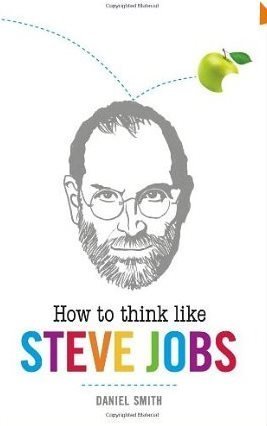
"How to Think Like Steve Jobs" distills the core principles and mindset that defined Steve Jobs's approach to innovation, business, and life. It unpacks his relentless pursuit of excellence, his ability to simplify complex ideas, and his unconventional strategies for problem-solving and leadership, offering actionable insights derived from his career.
This book shares significant thematic overlap with "Smart Thinking." Both works explore the cognitive processes and practical methodologies employed by highly successful individuals to navigate challenges, generate novel solutions, and execute their visions effectively. Where Markman provides general frameworks for enhanced thinking, Smith offers a specific, compelling case study in Jobs, illustrating these frameworks in action through a celebrated innovator.
Individuals seeking to elevate their innovative capacity, refine their problem-solving techniques, and foster a more visionary approach to their work will find immense value. It provides a blueprint for adopting a transformative mindset, demonstrating how strategic thought and unwavering determination can lead to groundbreaking achievements and sustained impact.
How to Think Like Steve Jobs
"How to Think Like Steve Jobs" distills the core principles and mindset that defined Steve Jobs's approach to innovation, business, and life. It unpacks his relentless pursuit of excellence, his ability to simplify complex ideas, and his unconventional strategies for problem-solving and leadership, offering actionable insights derived from his career.
This book shares significant thematic overlap with "Smart Thinking." Both works explore the cognitive processes and practical methodologies employed by highly successful individuals to navigate challenges, generate novel solutions, and execute their visions effectively. Where Markman provides general frameworks for enhanced thinking, Smith offers a specific, compelling case study in Jobs, illustrating these frameworks in action through a celebrated innovator.
Individuals seeking to elevate their innovative capacity, refine their problem-solving techniques, and foster a more visionary approach to their work will find immense value. It provides a blueprint for adopting a transformative mindset, demonstrating how strategic thought and unwavering determination can lead to groundbreaking achievements and sustained impact.
Making Ideas Happen: Overcoming the Obstacles Between Vision and Reality
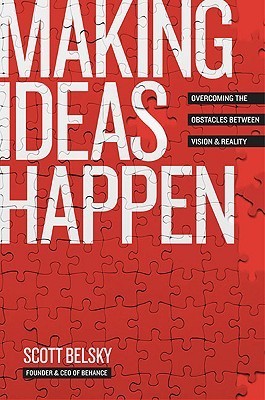
"Making Ideas Happen" by Scott Belsky tackles the critical gap between conceptualizing an idea and bringing it to fruition. It moves beyond pure creativity, focusing instead on the practical systems and habits necessary to organize, prioritize, and execute projects. Belsky emphasizes the discipline and accountability required to navigate the often-messy process of turning vision into reality, detailing strategies for overcoming common roadblocks.
This book aligns with Art Markman's "Smart Thinking" by offering actionable frameworks for improving productivity and problem-solving through concrete methods. Both titles empower individuals to move beyond abstract thought, providing tools and strategies to translate mental processes – whether it's thinking smarter or generating impactful ideas – into tangible results and progress.
The book will appeal to professionals, entrepreneurs, and anyone aspiring to translate their concepts into action. Its practical focus on execution, project management, and team dynamics provides invaluable guidance for breaking through inertia, managing creative teams effectively, and ultimately making significant headway on ambitious goals.
Making Ideas Happen: Overcoming the Obstacles Between Vision and Reality
"Making Ideas Happen" by Scott Belsky tackles the critical gap between conceptualizing an idea and bringing it to fruition. It moves beyond pure creativity, focusing instead on the practical systems and habits necessary to organize, prioritize, and execute projects. Belsky emphasizes the discipline and accountability required to navigate the often-messy process of turning vision into reality, detailing strategies for overcoming common roadblocks.
This book aligns with Art Markman's "Smart Thinking" by offering actionable frameworks for improving productivity and problem-solving through concrete methods. Both titles empower individuals to move beyond abstract thought, providing tools and strategies to translate mental processes – whether it's thinking smarter or generating impactful ideas – into tangible results and progress.
The book will appeal to professionals, entrepreneurs, and anyone aspiring to translate their concepts into action. Its practical focus on execution, project management, and team dynamics provides invaluable guidance for breaking through inertia, managing creative teams effectively, and ultimately making significant headway on ambitious goals.
Rewire Your Brain: Think Your Way to a Better Life

"Rewire Your Brain: Think Your Way to a Better Life" by John B. Arden explores how our brains are not fixed but remarkably adaptable. It delves into the principles of neuroplasticity, explaining how conscious effort and specific practices can literally reshape neural pathways. Arden guides readers through practical strategies for improving memory, managing stress, fostering positive emotions, and enhancing overall cognitive function by understanding and harnessing the brain's capacity for change.
This book shares thematic ground with "Smart Thinking" by focusing on actionable insights for cognitive enhancement. Both volumes empower individuals to take control of their mental processes. While Markman emphasizes specific thinking strategies for problem-solving and innovation, Arden provides the underlying neuroscientific framework for why such strategies work and how to build a stronger, more resilient brain that can implement them effectively. Both aim to improve mental performance and productivity through informed self-directed effort.
People seeking to actively improve their mental capabilities and well-being will find significant value in Arden's work. It offers a scientific yet accessible roadmap for cultivating healthier thought patterns and emotional responses. The practical exercises and clear explanations demystify brain function, providing a tangible path toward personal growth, enhanced problem-solving abilities, and a more fulfilling life by leveraging the brain's inherent capacity for transformation.
Rewire Your Brain: Think Your Way to a Better Life
"Rewire Your Brain: Think Your Way to a Better Life" by John B. Arden explores how our brains are not fixed but remarkably adaptable. It delves into the principles of neuroplasticity, explaining how conscious effort and specific practices can literally reshape neural pathways. Arden guides readers through practical strategies for improving memory, managing stress, fostering positive emotions, and enhancing overall cognitive function by understanding and harnessing the brain's capacity for change.
This book shares thematic ground with "Smart Thinking" by focusing on actionable insights for cognitive enhancement. Both volumes empower individuals to take control of their mental processes. While Markman emphasizes specific thinking strategies for problem-solving and innovation, Arden provides the underlying neuroscientific framework for why such strategies work and how to build a stronger, more resilient brain that can implement them effectively. Both aim to improve mental performance and productivity through informed self-directed effort.
People seeking to actively improve their mental capabilities and well-being will find significant value in Arden's work. It offers a scientific yet accessible roadmap for cultivating healthier thought patterns and emotional responses. The practical exercises and clear explanations demystify brain function, providing a tangible path toward personal growth, enhanced problem-solving abilities, and a more fulfilling life by leveraging the brain's inherent capacity for transformation.
Think Again: The Power of Knowing What You Don't Know
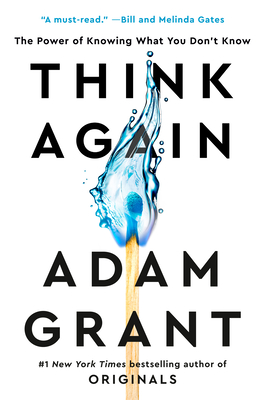
"Think Again: The Power of Knowing What You Don't Know" advocates for critical self-reflection and intellectual humility. Adam Grant argues that our ability to rethink and unlearn old ideas, rather than clinging to them, is crucial for both personal and professional growth. He explores how biases, overconfidence, and mental laziness often hinder progress, and champions an open-minded, scientific approach to knowledge, encouraging us to constantly question our assumptions and seek out dissenting viewpoints.
This book shares a fundamental premise with "Smart Thinking." Both works emphasize the importance of mental agility and effective cognitive processes for navigating complex challenges. While "Smart Thinking" provides practical frameworks for problem-solving and innovation, "Think Again" illuminates the underlying mindset – the flexibility and willingness to adapt one's thinking – that underpins these capabilities. Both guide individuals toward more strategic and adaptive approaches to intellect.
The value of "Think Again" lies in its compelling argument for intellectual curiosity and adaptability in a rapidly changing world. It offers a powerful antidote to rigid dogma and overconfidence, fostering a more nuanced and effective way of engaging with information and diverse perspectives. It equips individuals with the tools to continuously improve their decision-making and problem-solving by embracing a posture of ongoing learning and re-evaluation.
Think Again: The Power of Knowing What You Don't Know
"Think Again: The Power of Knowing What You Don't Know" advocates for critical self-reflection and intellectual humility. Adam Grant argues that our ability to rethink and unlearn old ideas, rather than clinging to them, is crucial for both personal and professional growth. He explores how biases, overconfidence, and mental laziness often hinder progress, and champions an open-minded, scientific approach to knowledge, encouraging us to constantly question our assumptions and seek out dissenting viewpoints.
This book shares a fundamental premise with "Smart Thinking." Both works emphasize the importance of mental agility and effective cognitive processes for navigating complex challenges. While "Smart Thinking" provides practical frameworks for problem-solving and innovation, "Think Again" illuminates the underlying mindset – the flexibility and willingness to adapt one's thinking – that underpins these capabilities. Both guide individuals toward more strategic and adaptive approaches to intellect.
The value of "Think Again" lies in its compelling argument for intellectual curiosity and adaptability in a rapidly changing world. It offers a powerful antidote to rigid dogma and overconfidence, fostering a more nuanced and effective way of engaging with information and diverse perspectives. It equips individuals with the tools to continuously improve their decision-making and problem-solving by embracing a posture of ongoing learning and re-evaluation.
Brain Rules: 12 Principles for Surviving and Thriving at Work, Home, and School

"Brain Rules" by John Medina distills complex neuroscience into twelve actionable principles for optimizing cognitive performance across all aspects of life. It explores how the brain truly functions, challenging common misconceptions about learning, memory, and stress, and offers practical strategies for enhancing productivity, creativity, and well-being based on scientific evidence.
This book strongly aligns with "Smart Thinking" by Art Markman due to their shared focus on empirically-backed methods for improving cognitive function. Both authors empower individuals to leverage their understanding of how the mind works to solve problems more effectively, foster innovation, and achieve their goals through intentional habits and environmental adjustments.
Individuals seeking to unlock their full intellectual potential and apply scientific insights to their daily routines will find immense value in "Brain Rules." It provides a clear, accessible roadmap for anyone looking to improve their learning, decision-making, and overall mental fitness, translating abstract scientific concepts into practical benefits for both personal and professional growth.
Brain Rules: 12 Principles for Surviving and Thriving at Work, Home, and School
"Brain Rules" by John Medina distills complex neuroscience into twelve actionable principles for optimizing cognitive performance across all aspects of life. It explores how the brain truly functions, challenging common misconceptions about learning, memory, and stress, and offers practical strategies for enhancing productivity, creativity, and well-being based on scientific evidence.
This book strongly aligns with "Smart Thinking" by Art Markman due to their shared focus on empirically-backed methods for improving cognitive function. Both authors empower individuals to leverage their understanding of how the mind works to solve problems more effectively, foster innovation, and achieve their goals through intentional habits and environmental adjustments.
Individuals seeking to unlock their full intellectual potential and apply scientific insights to their daily routines will find immense value in "Brain Rules." It provides a clear, accessible roadmap for anyone looking to improve their learning, decision-making, and overall mental fitness, translating abstract scientific concepts into practical benefits for both personal and professional growth.
A Whole New Mind: Why Right-Brainers Will Rule the Future
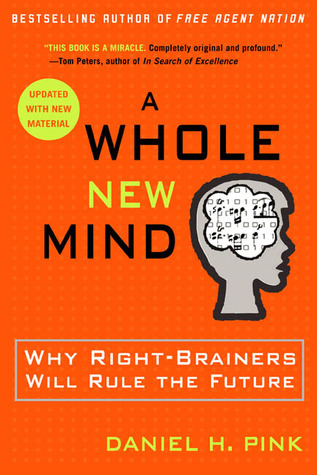
"A Whole New Mind" argues that the future belongs to individuals who cultivate "right-brain" aptitudes like empathy, storytelling, design, humor, and meaning. Pink contends that as routine, logic-based work becomes increasingly automated and outsourced, success will hinge on these distinctively human, imaginative, and holistic capabilities. He categorizes these as "high-concept" and "high-touch" skills, presenting a compelling case for their growing importance in a world of abundance and rapid change.
Both books advocate for a broader, more integrated approach to cognitive function and problem-solving. While Markman emphasizes mental models and building cognitive toolkits, Pink similarly champions a move beyond purely linear, analytical thought. Both authors implicitly suggest that relying solely on traditional "left-brain" thinking is insufficient for navigating complex challenges and fostering innovation in the modern era. They both empower individuals to expand their intellectual and creative capacities.
This book will appeal to those seeking a strategic advantage in their careers and lives. It offers a practical framework for understanding and developing crucial skills that are becoming indispensable. Individuals looking to innovate, enhance their problem-solving abilities, and cultivate a competitive edge in a rapidly evolving professional landscape will find tangible insights and compelling reasons to embrace a more holistic cognitive toolkit.
A Whole New Mind: Why Right-Brainers Will Rule the Future
"A Whole New Mind" argues that the future belongs to individuals who cultivate "right-brain" aptitudes like empathy, storytelling, design, humor, and meaning. Pink contends that as routine, logic-based work becomes increasingly automated and outsourced, success will hinge on these distinctively human, imaginative, and holistic capabilities. He categorizes these as "high-concept" and "high-touch" skills, presenting a compelling case for their growing importance in a world of abundance and rapid change.
Both books advocate for a broader, more integrated approach to cognitive function and problem-solving. While Markman emphasizes mental models and building cognitive toolkits, Pink similarly champions a move beyond purely linear, analytical thought. Both authors implicitly suggest that relying solely on traditional "left-brain" thinking is insufficient for navigating complex challenges and fostering innovation in the modern era. They both empower individuals to expand their intellectual and creative capacities.
This book will appeal to those seeking a strategic advantage in their careers and lives. It offers a practical framework for understanding and developing crucial skills that are becoming indispensable. Individuals looking to innovate, enhance their problem-solving abilities, and cultivate a competitive edge in a rapidly evolving professional landscape will find tangible insights and compelling reasons to embrace a more holistic cognitive toolkit.
More Books to Explore
Discover more titles that expand on these ideas and themes.
Use Your Head
The Art of Thinking Clearly
How Successful People Think: Change Your Thinking, Change Your Life
Mastermind: How to Think Like Sherlock Holmes
How to Think Like Steve Jobs
Making Ideas Happen: Overcoming the Obstacles Between Vision and Reality