10 Books Similar to "Rose Under Fire"
by Elizabeth Wein
Code Name Verity

"Code Name Verity" tells the harrowing story of two young women, a British spy and her pilot, whose friendship is tested under extreme duress during World War II. The narrative unfolds through the captured spy's confession to the Gestapo, detailing her mission, her relationship with her pilot, and the agonizing choices faced in captivity. It's a tale of remarkable courage, sacrifice, and the enduring power of human connection amidst unimaginable brutality.
The similarity to "Rose Under Fire" lies primarily in their shared historical context—World War II—and the profound exploration of female friendship, resilience, and survival in the face of Nazi atrocity. Both novels feature young women thrust into extraordinary circumstances, displaying incredible inner strength and moral fortitude. Wein masterfully crafts compelling narratives, often using epistolary or fragmented structures, to immerse the audience in the psychological and emotional landscapes of her characters.
This book will appeal to those who appreciate meticulously researched historical fiction with a strong emotional core. Its value lies in its unflinching portrayal of war's impact, the complex ethical dilemmas faced by individuals, and its celebration of ordinary heroism. It serves as a powerful testament to the human spirit's capacity for defiance and hope, even in the darkest of times, prompting reflection on courage, loyalty, and the untold stories of wartime.
Code Name Verity
"Code Name Verity" tells the harrowing story of two young women, a British spy and her pilot, whose friendship is tested under extreme duress during World War II. The narrative unfolds through the captured spy's confession to the Gestapo, detailing her mission, her relationship with her pilot, and the agonizing choices faced in captivity. It's a tale of remarkable courage, sacrifice, and the enduring power of human connection amidst unimaginable brutality.
The similarity to "Rose Under Fire" lies primarily in their shared historical context—World War II—and the profound exploration of female friendship, resilience, and survival in the face of Nazi atrocity. Both novels feature young women thrust into extraordinary circumstances, displaying incredible inner strength and moral fortitude. Wein masterfully crafts compelling narratives, often using epistolary or fragmented structures, to immerse the audience in the psychological and emotional landscapes of her characters.
This book will appeal to those who appreciate meticulously researched historical fiction with a strong emotional core. Its value lies in its unflinching portrayal of war's impact, the complex ethical dilemmas faced by individuals, and its celebration of ordinary heroism. It serves as a powerful testament to the human spirit's capacity for defiance and hope, even in the darkest of times, prompting reflection on courage, loyalty, and the untold stories of wartime.
White Rose, Black Forest
"White Rose, Black Forest" centers on Franka, a young woman living in Nazi Germany, who discovers a wounded Royal Air Force pilot in the Black Forest. Driven by her own disillusionment with the regime and a personal connection to the White Rose resistance movement, she makes the dangerous decision to shelter him. Their burgeoning relationship unfolds against a backdrop of escalating war and the constant threat of discovery, forcing them to confront moral dilemmas and the ultimate costs of their choices.
This novel shares significant thematic and atmospheric commonalities with "Rose Under Fire." Both books feature young female protagonists navigating the perils of World War II, confronting the horrors of Nazi brutality, and finding unexpected connections amidst the chaos. They explore themes of resistance, courage in the face of tyranny, and the profound impact of war on individual lives, often highlighting the resilience of the human spirit through the lens of young women. Both works also possess a strong historical grounding, immersing the audience in the grim realities and moral complexities of the period.
The book will appeal to those who appreciate meticulously researched historical fiction focused on untold stories and moral fortitude during wartime. Its exploration of personal ethics, the nature of resistance, and the human capacity for compassion in extreme circumstances offers compelling insights. The intimate narrative perspective and the development of a forbidden bond against a backdrop of grave danger provide both emotional depth and sustained tension, making it a valuable read for anyone seeking a powerful and thought-provoking narrative set during World War II.
White Rose, Black Forest
"White Rose, Black Forest" centers on Franka, a young woman living in Nazi Germany, who discovers a wounded Royal Air Force pilot in the Black Forest. Driven by her own disillusionment with the regime and a personal connection to the White Rose resistance movement, she makes the dangerous decision to shelter him. Their burgeoning relationship unfolds against a backdrop of escalating war and the constant threat of discovery, forcing them to confront moral dilemmas and the ultimate costs of their choices.
This novel shares significant thematic and atmospheric commonalities with "Rose Under Fire." Both books feature young female protagonists navigating the perils of World War II, confronting the horrors of Nazi brutality, and finding unexpected connections amidst the chaos. They explore themes of resistance, courage in the face of tyranny, and the profound impact of war on individual lives, often highlighting the resilience of the human spirit through the lens of young women. Both works also possess a strong historical grounding, immersing the audience in the grim realities and moral complexities of the period.
The book will appeal to those who appreciate meticulously researched historical fiction focused on untold stories and moral fortitude during wartime. Its exploration of personal ethics, the nature of resistance, and the human capacity for compassion in extreme circumstances offers compelling insights. The intimate narrative perspective and the development of a forbidden bond against a backdrop of grave danger provide both emotional depth and sustained tension, making it a valuable read for anyone seeking a powerful and thought-provoking narrative set during World War II.
The Plum Tree
*The Plum Tree* follows Christine, a young German woman in love with a Jewish man, Isaac, as World War II escalates and engulfs their lives. Stripped of her home and forced into a labor camp, Christine endures profound hardship and witnesses unimaginable cruelty. The narrative explores themes of impossible choices, the enduring power of love amidst atrocity, and the moral complexities faced by ordinary people caught in extraordinary circumstances.
This novel shares a deep resonance with *Rose Under Fire* through its focus on young women navigating the horrors of World War II concentration camps. Both books portray the stark realities of internment, sustained hope in dire situations, and acts of quiet defiance and bravery. They highlight the psychological toll of war alongside the resilience of the human spirit in the face of systematic oppression.
This book offers a compelling and emotionally resonant historical account, providing insights into a lesser-explored perspective of WWII through the eyes of a German woman intertwined with a Jewish family. It explores enduring themes of love, loss, survival, and the difficult moral questions that define war, prompting reflection on historical empathy and the strength of the human will to live.
The Plum Tree
*The Plum Tree* follows Christine, a young German woman in love with a Jewish man, Isaac, as World War II escalates and engulfs their lives. Stripped of her home and forced into a labor camp, Christine endures profound hardship and witnesses unimaginable cruelty. The narrative explores themes of impossible choices, the enduring power of love amidst atrocity, and the moral complexities faced by ordinary people caught in extraordinary circumstances.
This novel shares a deep resonance with *Rose Under Fire* through its focus on young women navigating the horrors of World War II concentration camps. Both books portray the stark realities of internment, sustained hope in dire situations, and acts of quiet defiance and bravery. They highlight the psychological toll of war alongside the resilience of the human spirit in the face of systematic oppression.
This book offers a compelling and emotionally resonant historical account, providing insights into a lesser-explored perspective of WWII through the eyes of a German woman intertwined with a Jewish family. It explores enduring themes of love, loss, survival, and the difficult moral questions that define war, prompting reflection on historical empathy and the strength of the human will to live.
Lilac Girls
"Lilac Girls" intertwines the narratives of three women during World War II: Caroline
Lilac Girls
"Lilac Girls" intertwines the narratives of three women during World War II: Caroline
The Golden Doves

"The Golden Doves" follows two women, a British-American and a French Jew, who escape a WWII concentration camp and are then recruited by intelligence agencies to hunt down a Nazi doctor responsible for horrific experiments. Their intertwined quests for justice and vengeance lead them across post-war Europe, revealing hidden agendas and complex moral dilemmas.
This novel shares thematic DNA with "Rose Under Fire" through its unflinching portrayal of female resilience amidst wartime atrocities. Both books navigate the psychological scars of survival, the camaraderie forged in extreme circumstances, and the pursuit of truth and accountability after profound trauma, all against the backdrop of WWII.
The narrative engages with its compelling blend of historical accuracy, espionage thriller elements, and profound character studies. It offers valuable insights into the long-term societal and individual impacts of war, the complexities of justice, and the enduring strength of the human spirit in overcoming unimaginable adversity.
The Golden Doves
"The Golden Doves" follows two women, a British-American and a French Jew, who escape a WWII concentration camp and are then recruited by intelligence agencies to hunt down a Nazi doctor responsible for horrific experiments. Their intertwined quests for justice and vengeance lead them across post-war Europe, revealing hidden agendas and complex moral dilemmas.
This novel shares thematic DNA with "Rose Under Fire" through its unflinching portrayal of female resilience amidst wartime atrocities. Both books navigate the psychological scars of survival, the camaraderie forged in extreme circumstances, and the pursuit of truth and accountability after profound trauma, all against the backdrop of WWII.
The narrative engages with its compelling blend of historical accuracy, espionage thriller elements, and profound character studies. It offers valuable insights into the long-term societal and individual impacts of war, the complexities of justice, and the enduring strength of the human spirit in overcoming unimaginable adversity.
Code Name Sapphire

"Code Name Sapphire" thrusts readers into the harrowing world of WWII Paris, where French Resistance operative Hannah Martel must orchestrate the escape of Jewish children through a perilous underground network. When the mission goes awry, Hannah finds herself incarcerated, facing impossible choices and profound moral dilemmas as she desperately seeks a way to protect the children and survive.
This novel shares a remarkable thematic kinship with "Rose Under Fire." Both explore the profound resilience of young women caught in the devastating grip of WWII, featuring protagonists who navigate immense personal danger and moral compromise to resist tyranny and protect vulnerable lives. The narratives powerfully convey the brutal realities of war and the unwavering human spirit in the face of unimaginable cruelty.
The book offers a compelling narrative of courage, sacrifice, and the enduring power of humanity during one of history's darkest periods. It provides a nuanced look at the ethical complexities of wartime resistance and the extraordinary lengths individuals will go to preserve innocence and fight for justice, leaving a lasting impression and prompting reflection on historical events and human resilience.
Code Name Sapphire
"Code Name Sapphire" thrusts readers into the harrowing world of WWII Paris, where French Resistance operative Hannah Martel must orchestrate the escape of Jewish children through a perilous underground network. When the mission goes awry, Hannah finds herself incarcerated, facing impossible choices and profound moral dilemmas as she desperately seeks a way to protect the children and survive.
This novel shares a remarkable thematic kinship with "Rose Under Fire." Both explore the profound resilience of young women caught in the devastating grip of WWII, featuring protagonists who navigate immense personal danger and moral compromise to resist tyranny and protect vulnerable lives. The narratives powerfully convey the brutal realities of war and the unwavering human spirit in the face of unimaginable cruelty.
The book offers a compelling narrative of courage, sacrifice, and the enduring power of humanity during one of history's darkest periods. It provides a nuanced look at the ethical complexities of wartime resistance and the extraordinary lengths individuals will go to preserve innocence and fight for justice, leaving a lasting impression and prompting reflection on historical events and human resilience.
The Rose Code

"The Rose Code" centers on three distinct women – Osla, Mab, and Beth – who are brought together at Bletchley Park during World War II. They are recruited for their unique skills, from social intelligence to linguistic talent and exceptional puzzle-solving, to decode German military communications. The narrative weaves between their intense wartime work, their personal lives, the complexities of their friendships, and a post-war mystery involving betrayal and a search for truth.
The books share a compelling historical setting during World War II, focusing on extraordinary young women who are deeply involved in the war effort in non-combat roles. Both explore themes of resilience, female friendship under duress, and the devastating personal costs of war, even for those not on the front lines. The protagonists, like Rose Justice in "Rose Under Fire," are brave, intelligent, and mature quickly as they confront unimaginable challenges and moral dilemmas.
This novel offers a rich, character-driven story that illuminates a crucial, often overlooked aspect of World War II history: the pivotal role of female cryptographers. It provides intricate plotting, a suspenseful mystery, and emotionally resonant portrayals of friendship and sacrifice, making it a powerful and educational reading experience that celebrates unheralded wartime heroes.
The Rose Code
"The Rose Code" centers on three distinct women – Osla, Mab, and Beth – who are brought together at Bletchley Park during World War II. They are recruited for their unique skills, from social intelligence to linguistic talent and exceptional puzzle-solving, to decode German military communications. The narrative weaves between their intense wartime work, their personal lives, the complexities of their friendships, and a post-war mystery involving betrayal and a search for truth.
The books share a compelling historical setting during World War II, focusing on extraordinary young women who are deeply involved in the war effort in non-combat roles. Both explore themes of resilience, female friendship under duress, and the devastating personal costs of war, even for those not on the front lines. The protagonists, like Rose Justice in "Rose Under Fire," are brave, intelligent, and mature quickly as they confront unimaginable challenges and moral dilemmas.
This novel offers a rich, character-driven story that illuminates a crucial, often overlooked aspect of World War II history: the pivotal role of female cryptographers. It provides intricate plotting, a suspenseful mystery, and emotionally resonant portrayals of friendship and sacrifice, making it a powerful and educational reading experience that celebrates unheralded wartime heroes.
From Sand and Ash

"From Sand and Ash" centers on Eva, a young Jewish woman, and Angelo, a Catholic priest, whose lives intertwine in 1943 Florence amidst the Nazi occupation. The novel explores their perilous efforts to shelter Jewish refugees within the Vatican and affiliated institutions, risking their lives against a backdrop of escalating persecution and the moral complexities of wartime heroism. It's a story of courage, faith, and the enduring power of human connection in the face of unimaginable adversity.
The core similarity to "Rose Under Fire" lies in their shared historical setting – World War II – and their profound exploration of human endurance and resistance during extreme oppression. Both novels feature young female protagonists who, despite their different circumstances, confront the horrors of war directly, performing acts of quiet heroism and survival. They delve into themes of resilience, the deep bonds forged in adversity, and the moral choices individuals make when faced with profound evil, often involving clandestine operations and personal sacrifice.
This book offers a compelling narrative for those drawn to meticulously researched historical fiction that illuminates the human spirit's capacity for defiance and compassion. Its depiction of courage, interwoven with a poignant, forbidden love story, provides not only gripping entertainment but also a valuable reminder of the individuals who risked everything to uphold human dignity during one of history's darkest periods. It speaks to the enduring relevance of stories about resistance and hope in the face of tyranny.
From Sand and Ash
"From Sand and Ash" centers on Eva, a young Jewish woman, and Angelo, a Catholic priest, whose lives intertwine in 1943 Florence amidst the Nazi occupation. The novel explores their perilous efforts to shelter Jewish refugees within the Vatican and affiliated institutions, risking their lives against a backdrop of escalating persecution and the moral complexities of wartime heroism. It's a story of courage, faith, and the enduring power of human connection in the face of unimaginable adversity.
The core similarity to "Rose Under Fire" lies in their shared historical setting – World War II – and their profound exploration of human endurance and resistance during extreme oppression. Both novels feature young female protagonists who, despite their different circumstances, confront the horrors of war directly, performing acts of quiet heroism and survival. They delve into themes of resilience, the deep bonds forged in adversity, and the moral choices individuals make when faced with profound evil, often involving clandestine operations and personal sacrifice.
This book offers a compelling narrative for those drawn to meticulously researched historical fiction that illuminates the human spirit's capacity for defiance and compassion. Its depiction of courage, interwoven with a poignant, forbidden love story, provides not only gripping entertainment but also a valuable reminder of the individuals who risked everything to uphold human dignity during one of history's darkest periods. It speaks to the enduring relevance of stories about resistance and hope in the face of tyranny.
The White Rose Resists: A Novel of the German Students Who Defied Hitler

"The White Rose Resists" chronicles the courageous true story of Sophie Scholl and the White Rose, a group of university students in Nazi Germany. Disillusioned and horrified by the regime's atrocities, they secretly penned and distributed leaflets calling for peaceful resistance and exposing the truth about the war. The novel delves into their personal sacrifices, intellectual resolve, and the ultimately tragic but profoundly impactful stand they took against totalitarianism, offering a deeply human perspective on a pivotal moment in history.
This novel shares a striking thematic resonance with "Rose Under Fire" through its exploration of youth defiance against a brutal authoritarian power during World War II. Both books center on young women grappling with the moral imperative to resist oppression, highlighting the courage required to speak truth to power and the devastating personal costs of such actions. While one focuses on a student resistance movement and the other on a female pilot in a concentration camp, their core message of hope and resilience in the face of unimaginable darkness connects them intrinsically.
The book will powerfully resonate with individuals interested in historical fiction that illuminates the human spirit's capacity for bravery and moral conviction. It offers a poignant, historically grounded narrative of youthful idealism challenging overwhelming evil, providing insight into the complexities of wartime resistance and the enduring power of the written word. It serves as a compelling reminder of the importance of standing up for what is right, even when faced with insurmountable odds.
The White Rose Resists: A Novel of the German Students Who Defied Hitler
"The White Rose Resists" chronicles the courageous true story of Sophie Scholl and the White Rose, a group of university students in Nazi Germany. Disillusioned and horrified by the regime's atrocities, they secretly penned and distributed leaflets calling for peaceful resistance and exposing the truth about the war. The novel delves into their personal sacrifices, intellectual resolve, and the ultimately tragic but profoundly impactful stand they took against totalitarianism, offering a deeply human perspective on a pivotal moment in history.
This novel shares a striking thematic resonance with "Rose Under Fire" through its exploration of youth defiance against a brutal authoritarian power during World War II. Both books center on young women grappling with the moral imperative to resist oppression, highlighting the courage required to speak truth to power and the devastating personal costs of such actions. While one focuses on a student resistance movement and the other on a female pilot in a concentration camp, their core message of hope and resilience in the face of unimaginable darkness connects them intrinsically.
The book will powerfully resonate with individuals interested in historical fiction that illuminates the human spirit's capacity for bravery and moral conviction. It offers a poignant, historically grounded narrative of youthful idealism challenging overwhelming evil, providing insight into the complexities of wartime resistance and the enduring power of the written word. It serves as a compelling reminder of the importance of standing up for what is right, even when faced with insurmountable odds.
My Enemy's Cradle
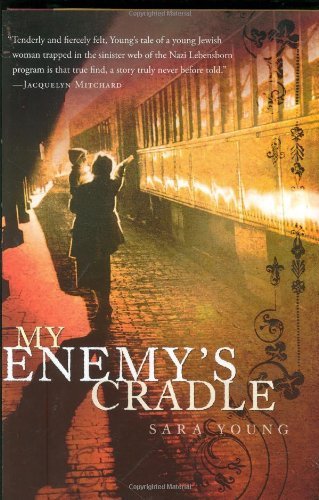
"My Enemy's Cradle" by Sara Young centers on a pregnant German woman, Anna, who, in order to protect her unborn child during World War II, assumes the identity of a Jewish resistance fighter she has just met. This desperate act forces her into a perilous world of espionage, moral ambiguity, and deep personal sacrifice as she grapples with her new persona and the ever-present threat of discovery by the Gestapo. The narrative explores themes of identity, survival, and the profound lengths to which a mother will go to save her child amidst the horrors of war.
The similarity to "Rose Under Fire" lies in their shared exploration of female agency and resilience during wartime, particularly within concentration camp settings or under Nazi persecution. Both novels feature young women thrust into horrific circumstances who must make impossible choices, often involving deception and immense personal risk, to survive and protect others. They delve into the emotional and psychological toll of war, highlighting the strength of the human spirit when confronted with unimaginable cruelty and challenging readers to consider complex moral dilemmas.
This novel will appeal to those who appreciate historical fiction that offers a gripping, character-driven narrative set against a meticulously researched backdrop of World War II. It provides a nuanced perspective on the war, moving beyond conventional narratives to examine the universal struggle for humanity and survival from a unique viewpoint. The compelling plot, coupled with its poignant exploration of maternal love and identity under duress, offers a deeply moving and thought-provoking experience, enriching understanding of the war's personal impact.
My Enemy's Cradle
"My Enemy's Cradle" by Sara Young centers on a pregnant German woman, Anna, who, in order to protect her unborn child during World War II, assumes the identity of a Jewish resistance fighter she has just met. This desperate act forces her into a perilous world of espionage, moral ambiguity, and deep personal sacrifice as she grapples with her new persona and the ever-present threat of discovery by the Gestapo. The narrative explores themes of identity, survival, and the profound lengths to which a mother will go to save her child amidst the horrors of war.
The similarity to "Rose Under Fire" lies in their shared exploration of female agency and resilience during wartime, particularly within concentration camp settings or under Nazi persecution. Both novels feature young women thrust into horrific circumstances who must make impossible choices, often involving deception and immense personal risk, to survive and protect others. They delve into the emotional and psychological toll of war, highlighting the strength of the human spirit when confronted with unimaginable cruelty and challenging readers to consider complex moral dilemmas.
This novel will appeal to those who appreciate historical fiction that offers a gripping, character-driven narrative set against a meticulously researched backdrop of World War II. It provides a nuanced perspective on the war, moving beyond conventional narratives to examine the universal struggle for humanity and survival from a unique viewpoint. The compelling plot, coupled with its poignant exploration of maternal love and identity under duress, offers a deeply moving and thought-provoking experience, enriching understanding of the war's personal impact.
More Books to Explore
Discover more titles that expand on these ideas and themes.
Code Name Verity
White Rose, Black Forest
The Plum Tree
Lilac Girls
The Golden Doves
Code Name Sapphire