10 Books Similar to "Rich Dad's Retire Young, Retire Rich: How to Get Rich Quickly and Stay Rich Forever!"
by Robert T. Kiyosaki

Rich Dad, Poor Dad
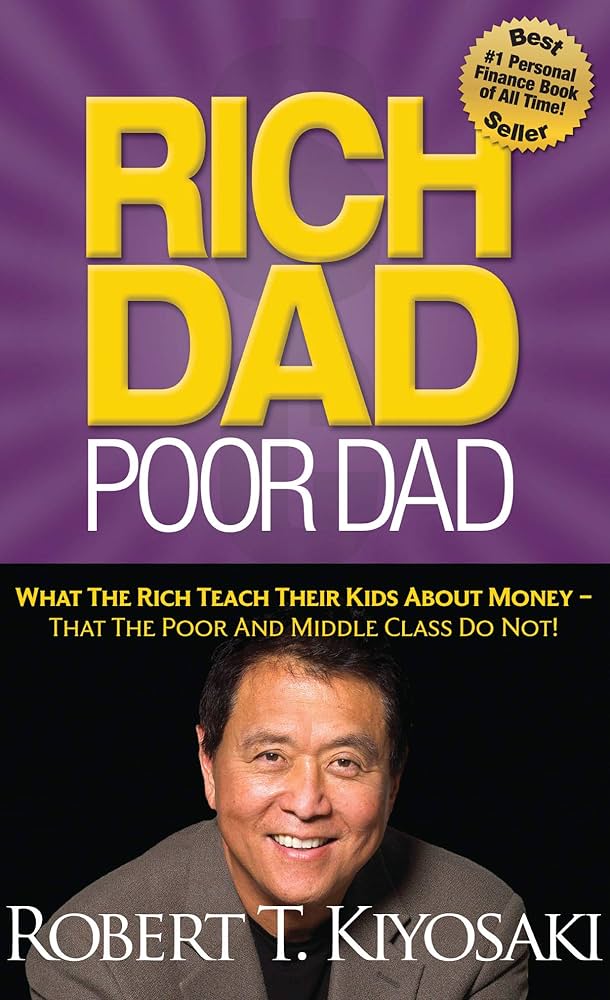
"Rich Dad, Poor Dad" introduces a pivotal concept: understanding the difference between assets and liabilities, and how this distinction drives wealth accumulation. Kiyosaki shares his upbringing with two influential figures—his highly educated "poor dad" (his biological father) and his entrepreneurial "rich dad" (his best friend's father)—to illustrate contrasting financial philosophies. The book champions financial literacy, entrepreneurship, and investing over traditional employment for achieving financial independence.
Both "Rich Dad, Poor Dad" and "Rich Dad's Retire Young, Retire Rich" share Kiyosaki's core philosophy of financial education and asset acquisition. "Rich Dad, Poor Dad" lays the foundational concepts, emphasizing the mindset shift required, while "Retire Young, Retire Rich" builds upon these principles, offering more tactical strategies for accelerating that journey towards financial freedom. They both advocate for self-driven learning and challenging conventional wisdom about money.
The insights offered provide practical insights into personal finance, particularly for those feeling trapped by the "rat race." The emphasis on financial education and changing one's money mindset offers a refreshing alternative to traditional employment paths. It empowers individuals to take control of their financial destiny, fostering a proactive approach to wealth creation that can profoundly impact long-term financial security and freedom.
Rich Dad, Poor Dad
"Rich Dad, Poor Dad" introduces a pivotal concept: understanding the difference between assets and liabilities, and how this distinction drives wealth accumulation. Kiyosaki shares his upbringing with two influential figures—his highly educated "poor dad" (his biological father) and his entrepreneurial "rich dad" (his best friend's father)—to illustrate contrasting financial philosophies. The book champions financial literacy, entrepreneurship, and investing over traditional employment for achieving financial independence.
Both "Rich Dad, Poor Dad" and "Rich Dad's Retire Young, Retire Rich" share Kiyosaki's core philosophy of financial education and asset acquisition. "Rich Dad, Poor Dad" lays the foundational concepts, emphasizing the mindset shift required, while "Retire Young, Retire Rich" builds upon these principles, offering more tactical strategies for accelerating that journey towards financial freedom. They both advocate for self-driven learning and challenging conventional wisdom about money.
The insights offered provide practical insights into personal finance, particularly for those feeling trapped by the "rat race." The emphasis on financial education and changing one's money mindset offers a refreshing alternative to traditional employment paths. It empowers individuals to take control of their financial destiny, fostering a proactive approach to wealth creation that can profoundly impact long-term financial security and freedom.
Rich Dad's Guide to Investing: What the Rich Invest in That the Poor and Middle Class Do Not!

"Rich Dad's Guide to Investing" demystifies the investing strategies employed by the wealthy, contrasting them with the common financial choices of the poor and middle class. It breaks down complex investment concepts into accessible terms, emphasizing passive income generation through assets like real estate, businesses, and paper assets, rather than solely relying on earned income from a job. The book advocates for financial education as the cornerstone of true wealth building and outlines the mindset required to identify and capitalize on lucrative investment opportunities.
This guide shares key philosophical underpinnings with "Rich Dad's Retire Young, Retire Rich." Both books champion the pursuit of financial independence early in life, stressing the importance of acquiring income-generating assets to achieve this. They both advocate for a shift from traditional employment to entrepreneurial thinking and strategic investing, aiming to empower individuals to take control of their financial destinies rather than relying on conventional wisdom or corporate ladders.
The book will appeal to individuals seeking practical, actionable advice on building substantial wealth and achieving financial freedom. It offers a blueprint for understanding different asset classes and how to make them work for you, rather than working for money. Its value lies in empowering individuals to challenge conventional financial paradigms and adopt a proactive, investor-centric approach to their economic future.
Rich Dad's Guide to Investing: What the Rich Invest in That the Poor and Middle Class Do Not!
"Rich Dad's Guide to Investing" demystifies the investing strategies employed by the wealthy, contrasting them with the common financial choices of the poor and middle class. It breaks down complex investment concepts into accessible terms, emphasizing passive income generation through assets like real estate, businesses, and paper assets, rather than solely relying on earned income from a job. The book advocates for financial education as the cornerstone of true wealth building and outlines the mindset required to identify and capitalize on lucrative investment opportunities.
This guide shares key philosophical underpinnings with "Rich Dad's Retire Young, Retire Rich." Both books champion the pursuit of financial independence early in life, stressing the importance of acquiring income-generating assets to achieve this. They both advocate for a shift from traditional employment to entrepreneurial thinking and strategic investing, aiming to empower individuals to take control of their financial destinies rather than relying on conventional wisdom or corporate ladders.
The book will appeal to individuals seeking practical, actionable advice on building substantial wealth and achieving financial freedom. It offers a blueprint for understanding different asset classes and how to make them work for you, rather than working for money. Its value lies in empowering individuals to challenge conventional financial paradigms and adopt a proactive, investor-centric approach to their economic future.
Why We Want You To Be Rich: Two Men, One Message

"Why We Want You To Be Rich" by Donald Trump and Robert Kiyosaki presents their combined perspectives on wealth creation and financial education. It argues that traditional education often fails to prepare individuals for real-world financial success, advocating instead for entrepreneurial thinking, real estate investment, and understanding the nuances of money. The book emphasizes taking control of one's financial destiny and challenging conventional advice to build sustainable wealth.
This book shares significant thematic overlap with "Rich Dad's Retire Young, Retire Rich." Both works fundamentally challenge conventional financial wisdom, promoting an entrepreneurial mindset over traditional employment. They both advocate for financial literacy, specifically in areas like real estate and business ownership, as the primary pathways to achieving financial independence and long-term prosperity. Both authors stress the importance of thinking differently about money and leveraging assets rather than solely relying on earned income.
The insights offered will resonate deeply with individuals seeking alternatives to a traditional career path for financial freedom. It provides actionable advice and a compelling philosophical framework for those aspiring to create their own wealth, understand the power of investing, and ultimately achieve financial independence outside of standard employment models. The combined authority of both authors lends significant weight to their message, offering a powerful blueprint for financial elevation.
Why We Want You To Be Rich: Two Men, One Message
"Why We Want You To Be Rich" by Donald Trump and Robert Kiyosaki presents their combined perspectives on wealth creation and financial education. It argues that traditional education often fails to prepare individuals for real-world financial success, advocating instead for entrepreneurial thinking, real estate investment, and understanding the nuances of money. The book emphasizes taking control of one's financial destiny and challenging conventional advice to build sustainable wealth.
This book shares significant thematic overlap with "Rich Dad's Retire Young, Retire Rich." Both works fundamentally challenge conventional financial wisdom, promoting an entrepreneurial mindset over traditional employment. They both advocate for financial literacy, specifically in areas like real estate and business ownership, as the primary pathways to achieving financial independence and long-term prosperity. Both authors stress the importance of thinking differently about money and leveraging assets rather than solely relying on earned income.
The insights offered will resonate deeply with individuals seeking alternatives to a traditional career path for financial freedom. It provides actionable advice and a compelling philosophical framework for those aspiring to create their own wealth, understand the power of investing, and ultimately achieve financial independence outside of standard employment models. The combined authority of both authors lends significant weight to their message, offering a powerful blueprint for financial elevation.
Pirates of Financial Freedom
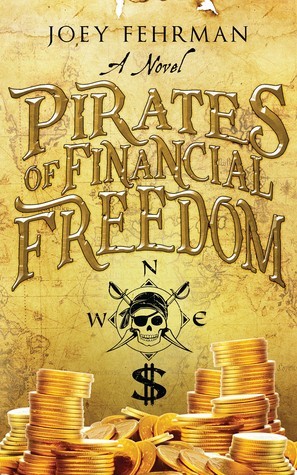
"Pirates of Financial Freedom" posits a roadmap to escaping the traditional 9-to-5 grind, advocating for entrepreneurial thinking and unconventional wealth-building strategies. It emphasizes leveraging digital opportunities, smart investing, and cultivating a mindset focused on financial independence rather than linear career progression. The book deconstructs complex financial concepts into actionable steps, encouraging readers to actively design their financial future.
This book aligns with Kiyosaki's "Rich Dad's Retire Young, Retire Rich" by challenging conventional wisdom about employment and retirement. Both texts champion the idea of building passive income streams and acquiring assets, distinguishing between "good debt" and "bad debt." They share a core philosophy that a strategic shift in financial perspective, combined with proactive learning and risk-taking, can accelerate wealth accumulation and offer an alternative to a decades-long corporate ladder climb.
This book will attract individuals seeking practical, alternative paths to financial freedom. Its value lies in demystifying wealth creation for a modern audience, providing concrete strategies applicable to today's economic landscape. It offers a blueprint for those dissatisfied with traditional career paths, presenting an empowering framework for achieving financial autonomy and a lifestyle defined by choice, not obligation.
Pirates of Financial Freedom
"Pirates of Financial Freedom" posits a roadmap to escaping the traditional 9-to-5 grind, advocating for entrepreneurial thinking and unconventional wealth-building strategies. It emphasizes leveraging digital opportunities, smart investing, and cultivating a mindset focused on financial independence rather than linear career progression. The book deconstructs complex financial concepts into actionable steps, encouraging readers to actively design their financial future.
This book aligns with Kiyosaki's "Rich Dad's Retire Young, Retire Rich" by challenging conventional wisdom about employment and retirement. Both texts champion the idea of building passive income streams and acquiring assets, distinguishing between "good debt" and "bad debt." They share a core philosophy that a strategic shift in financial perspective, combined with proactive learning and risk-taking, can accelerate wealth accumulation and offer an alternative to a decades-long corporate ladder climb.
This book will attract individuals seeking practical, alternative paths to financial freedom. Its value lies in demystifying wealth creation for a modern audience, providing concrete strategies applicable to today's economic landscape. It offers a blueprint for those dissatisfied with traditional career paths, presenting an empowering framework for achieving financial autonomy and a lifestyle defined by choice, not obligation.
Secrets of the Millionaire Mind: Mastering the Inner Game of Wealth

"Secrets of the Millionaire Mind" delves into the psychological underpinnings of wealth. T. Harv Eker posits that everyone possesses a "money blueprint" – ingrained financial beliefs and habits – that dictates their financial destiny. The book unpacks how to identify and then consciously reprogram these blueprints, replacing limiting thoughts and behaviors with those common among financially successful individuals. It focuses heavily on mindset shifts, energy management, and adopting specific "wealth files" to create lasting financial abundance.
This book shares kinship with "Rich Dad's Retire Young, Retire Rich" through their mutual emphasis on the *mindset* required for financial success, rather than solely focusing on external strategies. Both authors argue that true wealth accumulation begins internally. While Kiyosaki champions financial education and active asset acquisition, Eker provides the foundational psychological framework and behavioral adjustments necessary to effectively apply such education and maintain wealth over time, echoing Kiyosaki's call to "think like the rich."
It will appeal to individuals seeking not just financial advice, but a profound transformation in their relationship with money. The actionable exercises and distinct "wealth files" offer concrete steps for self-assessment and mental restructuring. The value lies in its ability to empower individuals to break free from self-sabotaging financial patterns, fostering a proactive and confident approach to generating and sustaining wealth, aligning inner beliefs with outer financial realities.
Secrets of the Millionaire Mind: Mastering the Inner Game of Wealth
"Secrets of the Millionaire Mind" delves into the psychological underpinnings of wealth. T. Harv Eker posits that everyone possesses a "money blueprint" – ingrained financial beliefs and habits – that dictates their financial destiny. The book unpacks how to identify and then consciously reprogram these blueprints, replacing limiting thoughts and behaviors with those common among financially successful individuals. It focuses heavily on mindset shifts, energy management, and adopting specific "wealth files" to create lasting financial abundance.
This book shares kinship with "Rich Dad's Retire Young, Retire Rich" through their mutual emphasis on the *mindset* required for financial success, rather than solely focusing on external strategies. Both authors argue that true wealth accumulation begins internally. While Kiyosaki champions financial education and active asset acquisition, Eker provides the foundational psychological framework and behavioral adjustments necessary to effectively apply such education and maintain wealth over time, echoing Kiyosaki's call to "think like the rich."
It will appeal to individuals seeking not just financial advice, but a profound transformation in their relationship with money. The actionable exercises and distinct "wealth files" offer concrete steps for self-assessment and mental restructuring. The value lies in its ability to empower individuals to break free from self-sabotaging financial patterns, fostering a proactive and confident approach to generating and sustaining wealth, aligning inner beliefs with outer financial realities.
I Will Teach You to Be Rich: No Guilt. No Excuses. No BS. Just a 6-Week Program That Works

"I Will Teach You to Be Rich" by Ramit Sethi is a practical, no-nonsense guide to personal finance, offering a six-week program to automate your money, invest effectively, and negotiate better salaries. It emphasizes conscious spending, avoiding financial guilt, and building sustainable wealth through actionable steps rather than deprivation. Sethi's approach is about crafting a "rich life" on your own terms.
This book shares common ground with "Rich Dad's Retire Young, Retire Rich" by its focus on accelerating financial independence and adopting a proactive, entrepreneurial mindset toward wealth creation. Both challenge conventional financial wisdom, encouraging readers to move beyond traditional employment for security and embrace strategies for building assets, though their specific methodologies differ. They empower individuals to take control of their financial future.
This book appeals to those seeking a tangible, step-by-step roadmap to financial well-being without the pretense often found in personal finance literature. Its actionable strategies provide immediate value, enabling individuals to streamline their finances, invest wisely, and ultimately achieve greater financial freedom for a less stressful and more fulfilling life.
I Will Teach You to Be Rich: No Guilt. No Excuses. No BS. Just a 6-Week Program That Works
"I Will Teach You to Be Rich" by Ramit Sethi is a practical, no-nonsense guide to personal finance, offering a six-week program to automate your money, invest effectively, and negotiate better salaries. It emphasizes conscious spending, avoiding financial guilt, and building sustainable wealth through actionable steps rather than deprivation. Sethi's approach is about crafting a "rich life" on your own terms.
This book shares common ground with "Rich Dad's Retire Young, Retire Rich" by its focus on accelerating financial independence and adopting a proactive, entrepreneurial mindset toward wealth creation. Both challenge conventional financial wisdom, encouraging readers to move beyond traditional employment for security and embrace strategies for building assets, though their specific methodologies differ. They empower individuals to take control of their financial future.
This book appeals to those seeking a tangible, step-by-step roadmap to financial well-being without the pretense often found in personal finance literature. Its actionable strategies provide immediate value, enabling individuals to streamline their finances, invest wisely, and ultimately achieve greater financial freedom for a less stressful and more fulfilling life.
The Total Money Makeover Workbook
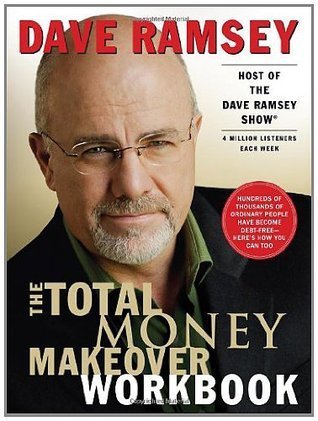
"The Total Money Makeover Workbook" is a practical, step-by-step guide designed to help individuals eliminate debt, build an emergency fund, and accumulate wealth. It emphasizes foundational financial principles and provides actionable exercises to develop disciplined money management habits, ultimately leading to financial independence.
This workbook shares a thematic kinship with "Rich Dad's Retire Young, Retire Rich" by promoting a proactive approach to financial liberation. Both books advocate for escaping the traditional employment rat race and achieving financial freedom, although Ramsey's method is more about disciplined debt elimination and foundational wealth building, while Kiyosaki focuses on leveraging assets and entrepreneurial ventures. Both ultimately aim to empower individuals to control their financial destiny.
The book will appeal to those seeking a structured, no-nonsense path to financial stability. Its workbook format fosters active participation and provides tangible progress markers, which can be highly motivating. It offers a clear, proven methodology for transforming one's financial situation, equipping individuals with the tools and mindset necessary to overcome debt and build lasting wealth.
The Total Money Makeover Workbook
"The Total Money Makeover Workbook" is a practical, step-by-step guide designed to help individuals eliminate debt, build an emergency fund, and accumulate wealth. It emphasizes foundational financial principles and provides actionable exercises to develop disciplined money management habits, ultimately leading to financial independence.
This workbook shares a thematic kinship with "Rich Dad's Retire Young, Retire Rich" by promoting a proactive approach to financial liberation. Both books advocate for escaping the traditional employment rat race and achieving financial freedom, although Ramsey's method is more about disciplined debt elimination and foundational wealth building, while Kiyosaki focuses on leveraging assets and entrepreneurial ventures. Both ultimately aim to empower individuals to control their financial destiny.
The book will appeal to those seeking a structured, no-nonsense path to financial stability. Its workbook format fosters active participation and provides tangible progress markers, which can be highly motivating. It offers a clear, proven methodology for transforming one's financial situation, equipping individuals with the tools and mindset necessary to overcome debt and build lasting wealth.
How to Think Like a Millionaire
"How to Think Like a Millionaire" delves into the psychological frameworks and ingrained habits that distinguish successful individuals. It focuses less on specific investment strategies and more on cultivating a millionaire mindset—a belief system rooted in self-worth, a positive attitude towards money, and an unwavering commitment to achieving financial freedom. The book emphasizes practical exercises and thought processes designed to reframe one's relationship with wealth, fostering an abundance mentality rather than one of scarcity.
This book shares a core philosophical similarity with "Rich Dad's Retire Young, Retire Rich." Both titles champion the idea that accumulating wealth and achieving financial independence is fundamentally an internal game. While Kiyosaki offers actionable financial education and investment principles, Fisher’s work provides the underlying attitudinal shift necessary to implement and sustain such strategies. Both authors understand that true financial success begins with a paradigm shift in how one perceives and interacts with money.
This book will appeal to those seeking a foundational shift in their financial outlook. It offers a compelling guide for altering one's internal dialogue and belief systems surrounding wealth, which is often the most significant hurdle to financial success. The value lies in its ability to empower individuals to overcome self-limiting beliefs and embrace the proactive, opportunity-seeking mindset characteristic of the financially affluent.
How to Think Like a Millionaire
"How to Think Like a Millionaire" delves into the psychological frameworks and ingrained habits that distinguish successful individuals. It focuses less on specific investment strategies and more on cultivating a millionaire mindset—a belief system rooted in self-worth, a positive attitude towards money, and an unwavering commitment to achieving financial freedom. The book emphasizes practical exercises and thought processes designed to reframe one's relationship with wealth, fostering an abundance mentality rather than one of scarcity.
This book shares a core philosophical similarity with "Rich Dad's Retire Young, Retire Rich." Both titles champion the idea that accumulating wealth and achieving financial independence is fundamentally an internal game. While Kiyosaki offers actionable financial education and investment principles, Fisher’s work provides the underlying attitudinal shift necessary to implement and sustain such strategies. Both authors understand that true financial success begins with a paradigm shift in how one perceives and interacts with money.
This book will appeal to those seeking a foundational shift in their financial outlook. It offers a compelling guide for altering one's internal dialogue and belief systems surrounding wealth, which is often the most significant hurdle to financial success. The value lies in its ability to empower individuals to overcome self-limiting beliefs and embrace the proactive, opportunity-seeking mindset characteristic of the financially affluent.
Financial Peace Revisited: New Chapters on Marriage, Singles, Kids and Families

"Financial Peace Revisited" offers a practical, Biblically-based roadmap for managing personal finances, addressing debt, budgeting, and building wealth. It provides actionable advice tailored to various life stages, including guidance for couples, single individuals, and families navigating financial decisions. The book emphasizes discipline, responsible stewardship, and a clear path to financial security.
Both books advocate for financial independence and strategic wealth building beyond traditional employment. While Kiyosaki focuses on asset acquisition and entrepreneurial ventures, Ramsey similarly champions escape from debt and conscious financial planning as core tenets of lasting prosperity. They share a fundamental belief that financial education and intentional action are crucial for a secure future, challenging conventional wisdom about money management.
This book provides relatable, actionable strategies for anyone seeking to gain control over their finances and establish a stable economic future. Its clear, step-by-step approach empowers individuals and families to overcome financial obstacles, achieve peace of mind, and build a legacy of financial stability. The updated chapters offer timely insights, making its foundational principles even more relevant for contemporary financial challenges.
Financial Peace Revisited: New Chapters on Marriage, Singles, Kids and Families
"Financial Peace Revisited" offers a practical, Biblically-based roadmap for managing personal finances, addressing debt, budgeting, and building wealth. It provides actionable advice tailored to various life stages, including guidance for couples, single individuals, and families navigating financial decisions. The book emphasizes discipline, responsible stewardship, and a clear path to financial security.
Both books advocate for financial independence and strategic wealth building beyond traditional employment. While Kiyosaki focuses on asset acquisition and entrepreneurial ventures, Ramsey similarly champions escape from debt and conscious financial planning as core tenets of lasting prosperity. They share a fundamental belief that financial education and intentional action are crucial for a secure future, challenging conventional wisdom about money management.
This book provides relatable, actionable strategies for anyone seeking to gain control over their finances and establish a stable economic future. Its clear, step-by-step approach empowers individuals and families to overcome financial obstacles, achieve peace of mind, and build a legacy of financial stability. The updated chapters offer timely insights, making its foundational principles even more relevant for contemporary financial challenges.
Dave Ramsey's Financial Peace University

"Dave Ramsey's Financial Peace University" provides a structured, biblically-based approach to personal finance, guiding individuals through principles like eliminating debt, building an emergency fund, and investing for the future. It emphasizes a "baby steps" methodology, offering practical, actionable strategies for achieving financial stability and independence through disciplined budgeting and saving.
The similarity to "Rich Dad's Retire Young, Retire Rich" lies in both books championing financial independence and offering a clear, actionable path to get there. While Kiyosaki focuses on asset acquisition and understanding financial statements, Ramsey provides a parallel emphasis on taking control of one's financial destiny, albeit through a different philosophical lens (debt elimination vs. leveraging debt). Both aim to empower individuals to build lasting wealth and move beyond traditional employment for income.
This book will appeal to individuals seeking a clear, step-by-step framework to regain control of their finances and build wealth systematically. Its emphasis on practical implementation and a supportive community environment provides tangible tools and motivation, helping diverse audiences navigate the complexities of personal finance and achieve their long-term financial aspirations.
Dave Ramsey's Financial Peace University
"Dave Ramsey's Financial Peace University" provides a structured, biblically-based approach to personal finance, guiding individuals through principles like eliminating debt, building an emergency fund, and investing for the future. It emphasizes a "baby steps" methodology, offering practical, actionable strategies for achieving financial stability and independence through disciplined budgeting and saving.
The similarity to "Rich Dad's Retire Young, Retire Rich" lies in both books championing financial independence and offering a clear, actionable path to get there. While Kiyosaki focuses on asset acquisition and understanding financial statements, Ramsey provides a parallel emphasis on taking control of one's financial destiny, albeit through a different philosophical lens (debt elimination vs. leveraging debt). Both aim to empower individuals to build lasting wealth and move beyond traditional employment for income.
This book will appeal to individuals seeking a clear, step-by-step framework to regain control of their finances and build wealth systematically. Its emphasis on practical implementation and a supportive community environment provides tangible tools and motivation, helping diverse audiences navigate the complexities of personal finance and achieve their long-term financial aspirations.
More Books to Explore
Discover more titles that expand on these ideas and themes.
Rich Dad, Poor Dad
Rich Dad's Guide to Investing: What the Rich Invest in That the Poor and Middle Class Do Not!
Why We Want You To Be Rich: Two Men, One Message
Pirates of Financial Freedom
Secrets of the Millionaire Mind: Mastering the Inner Game of Wealth
I Will Teach You to Be Rich: No Guilt. No Excuses. No BS. Just a 6-Week Program That Works