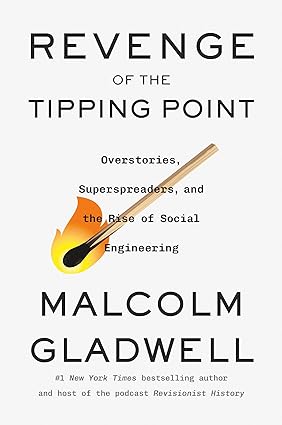
10 Books Similar to "Revenge of the Tipping Point: Overstories, Superspreaders, and the Rise of Social Engineering"
by Malcolm Gladwell
The Tipping Point: How Little Things Can Make a Big Difference

"The Tipping Point" explores how small, seemingly insignificant changes can lead to large-scale social epidemics. Gladwell posits that ideas, trends, and behaviors spread like infectious diseases, reaching a critical mass – the “tipping point” – and then proliferate rapidly through a population. He identifies key factors like "The Law of the Few" (connectors, mavens, and salesmen), the "Stickiness Factor" (memorable messages), and "The Power of Context" (environmental influences) as essential for these phenomena.
This foundational work shares a core methodological approach with "Revenge of the Tipping Point." Both books meticulously unpack the mechanisms behind widespread social phenomena, dissecting the forces that influence collective behavior. While "Revenge" likely updates and expands upon these concepts within a contemporary context of social engineering, "The Tipping Point" established the very framework for understanding how ideas become pervasive.
The book offers a compelling lens through which to understand societal change, marketing, and the diffusion of innovation. Its insights into human behavior and social dynamics are highly relevant for anyone seeking to comprehend how trends emerge, why certain ideas catch on, and how subtle influences can instigate significant shifts across communities and cultures.
The Tipping Point: How Little Things Can Make a Big Difference
"The Tipping Point" explores how small, seemingly insignificant changes can lead to large-scale social epidemics. Gladwell posits that ideas, trends, and behaviors spread like infectious diseases, reaching a critical mass – the “tipping point” – and then proliferate rapidly through a population. He identifies key factors like "The Law of the Few" (connectors, mavens, and salesmen), the "Stickiness Factor" (memorable messages), and "The Power of Context" (environmental influences) as essential for these phenomena.
This foundational work shares a core methodological approach with "Revenge of the Tipping Point." Both books meticulously unpack the mechanisms behind widespread social phenomena, dissecting the forces that influence collective behavior. While "Revenge" likely updates and expands upon these concepts within a contemporary context of social engineering, "The Tipping Point" established the very framework for understanding how ideas become pervasive.
The book offers a compelling lens through which to understand societal change, marketing, and the diffusion of innovation. Its insights into human behavior and social dynamics are highly relevant for anyone seeking to comprehend how trends emerge, why certain ideas catch on, and how subtle influences can instigate significant shifts across communities and cultures.
Talking to Strangers: What We Should Know About the People We Don't Know
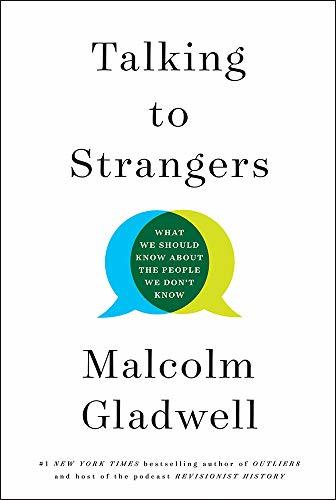
"Talking to Strangers" delves into the profound ways humans misinterpret and misunderstand strangers, often with grave consequences. Gladwell explores the psychological mechanisms that leave us vulnerable to deception, examining how our default assumption of truth, coupled with a failure to account for context, can lead to devastating errors in judgment when encountering unfamiliar individuals. He presents compelling, real-world examples to illustrate these pervasive cognitive biases.
This book shares thematic DNA with "Revenge of the Tipping Point" through its exploration of hidden forces and subtle mechanisms that shape human behavior and societal outcomes. Both works analyze how seemingly small, overlooked factors—whether it's the structure of conversations with strangers or the influence of "overstories" and "superspreaders"—can have outsized, often counterintuitive impacts. They dissect complex social dynamics by applying a keen analytical lens to human interaction and information dissemination.
The insights offered will resonate with anyone seeking a deeper understanding of human communication and the inherent challenges in judging character. It provides a valuable framework for critically examining our own interactions and recognizing the subtle cues and systemic biases that influence how we perceive others. The real-world case studies offer sobering lessons, prompting a more nuanced and cautious approach to everyday encounters.
Talking to Strangers: What We Should Know About the People We Don't Know
"Talking to Strangers" delves into the profound ways humans misinterpret and misunderstand strangers, often with grave consequences. Gladwell explores the psychological mechanisms that leave us vulnerable to deception, examining how our default assumption of truth, coupled with a failure to account for context, can lead to devastating errors in judgment when encountering unfamiliar individuals. He presents compelling, real-world examples to illustrate these pervasive cognitive biases.
This book shares thematic DNA with "Revenge of the Tipping Point" through its exploration of hidden forces and subtle mechanisms that shape human behavior and societal outcomes. Both works analyze how seemingly small, overlooked factors—whether it's the structure of conversations with strangers or the influence of "overstories" and "superspreaders"—can have outsized, often counterintuitive impacts. They dissect complex social dynamics by applying a keen analytical lens to human interaction and information dissemination.
The insights offered will resonate with anyone seeking a deeper understanding of human communication and the inherent challenges in judging character. It provides a valuable framework for critically examining our own interactions and recognizing the subtle cues and systemic biases that influence how we perceive others. The real-world case studies offer sobering lessons, prompting a more nuanced and cautious approach to everyday encounters.
David and Goliath: Underdogs, Misfits, and the Art of Battling Giants

"David and Goliath" explores instances where perceived disadvantages – being an underdog, a misfit, or facing overwhelming odds – often become sources of unexpected strength and advantage. Gladwell unpacks real-world examples, from historical battles to educational reforms and social movements, revealing how what we consider weaknesses can fundamentally alter the dynamics of conflict and success. It's a compelling argument against conventional wisdom regarding power and vulnerability.
The similarity to "Revenge of the Tipping Point" lies in Gladwell's characteristic approach: taking seemingly disparate social phenomena and exposing the hidden mechanisms and counterintuitive truths that govern them. Both books delve into how seemingly minor elements or overlooked perspectives (the "overstories" and "superspreaders" of Tipping Point, or the inherent strengths of underdogs in David and Goliath) can disproportionately influence outcomes, challenging our preconceived notions of causality and impact.
This book offers a fresh perspective on challenges and resilience. It equips individuals with a new lens through which to view their own struggles and the perceived might of adversaries, fostering a sense of empowerment. It provides valuable insights for strategic thinking, leadership, and understanding the unexpected ways in which transformative change can emerge from the margins, demonstrating that true power is often far more nuanced and dynamic than it appears.
David and Goliath: Underdogs, Misfits, and the Art of Battling Giants
"David and Goliath" explores instances where perceived disadvantages – being an underdog, a misfit, or facing overwhelming odds – often become sources of unexpected strength and advantage. Gladwell unpacks real-world examples, from historical battles to educational reforms and social movements, revealing how what we consider weaknesses can fundamentally alter the dynamics of conflict and success. It's a compelling argument against conventional wisdom regarding power and vulnerability.
The similarity to "Revenge of the Tipping Point" lies in Gladwell's characteristic approach: taking seemingly disparate social phenomena and exposing the hidden mechanisms and counterintuitive truths that govern them. Both books delve into how seemingly minor elements or overlooked perspectives (the "overstories" and "superspreaders" of Tipping Point, or the inherent strengths of underdogs in David and Goliath) can disproportionately influence outcomes, challenging our preconceived notions of causality and impact.
This book offers a fresh perspective on challenges and resilience. It equips individuals with a new lens through which to view their own struggles and the perceived might of adversaries, fostering a sense of empowerment. It provides valuable insights for strategic thinking, leadership, and understanding the unexpected ways in which transformative change can emerge from the margins, demonstrating that true power is often far more nuanced and dynamic than it appears.
Blink: The Power of Thinking Without Thinking

"Blink" explores the power and pitfalls of rapid cognition – the snap judgments, gut feelings, and instant decisions we make every day. Gladwell argues that our unconscious minds are capable of incredible feats of analysis, allowing us to accurately assess situations and people in mere seconds, often more effectively than prolonged deliberation. He delves into how these "thin slices" of information lead to profound insights, but also how they can be led astray by biases and preconceived notions.
Both "Blink" and "Revenge of the Tipping Point" share Gladwell's signature approach of dissecting complex social phenomena through compelling anecdotes and accessible explanations. They both examine the hidden forces that shape our perceptions and actions, applying a similar analytical lens to seemingly disparate topics. Where "Tipping Point" might focus on how ideas spread, "Blink" focuses on how individuals process and react to those ideas, making them complementary explorations of human behavior and influence.
This book offers a fascinating glimpse into the workings of the mind, providing a fresh perspective on decision-making and intuition. It encourages critical self-reflection on how our instant reactions shape our lives and the world around us. The insights presented can empower a more mindful approach to judgment and understanding.
Blink: The Power of Thinking Without Thinking
"Blink" explores the power and pitfalls of rapid cognition – the snap judgments, gut feelings, and instant decisions we make every day. Gladwell argues that our unconscious minds are capable of incredible feats of analysis, allowing us to accurately assess situations and people in mere seconds, often more effectively than prolonged deliberation. He delves into how these "thin slices" of information lead to profound insights, but also how they can be led astray by biases and preconceived notions.
Both "Blink" and "Revenge of the Tipping Point" share Gladwell's signature approach of dissecting complex social phenomena through compelling anecdotes and accessible explanations. They both examine the hidden forces that shape our perceptions and actions, applying a similar analytical lens to seemingly disparate topics. Where "Tipping Point" might focus on how ideas spread, "Blink" focuses on how individuals process and react to those ideas, making them complementary explorations of human behavior and influence.
This book offers a fascinating glimpse into the workings of the mind, providing a fresh perspective on decision-making and intuition. It encourages critical self-reflection on how our instant reactions shape our lives and the world around us. The insights presented can empower a more mindful approach to judgment and understanding.
Outliers: The Story of Success

"Outliers: The Story of Success" explores the hidden factors behind extraordinary achievement. Gladwell argues that success isn't solely about talent or hard work, but often springs from advantageous circumstances, cultural legacies, and timely opportunities. He dissects how seemingly mundane details, like birth month or geographic location, can significantly influence an individual's trajectory towards greatness.
Similar to "Revenge of the Tipping Point," "Outliers" delves into the underlying mechanisms that shape societal outcomes and individual experiences, rather than focusing on surface-level explanations. Both books examine how unseen forces—be they cultural norms, historical trends, or a select few influential individuals—can dramatically influence a broader population, moving beyond conventional wisdom to reveal the intricate tapestry of cause and effect.
This book offers a fresh perspective on success, challenging conventional narratives and encouraging a deeper understanding of human potential. It provides valuable insights into the systemic influences that contribute to individual and collective achievement, prompting a rethinking of personal agency within broader social contexts.
Outliers: The Story of Success
"Outliers: The Story of Success" explores the hidden factors behind extraordinary achievement. Gladwell argues that success isn't solely about talent or hard work, but often springs from advantageous circumstances, cultural legacies, and timely opportunities. He dissects how seemingly mundane details, like birth month or geographic location, can significantly influence an individual's trajectory towards greatness.
Similar to "Revenge of the Tipping Point," "Outliers" delves into the underlying mechanisms that shape societal outcomes and individual experiences, rather than focusing on surface-level explanations. Both books examine how unseen forces—be they cultural norms, historical trends, or a select few influential individuals—can dramatically influence a broader population, moving beyond conventional wisdom to reveal the intricate tapestry of cause and effect.
This book offers a fresh perspective on success, challenging conventional narratives and encouraging a deeper understanding of human potential. It provides valuable insights into the systemic influences that contribute to individual and collective achievement, prompting a rethinking of personal agency within broader social contexts.
Contagious: Why Things Catch On

"Contagious: Why Things Catch On" delves into the underlying psychology of virality, dissecting the precise mechanisms that make ideas, products, and behaviors spread. Jonah Berger introduces six key principles—Social Currency, Triggers, Emotion, Public, Practical Value, and Stories (STEPPS)—that explain why some things become popular while others falter. It's a pragmatic guide to understanding and even engineering social transmission.
This book shares significant thematic overlap with "Revenge of the Tipping Point." Both explore the dynamics of how ideas proliferate within social networks and the crucial role of certain individuals or conditions in amplifying messages. While Gladwell might focus on the "overstories" and "superspreaders" as agents, Berger offers a more granular framework of actionable drivers behind that spread, making them complementary analyses of social influence.
Anyone interested in marketing, social dynamics, or effective communication will appreciate this book. It provides clear, evidence-based insights into human behavior and the forces that shape our choices and conversations. The accessible breakdown of "STEPPS" offers a powerful lens for dissecting current trends and a practical toolkit for fostering the spread of one's own ideas.
Contagious: Why Things Catch On
"Contagious: Why Things Catch On" delves into the underlying psychology of virality, dissecting the precise mechanisms that make ideas, products, and behaviors spread. Jonah Berger introduces six key principles—Social Currency, Triggers, Emotion, Public, Practical Value, and Stories (STEPPS)—that explain why some things become popular while others falter. It's a pragmatic guide to understanding and even engineering social transmission.
This book shares significant thematic overlap with "Revenge of the Tipping Point." Both explore the dynamics of how ideas proliferate within social networks and the crucial role of certain individuals or conditions in amplifying messages. While Gladwell might focus on the "overstories" and "superspreaders" as agents, Berger offers a more granular framework of actionable drivers behind that spread, making them complementary analyses of social influence.
Anyone interested in marketing, social dynamics, or effective communication will appreciate this book. It provides clear, evidence-based insights into human behavior and the forces that shape our choices and conversations. The accessible breakdown of "STEPPS" offers a powerful lens for dissecting current trends and a practical toolkit for fostering the spread of one's own ideas.
What the Dog Saw and Other Adventures

"What the Dog Saw and Other Adventures" gathers Malcolm Gladwell's most compelling essays from The New Yorker. It delves into a fascinating array of everyday phenomena, uncovering the hidden logic, surprising truths, and often counterintuitive reasons behind human behavior, societal structures, and our understanding of the world. From profiling dog whisperers and examining ketchup's evolution to exploring intelligence testing and the psychology of failure, each piece offers a unique, in-depth exploration.
This collection shares its analytical DNA with "Revenge of the Tipping Point." Both books are quintessential Gladwell, characterized by his signature style of identifying seemingly trivial details and extrapolating their profound implications. They both explore "overstories" and "superspreaders" – the underlying forces and influential individuals that shape our experiences – albeit through individual essays rather than a singular overarching narrative. The similarity lies in the relentless pursuit of understanding how complex systems operate and influence outcomes.
This book offers a captivating journey into the unexpected. It challenges preconceptions, broadens perspectives, and provides a framework for critical thinking about the seemingly ordinary. Its strength lies in its ability to illuminate the invisible forces at play in our lives, making complex ideas accessible and engaging, fostering a deeper appreciation for the intricate tapestry of human experience and societal mechanics.
What the Dog Saw and Other Adventures
"What the Dog Saw and Other Adventures" gathers Malcolm Gladwell's most compelling essays from The New Yorker. It delves into a fascinating array of everyday phenomena, uncovering the hidden logic, surprising truths, and often counterintuitive reasons behind human behavior, societal structures, and our understanding of the world. From profiling dog whisperers and examining ketchup's evolution to exploring intelligence testing and the psychology of failure, each piece offers a unique, in-depth exploration.
This collection shares its analytical DNA with "Revenge of the Tipping Point." Both books are quintessential Gladwell, characterized by his signature style of identifying seemingly trivial details and extrapolating their profound implications. They both explore "overstories" and "superspreaders" – the underlying forces and influential individuals that shape our experiences – albeit through individual essays rather than a singular overarching narrative. The similarity lies in the relentless pursuit of understanding how complex systems operate and influence outcomes.
This book offers a captivating journey into the unexpected. It challenges preconceptions, broadens perspectives, and provides a framework for critical thinking about the seemingly ordinary. Its strength lies in its ability to illuminate the invisible forces at play in our lives, making complex ideas accessible and engaging, fostering a deeper appreciation for the intricate tapestry of human experience and societal mechanics.
Influencer: The Power to Change Anything
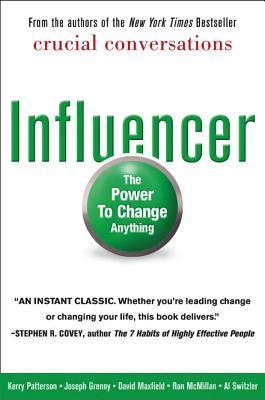
"Influencer: The Power to Change Anything" meticulously dissects the mechanisms of significant behavioral and organizational change. It posits that sustainable transformation isn't accidental; rather, it stems from a deliberate confluence of motivations and abilities. The book outlines a powerful six-source model for influencing behavior, emphasizing strategies that address both personal and structural factors, from clarifying vital behaviors and fostering personal desire to leveraging social support and redesigning environments.
It shares common ground with "Revenge of the Tipping Point" by exploring the dynamics of social influence and how small, targeted interventions can yield widespread results. Both books delve into the concept of leverage points within systems, illustrating how understanding underlying mechanics—whether through Gladwell's superspreaders and overstories or Patterson's six sources of influence—is crucial for engineering impactful shifts in norms and actions.
Individuals interested in understanding and executing meaningful change, whether in their personal lives, within teams, or across organizations, will find this a valuable resource. It offers a practical framework and actionable strategies for overcoming entrenched behaviors and inspiring new ones. The insights will empower anyone seeking to move beyond mere persuasion to truly transform outcomes.
Influencer: The Power to Change Anything
"Influencer: The Power to Change Anything" meticulously dissects the mechanisms of significant behavioral and organizational change. It posits that sustainable transformation isn't accidental; rather, it stems from a deliberate confluence of motivations and abilities. The book outlines a powerful six-source model for influencing behavior, emphasizing strategies that address both personal and structural factors, from clarifying vital behaviors and fostering personal desire to leveraging social support and redesigning environments.
It shares common ground with "Revenge of the Tipping Point" by exploring the dynamics of social influence and how small, targeted interventions can yield widespread results. Both books delve into the concept of leverage points within systems, illustrating how understanding underlying mechanics—whether through Gladwell's superspreaders and overstories or Patterson's six sources of influence—is crucial for engineering impactful shifts in norms and actions.
Individuals interested in understanding and executing meaningful change, whether in their personal lives, within teams, or across organizations, will find this a valuable resource. It offers a practical framework and actionable strategies for overcoming entrenched behaviors and inspiring new ones. The insights will empower anyone seeking to move beyond mere persuasion to truly transform outcomes.
Everybody Lies: Big Data, New Data, and What the Internet Can Tell Us About Who We Really Are

"Everybody Lies" by Seth Stephens-Davidowitz explores how the vast, unfiltered data generated by internet searches and social media reveals a more honest, often unsettling, truth about human behavior than traditional surveys or self-reporting. It delves into the surprising insights hidden within this "big data," from our secret biases to our real interests, demonstrating how our digital footprints expose what we truly think and do.
This book shares thematic DNA with Gladwell's "Revenge of the Tipping Point" by examining the undercurrents and subtle mechanisms that shape societal trends and individual actions. Both authors leverage novel forms of data and observation to deconstruct complex social phenomena, moving beyond surface-level explanations to reveal the deeper, often counterintuitive, forces at play. They both challenge conventional wisdom by presenting compelling evidence from unconventional sources.
The book offers a compelling journey into the human psyche, illuminated by the unparalleled honesty of our anonymous online activities. It provides a potent and practical framework for understanding contemporary society, offering a fresh perspective on everything from economics to prejudice. Its insights are invaluable for anyone seeking a more accurate and nuanced understanding of human nature in the digital age.
Everybody Lies: Big Data, New Data, and What the Internet Can Tell Us About Who We Really Are
"Everybody Lies" by Seth Stephens-Davidowitz explores how the vast, unfiltered data generated by internet searches and social media reveals a more honest, often unsettling, truth about human behavior than traditional surveys or self-reporting. It delves into the surprising insights hidden within this "big data," from our secret biases to our real interests, demonstrating how our digital footprints expose what we truly think and do.
This book shares thematic DNA with Gladwell's "Revenge of the Tipping Point" by examining the undercurrents and subtle mechanisms that shape societal trends and individual actions. Both authors leverage novel forms of data and observation to deconstruct complex social phenomena, moving beyond surface-level explanations to reveal the deeper, often counterintuitive, forces at play. They both challenge conventional wisdom by presenting compelling evidence from unconventional sources.
The book offers a compelling journey into the human psyche, illuminated by the unparalleled honesty of our anonymous online activities. It provides a potent and practical framework for understanding contemporary society, offering a fresh perspective on everything from economics to prejudice. Its insights are invaluable for anyone seeking a more accurate and nuanced understanding of human nature in the digital age.
The Social Animal: The Hidden Sources of Love, Character, and Achievement

"The Social Animal: The Hidden Sources of Love, Character, and Achievement" delves into the intricate, often unconscious, processes that shape human lives and define success. David Brooks explores the profound influence of our non-rational minds, arguing that our deepest desires, habits, and social connections are far more instrumental in determining who we become than mere intellect or conscious choices. Through the narrative of two fictional characters, Harold and Erica, Brooks illustrates how seemingly small, unacknowledged forces — from early childhood experiences to social cues and emotional intelligence — cumulatively mold character, foster meaningful relationships, and ultimately lead to a fulfilling existence.
This book shares a fundamental intellectual curiosity with "Revenge of the Tipping Point" in its examination of unseen social and psychological mechanisms. Both Gladwell and Brooks investigate how seemingly subtle, often overlooked factors escalate into significant societal and individual impacts. While Gladwell dissects the mechanics of social influence and "superspreaders" who amplify ideas, Brooks focuses on the underlying psychological architecture that makes us susceptible to—or resilient against—these influences, and how individual character development is a cumulative result of myriad hidden interactions.
Anyone fascinated by the complexities of human behavior and the forces that truly drive personal and societal development will find this book immensely rewarding. It provides a nuanced understanding of why some individuals thrive while others struggle, offering insights into the profound power of our emotional landscape and social interactions. The book's compelling narrative approach makes complex psychological theories accessible, enriching one's perspective on love, character formation, and the pursuit of a well-lived life.
The Social Animal: The Hidden Sources of Love, Character, and Achievement
"The Social Animal: The Hidden Sources of Love, Character, and Achievement" delves into the intricate, often unconscious, processes that shape human lives and define success. David Brooks explores the profound influence of our non-rational minds, arguing that our deepest desires, habits, and social connections are far more instrumental in determining who we become than mere intellect or conscious choices. Through the narrative of two fictional characters, Harold and Erica, Brooks illustrates how seemingly small, unacknowledged forces — from early childhood experiences to social cues and emotional intelligence — cumulatively mold character, foster meaningful relationships, and ultimately lead to a fulfilling existence.
This book shares a fundamental intellectual curiosity with "Revenge of the Tipping Point" in its examination of unseen social and psychological mechanisms. Both Gladwell and Brooks investigate how seemingly subtle, often overlooked factors escalate into significant societal and individual impacts. While Gladwell dissects the mechanics of social influence and "superspreaders" who amplify ideas, Brooks focuses on the underlying psychological architecture that makes us susceptible to—or resilient against—these influences, and how individual character development is a cumulative result of myriad hidden interactions.
Anyone fascinated by the complexities of human behavior and the forces that truly drive personal and societal development will find this book immensely rewarding. It provides a nuanced understanding of why some individuals thrive while others struggle, offering insights into the profound power of our emotional landscape and social interactions. The book's compelling narrative approach makes complex psychological theories accessible, enriching one's perspective on love, character formation, and the pursuit of a well-lived life.
More Books to Explore
Discover more titles that expand on these ideas and themes.
The Tipping Point: How Little Things Can Make a Big Difference
Talking to Strangers: What We Should Know About the People We Don't Know
David and Goliath: Underdogs, Misfits, and the Art of Battling Giants
Blink: The Power of Thinking Without Thinking
Outliers: The Story of Success
Contagious: Why Things Catch On