10 Books Similar to "Quantum Supremacy"
by Michio Kaku

The Future of the Mind: The Scientific Quest to Understand, Enhance, and Empower the Mind

"The Future of the Mind" explores the cutting-edge of neuroscience and physics to envision how our understanding of the brain could evolve. Kaku delves into topics like telepathy, telekinesis, artificial intelligence, and consciousness, examining their scientific basis and potential future applications. He dissects how these seemingly futuristic concepts might become reality, driven by advancements in brain mapping, virtual reality, and quantum computing.
This book shares a core similarity with "Quantum Supremacy" in its ambitious exploration of revolutionary scientific advancements and their societal implications. Both works grapple with the potential for technology to fundamentally alter human experience, pushing the boundaries of what is currently considered possible. Kaku’s signature blend of speculative yet rigorously scientific inquiry is evident in both, as he dissects complex ideas into accessible narratives.
Individuals intrigued by the intersection of science, technology, and humanity's future will find immense value in this book. It offers a thought-provoking journey into the profound questions surrounding consciousness, intelligence, and the very nature of our minds, presented with Kaku's characteristic clarity and enthusiasm for groundbreaking discoveries.
The Future of the Mind: The Scientific Quest to Understand, Enhance, and Empower the Mind
"The Future of the Mind" explores the cutting-edge of neuroscience and physics to envision how our understanding of the brain could evolve. Kaku delves into topics like telepathy, telekinesis, artificial intelligence, and consciousness, examining their scientific basis and potential future applications. He dissects how these seemingly futuristic concepts might become reality, driven by advancements in brain mapping, virtual reality, and quantum computing.
This book shares a core similarity with "Quantum Supremacy" in its ambitious exploration of revolutionary scientific advancements and their societal implications. Both works grapple with the potential for technology to fundamentally alter human experience, pushing the boundaries of what is currently considered possible. Kaku’s signature blend of speculative yet rigorously scientific inquiry is evident in both, as he dissects complex ideas into accessible narratives.
Individuals intrigued by the intersection of science, technology, and humanity's future will find immense value in this book. It offers a thought-provoking journey into the profound questions surrounding consciousness, intelligence, and the very nature of our minds, presented with Kaku's characteristic clarity and enthusiasm for groundbreaking discoveries.
Physics of the Impossible

"Physics of the Impossible" systematically explores technologies and concepts we currently consider impossible, categorizing them by their potential for future realization. Michio Kaku delves into science fiction staples like warp drives, force fields, and time travel, dissecting their theoretical underpinnings and speculating on the scientific breakthroughs required to make them a reality, or proving why they can never exist based on known laws of physics.
This book shares a fundamental similarity with "Quantum Supremacy" in its ambitious scope and Kaku's signature approach to future science. Both works leap beyond current technological limitations, examining the profound implications of advanced scientific concepts through a lens of accessibility and informed conjecture. They showcase Kaku's talent for translating complex physics into understandable narratives, making the seemingly fantastical feel tangible.
The book appeals to anyone fascinated by the intersection of science and science fiction, offering a robust intellectual exploration of humanity's technological potential. It provides valuable insight into the scientific method's power to analyze speculative concepts, inspiring a deeper appreciation for both fundamental physics and the boundless imagination of human endeavor.
Physics of the Impossible
"Physics of the Impossible" systematically explores technologies and concepts we currently consider impossible, categorizing them by their potential for future realization. Michio Kaku delves into science fiction staples like warp drives, force fields, and time travel, dissecting their theoretical underpinnings and speculating on the scientific breakthroughs required to make them a reality, or proving why they can never exist based on known laws of physics.
This book shares a fundamental similarity with "Quantum Supremacy" in its ambitious scope and Kaku's signature approach to future science. Both works leap beyond current technological limitations, examining the profound implications of advanced scientific concepts through a lens of accessibility and informed conjecture. They showcase Kaku's talent for translating complex physics into understandable narratives, making the seemingly fantastical feel tangible.
The book appeals to anyone fascinated by the intersection of science and science fiction, offering a robust intellectual exploration of humanity's technological potential. It provides valuable insight into the scientific method's power to analyze speculative concepts, inspiring a deeper appreciation for both fundamental physics and the boundless imagination of human endeavor.
Physics of the Future: How Science Will Shape Human Destiny and Our Daily Lives by the Year 2100

*Physics of the Future* explores how scientific breakthroughs, particularly in areas like AI, biotechnology, and nanotechnology, will profoundly transform human society and daily existence by the end of the 21st century. Kaku interviews leading scientists to paint a vivid, yet grounded, picture of upcoming advancements from personalized medicine to space travel, examining both the potential benefits and ethical challenges.
This book shares conceptual DNA with *Quantum Supremacy* through its overarching theme: Kaku's characteristic forward-looking analysis of cutting-edge science and its societal impact. Both works delve into complex scientific frontiers, translating them into accessible narratives about future possibilities and challenges, driven by Kaku's established expertise in communicating scientific concepts to a broad audience.
Individuals interested in understanding the trajectory of scientific progress and its far-reaching implications for humanity will find immense value in this predictive overview. It offers a well-researched, thought-provoking examination of how emerging technologies are set to redefine health, work, and our very perception of reality, encouraging a critical engagement with tomorrow's world.
Physics of the Future: How Science Will Shape Human Destiny and Our Daily Lives by the Year 2100
*Physics of the Future* explores how scientific breakthroughs, particularly in areas like AI, biotechnology, and nanotechnology, will profoundly transform human society and daily existence by the end of the 21st century. Kaku interviews leading scientists to paint a vivid, yet grounded, picture of upcoming advancements from personalized medicine to space travel, examining both the potential benefits and ethical challenges.
This book shares conceptual DNA with *Quantum Supremacy* through its overarching theme: Kaku's characteristic forward-looking analysis of cutting-edge science and its societal impact. Both works delve into complex scientific frontiers, translating them into accessible narratives about future possibilities and challenges, driven by Kaku's established expertise in communicating scientific concepts to a broad audience.
Individuals interested in understanding the trajectory of scientific progress and its far-reaching implications for humanity will find immense value in this predictive overview. It offers a well-researched, thought-provoking examination of how emerging technologies are set to redefine health, work, and our very perception of reality, encouraging a critical engagement with tomorrow's world.
Parallel Worlds: A Journey through Creation, Higher Dimensions, and the Future of the Cosmos
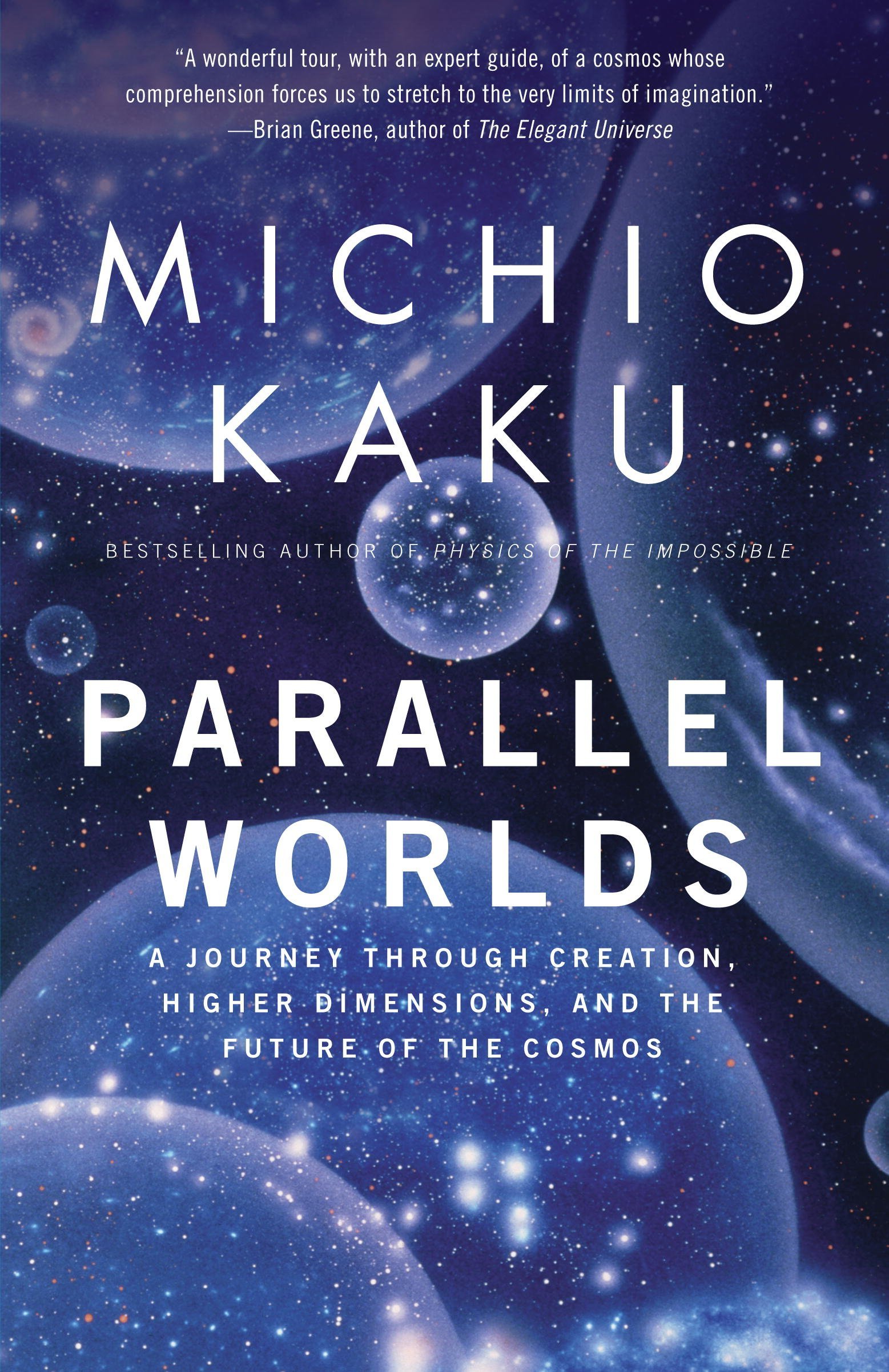
"Parallel Worlds" explores the cutting edge of theoretical physics, delving into concepts like the multiverse, higher dimensions, and the ultimate fate of the universe. Kaku expertly unpacks complex ideas—from string theory to the Big Bang—making them accessible to a general audience. It's a grand tour of cosmic possibilities, offering a glimpse into the scientific quest to understand our reality and beyond.
This book shares a fundamental kinship with "Quantum Supremacy" through its ambitious exploration of groundbreaking scientific frontiers. Both works showcase Kaku's signature style of demystifying advanced physics for a broad readership, tackling profound questions about the nature of existence, consciousness, and the universe using a clear, engaging narrative.
The work's overarching appeal lies in its ability to ignite curiosity about the universe's biggest mysteries. It offers a profound intellectual journey, expanding perspectives on what is possible within scientific understanding and inspiring a deeper appreciation for the wonders and intricacies of the cosmos. Its value comes from clarifying mind-bending concepts, providing a roadmap to the most exciting areas of modern physics.
Parallel Worlds: A Journey through Creation, Higher Dimensions, and the Future of the Cosmos
"Parallel Worlds" explores the cutting edge of theoretical physics, delving into concepts like the multiverse, higher dimensions, and the ultimate fate of the universe. Kaku expertly unpacks complex ideas—from string theory to the Big Bang—making them accessible to a general audience. It's a grand tour of cosmic possibilities, offering a glimpse into the scientific quest to understand our reality and beyond.
This book shares a fundamental kinship with "Quantum Supremacy" through its ambitious exploration of groundbreaking scientific frontiers. Both works showcase Kaku's signature style of demystifying advanced physics for a broad readership, tackling profound questions about the nature of existence, consciousness, and the universe using a clear, engaging narrative.
The work's overarching appeal lies in its ability to ignite curiosity about the universe's biggest mysteries. It offers a profound intellectual journey, expanding perspectives on what is possible within scientific understanding and inspiring a deeper appreciation for the wonders and intricacies of the cosmos. Its value comes from clarifying mind-bending concepts, providing a roadmap to the most exciting areas of modern physics.
Hyperspace: A Scientific Odyssey Through Parallel Universes, Time Warps, and the Tenth Dimension

"Hyperspace: A Scientific Odyssey Through Parallel Universes, Time Warps, and the Tenth Dimension" delves into the cutting-edge theories of theoretical physics, exploring concepts like higher dimensions, the possibility of parallel universes, and the nature of time itself. Kaku guides the audience through complex ideas, making them accessible by drawing upon metaphors and historical context, ultimately painting a picture of a universe far more intricate and expansive than our everyday experience suggests. It's an intellectual journey into the speculative frontiers of science.
This book shares significant thematic overlap with "Quantum Supremacy" due to their common author and subject matter. Both works explore the theoretical limits of physics and computation, pushing the boundaries of what is conventionally understood. While "Quantum Supremacy" focuses on the computational power of quantum mechanics, "Hyperspace" broadens this exploration to the larger cosmological implications arising from similar fundamental physical principles, addressing questions about reality's deepest structure.
The book will appeal to those with a curiosity for the universe's grand mysteries and an appreciation for expertly explained scientific concepts. It offers a profound mental exercise, expanding one's understanding of cosmic possibilities and the human endeavor to comprehend them. This intellectual stimulation and the clear articulation of mind-bending theories make it a valuable read for anyone intrigued by the future of scientific discovery.
Hyperspace: A Scientific Odyssey Through Parallel Universes, Time Warps, and the Tenth Dimension
"Hyperspace: A Scientific Odyssey Through Parallel Universes, Time Warps, and the Tenth Dimension" delves into the cutting-edge theories of theoretical physics, exploring concepts like higher dimensions, the possibility of parallel universes, and the nature of time itself. Kaku guides the audience through complex ideas, making them accessible by drawing upon metaphors and historical context, ultimately painting a picture of a universe far more intricate and expansive than our everyday experience suggests. It's an intellectual journey into the speculative frontiers of science.
This book shares significant thematic overlap with "Quantum Supremacy" due to their common author and subject matter. Both works explore the theoretical limits of physics and computation, pushing the boundaries of what is conventionally understood. While "Quantum Supremacy" focuses on the computational power of quantum mechanics, "Hyperspace" broadens this exploration to the larger cosmological implications arising from similar fundamental physical principles, addressing questions about reality's deepest structure.
The book will appeal to those with a curiosity for the universe's grand mysteries and an appreciation for expertly explained scientific concepts. It offers a profound mental exercise, expanding one's understanding of cosmic possibilities and the human endeavor to comprehend them. This intellectual stimulation and the clear articulation of mind-bending theories make it a valuable read for anyone intrigued by the future of scientific discovery.
Quantum Computation and Quantum Information

"Quantum Computation and Quantum Information" acts as a foundational textbook, rigorously detailing the theoretical underpinnings and practical applications of quantum computing. It systematically builds a comprehensive understanding of quantum mechanics as it applies to information processing, covering everything from qubits and quantum gates to algorithms like Shor's and Grover's, and the intricate challenges of error correction.
This book shares a core subject matter with "Quantum Supremacy": the revolutionary potential of quantum technology. Both explore the paradigm shift quantum capabilities represent for computational power and information handling. While Kaku's work offers a broader, more speculative vision, Nielsen's provides the detailed, scientific blueprint for the very advancements Kaku discusses.
For those captivated by the future Kaku describes, delving into Nielsen's work offers invaluable depth. It transforms a high-level appreciation into a grounded understanding of how these powerful quantum systems actually function, the principles governing their operation, and the scientific challenges currently being tackled. This book is an essential resource for anyone seeking a serious, technical grasp of quantum computing's landscape.
Quantum Computation and Quantum Information
"Quantum Computation and Quantum Information" acts as a foundational textbook, rigorously detailing the theoretical underpinnings and practical applications of quantum computing. It systematically builds a comprehensive understanding of quantum mechanics as it applies to information processing, covering everything from qubits and quantum gates to algorithms like Shor's and Grover's, and the intricate challenges of error correction.
This book shares a core subject matter with "Quantum Supremacy": the revolutionary potential of quantum technology. Both explore the paradigm shift quantum capabilities represent for computational power and information handling. While Kaku's work offers a broader, more speculative vision, Nielsen's provides the detailed, scientific blueprint for the very advancements Kaku discusses.
For those captivated by the future Kaku describes, delving into Nielsen's work offers invaluable depth. It transforms a high-level appreciation into a grounded understanding of how these powerful quantum systems actually function, the principles governing their operation, and the scientific challenges currently being tackled. This book is an essential resource for anyone seeking a serious, technical grasp of quantum computing's landscape.
How to Create a Mind: The Secret of Human Thought Revealed

"How to Create a Mind" explores Kurzweil's pattern recognition theory of mind (PRTM), positing that the neocortex learns by recognizing hierarchical patterns. He details how this model could be emulated in artificial intelligence, arguing for the feasibility of creating conscious machines through reverse-engineering the human brain. The book delves into brain function, consciousness, and the future of AI.
This work resonates with "Quantum Supremacy" in its ambitious exploration of cutting-edge scientific frontiers and their profound societal implications. Both books tackle the grand challenge of pushing beyond current technological limits, one toward advanced computation leveraging quantum mechanics, the other toward replicating human intelligence through advanced AI. Both authors are highly respected scientists who illuminate complex concepts for a broad audience.
The book offers a compelling vision of the future where AI can achieve human-level intelligence, sparking contemplation on what it means to be human and the ethical considerations of creating conscious machines. Its rigorous yet accessible discussion of neuroscience, AI, and philosophy provides a profound intellectual journey into the potential of technology to redefine our existence.
How to Create a Mind: The Secret of Human Thought Revealed
"How to Create a Mind" explores Kurzweil's pattern recognition theory of mind (PRTM), positing that the neocortex learns by recognizing hierarchical patterns. He details how this model could be emulated in artificial intelligence, arguing for the feasibility of creating conscious machines through reverse-engineering the human brain. The book delves into brain function, consciousness, and the future of AI.
This work resonates with "Quantum Supremacy" in its ambitious exploration of cutting-edge scientific frontiers and their profound societal implications. Both books tackle the grand challenge of pushing beyond current technological limits, one toward advanced computation leveraging quantum mechanics, the other toward replicating human intelligence through advanced AI. Both authors are highly respected scientists who illuminate complex concepts for a broad audience.
The book offers a compelling vision of the future where AI can achieve human-level intelligence, sparking contemplation on what it means to be human and the ethical considerations of creating conscious machines. Its rigorous yet accessible discussion of neuroscience, AI, and philosophy provides a profound intellectual journey into the potential of technology to redefine our existence.
The Age of Spiritual Machines

"The Age of Spiritual Machines" by Ray Kurzweil explores the future trajectory of artificial intelligence, predicting a time when machines not only achieve human-level intelligence but surpass it, leading to a new evolutionary era for humanity. Kurzweil delves into the exponential growth of technology, computing power, and the eventual convergence of biological and non-biological intelligence.
This book shares thematic similarities with Michio Kaku's "Quantum Supremacy" by both examining the ultimate frontiers of human scientific and technological ambition. Just as Kaku speculates on the power of quantum computing to revolutionize our world, Kurzweil forecasts a profound societal transformation driven by advanced AI, each author exploring the profound implications of breakthrough technologies on human existence and consciousness.
This work appeals to those fascinated by the future of technology and its societal impact, offering a detailed, yet accessible, vision of humanity's evolution alongside intelligent machines. It provides valuable insights into the potential opportunities and challenges of a post-biological future, stimulating critical thought about identity, progress, and the very definition of life.
The Age of Spiritual Machines
"The Age of Spiritual Machines" by Ray Kurzweil explores the future trajectory of artificial intelligence, predicting a time when machines not only achieve human-level intelligence but surpass it, leading to a new evolutionary era for humanity. Kurzweil delves into the exponential growth of technology, computing power, and the eventual convergence of biological and non-biological intelligence.
This book shares thematic similarities with Michio Kaku's "Quantum Supremacy" by both examining the ultimate frontiers of human scientific and technological ambition. Just as Kaku speculates on the power of quantum computing to revolutionize our world, Kurzweil forecasts a profound societal transformation driven by advanced AI, each author exploring the profound implications of breakthrough technologies on human existence and consciousness.
This work appeals to those fascinated by the future of technology and its societal impact, offering a detailed, yet accessible, vision of humanity's evolution alongside intelligent machines. It provides valuable insights into the potential opportunities and challenges of a post-biological future, stimulating critical thought about identity, progress, and the very definition of life.
The Infinity Puzzle: How the Quest to Understand Quantum Field Theory Led to Extraordinary Science, High Politics, and the World's Most Expensive Experiment
"The Infinity Puzzle" unravels the dramatic story behind humanity's quest to understand the fundamental forces of the universe, particularly focusing on the "Higgs boson." It chronicles the intellectual battles, political maneuvering, and astronomical costs involved in building the Large Hadron Collider, detailing how brilliant minds grappled with the mathematical "infinity problem" within quantum field theory to finally explain why particles have mass.
This book shares Kaku's "Quantum Supremacy" an ambitious scope. Both delve into cutting-edge physics, demystifying complex concepts for a general audience, and explore the human drama behind scientific breakthroughs. They showcase how theoretical physics, despite its abstract nature, impacts real-world endeavors and pushes the boundaries of human knowledge.
The book will appeal to those fascinated by the grand narratives of science and the often-overlooked human element within them. It offers a detailed, accessible account of a pivotal moment in physics, providing valuable insight into the collaborative, competitive, and costly enterprise of modern scientific discovery, ultimately enriching one's understanding of our universe's deepest secrets.
The Infinity Puzzle: How the Quest to Understand Quantum Field Theory Led to Extraordinary Science, High Politics, and the World's Most Expensive Experiment
"The Infinity Puzzle" unravels the dramatic story behind humanity's quest to understand the fundamental forces of the universe, particularly focusing on the "Higgs boson." It chronicles the intellectual battles, political maneuvering, and astronomical costs involved in building the Large Hadron Collider, detailing how brilliant minds grappled with the mathematical "infinity problem" within quantum field theory to finally explain why particles have mass.
This book shares Kaku's "Quantum Supremacy" an ambitious scope. Both delve into cutting-edge physics, demystifying complex concepts for a general audience, and explore the human drama behind scientific breakthroughs. They showcase how theoretical physics, despite its abstract nature, impacts real-world endeavors and pushes the boundaries of human knowledge.
The book will appeal to those fascinated by the grand narratives of science and the often-overlooked human element within them. It offers a detailed, accessible account of a pivotal moment in physics, providing valuable insight into the collaborative, competitive, and costly enterprise of modern scientific discovery, ultimately enriching one's understanding of our universe's deepest secrets.
What Is Real?: The Unfinished Quest for the Meaning of Quantum Physics
"What Is Real?" delves into the captivating history of quantum mechanics, not by focusing on its technological applications, but by exploring the profound philosophical debates that have challenged physicists for a century. It unearths the struggle to comprehend the true nature of reality at its most fundamental level, revealing how different interpretations of quantum theory—from Copenhagen to Many-Worlds—arose from this ongoing "quest for meaning."
This book shares a core similarity with "Quantum Supremacy" in its exploration of advanced physics concepts for a general audience. Both authors adeptly translate complex scientific ideas into accessible language, making the seemingly abstract world of quantum physics understandable and engaging without oversimplifying the underlying challenges and implications.
The book will appeal to those intrigued by the deeper implications of scientific discovery, offering a rich narrative of intellectual struggle and the human endeavor to understand the universe. It provides valuable insight into how scientific theories are not just sets of equations, but also products of human interpretation and ongoing philosophical inquiry.
What Is Real?: The Unfinished Quest for the Meaning of Quantum Physics
"What Is Real?" delves into the captivating history of quantum mechanics, not by focusing on its technological applications, but by exploring the profound philosophical debates that have challenged physicists for a century. It unearths the struggle to comprehend the true nature of reality at its most fundamental level, revealing how different interpretations of quantum theory—from Copenhagen to Many-Worlds—arose from this ongoing "quest for meaning."
This book shares a core similarity with "Quantum Supremacy" in its exploration of advanced physics concepts for a general audience. Both authors adeptly translate complex scientific ideas into accessible language, making the seemingly abstract world of quantum physics understandable and engaging without oversimplifying the underlying challenges and implications.
The book will appeal to those intrigued by the deeper implications of scientific discovery, offering a rich narrative of intellectual struggle and the human endeavor to understand the universe. It provides valuable insight into how scientific theories are not just sets of equations, but also products of human interpretation and ongoing philosophical inquiry.
More Books to Explore
Discover more titles that expand on these ideas and themes.
The Future of the Mind: The Scientific Quest to Understand, Enhance, and Empower the Mind
Physics of the Impossible
Physics of the Future: How Science Will Shape Human Destiny and Our Daily Lives by the Year 2100
Parallel Worlds: A Journey through Creation, Higher Dimensions, and the Future of the Cosmos
Hyperspace: A Scientific Odyssey Through Parallel Universes, Time Warps, and the Tenth Dimension
Quantum Computation and Quantum Information