10 Books Similar to "How We Decide"
by Jonah Lehrer
Thinking, Fast and Slow
"Thinking, Fast and Slow" explores the two systems that drive our cognition: System 1, which is fast, intuitive, and emotional, and System 2, which is slower, more deliberate, and logical. Kahneman, a Nobel laureate, unpacks how these systems interact, often leading to predictable biases and errors in judgment, from everyday decisions to complex financial choices. It's a foundational text in behavioral economics, revealing the intricate, often irrational, ways our minds operate.
This book shares foundational themes with "How We Decide" by delving deeply into the mechanics of decision-making. Both authors dissect the interplay between rational and emotional processes that lead us to choose, albeit Kahneman focuses more on the inherent biases and cognitive shortcuts of the mind, providing a more academic, yet accessible, framework for understanding the underlying machinery that Lehrer then builds upon.
Individuals interested in understanding the hidden forces behind their choices and the pitfalls inherent in human reasoning will find this book profoundly insightful. It offers a powerful lens through which to examine one's own thought processes, leading to a greater awareness of cognitive biases and potentially fostering more deliberate, effective decision-making in personal and professional life.
Thinking, Fast and Slow
"Thinking, Fast and Slow" explores the two systems that drive our cognition: System 1, which is fast, intuitive, and emotional, and System 2, which is slower, more deliberate, and logical. Kahneman, a Nobel laureate, unpacks how these systems interact, often leading to predictable biases and errors in judgment, from everyday decisions to complex financial choices. It's a foundational text in behavioral economics, revealing the intricate, often irrational, ways our minds operate.
This book shares foundational themes with "How We Decide" by delving deeply into the mechanics of decision-making. Both authors dissect the interplay between rational and emotional processes that lead us to choose, albeit Kahneman focuses more on the inherent biases and cognitive shortcuts of the mind, providing a more academic, yet accessible, framework for understanding the underlying machinery that Lehrer then builds upon.
Individuals interested in understanding the hidden forces behind their choices and the pitfalls inherent in human reasoning will find this book profoundly insightful. It offers a powerful lens through which to examine one's own thought processes, leading to a greater awareness of cognitive biases and potentially fostering more deliberate, effective decision-making in personal and professional life.
Blink: The Power of Thinking Without Thinking

"Blink" explores the power of rapid cognition – the snap judgments and first impressions we make instantly. Gladwell investigates how our subconscious minds process vast amounts of information in a blink, leading to decisions that are often surprisingly accurate, and sometimes profoundly flawed. It delves into the science behind these intuitive leaps, from expert intuition to discerning genuine from fake.
The book shares a core fascination with "How We Decide" in its exploration of human decision-making processes. Both authors illuminate the complex interplay between conscious deliberation and subconscious influences, revealing how our brains navigate choices under various circumstances. They both emphasize that what feels like a simple decision is often a rich tapestry of cognitive operations.
This book offers a compelling lens through which to understand everyday judgment, from appreciating art to making life-altering choices. It encourages a deeper appreciation for the less tangible aspects of thought and provides insights that can refine one's own decision-making abilities and a more nuanced perspective on the decisions of others.
Blink: The Power of Thinking Without Thinking
"Blink" explores the power of rapid cognition – the snap judgments and first impressions we make instantly. Gladwell investigates how our subconscious minds process vast amounts of information in a blink, leading to decisions that are often surprisingly accurate, and sometimes profoundly flawed. It delves into the science behind these intuitive leaps, from expert intuition to discerning genuine from fake.
The book shares a core fascination with "How We Decide" in its exploration of human decision-making processes. Both authors illuminate the complex interplay between conscious deliberation and subconscious influences, revealing how our brains navigate choices under various circumstances. They both emphasize that what feels like a simple decision is often a rich tapestry of cognitive operations.
This book offers a compelling lens through which to understand everyday judgment, from appreciating art to making life-altering choices. It encourages a deeper appreciation for the less tangible aspects of thought and provides insights that can refine one's own decision-making abilities and a more nuanced perspective on the decisions of others.
Descartes' Error: Emotion, Reason and the Human Brain
"Descartes' Error" explores the profound connection between emotion and rational thought, arguing against the traditional Western view that these faculties are separate. Damásio, through compelling case studies of individuals with specific brain injuries, demonstrates how damage to emotional processing centers invariably impairs decision-making and reasoning abilities, fundamentally challenging Descartes' famous assertion of mind-body duality.
This book shares significant thematic overlap with "How We Decide" by delving into the intricate neural mechanisms underlying our choices. Both authors investigate how different brain systems, including those responsible for emotional responses, contribute to the complex process of making decisions, whether conscious or unconscious. They both dismantle the myth of purely rational thought, highlighting the critical role of feeling in our cognitive architecture.
Anyone interested in the science of human behavior, cognitive psychology, or neuroscience will find this an illuminating read. It offers a sophisticated yet accessible understanding of how our brains construct reality and make choices, providing valuable insights into the origins of sound judgment and poor decision-making.
Descartes' Error: Emotion, Reason and the Human Brain
"Descartes' Error" explores the profound connection between emotion and rational thought, arguing against the traditional Western view that these faculties are separate. Damásio, through compelling case studies of individuals with specific brain injuries, demonstrates how damage to emotional processing centers invariably impairs decision-making and reasoning abilities, fundamentally challenging Descartes' famous assertion of mind-body duality.
This book shares significant thematic overlap with "How We Decide" by delving into the intricate neural mechanisms underlying our choices. Both authors investigate how different brain systems, including those responsible for emotional responses, contribute to the complex process of making decisions, whether conscious or unconscious. They both dismantle the myth of purely rational thought, highlighting the critical role of feeling in our cognitive architecture.
Anyone interested in the science of human behavior, cognitive psychology, or neuroscience will find this an illuminating read. It offers a sophisticated yet accessible understanding of how our brains construct reality and make choices, providing valuable insights into the origins of sound judgment and poor decision-making.
Incognito: The Secret Lives of the Brain
David Eagleman’s "Incognito" delves into the vast, hidden workings of the human brain, revealing how much of our thoughts, decisions, and even our sense of self are driven by processes far beneath conscious awareness. He explores the neural machinery responsible for everything from love and addiction to morality and free will, demonstrating that our conscious mind is merely a small fraction of the total mental activity occurring within us. It’s a fascinating journey into the subconscious forces shaping our reality.
This exploration of the brain's hidden mechanisms makes "Incognito" a natural companion to Jonah Lehrer's "How We Decide." Both books dissect the intricate processes behind decision-making, moving beyond simplistic notions of rational choice. While Lehrer focuses on the interplay of conscious and unconscious thought in our daily decisions, Eagleman provides a deeper dive into the fundamental architecture of the brain that underpins these cognitive functions, illustrating *how* and *why* so much of our mental life operates automatically.
Engaging with "Incognito" offers a profound re-evaluation of human nature. It provides valuable insights into understanding our own impulses, biases, and behaviors, as well as those of others. The book’s accessible narrative and compelling scientific examples empower one to better navigate a complex world by appreciating the profound influence of the unseen mind.
Incognito: The Secret Lives of the Brain
David Eagleman’s "Incognito" delves into the vast, hidden workings of the human brain, revealing how much of our thoughts, decisions, and even our sense of self are driven by processes far beneath conscious awareness. He explores the neural machinery responsible for everything from love and addiction to morality and free will, demonstrating that our conscious mind is merely a small fraction of the total mental activity occurring within us. It’s a fascinating journey into the subconscious forces shaping our reality.
This exploration of the brain's hidden mechanisms makes "Incognito" a natural companion to Jonah Lehrer's "How We Decide." Both books dissect the intricate processes behind decision-making, moving beyond simplistic notions of rational choice. While Lehrer focuses on the interplay of conscious and unconscious thought in our daily decisions, Eagleman provides a deeper dive into the fundamental architecture of the brain that underpins these cognitive functions, illustrating *how* and *why* so much of our mental life operates automatically.
Engaging with "Incognito" offers a profound re-evaluation of human nature. It provides valuable insights into understanding our own impulses, biases, and behaviors, as well as those of others. The book’s accessible narrative and compelling scientific examples empower one to better navigate a complex world by appreciating the profound influence of the unseen mind.
The Upside of Irrationality: The Unexpected Benefits of Defying Logic at Work and at Home
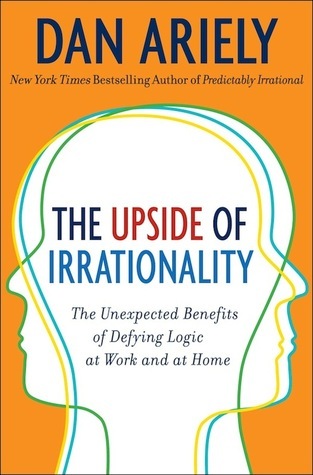
Dan Ariely's "The Upside of Irrationality" explores the often-surprising ways our seemingly illogical behaviors can actually lead to positive outcomes in our personal and professional lives. He delves into common biases and cognitive foibles, demonstrating through engaging experiments how these "irrationalities" aren't always detrimental, but can sometimes be leveraged for beneficial results, from improved motivation to better decision-making.
This book shares a deep kinship with "How We Decide" by Jonah Lehrer. Both authors meticulously dissect the intricate processes behind human judgment and choice, moving beyond simplistic rational models to reveal the complex interplay of emotion, intuition, and reason. They both empower readers with a deeper understanding of their own cognitive architecture, albeit with Ariely focusing more on the paradoxical benefits of our less-than-perfect minds.
This exploration will undoubtedly resonate with those seeking to understand the hidden forces shaping their choices. It offers practical insights for navigating the complexities of daily life, whether negotiating a raise, making personal commitments, or simply trying to live a more fulfilling existence. The book provides a compelling framework for re-evaluating our assumptions about rationality and embracing the unexpected advantages of our inherently human design.
The Upside of Irrationality: The Unexpected Benefits of Defying Logic at Work and at Home
Dan Ariely's "The Upside of Irrationality" explores the often-surprising ways our seemingly illogical behaviors can actually lead to positive outcomes in our personal and professional lives. He delves into common biases and cognitive foibles, demonstrating through engaging experiments how these "irrationalities" aren't always detrimental, but can sometimes be leveraged for beneficial results, from improved motivation to better decision-making.
This book shares a deep kinship with "How We Decide" by Jonah Lehrer. Both authors meticulously dissect the intricate processes behind human judgment and choice, moving beyond simplistic rational models to reveal the complex interplay of emotion, intuition, and reason. They both empower readers with a deeper understanding of their own cognitive architecture, albeit with Ariely focusing more on the paradoxical benefits of our less-than-perfect minds.
This exploration will undoubtedly resonate with those seeking to understand the hidden forces shaping their choices. It offers practical insights for navigating the complexities of daily life, whether negotiating a raise, making personal commitments, or simply trying to live a more fulfilling existence. The book provides a compelling framework for re-evaluating our assumptions about rationality and embracing the unexpected advantages of our inherently human design.
The Emotional Brain: The Mysterious Underpinnings of Emotional Life

Joseph LeDoux's "The Emotional Brain" delves into the intricate neural architecture of our emotional lives, specifically dissecting fear. It explores how ancient brain structures, particularly the amygdala, process and generate emotional responses, often before conscious thought. This foundational work illuminates the biological basis of emotion, moving beyond philosophical interpretations to reveal the physiological mechanisms that drive our feelings.
This book shares common ground with "How We Decide" by examining the underlying biological processes that influence human behavior and choice. While Lehrer focuses on the interplay of reason and emotion in decision-making, LeDoux provides the deeper neurological context, explaining *how* those emotional impulses arise. Both works emphasize that our seemingly rational minds are profoundly shaped by non-conscious brain activity.
Anyone fascinated by the science of the mind and the origins of human behavior will appreciate this exploration. It offers profound insights into why we feel what we feel, providing a robust framework for understanding not just our own emotional responses, but also the complexities of mental health and social interactions. Its scientific rigor and accessible explanations make it a cornerstone text for comprehending the brain's emotional landscape.
The Emotional Brain: The Mysterious Underpinnings of Emotional Life
Joseph LeDoux's "The Emotional Brain" delves into the intricate neural architecture of our emotional lives, specifically dissecting fear. It explores how ancient brain structures, particularly the amygdala, process and generate emotional responses, often before conscious thought. This foundational work illuminates the biological basis of emotion, moving beyond philosophical interpretations to reveal the physiological mechanisms that drive our feelings.
This book shares common ground with "How We Decide" by examining the underlying biological processes that influence human behavior and choice. While Lehrer focuses on the interplay of reason and emotion in decision-making, LeDoux provides the deeper neurological context, explaining *how* those emotional impulses arise. Both works emphasize that our seemingly rational minds are profoundly shaped by non-conscious brain activity.
Anyone fascinated by the science of the mind and the origins of human behavior will appreciate this exploration. It offers profound insights into why we feel what we feel, providing a robust framework for understanding not just our own emotional responses, but also the complexities of mental health and social interactions. Its scientific rigor and accessible explanations make it a cornerstone text for comprehending the brain's emotional landscape.
Imagine: How Creativity Works

"Imagine: How Creativity Works" delves into the intricate mechanisms of human creativity, examining how insights emerge, ideas are generated, and innovation takes root across various domains. Lehrer explores the neuroscience and psychology behind imaginative thought, illustrating his points with compelling stories of scientific discovery, artistic breakthroughs, and entrepreneurial successes. The book reveals that creativity isn't a mystical gift but a learnable process, dissecting the environmental, cognitive, and social factors that foster it.
This work resonates strongly with "How We Decide" due to its shared focus on the underlying mental processes that drive significant human outcomes. Both books employ a similar narrative structure, blending scientific research with real-world anecdotes to demystify complex cognitive functions. They both explore how the brain grapples with uncertainty and generates solutions, whether in decision-making or creative problem-solving, revealing the often-unconscious influences on our choices and insights.
Anyone interested in understanding how groundbreaking ideas come to fruition, or seeking to cultivate their own innovative potential, will find immense value in this book. It offers practical insights into optimizing conditions for creative thought, making it a powerful resource for professionals, educators, and individuals looking to enhance their ingenuity and better navigate challenges requiring original thinking.
Imagine: How Creativity Works
"Imagine: How Creativity Works" delves into the intricate mechanisms of human creativity, examining how insights emerge, ideas are generated, and innovation takes root across various domains. Lehrer explores the neuroscience and psychology behind imaginative thought, illustrating his points with compelling stories of scientific discovery, artistic breakthroughs, and entrepreneurial successes. The book reveals that creativity isn't a mystical gift but a learnable process, dissecting the environmental, cognitive, and social factors that foster it.
This work resonates strongly with "How We Decide" due to its shared focus on the underlying mental processes that drive significant human outcomes. Both books employ a similar narrative structure, blending scientific research with real-world anecdotes to demystify complex cognitive functions. They both explore how the brain grapples with uncertainty and generates solutions, whether in decision-making or creative problem-solving, revealing the often-unconscious influences on our choices and insights.
Anyone interested in understanding how groundbreaking ideas come to fruition, or seeking to cultivate their own innovative potential, will find immense value in this book. It offers practical insights into optimizing conditions for creative thought, making it a powerful resource for professionals, educators, and individuals looking to enhance their ingenuity and better navigate challenges requiring original thinking.
The Upside of Irrationality: The Unexpected Benefits of Defying Logic
Dan Ariely's "The Upside of Irrationality" explores the pervasive, often unconscious ways our decisions deviate from pure logic, and how these seemingly irrational behaviors can, surprisingly, lead to positive outcomes. Through engaging experiments and real-world examples, Ariely illuminates phenomena like the benefits of revenge, the joy of customizing mundane items, and the pitfalls and advantages of self-herding, revealing the intricate dance between reason and emotion that guides our choices, often for the better.
This book shares thematic ground with "How We Decide" by delving into the complex cognitive processes underpinning human decision-making. Both authors challenge the notion of humans as purely rational actors, instead highlighting the profound influence of biases, emotions, and subconscious drives. While Lehrer focuses more on the interplay of different brain systems in decision-making, Ariely specifically examines the *outcomes* of irrationality, exploring its unexpected utility.
This book offers a fascinating look into the human psyche, providing practical insights into why we act the way we do and how to leverage these insights for personal and professional growth. It encourages a more nuanced understanding of our own imperfections, suggesting that a rigid adherence to logic might sometimes be less effective than embracing our inherent, often beneficial, quirks. This perspective can empower individuals to make smarter choices by recognizing and working with, rather than against, their natural tendencies.
The Upside of Irrationality: The Unexpected Benefits of Defying Logic
Dan Ariely's "The Upside of Irrationality" explores the pervasive, often unconscious ways our decisions deviate from pure logic, and how these seemingly irrational behaviors can, surprisingly, lead to positive outcomes. Through engaging experiments and real-world examples, Ariely illuminates phenomena like the benefits of revenge, the joy of customizing mundane items, and the pitfalls and advantages of self-herding, revealing the intricate dance between reason and emotion that guides our choices, often for the better.
This book shares thematic ground with "How We Decide" by delving into the complex cognitive processes underpinning human decision-making. Both authors challenge the notion of humans as purely rational actors, instead highlighting the profound influence of biases, emotions, and subconscious drives. While Lehrer focuses more on the interplay of different brain systems in decision-making, Ariely specifically examines the *outcomes* of irrationality, exploring its unexpected utility.
This book offers a fascinating look into the human psyche, providing practical insights into why we act the way we do and how to leverage these insights for personal and professional growth. It encourages a more nuanced understanding of our own imperfections, suggesting that a rigid adherence to logic might sometimes be less effective than embracing our inherent, often beneficial, quirks. This perspective can empower individuals to make smarter choices by recognizing and working with, rather than against, their natural tendencies.
Never Go With Your Gut: How Pioneering Leaders Make the Best Decisions and Avoid Business Disasters
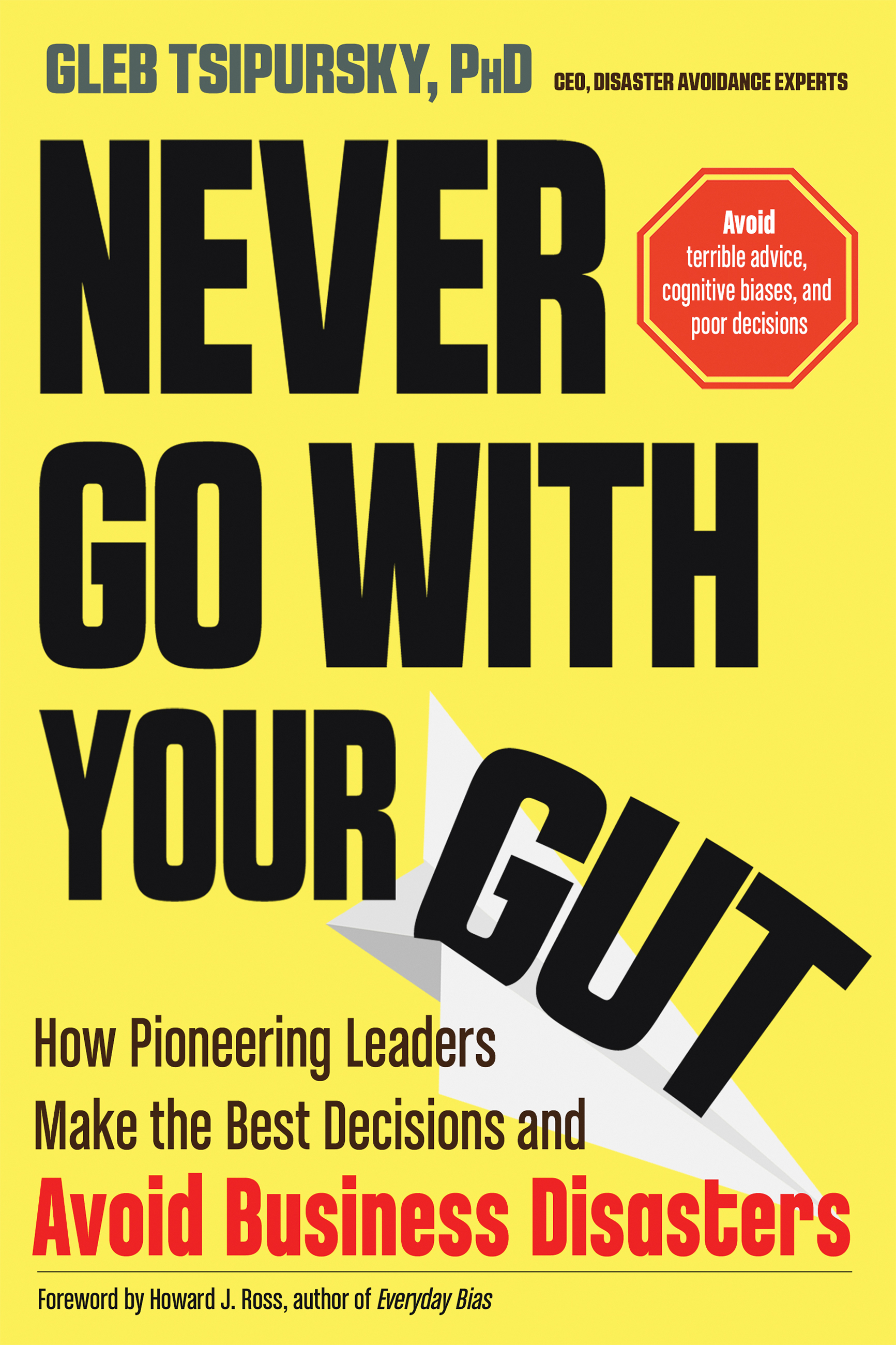
"Never Go With Your Gut" offers a systematic critique of relying on intuition in high-stakes environments, particularly business. Gleb Tsipursky advocates for "pro-truth" decision-making, a methodology rooted in cognitive science to counteract inherent biases and emotional pitfalls. The book provides actionable frameworks, such as anticipating future scenarios and utilizing probabilistic thinking, to ensure more rational, data-driven outcomes and preempt costly mistakes.
The book shares a core premise with "How We Decide" by exploring the intricate mechanisms of human decision-making. Both authors delve into the interplay of emotion and reason, dissecting how our mental shortcuts can lead us astray. While Lehrer illustrates this with varied examples, Tsipursky specifically hones in on practical, science-backed strategies to actively mitigate these cognitive vulnerabilities for superior results in professional contexts.
This book will appeal to individuals seeking to elevate their decision-making prowess beyond mere instinct. Professionals, managers, and anyone in a leadership position will find immense value in its detailed guidance on avoiding common cognitive traps. It provides a robust toolkit for navigating complex challenges with greater clarity and a higher probability of success, transforming how critical choices are approached and executed.
Never Go With Your Gut: How Pioneering Leaders Make the Best Decisions and Avoid Business Disasters
"Never Go With Your Gut" offers a systematic critique of relying on intuition in high-stakes environments, particularly business. Gleb Tsipursky advocates for "pro-truth" decision-making, a methodology rooted in cognitive science to counteract inherent biases and emotional pitfalls. The book provides actionable frameworks, such as anticipating future scenarios and utilizing probabilistic thinking, to ensure more rational, data-driven outcomes and preempt costly mistakes.
The book shares a core premise with "How We Decide" by exploring the intricate mechanisms of human decision-making. Both authors delve into the interplay of emotion and reason, dissecting how our mental shortcuts can lead us astray. While Lehrer illustrates this with varied examples, Tsipursky specifically hones in on practical, science-backed strategies to actively mitigate these cognitive vulnerabilities for superior results in professional contexts.
This book will appeal to individuals seeking to elevate their decision-making prowess beyond mere instinct. Professionals, managers, and anyone in a leadership position will find immense value in its detailed guidance on avoiding common cognitive traps. It provides a robust toolkit for navigating complex challenges with greater clarity and a higher probability of success, transforming how critical choices are approached and executed.
The Art of Thinking Clearly

"The Art of Thinking Clearly" by Rolf Dobelli dissects common cognitive biases and logical fallacies that routinely undermine our decision-making. Through concise chapters, it exposes errors in judgment we frequently make, from anchoring and confirmation bias to the sunk cost fallacy, offering practical insights into how these mental shortcuts distort our perception of reality and lead to subpar outcomes.
This book shares significant thematic overlap with Jonah Lehrer’s "How We Decide" by exploring the intricate mechanisms of human decision-making. Both authors delve into the interplay of emotion and reason, illustrating how our brains often stray from purely rational choices. While Lehrer emphasizes the neuroscience behind decision-making, Dobelli focuses on cataloging and explaining the predictable errors in thought, making them complementary perspectives on cognitive processes.
The book will appeal to those seeking to enhance their critical thinking skills and intellectual rigor. Its clear, accessible structure and real-world examples empower individuals to identify and mitigate their own cognitive blind spots, leading to more rational choices in both personal and professional contexts. The practical wisdom contained within offers a valuable toolset for anyone aiming to navigate complex information with greater discerning power.
The Art of Thinking Clearly
"The Art of Thinking Clearly" by Rolf Dobelli dissects common cognitive biases and logical fallacies that routinely undermine our decision-making. Through concise chapters, it exposes errors in judgment we frequently make, from anchoring and confirmation bias to the sunk cost fallacy, offering practical insights into how these mental shortcuts distort our perception of reality and lead to subpar outcomes.
This book shares significant thematic overlap with Jonah Lehrer’s "How We Decide" by exploring the intricate mechanisms of human decision-making. Both authors delve into the interplay of emotion and reason, illustrating how our brains often stray from purely rational choices. While Lehrer emphasizes the neuroscience behind decision-making, Dobelli focuses on cataloging and explaining the predictable errors in thought, making them complementary perspectives on cognitive processes.
The book will appeal to those seeking to enhance their critical thinking skills and intellectual rigor. Its clear, accessible structure and real-world examples empower individuals to identify and mitigate their own cognitive blind spots, leading to more rational choices in both personal and professional contexts. The practical wisdom contained within offers a valuable toolset for anyone aiming to navigate complex information with greater discerning power.
More Books to Explore
Discover more titles that expand on these ideas and themes.
Thinking, Fast and Slow
Blink: The Power of Thinking Without Thinking
Descartes' Error: Emotion, Reason and the Human Brain
Incognito: The Secret Lives of the Brain
The Upside of Irrationality: The Unexpected Benefits of Defying Logic at Work and at Home
The Emotional Brain: The Mysterious Underpinnings of Emotional Life