10 Books Similar to "Good to Great: Why Some Companies Make the Leap... and Others Don't"
by Jim Collins
Built to Last: Successful Habits of Visionary Companies

"Built to Last" delves into the enduring characteristics and practices of truly exceptional companies – those that have consistently outperformed their peers over decades. It isolates what sets visionary organizations apart, focusing on their core ideologies, big audacious goals, and the deliberate cultivation of internal talent and culture that allows them to thrive across multiple economic cycles.
This book shares a foundational DNA with "Good to Great" in its relentless pursuit of identifying the distinguishing factors behind long-term organizational success. Both works employ rigorous research methodologies, relying on extensive data analysis to unearth actionable principles rather than simple anecdotes. They seek to demystify how select companies achieve extraordinary, sustained performance.
Managers, entrepreneurs, and anyone interested in organizational longevity will find immense value in its insights. It offers a powerful framework for understanding how to build a resilient, purpose-driven enterprise, providing timeless wisdom applicable to creation, growth, and revitalization. The meticulous research and compelling case studies offer a profound education in sustainable excellence.
Built to Last: Successful Habits of Visionary Companies
"Built to Last" delves into the enduring characteristics and practices of truly exceptional companies – those that have consistently outperformed their peers over decades. It isolates what sets visionary organizations apart, focusing on their core ideologies, big audacious goals, and the deliberate cultivation of internal talent and culture that allows them to thrive across multiple economic cycles.
This book shares a foundational DNA with "Good to Great" in its relentless pursuit of identifying the distinguishing factors behind long-term organizational success. Both works employ rigorous research methodologies, relying on extensive data analysis to unearth actionable principles rather than simple anecdotes. They seek to demystify how select companies achieve extraordinary, sustained performance.
Managers, entrepreneurs, and anyone interested in organizational longevity will find immense value in its insights. It offers a powerful framework for understanding how to build a resilient, purpose-driven enterprise, providing timeless wisdom applicable to creation, growth, and revitalization. The meticulous research and compelling case studies offer a profound education in sustainable excellence.
Start with Why: How Great Leaders Inspire Everyone to Take Action
"Start with Why" posits that truly influential organizations and leaders prioritize communicating their core purpose before explaining what they do or how they do it. This "why," their belief or cause, forms the foundation of their culture and resonates deeply with customers and employees, inspiring loyalty and action far beyond transactional relationships.
This book shares a fundamental kinship with "Good to Great" by exploring the underlying principles that distinguish successful, enduring entities. Both works delve into the foundational elements – be it values, purpose, or disciplined leadership – that drive exceptional performance and sustained momentum, moving beyond superficial strategies to uncover deeper, internal drivers of success.
It will appeal to anyone seeking to understand the psychological underpinnings of influence and organizational success. It offers a compelling framework for re-evaluating leadership, branding, and career choices, providing actionable insights into building a more inspired and impactful professional life, whether leading a team or pursuing personal development.
Start with Why: How Great Leaders Inspire Everyone to Take Action
"Start with Why" posits that truly influential organizations and leaders prioritize communicating their core purpose before explaining what they do or how they do it. This "why," their belief or cause, forms the foundation of their culture and resonates deeply with customers and employees, inspiring loyalty and action far beyond transactional relationships.
This book shares a fundamental kinship with "Good to Great" by exploring the underlying principles that distinguish successful, enduring entities. Both works delve into the foundational elements – be it values, purpose, or disciplined leadership – that drive exceptional performance and sustained momentum, moving beyond superficial strategies to uncover deeper, internal drivers of success.
It will appeal to anyone seeking to understand the psychological underpinnings of influence and organizational success. It offers a compelling framework for re-evaluating leadership, branding, and career choices, providing actionable insights into building a more inspired and impactful professional life, whether leading a team or pursuing personal development.
What Got You Here Won't Get You There
"What Got You Here Won't Get You There" by Marshall Goldsmith tackles the often-unexamined behavioral blind spots that derail successful individuals at the peak of their careers. It posits that the very habits and traits that propel someone to a certain level of achievement can become obstacles to further growth and leadership effectiveness. Goldsmith offers practical, actionable advice for identifying and overcoming these self-limiting behaviors, focusing on interpersonal dynamics and communication.
This book shares a foundational premise with "Good to Great" – the idea that sustained excellence requires a conscious evolution beyond current successful practices. While "Good to Great" focuses on organizational transformation, Goldsmith zeroes in on individual leadership, emphasizing that what works for one stage of development may be insufficient, or even detrimental, for the next. Both texts explore the critical distinction between merely being good and achieving true greatness, whether as a company or as a leader.
The appeal of Goldsmith's work lies in its direct, no-nonsense approach to identifying and correcting ingrained behaviors that many highly competent professionals unconsciously exhibit. It offers a mirror for introspection and a roadmap for personal leadership development, particularly for those in managerial or executive roles. It provides practical strategies for enhancing one's impact, fostering better relationships, and ultimately, ascending to higher levels of influence and effectiveness.
What Got You Here Won't Get You There
"What Got You Here Won't Get You There" by Marshall Goldsmith tackles the often-unexamined behavioral blind spots that derail successful individuals at the peak of their careers. It posits that the very habits and traits that propel someone to a certain level of achievement can become obstacles to further growth and leadership effectiveness. Goldsmith offers practical, actionable advice for identifying and overcoming these self-limiting behaviors, focusing on interpersonal dynamics and communication.
This book shares a foundational premise with "Good to Great" – the idea that sustained excellence requires a conscious evolution beyond current successful practices. While "Good to Great" focuses on organizational transformation, Goldsmith zeroes in on individual leadership, emphasizing that what works for one stage of development may be insufficient, or even detrimental, for the next. Both texts explore the critical distinction between merely being good and achieving true greatness, whether as a company or as a leader.
The appeal of Goldsmith's work lies in its direct, no-nonsense approach to identifying and correcting ingrained behaviors that many highly competent professionals unconsciously exhibit. It offers a mirror for introspection and a roadmap for personal leadership development, particularly for those in managerial or executive roles. It provides practical strategies for enhancing one's impact, fostering better relationships, and ultimately, ascending to higher levels of influence and effectiveness.
The 8th Habit: From Effectiveness to Greatness

Stephen Covey's "The 8th Habit" argues that true greatness for individuals and organizations stems from finding one's unique voice and inspiring others to find theirs. It posits that while "effectiveness" (mastering the first seven habits) is crucial, it's achieving this "voice" – a blend of talent, passion, need, and conscience – that propels one beyond competence to meaningful contribution and lasting impact in a rapidly changing world.
This book resonates with "Good to Great" by exploring the fundamental drivers of exceptional performance beyond mere success. Both works delve into the qualities, mindsets, and organizational cultures distinguishing those who achieve sustained excellence from those who remain merely good. They share a focus on disciplined action, visionary leadership, and the critical role of human capital in achieving transformative results.
The book will appeal to those seeking a deeper dive into personal and organizational leadership, aiming to unlock their full potential and foster greatness in others. Its structured approach offers practical frameworks for self-discovery and inspiring collective effort, providing a roadmap for individuals and teams striving for impactful, purpose-driven achievement in their professional and personal lives.
The 8th Habit: From Effectiveness to Greatness
Stephen Covey's "The 8th Habit" argues that true greatness for individuals and organizations stems from finding one's unique voice and inspiring others to find theirs. It posits that while "effectiveness" (mastering the first seven habits) is crucial, it's achieving this "voice" – a blend of talent, passion, need, and conscience – that propels one beyond competence to meaningful contribution and lasting impact in a rapidly changing world.
This book resonates with "Good to Great" by exploring the fundamental drivers of exceptional performance beyond mere success. Both works delve into the qualities, mindsets, and organizational cultures distinguishing those who achieve sustained excellence from those who remain merely good. They share a focus on disciplined action, visionary leadership, and the critical role of human capital in achieving transformative results.
The book will appeal to those seeking a deeper dive into personal and organizational leadership, aiming to unlock their full potential and foster greatness in others. Its structured approach offers practical frameworks for self-discovery and inspiring collective effort, providing a roadmap for individuals and teams striving for impactful, purpose-driven achievement in their professional and personal lives.
The Innovator's Dilemma: The Revolutionary Book that Will Change the Way You Do Business

"The Innovator's Dilemma" explores a profound paradox: why well-managed, successful companies often fail when confronted with disruptive innovations. Clayton Christensen argues that these companies, by diligently listening to their best customers and focusing on continuous improvement, inadvertently set themselves up for failure. They prioritize profitable, high-end market segments, ceding the seemingly unprofitable, low-end ground to nascent disruptors whose simpler, cheaper offerings eventually evolve to challenge established players. This framework explains how seemingly sound business practices can paradoxically lead to market displacement.
Both books delve into the dynamics of sustained corporate success and failure. While "Good to Great" identifies traits of companies that achieved extraordinary, lasting performance, "The Innovator's Dilemma" offers a complementary perspective by illuminating a critical threat even to exemplary companies. Both emphasize long-term strategic thinking and the often counter-intuitive decisions required to navigate competitive landscapes and avoid decline.
This book offers invaluable insights for anyone in a leadership position, or aspiring to one. It provides a robust framework for anticipating market shifts and understanding why even the most successful organizations can be blindsided. The ability to recognize and strategically respond to disruptive innovation is a critical differentiator, making this a highly practical guide for navigating today's rapidly changing business environment.
The Innovator's Dilemma: The Revolutionary Book that Will Change the Way You Do Business
"The Innovator's Dilemma" explores a profound paradox: why well-managed, successful companies often fail when confronted with disruptive innovations. Clayton Christensen argues that these companies, by diligently listening to their best customers and focusing on continuous improvement, inadvertently set themselves up for failure. They prioritize profitable, high-end market segments, ceding the seemingly unprofitable, low-end ground to nascent disruptors whose simpler, cheaper offerings eventually evolve to challenge established players. This framework explains how seemingly sound business practices can paradoxically lead to market displacement.
Both books delve into the dynamics of sustained corporate success and failure. While "Good to Great" identifies traits of companies that achieved extraordinary, lasting performance, "The Innovator's Dilemma" offers a complementary perspective by illuminating a critical threat even to exemplary companies. Both emphasize long-term strategic thinking and the often counter-intuitive decisions required to navigate competitive landscapes and avoid decline.
This book offers invaluable insights for anyone in a leadership position, or aspiring to one. It provides a robust framework for anticipating market shifts and understanding why even the most successful organizations can be blindsided. The ability to recognize and strategically respond to disruptive innovation is a critical differentiator, making this a highly practical guide for navigating today's rapidly changing business environment.
Playing to Win: How Strategy Really Works

"Playing to Win" distills strategy into a practical, five-step framework: what is your winning aspiration, where will you play, how will you win, what capabilities must be in place, and what management systems are needed. It moves beyond abstract strategic concepts, showing how these elements interact to create robust, actionable plans, drawing heavily on examples from Procter & Gamble's successful reinvention.
The similarity to "Good to Great" lies in their shared pursuit of understanding sustained organizational success. Both books actively dissect what enables companies to transcend mediocrity and achieve exceptional, lasting performance. Collins identifies characteristics of "great" companies and their leadership, while Lafley and Martin provide a prescriptive, actionable methodology for *how* to build a winning strategy that leads to such greatness.
This book will appeal to anyone seeking to build a stronger, more competitive organization, whether a business executive, entrepreneur, or aspiring leader. It offers a structured approach to thinking strategically, moving beyond conventional wisdom to provide a clear roadmap for intentional competitive advantage and sustainable growth. The practical application of strategy ensures its immediate utility.
Playing to Win: How Strategy Really Works
"Playing to Win" distills strategy into a practical, five-step framework: what is your winning aspiration, where will you play, how will you win, what capabilities must be in place, and what management systems are needed. It moves beyond abstract strategic concepts, showing how these elements interact to create robust, actionable plans, drawing heavily on examples from Procter & Gamble's successful reinvention.
The similarity to "Good to Great" lies in their shared pursuit of understanding sustained organizational success. Both books actively dissect what enables companies to transcend mediocrity and achieve exceptional, lasting performance. Collins identifies characteristics of "great" companies and their leadership, while Lafley and Martin provide a prescriptive, actionable methodology for *how* to build a winning strategy that leads to such greatness.
This book will appeal to anyone seeking to build a stronger, more competitive organization, whether a business executive, entrepreneur, or aspiring leader. It offers a structured approach to thinking strategically, moving beyond conventional wisdom to provide a clear roadmap for intentional competitive advantage and sustainable growth. The practical application of strategy ensures its immediate utility.
The Advantage: Why Organizational Health Trumps Everything Else In Business
"The Advantage" argues that organizational health—things like minimal politics, minimal confusion, high morale, and high productivity—is the most potent competitive advantage a company can possess. Lencioni posits that healthy organizations clarify their core values, purpose, and strategies, ensuring every employee is unified and working towards shared goals. It’s about building a cohesive, productive team that executes effectively because everyone is on the same page.
Both books delve into the fundamental characteristics that differentiate successful organizations from their struggling counterparts. While "Good to Great" emphasizes disciplined people, thought, and action leading to sustained performance, "The Advantage" complements this by focusing on the underlying cultural and operational health necessary for such discipline to thrive and be consistently applied. They both champion the idea that true organizational excellence stems from internal principles, not just external market conditions.
This book offers practical, actionable frameworks for leaders seeking to move beyond superficial fixes and build truly robust, thriving organizations. It demystifies the often-intangible aspects of company culture, providing a clear roadmap for fostering alignment and engagement. Its value lies in equipping leaders with the tools to create environments where strategy can be effectively implemented and sustained success becomes an organic outcome.
The Advantage: Why Organizational Health Trumps Everything Else In Business
"The Advantage" argues that organizational health—things like minimal politics, minimal confusion, high morale, and high productivity—is the most potent competitive advantage a company can possess. Lencioni posits that healthy organizations clarify their core values, purpose, and strategies, ensuring every employee is unified and working towards shared goals. It’s about building a cohesive, productive team that executes effectively because everyone is on the same page.
Both books delve into the fundamental characteristics that differentiate successful organizations from their struggling counterparts. While "Good to Great" emphasizes disciplined people, thought, and action leading to sustained performance, "The Advantage" complements this by focusing on the underlying cultural and operational health necessary for such discipline to thrive and be consistently applied. They both champion the idea that true organizational excellence stems from internal principles, not just external market conditions.
This book offers practical, actionable frameworks for leaders seeking to move beyond superficial fixes and build truly robust, thriving organizations. It demystifies the often-intangible aspects of company culture, providing a clear roadmap for fostering alignment and engagement. Its value lies in equipping leaders with the tools to create environments where strategy can be effectively implemented and sustained success becomes an organic outcome.
No Man's Land: What to Do When Your Company Is Too Big to Be Small but TooSmall to Be Big
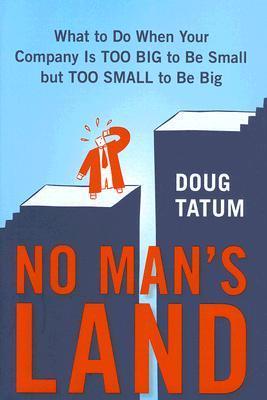
*No Man's Land* directly addresses the unique challenges faced by companies stuck in the awkward growth phase between startup agility and large-scale corporate infrastructure. It unpacks the distinct operational, financial, and leadership hurdles that emerge when a business outgrows its initial entrepreneurial structure but hasn't yet established the systems and resources of a truly mature enterprise.
This book shares *Good to Great*'s analytical rigor in examining what differentiates companies that successfully navigate critical transitions from those that falter. Both works dissect the internal mechanics and strategic choices that determine long-term organizational health and sustainable growth, offering frameworks to understand and overcome significant business inflection points.
The book will appeal to entrepreneurs, executives, and leaders grappling with scaling up, providing actionable insights and strategies for managing the complex demands of this specific growth stage. Its practical advice offers a roadmap for avoiding common pitfalls and building a robust foundation for future success.
No Man's Land: What to Do When Your Company Is Too Big to Be Small but TooSmall to Be Big
*No Man's Land* directly addresses the unique challenges faced by companies stuck in the awkward growth phase between startup agility and large-scale corporate infrastructure. It unpacks the distinct operational, financial, and leadership hurdles that emerge when a business outgrows its initial entrepreneurial structure but hasn't yet established the systems and resources of a truly mature enterprise.
This book shares *Good to Great*'s analytical rigor in examining what differentiates companies that successfully navigate critical transitions from those that falter. Both works dissect the internal mechanics and strategic choices that determine long-term organizational health and sustainable growth, offering frameworks to understand and overcome significant business inflection points.
The book will appeal to entrepreneurs, executives, and leaders grappling with scaling up, providing actionable insights and strategies for managing the complex demands of this specific growth stage. Its practical advice offers a roadmap for avoiding common pitfalls and building a robust foundation for future success.
Jack: Straight from the Gut
"Jack: Straight from the Gut" offers a candid, first-person account of Jack Welch's transformative 20-year tenure as CEO of General Electric. It delves into his philosophy of leadership, his aggressive strategies for growth and talent management, and the crucial decisions that reshaped GE into a global powerhouse.
This memoir resonates with "Good to Great" because both books dissect the drivers of exceptional organizational success. While Collins's work is research-driven, Welch's narrative provides a living case study of many "Good to Great" principles in action, such as Level 5 leadership, confronting brutal facts, and fostering a culture of disciplined thought and action. It's the practical, real-world application to Collins's theoretical framework.
The book delivers invaluable insights for anyone interested in business leadership, corporate strategy, and the mechanics of large-scale organizational change. It offers a masterclass in aggressive yet effective management, providing a direct window into the mindset and decisions of one of the 20th century's most influential CEOs. It's a pragmatic guide to achieving and sustaining peak performance.
Jack: Straight from the Gut
"Jack: Straight from the Gut" offers a candid, first-person account of Jack Welch's transformative 20-year tenure as CEO of General Electric. It delves into his philosophy of leadership, his aggressive strategies for growth and talent management, and the crucial decisions that reshaped GE into a global powerhouse.
This memoir resonates with "Good to Great" because both books dissect the drivers of exceptional organizational success. While Collins's work is research-driven, Welch's narrative provides a living case study of many "Good to Great" principles in action, such as Level 5 leadership, confronting brutal facts, and fostering a culture of disciplined thought and action. It's the practical, real-world application to Collins's theoretical framework.
The book delivers invaluable insights for anyone interested in business leadership, corporate strategy, and the mechanics of large-scale organizational change. It offers a masterclass in aggressive yet effective management, providing a direct window into the mindset and decisions of one of the 20th century's most influential CEOs. It's a pragmatic guide to achieving and sustaining peak performance.
Winning
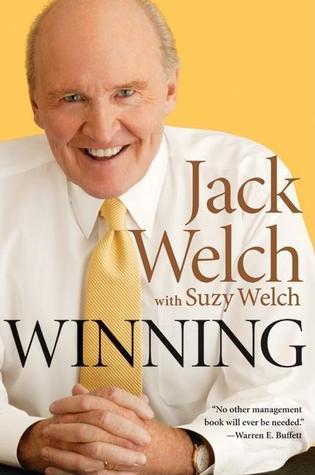
"Winning" by Jack Welch distills his extensive experience leading General Electric into practical guidance for achieving success in business. Welch offers candid insights on leadership, building winning teams, fostering innovation, and navigating organizational change. It’s a direct, no-nonsense manual filled with actionable strategies for individuals and companies striving for peak performance.
Both "Winning" and "Good to Great" explore the fundamental drivers of sustained organizational excellence. While Collins focuses on empirical research and specific company case studies to identify the characteristics of companies that transition to greatness, Welch provides a highly personal, experience-driven blueprint for instilling winning habits and a high-performance culture. Both emphasize leadership, people, and disciplined execution as critical components of success.
This book will appeal to those seeking practical, battle-tested strategies for leadership and organizational achievement. Its direct advice, drawn from one of the most successful CEOs of his generation, offers valuable wisdom on cultivating a winning mindset, developing talent, and achieving ambitious goals within any industry.
Winning
"Winning" by Jack Welch distills his extensive experience leading General Electric into practical guidance for achieving success in business. Welch offers candid insights on leadership, building winning teams, fostering innovation, and navigating organizational change. It’s a direct, no-nonsense manual filled with actionable strategies for individuals and companies striving for peak performance.
Both "Winning" and "Good to Great" explore the fundamental drivers of sustained organizational excellence. While Collins focuses on empirical research and specific company case studies to identify the characteristics of companies that transition to greatness, Welch provides a highly personal, experience-driven blueprint for instilling winning habits and a high-performance culture. Both emphasize leadership, people, and disciplined execution as critical components of success.
This book will appeal to those seeking practical, battle-tested strategies for leadership and organizational achievement. Its direct advice, drawn from one of the most successful CEOs of his generation, offers valuable wisdom on cultivating a winning mindset, developing talent, and achieving ambitious goals within any industry.
More Books to Explore
Discover more titles that expand on these ideas and themes.
Built to Last: Successful Habits of Visionary Companies
Start with Why: How Great Leaders Inspire Everyone to Take Action
What Got You Here Won't Get You There
The 8th Habit: From Effectiveness to Greatness
The Innovator's Dilemma: The Revolutionary Book that Will Change the Way You Do Business
Playing to Win: How Strategy Really Works