10 Books Similar to "Gone to Soldiers"
by Marge Piercy

Braided Lives

"Braided Lives" charts the coming-of-age of Jill, a bright and ambitious young woman navigating the complexities of college life in the 1950s. It delves into her intellectual awakenings, passionate relationships, and the difficult choices she faces concerning her body, her career aspirations, and societal expectations for women during a transformative era. The novel explores themes of independence, artistic ambition, and the struggle for personal autonomy against a backdrop of burgeoning feminist thought.
This novel shares a deep thematic resonance with "Gone to Soldiers" through its exploration of women's experiences during periods of significant societal upheaval. Both books foreground strong, intelligent female protagonists grappling with personal and political dilemmas, challenging conventional roles, and striving for self-determination. They illuminate the intricate interplay between individual lives and historical currents, portraying both the triumphs and sacrifices inherent in forging a meaningful existence amidst broader social change.
The value in "Braided Lives" lies in its compelling portrayal of self-discovery and resilience, particularly for those interested in historical fiction with a strong feminist lens. It offers a rich, nuanced perspective on an era of profound change, showcasing the human cost and courage involved in carving out agency. Its exploration of intellectual and sexual awakening provides enduring insights into the universal pursuit of identity and belonging, making it a powerful and thought-provoking read.
Braided Lives
"Braided Lives" charts the coming-of-age of Jill, a bright and ambitious young woman navigating the complexities of college life in the 1950s. It delves into her intellectual awakenings, passionate relationships, and the difficult choices she faces concerning her body, her career aspirations, and societal expectations for women during a transformative era. The novel explores themes of independence, artistic ambition, and the struggle for personal autonomy against a backdrop of burgeoning feminist thought.
This novel shares a deep thematic resonance with "Gone to Soldiers" through its exploration of women's experiences during periods of significant societal upheaval. Both books foreground strong, intelligent female protagonists grappling with personal and political dilemmas, challenging conventional roles, and striving for self-determination. They illuminate the intricate interplay between individual lives and historical currents, portraying both the triumphs and sacrifices inherent in forging a meaningful existence amidst broader social change.
The value in "Braided Lives" lies in its compelling portrayal of self-discovery and resilience, particularly for those interested in historical fiction with a strong feminist lens. It offers a rich, nuanced perspective on an era of profound change, showcasing the human cost and courage involved in carving out agency. Its exploration of intellectual and sexual awakening provides enduring insights into the universal pursuit of identity and belonging, making it a powerful and thought-provoking read.
City of Darkness, City of Light

"City of Darkness, City of Light" plunges into the tumultuous heart of the French Revolution, weaving a narrative through the eyes of several key historical figures and fictional characters. It explores the lives of Robespierre, Danton, Condorcet, and others, offering a multi-faceted portrait of the era's ideals, passions, and brutal realities. Piercy meticulously reconstructs the social and political landscape, illuminating the profound impact of revolutionary fervor on individual lives and the shaping of a nation.
The similarity to "Gone to Soldiers" lies in Piercy’s masterful ability to intertwine grand historical events with intimate personal dramas. Both novels feature large ensembles of characters whose individual journeys are deeply affected by cataclysmic historical periods—World War II in "Gone to Soldiers" and the French Revolution here. Piercy consistently examines how extraordinary circumstances force ordinary and extraordinary people to confront moral compromises, make difficult choices, and grapple with identity amidst societal upheaval.
This book will appeal for its immersive historical detail and its profound psychological insights into characters caught in the maelstrom of revolution. It offers a valuable opportunity to understand the human cost of political ideals and the complex interplay of power, philosophy, and personal ambition during a pivotal moment in history, making it a compelling exploration of human nature under extreme duress.
City of Darkness, City of Light
"City of Darkness, City of Light" plunges into the tumultuous heart of the French Revolution, weaving a narrative through the eyes of several key historical figures and fictional characters. It explores the lives of Robespierre, Danton, Condorcet, and others, offering a multi-faceted portrait of the era's ideals, passions, and brutal realities. Piercy meticulously reconstructs the social and political landscape, illuminating the profound impact of revolutionary fervor on individual lives and the shaping of a nation.
The similarity to "Gone to Soldiers" lies in Piercy’s masterful ability to intertwine grand historical events with intimate personal dramas. Both novels feature large ensembles of characters whose individual journeys are deeply affected by cataclysmic historical periods—World War II in "Gone to Soldiers" and the French Revolution here. Piercy consistently examines how extraordinary circumstances force ordinary and extraordinary people to confront moral compromises, make difficult choices, and grapple with identity amidst societal upheaval.
This book will appeal for its immersive historical detail and its profound psychological insights into characters caught in the maelstrom of revolution. It offers a valuable opportunity to understand the human cost of political ideals and the complex interplay of power, philosophy, and personal ambition during a pivotal moment in history, making it a compelling exploration of human nature under extreme duress.
War and Remembrance
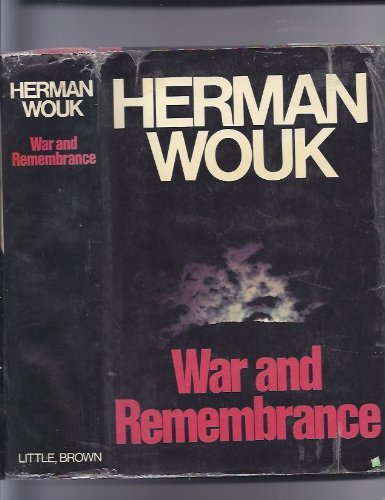
"War and Remembrance" is a monumental historical fiction epic that follows the Henry family, especially Commander Victor "Pug" Henry, as they navigate the personal and strategic complexities of World War II. It offers a sweeping panorama of the global conflict, detailing naval battles, the Holocaust, and the high-stakes political machinations from the perspectives of both fictional characters and historical figures like Hitler and Roosevelt.
This novel shares a striking similarity with "Gone to Soldiers" in its ambitious scope and its commitment to depicting the human cost of war across diverse experiences. Both books meticulously reconstruct a pivotal historical period through the eyes of multiple characters, providing a mosaic of individual stories that converge to illustrate the broader impact of conflict on society, families, and personal values. Each book offers a multi-faceted view, moving beyond simple battle narratives to explore the civilian experience, political intrigue, and ethical dilemmas.
The novel's depth and breadth offer a compelling and enriching experience. Its meticulous historical detail combined with richly drawn characters provides profound insight into human resilience, suffering, and the moral ambiguities inherent in global conflict. It illuminates the vast destruction of war and the enduring spirit that seeks to rebuild, offering vital lessons about history, heroism, and the enduring quest for peace.
War and Remembrance
"War and Remembrance" is a monumental historical fiction epic that follows the Henry family, especially Commander Victor "Pug" Henry, as they navigate the personal and strategic complexities of World War II. It offers a sweeping panorama of the global conflict, detailing naval battles, the Holocaust, and the high-stakes political machinations from the perspectives of both fictional characters and historical figures like Hitler and Roosevelt.
This novel shares a striking similarity with "Gone to Soldiers" in its ambitious scope and its commitment to depicting the human cost of war across diverse experiences. Both books meticulously reconstruct a pivotal historical period through the eyes of multiple characters, providing a mosaic of individual stories that converge to illustrate the broader impact of conflict on society, families, and personal values. Each book offers a multi-faceted view, moving beyond simple battle narratives to explore the civilian experience, political intrigue, and ethical dilemmas.
The novel's depth and breadth offer a compelling and enriching experience. Its meticulous historical detail combined with richly drawn characters provides profound insight into human resilience, suffering, and the moral ambiguities inherent in global conflict. It illuminates the vast destruction of war and the enduring spirit that seeks to rebuild, offering vital lessons about history, heroism, and the enduring quest for peace.
Sex Wars: A Novel of Gilded Age New York

"Sex Wars" plunges into Gilded Age New York, following the intertwined lives of several compelling women navigating a society grappling with nascent feminism, social reform, and scientific advancement. It centers on the radical Victoria Woodhull, a Spiritualist, free-love advocate, and the first woman to run for U.S. President, alongside a diverse cast of fictional characters struggling against patriarchal constraints to forge independent paths and challenge societal norms in an era of immense change and hypocrisy.
The similarity to "Gone to Soldiers" lies in Piercy's masterful ability to weave a rich tapestry of historical fiction through multiple, diverse female perspectives facing systemic oppression and personal struggles within a pivotal historical period. Both novels meticulously explore the intersection of personal agency, political movements, and societal expectations, portraying women striving for autonomy and making difficult choices under extraordinary circumstances. The scale of character development and the detailed historical backdrops are hallmarks of both works.
This novel will resonate with those who appreciate immersive historical narratives driven by strong, complex female characters. It offers a valuable exploration of early feminist movements, the fight for women's suffrage, and the enduring battles against social conservatism, all within a meticulously researched and engaging setting. It’s a compelling look at how individual courage and collective action can challenge entrenched power structures, providing timely insight into historical precursors of contemporary social discourse.
Sex Wars: A Novel of Gilded Age New York
"Sex Wars" plunges into Gilded Age New York, following the intertwined lives of several compelling women navigating a society grappling with nascent feminism, social reform, and scientific advancement. It centers on the radical Victoria Woodhull, a Spiritualist, free-love advocate, and the first woman to run for U.S. President, alongside a diverse cast of fictional characters struggling against patriarchal constraints to forge independent paths and challenge societal norms in an era of immense change and hypocrisy.
The similarity to "Gone to Soldiers" lies in Piercy's masterful ability to weave a rich tapestry of historical fiction through multiple, diverse female perspectives facing systemic oppression and personal struggles within a pivotal historical period. Both novels meticulously explore the intersection of personal agency, political movements, and societal expectations, portraying women striving for autonomy and making difficult choices under extraordinary circumstances. The scale of character development and the detailed historical backdrops are hallmarks of both works.
This novel will resonate with those who appreciate immersive historical narratives driven by strong, complex female characters. It offers a valuable exploration of early feminist movements, the fight for women's suffrage, and the enduring battles against social conservatism, all within a meticulously researched and engaging setting. It’s a compelling look at how individual courage and collective action can challenge entrenched power structures, providing timely insight into historical precursors of contemporary social discourse.
The Soldier's Wife

"The Soldier's Wife" by Margaret Leroy immerses readers in Nazi-occupied Guernsey, where a doctor's wife, a young mother, is forced into an intimate and illicit relationship with a German officer to protect her family. It's a gripping tale of survival, moral compromise, and the profound personal cost of war, exploring the psychological toll of impossible choices under extreme duress.
This novel shares a thematic core with Marge Piercy's "Gone to Soldiers." Both books explore the impact of war on women, not as frontline combatants, but as civilians navigating impossible circumstances. They meticulously portray the difficult choices made for survival, the complexities of love and betrayal within a wartime context, and the enduring strength of the human spirit in the face of widespread upheaval and personal danger.
The book offers a compelling narrative for those interested in historical fiction, particularly stories set during World War II, and explores the nuanced ethical dilemmas faced by ordinary people in extraordinary times. Its exploration of female resilience, the grey areas of morality, and the individual impact of historical events provides a thought-provoking and emotionally resonant experience.
The Soldier's Wife
"The Soldier's Wife" by Margaret Leroy immerses readers in Nazi-occupied Guernsey, where a doctor's wife, a young mother, is forced into an intimate and illicit relationship with a German officer to protect her family. It's a gripping tale of survival, moral compromise, and the profound personal cost of war, exploring the psychological toll of impossible choices under extreme duress.
This novel shares a thematic core with Marge Piercy's "Gone to Soldiers." Both books explore the impact of war on women, not as frontline combatants, but as civilians navigating impossible circumstances. They meticulously portray the difficult choices made for survival, the complexities of love and betrayal within a wartime context, and the enduring strength of the human spirit in the face of widespread upheaval and personal danger.
The book offers a compelling narrative for those interested in historical fiction, particularly stories set during World War II, and explores the nuanced ethical dilemmas faced by ordinary people in extraordinary times. Its exploration of female resilience, the grey areas of morality, and the individual impact of historical events provides a thought-provoking and emotionally resonant experience.
Every Time We Say Goodbye
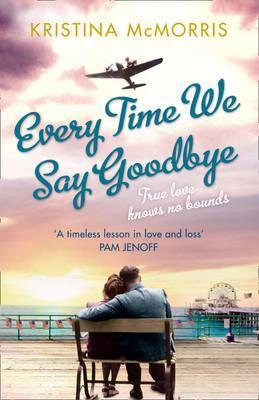
"Every Time We Say Goodbye" is a historical fiction novel set during World War II, following a young American woman, Penny, who enlists as a Women Airforce Service Pilot (WASP). It details her hazardous experiences flying military aircraft, delivering them to distant bases, and the challenges she faces both in the air and on the ground, including her burgeoning romance with an English RAF pilot.
This novel shares similarities with "Gone to Soldiers" in its immersive, character-driven exploration of women's vital, often overlooked, contributions during wartime. Both books realistically portray the personal sacrifices, the emotional impact of separation and loss, and the societal pressures endured by women stepping into traditionally male roles amidst global conflict. They offer multifaceted perspectives on the war, extending beyond the battlefield to illuminate the domestic front and the evolving roles of women.
The compelling narrative and well-researched historical context ensure this book offers a profound experience. It provides insight into a significant, yet less-explored, aspect of World War II, celebrating the courage and resilience of women who served. The human stories of love, loss, and determination resonate deeply, delivering an emotionally rich and educational read.
Every Time We Say Goodbye
"Every Time We Say Goodbye" is a historical fiction novel set during World War II, following a young American woman, Penny, who enlists as a Women Airforce Service Pilot (WASP). It details her hazardous experiences flying military aircraft, delivering them to distant bases, and the challenges she faces both in the air and on the ground, including her burgeoning romance with an English RAF pilot.
This novel shares similarities with "Gone to Soldiers" in its immersive, character-driven exploration of women's vital, often overlooked, contributions during wartime. Both books realistically portray the personal sacrifices, the emotional impact of separation and loss, and the societal pressures endured by women stepping into traditionally male roles amidst global conflict. They offer multifaceted perspectives on the war, extending beyond the battlefield to illuminate the domestic front and the evolving roles of women.
The compelling narrative and well-researched historical context ensure this book offers a profound experience. It provides insight into a significant, yet less-explored, aspect of World War II, celebrating the courage and resilience of women who served. The human stories of love, loss, and determination resonate deeply, delivering an emotionally rich and educational read.
Those Who Save Us

"Those Who Save Us" follows Anna, a German woman who navigates life under Nazi rule, including a forced relationship with an SS officer, and the difficult choices she makes to protect her child. Decades later, her daughter grapples with their hidden wartime past, seeking to understand her mother's silence and the true cost of survival.
This novel shares a profound thematic kinship with "Gone to Soldiers" through its exploration of how wartime profoundly shapes individuals and families, particularly women, across generations. Both books delve into the moral complexities, personal sacrifices, and lasting emotional scars inflicted by conflict, focusing on the intimate human experiences amidst grand historical events. Trauma, resilience, and the enduring impact of choices made under extreme duress are central to both narratives.
Readers will appreciate the nuanced portrayal of immense personal sacrifice and the enduring human spirit in "Those Who Save Us." Its exploration of intergenerational trauma and the search for truth makes it a compelling read, offering valuable insight into the profound and lasting impact of historical events on individual lives and familial bonds. The novel prompts significant reflection on moral ambiguity and the nature of survival.
Those Who Save Us
"Those Who Save Us" follows Anna, a German woman who navigates life under Nazi rule, including a forced relationship with an SS officer, and the difficult choices she makes to protect her child. Decades later, her daughter grapples with their hidden wartime past, seeking to understand her mother's silence and the true cost of survival.
This novel shares a profound thematic kinship with "Gone to Soldiers" through its exploration of how wartime profoundly shapes individuals and families, particularly women, across generations. Both books delve into the moral complexities, personal sacrifices, and lasting emotional scars inflicted by conflict, focusing on the intimate human experiences amidst grand historical events. Trauma, resilience, and the enduring impact of choices made under extreme duress are central to both narratives.
Readers will appreciate the nuanced portrayal of immense personal sacrifice and the enduring human spirit in "Those Who Save Us." Its exploration of intergenerational trauma and the search for truth makes it a compelling read, offering valuable insight into the profound and lasting impact of historical events on individual lives and familial bonds. The novel prompts significant reflection on moral ambiguity and the nature of survival.
At the Going Down of the Sun

Elizabeth Darrell’s "At the Going Down of the Sun" vividly portrays the devastating impact of World War I on an English aristocratic family. Spanning the conflict’s duration and its immediate aftermath, the novel follows their personal sacrifices, the erosion of their societal roles, and their struggles with loss and identity as the old world crumbles around them. It's a poignant exploration of intergenerational conflict, forbidden love, and the profound changes wrought by war on individuals and a nation.
This novel shares a deep thematic resonance with Marge Piercy's "Gone to Soldiers." Both books excel at depicting the sprawling, multifaceted experience of war, not just through battlefield accounts but through the intimate, often agonizing, perspectives of those left behind or engaged in non-combatant roles. They both explore how grand historical events fundamentally reshape personal lives, relationships, and societal norms, centering on diverse characters whose paths converge and diverge against a backdrop of global conflict.
The book offers a compelling narrative for those who appreciate historical epics grounded in human emotion. It provides a nuanced look at a pivotal historical period, offering insights into grief, resilience, and the enduring human spirit amidst unimaginable hardship. Its rich character development and evocative prose promise an immersive and thought-provoking reading experience that deepens understanding of historical consequence and personal endurance.
At the Going Down of the Sun
Elizabeth Darrell’s "At the Going Down of the Sun" vividly portrays the devastating impact of World War I on an English aristocratic family. Spanning the conflict’s duration and its immediate aftermath, the novel follows their personal sacrifices, the erosion of their societal roles, and their struggles with loss and identity as the old world crumbles around them. It's a poignant exploration of intergenerational conflict, forbidden love, and the profound changes wrought by war on individuals and a nation.
This novel shares a deep thematic resonance with Marge Piercy's "Gone to Soldiers." Both books excel at depicting the sprawling, multifaceted experience of war, not just through battlefield accounts but through the intimate, often agonizing, perspectives of those left behind or engaged in non-combatant roles. They both explore how grand historical events fundamentally reshape personal lives, relationships, and societal norms, centering on diverse characters whose paths converge and diverge against a backdrop of global conflict.
The book offers a compelling narrative for those who appreciate historical epics grounded in human emotion. It provides a nuanced look at a pivotal historical period, offering insights into grief, resilience, and the enduring human spirit amidst unimaginable hardship. Its rich character development and evocative prose promise an immersive and thought-provoking reading experience that deepens understanding of historical consequence and personal endurance.
The Winds of War
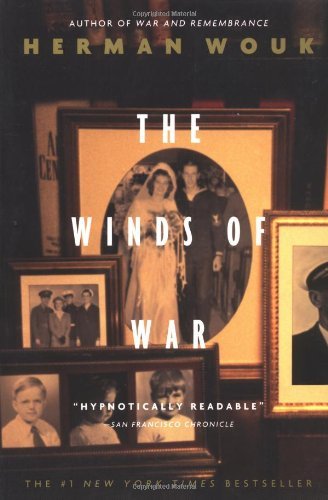
"The Winds of War" is a sweeping epic that chronicles the lives of the Henry family, particularly naval officer Victor "Pug" Henry, against the tumultuous backdrop of World War II's lead-up and early years. It meticulously details the political machinations, strategic dilemmas, and human struggles across multiple global theaters, offering a panoramic view of the conflict through the experiences of its diverse characters—from diplomats and soldiers to civilians caught in the crossfire.
This novel shares a striking thematic resemblance to "Gone to Soldiers" in its ambition to intertwine personal narratives with the vast sweep of a global conflict. Both books explore how war irrevocably alters individual lives, relationships, and societal structures, featuring multiple protagonists whose experiences provide a kaleidoscopic perspective on the historical period. They both deftly navigate the intricate dance between intimate human drama and grand historical events.
For those who appreciate historical fiction that humanizes monumental events, "The Winds of War" offers an incredibly rich and immersive experience. Its detailed historical accuracy, combined with compelling character development and interwoven storylines, provides a profound understanding of the war's immense human cost and complex origins. This deep dive into a pivotal historical period, viewed through relatable personal lenses, enriches one's comprehension of the past and its enduring impact.
The Winds of War
"The Winds of War" is a sweeping epic that chronicles the lives of the Henry family, particularly naval officer Victor "Pug" Henry, against the tumultuous backdrop of World War II's lead-up and early years. It meticulously details the political machinations, strategic dilemmas, and human struggles across multiple global theaters, offering a panoramic view of the conflict through the experiences of its diverse characters—from diplomats and soldiers to civilians caught in the crossfire.
This novel shares a striking thematic resemblance to "Gone to Soldiers" in its ambition to intertwine personal narratives with the vast sweep of a global conflict. Both books explore how war irrevocably alters individual lives, relationships, and societal structures, featuring multiple protagonists whose experiences provide a kaleidoscopic perspective on the historical period. They both deftly navigate the intricate dance between intimate human drama and grand historical events.
For those who appreciate historical fiction that humanizes monumental events, "The Winds of War" offers an incredibly rich and immersive experience. Its detailed historical accuracy, combined with compelling character development and interwoven storylines, provides a profound understanding of the war's immense human cost and complex origins. This deep dive into a pivotal historical period, viewed through relatable personal lenses, enriches one's comprehension of the past and its enduring impact.
The Golden Doves

"The Golden Doves" follows two WWII intelligence operatives, an American and a Jewess, who form an unlikely friendship amidst the chaos of war. Years later, their paths converge again as they embark on separate, yet interconnected, missions to uncover hidden truths about their pasts, specifically the fates of children lost during the war and the Nazi medical experiments that touched their lives.
This novel shares a thematic core with "Gone to Soldiers" in its exploration of women's experiences and resilience during wartime, and the enduring psychological and emotional scars left by conflict. Both books delve into the personal struggles, moral dilemmas, and the fight for justice faced by women navigating unimaginable circumstances, highlighting their agency and strength against a backdrop of global upheaval.
The book offers a compelling narrative for those drawn to stories of female courage, historical mysteries, and the profound impact of war on individuals and families. Its intricate plot and well-developed characters illuminate lesser-known aspects of WWII, providing a valuable perspective on human perseverance and the quest for resolution in the aftermath of trauma.
The Golden Doves
"The Golden Doves" follows two WWII intelligence operatives, an American and a Jewess, who form an unlikely friendship amidst the chaos of war. Years later, their paths converge again as they embark on separate, yet interconnected, missions to uncover hidden truths about their pasts, specifically the fates of children lost during the war and the Nazi medical experiments that touched their lives.
This novel shares a thematic core with "Gone to Soldiers" in its exploration of women's experiences and resilience during wartime, and the enduring psychological and emotional scars left by conflict. Both books delve into the personal struggles, moral dilemmas, and the fight for justice faced by women navigating unimaginable circumstances, highlighting their agency and strength against a backdrop of global upheaval.
The book offers a compelling narrative for those drawn to stories of female courage, historical mysteries, and the profound impact of war on individuals and families. Its intricate plot and well-developed characters illuminate lesser-known aspects of WWII, providing a valuable perspective on human perseverance and the quest for resolution in the aftermath of trauma.
More Books to Explore
Discover more titles that expand on these ideas and themes.
Braided Lives
City of Darkness, City of Light
War and Remembrance
Sex Wars: A Novel of Gilded Age New York
The Soldier's Wife
Every Time We Say Goodbye