10 Books Similar to "God and Stephen Hawking: Whose design is it anyway?"
by John C. Lennox

The Grand Design

Stephen Hawking's "The Grand Design" explores the fundamental questions of existence: why there is something rather than nothing, and whether a creator is necessary for the universe's origin. It postulates a "model-dependent realism" where different scientific theories can explain reality, and introduces M-theory as a candidate for a unifying theory that could spontaneously create the universe from nothing, without divine intervention.
"The Grand Design" is similar to John C. Lennox's "God and Stephen Hawking" because both books directly engage with the intersection of cosmology, physics, and theological questions of creation and God's role. While Hawking's book presents an argument for a self-contained universe, Lennox's work offers a Christian philosophical and scientific critique of these very claims, making them two sides of an ongoing intellectual debate.
This book offers a compelling journey into cutting-edge physics and cosmic origins, directly challenging traditional notions of creation. It presents a scientific perspective on some of humanity's deepest inquiries, encouraging critical thought about the universe's workings and posing profound questions about the nature of reality itself. It serves as a pivotal text in the contemporary dialogue between science and religion.
The Grand Design
Stephen Hawking's "The Grand Design" explores the fundamental questions of existence: why there is something rather than nothing, and whether a creator is necessary for the universe's origin. It postulates a "model-dependent realism" where different scientific theories can explain reality, and introduces M-theory as a candidate for a unifying theory that could spontaneously create the universe from nothing, without divine intervention.
"The Grand Design" is similar to John C. Lennox's "God and Stephen Hawking" because both books directly engage with the intersection of cosmology, physics, and theological questions of creation and God's role. While Hawking's book presents an argument for a self-contained universe, Lennox's work offers a Christian philosophical and scientific critique of these very claims, making them two sides of an ongoing intellectual debate.
This book offers a compelling journey into cutting-edge physics and cosmic origins, directly challenging traditional notions of creation. It presents a scientific perspective on some of humanity's deepest inquiries, encouraging critical thought about the universe's workings and posing profound questions about the nature of reality itself. It serves as a pivotal text in the contemporary dialogue between science and religion.
God's Undertaker: Has Science Buried God?

"God's Undertaker: Has Science Buried God?" directly confronts the perceived conflict between scientific discovery and religious belief. Lennox meticulously dissects arguments suggesting science has rendered God obsolete, instead asserting that a coherent understanding of the universe, particularly its fine-tuning and complexity, is entirely compatible with, and even points towards, intelligent design. He explores historical and philosophical aspects of this debate, illustrating how often the dichotomy is a false one.
This book shares significant thematic and methodological DNA with "God and Stephen Hawking." Both works are essentially apologetic rebuttals to prominent scientific figures (Hawking in the latter, and a broader collection of "new atheists" in the former) who argue against the existence of God based on scientific understanding. Lennox consistently uses a rigorous, logical approach, dissecting claims from a philosophical and scientific standpoint to demonstrate the rationality of a theistic worldview.
This book will appeal to those engaged with the ongoing science-religion dialogue. It offers a robust defense of the compatibility of faith and reason, providing intellectual grounding for believing individuals and thoughtful challenges for skeptics. Its value lies in offering a clear, well-argued response to common anti-theistic scientific assertions, fostering a more nuanced understanding of the relationship between faith, science, and the origins of the cosmos.
God's Undertaker: Has Science Buried God?
"God's Undertaker: Has Science Buried God?" directly confronts the perceived conflict between scientific discovery and religious belief. Lennox meticulously dissects arguments suggesting science has rendered God obsolete, instead asserting that a coherent understanding of the universe, particularly its fine-tuning and complexity, is entirely compatible with, and even points towards, intelligent design. He explores historical and philosophical aspects of this debate, illustrating how often the dichotomy is a false one.
This book shares significant thematic and methodological DNA with "God and Stephen Hawking." Both works are essentially apologetic rebuttals to prominent scientific figures (Hawking in the latter, and a broader collection of "new atheists" in the former) who argue against the existence of God based on scientific understanding. Lennox consistently uses a rigorous, logical approach, dissecting claims from a philosophical and scientific standpoint to demonstrate the rationality of a theistic worldview.
This book will appeal to those engaged with the ongoing science-religion dialogue. It offers a robust defense of the compatibility of faith and reason, providing intellectual grounding for believing individuals and thoughtful challenges for skeptics. Its value lies in offering a clear, well-argued response to common anti-theistic scientific assertions, fostering a more nuanced understanding of the relationship between faith, science, and the origins of the cosmos.
Gunning for God: A Critique of the New Atheism
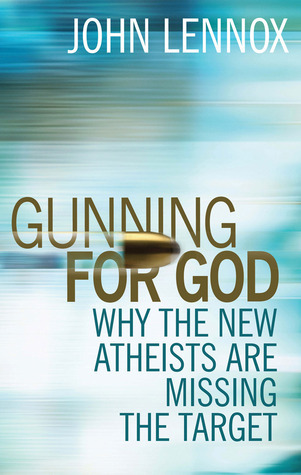
"Gunning for God" critically examines the claims of the New Atheism, particularly the arguments put forth by prominent atheists regarding the incompatibility of science and faith. Lennox dissects these arguments, primarily focusing on logical fallacies, historical inaccuracies, and misunderstandings of both scientific and theological concepts. It’s essentially a rigorous defense of the intellectual integrity of faith in the face of contemporary atheistic objections, presenting a reasoned counter-narrative to the idea that religion is inherently anti-scientific or irrational.
The book shares a core intellectual DNA with "God and Stephen Hawking." Both works engage with the alleged conflict between science and faith, tackling influential figures who propose that advances in scientific understanding negate the need, or even the possibility, of a divine creator. Both demonstrate Lennox's methodical approach to analyzing complex philosophical and scientific claims through a Christian theological lens, showing how faith and reason can be reconciled.
This analysis offers compelling insights for anyone grappling with the intellectual challenges posed by modern atheistic thought. It provides a robust, well-articulated framework for understanding why an accomplished mathematician and philosopher finds faith intellectually coherent, equipping them with counter-arguments and a deeper appreciation for the nuanced relationship between scientific inquiry and religious belief.
Gunning for God: A Critique of the New Atheism
"Gunning for God" critically examines the claims of the New Atheism, particularly the arguments put forth by prominent atheists regarding the incompatibility of science and faith. Lennox dissects these arguments, primarily focusing on logical fallacies, historical inaccuracies, and misunderstandings of both scientific and theological concepts. It’s essentially a rigorous defense of the intellectual integrity of faith in the face of contemporary atheistic objections, presenting a reasoned counter-narrative to the idea that religion is inherently anti-scientific or irrational.
The book shares a core intellectual DNA with "God and Stephen Hawking." Both works engage with the alleged conflict between science and faith, tackling influential figures who propose that advances in scientific understanding negate the need, or even the possibility, of a divine creator. Both demonstrate Lennox's methodical approach to analyzing complex philosophical and scientific claims through a Christian theological lens, showing how faith and reason can be reconciled.
This analysis offers compelling insights for anyone grappling with the intellectual challenges posed by modern atheistic thought. It provides a robust, well-articulated framework for understanding why an accomplished mathematician and philosopher finds faith intellectually coherent, equipping them with counter-arguments and a deeper appreciation for the nuanced relationship between scientific inquiry and religious belief.
Seven Days that Divide the World: The Beginning According to Genesis & Science
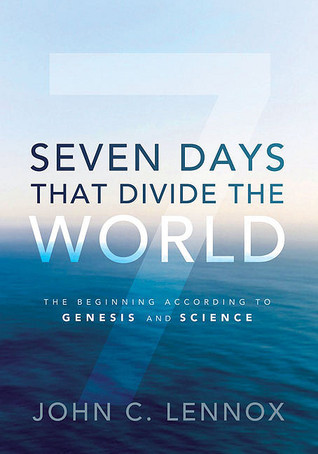
John C. Lennox's *Seven Days that Divide the World* tackles the frequently contentious debate surrounding the Genesis creation account and modern scientific understandings of cosmology and evolution. Rather than dismissing either perspective, Lennox carefully examines the different interpretations of "day" in Genesis 1, exploring theological, linguistic, and scientific nuances to demonstrate that traditional Christian belief and established science aren't necessarily at odds. He aims to bridge the perceived chasm between faith and reason with intellectual rigor and respect for both.
This book shares a core intellectual DNA with *God and Stephen Hawking*. Both works confront perceived conflicts between scientific inquiry and religious belief, particularly concerning origins and the role of a creator. Lennox consistently employs a clear, logical approach to disentangle complex arguments, challenging reductionist scientific materialism while advocating for a rational, robust faith that is not intimidated by scientific discovery. His methodology involves meticulous textual analysis alongside an informed engagement with scientific concepts.
This offers individuals a well-reasoned and accessible guide through a heavily politicized intellectual landscape. It provides a nuanced understanding of Genesis for believers and skeptics alike, demonstrating that a deep appreciation for science can coexist with a profound faith. The book’s comprehensive yet concise treatment of the subject empowers one to navigate these discussions with greater clarity and intellectual confidence, fostering a more informed and less polarized perspective.
Seven Days that Divide the World: The Beginning According to Genesis & Science
John C. Lennox's *Seven Days that Divide the World* tackles the frequently contentious debate surrounding the Genesis creation account and modern scientific understandings of cosmology and evolution. Rather than dismissing either perspective, Lennox carefully examines the different interpretations of "day" in Genesis 1, exploring theological, linguistic, and scientific nuances to demonstrate that traditional Christian belief and established science aren't necessarily at odds. He aims to bridge the perceived chasm between faith and reason with intellectual rigor and respect for both.
This book shares a core intellectual DNA with *God and Stephen Hawking*. Both works confront perceived conflicts between scientific inquiry and religious belief, particularly concerning origins and the role of a creator. Lennox consistently employs a clear, logical approach to disentangle complex arguments, challenging reductionist scientific materialism while advocating for a rational, robust faith that is not intimidated by scientific discovery. His methodology involves meticulous textual analysis alongside an informed engagement with scientific concepts.
This offers individuals a well-reasoned and accessible guide through a heavily politicized intellectual landscape. It provides a nuanced understanding of Genesis for believers and skeptics alike, demonstrating that a deep appreciation for science can coexist with a profound faith. The book’s comprehensive yet concise treatment of the subject empowers one to navigate these discussions with greater clarity and intellectual confidence, fostering a more informed and less polarized perspective.
Brief Answers to the Big Questions

"Brief Answers to the Big Questions" encapsulates Stephen Hawking's final thoughts on humanity's most profound inquiries, ranging from the existence of God to the potential for artificial intelligence. It presents his distinctive scientific perspective on the universe's origins, life's meaning, and our future as a species, all delivered in an accessible, engaging style.
This book shares conceptual territory with John C. Lennox's "God and Stephen Hawking" by engaging directly with the interplay between scientific discovery and philosophical or theological questions about design, origin, and purpose. Both works tackle cosmological arguments and the implications of scientific theories for our understanding of reality, often referencing similar scientific frameworks.
This book will attract those curious about the universe's fundamental mysteries and humankind's place within it, particularly those intrigued by a scientific titan's ultimate reflections. It offers accessible insights into complex topics, stimulating contemplation and providing a significant perspective on science's ongoing dialogue with existence's biggest questions.
Brief Answers to the Big Questions
"Brief Answers to the Big Questions" encapsulates Stephen Hawking's final thoughts on humanity's most profound inquiries, ranging from the existence of God to the potential for artificial intelligence. It presents his distinctive scientific perspective on the universe's origins, life's meaning, and our future as a species, all delivered in an accessible, engaging style.
This book shares conceptual territory with John C. Lennox's "God and Stephen Hawking" by engaging directly with the interplay between scientific discovery and philosophical or theological questions about design, origin, and purpose. Both works tackle cosmological arguments and the implications of scientific theories for our understanding of reality, often referencing similar scientific frameworks.
This book will attract those curious about the universe's fundamental mysteries and humankind's place within it, particularly those intrigued by a scientific titan's ultimate reflections. It offers accessible insights into complex topics, stimulating contemplation and providing a significant perspective on science's ongoing dialogue with existence's biggest questions.
The Fallacy of Fine-Tuning: Why the Universe Is Not Designed for Us
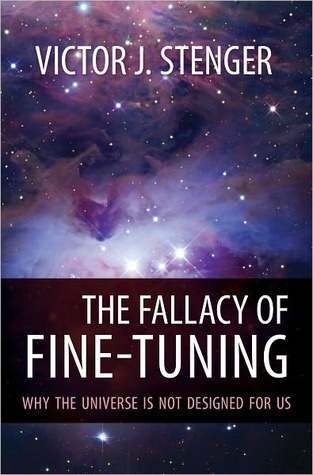
Victor Stenger's "The Fallacy of Fine-Tuning" meticulously dismantles the argument that the universe's precise physical constants imply intelligent design. He argues that what appears to be "fine-tuning" is often a misinterpretation of probabilities, a failure to consider the vast range of possibilities, or simply a byproduct of natural processes. Stenger, a physicist, employs scientific rigor to demonstrate how our existence is not evidence of a designer, but rather a consequence of the universe's inherent properties and the sheer scale of cosmic chance.
The similarity to John Lennox's "God and Stephen Hawking" lies in their shared central theme: the debate surrounding intelligent design and the anthropic principle. Both books directly engage with theories about the universe's origin and structure, using the lens of science and philosophy to address whether the cosmos points to a creator or is a product of natural laws. Each author presents a robust argument intended to persuade the reader about the truth of their respective positions.
This book will appeal to those intrigued by the intersection of science, philosophy, and religion, particularly individuals who question received wisdom about cosmic purpose. Its rigorous scientific explanations and accessible argumentation provide a powerful counterpoint to design arguments, offering a compelling naturalistic perspective. It provides a valuable resource for understanding the complexities of cosmological debates and the scientific methods used to explore them.
The Fallacy of Fine-Tuning: Why the Universe Is Not Designed for Us
Victor Stenger's "The Fallacy of Fine-Tuning" meticulously dismantles the argument that the universe's precise physical constants imply intelligent design. He argues that what appears to be "fine-tuning" is often a misinterpretation of probabilities, a failure to consider the vast range of possibilities, or simply a byproduct of natural processes. Stenger, a physicist, employs scientific rigor to demonstrate how our existence is not evidence of a designer, but rather a consequence of the universe's inherent properties and the sheer scale of cosmic chance.
The similarity to John Lennox's "God and Stephen Hawking" lies in their shared central theme: the debate surrounding intelligent design and the anthropic principle. Both books directly engage with theories about the universe's origin and structure, using the lens of science and philosophy to address whether the cosmos points to a creator or is a product of natural laws. Each author presents a robust argument intended to persuade the reader about the truth of their respective positions.
This book will appeal to those intrigued by the intersection of science, philosophy, and religion, particularly individuals who question received wisdom about cosmic purpose. Its rigorous scientific explanations and accessible argumentation provide a powerful counterpoint to design arguments, offering a compelling naturalistic perspective. It provides a valuable resource for understanding the complexities of cosmological debates and the scientific methods used to explore them.
Does God Exist?
William Lane Craig’s *Does God Exist?* systematically explores the logical and philosophical arguments for the existence of God. It delves into cosmological, teleological, and moral arguments, examining their historical foundations and contemporary relevance. Craig meticulously dissects potential objections and presents a cohesive case for a rational belief in God.
This work resonates with John C. Lennox's *God and Stephen Hawking* in its rigorous intellectual engagement with the question of God's existence. Both authors prioritize reasoned argument over emotional appeal, meticulously addressing scientific and philosophical challenges to religious belief. They share a commitment to clarifying complex concepts and engaging with significant intellectual figures, making their respective cases through careful, logical reasoning.
This book will appeal to individuals seeking a robust, intellectually stimulating defense of God's existence. Its clear elucidation of complex philosophical arguments alongside responses to common critiques offers a valuable resource for those grappling with faith and reason. The depth and precision of Craig's analysis provide a strong foundation for understanding and articulating one's own position on this fundamental question.
Does God Exist?
William Lane Craig’s *Does God Exist?* systematically explores the logical and philosophical arguments for the existence of God. It delves into cosmological, teleological, and moral arguments, examining their historical foundations and contemporary relevance. Craig meticulously dissects potential objections and presents a cohesive case for a rational belief in God.
This work resonates with John C. Lennox's *God and Stephen Hawking* in its rigorous intellectual engagement with the question of God's existence. Both authors prioritize reasoned argument over emotional appeal, meticulously addressing scientific and philosophical challenges to religious belief. They share a commitment to clarifying complex concepts and engaging with significant intellectual figures, making their respective cases through careful, logical reasoning.
This book will appeal to individuals seeking a robust, intellectually stimulating defense of God's existence. Its clear elucidation of complex philosophical arguments alongside responses to common critiques offers a valuable resource for those grappling with faith and reason. The depth and precision of Craig's analysis provide a strong foundation for understanding and articulating one's own position on this fundamental question.
The Nature of Space and Time

"The Nature of Space and Time" delves into the profound theoretical underpinnings of cosmology and physics, exploring concepts like the origins of the universe, black holes, and the fundamental properties of spacetime. It presents a detailed, albeit technical, discussion based on collaboration and lecture notes, focusing on the mathematical and scientific framework used to understand these cosmic mysteries.
This book shares a core thematic link with "God and Stephen Hawking" by confronting the very questions about existence and cosmic order that Lennox scrutinizes from a philosophical and theological perspective. Both works grapple with the ultimate "how" and "why" of the universe, though "The Nature of Space and Time" approaches these questions squarely from within the realm of scientific inquiry.
Individuals interested in the scientific exploration of the universe will appreciate this book for its authoritative insights into cutting-edge cosmological theories. It offers a challenging yet rewarding deep dive into the scientific models that describe our reality, providing a clearer understanding of the universe's mechanics from one of its most influential minds.
The Nature of Space and Time
"The Nature of Space and Time" delves into the profound theoretical underpinnings of cosmology and physics, exploring concepts like the origins of the universe, black holes, and the fundamental properties of spacetime. It presents a detailed, albeit technical, discussion based on collaboration and lecture notes, focusing on the mathematical and scientific framework used to understand these cosmic mysteries.
This book shares a core thematic link with "God and Stephen Hawking" by confronting the very questions about existence and cosmic order that Lennox scrutinizes from a philosophical and theological perspective. Both works grapple with the ultimate "how" and "why" of the universe, though "The Nature of Space and Time" approaches these questions squarely from within the realm of scientific inquiry.
Individuals interested in the scientific exploration of the universe will appreciate this book for its authoritative insights into cutting-edge cosmological theories. It offers a challenging yet rewarding deep dive into the scientific models that describe our reality, providing a clearer understanding of the universe's mechanics from one of its most influential minds.
A Brief History of Time
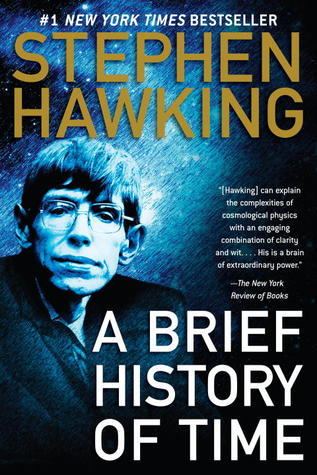
"A Brief History of Time" masterfully distills complex cosmological theories, from the Big Bang to black holes, into an accessible narrative. Hawking explores the fundamental questions about the universe's origin, evolution, and ultimate fate, offering insights into space-time, gravity, and the search for a unified theory that governs all physical laws. It’s a journey through the cosmos designed for the curious layperson.
The similarity to "God and Stephen Hawking: Whose Design Is It Anyway?" lies in their shared exploration of the universe's origins and the implications for a 'designer.' Both books delve into the profound questions of existence, causality, and the role (or absence) of a divine entity in the grand scheme of creation, making them two sides of a fascinating intellectual coin.
This book will appeal to anyone grappling with the ultimate questions of existence and the universe's mechanics. Its value lies in demystifying cutting-edge astrophysics, offering a foundational understanding of our place in the cosmos, and sparking intellectual curiosity about the universe's profound mysteries. It's an invitation to contemplate the cosmos with one of its most brilliant minds.
A Brief History of Time
"A Brief History of Time" masterfully distills complex cosmological theories, from the Big Bang to black holes, into an accessible narrative. Hawking explores the fundamental questions about the universe's origin, evolution, and ultimate fate, offering insights into space-time, gravity, and the search for a unified theory that governs all physical laws. It’s a journey through the cosmos designed for the curious layperson.
The similarity to "God and Stephen Hawking: Whose Design Is It Anyway?" lies in their shared exploration of the universe's origins and the implications for a 'designer.' Both books delve into the profound questions of existence, causality, and the role (or absence) of a divine entity in the grand scheme of creation, making them two sides of a fascinating intellectual coin.
This book will appeal to anyone grappling with the ultimate questions of existence and the universe's mechanics. Its value lies in demystifying cutting-edge astrophysics, offering a foundational understanding of our place in the cosmos, and sparking intellectual curiosity about the universe's profound mysteries. It's an invitation to contemplate the cosmos with one of its most brilliant minds.
The Theory of Everything: The Origin and Fate of the Universe

Stephen Hawking's "The Theory of Everything" offers an accessible overview of humanity's quest to understand the universe, from the Big Bang to black holes and the very nature of time. It distills complex cosmological theories into understandable language, exploring the fundamental laws governing our existence and pondering the ultimate fate of the cosmos. Hawking illuminates how scientific inquiry strives to unify our understanding of these grand phenomena, presenting a universe described by elegant mathematical frameworks.
This book shares common ground with John Lennox's "God and Stephen Hawking" by engaging with the profound questions surrounding the origin, design, and ultimate meaning of the universe. Both texts grapple with the implications of scientific discoveries for our understanding of existence, albeit from different philosophical perspectives. They both tackle the "why" behind the "how," exploring whether the finely-tuned parameters of the universe point towards a creator or are simply the product of undirected natural laws.
This book will appeal to those with a curiosity about the fundamental nature of reality and the universe's grand narrative. It offers a concise yet comprehensive introduction to significant cosmological concepts without requiring a scientific background. Its value lies in providing a foundational understanding of the universe's scientific description, fostering intellectual engagement with some of humanity's oldest and most profound questions, and serving as a crucial context for discussions about science, philosophy, and belief.
The Theory of Everything: The Origin and Fate of the Universe
Stephen Hawking's "The Theory of Everything" offers an accessible overview of humanity's quest to understand the universe, from the Big Bang to black holes and the very nature of time. It distills complex cosmological theories into understandable language, exploring the fundamental laws governing our existence and pondering the ultimate fate of the cosmos. Hawking illuminates how scientific inquiry strives to unify our understanding of these grand phenomena, presenting a universe described by elegant mathematical frameworks.
This book shares common ground with John Lennox's "God and Stephen Hawking" by engaging with the profound questions surrounding the origin, design, and ultimate meaning of the universe. Both texts grapple with the implications of scientific discoveries for our understanding of existence, albeit from different philosophical perspectives. They both tackle the "why" behind the "how," exploring whether the finely-tuned parameters of the universe point towards a creator or are simply the product of undirected natural laws.
This book will appeal to those with a curiosity about the fundamental nature of reality and the universe's grand narrative. It offers a concise yet comprehensive introduction to significant cosmological concepts without requiring a scientific background. Its value lies in providing a foundational understanding of the universe's scientific description, fostering intellectual engagement with some of humanity's oldest and most profound questions, and serving as a crucial context for discussions about science, philosophy, and belief.
More Books to Explore
Discover more titles that expand on these ideas and themes.
The Grand Design
God's Undertaker: Has Science Buried God?
Gunning for God: A Critique of the New Atheism
Seven Days that Divide the World: The Beginning According to Genesis & Science
Brief Answers to the Big Questions
The Fallacy of Fine-Tuning: Why the Universe Is Not Designed for Us