10 Books Similar to "Footfall"
by Larry Niven

The Gripping Hand

"The Gripping Hand" continues the saga of the Moties, a highly complex alien race with multiple, specialized castes, as humanity grapples with the philosophical and societal implications of their existence. The story explores the precarious balance between collaboration and conflict, delving into humanity's attempts to understand and manage an alien species inherently driven by an explosive population dynamic and the chilling "Crazy Ivan" defense mechanism.
This novel shares "Footfall's" core appeal in its masterful hard science fiction approach to first contact and alien invasion. Both books meticulously build alien societies, exploring their biology, culture, and technology with scientific rigor. The narrative tension in both arises from humanity encountering an alien species whose motivations are deeply alien, forcing difficult choices regarding survival, morality, and interstellar diplomacy.
The value here lies in its thought-provoking exploration of existential threats and the ethical complexities of interstellar relations. It offers a sophisticated, intellectually stimulating narrative that challenges assumptions about alien life and the nature of intelligence, providing a compelling speculative glimpse into potential future conflicts and resolutions with truly *other* beings.
The Gripping Hand
"The Gripping Hand" continues the saga of the Moties, a highly complex alien race with multiple, specialized castes, as humanity grapples with the philosophical and societal implications of their existence. The story explores the precarious balance between collaboration and conflict, delving into humanity's attempts to understand and manage an alien species inherently driven by an explosive population dynamic and the chilling "Crazy Ivan" defense mechanism.
This novel shares "Footfall's" core appeal in its masterful hard science fiction approach to first contact and alien invasion. Both books meticulously build alien societies, exploring their biology, culture, and technology with scientific rigor. The narrative tension in both arises from humanity encountering an alien species whose motivations are deeply alien, forcing difficult choices regarding survival, morality, and interstellar diplomacy.
The value here lies in its thought-provoking exploration of existential threats and the ethical complexities of interstellar relations. It offers a sophisticated, intellectually stimulating narrative that challenges assumptions about alien life and the nature of intelligence, providing a compelling speculative glimpse into potential future conflicts and resolutions with truly *other* beings.
Lucifer's Hammer
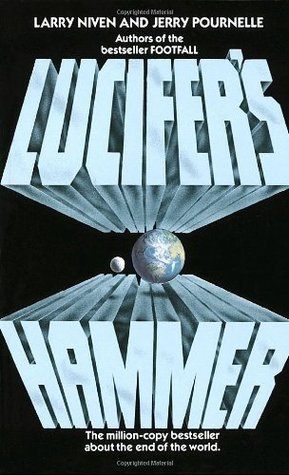
"Lucifer's Hammer" chronicles humanity's struggle for survival after a massive comet strikes Earth, triggering catastrophic climate shifts, tsunamis, and societal collapse. The narrative explores the immediate chaos and the long-term challenges of rebuilding civilization from the ground up, highlighting the best and worst of human nature in extreme adversity.
Both novels share a core appeal in their meticulous examination of large-scale, existential threats to humanity and the realistic, often brutal, consequences. They excel at depicting global-level disasters with scientific accuracy and then focusing on the granular details of survival, societal breakdown, and reconstruction. The multi-perspective narratives, spanning various characters and groups, also provide a panoramic view of the unfolding crisis, a hallmark of Niven's disaster storytelling.
This book offers a compelling exploration of human resilience, ingenuity, and the difficult choices faced when resources are scarce and institutions crumble. It provides a thought-provoking lens through which to consider the fragility of civilization and the enduring strength of the human spirit in overcoming seemingly insurmountable odds, making it a valuable read for those who appreciate detailed, high-stakes speculative fiction.
Lucifer's Hammer
"Lucifer's Hammer" chronicles humanity's struggle for survival after a massive comet strikes Earth, triggering catastrophic climate shifts, tsunamis, and societal collapse. The narrative explores the immediate chaos and the long-term challenges of rebuilding civilization from the ground up, highlighting the best and worst of human nature in extreme adversity.
Both novels share a core appeal in their meticulous examination of large-scale, existential threats to humanity and the realistic, often brutal, consequences. They excel at depicting global-level disasters with scientific accuracy and then focusing on the granular details of survival, societal breakdown, and reconstruction. The multi-perspective narratives, spanning various characters and groups, also provide a panoramic view of the unfolding crisis, a hallmark of Niven's disaster storytelling.
This book offers a compelling exploration of human resilience, ingenuity, and the difficult choices faced when resources are scarce and institutions crumble. It provides a thought-provoking lens through which to consider the fragility of civilization and the enduring strength of the human spirit in overcoming seemingly insurmountable odds, making it a valuable read for those who appreciate detailed, high-stakes speculative fiction.
Protector

"Protector" delves into the mystery of humanity's origins and its startling connection to an ancient, manipulative alien species called the Pak. The narrative follows Jack Brennan, an elderly man who undergoes a dramatic transformation, revealing humanity's latent potential and its intended role in a complex interstellar ecosystem. This transformation leads to conflict, exploration, and a re-evaluation of what it means to be human in a vast, dangerous universe.
Both "Protector" and "Footfall" showcase Niven's characteristic hard science fiction approach to alien contact and existential threats. They share a core theme of humanity fighting for its survival against overwhelming odds, often aided or hindered by alien interference. The novels also feature intricate world-building, a deep focus on biological imperatives, and meticulously crafted, high-stakes narratives that explore humanity's place in a grander cosmic scheme.
This book offers a compelling narrative that challenges preconceived notions about human evolution and destiny. It provides a unique blend of scientific speculation, adventure, and philosophical introspection, making it a thought-provoking read. The exploration of biological determinism and the unexpected strength of the human spirit in the face of cosmic revelations will resonate deeply, offering a fresh perspective on humanity's potential and its perilous journey through the stars.
Protector
"Protector" delves into the mystery of humanity's origins and its startling connection to an ancient, manipulative alien species called the Pak. The narrative follows Jack Brennan, an elderly man who undergoes a dramatic transformation, revealing humanity's latent potential and its intended role in a complex interstellar ecosystem. This transformation leads to conflict, exploration, and a re-evaluation of what it means to be human in a vast, dangerous universe.
Both "Protector" and "Footfall" showcase Niven's characteristic hard science fiction approach to alien contact and existential threats. They share a core theme of humanity fighting for its survival against overwhelming odds, often aided or hindered by alien interference. The novels also feature intricate world-building, a deep focus on biological imperatives, and meticulously crafted, high-stakes narratives that explore humanity's place in a grander cosmic scheme.
This book offers a compelling narrative that challenges preconceived notions about human evolution and destiny. It provides a unique blend of scientific speculation, adventure, and philosophical introspection, making it a thought-provoking read. The exploration of biological determinism and the unexpected strength of the human spirit in the face of cosmic revelations will resonate deeply, offering a fresh perspective on humanity's potential and its perilous journey through the stars.
The World of Ptavvs

"The World of Ptavvs" centers on Kzanol, an alien trapped in stasis for three billion years, and his accidental release by a future human. He awakens to a world vastly changed, desperately seeking his ancient slave-collar technology to reclaim his vanished empire, while humans grapple with the implications of his power and advanced knowledge.
Its similarity to "Footfall" lies in the core dynamic of humanity confronting a technologically superior, initially incomprehensible alien race with aggressive intentions. Both novels explore the survival instincts of Earth against an existential threat, forced to rapidly adapt and innovate in the face of overwhelming odds. The strategic maneuvering, the high stakes, and the detailed exploration of alien psychology resonate between the two.
This novel will appeal to those who appreciate classic hard science fiction with a focus on alien contact and the philosophical implications of vastly different timelines and power structures. It offers a thought-provoking exploration of power, advanced technology, and humanity's place in a complex galaxy, making it a valuable read for anyone interested in the foundational elements of Niven's Known Space universe.
The World of Ptavvs
"The World of Ptavvs" centers on Kzanol, an alien trapped in stasis for three billion years, and his accidental release by a future human. He awakens to a world vastly changed, desperately seeking his ancient slave-collar technology to reclaim his vanished empire, while humans grapple with the implications of his power and advanced knowledge.
Its similarity to "Footfall" lies in the core dynamic of humanity confronting a technologically superior, initially incomprehensible alien race with aggressive intentions. Both novels explore the survival instincts of Earth against an existential threat, forced to rapidly adapt and innovate in the face of overwhelming odds. The strategic maneuvering, the high stakes, and the detailed exploration of alien psychology resonate between the two.
This novel will appeal to those who appreciate classic hard science fiction with a focus on alien contact and the philosophical implications of vastly different timelines and power structures. It offers a thought-provoking exploration of power, advanced technology, and humanity's place in a complex galaxy, making it a valuable read for anyone interested in the foundational elements of Niven's Known Space universe.
Beowulf's Children

"Beowulf's Children" (also known as "The Legacy of Heorot") details humanity's struggle to survive and thrive on Avalon, a potentially habitable exoplanet. The colonists, originally from Earth, encounter a complex and terrifying indigenous ecosystem where the dominant predators, powerful and intelligent, threaten to obliterate their nascent civilization. It's an intense narrative of adaptation, scientific exploration, and the grim realities of establishing a foothold in a truly alien environment.
The similarities to "Footfall" are pronounced in their shared themes of existential threat and the tenacious human response. Both novels showcase humanity united against a formidable, non-human adversary – the Fithp in "Footfall" and the "grendels" in "Beowulf's Children." The core narrative thrust in both involves critical problem-solving, strategic thinking, and the ultimate test of human ingenuity and resilience when faced with extinction-level challenges. Both explore the societal and psychological impacts of such pressures.
This novel will appeal to those who appreciate thoughtful hard science fiction, particularly narratives exploring the "first contact" trope with a survivalist edge. Its value lies in its meticulous world-building, believable scientific extrapolation, and the compelling depiction of humanity's capacity for both cooperation and conflict under extreme duress. It presents a stark yet hopeful vision of humanity's future amongst the stars, confronting challenges head-on.
Beowulf's Children
"Beowulf's Children" (also known as "The Legacy of Heorot") details humanity's struggle to survive and thrive on Avalon, a potentially habitable exoplanet. The colonists, originally from Earth, encounter a complex and terrifying indigenous ecosystem where the dominant predators, powerful and intelligent, threaten to obliterate their nascent civilization. It's an intense narrative of adaptation, scientific exploration, and the grim realities of establishing a foothold in a truly alien environment.
The similarities to "Footfall" are pronounced in their shared themes of existential threat and the tenacious human response. Both novels showcase humanity united against a formidable, non-human adversary – the Fithp in "Footfall" and the "grendels" in "Beowulf's Children." The core narrative thrust in both involves critical problem-solving, strategic thinking, and the ultimate test of human ingenuity and resilience when faced with extinction-level challenges. Both explore the societal and psychological impacts of such pressures.
This novel will appeal to those who appreciate thoughtful hard science fiction, particularly narratives exploring the "first contact" trope with a survivalist edge. Its value lies in its meticulous world-building, believable scientific extrapolation, and the compelling depiction of humanity's capacity for both cooperation and conflict under extreme duress. It presents a stark yet hopeful vision of humanity's future amongst the stars, confronting challenges head-on.
A Gift from Earth

"A Gift from Earth" explores a dystopian future where humanity's survival on a resource-scarce colony world is maintained by a brutal, caste-based social stratification. Citizens are assigned roles at birth, with "Organs" being the lowest, bred solely for their body parts to support the privileged "Crew." The narrative follows a young Organ discovering the horrifying truth of his society and his burgeoning desire for rebellion, confronting the ethical implications of a system designed for a cruel, utilitarian survival.
The thematic core of both novels lies in their exploration of humanity confronting existential threats, leading to desperate and often morally ambiguous societal structures. "Footfall" presents an external, alien invasion forcing humanity to unite and innovate against overwhelming odds, while "A Gift from Earth" examines an internal, self-imposed struggle for survival where individual lives are sacrificed for the supposed greater good. Both books feature high stakes, critical decisions with devastating consequences, and the enduring human spirit in the face of despair.
Those who appreciate "Footfall's" rigorous examination of societal response to crisis and its unflinching look at human ingenuity under pressure will find "A Gift from Earth" compelling. It offers a thought-provoking analysis of power, control, and the inherent value of individual life within a system designed to deny it. The novel delves into profound philosophical questions about survival, justice, and the definition of humanity, making it a valuable read for anyone interested in complex ethical dilemmas within a speculative fiction framework.
A Gift from Earth
"A Gift from Earth" explores a dystopian future where humanity's survival on a resource-scarce colony world is maintained by a brutal, caste-based social stratification. Citizens are assigned roles at birth, with "Organs" being the lowest, bred solely for their body parts to support the privileged "Crew." The narrative follows a young Organ discovering the horrifying truth of his society and his burgeoning desire for rebellion, confronting the ethical implications of a system designed for a cruel, utilitarian survival.
The thematic core of both novels lies in their exploration of humanity confronting existential threats, leading to desperate and often morally ambiguous societal structures. "Footfall" presents an external, alien invasion forcing humanity to unite and innovate against overwhelming odds, while "A Gift from Earth" examines an internal, self-imposed struggle for survival where individual lives are sacrificed for the supposed greater good. Both books feature high stakes, critical decisions with devastating consequences, and the enduring human spirit in the face of despair.
Those who appreciate "Footfall's" rigorous examination of societal response to crisis and its unflinching look at human ingenuity under pressure will find "A Gift from Earth" compelling. It offers a thought-provoking analysis of power, control, and the inherent value of individual life within a system designed to deny it. The novel delves into profound philosophical questions about survival, justice, and the definition of humanity, making it a valuable read for anyone interested in complex ethical dilemmas within a speculative fiction framework.
The Man-Kzin Wars

"The Man-Kzin Wars" is a collection of military science fiction novellas and short stories, detailing humanity's brutal and protracted interstellar conflicts with the Kzinti, a species of telepathic, honorable, and fiercely territorial feline aliens. Each story explores different facets of these wars, showcasing human ingenuity and resilience against a physically superior and ideologically rigid foe, often focusing on new technologies or strategic breakthroughs developed in the face of existential threat.
It shares similarities with "Footfall" through its core premise of a devastating alien invasion against humanity, forcing rapid societal and technological adaptation. Both works explore themes of survival, strategic innovation under duress, and the clash of fundamentally different species with unique philosophies. The struggle for humanity's very existence against an advanced, yet comprehensible, alien threat provides a common dramatic tension.
This series offers a compelling exploration of interspecies conflict and serves as a foundational text within Larry Niven's Known Space universe. It provides an engaging and tactical look at military sci-fi, demonstrating how humanity can overcome immense odds not just through brute force, but through intelligence, adaptability, and an understanding of the enemy’s strengths and weaknesses. The narratives are rich with strategic thinking and demonstrate the grim realities of interstellar warfare.
The Man-Kzin Wars
"The Man-Kzin Wars" is a collection of military science fiction novellas and short stories, detailing humanity's brutal and protracted interstellar conflicts with the Kzinti, a species of telepathic, honorable, and fiercely territorial feline aliens. Each story explores different facets of these wars, showcasing human ingenuity and resilience against a physically superior and ideologically rigid foe, often focusing on new technologies or strategic breakthroughs developed in the face of existential threat.
It shares similarities with "Footfall" through its core premise of a devastating alien invasion against humanity, forcing rapid societal and technological adaptation. Both works explore themes of survival, strategic innovation under duress, and the clash of fundamentally different species with unique philosophies. The struggle for humanity's very existence against an advanced, yet comprehensible, alien threat provides a common dramatic tension.
This series offers a compelling exploration of interspecies conflict and serves as a foundational text within Larry Niven's Known Space universe. It provides an engaging and tactical look at military sci-fi, demonstrating how humanity can overcome immense odds not just through brute force, but through intelligence, adaptability, and an understanding of the enemy’s strengths and weaknesses. The narratives are rich with strategic thinking and demonstrate the grim realities of interstellar warfare.
A World Out of Time

"A World Out of Time" centers on the journey of Jaybee Corbell, a terminally ill man sent into a centuries-long relativistic sleep to colonize a new planet. He awakens to a vastly altered universe, governed by a powerful, enigmatic "Puppet Master" civilization, and discovers humanity's future has taken an unexpected, highly stratified turn. His quest to understand his new reality unfolds against a backdrop of advanced technology, societal decay, and the ultimate fate of human independence.
Both novels share Niven's characteristic hard science fiction approach to speculative futures and alien encounters. They explore grand-scale societal disruption, the long-term consequences of technological progress, and the fundamental question of humanity's place in a universe inhabited by more advanced species. The sense of profound existential threat and the struggle for survival against overwhelming odds are pervasive themes in both works.
This book offers a compelling exploration of human ingenuity and resilience when faced with overwhelming temporal and societal shifts. Its intricate world-building and thought-provoking philosophical questions about destiny, free will, and the very definition of humanity make it a valuable read for anyone interested in deeply imaginative and intellectually stimulating science fiction.
A World Out of Time
"A World Out of Time" centers on the journey of Jaybee Corbell, a terminally ill man sent into a centuries-long relativistic sleep to colonize a new planet. He awakens to a vastly altered universe, governed by a powerful, enigmatic "Puppet Master" civilization, and discovers humanity's future has taken an unexpected, highly stratified turn. His quest to understand his new reality unfolds against a backdrop of advanced technology, societal decay, and the ultimate fate of human independence.
Both novels share Niven's characteristic hard science fiction approach to speculative futures and alien encounters. They explore grand-scale societal disruption, the long-term consequences of technological progress, and the fundamental question of humanity's place in a universe inhabited by more advanced species. The sense of profound existential threat and the struggle for survival against overwhelming odds are pervasive themes in both works.
This book offers a compelling exploration of human ingenuity and resilience when faced with overwhelming temporal and societal shifts. Its intricate world-building and thought-provoking philosophical questions about destiny, free will, and the very definition of humanity make it a valuable read for anyone interested in deeply imaginative and intellectually stimulating science fiction.
The Mote in God's Eye

"The Mote in God's Eye" chronicles humanity's discovery of an alien race, the Moties, within a star system shrouded by an impenetrable dust cloud. This first contact narrative masterfully explores the intricate challenges of communication, cultural understanding, and the ultimate implications of encountering a truly alien intelligence, particularly one facing a unique biological imperative that threatens its very existence.
The similarity to "Footfall" lies in both books' meticulous examination of first contact scenarios with advanced alien species. Both novels prioritize realistic scientific speculation, explore the profoundly unsettling nature of encountering extraterrestrial life that doesn’t conform to human norms, and delve into the geopolitical and societal ramifications of such an event, even if the stakes in "Footfall" are more immediately existential for humanity.
This novel will appeal to those who appreciate thoughtful, hard science fiction that grapples with profound philosophical questions about intelligence, evolution, and humanity's place in the universe. It offers a sophisticated exploration of the concept of "otherness," providing a compelling and often chilling perspective on what genuine first contact might entail, making it a valuable addition to any discerning science fiction library.
The Mote in God's Eye
"The Mote in God's Eye" chronicles humanity's discovery of an alien race, the Moties, within a star system shrouded by an impenetrable dust cloud. This first contact narrative masterfully explores the intricate challenges of communication, cultural understanding, and the ultimate implications of encountering a truly alien intelligence, particularly one facing a unique biological imperative that threatens its very existence.
The similarity to "Footfall" lies in both books' meticulous examination of first contact scenarios with advanced alien species. Both novels prioritize realistic scientific speculation, explore the profoundly unsettling nature of encountering extraterrestrial life that doesn’t conform to human norms, and delve into the geopolitical and societal ramifications of such an event, even if the stakes in "Footfall" are more immediately existential for humanity.
This novel will appeal to those who appreciate thoughtful, hard science fiction that grapples with profound philosophical questions about intelligence, evolution, and humanity's place in the universe. It offers a sophisticated exploration of the concept of "otherness," providing a compelling and often chilling perspective on what genuine first contact might entail, making it a valuable addition to any discerning science fiction library.
The Legacy of Heorot
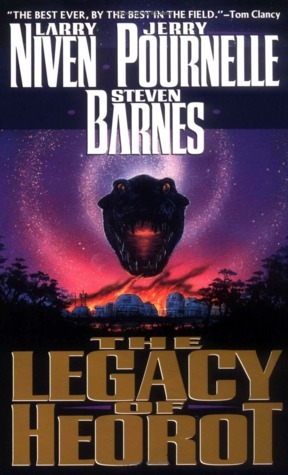
"The Legacy of Heorot" details humanity's first interstellar colonization attempt on the planet Avalon. The colonists, awakening from cryosleep, face not the utopian paradise they expected, but a burgeoning ecosystem dominated by a terrifying, rapidly evolving apex predator, the grendel. Their struggle for survival against this alien threat exposes the fragility of human assumptions and the brutal realities of adaptation on a truly foreign world.
The similarity to "Footfall" lies in the core narrative of humanity facing an existential threat from a truly alien intelligence or life form. Both novels present a desperate, large-scale confrontation where human ingenuity, coupled with significant sacrifice, is tested to its limits against an utterly unfamiliar foe that operates outside human understanding of warfare or biology. The stakes are global or interstellar, and the progression of the conflict feels authentic and hard-won.
This book will appeal to those who appreciate grounded, hard science fiction that explores the challenges of first contact and survival. Its value comes from its unflinching look at biological warfare, adaptation, and the moral complexities that arise when humanity's very existence is on the line. It offers a thought-provoking examination of what it means to be human when confronted with an unknowable, utterly hostile environment.
The Legacy of Heorot
"The Legacy of Heorot" details humanity's first interstellar colonization attempt on the planet Avalon. The colonists, awakening from cryosleep, face not the utopian paradise they expected, but a burgeoning ecosystem dominated by a terrifying, rapidly evolving apex predator, the grendel. Their struggle for survival against this alien threat exposes the fragility of human assumptions and the brutal realities of adaptation on a truly foreign world.
The similarity to "Footfall" lies in the core narrative of humanity facing an existential threat from a truly alien intelligence or life form. Both novels present a desperate, large-scale confrontation where human ingenuity, coupled with significant sacrifice, is tested to its limits against an utterly unfamiliar foe that operates outside human understanding of warfare or biology. The stakes are global or interstellar, and the progression of the conflict feels authentic and hard-won.
This book will appeal to those who appreciate grounded, hard science fiction that explores the challenges of first contact and survival. Its value comes from its unflinching look at biological warfare, adaptation, and the moral complexities that arise when humanity's very existence is on the line. It offers a thought-provoking examination of what it means to be human when confronted with an unknowable, utterly hostile environment.
More Books to Explore
Discover more titles that expand on these ideas and themes.
The Gripping Hand
Lucifer's Hammer
Protector
The World of Ptavvs
Beowulf's Children
A Gift from Earth