10 Books Similar to "Extinction"
by Thomas Bernhard

Concrete

"Concrete" delves into the obsessive interior monologue of Rudolf, a musicologist fixated on writing a definitive essay about Mendelssohn. Plagued by distractions and the suffocating presence of his wife, he endlessly procrastinates, meticulously detailing his grievances, ailments, and self-justifications while the esteemed work remains unwritten. It's a profound exploration of artistic paralysis, intellectual pride, and the insidious ways domestic life can—or is perceived to—stifle creative output.
Both "Concrete" and "Extinction" showcase Bernhard's signature style: a relentless, spiraling stream of consciousness driven by a misanthropic male narrator. The protagonist in each book is a highly educated, deeply dissatisfied individual who dissects his world and his own failures with vitriolic precision, often blaming external forces for his internal turmoil. The thematic overlap of artistic frustration, societal critique, and the suffocating weight of family expectations runs deep through both works.
This book offers a compelling deep dive into the human psyche under duress, particularly for those interested in complex character studies and the nature of unproductive thought. Its unsparing honesty about artistic struggle and intellectual self-delusion provides a mirror for contemporary anxieties, while Bernhard's masterful, hypnotic prose makes the experience both challenging and uniquely rewarding. It's a stark, powerful meditation on the elusive nature of fulfillment and the tyranny of the unwritten.
Concrete
"Concrete" delves into the obsessive interior monologue of Rudolf, a musicologist fixated on writing a definitive essay about Mendelssohn. Plagued by distractions and the suffocating presence of his wife, he endlessly procrastinates, meticulously detailing his grievances, ailments, and self-justifications while the esteemed work remains unwritten. It's a profound exploration of artistic paralysis, intellectual pride, and the insidious ways domestic life can—or is perceived to—stifle creative output.
Both "Concrete" and "Extinction" showcase Bernhard's signature style: a relentless, spiraling stream of consciousness driven by a misanthropic male narrator. The protagonist in each book is a highly educated, deeply dissatisfied individual who dissects his world and his own failures with vitriolic precision, often blaming external forces for his internal turmoil. The thematic overlap of artistic frustration, societal critique, and the suffocating weight of family expectations runs deep through both works.
This book offers a compelling deep dive into the human psyche under duress, particularly for those interested in complex character studies and the nature of unproductive thought. Its unsparing honesty about artistic struggle and intellectual self-delusion provides a mirror for contemporary anxieties, while Bernhard's masterful, hypnotic prose makes the experience both challenging and uniquely rewarding. It's a stark, powerful meditation on the elusive nature of fulfillment and the tyranny of the unwritten.
Woodcutters
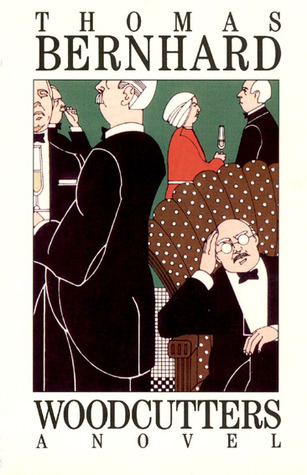
"Woodcutters" narrates an evening at an "artistic dinner party" in Vienna, as experienced through the bitter, observational internal monologue of its unnamed protagonist. Stuck in an armchair, he excoriates the hypocrisy, mediocrity, and pretentious posturing of his fellow guests, former friends he once admired. The narrative unfolds as a sustained, often scathing, stream of consciousness, dissecting the decay of artistic integrity and social facades.
The similarity to "Extinction" lies primarily in the narrative structure and thematic concerns. Both novels are extended, highly analytical soliloquies delivered by protagonists consumed by intellectual and moral revulsion for their surroundings. They share Bernhard's signature style: repetitive, meticulously structured prose that spirals around core grievances, relentlessly stripping away illusions. Both protagonists are outsiders, critical observers of a decadent society and familial legacy they find insufferable, using their highly subjective internal landscapes to dissect broader cultural ailments.
This novel will appeal to those who appreciate a deep dive into the psychological landscape of a disaffected intellectual, offering a powerful, if challenging, critique of societal and artistic pretense. It provides a valuable exploration of disillusionment, the nature of memory, and the intricate ways individuals grapple with perceived betrayal and the erosion of ideals. The unflinching honesty and relentless analytical gaze offer a profound, immersive, and unforgettable literary experience.
Woodcutters
"Woodcutters" narrates an evening at an "artistic dinner party" in Vienna, as experienced through the bitter, observational internal monologue of its unnamed protagonist. Stuck in an armchair, he excoriates the hypocrisy, mediocrity, and pretentious posturing of his fellow guests, former friends he once admired. The narrative unfolds as a sustained, often scathing, stream of consciousness, dissecting the decay of artistic integrity and social facades.
The similarity to "Extinction" lies primarily in the narrative structure and thematic concerns. Both novels are extended, highly analytical soliloquies delivered by protagonists consumed by intellectual and moral revulsion for their surroundings. They share Bernhard's signature style: repetitive, meticulously structured prose that spirals around core grievances, relentlessly stripping away illusions. Both protagonists are outsiders, critical observers of a decadent society and familial legacy they find insufferable, using their highly subjective internal landscapes to dissect broader cultural ailments.
This novel will appeal to those who appreciate a deep dive into the psychological landscape of a disaffected intellectual, offering a powerful, if challenging, critique of societal and artistic pretense. It provides a valuable exploration of disillusionment, the nature of memory, and the intricate ways individuals grapple with perceived betrayal and the erosion of ideals. The unflinching honesty and relentless analytical gaze offer a profound, immersive, and unforgettable literary experience.
The Loser
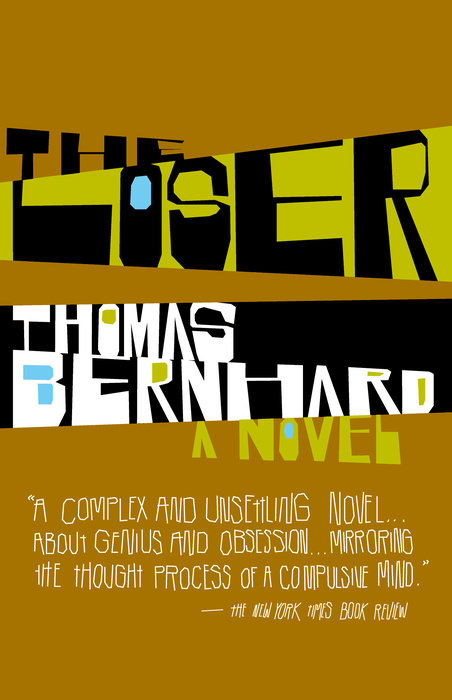
"The Loser" centers on the narrator's obsessive rumination on his friendship with two prodigious pianists, Wertheimer and the legendary Glenn Gould. Following Gould’s death, the narrator recounts their shared past at the Mozarteum, particularly Wertheimer’s descent into "loserhood" after realizing he could never surpass Gould. It's a claustrophobic internal monologue, exploring artistic genius, failure, suicide, and the destructive power of comparison.
The similarities with "Extinction" are striking in their shared thematic core and narrative structure. Both novels are extended, unpunctuated monologues delivered by a bitter, intellectual protagonist railing against society, family, and art. They dissect the corrosive impact of genius on those around it, the agonizing pursuit of perfection, and the ultimate futility of human endeavor. Both feature a deceased central figure whose memory fuels the narrator's relentless critique, and both narrators are deeply alienated figures grappling with their own mortality and philosophical despair.
This book will appeal to those who appreciate intense psychological dives into the human condition. Its value lies in its unflinching examination of self-doubt, the burden of potential, and the complexities of artistic ambition and sacrifice. It offers a profound, if challenging, literary experience that interrogates the very nature of success and failure, prompting reflection on individual purpose and the inescapable shadows cast by extraordinary talent.
The Loser
"The Loser" centers on the narrator's obsessive rumination on his friendship with two prodigious pianists, Wertheimer and the legendary Glenn Gould. Following Gould’s death, the narrator recounts their shared past at the Mozarteum, particularly Wertheimer’s descent into "loserhood" after realizing he could never surpass Gould. It's a claustrophobic internal monologue, exploring artistic genius, failure, suicide, and the destructive power of comparison.
The similarities with "Extinction" are striking in their shared thematic core and narrative structure. Both novels are extended, unpunctuated monologues delivered by a bitter, intellectual protagonist railing against society, family, and art. They dissect the corrosive impact of genius on those around it, the agonizing pursuit of perfection, and the ultimate futility of human endeavor. Both feature a deceased central figure whose memory fuels the narrator's relentless critique, and both narrators are deeply alienated figures grappling with their own mortality and philosophical despair.
This book will appeal to those who appreciate intense psychological dives into the human condition. Its value lies in its unflinching examination of self-doubt, the burden of potential, and the complexities of artistic ambition and sacrifice. It offers a profound, if challenging, literary experience that interrogates the very nature of success and failure, prompting reflection on individual purpose and the inescapable shadows cast by extraordinary talent.
Wittgenstein’s Nephew

"Wittgenstein’s Nephew" recounts Bernhard's own stay in a mental sanatorium where he befriends Paul Wittgenstein, Ludwig Wittgenstein's nephew. The narrative delves into their shared experiences of illness, the peculiarities of the institutional setting, and Paul's eccentricities, all filtered through Bernhard’s distinctive, intensely introspective, and often critical lens. It’s a profound meditation on mental and physical decline, intellectual brilliance, and the suffocating nature of societal expectations.
The similarity to "Extinction" lies in both novels' obsessive, monologue-driven narratives delivered by highly unreliable and deeply critical protagonists. Both works dissect the absurdity and hypocrisy of their respective social spheres – the Viennese intellectual elite in "Wittgenstein’s Nephew" and the provincial Austrian aristocracy in "Extinction." A pervasive sense of disillusionment, the dissecting of a complicated individual through fragmented memory, and Bernhard's signature musical, repetitive prose are core threads linking the two.
This book offers a unique exploration of friendship, illness, and the nature of genius, challenging conventional notions of sanity and success. Its value lies in its unflinching portrayal of human vulnerability and intellectual grandeur, rendered with a darkly comedic and intensely psychological depth that reshapes perceptions of biography and autofiction.
Wittgenstein’s Nephew
"Wittgenstein’s Nephew" recounts Bernhard's own stay in a mental sanatorium where he befriends Paul Wittgenstein, Ludwig Wittgenstein's nephew. The narrative delves into their shared experiences of illness, the peculiarities of the institutional setting, and Paul's eccentricities, all filtered through Bernhard’s distinctive, intensely introspective, and often critical lens. It’s a profound meditation on mental and physical decline, intellectual brilliance, and the suffocating nature of societal expectations.
The similarity to "Extinction" lies in both novels' obsessive, monologue-driven narratives delivered by highly unreliable and deeply critical protagonists. Both works dissect the absurdity and hypocrisy of their respective social spheres – the Viennese intellectual elite in "Wittgenstein’s Nephew" and the provincial Austrian aristocracy in "Extinction." A pervasive sense of disillusionment, the dissecting of a complicated individual through fragmented memory, and Bernhard's signature musical, repetitive prose are core threads linking the two.
This book offers a unique exploration of friendship, illness, and the nature of genius, challenging conventional notions of sanity and success. Its value lies in its unflinching portrayal of human vulnerability and intellectual grandeur, rendered with a darkly comedic and intensely psychological depth that reshapes perceptions of biography and autofiction.
Old Masters: A Comedy

"Old Masters: A Comedy" centers on the observations and internal monologue of Reger, an elderly music critic, positioned on a bench in Vienna's Kunsthistorisches Museum. He scrutinizes the perceived flaws and artistic intentions of various "old masters" in painting while awaiting his wife. The novel is less about a traditional plot and more about Reger’s relentless, often misanthropic, dissection of art, society, and human existence, permeated by his idiosyncratic philosophy and personal grievances.
Both "Old Masters" and "Extinction" exemplify Bernhard’s signature style: extensive, dense internal monologues, often delivered by intellectual, cynical protagonists. They share a critical, almost suffocating, examination of cultural institutions, artistic merit, and the perceived hypocrisy of society. The obsessive focus on a particular place (the museum for Reger, Wolfsegg for Murau) and the relentless, almost musical, repetition of themes and ideas are hallmarks connecting these two works.
This novel offers a profound, albeit challenging, delve into the nature of criticism, art, and the human condition. Its value lies in providing a unique lens through which to consider the subjective experience of art and the often-unspoken biases that shape our perceptions. The depth of character, even within his caustic ramblings, and the intellectual rigor of Bernhard's prose provide a rich, thought-provoking experience, encouraging a re-evaluation of established norms and personal truths.
Old Masters: A Comedy
"Old Masters: A Comedy" centers on the observations and internal monologue of Reger, an elderly music critic, positioned on a bench in Vienna's Kunsthistorisches Museum. He scrutinizes the perceived flaws and artistic intentions of various "old masters" in painting while awaiting his wife. The novel is less about a traditional plot and more about Reger’s relentless, often misanthropic, dissection of art, society, and human existence, permeated by his idiosyncratic philosophy and personal grievances.
Both "Old Masters" and "Extinction" exemplify Bernhard’s signature style: extensive, dense internal monologues, often delivered by intellectual, cynical protagonists. They share a critical, almost suffocating, examination of cultural institutions, artistic merit, and the perceived hypocrisy of society. The obsessive focus on a particular place (the museum for Reger, Wolfsegg for Murau) and the relentless, almost musical, repetition of themes and ideas are hallmarks connecting these two works.
This novel offers a profound, albeit challenging, delve into the nature of criticism, art, and the human condition. Its value lies in providing a unique lens through which to consider the subjective experience of art and the often-unspoken biases that shape our perceptions. The depth of character, even within his caustic ramblings, and the intellectual rigor of Bernhard's prose provide a rich, thought-provoking experience, encouraging a re-evaluation of established norms and personal truths.
Liquidation

*Liquidation* by Imre Kertész explores the aftermath of the Holocaust through the lens of a writer, B., who commits suicide. The novel unfolds as B.'s publisher attempts to reconstruct his life and motivations, particularly concerning an unfinished manuscript that hints at a child survivor's story. It is a fragmented, meta-fictional meditation on memory, the impossibility of closure, and the lingering trauma of genocide, examining how historical catastrophe irrevocably shapes individual identity and narrative.
The similarity to Bernhard’s *Extinction* lies in their shared exploration of profound disillusionment and the overwhelming burden of the past. Both novels feature narrators whose experiences with personal and collective history lead to a corrosive cynicism, often expressed through relentless internal monologues or reconstructions of a deceased's worldview. They are critiques of inherited legacies and the often-futile attempts to transcend or escape them, characterized by a demanding, intellectual prose style.
This work appeals to those who appreciate challenging intellectual fiction and a deep dive into existential themes. Its value lies in its unflinching examination of historical trauma and its psychological permutations, offering a rigorous, multifaceted perspective on the enduring impact of atrocity. It serves as a powerful testament to the complexities of grappling with an unredeemable past, prompting reflection on memory, identity, and narrative construction.
Liquidation
*Liquidation* by Imre Kertész explores the aftermath of the Holocaust through the lens of a writer, B., who commits suicide. The novel unfolds as B.'s publisher attempts to reconstruct his life and motivations, particularly concerning an unfinished manuscript that hints at a child survivor's story. It is a fragmented, meta-fictional meditation on memory, the impossibility of closure, and the lingering trauma of genocide, examining how historical catastrophe irrevocably shapes individual identity and narrative.
The similarity to Bernhard’s *Extinction* lies in their shared exploration of profound disillusionment and the overwhelming burden of the past. Both novels feature narrators whose experiences with personal and collective history lead to a corrosive cynicism, often expressed through relentless internal monologues or reconstructions of a deceased's worldview. They are critiques of inherited legacies and the often-futile attempts to transcend or escape them, characterized by a demanding, intellectual prose style.
This work appeals to those who appreciate challenging intellectual fiction and a deep dive into existential themes. Its value lies in its unflinching examination of historical trauma and its psychological permutations, offering a rigorous, multifaceted perspective on the enduring impact of atrocity. It serves as a powerful testament to the complexities of grappling with an unredeemable past, prompting reflection on memory, identity, and narrative construction.
The Clown

Heinrich Böll's "The Clown" introduces Hans Schnier, a melancholic clown grappling with a crisis of faith and identity in post-war Germany. Shunned by society for his bohemian lifestyle and unconventional views, Schnier navigates a labyrinthine landscape of hypocrisy, religious austerity, and superficiality, desperately seeking connection and authenticity while his life crumbles around him.
The parallels with Bernhard's "Extinction" are striking in their shared exploration of disillusionment and social critique. Both novels feature protagonists – Bernhard's Franz-Josef Murau and Böll's Schnier – who are intellectual exiles, alienated from their families and the dominant societal norms. They employ biting, often cynical, internal monologues to dissect the rot they perceive in their respective societies, focusing on themes of ingrained duplicity, the superficiality of religious and cultural institutions, and the suffocating weight of tradition and expectation on the individual. Both authors masterfully craft narratives driven by a powerful, singular voice articulating profound dissatisfaction.
This novel offers a profound meditation on the individual's struggle against societal pressures and hypocrisies. Its unflinching depiction of a man's spiritual and existential unraveling, coupled with Böll's incisive commentary on post-war German society, resonates deeply with those who appreciate stark honesty and intellectual rigor in literature. It provides a powerful, introspective journey into the nature of belief, artistic integrity, and the alienation born from refusing to conform.
The Clown
Heinrich Böll's "The Clown" introduces Hans Schnier, a melancholic clown grappling with a crisis of faith and identity in post-war Germany. Shunned by society for his bohemian lifestyle and unconventional views, Schnier navigates a labyrinthine landscape of hypocrisy, religious austerity, and superficiality, desperately seeking connection and authenticity while his life crumbles around him.
The parallels with Bernhard's "Extinction" are striking in their shared exploration of disillusionment and social critique. Both novels feature protagonists – Bernhard's Franz-Josef Murau and Böll's Schnier – who are intellectual exiles, alienated from their families and the dominant societal norms. They employ biting, often cynical, internal monologues to dissect the rot they perceive in their respective societies, focusing on themes of ingrained duplicity, the superficiality of religious and cultural institutions, and the suffocating weight of tradition and expectation on the individual. Both authors masterfully craft narratives driven by a powerful, singular voice articulating profound dissatisfaction.
This novel offers a profound meditation on the individual's struggle against societal pressures and hypocrisies. Its unflinching depiction of a man's spiritual and existential unraveling, coupled with Böll's incisive commentary on post-war German society, resonates deeply with those who appreciate stark honesty and intellectual rigor in literature. It provides a powerful, introspective journey into the nature of belief, artistic integrity, and the alienation born from refusing to conform.
The Last World

"The Last World" reimagines Ovid’s *Tristia*, chronicling the poet Cotta’s perilous journey to Tomi, a desolate outpost where Ovid was exiled. Cotta’s mission is to retrieve his mentor’s lost works, but he instead encounters a fragmented, mythical landscape inhabited by characters echoing Ovid’s metamorphoses, all grappling with memory, exile, and the disintegration of their identities. The narrative is a haunting exploration of storytelling, loss, and the enduring power of myth in a crumbling world.
Both "The Last World" and "Extinction" delve into the corrosive effects of memory, isolation, and the weight of a past that refuses to be forgotten. Bernhard’s protagonist rages against inherited burdens, while Ransmayr’s Cotta grapples with the legacy of a banished poet, piecing together a broken narrative. Both authors employ a dense, almost hypnotic prose style, creating a sense of claustrophobia and intellectual intensity that explores the nature of truth and the subjective experience of reality.
This book offers a profound intellectual journey into the nature of narrative and the human condition. Its intricate layering of myth and history, combined with Ransmayr's masterful prose, provides a deeply immersive experience. It challenges perceptions of memory and exile, and its exploration of how stories are forged and endure, even in the face of oblivion, resonates with contemporary concerns about legacy, truth, and the fragility of civilization itself.
The Last World
"The Last World" reimagines Ovid’s *Tristia*, chronicling the poet Cotta’s perilous journey to Tomi, a desolate outpost where Ovid was exiled. Cotta’s mission is to retrieve his mentor’s lost works, but he instead encounters a fragmented, mythical landscape inhabited by characters echoing Ovid’s metamorphoses, all grappling with memory, exile, and the disintegration of their identities. The narrative is a haunting exploration of storytelling, loss, and the enduring power of myth in a crumbling world.
Both "The Last World" and "Extinction" delve into the corrosive effects of memory, isolation, and the weight of a past that refuses to be forgotten. Bernhard’s protagonist rages against inherited burdens, while Ransmayr’s Cotta grapples with the legacy of a banished poet, piecing together a broken narrative. Both authors employ a dense, almost hypnotic prose style, creating a sense of claustrophobia and intellectual intensity that explores the nature of truth and the subjective experience of reality.
This book offers a profound intellectual journey into the nature of narrative and the human condition. Its intricate layering of myth and history, combined with Ransmayr's masterful prose, provides a deeply immersive experience. It challenges perceptions of memory and exile, and its exploration of how stories are forged and endure, even in the face of oblivion, resonates with contemporary concerns about legacy, truth, and the fragility of civilization itself.
Gantenbein

"Gantenbein" explores identity through a series of hypothetical lives its narrator, Theo Gantenbein, imagines for himself. He constructs various personas – a blind man, a husband whose wife had an affair, an architect – each offering a different lens on reality, marriage, and self-perception. It’s a profound meditation on how we continually invent and reinvent ourselves, and how these invented narratives shape our understanding of existence.
Its similarity to "Extinction" lies in the relentless, introspective monologue, driven by a narrator obsessively turning over questions of identity, memory, and authenticity. Both novels feature protagonists who, through intellectual dissection and self-interrogation, dismantle conventional notions of truth and personal history, ultimately arriving at a profound sense of disillusionment and a questioning of the stories we tell ourselves.
This novel will appeal to those who appreciate deep philosophical inquiry within a narrative framework, particularly those drawn to experimental forms that challenge traditional storytelling. It offers a rich, thought-provoking examination of self-deception, the fluidity of identity, and the existential weight of choice, making it a valuable experience for anyone seeking literature that probes the very essence of human experience.
Gantenbein
"Gantenbein" explores identity through a series of hypothetical lives its narrator, Theo Gantenbein, imagines for himself. He constructs various personas – a blind man, a husband whose wife had an affair, an architect – each offering a different lens on reality, marriage, and self-perception. It’s a profound meditation on how we continually invent and reinvent ourselves, and how these invented narratives shape our understanding of existence.
Its similarity to "Extinction" lies in the relentless, introspective monologue, driven by a narrator obsessively turning over questions of identity, memory, and authenticity. Both novels feature protagonists who, through intellectual dissection and self-interrogation, dismantle conventional notions of truth and personal history, ultimately arriving at a profound sense of disillusionment and a questioning of the stories we tell ourselves.
This novel will appeal to those who appreciate deep philosophical inquiry within a narrative framework, particularly those drawn to experimental forms that challenge traditional storytelling. It offers a rich, thought-provoking examination of self-deception, the fluidity of identity, and the existential weight of choice, making it a valuable experience for anyone seeking literature that probes the very essence of human experience.
Fatelessness

"Fatelessness" follows a young Hungarian Jew through his experiences in various concentration camps during the Holocaust. It's not a tale of heroic resistance or dramatic escape, but rather a chillingly detached, almost observational account of survival, adaptation, and the gradual erosion of self in the face of unimaginable atrocity. The narration maintains a stark, unembellished tone, chronicling the mundane and the monstrous with equal, unsettling composure.
Both "Fatelessness" and "Extinction" delve into themes of profound disillusionment and the individual's struggle to reconcile with a traumatic past or a perceived moral decay within society. They share a distinctive narrative voice characterized by its relentless, almost hypnotic internal monologue, exploring the absurdity and meaninglessness discovered in extreme circumstances. Both authors use repetition and a singular, sustained perspective to create an immersive, unsettling psychological landscape for the reader.
This book offers a unique and unsettling perspective on historical trauma, presenting it not as a catalyst for grand emotional display, but as a slow, dehumanizing process that reshapes identity. Its stark honesty and philosophical depth provide an invaluable examination of resilience, memory, and the insidious nature of evil, challenging conventional narratives of victimhood and survival.
Fatelessness
"Fatelessness" follows a young Hungarian Jew through his experiences in various concentration camps during the Holocaust. It's not a tale of heroic resistance or dramatic escape, but rather a chillingly detached, almost observational account of survival, adaptation, and the gradual erosion of self in the face of unimaginable atrocity. The narration maintains a stark, unembellished tone, chronicling the mundane and the monstrous with equal, unsettling composure.
Both "Fatelessness" and "Extinction" delve into themes of profound disillusionment and the individual's struggle to reconcile with a traumatic past or a perceived moral decay within society. They share a distinctive narrative voice characterized by its relentless, almost hypnotic internal monologue, exploring the absurdity and meaninglessness discovered in extreme circumstances. Both authors use repetition and a singular, sustained perspective to create an immersive, unsettling psychological landscape for the reader.
This book offers a unique and unsettling perspective on historical trauma, presenting it not as a catalyst for grand emotional display, but as a slow, dehumanizing process that reshapes identity. Its stark honesty and philosophical depth provide an invaluable examination of resilience, memory, and the insidious nature of evil, challenging conventional narratives of victimhood and survival.
More Books to Explore
Discover more titles that expand on these ideas and themes.
Concrete
Woodcutters
The Loser
Wittgenstein’s Nephew
Old Masters: A Comedy
Liquidation