10 Books Similar to "End the Fed"
by Ron Paul

The Revolution: A Manifesto

"The Revolution: A Manifesto" outlines Ron Paul's core political philosophy, advocating for limited government, individual liberty, and a non-interventionist foreign policy. It’s a direct call to action, urging citizens to reclaim constitutional principles and reduce federal overreach in all aspects of life, from economic policy to personal freedoms.
This manifesto resonates with "End the Fed" by sharing a foundational distrust of centralized power and an emphasis on individual sovereignty. Both books critique the current economic and political systems, arguing for a return to a more decentralized, market-driven approach, free from government manipulation and control.
The book offers a compelling alternative vision for America, appealing to those who feel disenfranchised by mainstream politics and yearn for greater personal and economic freedom. Its clear articulation of libertarian ideals and its consistent call for constitutional governance provides a valuable framework for understanding a significant political movement and its proposed solutions to contemporary challenges.
The Revolution: A Manifesto
"The Revolution: A Manifesto" outlines Ron Paul's core political philosophy, advocating for limited government, individual liberty, and a non-interventionist foreign policy. It’s a direct call to action, urging citizens to reclaim constitutional principles and reduce federal overreach in all aspects of life, from economic policy to personal freedoms.
This manifesto resonates with "End the Fed" by sharing a foundational distrust of centralized power and an emphasis on individual sovereignty. Both books critique the current economic and political systems, arguing for a return to a more decentralized, market-driven approach, free from government manipulation and control.
The book offers a compelling alternative vision for America, appealing to those who feel disenfranchised by mainstream politics and yearn for greater personal and economic freedom. Its clear articulation of libertarian ideals and its consistent call for constitutional governance provides a valuable framework for understanding a significant political movement and its proposed solutions to contemporary challenges.
What Has Government Done to Our Money? and The Case for a 100 Percent Gold Dollar

Murray Rothbard's "What Has Government Done to Our Money?" critically examines the history of money and government intervention, arguing that states have consistently debased currencies, leading to inflation and economic instability. He advocates for a return to a 100% gold standard, believing it would impose discipline on spending and protect individual liberty from governmental monetary manipulation.
This work resonates strongly with Ron Paul's "End the Fed" by sharing a fundamental critique of centralized monetary control. Both authors argue that a government-controlled central bank, unconstrained by a hard monetary standard, inevitably leads to diminished purchasing power and recurrent financial crises, and that true economic stability and individual freedom require severing the state's power over money.
This book will appeal to those seeking a deeper historical and theoretical understanding of monetary policy and its societal impact. It offers a compelling, intellectual framework for distrusting fiat currencies and central bank power, providing profound insights into the origins of modern economic challenges and offering a principled alternative grounded in economic freedom.
What Has Government Done to Our Money? and The Case for a 100 Percent Gold Dollar
Murray Rothbard's "What Has Government Done to Our Money?" critically examines the history of money and government intervention, arguing that states have consistently debased currencies, leading to inflation and economic instability. He advocates for a return to a 100% gold standard, believing it would impose discipline on spending and protect individual liberty from governmental monetary manipulation.
This work resonates strongly with Ron Paul's "End the Fed" by sharing a fundamental critique of centralized monetary control. Both authors argue that a government-controlled central bank, unconstrained by a hard monetary standard, inevitably leads to diminished purchasing power and recurrent financial crises, and that true economic stability and individual freedom require severing the state's power over money.
This book will appeal to those seeking a deeper historical and theoretical understanding of monetary policy and its societal impact. It offers a compelling, intellectual framework for distrusting fiat currencies and central bank power, providing profound insights into the origins of modern economic challenges and offering a principled alternative grounded in economic freedom.
The Conscience of a Liberal

Paul Krugman's "The Conscience of a Liberal" examines the rise and fall of America's middle class, attributing its decline to a specific political shift towards conservative economics. He argues against the prevailing notion that market forces alone drive inequality, instead positing that conscious political choices shaped the economic landscape and that similar choices could reverse these trends, advocating for a restoration of New Deal-era policies.
Both "The Conscience of a Liberal" and "End the Fed" share a fundamental questioning of powerful, established institutions often taken for granted. While Paul targets the Federal Reserve's economic control, Krugman critiques the dominance of conservative economic ideology and its impact on societal well-being. Both authors challenge the status quo, advocating for significant systemic change to address what they perceive as deep-seated problems within American society and its economic structure.
This book will appeal to those interested in understanding the historical roots of economic inequality and the political forces that shaped the American economy. Its value lies in offering a detailed, academically-grounded perspective on policy choices and their societal consequences, providing a robust intellectual framework for comprehending contemporary economic debates and their implications for social justice and democratic health.
The Conscience of a Liberal
Paul Krugman's "The Conscience of a Liberal" examines the rise and fall of America's middle class, attributing its decline to a specific political shift towards conservative economics. He argues against the prevailing notion that market forces alone drive inequality, instead positing that conscious political choices shaped the economic landscape and that similar choices could reverse these trends, advocating for a restoration of New Deal-era policies.
Both "The Conscience of a Liberal" and "End the Fed" share a fundamental questioning of powerful, established institutions often taken for granted. While Paul targets the Federal Reserve's economic control, Krugman critiques the dominance of conservative economic ideology and its impact on societal well-being. Both authors challenge the status quo, advocating for significant systemic change to address what they perceive as deep-seated problems within American society and its economic structure.
This book will appeal to those interested in understanding the historical roots of economic inequality and the political forces that shaped the American economy. Its value lies in offering a detailed, academically-grounded perspective on policy choices and their societal consequences, providing a robust intellectual framework for comprehending contemporary economic debates and their implications for social justice and democratic health.
The FairTax Book: Saying Goodbye to the Income Tax and the IRS
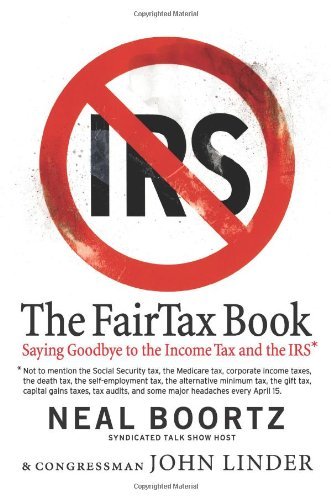
"The FairTax Book" advocates for a radical overhaul of the American tax system, proposing to replace all existing federal income, payroll, estate, and gift taxes with a single, national retail sales tax. The authors argue this shift would simplify the tax code, stimulate economic growth, reward savings and investment, and eliminate the IRS, thereby increasing transparency and fairness for all citizens. It details how the FairTax would work, addressing common concerns and outlining its purported benefits for individuals and the economy at large.
The two books share a fundamental premise: a deeply ingrained distrust of powerful, centralized government institutions and a belief that systemic reform is necessary to restore economic liberty and individual prosperity. Both "End the Fed" and "The FairTax Book" challenge the status quo, identifying a core economic pillar (the Federal Reserve and the income tax system, respectively) as detrimental to the nation's well-being and advocating for its complete dismantling in favor of a more decentralized, market-driven approach.
This book will appeal to individuals who feel burdened by the complexity and perceived unfairness of the current tax system. It offers a clear, well-articulated vision for a different economic future, promising greater individual control over finances and a more equitable distribution of the tax burden. For those seeking concrete, actionable proposals for significant economic reform, it provides a compelling and thoroughly researched argument.
The FairTax Book: Saying Goodbye to the Income Tax and the IRS
"The FairTax Book" advocates for a radical overhaul of the American tax system, proposing to replace all existing federal income, payroll, estate, and gift taxes with a single, national retail sales tax. The authors argue this shift would simplify the tax code, stimulate economic growth, reward savings and investment, and eliminate the IRS, thereby increasing transparency and fairness for all citizens. It details how the FairTax would work, addressing common concerns and outlining its purported benefits for individuals and the economy at large.
The two books share a fundamental premise: a deeply ingrained distrust of powerful, centralized government institutions and a belief that systemic reform is necessary to restore economic liberty and individual prosperity. Both "End the Fed" and "The FairTax Book" challenge the status quo, identifying a core economic pillar (the Federal Reserve and the income tax system, respectively) as detrimental to the nation's well-being and advocating for its complete dismantling in favor of a more decentralized, market-driven approach.
This book will appeal to individuals who feel burdened by the complexity and perceived unfairness of the current tax system. It offers a clear, well-articulated vision for a different economic future, promising greater individual control over finances and a more equitable distribution of the tax burden. For those seeking concrete, actionable proposals for significant economic reform, it provides a compelling and thoroughly researched argument.
Free to Choose: A Personal Statement

"Free to Choose: A Personal Statement" by Milton and Rose Friedman is a seminal work advocating for economic and individual liberty. It meticulously argues that free markets and limited government intervention are the most effective means to foster prosperity, innovation, and personal freedom. The book explores various societal issues, from education to welfare, through the lens of free-market principles, demonstrating how government overreach often leads to unintended negative consequences.
The similarity to "End the Fed" lies in their shared philosophical underpinning of skepticism towards centralized government power, particularly in economic matters. While Paul focuses specifically on the Federal Reserve, both books champion individual economic freedom and argue against institutions that distort market mechanisms and erode personal choice. They both contend that less government interference, even in areas perceived as beneficial, ultimately benefits society more broadly by allowing natural economic forces to operate.
This book offers a compelling and academically rigorous defense of free-market capitalism and individual liberty. It provides a robust framework for understanding contemporary economic and social issues, empowering individuals to critically evaluate government policies and their impact. Its enduring insights into the relationship between freedom and prosperity make it a valuable resource for anyone seeking a deeper understanding of economic philosophy and its practical applications.
Free to Choose: A Personal Statement
"Free to Choose: A Personal Statement" by Milton and Rose Friedman is a seminal work advocating for economic and individual liberty. It meticulously argues that free markets and limited government intervention are the most effective means to foster prosperity, innovation, and personal freedom. The book explores various societal issues, from education to welfare, through the lens of free-market principles, demonstrating how government overreach often leads to unintended negative consequences.
The similarity to "End the Fed" lies in their shared philosophical underpinning of skepticism towards centralized government power, particularly in economic matters. While Paul focuses specifically on the Federal Reserve, both books champion individual economic freedom and argue against institutions that distort market mechanisms and erode personal choice. They both contend that less government interference, even in areas perceived as beneficial, ultimately benefits society more broadly by allowing natural economic forces to operate.
This book offers a compelling and academically rigorous defense of free-market capitalism and individual liberty. It provides a robust framework for understanding contemporary economic and social issues, empowering individuals to critically evaluate government policies and their impact. Its enduring insights into the relationship between freedom and prosperity make it a valuable resource for anyone seeking a deeper understanding of economic philosophy and its practical applications.
Obamanomics: How Bottom-Up Economic Prosperity Will Replace Trickle-Down Economics
"Obamanomics" by John R. Talbott critiques traditional trickle-down economic theories, advocating instead for a "bottom-up" approach. Talbott argues that prosperity is best achieved by investing in the middle class and supporting policies that benefit average citizens, rather than relying on tax cuts and deregulation for corporations and the wealthy. The book dissects the economic strategies of the Obama administration, presenting them as a model for this bottom-up revitalization.
Both "Obamanomics" and "End the Fed" share a fundamental questioning of entrenched economic powers and their impact on the average American. While Ron Paul targets the Federal Reserve's monetary policies, Talbott challenges the conventional capitalist structure that he believes favors the top. Both authors posit that current systems are detrimental to widespread prosperity and advocate for significant systemic change to re-empower the citizenry.
This analysis offers a compelling perspective for those interested in alternative economic models and criticisms of mainstream financial policy. It provides a detailed look at the theoretical underpinnings and practical applications of a progressive economic framework, offering insights into how government intervention can be leveraged to create a more equitable and robust economy for all.
Obamanomics: How Bottom-Up Economic Prosperity Will Replace Trickle-Down Economics
"Obamanomics" by John R. Talbott critiques traditional trickle-down economic theories, advocating instead for a "bottom-up" approach. Talbott argues that prosperity is best achieved by investing in the middle class and supporting policies that benefit average citizens, rather than relying on tax cuts and deregulation for corporations and the wealthy. The book dissects the economic strategies of the Obama administration, presenting them as a model for this bottom-up revitalization.
Both "Obamanomics" and "End the Fed" share a fundamental questioning of entrenched economic powers and their impact on the average American. While Ron Paul targets the Federal Reserve's monetary policies, Talbott challenges the conventional capitalist structure that he believes favors the top. Both authors posit that current systems are detrimental to widespread prosperity and advocate for significant systemic change to re-empower the citizenry.
This analysis offers a compelling perspective for those interested in alternative economic models and criticisms of mainstream financial policy. It provides a detailed look at the theoretical underpinnings and practical applications of a progressive economic framework, offering insights into how government intervention can be leveraged to create a more equitable and robust economy for all.
How an Economy Grows and Why It Crashes

"How an Economy Grows and Why It Crashes" simplifies complex economic principles by illustrating them through a compelling, multi-generational parable. It traces the journey of a primitive island society, demonstrating how savings, investment, and sound monetary policy foster prosperity, while reckless spending, excessive debt, and government intervention ultimately lead to economic collapse. The narrative effectively distills Austrian economic theory into an accessible and engaging format, explaining concepts like inflation, capital formation, and the business cycle with remarkable clarity.
This book shares fundamental ideological ground with "End the Fed." Both works strongly advocate for limited government intervention in the economy and critique central banking's role in creating financial instability. Schiff, like Paul, argues that artificial manipulation of interest rates and the money supply by central authorities distorts market signals and ultimately causes booms followed by inevitable busts. They both champion free markets and individual liberty as the bedrock of sustainable economic growth.
For those concerned about financial stability, government overreach, and the true drivers of economic prosperity, this book offers profound insights. It provides a foundational understanding of economic principles often obscured by conventional narratives, empowering individuals to critically assess current policies and understand the potential consequences of unchecked monetary expansion. The engaging storytelling makes potentially dry subject matter both understandable and memorable, making it invaluable for anyone seeking a deeper comprehension of economic cycles.
How an Economy Grows and Why It Crashes
"How an Economy Grows and Why It Crashes" simplifies complex economic principles by illustrating them through a compelling, multi-generational parable. It traces the journey of a primitive island society, demonstrating how savings, investment, and sound monetary policy foster prosperity, while reckless spending, excessive debt, and government intervention ultimately lead to economic collapse. The narrative effectively distills Austrian economic theory into an accessible and engaging format, explaining concepts like inflation, capital formation, and the business cycle with remarkable clarity.
This book shares fundamental ideological ground with "End the Fed." Both works strongly advocate for limited government intervention in the economy and critique central banking's role in creating financial instability. Schiff, like Paul, argues that artificial manipulation of interest rates and the money supply by central authorities distorts market signals and ultimately causes booms followed by inevitable busts. They both champion free markets and individual liberty as the bedrock of sustainable economic growth.
For those concerned about financial stability, government overreach, and the true drivers of economic prosperity, this book offers profound insights. It provides a foundational understanding of economic principles often obscured by conventional narratives, empowering individuals to critically assess current policies and understand the potential consequences of unchecked monetary expansion. The engaging storytelling makes potentially dry subject matter both understandable and memorable, making it invaluable for anyone seeking a deeper comprehension of economic cycles.
One Market Under God: Extreme Capitalism, Market Populism, and the End of Economic Democracy

"One Market Under God" dissects how mainstream culture, particularly in media and business, began to champion a specific, extreme form of capitalism during the 1990s. Thomas Frank argues that this "market populism" co-opted democratic ideals, presenting corporate interests as synonymous with individual freedom and progress. He reveals how this narrative disguised wealth concentration and eroded genuine economic democracy, ultimately serving the powerful at the expense of broader societal well-being.
Both books challenge established economic powers and question the narratives that uphold them. While Ron Paul targets the Federal Reserve's control over monetary policy and its impact on liberty, Frank scrutinizes the cultural and ideological mechanisms that legitimized unchecked corporate power and wealth accumulation. Both critiques stem from a concern about the disenfranchisement of ordinary citizens and the subversion of true democratic principles by entrenched economic interests.
This book offers a critical lens through which to understand the ideological underpinnings of modern economic discourse. It provides valuable insights for anyone interested in how economic power is sustained through cultural narratives, how democratic ideals can be co-opted, and the historical roots of contemporary economic inequality. The book equips one with a deeper understanding of the forces shaping our economic landscape.
One Market Under God: Extreme Capitalism, Market Populism, and the End of Economic Democracy
"One Market Under God" dissects how mainstream culture, particularly in media and business, began to champion a specific, extreme form of capitalism during the 1990s. Thomas Frank argues that this "market populism" co-opted democratic ideals, presenting corporate interests as synonymous with individual freedom and progress. He reveals how this narrative disguised wealth concentration and eroded genuine economic democracy, ultimately serving the powerful at the expense of broader societal well-being.
Both books challenge established economic powers and question the narratives that uphold them. While Ron Paul targets the Federal Reserve's control over monetary policy and its impact on liberty, Frank scrutinizes the cultural and ideological mechanisms that legitimized unchecked corporate power and wealth accumulation. Both critiques stem from a concern about the disenfranchisement of ordinary citizens and the subversion of true democratic principles by entrenched economic interests.
This book offers a critical lens through which to understand the ideological underpinnings of modern economic discourse. It provides valuable insights for anyone interested in how economic power is sustained through cultural narratives, how democratic ideals can be co-opted, and the historical roots of contemporary economic inequality. The book equips one with a deeper understanding of the forces shaping our economic landscape.
Economic Facts and Fallacies
"Economic Facts and Fallacies" by Thomas Sowell dissects common economic misconceptions and presents nuanced, evidence-based arguments for how economies truly function. Sowell systematically exposes how popular beliefs, often driven by emotion or ideology, frequently contradict empirical reality, offering a clear-eyed perspective on topics from income inequality to government intervention.
This book shares common ground with "End the Fed" in its skepticism towards centralized economic authority and its emphasis on individual liberty's role in prosperity. Both authors advocate for a deeper understanding of economic principles to counter prevailing narratives, questioning established institutions and their often-unintended consequences on financial stability and societal well-being.
The book will appeal to those who appreciate rigorous, data-driven analysis challenging conventional wisdom. It offers invaluable insights for anyone seeking to understand the often-complex interplay of economic forces and policy decisions, providing a robust framework for critical thinking about money, markets, and government's impact on individual prosperity.
Economic Facts and Fallacies
"Economic Facts and Fallacies" by Thomas Sowell dissects common economic misconceptions and presents nuanced, evidence-based arguments for how economies truly function. Sowell systematically exposes how popular beliefs, often driven by emotion or ideology, frequently contradict empirical reality, offering a clear-eyed perspective on topics from income inequality to government intervention.
This book shares common ground with "End the Fed" in its skepticism towards centralized economic authority and its emphasis on individual liberty's role in prosperity. Both authors advocate for a deeper understanding of economic principles to counter prevailing narratives, questioning established institutions and their often-unintended consequences on financial stability and societal well-being.
The book will appeal to those who appreciate rigorous, data-driven analysis challenging conventional wisdom. It offers invaluable insights for anyone seeking to understand the often-complex interplay of economic forces and policy decisions, providing a robust framework for critical thinking about money, markets, and government's impact on individual prosperity.
Liberty and Tyranny: A Conservative Manifesto

"Liberty and Tyranny" by Mark R. Levin argues for American exceptionalism and the enduring relevance of originalist constitutional principles. Levin contends that a progressive erosion of individual liberties and limited government has occurred, advocating for a return to the foundational values he sees enshrined in the Constitution: strict constructionism, free markets, and a powerful citizenry constrained by biblical morality. He critiques contemporary liberal policies as antithetical to these ideals, presenting a clear vision for conservative governance.
This book shares thematic strongpoints with "End the Fed" in its fundamental distrust of large, centralized institutions and unconstrained governmental power. Both authors highlight how such entities can undermine individual freedom and economic stability, albeit with Levin focusing on a broader scope of government encroachment and Paul specifically targeting the Federal Reserve. They both champion a return to what they perceive as foundational American principles to restore liberty and prosperity.
The book offers a compelling exploration of conservative thought, providing a structured argument for limited government and individual responsibility. Its clear articulation of principles provides a framework for understanding contemporary political debates, inspiring critical thinking about the balance between state power and personal freedom. It serves as a valuable resource for anyone seeking a deeper understanding of American conservative philosophy.
Liberty and Tyranny: A Conservative Manifesto
"Liberty and Tyranny" by Mark R. Levin argues for American exceptionalism and the enduring relevance of originalist constitutional principles. Levin contends that a progressive erosion of individual liberties and limited government has occurred, advocating for a return to the foundational values he sees enshrined in the Constitution: strict constructionism, free markets, and a powerful citizenry constrained by biblical morality. He critiques contemporary liberal policies as antithetical to these ideals, presenting a clear vision for conservative governance.
This book shares thematic strongpoints with "End the Fed" in its fundamental distrust of large, centralized institutions and unconstrained governmental power. Both authors highlight how such entities can undermine individual freedom and economic stability, albeit with Levin focusing on a broader scope of government encroachment and Paul specifically targeting the Federal Reserve. They both champion a return to what they perceive as foundational American principles to restore liberty and prosperity.
The book offers a compelling exploration of conservative thought, providing a structured argument for limited government and individual responsibility. Its clear articulation of principles provides a framework for understanding contemporary political debates, inspiring critical thinking about the balance between state power and personal freedom. It serves as a valuable resource for anyone seeking a deeper understanding of American conservative philosophy.
More Books to Explore
Discover more titles that expand on these ideas and themes.
The Revolution: A Manifesto
What Has Government Done to Our Money? and The Case for a 100 Percent Gold Dollar
The Conscience of a Liberal
The FairTax Book: Saying Goodbye to the Income Tax and the IRS
Free to Choose: A Personal Statement
Obamanomics: How Bottom-Up Economic Prosperity Will Replace Trickle-Down Economics