10 Books Similar to "Drive: The Surprising Truth About What Motivates Us"
by Daniel H. Pink
To Sell is Human: The Surprising Truth About Moving Others
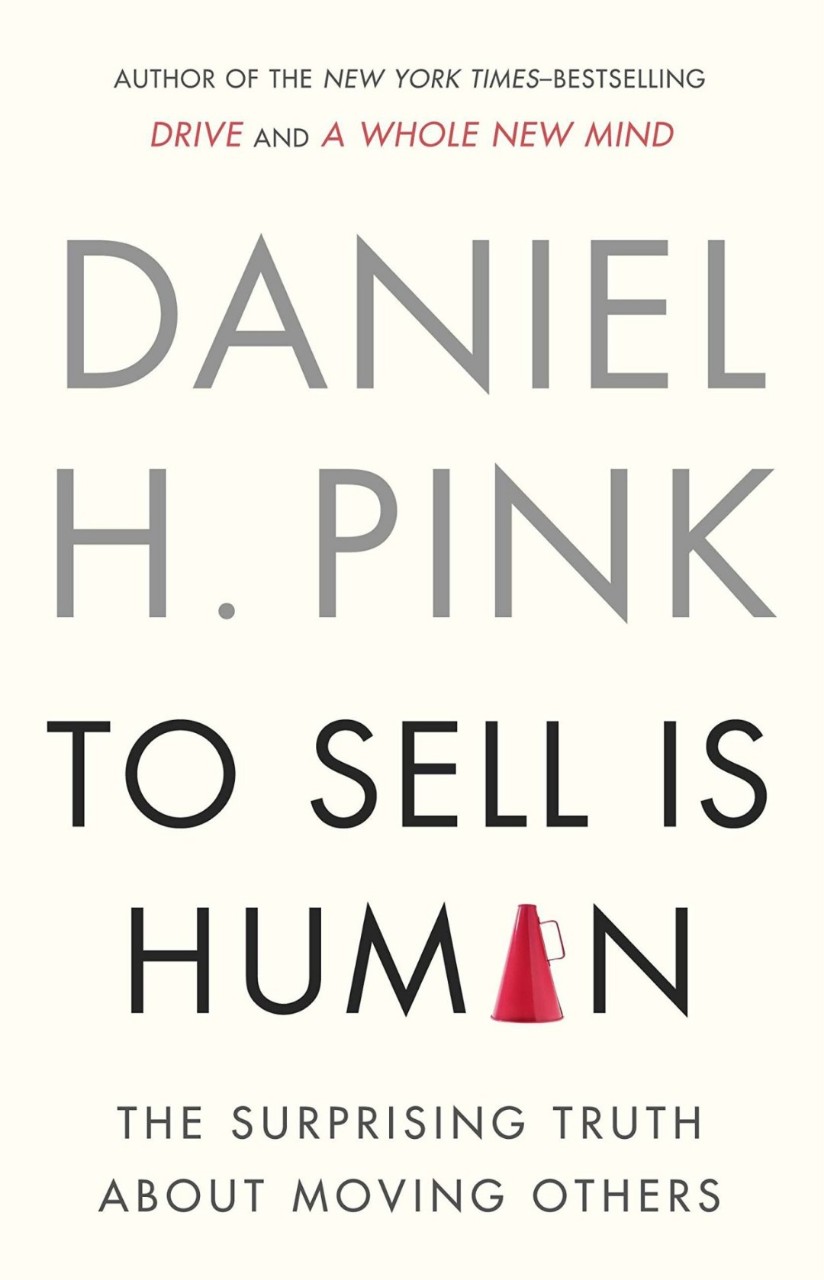
"To Sell is Human" redefines "selling" as a fundamental human activity: moving others to act, whether it's convincing a child to tidy their room, a colleague to adopt an idea, or a customer to buy a product. Pink argues that in our modern economy, everyone is in sales to some degree, even if they don't hold a sales title. He strips away outdated notions of aggressive, manipulative selling tactics, instead advocating for transparency, empathy, and service.
This book shares "Drive's" overarching theme of challenging conventional wisdom about human behavior. Just as "Drive" debunked extrinsic motivators as primary drivers, "To Sell is Human" deconstructs traditional sales paradigms, revealing a more authentic and effective approach to influence. Both draw on social science research to offer a fresh perspective on a ubiquitous human experience, urging a shift from outdated models to more nuanced, intrinsic understandings.
Individuals in any profession seeking to be more effective in their communication and influence will find immense value in this book. It equips them with a more ethical and practical framework for understanding and engaging with others, fostering stronger relationships and generating more positive outcomes. It offers actionable insights for anyone looking to navigate the increasingly interconnected and persuasive aspects of modern life and work.
To Sell is Human: The Surprising Truth About Moving Others
"To Sell is Human" redefines "selling" as a fundamental human activity: moving others to act, whether it's convincing a child to tidy their room, a colleague to adopt an idea, or a customer to buy a product. Pink argues that in our modern economy, everyone is in sales to some degree, even if they don't hold a sales title. He strips away outdated notions of aggressive, manipulative selling tactics, instead advocating for transparency, empathy, and service.
This book shares "Drive's" overarching theme of challenging conventional wisdom about human behavior. Just as "Drive" debunked extrinsic motivators as primary drivers, "To Sell is Human" deconstructs traditional sales paradigms, revealing a more authentic and effective approach to influence. Both draw on social science research to offer a fresh perspective on a ubiquitous human experience, urging a shift from outdated models to more nuanced, intrinsic understandings.
Individuals in any profession seeking to be more effective in their communication and influence will find immense value in this book. It equips them with a more ethical and practical framework for understanding and engaging with others, fostering stronger relationships and generating more positive outcomes. It offers actionable insights for anyone looking to navigate the increasingly interconnected and persuasive aspects of modern life and work.
Start with Why: How Great Leaders Inspire Everyone to Take Action
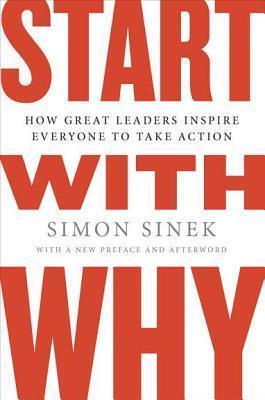
"Start with Why" unpacks the concept that truly inspiring leaders and organizations don't just communicate *what* they do or *how* they do it; they articulate *why* they do it. Sinek posits that understanding and communicating your core purpose, cause, or belief—the "Why"—is paramount to motivating others and building lasting loyalty. He illustrates how this "Golden Circle" framework differentiates successful entities from their less impactful counterparts.
This book resonates with "Drive" by both challenging traditional views of motivation and offering a powerful alternative. While Pink focuses on intrinsic motivators like autonomy, mastery, and purpose, Sinek provides the overarching framework for how purpose (the "Why") is effectively communicated and ingrained within individuals and organizations to drive action and engagement. Both authors argue for moving beyond transactional, extrinsic rewards to foster deeper, more sustainable commitment.
Its insights offer a compelling lens through which to examine leadership, team dynamics, and personal effectiveness. The practical applications of Sinek’s "Why" framework provide a clear path for individuals and businesses seeking to build stronger connections, inspire meaningful work, and create an enduring impact. Understanding its principles can fundamentally shift how one approaches communication, strategy, and fostering true dedication.
Start with Why: How Great Leaders Inspire Everyone to Take Action
"Start with Why" unpacks the concept that truly inspiring leaders and organizations don't just communicate *what* they do or *how* they do it; they articulate *why* they do it. Sinek posits that understanding and communicating your core purpose, cause, or belief—the "Why"—is paramount to motivating others and building lasting loyalty. He illustrates how this "Golden Circle" framework differentiates successful entities from their less impactful counterparts.
This book resonates with "Drive" by both challenging traditional views of motivation and offering a powerful alternative. While Pink focuses on intrinsic motivators like autonomy, mastery, and purpose, Sinek provides the overarching framework for how purpose (the "Why") is effectively communicated and ingrained within individuals and organizations to drive action and engagement. Both authors argue for moving beyond transactional, extrinsic rewards to foster deeper, more sustainable commitment.
Its insights offer a compelling lens through which to examine leadership, team dynamics, and personal effectiveness. The practical applications of Sinek’s "Why" framework provide a clear path for individuals and businesses seeking to build stronger connections, inspire meaningful work, and create an enduring impact. Understanding its principles can fundamentally shift how one approaches communication, strategy, and fostering true dedication.
A Whole New Mind: Why Right-Brainers Will Rule the Future
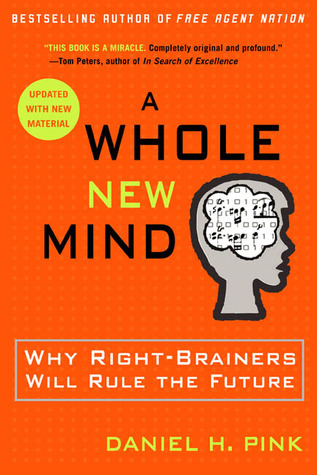
"A Whole New Mind" posits that Western society is shifting from an economy driven by logical, data-processing "left-brain" aptitudes to one prioritizing creative, empathetic "right-brain" skills. Pink argues that abilities like design, storytelling, symphony, and meaning-making will become paramount for professional and personal success in this evolving landscape.
This book resonates with "Drive" by exploring a fundamental shift in human capital, much like "Drive" examines the evolution of human motivation. Both works challenge conventional wisdom by highlighting the inadequacy of outdated models (extrinsic rewards in "Drive," purely analytical thinking in "A Whole New Mind") and advocating for a deeper understanding of human potential and engagement to thrive in modern contexts.
This offers valuable insights for anyone navigating career changes, educational choices, or seeking to cultivate skills relevant to a future economy. Its emphasis on cultivating creativity and meaning provides a compelling framework for personal growth and professional adaptation in a world increasingly valuing uniquely human competencies.
A Whole New Mind: Why Right-Brainers Will Rule the Future
"A Whole New Mind" posits that Western society is shifting from an economy driven by logical, data-processing "left-brain" aptitudes to one prioritizing creative, empathetic "right-brain" skills. Pink argues that abilities like design, storytelling, symphony, and meaning-making will become paramount for professional and personal success in this evolving landscape.
This book resonates with "Drive" by exploring a fundamental shift in human capital, much like "Drive" examines the evolution of human motivation. Both works challenge conventional wisdom by highlighting the inadequacy of outdated models (extrinsic rewards in "Drive," purely analytical thinking in "A Whole New Mind") and advocating for a deeper understanding of human potential and engagement to thrive in modern contexts.
This offers valuable insights for anyone navigating career changes, educational choices, or seeking to cultivate skills relevant to a future economy. Its emphasis on cultivating creativity and meaning provides a compelling framework for personal growth and professional adaptation in a world increasingly valuing uniquely human competencies.
Give and Take: A Revolutionary Approach to Success
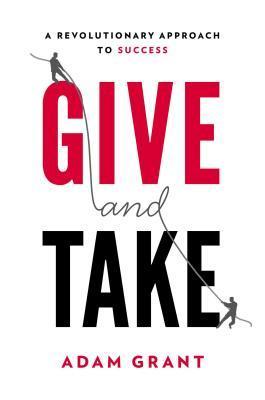
"Give and Take" by Adam Grant explores how our interactions with others—specifically, whether we tend to be givers, takers, or matchers—profoundly impact our success. Grant argues that, counterintuitively, givers who prioritize contributing to others' well-being often achieve the highest level of success, though they also populate the bottom. The book delves into the strategies and mindsets that differentiate successful givers from those who burn out, advocating for a more altruistic approach to professional and personal life.
This book resonates with "Drive" as both challenge conventional wisdom regarding what truly motivates and leads to success. While Pink’s "Drive" focuses on intrinsic motivators like autonomy, mastery, and purpose within individuals, Grant's work shifts the lens to interpersonal dynamics, demonstrating how a giving orientation, rather than self-interest or transactional exchanges, is a powerful, often overlooked engine for both personal and collective achievement. Both authors argue for a more enlightened, human-centered approach to thriving.
Individuals seeking to optimize their professional impact and personal fulfillment will value this book. It offers actionable insights and compelling evidence for cultivating a more collaborative and generous approach in their careers and relationships, ultimately leading to greater influence, innovation, and long-term success. It frames generosity not as a sacrifice, but as a strategic advantage.
Give and Take: A Revolutionary Approach to Success
"Give and Take" by Adam Grant explores how our interactions with others—specifically, whether we tend to be givers, takers, or matchers—profoundly impact our success. Grant argues that, counterintuitively, givers who prioritize contributing to others' well-being often achieve the highest level of success, though they also populate the bottom. The book delves into the strategies and mindsets that differentiate successful givers from those who burn out, advocating for a more altruistic approach to professional and personal life.
This book resonates with "Drive" as both challenge conventional wisdom regarding what truly motivates and leads to success. While Pink’s "Drive" focuses on intrinsic motivators like autonomy, mastery, and purpose within individuals, Grant's work shifts the lens to interpersonal dynamics, demonstrating how a giving orientation, rather than self-interest or transactional exchanges, is a powerful, often overlooked engine for both personal and collective achievement. Both authors argue for a more enlightened, human-centered approach to thriving.
Individuals seeking to optimize their professional impact and personal fulfillment will value this book. It offers actionable insights and compelling evidence for cultivating a more collaborative and generous approach in their careers and relationships, ultimately leading to greater influence, innovation, and long-term success. It frames generosity not as a sacrifice, but as a strategic advantage.
The Happiness Advantage: The Seven Principles of Positive Psychology That Fuel Success and Performance at Work

"The Happiness Advantage" contends that success doesn't lead to happiness; rather, happiness is a precursor to success. Shawn Achor outlines seven actionable principles rooted in positive psychology, demonstrating how cultivating a positive mindset, optimistic outlook, and strong social connections can significantly enhance productivity, performance, and overall well-being in personal and professional life. It shifts the paradigm from endlessly pursuing external achievements to strategically building internal resources.
This book shares conceptual DNA with "Drive" by both challenging conventional wisdom about motivation and achievement. While Pink deconstructs extrinsic motivators to reveal the power of intrinsic drives (autonomy, mastery, purpose), Achor argues that a positive psychological state is itself a powerful intrinsic driver, unlocking greater potential and leading to more sustained success than purely external rewards. Both authors emphasize the internal landscape as key to superior outcomes.
The book will resonate with anyone seeking a science-backed approach to improving their personal and organizational performance. It offers practical tools for cultivating resilience, optimism, and positive habits, directly addressing the endemic challenges of stress and disengagement in modern work environments. Its principles provide a compelling roadmap for fostering a more engaged, productive, and ultimately more successful life, both individually and collectively.
The Happiness Advantage: The Seven Principles of Positive Psychology That Fuel Success and Performance at Work
"The Happiness Advantage" contends that success doesn't lead to happiness; rather, happiness is a precursor to success. Shawn Achor outlines seven actionable principles rooted in positive psychology, demonstrating how cultivating a positive mindset, optimistic outlook, and strong social connections can significantly enhance productivity, performance, and overall well-being in personal and professional life. It shifts the paradigm from endlessly pursuing external achievements to strategically building internal resources.
This book shares conceptual DNA with "Drive" by both challenging conventional wisdom about motivation and achievement. While Pink deconstructs extrinsic motivators to reveal the power of intrinsic drives (autonomy, mastery, purpose), Achor argues that a positive psychological state is itself a powerful intrinsic driver, unlocking greater potential and leading to more sustained success than purely external rewards. Both authors emphasize the internal landscape as key to superior outcomes.
The book will resonate with anyone seeking a science-backed approach to improving their personal and organizational performance. It offers practical tools for cultivating resilience, optimism, and positive habits, directly addressing the endemic challenges of stress and disengagement in modern work environments. Its principles provide a compelling roadmap for fostering a more engaged, productive, and ultimately more successful life, both individually and collectively.
Originals: How Non-Conformists Move the World
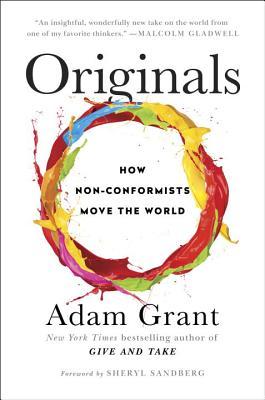
*Originals: How Non-Conformists Move the World* explores the behaviors, thought processes, and strategies of individuals who challenge the status quo and introduce novel ideas that reshape organizations and societies. Grant dismantles common myths about originality, revealing that truly impactful non-conformists are often not risk-crazed mavericks, but rather thoughtful individuals who cultivate diverse perspectives, strategically leverage fear, and build supportive networks to champion their innovations.
This book resonates with *Drive* by delving into the intrinsic motivators behind exceptional performance and innovative contributions. While *Drive* focuses on autonomy, mastery, and purpose as universal drivers, *Originals* provides empirical evidence and case studies illustrating how these very elements empower individuals to deviate from convention and achieve groundbreaking results. Both books fundamentally challenge outdated notions of motivation and success, advocating for environments that foster genuine engagement and self-direction.
The insights offered provide practical frameworks for fostering creativity and embracing change, both personally and professionally. It equips individuals with tools to identify and overcome psychological barriers to originality, while also offering guidance for leaders seeking to cultivate a culture where new ideas can flourish. The profound implications for innovation, leadership, and personal growth make it a highly valuable read.
Originals: How Non-Conformists Move the World
*Originals: How Non-Conformists Move the World* explores the behaviors, thought processes, and strategies of individuals who challenge the status quo and introduce novel ideas that reshape organizations and societies. Grant dismantles common myths about originality, revealing that truly impactful non-conformists are often not risk-crazed mavericks, but rather thoughtful individuals who cultivate diverse perspectives, strategically leverage fear, and build supportive networks to champion their innovations.
This book resonates with *Drive* by delving into the intrinsic motivators behind exceptional performance and innovative contributions. While *Drive* focuses on autonomy, mastery, and purpose as universal drivers, *Originals* provides empirical evidence and case studies illustrating how these very elements empower individuals to deviate from convention and achieve groundbreaking results. Both books fundamentally challenge outdated notions of motivation and success, advocating for environments that foster genuine engagement and self-direction.
The insights offered provide practical frameworks for fostering creativity and embracing change, both personally and professionally. It equips individuals with tools to identify and overcome psychological barriers to originality, while also offering guidance for leaders seeking to cultivate a culture where new ideas can flourish. The profound implications for innovation, leadership, and personal growth make it a highly valuable read.
Smarter Faster Better: The Secrets of Being Productive in Life and Business

Charles Duhigg's "Smarter Faster Better" delves into the intricate psychology of productivity, revealing how individuals and organizations can achieve more by understanding the underlying mechanisms of motivation, focus, and decision-making. Through compelling narratives and scientific insights, Duhigg dissects the principles that drive true efficiency and innovation, moving beyond simplistic time management hacks.
This book resonates strongly with themes explored in Daniel Pink's "Drive" because both works challenge conventional wisdom about what truly fuels high performance. While Pink champions intrinsic motivation over external rewards, Duhigg examines how conscious choices about how we think, frame tasks, and build teams directly impact our output and fulfillment, echoing the importance of autonomy, mastery, and purpose as core drivers.
The book offers actionable insights for anyone seeking to enhance their effectiveness, whether in their personal lives or professional endeavors. Its blend of engaging storytelling and research-backed analysis provides a valuable framework for cultivating better habits, making smarter choices, and ultimately unlocking greater potential in a complex world.
Smarter Faster Better: The Secrets of Being Productive in Life and Business
Charles Duhigg's "Smarter Faster Better" delves into the intricate psychology of productivity, revealing how individuals and organizations can achieve more by understanding the underlying mechanisms of motivation, focus, and decision-making. Through compelling narratives and scientific insights, Duhigg dissects the principles that drive true efficiency and innovation, moving beyond simplistic time management hacks.
This book resonates strongly with themes explored in Daniel Pink's "Drive" because both works challenge conventional wisdom about what truly fuels high performance. While Pink champions intrinsic motivation over external rewards, Duhigg examines how conscious choices about how we think, frame tasks, and build teams directly impact our output and fulfillment, echoing the importance of autonomy, mastery, and purpose as core drivers.
The book offers actionable insights for anyone seeking to enhance their effectiveness, whether in their personal lives or professional endeavors. Its blend of engaging storytelling and research-backed analysis provides a valuable framework for cultivating better habits, making smarter choices, and ultimately unlocking greater potential in a complex world.
Influencer: The Power to Change Anything
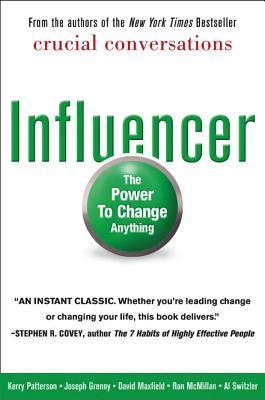
"Influencer: The Power to Change Anything" provides a practical framework for understanding and enacting profound behavioral change, whether in individuals, teams, or entire organizations. It dissects the six key sources of influence – personal, social, and structural – offering actionable strategies to diagnose problems and implement effective solutions that stick.
Both books delve into the often-misunderstood mechanisms behind human motivation and action. While Pink's "Drive" focuses on internal motivators beyond traditional rewards, "Influencer" offers a broader, more systemic approach to shaping behavior, presenting a blueprint for applying those motivational principles in real-world change efforts. They complement each other by addressing both the "why" and "how" of impactful transformation.
This book will appeal to anyone seeking to make a lasting difference, from leaders striving to improve organizational culture to individuals aiming to break old habits or inspire positive change in their communities. It offers a powerful toolkit for understanding human behavior and systematically designing interventions that yield significant, sustainable results.
Influencer: The Power to Change Anything
"Influencer: The Power to Change Anything" provides a practical framework for understanding and enacting profound behavioral change, whether in individuals, teams, or entire organizations. It dissects the six key sources of influence – personal, social, and structural – offering actionable strategies to diagnose problems and implement effective solutions that stick.
Both books delve into the often-misunderstood mechanisms behind human motivation and action. While Pink's "Drive" focuses on internal motivators beyond traditional rewards, "Influencer" offers a broader, more systemic approach to shaping behavior, presenting a blueprint for applying those motivational principles in real-world change efforts. They complement each other by addressing both the "why" and "how" of impactful transformation.
This book will appeal to anyone seeking to make a lasting difference, from leaders striving to improve organizational culture to individuals aiming to break old habits or inspire positive change in their communities. It offers a powerful toolkit for understanding human behavior and systematically designing interventions that yield significant, sustainable results.
100 Ways to Motivate Yourself: Change Your Life Forever

"100 Ways to Motivate Yourself" offers practical, actionable strategies for personal transformation. Steve Chandler breaks down motivation into digestible concepts, providing concrete exercises and shifts in perspective that empower individuals to overcome inertia, build positive habits, and proactively pursue their goals. It's a hand-on guide for self-improvement and sustained internal drive.
This book shares common ground with "Drive" by focusing on the *how* and *why* of motivation. While Pink illuminates the science behind intrinsic motivation, Chandler provides the practical application of similar principles, emphasizing autonomy, mastery, and purpose through a series of tactical approaches. Both books underscore the importance of internal drivers over external rewards, albeit from different angles.
Individuals seeking to actively enhance their personal motivation and achieve lasting change will appreciate this book. Its direct, pragmatic advice provides immediate tools for self-improvement, fostering a sense of agency and encouraging a proactive approach to one's life. The accessible format and actionable steps make it highly valuable for anyone committed to personal growth.
100 Ways to Motivate Yourself: Change Your Life Forever
"100 Ways to Motivate Yourself" offers practical, actionable strategies for personal transformation. Steve Chandler breaks down motivation into digestible concepts, providing concrete exercises and shifts in perspective that empower individuals to overcome inertia, build positive habits, and proactively pursue their goals. It's a hand-on guide for self-improvement and sustained internal drive.
This book shares common ground with "Drive" by focusing on the *how* and *why* of motivation. While Pink illuminates the science behind intrinsic motivation, Chandler provides the practical application of similar principles, emphasizing autonomy, mastery, and purpose through a series of tactical approaches. Both books underscore the importance of internal drivers over external rewards, albeit from different angles.
Individuals seeking to actively enhance their personal motivation and achieve lasting change will appreciate this book. Its direct, pragmatic advice provides immediate tools for self-improvement, fostering a sense of agency and encouraging a proactive approach to one's life. The accessible format and actionable steps make it highly valuable for anyone committed to personal growth.
Find Your Purpose Using Science

"Find Your Purpose Using Science" offers a pragmatic, research-backed framework for individuals to identify and cultivate their personal sense of meaning and direction. It distills complex psychological and neuroscience findings into actionable strategies for self-discovery and purpose-driven living, emphasizing scientific validation over anecdotal advice.
This book aligns with "Drive" by both challenging conventional wisdom about motivation and providing evidence-based alternatives. Where Pink dissects intrinsic motivation (autonomy, mastery, purpose) as superior to external rewards, Tsipursky builds upon this, offering a systematic approach to *finding* and *applying* that inherent drive. Both volumes empower individuals by revealing the deeper mechanisms behind human initiative and fulfillment.
The book will appeal to those seeking a structured, objective methodology for personal growth and career satisfaction. Its reliance on scientific evidence lends credibility and assurance, offering practical tools for navigating life's complexities with a clearer sense of direction. It provides a valuable resource for anyone striving to align their daily efforts with a meaningful, overarching purpose.
Find Your Purpose Using Science
"Find Your Purpose Using Science" offers a pragmatic, research-backed framework for individuals to identify and cultivate their personal sense of meaning and direction. It distills complex psychological and neuroscience findings into actionable strategies for self-discovery and purpose-driven living, emphasizing scientific validation over anecdotal advice.
This book aligns with "Drive" by both challenging conventional wisdom about motivation and providing evidence-based alternatives. Where Pink dissects intrinsic motivation (autonomy, mastery, purpose) as superior to external rewards, Tsipursky builds upon this, offering a systematic approach to *finding* and *applying* that inherent drive. Both volumes empower individuals by revealing the deeper mechanisms behind human initiative and fulfillment.
The book will appeal to those seeking a structured, objective methodology for personal growth and career satisfaction. Its reliance on scientific evidence lends credibility and assurance, offering practical tools for navigating life's complexities with a clearer sense of direction. It provides a valuable resource for anyone striving to align their daily efforts with a meaningful, overarching purpose.
More Books to Explore
Discover more titles that expand on these ideas and themes.
To Sell is Human: The Surprising Truth About Moving Others
Start with Why: How Great Leaders Inspire Everyone to Take Action
A Whole New Mind: Why Right-Brainers Will Rule the Future
Give and Take: A Revolutionary Approach to Success
The Happiness Advantage: The Seven Principles of Positive Psychology That Fuel Success and Performance at Work
Originals: How Non-Conformists Move the World