10 Books Similar to "Descartes' Error: Emotion, Reason and the Human Brain"
by António Damásio
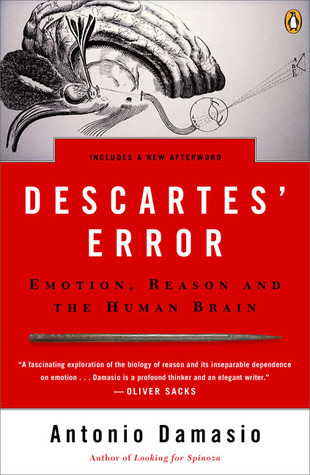
The Emotional Brain: The Mysterious Underpinnings of Emotional Life

"The Emotional Brain" by Joseph LeDoux meticulously explores the neurobiological basis of emotions, focusing particularly on fear. LeDoux delves into how different brain structures, particularly the amygdala, process and generate emotional responses, distinguishing between conscious feelings and unconscious emotional reactions. He presents cutting-edge research to unravel the intricate circuitry underlying our emotional experiences, offering a comprehensive look at the "machinery" of feeling.
This book resonates with themes in "Descartes' Error" because both challenge the traditional dichotomy between reason and emotion, arguing that emotions are not mere disruptions but integral to cognitive processes and decision-making. Both authors use neuroscience to dismantle the idea of a purely rational self, showing how biology intertwines with our subjective experiences. They share a commitment to grounding profound philosophical questions about the mind in rigorous scientific investigation.
This book will appeal to those curious about the physical origins of their innermost feelings and behaviors. It offers a profound understanding of how basic emotions, especially fear, are hardwired into our brains, providing insights into anxiety, trauma, and our fundamental drives. The scientific depth, combined with clear explanations, makes it a valuable resource for anyone seeking a deeper appreciation of the human mind from a neuroscientific perspective.
The Emotional Brain: The Mysterious Underpinnings of Emotional Life
"The Emotional Brain" by Joseph LeDoux meticulously explores the neurobiological basis of emotions, focusing particularly on fear. LeDoux delves into how different brain structures, particularly the amygdala, process and generate emotional responses, distinguishing between conscious feelings and unconscious emotional reactions. He presents cutting-edge research to unravel the intricate circuitry underlying our emotional experiences, offering a comprehensive look at the "machinery" of feeling.
This book resonates with themes in "Descartes' Error" because both challenge the traditional dichotomy between reason and emotion, arguing that emotions are not mere disruptions but integral to cognitive processes and decision-making. Both authors use neuroscience to dismantle the idea of a purely rational self, showing how biology intertwines with our subjective experiences. They share a commitment to grounding profound philosophical questions about the mind in rigorous scientific investigation.
This book will appeal to those curious about the physical origins of their innermost feelings and behaviors. It offers a profound understanding of how basic emotions, especially fear, are hardwired into our brains, providing insights into anxiety, trauma, and our fundamental drives. The scientific depth, combined with clear explanations, makes it a valuable resource for anyone seeking a deeper appreciation of the human mind from a neuroscientific perspective.
How We Decide
"How We Decide" by Jonah Lehrer explores the intricate dance between our rational and emotional brains in the process of decision-making. Through compelling scientific research and real-world anecdotes, Lehrer unpacks why some choices feel intuitive while others demand painstaking deliberation, revealing the neural mechanisms that underpin both good and bad judgments. He illustrates how understanding these processes can lead to more effective and satisfying outcomes in our lives.
This book shares significant thematic overlap with Damásio's "Descartes' Error" by similarly challenging the traditional dichotomy between reason and emotion. Both authors argue persuasively that emotions are not merely obstacles to logical thought but are, in fact, integral and often indispensable components of sound decision-making. While Damásio focuses on the neurological underpinnings of this integration, Lehrer extends this concept to practical applications in everyday choices, from financial investments to personal relationships.
This analysis of human decision-making will appeal to those curious about the internal workings of their own minds and seeking to improve their cognitive strategies. It offers practical insights into navigating complex choices, understanding biases, and harnessing emotional intelligence for better results. The blend of neuroscience, psychology, and engaging storytelling makes it an enriching and empowering read for anyone aiming to make more informed decisions.
How We Decide
"How We Decide" by Jonah Lehrer explores the intricate dance between our rational and emotional brains in the process of decision-making. Through compelling scientific research and real-world anecdotes, Lehrer unpacks why some choices feel intuitive while others demand painstaking deliberation, revealing the neural mechanisms that underpin both good and bad judgments. He illustrates how understanding these processes can lead to more effective and satisfying outcomes in our lives.
This book shares significant thematic overlap with Damásio's "Descartes' Error" by similarly challenging the traditional dichotomy between reason and emotion. Both authors argue persuasively that emotions are not merely obstacles to logical thought but are, in fact, integral and often indispensable components of sound decision-making. While Damásio focuses on the neurological underpinnings of this integration, Lehrer extends this concept to practical applications in everyday choices, from financial investments to personal relationships.
This analysis of human decision-making will appeal to those curious about the internal workings of their own minds and seeking to improve their cognitive strategies. It offers practical insights into navigating complex choices, understanding biases, and harnessing emotional intelligence for better results. The blend of neuroscience, psychology, and engaging storytelling makes it an enriching and empowering read for anyone aiming to make more informed decisions.
Phantoms in the Brain: Probing the Mysteries of the Human Mind

"Phantoms in the Brain" dives into the extraordinary capabilities and perplexing malfunctions of the human brain, using captivating case studies of neurological disorders. Ramachandran explores phenomena like phantom limbs, synesthesia, and Capgras delusion, unraveling how these conditions offer profound insights into the brain's construction of reality, self, and perception. It's a journey through the brain's remarkable plasticity and its sometimes bewildering ways of interpreting the world.
This book shares a fundamental objective with "Descartes' Error": to challenge traditional, dualistic views of the mind and body. Both authors demonstrate, through compelling scientific evidence and clinical observations, how deeply intertwined our emotional and cognitive processes are with our physical brains. They both argue against the idea of a detached, purely rational mind, emphasizing the biological underpinnings of consciousness and identity.
Anyone intrigued by the mysteries of human consciousness and the biological roots of our thoughts and feelings will find this book immensely rewarding. It illuminates how neurological aberrations can be powerful lenses through which to understand normal brain function, offering a richer, more integrated understanding of what it means to be human. Its engaging narrative and accessible science make complex concepts understandable, expanding one's appreciation for the brain's intricate workings.
Phantoms in the Brain: Probing the Mysteries of the Human Mind
"Phantoms in the Brain" dives into the extraordinary capabilities and perplexing malfunctions of the human brain, using captivating case studies of neurological disorders. Ramachandran explores phenomena like phantom limbs, synesthesia, and Capgras delusion, unraveling how these conditions offer profound insights into the brain's construction of reality, self, and perception. It's a journey through the brain's remarkable plasticity and its sometimes bewildering ways of interpreting the world.
This book shares a fundamental objective with "Descartes' Error": to challenge traditional, dualistic views of the mind and body. Both authors demonstrate, through compelling scientific evidence and clinical observations, how deeply intertwined our emotional and cognitive processes are with our physical brains. They both argue against the idea of a detached, purely rational mind, emphasizing the biological underpinnings of consciousness and identity.
Anyone intrigued by the mysteries of human consciousness and the biological roots of our thoughts and feelings will find this book immensely rewarding. It illuminates how neurological aberrations can be powerful lenses through which to understand normal brain function, offering a richer, more integrated understanding of what it means to be human. Its engaging narrative and accessible science make complex concepts understandable, expanding one's appreciation for the brain's intricate workings.
The Tree of Knowledge: The Biological Roots of Human Understanding
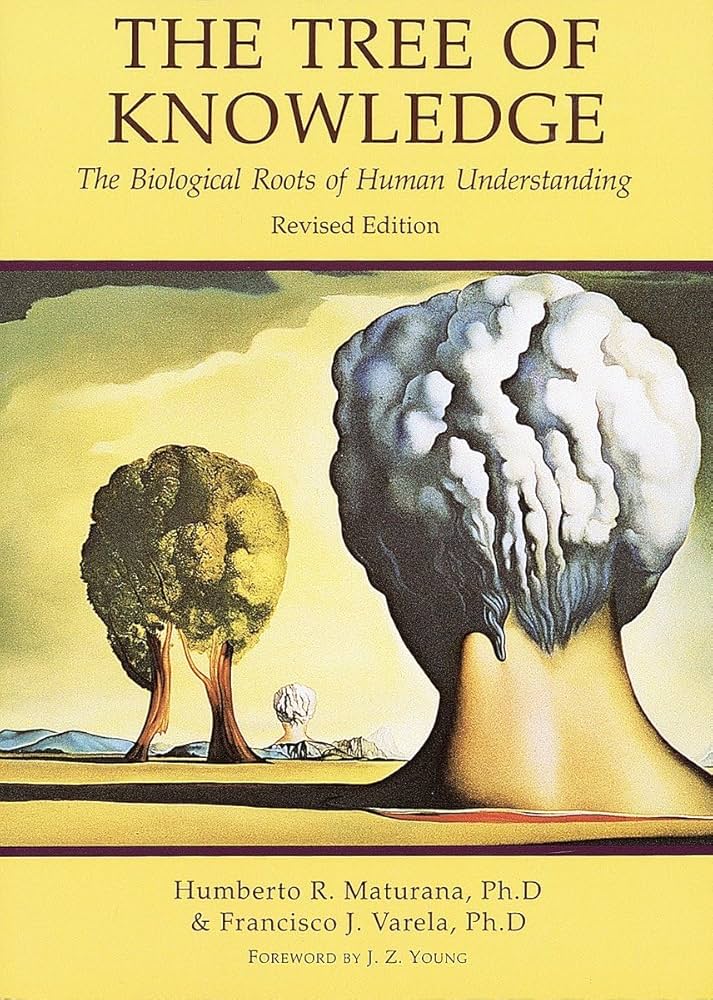
"The Tree of Knowledge" proposes that our understanding of the world, our very knowledge, isn't a passive reception of external truths but an active construction, deeply rooted in our biological structure. Maturana argues that living systems are "autopoietic" – self-making and self-maintaining – and this inherent circularity shapes how we perceive, interact with, and create meaning within our environment. It's a profound look at how our biology determines the limits and possibilities of our cognition and language.
This book resonates with Damasio's "Descartes' Error" by similarly challenging the traditional mind-body dichotomy and emphasizing the integrated nature of biological processes in shaping what we consider "reason." Both authors contend that our cognitive abilities, including our capacity for thought and self-awareness, are intrinsically linked to our physical embodiment and emotional states, rather than arising from a disembodied, purely rational mind.
Anyone interested in the fundamental questions of human consciousness, the origins of knowledge, and the intricate relationship between biology and experience will find this work deeply insightful. It offers a paradigm-shifting perspective on how we perceive reality and the organic basis for our conceptual frameworks, providing a rich intellectual journey into the very essence of what it means to be a knowing organism.
The Tree of Knowledge: The Biological Roots of Human Understanding
"The Tree of Knowledge" proposes that our understanding of the world, our very knowledge, isn't a passive reception of external truths but an active construction, deeply rooted in our biological structure. Maturana argues that living systems are "autopoietic" – self-making and self-maintaining – and this inherent circularity shapes how we perceive, interact with, and create meaning within our environment. It's a profound look at how our biology determines the limits and possibilities of our cognition and language.
This book resonates with Damasio's "Descartes' Error" by similarly challenging the traditional mind-body dichotomy and emphasizing the integrated nature of biological processes in shaping what we consider "reason." Both authors contend that our cognitive abilities, including our capacity for thought and self-awareness, are intrinsically linked to our physical embodiment and emotional states, rather than arising from a disembodied, purely rational mind.
Anyone interested in the fundamental questions of human consciousness, the origins of knowledge, and the intricate relationship between biology and experience will find this work deeply insightful. It offers a paradigm-shifting perspective on how we perceive reality and the organic basis for our conceptual frameworks, providing a rich intellectual journey into the very essence of what it means to be a knowing organism.
I of the Vortex: From Neurons to Self

"I of the Vortex: From Neurons to Self" explores the biological origins of our sense of self, consciousness, and volitional movement, delving into how the brain generates the experience of being an individual. Llinás, a renowned neuroscientist, argues that the "self" isn't a mystical entity but an emergent property of finely tuned neuronal oscillations within the brain's thalamocortical system, creating a unified, predictive model of reality. He presents a compelling case for the brain as a "closed-loop system" that primarily generates internal models, even when interacting with the external world.
This book resonates with themes in "Descartes' Error" by rejecting a strict mind-body dualism. Both Damasio and Llinás champion a biologically grounded understanding of human experience, emphasizing that our subjective sense of self and our capacity for reason are deeply intertwined with, and emerge from, our physical brain. They both dismantle traditional philosophical divisions, advocating for a holistic view where the "mind" is not separate from the "body" but rather an intricate function of it.
The book offers a profound and accessible journey into the neuroscience of consciousness, revealing the intricate dance of neurons that gives rise to our personal identity. It will appeal to those captivated by the mysteries of the brain and eager to understand how our subjective world is constructed from within. Its rigorous yet engaging exploration of the "self" provides invaluable insights into one of humanity's most enduring questions.
I of the Vortex: From Neurons to Self
"I of the Vortex: From Neurons to Self" explores the biological origins of our sense of self, consciousness, and volitional movement, delving into how the brain generates the experience of being an individual. Llinás, a renowned neuroscientist, argues that the "self" isn't a mystical entity but an emergent property of finely tuned neuronal oscillations within the brain's thalamocortical system, creating a unified, predictive model of reality. He presents a compelling case for the brain as a "closed-loop system" that primarily generates internal models, even when interacting with the external world.
This book resonates with themes in "Descartes' Error" by rejecting a strict mind-body dualism. Both Damasio and Llinás champion a biologically grounded understanding of human experience, emphasizing that our subjective sense of self and our capacity for reason are deeply intertwined with, and emerge from, our physical brain. They both dismantle traditional philosophical divisions, advocating for a holistic view where the "mind" is not separate from the "body" but rather an intricate function of it.
The book offers a profound and accessible journey into the neuroscience of consciousness, revealing the intricate dance of neurons that gives rise to our personal identity. It will appeal to those captivated by the mysteries of the brain and eager to understand how our subjective world is constructed from within. Its rigorous yet engaging exploration of the "self" provides invaluable insights into one of humanity's most enduring questions.
How the Mind Works

Steven Pinker's "How the Mind Works" offers a grand tour of human cognition, using insights from evolutionary psychology and computational theory to explain why our minds are structured the way they are. He delves into everything from vision and language to emotions and social dynamics, arguing that our mental faculties are complex adaptations designed to solve problems faced by our Stone Age ancestors.
This book resonates with Damasio’s "Descartes' Error" by similarly challenging traditional views of the mind. While Damasio focuses on the indispensable role of emotion in rational thought, Pinker also presents a highly integrated perspective, demonstrating how seemingly disparate mental functions are intertwined and rooted in our biological heritage. Both authors advocate for a scientifically informed understanding of human nature, pushing against simplistic or dualistic interpretations.
Readers interested in the fundamental mechanisms of thought and behavior will find this exploration deeply engaging. It provides a comprehensive framework for understanding the intricacies of the human brain and its evolutionary origins, offering profound insights into what makes us uniquely human and shedding light on the everyday experiences of perception, decision-making, and social interaction.
How the Mind Works
Steven Pinker's "How the Mind Works" offers a grand tour of human cognition, using insights from evolutionary psychology and computational theory to explain why our minds are structured the way they are. He delves into everything from vision and language to emotions and social dynamics, arguing that our mental faculties are complex adaptations designed to solve problems faced by our Stone Age ancestors.
This book resonates with Damasio’s "Descartes' Error" by similarly challenging traditional views of the mind. While Damasio focuses on the indispensable role of emotion in rational thought, Pinker also presents a highly integrated perspective, demonstrating how seemingly disparate mental functions are intertwined and rooted in our biological heritage. Both authors advocate for a scientifically informed understanding of human nature, pushing against simplistic or dualistic interpretations.
Readers interested in the fundamental mechanisms of thought and behavior will find this exploration deeply engaging. It provides a comprehensive framework for understanding the intricacies of the human brain and its evolutionary origins, offering profound insights into what makes us uniquely human and shedding light on the everyday experiences of perception, decision-making, and social interaction.
The Mind & the Brain: Neuroplasticity and the Power of Mental Force

"The Mind & the Brain" explores the revolutionary concept of neuroplasticity – the brain's ability to reorganize itself throughout life, both structurally and functionally. Jeffrey Schwartz, a psychiatrist, details how focused mental effort, or "mental force," can actively reshape neural pathways, offering profound implications for treating conditions like OCD and stroke recovery, and for understanding consciousness itself.
This book shares thematic ground with "Descartes' Error" due to its sustained challenge to a dualistic view of mind and body. While Damasio critiques the separation of emotion and reason, Schwartz demonstrates how the *mind* can directly influence and modify the physical *brain*, thereby dismantling the traditional separation and advocating for an integrated understanding of our cognitive and biological selves. Both authors champion a more holistic perspective on human experience.
This work offers a compelling narrative for anyone fascinated by the brain's potential and the power of conscious thought. It presents scientific evidence for self-directed brain change, providing hope for individuals seeking agency over their mental states and offering a deeper appreciation for the complex interplay between our thoughts and our physical being. The insights presented are deeply empowering.
The Mind & the Brain: Neuroplasticity and the Power of Mental Force
"The Mind & the Brain" explores the revolutionary concept of neuroplasticity – the brain's ability to reorganize itself throughout life, both structurally and functionally. Jeffrey Schwartz, a psychiatrist, details how focused mental effort, or "mental force," can actively reshape neural pathways, offering profound implications for treating conditions like OCD and stroke recovery, and for understanding consciousness itself.
This book shares thematic ground with "Descartes' Error" due to its sustained challenge to a dualistic view of mind and body. While Damasio critiques the separation of emotion and reason, Schwartz demonstrates how the *mind* can directly influence and modify the physical *brain*, thereby dismantling the traditional separation and advocating for an integrated understanding of our cognitive and biological selves. Both authors champion a more holistic perspective on human experience.
This work offers a compelling narrative for anyone fascinated by the brain's potential and the power of conscious thought. It presents scientific evidence for self-directed brain change, providing hope for individuals seeking agency over their mental states and offering a deeper appreciation for the complex interplay between our thoughts and our physical being. The insights presented are deeply empowering.
Principles of Neural Science

"Principles of Neural Science" is a foundational, encyclopedic textbook in neuroscience. It meticulously details the fundamental principles governing how the brain and nervous system work, from the molecular and cellular levels to complex cognitive functions and behavior. It’s an authoritative guide to understanding neural circuits, sensory perception, motor control, memory, emotion, and diseases of the nervous system.
It shares common ground with "Descartes' Error" in its fundamental premise: understanding the biological underpinnings of the mind. Both works delve into the intricate relationship between brain structure and function, rejecting a purely dualistic view of mind and body. While Kandel provides the comprehensive scientific framework of how the brain operates, Damasio's work focuses more specifically on how emotion and reason are inextricably linked within that framework. Each offers a profound, evidence-based exploration into what it means to have a conscious, feeling, thinking self.
This book will appeal to those seeking a comprehensive, rigorous understanding of the brain's mechanics. Its depth and breadth make it invaluable for anyone interested in the biological basis of thought, emotion, and behavior, offering a scientific bedrock for appreciating how our internal world is constructed. It’s an essential resource for developing a sophisticated perspective on neurobiology and its implications for human experience.
Principles of Neural Science
"Principles of Neural Science" is a foundational, encyclopedic textbook in neuroscience. It meticulously details the fundamental principles governing how the brain and nervous system work, from the molecular and cellular levels to complex cognitive functions and behavior. It’s an authoritative guide to understanding neural circuits, sensory perception, motor control, memory, emotion, and diseases of the nervous system.
It shares common ground with "Descartes' Error" in its fundamental premise: understanding the biological underpinnings of the mind. Both works delve into the intricate relationship between brain structure and function, rejecting a purely dualistic view of mind and body. While Kandel provides the comprehensive scientific framework of how the brain operates, Damasio's work focuses more specifically on how emotion and reason are inextricably linked within that framework. Each offers a profound, evidence-based exploration into what it means to have a conscious, feeling, thinking self.
This book will appeal to those seeking a comprehensive, rigorous understanding of the brain's mechanics. Its depth and breadth make it invaluable for anyone interested in the biological basis of thought, emotion, and behavior, offering a scientific bedrock for appreciating how our internal world is constructed. It’s an essential resource for developing a sophisticated perspective on neurobiology and its implications for human experience.
Conversations on Consciousness: What the Best Minds Think about the Brain, Free Will, and What It Means to Be Human

"Conversations on Consciousness" offers a unique window into the minds of leading thinkers in neuroscience, philosophy, and psychology as they grapple with fundamental questions of consciousness, free will, and what defines human nature. Through a series of engaging interviews, Susan Blackmore illuminates diverse perspectives on these enduring mysteries, presenting a multifaceted dialogue rather than a single definitive answer, making complex ideas accessible.
This book shares a core intellectual lineage with "Descartes' Error" by directly confronting the traditional dualistic separation of mind and body. While Damasio meticulously builds a neurological argument for emotion's integral role in reason, Blackmore canvasses the contemporary landscape of how experts are questioning and reconstructing our understanding of the self, free will, and the brain's relationship to subjective experience—all themes implicitly or explicitly challenged by Damasio's work. Both books fundamentally shift focus from purely abstract notions of mind to an embodied, brain-centric perspective.
A reader interested in the frontiers of scientific and philosophical thought will find immense value in this exploration. It provides a comprehensive overview of current debates, offering informed perspectives on topics crucial to understanding ourselves and our place in the world. The book stimulates critical thinking, encouraging a deeper engagement with the profound implications of consciousness research, and offering intellectual gratification to those seeking to expand their understanding of these pivotal human questions.
Conversations on Consciousness: What the Best Minds Think about the Brain, Free Will, and What It Means to Be Human
"Conversations on Consciousness" offers a unique window into the minds of leading thinkers in neuroscience, philosophy, and psychology as they grapple with fundamental questions of consciousness, free will, and what defines human nature. Through a series of engaging interviews, Susan Blackmore illuminates diverse perspectives on these enduring mysteries, presenting a multifaceted dialogue rather than a single definitive answer, making complex ideas accessible.
This book shares a core intellectual lineage with "Descartes' Error" by directly confronting the traditional dualistic separation of mind and body. While Damasio meticulously builds a neurological argument for emotion's integral role in reason, Blackmore canvasses the contemporary landscape of how experts are questioning and reconstructing our understanding of the self, free will, and the brain's relationship to subjective experience—all themes implicitly or explicitly challenged by Damasio's work. Both books fundamentally shift focus from purely abstract notions of mind to an embodied, brain-centric perspective.
A reader interested in the frontiers of scientific and philosophical thought will find immense value in this exploration. It provides a comprehensive overview of current debates, offering informed perspectives on topics crucial to understanding ourselves and our place in the world. The book stimulates critical thinking, encouraging a deeper engagement with the profound implications of consciousness research, and offering intellectual gratification to those seeking to expand their understanding of these pivotal human questions.
Incognito: The Secret Lives of the Brain
"Incognito: The Secret Lives of the Brain" delves into the vast, hidden operations of our minds, exploring how the majority of our thoughts, decisions, and perceptions occur beneath the surface of conscious awareness. David Eagleman illuminates the complex neural machinery that orchestrates everything from our preferences to our moral judgments, often without our direct knowledge or control. The book unpacks the surprising implications of these unconscious processes for our understanding of ourselves, free will, and even legal responsibility.
This book shares a significant kinship with Damásio's "Descartes' Error" by challenging conventional notions of rationality and conscious control. Both authors argue that emotion and unconscious processes are not ancillary to reason, but fundamentally intertwined with it, shaping our cognition and behavior in profound ways. Like Damásio, Eagleman dismantles the simplistic idea of a purely rational, disembodied mind, presenting a more integrated and biologically grounded view of human consciousness.
The material will resonate with anyone curious about the inner workings of their own mind and the forces that truly drive human behavior. This book offers a compelling re-evaluation of long-held assumptions about agency and self, providing a deeper appreciation for the brain's intricate architecture and its pervasive, often unseen influence on our daily lives. Its insights offer a rich lens through which to understand personal choices, social interactions, and the very essence of what it means to be human.
Incognito: The Secret Lives of the Brain
"Incognito: The Secret Lives of the Brain" delves into the vast, hidden operations of our minds, exploring how the majority of our thoughts, decisions, and perceptions occur beneath the surface of conscious awareness. David Eagleman illuminates the complex neural machinery that orchestrates everything from our preferences to our moral judgments, often without our direct knowledge or control. The book unpacks the surprising implications of these unconscious processes for our understanding of ourselves, free will, and even legal responsibility.
This book shares a significant kinship with Damásio's "Descartes' Error" by challenging conventional notions of rationality and conscious control. Both authors argue that emotion and unconscious processes are not ancillary to reason, but fundamentally intertwined with it, shaping our cognition and behavior in profound ways. Like Damásio, Eagleman dismantles the simplistic idea of a purely rational, disembodied mind, presenting a more integrated and biologically grounded view of human consciousness.
The material will resonate with anyone curious about the inner workings of their own mind and the forces that truly drive human behavior. This book offers a compelling re-evaluation of long-held assumptions about agency and self, providing a deeper appreciation for the brain's intricate architecture and its pervasive, often unseen influence on our daily lives. Its insights offer a rich lens through which to understand personal choices, social interactions, and the very essence of what it means to be human.
More Books to Explore
Discover more titles that expand on these ideas and themes.
The Emotional Brain: The Mysterious Underpinnings of Emotional Life
How We Decide
Phantoms in the Brain: Probing the Mysteries of the Human Mind
The Tree of Knowledge: The Biological Roots of Human Understanding
I of the Vortex: From Neurons to Self
How the Mind Works