10 Books Similar to "Darkness at Noon"
by Arthur Koestler

The First Circle

Aleksandr Solzhenitsyn's "The First Circle" transports us into a unique Soviet gulag: a scientific research institute staffed by incarcerated, brilliant minds. These zeks, deemed "enemies of the people," are forced to use their talents for the state, developing technologies while under constant surveillance and facing the moral compromises inherent in their survival. The novel unfolds over a few crucial days, examining their internal struggles, their surveillance of each other, and the corrupting influence of power, even within this ostensibly privileged imprisonment.
"The First Circle" shares a profound thematic kinship with "Darkness at Noon." Both novels meticulously dissect the psychological impact of totalitarian regimes on the individual. Just as Rubashov grapples with his ideology and guilt in a solitary cell, Solzhenitsyn's characters confront their past loyalties, the erosion of personal freedom, and the agonizing choices that define their humanity under a system that demands absolute conformity. Both works are unflinching examinations of political imprisonment and the human spirit's resilience—or capitulation—under duress.
This novel will resonate deeply with those interested in the human condition under extreme pressure and the intricate dynamics of power structures. Its exploration of intellectual freedom versus state control, personal integrity versus survival, and the insidious nature of ideological manipulation offers invaluable insights into historical totalitarianism and timeless questions of morality. It's a powerful, intellectually stimulating experience that delves into the profound cost of political systems that dehumanize their citizens.
The First Circle
Aleksandr Solzhenitsyn's "The First Circle" transports us into a unique Soviet gulag: a scientific research institute staffed by incarcerated, brilliant minds. These zeks, deemed "enemies of the people," are forced to use their talents for the state, developing technologies while under constant surveillance and facing the moral compromises inherent in their survival. The novel unfolds over a few crucial days, examining their internal struggles, their surveillance of each other, and the corrupting influence of power, even within this ostensibly privileged imprisonment.
"The First Circle" shares a profound thematic kinship with "Darkness at Noon." Both novels meticulously dissect the psychological impact of totalitarian regimes on the individual. Just as Rubashov grapples with his ideology and guilt in a solitary cell, Solzhenitsyn's characters confront their past loyalties, the erosion of personal freedom, and the agonizing choices that define their humanity under a system that demands absolute conformity. Both works are unflinching examinations of political imprisonment and the human spirit's resilience—or capitulation—under duress.
This novel will resonate deeply with those interested in the human condition under extreme pressure and the intricate dynamics of power structures. Its exploration of intellectual freedom versus state control, personal integrity versus survival, and the insidious nature of ideological manipulation offers invaluable insights into historical totalitarianism and timeless questions of morality. It's a powerful, intellectually stimulating experience that delves into the profound cost of political systems that dehumanize their citizens.
Bend Sinister

"Bend Sinister" plunges into a nightmarish, totalitarian state, following Adam Krug, a renowned philosopher, as he grapples with the insidious regime that has consumed his homeland. After refusing to endorse the "Ekwilist" party, Krug finds himself targeted, and the state systematically dismantles his life, attempting to coerce him into submission through psychological torture and ultimately, the unthinkable. It's a chilling exploration of individual defiance against overwhelming state power and the corruption of humanity.
The similarity to "Darkness at Noon" lies in their shared exploration of totalitarianism's psychological impact and moral compromises. Both novels delve into the mechanisms of state control, the intellectual's struggle against ideological conformity, and the erosion of personal identity under an oppressive regime. While Rubashov's introspection in "Darkness at Noon" is largely internal, Krug's external agony and the regime's calculated cruelty in "Bend Sinister" offer equally profound insights into the human cost of political absolutism.
This novel will appeal to those seeking a profound and unsettling examination of political oppression, the nature of evil, and the enduring power of the individual spirit, even when facing utter despair. It offers a powerful cautionary tale, provoking thought on freedom, dissent, and the fragility of human values in the face of tyranny, making it a valuable addition to any thoughtful reader's library.
Bend Sinister
"Bend Sinister" plunges into a nightmarish, totalitarian state, following Adam Krug, a renowned philosopher, as he grapples with the insidious regime that has consumed his homeland. After refusing to endorse the "Ekwilist" party, Krug finds himself targeted, and the state systematically dismantles his life, attempting to coerce him into submission through psychological torture and ultimately, the unthinkable. It's a chilling exploration of individual defiance against overwhelming state power and the corruption of humanity.
The similarity to "Darkness at Noon" lies in their shared exploration of totalitarianism's psychological impact and moral compromises. Both novels delve into the mechanisms of state control, the intellectual's struggle against ideological conformity, and the erosion of personal identity under an oppressive regime. While Rubashov's introspection in "Darkness at Noon" is largely internal, Krug's external agony and the regime's calculated cruelty in "Bend Sinister" offer equally profound insights into the human cost of political absolutism.
This novel will appeal to those seeking a profound and unsettling examination of political oppression, the nature of evil, and the enduring power of the individual spirit, even when facing utter despair. It offers a powerful cautionary tale, provoking thought on freedom, dissent, and the fragility of human values in the face of tyranny, making it a valuable addition to any thoughtful reader's library.
1984

"1984" depicts a totalitarian future where a ubiquitous government, "The Party," exerts absolute control over every aspect of life. Its protagonist, Winston Smith, attempts to rebel inwardly against this oppressive system, challenging the Party's constant surveillance, historical revisionism, and psychological manipulation, ultimately facing brutal re-education and torture to conform.
Both novels explore the psychological impact of totalitarian regimes on the individual. They delve into themes of political disillusionment, the corruption of ideology, and the systematic destruction of personal identity and truth. The protagonists in both "1984" and "Darkness at Noon" are subjected to intense psychological pressure and physical torment, highlighting the fragility of human conviction against an all-encompassing state.
This novel offers profound insights into the dangers of unchecked power, the manipulation of language and history, and the erosion of individual liberty. Its exploration of human resilience and vulnerability in the face of absolute control serves as a powerful cautionary tale, encouraging critical thought about political systems and the preservation of personal freedom.
1984
"1984" depicts a totalitarian future where a ubiquitous government, "The Party," exerts absolute control over every aspect of life. Its protagonist, Winston Smith, attempts to rebel inwardly against this oppressive system, challenging the Party's constant surveillance, historical revisionism, and psychological manipulation, ultimately facing brutal re-education and torture to conform.
Both novels explore the psychological impact of totalitarian regimes on the individual. They delve into themes of political disillusionment, the corruption of ideology, and the systematic destruction of personal identity and truth. The protagonists in both "1984" and "Darkness at Noon" are subjected to intense psychological pressure and physical torment, highlighting the fragility of human conviction against an all-encompassing state.
This novel offers profound insights into the dangers of unchecked power, the manipulation of language and history, and the erosion of individual liberty. Its exploration of human resilience and vulnerability in the face of absolute control serves as a powerful cautionary tale, encouraging critical thought about political systems and the preservation of personal freedom.
Invitation to a Beheading
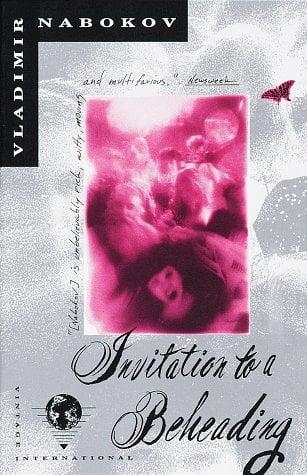
"Invitation to a Beheading" plunges the reader into the surreal, Kafkaesque world of Cincinnatus C., a man condemned to death for "gnostical turpitude," a crime never fully defined. Trapped in a grotesque, theatrical prison awaiting his execution, Cincinnatus grapples with his identity and attempts to understand a society populated by absurd characters and devoid of genuine human connection. The novel masterfully blurs the line between reality and illusion, creating a chilling portrait of isolation and existential dread in the face of an incomprehensible, oppressive system.
The similarity to "Darkness at Noon" lies in their shared exploration of totalitarianism's psychological impact and the individual's struggle against an all-encompassing, irrational state. Both novels depict protagonists facing a foregone verdict within a closed system, scrutinizing their pasts and inner lives as external pressures mount. Where Rubashov faces physical torture and ideological betrayal, Cincinnatus endures psychological torture and the complete dehumanization fostered by a state that denies individual thought and emotion. Both works dissect the mechanisms of manipulation and conformity, albeit through different stylistic lenses.
This novel will appeal to those who appreciate incisive social commentary wrapped in masterful prose. It offers a profound meditation on individuality, freedom of thought, and the nature of reality within oppressive regimes. Its unique blend of dark comedy, philosophical inquiry, and psychological depth provides a rich, thought-provoking experience, encouraging reflection on the human spirit's resilience and the perils of societal control. The novel's timeless themes and inventive narrative make it a compelling and intellectually rewarding read.
Invitation to a Beheading
"Invitation to a Beheading" plunges the reader into the surreal, Kafkaesque world of Cincinnatus C., a man condemned to death for "gnostical turpitude," a crime never fully defined. Trapped in a grotesque, theatrical prison awaiting his execution, Cincinnatus grapples with his identity and attempts to understand a society populated by absurd characters and devoid of genuine human connection. The novel masterfully blurs the line between reality and illusion, creating a chilling portrait of isolation and existential dread in the face of an incomprehensible, oppressive system.
The similarity to "Darkness at Noon" lies in their shared exploration of totalitarianism's psychological impact and the individual's struggle against an all-encompassing, irrational state. Both novels depict protagonists facing a foregone verdict within a closed system, scrutinizing their pasts and inner lives as external pressures mount. Where Rubashov faces physical torture and ideological betrayal, Cincinnatus endures psychological torture and the complete dehumanization fostered by a state that denies individual thought and emotion. Both works dissect the mechanisms of manipulation and conformity, albeit through different stylistic lenses.
This novel will appeal to those who appreciate incisive social commentary wrapped in masterful prose. It offers a profound meditation on individuality, freedom of thought, and the nature of reality within oppressive regimes. Its unique blend of dark comedy, philosophical inquiry, and psychological depth provides a rich, thought-provoking experience, encouraging reflection on the human spirit's resilience and the perils of societal control. The novel's timeless themes and inventive narrative make it a compelling and intellectually rewarding read.
Swastika Night
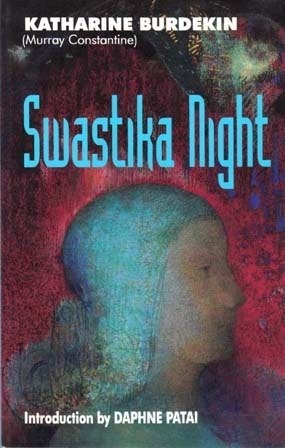
"Swastika Night" depicts a chilling dystopian future set 700 years after a triumphant Nazi Germany has conquered the world. Women are relegated to a subhuman, almost animalistic existence, while men venerate a mythical, god-like figure of "Hitler the God." The novel follows Alfred, a disillusioned Englishman, as he uncovers the brutal falsification of history that underpins this totalitarian regime, forcing him to confront the horrifying truth of their manufactured reality.
The similarity to "Darkness at Noon" lies in their shared exploration of oppressive ideology and the systematic dismantling of individual thought. Both novels delve into how totalitarian systems warp truth, manipulate history, and psychologically brutalize their subjects to maintain power. While Koestler focuses on the self-incrimination of a revolutionary in a communist state, Burdekin imagines a society where historical revisionism and gender-based discrimination have become the foundational pillars of total control.
This book will appeal to those who appreciate incisive social commentary and a stark examination of the dangers inherent in unchallenged authority and historical revisionism. It offers a powerful meditation on the fragility of truth and the devastating consequences of unchecked ideological power, providing valuable insights into the mechanisms of authoritarian control and the enduring human spirit's fight for intellectual freedom.
Swastika Night
"Swastika Night" depicts a chilling dystopian future set 700 years after a triumphant Nazi Germany has conquered the world. Women are relegated to a subhuman, almost animalistic existence, while men venerate a mythical, god-like figure of "Hitler the God." The novel follows Alfred, a disillusioned Englishman, as he uncovers the brutal falsification of history that underpins this totalitarian regime, forcing him to confront the horrifying truth of their manufactured reality.
The similarity to "Darkness at Noon" lies in their shared exploration of oppressive ideology and the systematic dismantling of individual thought. Both novels delve into how totalitarian systems warp truth, manipulate history, and psychologically brutalize their subjects to maintain power. While Koestler focuses on the self-incrimination of a revolutionary in a communist state, Burdekin imagines a society where historical revisionism and gender-based discrimination have become the foundational pillars of total control.
This book will appeal to those who appreciate incisive social commentary and a stark examination of the dangers inherent in unchallenged authority and historical revisionism. It offers a powerful meditation on the fragility of truth and the devastating consequences of unchecked ideological power, providing valuable insights into the mechanisms of authoritarian control and the enduring human spirit's fight for intellectual freedom.
Kallocain
Karin Boye's *Kallocain* depicts a totalitarian Worldstate where individual thought is systematically suppressed. The story unfolds through the journal entries of scientist Leo Kall, the inventor of "Kallocain," a truth serum that forces subjects to divulge their innermost thoughts. This drug becomes the ultimate tool of state control, eradicating privacy and the very concept of a private self, challenging the remnants of human freedom in a dystopian society.
The stark parallels with *Darkness at Noon* lie in their shared exploration of totalitarianism's psychological impact on individuals. Both novels meticulously dissect how oppressive regimes dismantle personal autonomy, manipulate truth, and force conformity. Just as Rubashov grapples with the Party’s logic, Kall witnesses the crushing of dissent and the internal contradictions inherent in a system built on absolute control, scrutinizing the very nature of individual conscience versus collective ideology.
This novel will appeal to those who value incisive political commentary and nuanced explorations of ethical dilemmas. Its profound examination of state power, personal freedom, and the destructive potential of science offers a timeless meditation on human nature under duress, providing critical insights into the resilience and fragility of individual thought when confronted by overwhelming societal pressure.
Kallocain
Karin Boye's *Kallocain* depicts a totalitarian Worldstate where individual thought is systematically suppressed. The story unfolds through the journal entries of scientist Leo Kall, the inventor of "Kallocain," a truth serum that forces subjects to divulge their innermost thoughts. This drug becomes the ultimate tool of state control, eradicating privacy and the very concept of a private self, challenging the remnants of human freedom in a dystopian society.
The stark parallels with *Darkness at Noon* lie in their shared exploration of totalitarianism's psychological impact on individuals. Both novels meticulously dissect how oppressive regimes dismantle personal autonomy, manipulate truth, and force conformity. Just as Rubashov grapples with the Party’s logic, Kall witnesses the crushing of dissent and the internal contradictions inherent in a system built on absolute control, scrutinizing the very nature of individual conscience versus collective ideology.
This novel will appeal to those who value incisive political commentary and nuanced explorations of ethical dilemmas. Its profound examination of state power, personal freedom, and the destructive potential of science offers a timeless meditation on human nature under duress, providing critical insights into the resilience and fragility of individual thought when confronted by overwhelming societal pressure.
Child 44

"Child 44" plunges into Soviet Russia during the totalitarian era, following Leo Demidov, a decorated MGB agent whose unwavering loyalty is tested when he uncovers evidence of a serial killer targeting children. In a state where "crime does not exist," Leo's pursuit of truth forces him to confront the regime's brutal suppression of reality, leading to his exile and a desperate, dangerous quest for justice.
The similarity to "Darkness at Noon" lies in their shared exploration of the individual's struggle against an oppressive, illogical totalitarian system. Both novels depict protagonists forced to navigate a landscape where truth is malleable, where political dogma trumps human conscience, and where unwavering loyalty can be a death sentence. They both powerfully illustrate the psychological toll of living under such regimes, where paranoia and fear permeate every aspect of existence.
This novel will appeal to those who appreciate gripping historical thrillers that delve into the dark psychology of totalitarianism. It offers a chilling yet compelling insight into a society warped by fear and propaganda, while simultaneously delivering a tense, high-stakes detective story. The exploration of moral compromise and the search for humanity amidst systemic inhumanity makes for a profoundly thought-provoking and rewarding reading experience.
Child 44
"Child 44" plunges into Soviet Russia during the totalitarian era, following Leo Demidov, a decorated MGB agent whose unwavering loyalty is tested when he uncovers evidence of a serial killer targeting children. In a state where "crime does not exist," Leo's pursuit of truth forces him to confront the regime's brutal suppression of reality, leading to his exile and a desperate, dangerous quest for justice.
The similarity to "Darkness at Noon" lies in their shared exploration of the individual's struggle against an oppressive, illogical totalitarian system. Both novels depict protagonists forced to navigate a landscape where truth is malleable, where political dogma trumps human conscience, and where unwavering loyalty can be a death sentence. They both powerfully illustrate the psychological toll of living under such regimes, where paranoia and fear permeate every aspect of existence.
This novel will appeal to those who appreciate gripping historical thrillers that delve into the dark psychology of totalitarianism. It offers a chilling yet compelling insight into a society warped by fear and propaganda, while simultaneously delivering a tense, high-stakes detective story. The exploration of moral compromise and the search for humanity amidst systemic inhumanity makes for a profoundly thought-provoking and rewarding reading experience.
Under Western Eyes

"Under Western Eyes" delves into the psychological torment of Razumov, a brilliant but apolitical Russian student in Geneva. He is inadvertently drawn into a revolutionary conspiracy after a fellow student, Victor Haldin, assassinates a despotic minister and seeks refuge with him. Razumov's desperate decision to betray Haldin sets in motion a chain of events that exposes the complex moral compromises and profound sense of isolation inherent in a society riddled with political extremism and surveillance.
The novel shares a profound thematic kinship with "Darkness at Noon" through its exploration of individual conscience crushed by totalitarian systems. Both protagonists, Rubashov and Razumov, are intellectuals forced to confront the moral abyss created by political expediency and betrayal. The narratives masterfully convey the internal struggles of individuals navigating a world where personal integrity is secondary to the demands of an ideological regime, showcasing the devastating psychological toll of such pressures.
This book offers a compelling and valuable experience by illuminating the timeless struggle between individual morality and systemic pressures. Its meticulous psychological portraiture and incisive critique of political extremism provide a deep understanding of human vulnerability and the corrosive nature of ideological fanaticism. It is a work that resonates with anyone interested in the human cost of political upheaval and the enduring questions of guilt, responsibility, and redemption.
Under Western Eyes
"Under Western Eyes" delves into the psychological torment of Razumov, a brilliant but apolitical Russian student in Geneva. He is inadvertently drawn into a revolutionary conspiracy after a fellow student, Victor Haldin, assassinates a despotic minister and seeks refuge with him. Razumov's desperate decision to betray Haldin sets in motion a chain of events that exposes the complex moral compromises and profound sense of isolation inherent in a society riddled with political extremism and surveillance.
The novel shares a profound thematic kinship with "Darkness at Noon" through its exploration of individual conscience crushed by totalitarian systems. Both protagonists, Rubashov and Razumov, are intellectuals forced to confront the moral abyss created by political expediency and betrayal. The narratives masterfully convey the internal struggles of individuals navigating a world where personal integrity is secondary to the demands of an ideological regime, showcasing the devastating psychological toll of such pressures.
This book offers a compelling and valuable experience by illuminating the timeless struggle between individual morality and systemic pressures. Its meticulous psychological portraiture and incisive critique of political extremism provide a deep understanding of human vulnerability and the corrosive nature of ideological fanaticism. It is a work that resonates with anyone interested in the human cost of political upheaval and the enduring questions of guilt, responsibility, and redemption.
Children of the Arbat
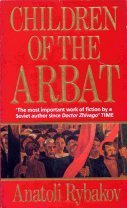
"Children of the Arbat" delves into the lives of young Muscovites during the harrowing 1930s, specifically focusing on Sascha Pankratov, a Komsomol leader unjustly arrested and exiled. The narrative intricately weaves together Pankratov's experiences with the broader political machinations of the Soviet state under Stalin, including the dictator's personal paranoias and the escalating purges. It offers a detailed, often brutal, portrayal of individual persecution within a system designed to crush dissent, exploring themes of innocence lost, betrayal, and the struggle for survival.
The similarity to "Darkness at Noon" lies in their shared exploration of totalitarian regimes' psychological impact and mechanics, particularly the show trials and confessions exacted from political prisoners. Both novels dissect the individual's capitulation and questioning of their convictions under immense pressure, and both offer a piercing indictment of Stalinist terror. While "Darkness at Noon" focuses intensely on one prisoner's internal struggle, "Children of the Arbat" broadens the scope to encompass a wider societal perspective, showing how the purges rippled through various segments of Soviet life.
This novel will appeal for its historical depth and its compelling human drama. It provides invaluable insight into a dark period of history, offering a fictionalized yet deeply researched account of life under Stalinism. Its exploration of moral compromise, the corruption of power, and the resilience of the human spirit resonates powerfully, fostering a deeper understanding of political repression and its devastating consequences.
Children of the Arbat
"Children of the Arbat" delves into the lives of young Muscovites during the harrowing 1930s, specifically focusing on Sascha Pankratov, a Komsomol leader unjustly arrested and exiled. The narrative intricately weaves together Pankratov's experiences with the broader political machinations of the Soviet state under Stalin, including the dictator's personal paranoias and the escalating purges. It offers a detailed, often brutal, portrayal of individual persecution within a system designed to crush dissent, exploring themes of innocence lost, betrayal, and the struggle for survival.
The similarity to "Darkness at Noon" lies in their shared exploration of totalitarian regimes' psychological impact and mechanics, particularly the show trials and confessions exacted from political prisoners. Both novels dissect the individual's capitulation and questioning of their convictions under immense pressure, and both offer a piercing indictment of Stalinist terror. While "Darkness at Noon" focuses intensely on one prisoner's internal struggle, "Children of the Arbat" broadens the scope to encompass a wider societal perspective, showing how the purges rippled through various segments of Soviet life.
This novel will appeal for its historical depth and its compelling human drama. It provides invaluable insight into a dark period of history, offering a fictionalized yet deeply researched account of life under Stalinism. Its exploration of moral compromise, the corruption of power, and the resilience of the human spirit resonates powerfully, fostering a deeper understanding of political repression and its devastating consequences.
Gorky Park

"Gorky Park" immerses you in the grim reality of Soviet Moscow as Arkady Renko, a world-weary Chief Investigator, unravels a chilling triple murder in the city's iconic park. What begins as a police procedural quickly spirals into a labyrinth of international espionage, political intrigue, and personal danger, revealing the moral ambiguities and pervasive corruption beneath the surface of the Cold War era.
The similarity to "Darkness at Noon" lies in their shared exploration of totalitarian systems and their corrosive effects on individual conscience and truth. Both novels depict individuals struggling to maintain their integrity within a suffocating political apparatus that demands conformity and obedience, regardless of justice. The psychological torment and the internal conflict faced by the protagonists resonate strongly across these two tales.
This novel will appeal to those who appreciate sophisticated thrillers with profound social commentary. It offers a gripping mystery woven with a meticulous portrayal of a historical period, inviting contemplation of themes such as justice, human resilience in oppressive regimes, and the slippery nature of truth. Its value lies in its ability to entertain while simultaneously offering a nuanced, thought-provoking examination of power and its human cost.
Gorky Park
"Gorky Park" immerses you in the grim reality of Soviet Moscow as Arkady Renko, a world-weary Chief Investigator, unravels a chilling triple murder in the city's iconic park. What begins as a police procedural quickly spirals into a labyrinth of international espionage, political intrigue, and personal danger, revealing the moral ambiguities and pervasive corruption beneath the surface of the Cold War era.
The similarity to "Darkness at Noon" lies in their shared exploration of totalitarian systems and their corrosive effects on individual conscience and truth. Both novels depict individuals struggling to maintain their integrity within a suffocating political apparatus that demands conformity and obedience, regardless of justice. The psychological torment and the internal conflict faced by the protagonists resonate strongly across these two tales.
This novel will appeal to those who appreciate sophisticated thrillers with profound social commentary. It offers a gripping mystery woven with a meticulous portrayal of a historical period, inviting contemplation of themes such as justice, human resilience in oppressive regimes, and the slippery nature of truth. Its value lies in its ability to entertain while simultaneously offering a nuanced, thought-provoking examination of power and its human cost.
More Books to Explore
Discover more titles that expand on these ideas and themes.
The First Circle
Bend Sinister
1984
Invitation to a Beheading
Swastika Night
Kallocain