10 Books Similar to "Cosmos"
by Carl Sagan

Carl Sagan's Cosmic Connection: An Extraterrestrial Perspective

"Carl Sagan's Cosmic Connection: An Extraterrestrial Perspective" explores humanity's fragile place within the vast cosmic order, examining the scientific and philosophical implications of a universe potentially teeming with life. Through a series of essays, Sagan delves into topics ranging from the possibility of extraterrestrial intelligence and interstellar communication to the origins of life on Earth and the future of human exploration, all viewed through the lens of a deep understanding and appreciation for scientific inquiry.
This collection shares "Cosmos'" remarkable ability to synthesize complex scientific concepts into an accessible and compelling narrative. Both works powerfully convey Sagan's unique blend of scientific rigor, poetic language, and profound sense of wonder, making the universe comprehensible and inspiring. The core themes of cosmic perspective, the urgency of scientific literacy, and the search for our place among the stars resonate strongly in both narratives.
This book offers a deeper dive into Sagan's foundational ideas preceding or complementing "Cosmos." It presents his earlier thought evolution on many subjects that would become central to his later, more expansive work, providing valuable context and a nuanced understanding of his intellectual development. It provides significant insight into the thought processes of one of science's most articulate advocates.
Carl Sagan's Cosmic Connection: An Extraterrestrial Perspective
"Carl Sagan's Cosmic Connection: An Extraterrestrial Perspective" explores humanity's fragile place within the vast cosmic order, examining the scientific and philosophical implications of a universe potentially teeming with life. Through a series of essays, Sagan delves into topics ranging from the possibility of extraterrestrial intelligence and interstellar communication to the origins of life on Earth and the future of human exploration, all viewed through the lens of a deep understanding and appreciation for scientific inquiry.
This collection shares "Cosmos'" remarkable ability to synthesize complex scientific concepts into an accessible and compelling narrative. Both works powerfully convey Sagan's unique blend of scientific rigor, poetic language, and profound sense of wonder, making the universe comprehensible and inspiring. The core themes of cosmic perspective, the urgency of scientific literacy, and the search for our place among the stars resonate strongly in both narratives.
This book offers a deeper dive into Sagan's foundational ideas preceding or complementing "Cosmos." It presents his earlier thought evolution on many subjects that would become central to his later, more expansive work, providing valuable context and a nuanced understanding of his intellectual development. It provides significant insight into the thought processes of one of science's most articulate advocates.
Broca's Brain: Reflections on the Romance of Science

"Broca's Brain: Reflections on the Romance of Science" is a collection of essays that delve into various scientific discoveries, historical figures, and philosophical musings on the nature of understanding the universe. Sagan explores topics ranging from extraterrestrial life and the origins of consciousness to discussions on intelligence and the ethical implications of scientific progress, inviting readers to ponder humanity's place in the vast cosmos through a series of insightful, interconnected reflections.
The book shares a profound thematic and stylistic kinship with "Cosmos." Both works showcase Sagan's unparalleled ability to synthesize complex scientific concepts into accessible, poetic prose, inspiring a sense of awe and wonder. They both champion scientific inquiry as a fundamental human endeavor, emphasizing the quest for knowledge as a journey of discovery that intertwines with our cultural and intellectual evolution.
It will appeal to those who value intellectual curiosity and a lyrical approach to science. The essays foster a deeper appreciation for the scientific method and its profound impact on our worldview, encouraging critical thinking and a sense of shared human experience in unraveling the universe's mysteries. The book offers not just facts, but a perspective that elevates science to an artistic and deeply human pursuit.
Broca's Brain: Reflections on the Romance of Science
"Broca's Brain: Reflections on the Romance of Science" is a collection of essays that delve into various scientific discoveries, historical figures, and philosophical musings on the nature of understanding the universe. Sagan explores topics ranging from extraterrestrial life and the origins of consciousness to discussions on intelligence and the ethical implications of scientific progress, inviting readers to ponder humanity's place in the vast cosmos through a series of insightful, interconnected reflections.
The book shares a profound thematic and stylistic kinship with "Cosmos." Both works showcase Sagan's unparalleled ability to synthesize complex scientific concepts into accessible, poetic prose, inspiring a sense of awe and wonder. They both champion scientific inquiry as a fundamental human endeavor, emphasizing the quest for knowledge as a journey of discovery that intertwines with our cultural and intellectual evolution.
It will appeal to those who value intellectual curiosity and a lyrical approach to science. The essays foster a deeper appreciation for the scientific method and its profound impact on our worldview, encouraging critical thinking and a sense of shared human experience in unraveling the universe's mysteries. The book offers not just facts, but a perspective that elevates science to an artistic and deeply human pursuit.
Pale Blue Dot: A Vision of the Human Future in Space

"Pale Blue Dot: A Vision of the Human Future in Space" explores humanity's place in the universe, emphasizing our ongoing journey of exploration and our profound responsibilities as stewards of our fragile home planet. Sagan eloquently argues for continued space exploration, not as an escape, but as a vital component of our intellectual, spiritual, and existential growth. He addresses the scientific, ethical, and societal implications of searching for extraterrestrial life and expanding our civilization beyond Earth, all while grounding these grand visions in a deep respect for our past and present.
Its similarity to "Cosmos" lies in Sagan's distinctive voice and overarching themes. Both books blend scientific rigor with poetic introspection, making complex astronomical concepts accessible and deeply meaningful. They share a fundamental advocacy for critical thinking, scientific literacy, and a cosmic perspective that transcends nationalistic or anthropocentric biases, linking humanity's story to the grand narrative of the universe.
This book will appeal to those who seek thoughtful reflection on humanity's role and potential. It offers profound insights into our aspirations, our ethical obligations, and the enduring human drive to understand our origins and destiny. Its value lies in its ability to inspire a sense of wonder, encourage intellectual curiosity, and foster a deeper appreciation for both the vastness of the cosmos and the preciousness of life on Earth.
Pale Blue Dot: A Vision of the Human Future in Space
"Pale Blue Dot: A Vision of the Human Future in Space" explores humanity's place in the universe, emphasizing our ongoing journey of exploration and our profound responsibilities as stewards of our fragile home planet. Sagan eloquently argues for continued space exploration, not as an escape, but as a vital component of our intellectual, spiritual, and existential growth. He addresses the scientific, ethical, and societal implications of searching for extraterrestrial life and expanding our civilization beyond Earth, all while grounding these grand visions in a deep respect for our past and present.
Its similarity to "Cosmos" lies in Sagan's distinctive voice and overarching themes. Both books blend scientific rigor with poetic introspection, making complex astronomical concepts accessible and deeply meaningful. They share a fundamental advocacy for critical thinking, scientific literacy, and a cosmic perspective that transcends nationalistic or anthropocentric biases, linking humanity's story to the grand narrative of the universe.
This book will appeal to those who seek thoughtful reflection on humanity's role and potential. It offers profound insights into our aspirations, our ethical obligations, and the enduring human drive to understand our origins and destiny. Its value lies in its ability to inspire a sense of wonder, encourage intellectual curiosity, and foster a deeper appreciation for both the vastness of the cosmos and the preciousness of life on Earth.
Coming of Age in the Milky Way
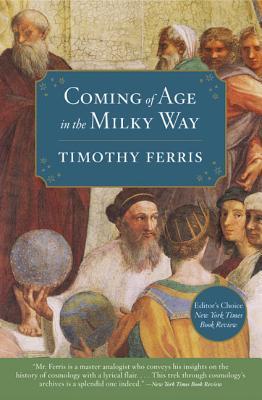
"Coming of Age in the Milky Way" chronicles humanity's evolving understanding of the cosmos, from ancient astronomical observations to modern Big Bang cosmology. It contextualizes the scientific journey not just as a series of discoveries, but as a profound intellectual and philosophical quest, tracing how our perception of the universe has shaped our place within it.
This book resonates strongly with "Cosmos" through its overarching ambition to democratize complex scientific concepts and inspire awe for the universe. Both works excel at weaving historical narrative, scientific explanation, and philosophical reflection into a compelling tapestry, making the vastness of space and time accessible and deeply personal. They share a similar narrative style that emphasizes the human element in scientific endeavor.
This book offers a captivating exploration of intellectual history and scientific progress. It will illuminate the continuous thread of human curiosity that has driven our understanding of the universe, providing a rich perspective on how scientific thought develops and impacts our worldview. Its value lies in fostering a deeper appreciation for the scientific method and humanity's enduring quest for knowledge.
Coming of Age in the Milky Way
"Coming of Age in the Milky Way" chronicles humanity's evolving understanding of the cosmos, from ancient astronomical observations to modern Big Bang cosmology. It contextualizes the scientific journey not just as a series of discoveries, but as a profound intellectual and philosophical quest, tracing how our perception of the universe has shaped our place within it.
This book resonates strongly with "Cosmos" through its overarching ambition to democratize complex scientific concepts and inspire awe for the universe. Both works excel at weaving historical narrative, scientific explanation, and philosophical reflection into a compelling tapestry, making the vastness of space and time accessible and deeply personal. They share a similar narrative style that emphasizes the human element in scientific endeavor.
This book offers a captivating exploration of intellectual history and scientific progress. It will illuminate the continuous thread of human curiosity that has driven our understanding of the universe, providing a rich perspective on how scientific thought develops and impacts our worldview. Its value lies in fostering a deeper appreciation for the scientific method and humanity's enduring quest for knowledge.
The Dragons of Eden: Speculations on the Evolution of Human Intelligence

"The Dragons of Eden" explores the fascinating journey of human intelligence, tracing its evolutionary roots from single-celled organisms to complex modern thought. Sagan delves into the structure and function of the brain, theorizing about the origins of consciousness, memory, and even myth. It's a profound thought experiment, weaving together neuroscience, anthropology, and paleontology to understand what makes us uniquely human.
This book shares "Cosmos'" spirit of grand inquiry and accessible scientific explanation. Both works demonstrate Sagan's remarkable ability to distill complex scientific concepts into compelling narratives, igniting curiosity about our place in the universe—whether that universe is external or lies within the human mind. The breadth of topics and the interdisciplinary approach are hallmarks of both.
It will appeal to those who enjoy intellectually stimulating explorations of big questions. The insights into human evolution, brain function, and the very nature of intelligence offer a unique perspective on our own minds. Its value lies in provoking deeper thought about our cognitive heritage and encouraging a sense of wonder about the biological journey that led to human consciousness.
The Dragons of Eden: Speculations on the Evolution of Human Intelligence
"The Dragons of Eden" explores the fascinating journey of human intelligence, tracing its evolutionary roots from single-celled organisms to complex modern thought. Sagan delves into the structure and function of the brain, theorizing about the origins of consciousness, memory, and even myth. It's a profound thought experiment, weaving together neuroscience, anthropology, and paleontology to understand what makes us uniquely human.
This book shares "Cosmos'" spirit of grand inquiry and accessible scientific explanation. Both works demonstrate Sagan's remarkable ability to distill complex scientific concepts into compelling narratives, igniting curiosity about our place in the universe—whether that universe is external or lies within the human mind. The breadth of topics and the interdisciplinary approach are hallmarks of both.
It will appeal to those who enjoy intellectually stimulating explorations of big questions. The insights into human evolution, brain function, and the very nature of intelligence offer a unique perspective on our own minds. Its value lies in provoking deeper thought about our cognitive heritage and encouraging a sense of wonder about the biological journey that led to human consciousness.
The Whole Shebang: A State-of-the-Universe[s] Report
![Cover of The Whole Shebang: A State-of-the-Universe[s] Report](https://images-na.ssl-images-amazon.com/images/S/compressed.photo.goodreads.com/books/1347278841i/310330.jpg)
"The Whole Shebang" masterfully surveys the current understanding of the cosmos, from the birth of stars to the potential for multiple universes. Ferris explores fundamental questions about existence, time, and the universe's ultimate fate, weaving in historical scientific discoveries and contemporary theories with remarkable clarity.
This book shares *Cosmos*'s ambitious scope and accessible approach to complex scientific topics. Both authors have a gift for making astrophysics and cosmology not only understandable but deeply engaging for a general audience, fostering a sense of wonder and intellectual curiosity about our place in the universe.
Anyone captivated by profound questions about the universe’s origins, structure, and future will appreciate this expertly crafted narrative. It offers a comprehensive and thought-provoking journey through modern cosmology, enriching one's perspective on existence and the scientific endeavor itself.
The Whole Shebang: A State-of-the-Universe[s] Report
"The Whole Shebang" masterfully surveys the current understanding of the cosmos, from the birth of stars to the potential for multiple universes. Ferris explores fundamental questions about existence, time, and the universe's ultimate fate, weaving in historical scientific discoveries and contemporary theories with remarkable clarity.
This book shares *Cosmos*'s ambitious scope and accessible approach to complex scientific topics. Both authors have a gift for making astrophysics and cosmology not only understandable but deeply engaging for a general audience, fostering a sense of wonder and intellectual curiosity about our place in the universe.
Anyone captivated by profound questions about the universe’s origins, structure, and future will appreciate this expertly crafted narrative. It offers a comprehensive and thought-provoking journey through modern cosmology, enriching one's perspective on existence and the scientific endeavor itself.
The Demon-Haunted World: Science as a Candle in the Dark

"The Demon-Haunted World" profoundly tackles the importance of scientific thinking in a world often misled by pseudoscience, superstition, and irrational beliefs. Sagan champions critical inquiry and skepticism as essential tools for discerning truth from deception across various societal domains, from UFO sightings to alternative medicine, ultimately advocating for a scientifically literate populace.
This work resonates strongly with "Cosmos" due to their shared core mission: illuminating the universe through the lens of science. Both books are passionate appeals for intellectual curiosity, emphasizing rigorous evidence and rational thought as paths to understanding. While "Cosmos" explores the wonders of the physical universe, "Demon-Haunted World" focuses on equipping individuals with the mental framework to navigate it responsibly.
This book offers immense value to anyone seeking to cultivate a more discerning mind and resist manipulative falsehoods. It empowers individuals with the intellectual tools to critically evaluate information, fostering a deeper appreciation for verifiable knowledge and protecting against the allure of unproven claims. It's a vital guide for navigating an information-rich yet often confusing world.
The Demon-Haunted World: Science as a Candle in the Dark
"The Demon-Haunted World" profoundly tackles the importance of scientific thinking in a world often misled by pseudoscience, superstition, and irrational beliefs. Sagan champions critical inquiry and skepticism as essential tools for discerning truth from deception across various societal domains, from UFO sightings to alternative medicine, ultimately advocating for a scientifically literate populace.
This work resonates strongly with "Cosmos" due to their shared core mission: illuminating the universe through the lens of science. Both books are passionate appeals for intellectual curiosity, emphasizing rigorous evidence and rational thought as paths to understanding. While "Cosmos" explores the wonders of the physical universe, "Demon-Haunted World" focuses on equipping individuals with the mental framework to navigate it responsibly.
This book offers immense value to anyone seeking to cultivate a more discerning mind and resist manipulative falsehoods. It empowers individuals with the intellectual tools to critically evaluate information, fostering a deeper appreciation for verifiable knowledge and protecting against the allure of unproven claims. It's a vital guide for navigating an information-rich yet often confusing world.
Origins: Fourteen Billion Years of Cosmic Evolution
"Origins: Fourteen Billion Years of Cosmic Evolution" meticulously traces the universe's grand narrative, starting from the Big Bang and journeying through the formation of stars, galaxies, planets, and ultimately, life itself. Tyson and Goldsmith unpack complex astrophysical concepts with clarity, providing a comprehensive and accessible overview of our cosmic genesis.
This work resonates strongly with "Cosmos" through its overarching ambition: to make the vastness and wonder of scientific discovery accessible to a broad audience. Both books serve as eloquent guides to humanity's place in the universe, inspiring curiosity and a sense of cosmic connection, utilizing engaging prose to demystify intricate scientific principles.
The book will appeal to those eager to understand the universe's origin story, presented with scientific rigor yet without obscure jargon. Its value lies in offering an updated, authoritative perspective on cosmic evolution, fostering a deeper appreciation for the interconnectedness of all phenomena, from subatomic particles to soaring galaxies.
Origins: Fourteen Billion Years of Cosmic Evolution
"Origins: Fourteen Billion Years of Cosmic Evolution" meticulously traces the universe's grand narrative, starting from the Big Bang and journeying through the formation of stars, galaxies, planets, and ultimately, life itself. Tyson and Goldsmith unpack complex astrophysical concepts with clarity, providing a comprehensive and accessible overview of our cosmic genesis.
This work resonates strongly with "Cosmos" through its overarching ambition: to make the vastness and wonder of scientific discovery accessible to a broad audience. Both books serve as eloquent guides to humanity's place in the universe, inspiring curiosity and a sense of cosmic connection, utilizing engaging prose to demystify intricate scientific principles.
The book will appeal to those eager to understand the universe's origin story, presented with scientific rigor yet without obscure jargon. Its value lies in offering an updated, authoritative perspective on cosmic evolution, fostering a deeper appreciation for the interconnectedness of all phenomena, from subatomic particles to soaring galaxies.
Death by Black Hole: And Other Cosmic Quandaries
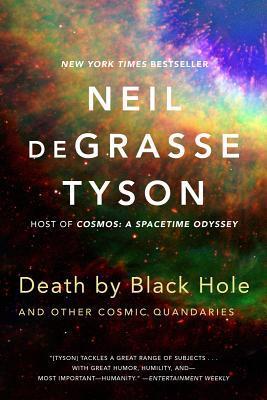
"Death by Black Hole: And Other Cosmic Quandaries" delves into a wide array of astrophysical concepts and cosmic phenomena, from the titular black holes to the intricacies of space exploration and the nature of scientific inquiry. Tyson, with a characteristic blend of scientific rigor and accessible language, demystifies complex ideas and addresses common misconceptions about the universe. It’s a collection of essays and articles, each illuminating a different facet of our cosmic neighborhood and the human endeavor to understand it.
Its similarity to "Cosmos" lies in its overarching mission: to inspire wonder and foster a deeper understanding of the universe in a broad audience. Both books serve as eloquent guides to scientific thought, weaving together astronomy, physics, and the philosophy of human existence within the vastness of space. They share a passion for communicating the beauty and significance of scientific discovery, making the cosmos feel both immense and intimately comprehensible.
This book will appeal to those curious about the universe's ultimate questions and the latest scientific insights. Its engaging explanations and thought-provoking discussions provide a valuable foundation for understanding contemporary astrophysics and the scientific process itself. It offers not just facts, but a perspective that enriches one's appreciation of our place in the cosmos.
Death by Black Hole: And Other Cosmic Quandaries
"Death by Black Hole: And Other Cosmic Quandaries" delves into a wide array of astrophysical concepts and cosmic phenomena, from the titular black holes to the intricacies of space exploration and the nature of scientific inquiry. Tyson, with a characteristic blend of scientific rigor and accessible language, demystifies complex ideas and addresses common misconceptions about the universe. It’s a collection of essays and articles, each illuminating a different facet of our cosmic neighborhood and the human endeavor to understand it.
Its similarity to "Cosmos" lies in its overarching mission: to inspire wonder and foster a deeper understanding of the universe in a broad audience. Both books serve as eloquent guides to scientific thought, weaving together astronomy, physics, and the philosophy of human existence within the vastness of space. They share a passion for communicating the beauty and significance of scientific discovery, making the cosmos feel both immense and intimately comprehensible.
This book will appeal to those curious about the universe's ultimate questions and the latest scientific insights. Its engaging explanations and thought-provoking discussions provide a valuable foundation for understanding contemporary astrophysics and the scientific process itself. It offers not just facts, but a perspective that enriches one's appreciation of our place in the cosmos.
Wonders of the Universe
"Wonders of the Universe" by Brian Cox explores the fundamental laws governing the cosmos, delving into concepts of time, space, matter, and energy. Through stunning imagery and accessible science, Cox unpacks how these elements combine to create everything from the smallest subatomic particles to the grandest galaxy clusters, often using Earth-based phenomena as relatable bridges to astronomical scale.
The book shares a profound kinship with Carl Sagan's "Cosmos" in its overarching goal: to instill a sense of awe and understanding about our place in the universe. Both works excel at presenting complex scientific ideas with clarity and an infectious enthusiasm, making the vastness of space feel both comprehensible and deeply beautiful. They share a philosophical underpinning, emphasizing curiosity and the human quest for knowledge.
This book will appeal to those who seek intellectual stimulation and a broadened perspective on existence. Its engaging explanations illuminate the interconnectedness of natural phenomena and foster a deeper appreciation for the scientific endeavor. It offers a valuable opportunity to witness the universe unfold through the eyes of a passionate and articulate guide, enriching one's understanding of foundational cosmic principles.
Wonders of the Universe
"Wonders of the Universe" by Brian Cox explores the fundamental laws governing the cosmos, delving into concepts of time, space, matter, and energy. Through stunning imagery and accessible science, Cox unpacks how these elements combine to create everything from the smallest subatomic particles to the grandest galaxy clusters, often using Earth-based phenomena as relatable bridges to astronomical scale.
The book shares a profound kinship with Carl Sagan's "Cosmos" in its overarching goal: to instill a sense of awe and understanding about our place in the universe. Both works excel at presenting complex scientific ideas with clarity and an infectious enthusiasm, making the vastness of space feel both comprehensible and deeply beautiful. They share a philosophical underpinning, emphasizing curiosity and the human quest for knowledge.
This book will appeal to those who seek intellectual stimulation and a broadened perspective on existence. Its engaging explanations illuminate the interconnectedness of natural phenomena and foster a deeper appreciation for the scientific endeavor. It offers a valuable opportunity to witness the universe unfold through the eyes of a passionate and articulate guide, enriching one's understanding of foundational cosmic principles.
More Books to Explore
Discover more titles that expand on these ideas and themes.
Carl Sagan's Cosmic Connection: An Extraterrestrial Perspective
Broca's Brain: Reflections on the Romance of Science
Pale Blue Dot: A Vision of the Human Future in Space
Coming of Age in the Milky Way
The Dragons of Eden: Speculations on the Evolution of Human Intelligence
The Whole Shebang: A State-of-the-Universe[s] Report