10 Books Similar to "Clans of the Alphane Moon"
by Philip K. Dick

Martian Time-Slip

"Martian Time-Slip" delves into the complexities of human perception and communication on a colonized Mars. It primarily follows Jack Bohlen, a repairman with a burgeoning mental illness, as he navigates the desolate Martian landscape and the fractured communities struggling for survival and sanity. The narrative explores themes of mental health, corporate exploitation, and the unique challenges posed by a non-human environment that distorts traditional notions of time and reality.
The similarity to "Clans of the Alphane Moon" lies in their shared thematic focus on fractured societies and the psychological impact of alternative social structures. Both novels explore communities grappling with mental illness – in "Clans," it's a planet populated by former mental patients, while in "Martian Time-Slip," it's an underlying current affecting many characters and particularly the "bleekmen" (Martian aboriginals). Both Dickian works present societies struggling to define "normalcy" and find equilibrium amidst internal and external pressures.
This exploration of atypical societies and the psychological toll of existence within them offers considerable appeal. The intricate character studies and the challenging of conventional reality provide a thought-provoking experience, inviting contemplation on mental health, societal constructs, and the nature of perception itself. It's a valuable read for those seeking intellectually stimulating science fiction that probes deep into the human condition.
Martian Time-Slip
"Martian Time-Slip" delves into the complexities of human perception and communication on a colonized Mars. It primarily follows Jack Bohlen, a repairman with a burgeoning mental illness, as he navigates the desolate Martian landscape and the fractured communities struggling for survival and sanity. The narrative explores themes of mental health, corporate exploitation, and the unique challenges posed by a non-human environment that distorts traditional notions of time and reality.
The similarity to "Clans of the Alphane Moon" lies in their shared thematic focus on fractured societies and the psychological impact of alternative social structures. Both novels explore communities grappling with mental illness – in "Clans," it's a planet populated by former mental patients, while in "Martian Time-Slip," it's an underlying current affecting many characters and particularly the "bleekmen" (Martian aboriginals). Both Dickian works present societies struggling to define "normalcy" and find equilibrium amidst internal and external pressures.
This exploration of atypical societies and the psychological toll of existence within them offers considerable appeal. The intricate character studies and the challenging of conventional reality provide a thought-provoking experience, inviting contemplation on mental health, societal constructs, and the nature of perception itself. It's a valuable read for those seeking intellectually stimulating science fiction that probes deep into the human condition.
The Three Stigmata of Palmer Eldritch
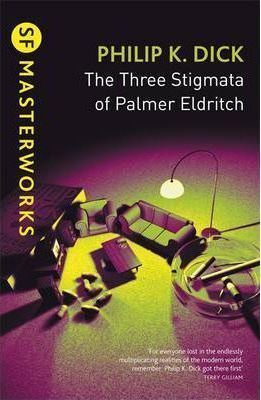
"The Three Stigmata of Palmer Eldritch" explores reality's fragility through a future where humanity colonizes other planets, dependent on hallucinogenic drugs for escapism. When a new, more potent drug, Chew-Z, promises a shared, superior reality, its enigmatic creator, Palmer Eldritch, arrives from deep space, bringing with him a disturbing, inescapable alteration to perception. The novel delves into the nature of experience, identity, and the terrifying possibility that our perceived reality is a manufactured, inescapable delusion.
This work echoes "Clans of the Alphane Moon" in its examination of constructed societies and the interplay between mental states and objective reality. Both novels feature isolated, peculiar communities – the mentally ill on Alphane, and humanity across the solar system in "Stigmata" – where the boundaries of normalcy are constantly challenged. They share a thematic concern with humanity's psychological vulnerabilities and the potentially catastrophic consequences of artificial social constructs and altered perceptions.
The novel offers a profound meditation on the nature of reality and the human need for escape. Its intricate plot, philosophical depth, and unsettling exploration of perception's malleability provide a compelling and thought-provoking experience. It challenges assumptions about what is real and what is truly "human," leaving a lasting impression that resonates with contemporary anxieties about technology, illusion, and existential authenticity.
The Three Stigmata of Palmer Eldritch
"The Three Stigmata of Palmer Eldritch" explores reality's fragility through a future where humanity colonizes other planets, dependent on hallucinogenic drugs for escapism. When a new, more potent drug, Chew-Z, promises a shared, superior reality, its enigmatic creator, Palmer Eldritch, arrives from deep space, bringing with him a disturbing, inescapable alteration to perception. The novel delves into the nature of experience, identity, and the terrifying possibility that our perceived reality is a manufactured, inescapable delusion.
This work echoes "Clans of the Alphane Moon" in its examination of constructed societies and the interplay between mental states and objective reality. Both novels feature isolated, peculiar communities – the mentally ill on Alphane, and humanity across the solar system in "Stigmata" – where the boundaries of normalcy are constantly challenged. They share a thematic concern with humanity's psychological vulnerabilities and the potentially catastrophic consequences of artificial social constructs and altered perceptions.
The novel offers a profound meditation on the nature of reality and the human need for escape. Its intricate plot, philosophical depth, and unsettling exploration of perception's malleability provide a compelling and thought-provoking experience. It challenges assumptions about what is real and what is truly "human," leaving a lasting impression that resonates with contemporary anxieties about technology, illusion, and existential authenticity.
A Maze of Death
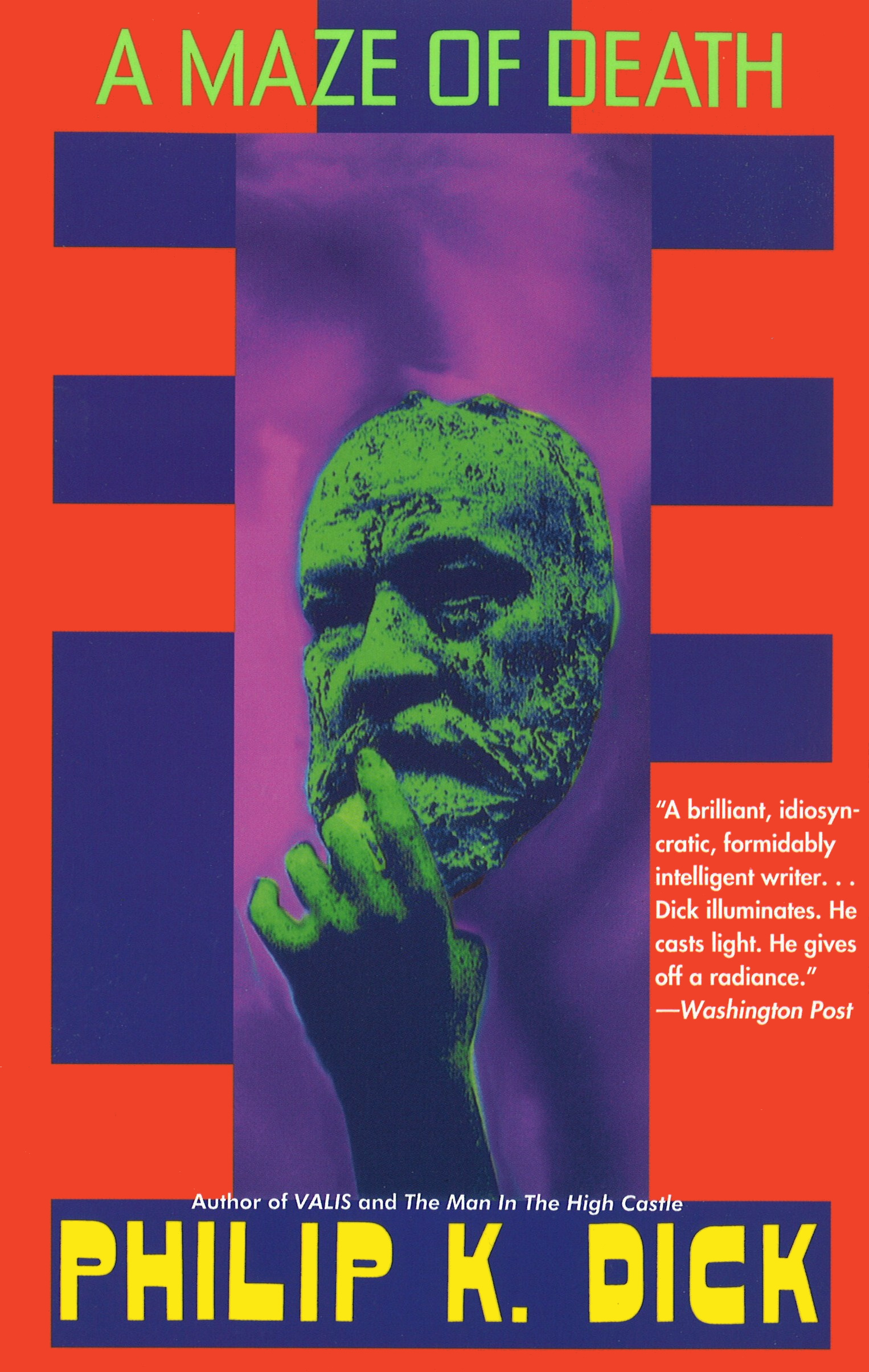
"A Maze of Death" plunges a group of colonists on an isolated planet into a spiral of murder and psychological breakdown. As the survivors face escalating paranoia and reality distortions, they struggle to comprehend their situation, leading to profound questions about the nature of existence, shared delusions, and divine intervention. The narrative relentlessly peels back layers of perceived truth, leaving characters and the audience questioning every premise.
Both novels exhibit Philip K. Dick’s signature exploration of fractured realities and belief systems. Just as "Clans of the Alphane Moon" dissects the societal structures and subjective truths within a lunar colony of mental patients, "A Maze of Death" scrutinizes the mental states and interpretations of reality among its isolated inhabitants. Both feature characters whose perceptions are demonstrably unreliable, challenging the very idea of an objective world and forcing a re-evaluation of what constitutes sanity or shared experience.
This novel offers a deeply immersive experience for those who appreciate philosophical science fiction that digs into the unsettling possibilities of human psychology and artificial worlds. Its intricate plot and existential dilemmas provide fertile ground for intellectual engagement, demonstrating Dick's unparalleled ability to craft narratives that are both thrillingly suspenseful and profoundly thought-provoking. The exploration of god-like manipulation and the desperate search for meaning in a chaotic universe ensures a compelling and memorable read.
A Maze of Death
"A Maze of Death" plunges a group of colonists on an isolated planet into a spiral of murder and psychological breakdown. As the survivors face escalating paranoia and reality distortions, they struggle to comprehend their situation, leading to profound questions about the nature of existence, shared delusions, and divine intervention. The narrative relentlessly peels back layers of perceived truth, leaving characters and the audience questioning every premise.
Both novels exhibit Philip K. Dick’s signature exploration of fractured realities and belief systems. Just as "Clans of the Alphane Moon" dissects the societal structures and subjective truths within a lunar colony of mental patients, "A Maze of Death" scrutinizes the mental states and interpretations of reality among its isolated inhabitants. Both feature characters whose perceptions are demonstrably unreliable, challenging the very idea of an objective world and forcing a re-evaluation of what constitutes sanity or shared experience.
This novel offers a deeply immersive experience for those who appreciate philosophical science fiction that digs into the unsettling possibilities of human psychology and artificial worlds. Its intricate plot and existential dilemmas provide fertile ground for intellectual engagement, demonstrating Dick's unparalleled ability to craft narratives that are both thrillingly suspenseful and profoundly thought-provoking. The exploration of god-like manipulation and the desperate search for meaning in a chaotic universe ensures a compelling and memorable read.
Time Out of Joint

"Time Out of Joint" centers on Ragle Gumm, a seemingly ordinary man living a mundane 1950s existence, whose peculiar talent for predicting newspaper contest winners provides his livelihood. However, subtle anachronisms and unsettling inconsistencies in his reality begin to accumulate, eventually leading him to question the very fabric of his world. He discovers his entire environment, and even his memories, are an elaborate, meticulously crafted illusion designed to exploit his unique psychological facility within a much larger, darker conflict.
This novel shares a foundational thematic resonance with "Clans of the Alphane Moon" through its exploration of subjective reality and the fragility of perceived truths. Both narratives delve into protagonists whose realities are manipulated or outright fabricated, leading to a profound sense of existential disorientation. They investigate how societal structures, whether a simulated 1950s suburban town or a colony of mental patients, can impose and maintain alternative definitions of sanity and normalcy, forcing characters to confront what is genuinely real.
The appeal of "Time Out of Joint" lies in its masterful execution of psychological disquiet and its profound philosophical questions. It offers a suspenseful unraveling of reality, hooking the audience with a mystery that escalates from minor anomalies to a full-blown existential crisis. This narrative provides a valuable experience for those interested in speculative fiction that probes the nature of consciousness, free will, and the ethical implications of technological and social control, offering a thought-provoking journey into the heart of what it means to be human in a constructed world.
Time Out of Joint
"Time Out of Joint" centers on Ragle Gumm, a seemingly ordinary man living a mundane 1950s existence, whose peculiar talent for predicting newspaper contest winners provides his livelihood. However, subtle anachronisms and unsettling inconsistencies in his reality begin to accumulate, eventually leading him to question the very fabric of his world. He discovers his entire environment, and even his memories, are an elaborate, meticulously crafted illusion designed to exploit his unique psychological facility within a much larger, darker conflict.
This novel shares a foundational thematic resonance with "Clans of the Alphane Moon" through its exploration of subjective reality and the fragility of perceived truths. Both narratives delve into protagonists whose realities are manipulated or outright fabricated, leading to a profound sense of existential disorientation. They investigate how societal structures, whether a simulated 1950s suburban town or a colony of mental patients, can impose and maintain alternative definitions of sanity and normalcy, forcing characters to confront what is genuinely real.
The appeal of "Time Out of Joint" lies in its masterful execution of psychological disquiet and its profound philosophical questions. It offers a suspenseful unraveling of reality, hooking the audience with a mystery that escalates from minor anomalies to a full-blown existential crisis. This narrative provides a valuable experience for those interested in speculative fiction that probes the nature of consciousness, free will, and the ethical implications of technological and social control, offering a thought-provoking journey into the heart of what it means to be human in a constructed world.
Counter-Clock World

"Counter-Clock World" presents a reality where time runs in reverse, leading to bizarre inversions: the dead awaken, returning to the womb, and objects spontaneously reassemble. We follow Sebastian Hermes, a proprietor of a "mortuary" for those recently reanimated, navigating the ethical and societal complexities of this decaying but re-forming world, particularly when a revered religious figure is poised to return to life.
Both novels explore deeply fractured societies struggling with external and internal pressures that fundamentally alter human experience. Just as "Clans of the Alphane Moon" features a lunar colony divided by mental illnesses and their corresponding "clans," "Counter-Clock World" depicts a world grappling with a reversed temporal flow that necessitates entirely new social structures and moral codes. Both works are quintessential Dick, questioning established norms and sanity itself within speculative frameworks.
This book offers a profound thought experiment on the nature of time, identity, and the resilience of societal organization in the face of radical change. Its exploration of philosophical dilemmas through a uniquely Dickian lens provides both intellectual stimulation and a fascinating narrative. The sheer creativity of its premise, coupled with its insightful commentary on human adaptation and belief systems, makes it a compelling read for those interested in speculative fiction's capacity for deep inquiry.
Counter-Clock World
"Counter-Clock World" presents a reality where time runs in reverse, leading to bizarre inversions: the dead awaken, returning to the womb, and objects spontaneously reassemble. We follow Sebastian Hermes, a proprietor of a "mortuary" for those recently reanimated, navigating the ethical and societal complexities of this decaying but re-forming world, particularly when a revered religious figure is poised to return to life.
Both novels explore deeply fractured societies struggling with external and internal pressures that fundamentally alter human experience. Just as "Clans of the Alphane Moon" features a lunar colony divided by mental illnesses and their corresponding "clans," "Counter-Clock World" depicts a world grappling with a reversed temporal flow that necessitates entirely new social structures and moral codes. Both works are quintessential Dick, questioning established norms and sanity itself within speculative frameworks.
This book offers a profound thought experiment on the nature of time, identity, and the resilience of societal organization in the face of radical change. Its exploration of philosophical dilemmas through a uniquely Dickian lens provides both intellectual stimulation and a fascinating narrative. The sheer creativity of its premise, coupled with its insightful commentary on human adaptation and belief systems, makes it a compelling read for those interested in speculative fiction's capacity for deep inquiry.
Now Wait for Last Year

"Now Wait for Last Year" plunges readers into a future where Earth is a pawn in a vast interstellar war, with protagonist Eric Sweetscent caught in a complex web of corporate espionage and political maneuvering. The narrative dissects his troubled marriage to an unstable telepath, Kathy, while Sweetscent’s unique healing abilities become crucial to his employer, the powerful industrialist Virgil Ackerman. The story brilliantly explores themes of identity, reality, and the nature of time as Sweetscent grapples with his increasingly fragmented existence and the unsettling possibility of parallel lives.
Both novels exemplify Dick's signature blend of darkly comedic societal critique and profound philosophical inquiry. Much like the intricate social structures of "Clans of the Alphane Moon," "Now Wait for Last Year" meticulously constructs an off-kilter future society where mental illness, corporate power, and altered perceptions of reality are central. The protagonists in both books are ordinary individuals thrust into extraordinary circumstances, struggling with their sanity and purpose amidst chaotic, manipulative environments.
This novel offers a compelling exploration of human resilience in the face of existential dread and technological alienation. Its thought-provoking narrative provides insight into the psychological impact of societal pressures and the search for authentic selfhood. The intricate plotting and richly developed characters deliver a satisfying and challenging reading experience, leaving a lasting impression on those who appreciate speculative fiction that delves deeply into the human condition.
Now Wait for Last Year
"Now Wait for Last Year" plunges readers into a future where Earth is a pawn in a vast interstellar war, with protagonist Eric Sweetscent caught in a complex web of corporate espionage and political maneuvering. The narrative dissects his troubled marriage to an unstable telepath, Kathy, while Sweetscent’s unique healing abilities become crucial to his employer, the powerful industrialist Virgil Ackerman. The story brilliantly explores themes of identity, reality, and the nature of time as Sweetscent grapples with his increasingly fragmented existence and the unsettling possibility of parallel lives.
Both novels exemplify Dick's signature blend of darkly comedic societal critique and profound philosophical inquiry. Much like the intricate social structures of "Clans of the Alphane Moon," "Now Wait for Last Year" meticulously constructs an off-kilter future society where mental illness, corporate power, and altered perceptions of reality are central. The protagonists in both books are ordinary individuals thrust into extraordinary circumstances, struggling with their sanity and purpose amidst chaotic, manipulative environments.
This novel offers a compelling exploration of human resilience in the face of existential dread and technological alienation. Its thought-provoking narrative provides insight into the psychological impact of societal pressures and the search for authentic selfhood. The intricate plotting and richly developed characters deliver a satisfying and challenging reading experience, leaving a lasting impression on those who appreciate speculative fiction that delves deeply into the human condition.
The Golden Man

"The Golden Man" explores the social implications of a hyper-evolved mutant, Cris, who possesses perfect precognition and near-invulnerability. Deemed a biological threat to humanity, Cris is hunted by government agents, leading to a profound meditation on the nature of evolution, free will, and fear of the "other." Dick probes how a society reacts to a being that fundamentally challenges its established order and understanding of existence.
This novel shares similarities with "Clans of the Alphane Moon" through its examination of societal structures built around unique mental or biological traits. Both books feature isolated, specialized communities or individuals whose distinct characteristics challenge conventional human norms and provoke societal conflict. They delve into how power dynamics shift and how fear and prejudice manifest when confronted with unfamiliar forms of intelligence or ability.
"The Golden Man" will appeal to those who appreciate thought-provoking science fiction, offering a compelling narrative that critiques societal fear of difference and the limitations of human perception. Its exploration of predestination versus free will provides a valuable intellectual exercise, prompting reflection on the ethical boundaries of control and the definition of humanity itself.
The Golden Man
"The Golden Man" explores the social implications of a hyper-evolved mutant, Cris, who possesses perfect precognition and near-invulnerability. Deemed a biological threat to humanity, Cris is hunted by government agents, leading to a profound meditation on the nature of evolution, free will, and fear of the "other." Dick probes how a society reacts to a being that fundamentally challenges its established order and understanding of existence.
This novel shares similarities with "Clans of the Alphane Moon" through its examination of societal structures built around unique mental or biological traits. Both books feature isolated, specialized communities or individuals whose distinct characteristics challenge conventional human norms and provoke societal conflict. They delve into how power dynamics shift and how fear and prejudice manifest when confronted with unfamiliar forms of intelligence or ability.
"The Golden Man" will appeal to those who appreciate thought-provoking science fiction, offering a compelling narrative that critiques societal fear of difference and the limitations of human perception. Its exploration of predestination versus free will provides a valuable intellectual exercise, prompting reflection on the ethical boundaries of control and the definition of humanity itself.
A Scanner Darkly
"A Scanner Darkly" plunges into a near-future dystopia where a new, highly addictive, and devastating drug called Substance D ravages society. The story follows Bob Arctor, an undercover narcotics agent deeply entrenched in the drug scene, whose identity is so convoluted that he risks losing his own sense of self. As he monitors his friends and suspects, the line between agent and addict blurs, revealing the devastating psychological toll of surveillance and addiction.
The similarity to "Clans of the Alphane Moon" lies in their shared exploration of fractured identities and the unreliable nature of perception. Both novels showcase characters grappling with shifting realities – whether due to mental illness, drug-induced states, or societal pressures – forcing them to question what is real and who they truly are. Dick's recurring theme of complex, often compromised protagonists navigating chaotic, fragmented worlds is prominent in both works.
This novel will appeal to those drawn to psychological thrillers and incisive social commentary. Its unflinching portrayal of drug addiction and the surveillance state offers a profound look at themes of personal freedom, identity, and the insidious nature of control, providing a valuable, albeit unsettling, reflection on human vulnerability and societal decay.
A Scanner Darkly
"A Scanner Darkly" plunges into a near-future dystopia where a new, highly addictive, and devastating drug called Substance D ravages society. The story follows Bob Arctor, an undercover narcotics agent deeply entrenched in the drug scene, whose identity is so convoluted that he risks losing his own sense of self. As he monitors his friends and suspects, the line between agent and addict blurs, revealing the devastating psychological toll of surveillance and addiction.
The similarity to "Clans of the Alphane Moon" lies in their shared exploration of fractured identities and the unreliable nature of perception. Both novels showcase characters grappling with shifting realities – whether due to mental illness, drug-induced states, or societal pressures – forcing them to question what is real and who they truly are. Dick's recurring theme of complex, often compromised protagonists navigating chaotic, fragmented worlds is prominent in both works.
This novel will appeal to those drawn to psychological thrillers and incisive social commentary. Its unflinching portrayal of drug addiction and the surveillance state offers a profound look at themes of personal freedom, identity, and the insidious nature of control, providing a valuable, albeit unsettling, reflection on human vulnerability and societal decay.
Four Novels of the 1960s

"Four Novels of the 1960s" is a compelling collection showcasing Philip K. Dick's distinctive vision during a pivotal decade. It compiles "The Man in the High Castle," "The Three Stigmata of Palmer Eldritch," "Ubik," and "Do Androids Dream of Electric Sheep?" Each novel explores core PKD themes such as the nature of reality, identity, sanity, and the pervasive impact of technology and corporate power on human existence. Individually, they are seminal works of science fiction, together offering a comprehensive look at his evolving genius.
This collection shares a profound thematic kinship with "Clans of the Alphane Moon" through its deep interrogation of what constitutes authentic reality and subjective experience. Both works feature characters grappling with manufactured environments, altered perceptions, and the breakdown of societal norms under extraordinary pressures. The recurring motif of fragmented identities and a blurring of lines between the real and the imagined—often exacerbated by technology or psychological states—forms a strong common thread, reflecting Dick's persistent fascination with these concepts across his oeuvre.
This compilation offers immense value to anyone interested in the foundational works of speculative fiction and profound philosophical inquiry. It provides a concentrated exposure to Dick's groundbreaking ideas, influential storytelling, and unique narrative voice, which continue to resonate and provoke thought. Acquiring this collection allows for an immersive journey into the intellectual landscape of a master, making it an essential addition for those who appreciate challenging, intricate narratives and the exploration of humanity's place in often-unpredictable universes.
Four Novels of the 1960s
"Four Novels of the 1960s" is a compelling collection showcasing Philip K. Dick's distinctive vision during a pivotal decade. It compiles "The Man in the High Castle," "The Three Stigmata of Palmer Eldritch," "Ubik," and "Do Androids Dream of Electric Sheep?" Each novel explores core PKD themes such as the nature of reality, identity, sanity, and the pervasive impact of technology and corporate power on human existence. Individually, they are seminal works of science fiction, together offering a comprehensive look at his evolving genius.
This collection shares a profound thematic kinship with "Clans of the Alphane Moon" through its deep interrogation of what constitutes authentic reality and subjective experience. Both works feature characters grappling with manufactured environments, altered perceptions, and the breakdown of societal norms under extraordinary pressures. The recurring motif of fragmented identities and a blurring of lines between the real and the imagined—often exacerbated by technology or psychological states—forms a strong common thread, reflecting Dick's persistent fascination with these concepts across his oeuvre.
This compilation offers immense value to anyone interested in the foundational works of speculative fiction and profound philosophical inquiry. It provides a concentrated exposure to Dick's groundbreaking ideas, influential storytelling, and unique narrative voice, which continue to resonate and provoke thought. Acquiring this collection allows for an immersive journey into the intellectual landscape of a master, making it an essential addition for those who appreciate challenging, intricate narratives and the exploration of humanity's place in often-unpredictable universes.
Flow My Tears, the Policeman Said
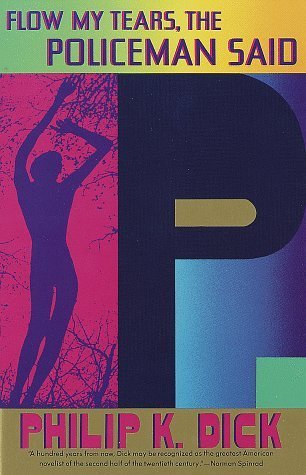
"Flow My Tears, the Policeman Said" explores a celebrity General's sudden, inexplicable plunge into anonymity and poverty in a dystopian future where identity is strictly controlled. Waking to a world where no one recognizes him, he grapples with existential dread, navigating a society that has erased his very being, all while being hunted by an authoritarian police state. The narrative delves into profound questions of identity, memory, and the fragility of perceived reality.
This novel shares thematic DNA with "Clans of the Alphane Moon" through its examination of societal structures and the psychological impact of radical alteration. Both books feature characters struggling to maintain their footing in unstable or alien social environments, highlighting the deep-seated human need for belonging and recognition amidst systems designed to either ignore or redefine individuals. The exploration of mental states, whether due to illness or societal engineering, serves as a crucial bridge between the two works.
The appeal of "Flow My Tears, the Policeman Said" lies in its gripping exploration of a universal fear: the loss of self. Its psychological depth, coupled with Dick's signature blend of speculative fiction and astute social commentary, offers a compelling experience. The novel provides valuable insights into the nature of identity and the insidious power of state control, encouraging reflection on personal perception and societal influence.
Flow My Tears, the Policeman Said
"Flow My Tears, the Policeman Said" explores a celebrity General's sudden, inexplicable plunge into anonymity and poverty in a dystopian future where identity is strictly controlled. Waking to a world where no one recognizes him, he grapples with existential dread, navigating a society that has erased his very being, all while being hunted by an authoritarian police state. The narrative delves into profound questions of identity, memory, and the fragility of perceived reality.
This novel shares thematic DNA with "Clans of the Alphane Moon" through its examination of societal structures and the psychological impact of radical alteration. Both books feature characters struggling to maintain their footing in unstable or alien social environments, highlighting the deep-seated human need for belonging and recognition amidst systems designed to either ignore or redefine individuals. The exploration of mental states, whether due to illness or societal engineering, serves as a crucial bridge between the two works.
The appeal of "Flow My Tears, the Policeman Said" lies in its gripping exploration of a universal fear: the loss of self. Its psychological depth, coupled with Dick's signature blend of speculative fiction and astute social commentary, offers a compelling experience. The novel provides valuable insights into the nature of identity and the insidious power of state control, encouraging reflection on personal perception and societal influence.
More Books to Explore
Discover more titles that expand on these ideas and themes.
Martian Time-Slip
The Three Stigmata of Palmer Eldritch
A Maze of Death
Time Out of Joint
Counter-Clock World
Now Wait for Last Year