10 Books Similar to "Children of the Arbat"
by Anatoli Rybakov
Heavy Sand
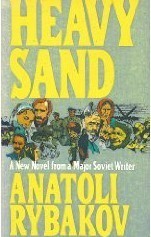
"Heavy Sand" chronicles the life of a Jewish family in a small Ukrainian town from the 1910s through World War II, focusing on their resilience and humanity in the face of escalating persecution and the Holocaust. It's a story of love, family endurance, and the horrific choices individuals are forced to make under unimaginable duress.
The similarity to "Children of the Arbat" lies in Rybakov's masterful portrayal of a specific historical period through the intimate lens of individual and family experiences. Both novels meticulously reconstruct a traumatic era, blending personal drama with sweeping socio-political forces. In "Heavy Sand," the focus shifts from Stalinist purges to the devastation of the Nazi occupation, but the core themes of survival, moral compromise, and the indelible human spirit remain consistent.
This novel offers a profound insight into a harrowing chapter of human history, particularly the Jewish experience during the Holocaust, without resorting to gratuitous detail. It celebrates the strength of family bonds and the enduring power of love amidst terror. Its historical accuracy and deeply personal narrative make it a poignant and essential read for understanding human resilience, challenging readers to reflect on collective memory and the timeless struggle against oppression.
Heavy Sand
"Heavy Sand" chronicles the life of a Jewish family in a small Ukrainian town from the 1910s through World War II, focusing on their resilience and humanity in the face of escalating persecution and the Holocaust. It's a story of love, family endurance, and the horrific choices individuals are forced to make under unimaginable duress.
The similarity to "Children of the Arbat" lies in Rybakov's masterful portrayal of a specific historical period through the intimate lens of individual and family experiences. Both novels meticulously reconstruct a traumatic era, blending personal drama with sweeping socio-political forces. In "Heavy Sand," the focus shifts from Stalinist purges to the devastation of the Nazi occupation, but the core themes of survival, moral compromise, and the indelible human spirit remain consistent.
This novel offers a profound insight into a harrowing chapter of human history, particularly the Jewish experience during the Holocaust, without resorting to gratuitous detail. It celebrates the strength of family bonds and the enduring power of love amidst terror. Its historical accuracy and deeply personal narrative make it a poignant and essential read for understanding human resilience, challenging readers to reflect on collective memory and the timeless struggle against oppression.
Gorky Park

*Gorky Park* is a gripping crime thriller set in 1980s Moscow, following Chief Investigator Arkady Renko as he uncovers a brutal triple murder in Gorky Park. His investigation quickly spirals into a labyrinth of international espionage and political intrigue, forcing him to navigate the treacherous world of the KGB and American intelligence while facing personal danger at every turn. Renko's relentless pursuit of truth exposes the hypocrisy and corruption endemic in the Soviet system.
Both *Gorky Park* and *Children of the Arbat* delve deep into the psychological and societal impact of totalitarian regimes. They share a common thread of protagonist-driven narratives set against the backdrop of Soviet-era Russia, where individual lives are inextricably linked to the pervasive political climate. Each book skillfully uses a compelling plot – a murder mystery in one, a coming-of-age story amidst purges in the other – to expose the human cost of a state that prioritizes ideological control over justice and truth.
This book will appeal to those who appreciate meticulously crafted thrillers embedded in a rich historical and political context. Its nuanced portrayal of Soviet society, coupled with sophisticated detective work and a strong sense of atmospheric tension, offers significant insight into a bygone era. The complex characters and moral ambiguities presented will resonate with anyone seeking intelligent, thought-provoking narratives that combine entertainment with a profound examination of power and conscience.
Gorky Park
*Gorky Park* is a gripping crime thriller set in 1980s Moscow, following Chief Investigator Arkady Renko as he uncovers a brutal triple murder in Gorky Park. His investigation quickly spirals into a labyrinth of international espionage and political intrigue, forcing him to navigate the treacherous world of the KGB and American intelligence while facing personal danger at every turn. Renko's relentless pursuit of truth exposes the hypocrisy and corruption endemic in the Soviet system.
Both *Gorky Park* and *Children of the Arbat* delve deep into the psychological and societal impact of totalitarian regimes. They share a common thread of protagonist-driven narratives set against the backdrop of Soviet-era Russia, where individual lives are inextricably linked to the pervasive political climate. Each book skillfully uses a compelling plot – a murder mystery in one, a coming-of-age story amidst purges in the other – to expose the human cost of a state that prioritizes ideological control over justice and truth.
This book will appeal to those who appreciate meticulously crafted thrillers embedded in a rich historical and political context. Its nuanced portrayal of Soviet society, coupled with sophisticated detective work and a strong sense of atmospheric tension, offers significant insight into a bygone era. The complex characters and moral ambiguities presented will resonate with anyone seeking intelligent, thought-provoking narratives that combine entertainment with a profound examination of power and conscience.
Red Square
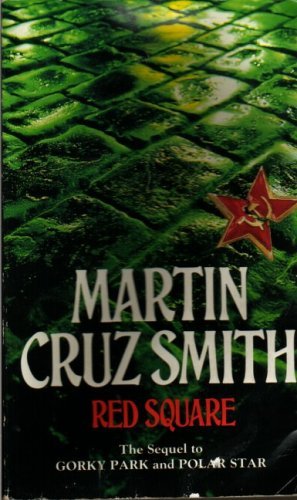
Martin Cruz Smith's "Red Square" plunges into the murky world of post-Soviet Moscow as investigator Arkady Renko finds himself entangled in a murder that exposes the deep web of corruption, the rise of the Russian mafia, and the lingering shadows of the KGB. It's a gritty, atmospheric thriller that explores a nation in tumultuous transition, grappling with its past and an uncertain future.
Both novels excel at portraying the oppressive and morally ambiguous atmosphere of Soviet and post-Soviet Russia. Just as "Children of the Arbat" meticulously details the psychological toll of Stalinist purges and the surveillance state on ordinary lives, "Red Square" similarly captures the pervasive paranoia, societal decay, and the struggle for individual integrity within a system driven by power and self-interest. Both authors masterfully use individual stories to illuminate broader historical and political landscapes.
This book will appeal to those who appreciate intricate thrillers woven with historical and political depth. It offers a compelling window into a pivotal era of Russian history, prompting reflection on systemic corruption, resilience in the face of adversity, and the enduring human struggle for justice in fractured societies. Its value lies in its intelligent plot, nuanced character development, and its unflinching portrayal of a complex geopolitical moment.
Red Square
Martin Cruz Smith's "Red Square" plunges into the murky world of post-Soviet Moscow as investigator Arkady Renko finds himself entangled in a murder that exposes the deep web of corruption, the rise of the Russian mafia, and the lingering shadows of the KGB. It's a gritty, atmospheric thriller that explores a nation in tumultuous transition, grappling with its past and an uncertain future.
Both novels excel at portraying the oppressive and morally ambiguous atmosphere of Soviet and post-Soviet Russia. Just as "Children of the Arbat" meticulously details the psychological toll of Stalinist purges and the surveillance state on ordinary lives, "Red Square" similarly captures the pervasive paranoia, societal decay, and the struggle for individual integrity within a system driven by power and self-interest. Both authors masterfully use individual stories to illuminate broader historical and political landscapes.
This book will appeal to those who appreciate intricate thrillers woven with historical and political depth. It offers a compelling window into a pivotal era of Russian history, prompting reflection on systemic corruption, resilience in the face of adversity, and the enduring human struggle for justice in fractured societies. Its value lies in its intelligent plot, nuanced character development, and its unflinching portrayal of a complex geopolitical moment.
One Night in Winter
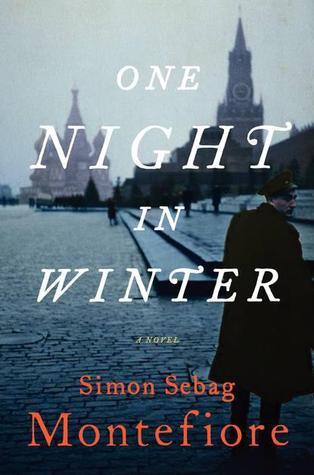
"One Night in Winter" by Simon Sebag Montefiore plunges into the murky depths of Stalinist Moscow in 1945, unraveling the dramatic aftermath of a forbidden romance and a resulting murder among elite teenagers. It explores the profound impact of arbitrary power and paranoia on individuals and families, showcasing how a seemingly isolated incident can trigger a wide-ranging, devastating state response that implicates even the innocent.
This novel shares a remarkable kinship with "Children of the Arbat" through its authentic depiction of life under Soviet totalitarianism. Both books masterfully portray the chilling atmosphere of constant surveillance, fear, and betrayal that permeated Soviet society, particularly among the intelligentsia and their children. They explore the loss of innocence, the systematic destruction of human relationships, and the desperate struggle for survival and moral integrity against an oppressive regime. Both reveal the personal cost of political ideology.
This book will strongly resonate with individuals who appreciate historical fiction that offers a nuanced and deeply human exploration of political oppression. Its value lies in illuminating a critical period of history through the intimate experiences of its characters, fostering a deeper understanding of the psychological and social ramifications of authoritarian rule. It serves as a potent reminder of the fragility of justice and truth when confronted by unchecked power.
One Night in Winter
"One Night in Winter" by Simon Sebag Montefiore plunges into the murky depths of Stalinist Moscow in 1945, unraveling the dramatic aftermath of a forbidden romance and a resulting murder among elite teenagers. It explores the profound impact of arbitrary power and paranoia on individuals and families, showcasing how a seemingly isolated incident can trigger a wide-ranging, devastating state response that implicates even the innocent.
This novel shares a remarkable kinship with "Children of the Arbat" through its authentic depiction of life under Soviet totalitarianism. Both books masterfully portray the chilling atmosphere of constant surveillance, fear, and betrayal that permeated Soviet society, particularly among the intelligentsia and their children. They explore the loss of innocence, the systematic destruction of human relationships, and the desperate struggle for survival and moral integrity against an oppressive regime. Both reveal the personal cost of political ideology.
This book will strongly resonate with individuals who appreciate historical fiction that offers a nuanced and deeply human exploration of political oppression. Its value lies in illuminating a critical period of history through the intimate experiences of its characters, fostering a deeper understanding of the psychological and social ramifications of authoritarian rule. It serves as a potent reminder of the fragility of justice and truth when confronted by unchecked power.
Going under

"Going Under" by Lydia Chukovskaya offers a raw, internal account of a woman's desperate search for her arrested husband during the Great Purge in 1930s Leningrad. Through the protagonist's harrowing journey through bureaucratic waiting rooms and increasingly unreliable sources of information, the novel captures the psychological torment and moral compromises forced upon individuals caught in the Soviet regime's destructive grip.
The primary similarity to "Children of the Arbat" lies in their shared exploration of the human cost of Stalinist repression. Both novels meticulously detail the pervasive fear, arbitrary justice, and systematic destruction of lives and families during the Great Purge. While "Children of the Arbat" provides a broader societal panorama, "Going Under" offers a more focused, intensely personal perspective on the same traumatic historical period, illuminating its impact on individual psyche and relationships.
This book appeals to those seeking an unflinching, emotionally resonant portrayal of totalitarianism's impact on ordinary lives. Its value lies in its profound psychological insight and its historical authenticity, offering a vital document of human resilience and suffering under extreme duress. It serves as a potent reminder of the importance of individual agency and the dangers of unchecked state power.
Going under
"Going Under" by Lydia Chukovskaya offers a raw, internal account of a woman's desperate search for her arrested husband during the Great Purge in 1930s Leningrad. Through the protagonist's harrowing journey through bureaucratic waiting rooms and increasingly unreliable sources of information, the novel captures the psychological torment and moral compromises forced upon individuals caught in the Soviet regime's destructive grip.
The primary similarity to "Children of the Arbat" lies in their shared exploration of the human cost of Stalinist repression. Both novels meticulously detail the pervasive fear, arbitrary justice, and systematic destruction of lives and families during the Great Purge. While "Children of the Arbat" provides a broader societal panorama, "Going Under" offers a more focused, intensely personal perspective on the same traumatic historical period, illuminating its impact on individual psyche and relationships.
This book appeals to those seeking an unflinching, emotionally resonant portrayal of totalitarianism's impact on ordinary lives. Its value lies in its profound psychological insight and its historical authenticity, offering a vital document of human resilience and suffering under extreme duress. It serves as a potent reminder of the importance of individual agency and the dangers of unchecked state power.
Child 44

"Child 44" plunges into Soviet Russia during the Stalinist era, where Leo Demidov, a decorated MGB agent, uncovers a series of horrific child murders officially deemed impossible in a "perfect" communist society. Exiled and discredited for questioning the party line, Demidov and his wife reluctantly pursue the killer, navigating a world where acknowledging crime is treason and truth is a dangerous commodity. The narrative meticulously portrays the pervasive fear, paranoia, and bureaucratic control that defined life under Stalin.
Both "Child 44" and "Children of the Arbat" dissect the chilling realities of Stalin's Soviet Union, focusing on individual lives crushed or distorted by totalitarian rule. They share a bleak historical setting and explore themes of political oppression, the struggle for personal integrity against overwhelming state power, and the devastating consequences of pervasive ideological dogma. While "Arbat" is a broader historical saga, "Child 44" distills these themes into a gripping, character-driven thriller, showcasing the impossibility of justice in a regime built on lies.
This novel offers a compelling blend of historical insight and suspenseful narrative. It provides a visceral understanding of life under an authoritarian regime, where official narratives supersede reality and individual conscience is a liability. Engaging with the desperate pursuit of truth against impossible odds, it’s a powerful exploration of human resilience and the insidious nature of systemic deception, making it a valuable read for anyone interested in historical thrillers and the human cost of totalitarianism.
Child 44
"Child 44" plunges into Soviet Russia during the Stalinist era, where Leo Demidov, a decorated MGB agent, uncovers a series of horrific child murders officially deemed impossible in a "perfect" communist society. Exiled and discredited for questioning the party line, Demidov and his wife reluctantly pursue the killer, navigating a world where acknowledging crime is treason and truth is a dangerous commodity. The narrative meticulously portrays the pervasive fear, paranoia, and bureaucratic control that defined life under Stalin.
Both "Child 44" and "Children of the Arbat" dissect the chilling realities of Stalin's Soviet Union, focusing on individual lives crushed or distorted by totalitarian rule. They share a bleak historical setting and explore themes of political oppression, the struggle for personal integrity against overwhelming state power, and the devastating consequences of pervasive ideological dogma. While "Arbat" is a broader historical saga, "Child 44" distills these themes into a gripping, character-driven thriller, showcasing the impossibility of justice in a regime built on lies.
This novel offers a compelling blend of historical insight and suspenseful narrative. It provides a visceral understanding of life under an authoritarian regime, where official narratives supersede reality and individual conscience is a liability. Engaging with the desperate pursuit of truth against impossible odds, it’s a powerful exploration of human resilience and the insidious nature of systemic deception, making it a valuable read for anyone interested in historical thrillers and the human cost of totalitarianism.
A School for Fools

"A School for Fools" explores the interior world and fragmented memories of a young man, known only as "Student," who navigates his life in a special needs boarding school in a Soviet-era city. The narrative, characterized by its stream-of-consciousness style and shifting timelines, blurs the lines between reality, delusion, and poetic introspection as Student grapples with his identity, love, and the oppressive gaze of societal norms.
Both novels offer profound insights into the psychological toll of living under oppressive regimes, albeit through different lenses. While "Children of the Arbat" provides a panoramic, historically grounded account of Stalinist terror and its impact on a generation, "A School for Fools" delves deeply into the subjective experience of alienation and marginalization within a system that values conformity. The shared thread is the individual's struggle for authenticity and sanity in environments designed to stifle dissent and individuality.
This book will appeal to those who appreciate experimental narratives and psychological depth. Its lyrical prose and exploration of consciousness offer a unique window into the human spirit's resilience and vulnerability. The novel provides a valuable commentary on memory, identity, and the ways in which individuals construct meaning in the face of societal pressures, fostering a deeper understanding of the human condition in challenging historical contexts.
A School for Fools
"A School for Fools" explores the interior world and fragmented memories of a young man, known only as "Student," who navigates his life in a special needs boarding school in a Soviet-era city. The narrative, characterized by its stream-of-consciousness style and shifting timelines, blurs the lines between reality, delusion, and poetic introspection as Student grapples with his identity, love, and the oppressive gaze of societal norms.
Both novels offer profound insights into the psychological toll of living under oppressive regimes, albeit through different lenses. While "Children of the Arbat" provides a panoramic, historically grounded account of Stalinist terror and its impact on a generation, "A School for Fools" delves deeply into the subjective experience of alienation and marginalization within a system that values conformity. The shared thread is the individual's struggle for authenticity and sanity in environments designed to stifle dissent and individuality.
This book will appeal to those who appreciate experimental narratives and psychological depth. Its lyrical prose and exploration of consciousness offer a unique window into the human spirit's resilience and vulnerability. The novel provides a valuable commentary on memory, identity, and the ways in which individuals construct meaning in the face of societal pressures, fostering a deeper understanding of the human condition in challenging historical contexts.
Sashenka

*Sashenka* by Simon Sebag Montefiore traces the captivating and tragic life of Alexandra “Sashenka” Zeitlin, a fiercely intelligent and politically active young woman in Stalinist Russia, from a privileged upbringing to the horrors of the Gulag. Her story is presented through a dual narrative: the 1930s account of her revolutionary fervour and subsequent downfall, and a 1990s investigation into her mysterious disappearance.
This novel shares a striking thematic resonance with Anatoli Rybakov's *Children of the Arbat*. Both works powerfully depict the devastating impact of Stalin's purges on individuals and families, showcasing the arbitrary nature of political persecution and the pervasive atmosphere of fear and betrayal. They offer intimate, character-driven perspectives on a period of immense historical upheaval, exploring themes of ideological disillusionment, personal sacrifice, and the search for truth amidst official lies.
This book offers a compelling narrative for those drawn to historical fiction grounded in meticulous research. Its exploration of complex moral dilemmas and the enduring human spirit in the face of tyranny provides profound insights into a pivotal era. The interwoven timelines create a suspenseful and emotionally rich reading experience, making it a valuable addition for anyone interested in the human cost of totalitarian regimes and the echoes of history.
Sashenka
*Sashenka* by Simon Sebag Montefiore traces the captivating and tragic life of Alexandra “Sashenka” Zeitlin, a fiercely intelligent and politically active young woman in Stalinist Russia, from a privileged upbringing to the horrors of the Gulag. Her story is presented through a dual narrative: the 1930s account of her revolutionary fervour and subsequent downfall, and a 1990s investigation into her mysterious disappearance.
This novel shares a striking thematic resonance with Anatoli Rybakov's *Children of the Arbat*. Both works powerfully depict the devastating impact of Stalin's purges on individuals and families, showcasing the arbitrary nature of political persecution and the pervasive atmosphere of fear and betrayal. They offer intimate, character-driven perspectives on a period of immense historical upheaval, exploring themes of ideological disillusionment, personal sacrifice, and the search for truth amidst official lies.
This book offers a compelling narrative for those drawn to historical fiction grounded in meticulous research. Its exploration of complex moral dilemmas and the enduring human spirit in the face of tyranny provides profound insights into a pivotal era. The interwoven timelines create a suspenseful and emotionally rich reading experience, making it a valuable addition for anyone interested in the human cost of totalitarian regimes and the echoes of history.
Doctor Zhivago
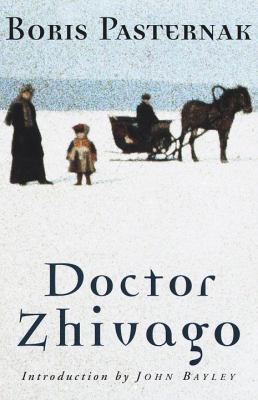
"Doctor Zhivago" chronicles the life and loves of Yuri Zhivago, a physician and poet, through the tumultuous early 20th-century Russian revolutions and civil war. It's an epic tale of individual endurance, artistic integrity, and the emotional toll of societal upheaval, exploring themes of fate, free will, and the search for meaning amid profound historical change.
Both novels offer intimate, human-scale narratives set against the backdrop of catastrophic Soviet history. They depict individuals wrestling with personal desires, moral dilemmas, and the overwhelming force of political ideology. Both authors, having experienced these eras firsthand, imbue their stories with a powerful sense of authenticity and a critical perspective on the human cost of totalitarianism.
This book will appeal to those seeking a profound exploration of human spirit under duress, a sweeping historical canvas, and a narrative rich in philosophical depth and emotional resonance. Its enduring themes of love, loss, and the resilience of art in the face of oppression offer timeless relevance and a nuanced understanding of a pivotal historical period.
Doctor Zhivago
"Doctor Zhivago" chronicles the life and loves of Yuri Zhivago, a physician and poet, through the tumultuous early 20th-century Russian revolutions and civil war. It's an epic tale of individual endurance, artistic integrity, and the emotional toll of societal upheaval, exploring themes of fate, free will, and the search for meaning amid profound historical change.
Both novels offer intimate, human-scale narratives set against the backdrop of catastrophic Soviet history. They depict individuals wrestling with personal desires, moral dilemmas, and the overwhelming force of political ideology. Both authors, having experienced these eras firsthand, imbue their stories with a powerful sense of authenticity and a critical perspective on the human cost of totalitarianism.
This book will appeal to those seeking a profound exploration of human spirit under duress, a sweeping historical canvas, and a narrative rich in philosophical depth and emotional resonance. Its enduring themes of love, loss, and the resilience of art in the face of oppression offer timeless relevance and a nuanced understanding of a pivotal historical period.
Dreams of My Russian Summers

*Dreams of My Russian Summers* explores the bittersweet recollections of a young Frenchman piecing together the life of his Russian grandmother, a woman whose memories encompass the romantic fervor of pre-revolutionary Russia and the poignant disillusionment of the Soviet era. Through her storytelling, the narrator reconstructs a vibrant past, contrasting it with his own contemporary landscape and unraveling the complexities of national and personal identity.
Both novels delve deeply into the lived experience of ordinary individuals navigating the seismic shifts of 20th-century Russian history. Like *Children of the Arbat*, Makine’s work meticulously portrays a vanished world, rich in cultural detail and emotional nuance, but filtered through the lens of memory and oral tradition rather than direct contemporary events. Both offer an intimate, human-scale perspective on grand historical narratives.
This book offers a profound emotional journey through memory and nationhood. Its elegant prose and evocative storytelling provide a deeply resonant exploration of how individual lives are shaped by historical forces, and how the past continues to inform the present, making it particularly valuable for those seeking poignant and insightful historical fiction.
Dreams of My Russian Summers
*Dreams of My Russian Summers* explores the bittersweet recollections of a young Frenchman piecing together the life of his Russian grandmother, a woman whose memories encompass the romantic fervor of pre-revolutionary Russia and the poignant disillusionment of the Soviet era. Through her storytelling, the narrator reconstructs a vibrant past, contrasting it with his own contemporary landscape and unraveling the complexities of national and personal identity.
Both novels delve deeply into the lived experience of ordinary individuals navigating the seismic shifts of 20th-century Russian history. Like *Children of the Arbat*, Makine’s work meticulously portrays a vanished world, rich in cultural detail and emotional nuance, but filtered through the lens of memory and oral tradition rather than direct contemporary events. Both offer an intimate, human-scale perspective on grand historical narratives.
This book offers a profound emotional journey through memory and nationhood. Its elegant prose and evocative storytelling provide a deeply resonant exploration of how individual lives are shaped by historical forces, and how the past continues to inform the present, making it particularly valuable for those seeking poignant and insightful historical fiction.
More Books to Explore
Discover more titles that expand on these ideas and themes.
Heavy Sand
Gorky Park
Red Square
One Night in Winter
Going under
Child 44