10 Books Similar to "Blink: The Power of Thinking Without Thinking"
by Malcolm Gladwell

Thinking, Fast and Slow
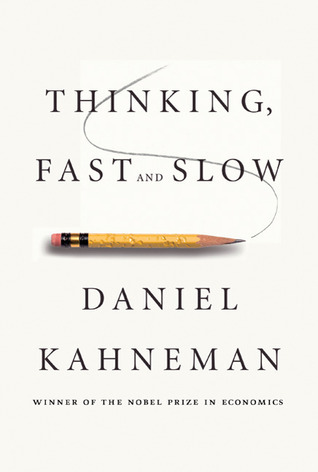
"Thinking, Fast and Slow" delves into the two distinct systems that drive our thought processes: System 1, which is fast, intuitive, and emotional, and System 2, which is slower, more deliberate, and logical. Kahneman meticulously explains how these systems interact, often leading us to make predictable errors in judgment and decision-making due to cognitive biases.
This book shares a foundational theme with Gladwell's "Blink" by exploring the power and pitfalls of rapid cognition. While "Blink" focuses on the strengths of our unconscious minds and instant judgments, "Thinking, Fast and Slow" provides a more scientific and detailed framework for understanding the mechanisms behind both our lightning-fast intuitions and our more methodical reasoning, revealing how they can both serve and sabotage us.
This book offers profound insights into human behavior and decision-making, equipping one with a remarkable lens through which to understand their own mind and the minds of others. The nuanced exploration of cognitive biases provides practical utility for improving personal and professional choices, making it an invaluable resource for anyone seeking a deeper understanding of human rationality and irrationality.
Thinking, Fast and Slow
"Thinking, Fast and Slow" delves into the two distinct systems that drive our thought processes: System 1, which is fast, intuitive, and emotional, and System 2, which is slower, more deliberate, and logical. Kahneman meticulously explains how these systems interact, often leading us to make predictable errors in judgment and decision-making due to cognitive biases.
This book shares a foundational theme with Gladwell's "Blink" by exploring the power and pitfalls of rapid cognition. While "Blink" focuses on the strengths of our unconscious minds and instant judgments, "Thinking, Fast and Slow" provides a more scientific and detailed framework for understanding the mechanisms behind both our lightning-fast intuitions and our more methodical reasoning, revealing how they can both serve and sabotage us.
This book offers profound insights into human behavior and decision-making, equipping one with a remarkable lens through which to understand their own mind and the minds of others. The nuanced exploration of cognitive biases provides practical utility for improving personal and professional choices, making it an invaluable resource for anyone seeking a deeper understanding of human rationality and irrationality.
The Tipping Point: How Little Things Can Make a Big Difference

"The Tipping Point" explores how social epidemics, from fashion trends to crime waves, spread like viruses. Gladwell identifies three key agents—the Law of the Few (Maverns, Connectors, and Salesmen), the Stickiness Factor (how memorable a message is), and the Power of Context (environmental influences)—that collectively determine if and when these "tipping points" occur, leading to rapid, widespread change. It’s an insightful dissection of the mechanisms behind sudden societal shifts.
This book shares a fundamental approach with "Blink." Both delve into the subtle, often overlooked, forces that shape human behavior and societal outcomes. While "Blink" focuses on the instantaneous judgments of individuals, "The Tipping Point" broadens this scope to examine how small, seemingly insignificant actions or individuals can catalyze massive, systemic transformations. Both books ask us to look beneath the surface to understand complex phenomena.
Anyone interested in the dynamics of social change, marketing, or simply understanding why certain ideas or products take off will find this book immensely valuable. It offers a framework for understanding not just past trends but also for predicting and even engineering future ones. The insights gained can provide a powerful lens through which to view and interact with the world.
The Tipping Point: How Little Things Can Make a Big Difference
"The Tipping Point" explores how social epidemics, from fashion trends to crime waves, spread like viruses. Gladwell identifies three key agents—the Law of the Few (Maverns, Connectors, and Salesmen), the Stickiness Factor (how memorable a message is), and the Power of Context (environmental influences)—that collectively determine if and when these "tipping points" occur, leading to rapid, widespread change. It’s an insightful dissection of the mechanisms behind sudden societal shifts.
This book shares a fundamental approach with "Blink." Both delve into the subtle, often overlooked, forces that shape human behavior and societal outcomes. While "Blink" focuses on the instantaneous judgments of individuals, "The Tipping Point" broadens this scope to examine how small, seemingly insignificant actions or individuals can catalyze massive, systemic transformations. Both books ask us to look beneath the surface to understand complex phenomena.
Anyone interested in the dynamics of social change, marketing, or simply understanding why certain ideas or products take off will find this book immensely valuable. It offers a framework for understanding not just past trends but also for predicting and even engineering future ones. The insights gained can provide a powerful lens through which to view and interact with the world.
Talking to Strangers: What We Should Know About the People We Don't Know
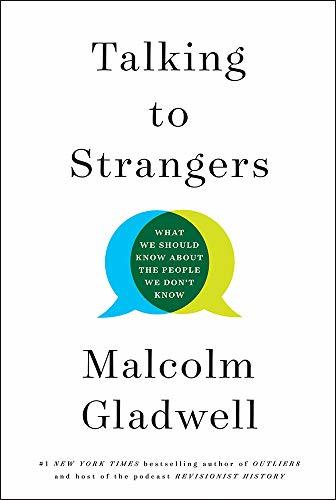
"Talking to Strangers" delves into why our default mode of interacting with unfamiliar people often leads to misinterpretations and sometimes devastating consequences. Gladwell explores the assumptions and "truth default" we employ, examining real-world events like the Amanda Knox case and the Bernie Madoff scandal to illustrate how our inability to accurately read outsiders can unravel trust and understanding. It's a fascinating look at the psychological biases that shape our social interactions.
This book shares thematic DNA with "Blink" by dissecting the complexities of human judgment. While "Blink" highlighted the power and pitfalls of rapid cognition, "Talking to Strangers" focuses on the specific challenges of assessing individuals we don't know well. Both books reveal the intricate, often hidden, mechanisms behind our decision-making and perception, ultimately demonstrating how our minds process information in nuanced, and sometimes flawed, ways.
Anyone interested in human behavior, psychology, and the intricacies of communication will find this particularly insightful. The book offers a compelling narrative that encourages critical self-reflection on how we form opinions and interact with the unknown. It provides valuable perspectives on understanding the root causes of miscommunication and conflict, equipping one with a more informed lens through which to navigate relationships and the world at large.
Talking to Strangers: What We Should Know About the People We Don't Know
"Talking to Strangers" delves into why our default mode of interacting with unfamiliar people often leads to misinterpretations and sometimes devastating consequences. Gladwell explores the assumptions and "truth default" we employ, examining real-world events like the Amanda Knox case and the Bernie Madoff scandal to illustrate how our inability to accurately read outsiders can unravel trust and understanding. It's a fascinating look at the psychological biases that shape our social interactions.
This book shares thematic DNA with "Blink" by dissecting the complexities of human judgment. While "Blink" highlighted the power and pitfalls of rapid cognition, "Talking to Strangers" focuses on the specific challenges of assessing individuals we don't know well. Both books reveal the intricate, often hidden, mechanisms behind our decision-making and perception, ultimately demonstrating how our minds process information in nuanced, and sometimes flawed, ways.
Anyone interested in human behavior, psychology, and the intricacies of communication will find this particularly insightful. The book offers a compelling narrative that encourages critical self-reflection on how we form opinions and interact with the unknown. It provides valuable perspectives on understanding the root causes of miscommunication and conflict, equipping one with a more informed lens through which to navigate relationships and the world at large.
Revenge of the Tipping Point: Overstories, Superspreaders, and the Rise of Social Engineering
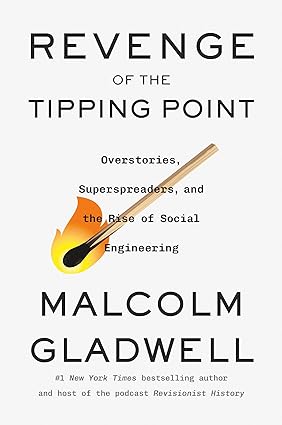
"Revenge of the Tipping Point" delves into the intricate mechanisms behind widespread social and cultural phenomena. It explores how seemingly small, unnoticeable factors, or "overstories," can amplify through "superspreaders" to engineer significant shifts in beliefs, trends, and collective behavior. The book dissects the deliberate and emergent ways these societal contagions manifest and their profound, often unseen, impact on our lives.
The similarity to "Blink" lies in their shared exploration of rapid, intuitive understanding and its far-reaching consequences. While "Blink" focuses on individual snap judgments, "Revenge of the Tipping Point" extends this concept to the macro level, examining how collective intuition and subtle environmental cues drive large-scale societal shifts, often without conscious awareness. Both books unravel the hidden logic beneath seemingly inexplicable events.
This work will appeal to those fascinated by the invisible forces shaping our world, offering profound insights into how ideas spread, movements gain traction, and societal norms evolve. It provides a unique lens through which to comprehend the dynamics of influence, marketing, and cultural change, equipping one with a more informed perspective on the world around them.
Revenge of the Tipping Point: Overstories, Superspreaders, and the Rise of Social Engineering
"Revenge of the Tipping Point" delves into the intricate mechanisms behind widespread social and cultural phenomena. It explores how seemingly small, unnoticeable factors, or "overstories," can amplify through "superspreaders" to engineer significant shifts in beliefs, trends, and collective behavior. The book dissects the deliberate and emergent ways these societal contagions manifest and their profound, often unseen, impact on our lives.
The similarity to "Blink" lies in their shared exploration of rapid, intuitive understanding and its far-reaching consequences. While "Blink" focuses on individual snap judgments, "Revenge of the Tipping Point" extends this concept to the macro level, examining how collective intuition and subtle environmental cues drive large-scale societal shifts, often without conscious awareness. Both books unravel the hidden logic beneath seemingly inexplicable events.
This work will appeal to those fascinated by the invisible forces shaping our world, offering profound insights into how ideas spread, movements gain traction, and societal norms evolve. It provides a unique lens through which to comprehend the dynamics of influence, marketing, and cultural change, equipping one with a more informed perspective on the world around them.
How We Decide
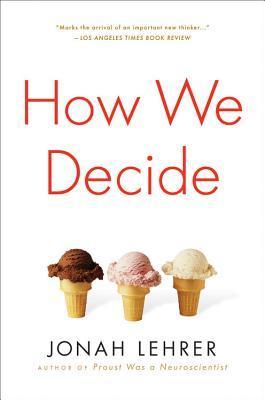
"How We Decide" delves into the intricate mechanisms of human decision-making, exploring the interplay between our rational and emotional brains. Jonah Lehrer unpacks scientific research and compelling case studies to reveal how we make choices, from everyday trivialities to life-altering decisions, often unconsciously blending logic and intuition. It's a fascinating look at the cognitive processes that underpin our judgments.
This book offers a natural progression for admirers of Malcolm Gladwell's "Blink." Both works explore the non-conscious aspects of decision-making, delving into the powerful, often instantaneous, judgments we make without explicit deliberation. While "Blink" focuses on the speed and accuracy of "thin-slicing," "How We Decide" takes a broader, more granular look at the neural pathways and psychological factors that shape our choices, complementing Gladwell's themes with deeper scientific explanation.
Anyone interested in understanding their own thought processes and improving their decision-making will discover immense value here. The insights provided can illuminate why we make certain choices and offer practical frameworks for navigating complex situations more effectively, whether in personal life or professional endeavors. The blend of neuroscience, psychology, and real-world examples makes it a compelling and insightful exploration of the human mind.
How We Decide
"How We Decide" delves into the intricate mechanisms of human decision-making, exploring the interplay between our rational and emotional brains. Jonah Lehrer unpacks scientific research and compelling case studies to reveal how we make choices, from everyday trivialities to life-altering decisions, often unconsciously blending logic and intuition. It's a fascinating look at the cognitive processes that underpin our judgments.
This book offers a natural progression for admirers of Malcolm Gladwell's "Blink." Both works explore the non-conscious aspects of decision-making, delving into the powerful, often instantaneous, judgments we make without explicit deliberation. While "Blink" focuses on the speed and accuracy of "thin-slicing," "How We Decide" takes a broader, more granular look at the neural pathways and psychological factors that shape our choices, complementing Gladwell's themes with deeper scientific explanation.
Anyone interested in understanding their own thought processes and improving their decision-making will discover immense value here. The insights provided can illuminate why we make certain choices and offer practical frameworks for navigating complex situations more effectively, whether in personal life or professional endeavors. The blend of neuroscience, psychology, and real-world examples makes it a compelling and insightful exploration of the human mind.
The Invisible Gorilla: And Other Ways Our Intuitions Deceive Us

"The Invisible Gorilla" delves into the fascinating and often deceptive nature of human intuition and perception. Through a collection of engaging studies and real-world examples, it reveals how our brains selectively process information, leading us to miss obvious details or harbor misconceptions, even when we believe we are paying close attention. It explores phenomena like inattentional blindness, memory fallacies, and the overconfidence we often have in our own judgments.
This book shares significant thematic overlap with "Blink" in its exploration of rapid cognition and the pitfalls thereof. While Gladwell examines the power and utility of quick judgments, Chabris and Simons meticulously dissect the vulnerabilities inherent in such automatic processes. Both authors challenge our assumptions about how we think, perceive, and make decisions, using compelling narratives and scientific evidence to illustrate their points.
This book offers a compelling intellectual journey for anyone curious about the inner workings of the human mind. The insights presented will empower individuals to think more critically about their own perceptions and judgments, fostering a greater awareness of cognitive biases that impact daily life. It provides a deeper understanding of why we sometimes fail to see what's right in front of us, offering valuable lessons for everything from personal decision-making to professional analysis.
The Invisible Gorilla: And Other Ways Our Intuitions Deceive Us
"The Invisible Gorilla" delves into the fascinating and often deceptive nature of human intuition and perception. Through a collection of engaging studies and real-world examples, it reveals how our brains selectively process information, leading us to miss obvious details or harbor misconceptions, even when we believe we are paying close attention. It explores phenomena like inattentional blindness, memory fallacies, and the overconfidence we often have in our own judgments.
This book shares significant thematic overlap with "Blink" in its exploration of rapid cognition and the pitfalls thereof. While Gladwell examines the power and utility of quick judgments, Chabris and Simons meticulously dissect the vulnerabilities inherent in such automatic processes. Both authors challenge our assumptions about how we think, perceive, and make decisions, using compelling narratives and scientific evidence to illustrate their points.
This book offers a compelling intellectual journey for anyone curious about the inner workings of the human mind. The insights presented will empower individuals to think more critically about their own perceptions and judgments, fostering a greater awareness of cognitive biases that impact daily life. It provides a deeper understanding of why we sometimes fail to see what's right in front of us, offering valuable lessons for everything from personal decision-making to professional analysis.
What the Dog Saw and Other Adventures

"What the Dog Saw and Other Adventures" compiles Malcolm Gladwell's diverse essays, exploring fascinating human behaviors, societal phenomena, and overlooked histories across various fields. From the psychology of dog trainers to the intelligence of an expert financial speculator, the book unpacks the intricate workings of the seemingly ordinary and the unexpectedly complex.
This collection shares a foundational kinship with "Blink" in its core methodology: both works meticulously dissect seemingly disparate events or decisions to reveal underlying patterns and principles. Just as "Blink" illuminates the power and pitfalls of rapid cognition, "What the Dog Saw" consistently delves into the hidden truths and counterintuitive insights that shape our perceptions and actions, often challenging conventional wisdom through engaging, evidence-based narratives.
Individuals intrigued by the subtle forces that govern our world and eager for fresh perspectives on everyday occurrences will find immense value in this book. It offers a stimulating intellectual journey, encouraging deeper thought about human nature, societal structures, and the often-unseen connections that bind them.
What the Dog Saw and Other Adventures
"What the Dog Saw and Other Adventures" compiles Malcolm Gladwell's diverse essays, exploring fascinating human behaviors, societal phenomena, and overlooked histories across various fields. From the psychology of dog trainers to the intelligence of an expert financial speculator, the book unpacks the intricate workings of the seemingly ordinary and the unexpectedly complex.
This collection shares a foundational kinship with "Blink" in its core methodology: both works meticulously dissect seemingly disparate events or decisions to reveal underlying patterns and principles. Just as "Blink" illuminates the power and pitfalls of rapid cognition, "What the Dog Saw" consistently delves into the hidden truths and counterintuitive insights that shape our perceptions and actions, often challenging conventional wisdom through engaging, evidence-based narratives.
Individuals intrigued by the subtle forces that govern our world and eager for fresh perspectives on everyday occurrences will find immense value in this book. It offers a stimulating intellectual journey, encouraging deeper thought about human nature, societal structures, and the often-unseen connections that bind them.
David and Goliath: Underdogs, Misfits, and the Art of Battling Giants
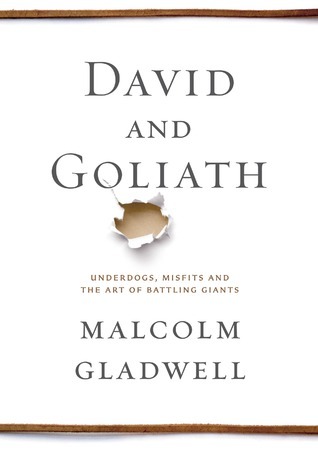
"David and Goliath" explores the unexpected advantages found in apparent disadvantages, challenges conventional wisdom, and redefines what constitutes strength and weakness. Gladwell uses compelling historical anecdotes and contemporary examples to illustrate how underdogs can, and often do, succeed against seemingly insurmountable odds by leveraging their perceived weaknesses into strategic strengths.
The similarity to "Blink" lies in Gladwell's exploration of hidden dynamics and unconventional approaches to understanding human behavior and outcomes. Both books delve into the counter-intuitive, examining phenomena that run contrary to our initial assumptions. "Blink" champions rapid cognition, while "David and Goliath" champions the overlooked power of the outsider, demonstrating how success often springs from unexpected places and methods.
Individuals interested in challenging their perspectives on success, adversity, and human potential will find this book deeply engaging. It offers practical insights into reframing challenges and recognizing the inherent power in unconventional thinking, making it a valuable read for anyone seeking to understand the often-misunderstood nature of advantage.
David and Goliath: Underdogs, Misfits, and the Art of Battling Giants
"David and Goliath" explores the unexpected advantages found in apparent disadvantages, challenges conventional wisdom, and redefines what constitutes strength and weakness. Gladwell uses compelling historical anecdotes and contemporary examples to illustrate how underdogs can, and often do, succeed against seemingly insurmountable odds by leveraging their perceived weaknesses into strategic strengths.
The similarity to "Blink" lies in Gladwell's exploration of hidden dynamics and unconventional approaches to understanding human behavior and outcomes. Both books delve into the counter-intuitive, examining phenomena that run contrary to our initial assumptions. "Blink" champions rapid cognition, while "David and Goliath" champions the overlooked power of the outsider, demonstrating how success often springs from unexpected places and methods.
Individuals interested in challenging their perspectives on success, adversity, and human potential will find this book deeply engaging. It offers practical insights into reframing challenges and recognizing the inherent power in unconventional thinking, making it a valuable read for anyone seeking to understand the often-misunderstood nature of advantage.
The Art of Thinking Clearly

"The Art of Thinking Clearly" by Rolf Dobelli dissects common cognitive biases and logical fallacies that cloud our judgment. It presents a collection of short, accessible chapters, each exposing a specific mental shortcut or error people frequently make, from survivorship bias to the sunk cost fallacy, and offers strategies to recognize and counteract them in daily life and decision-making.
This book shares thematic DNA with "Blink" in its exploration of how our minds process information and make decisions, often outside conscious awareness. Both authors delve into the intricacies of human cognition, one focusing on the power of rapid, intuitive judgment, the other on the pitfalls of faulty intuitive thinking, making them two sides of the same analytical coin regarding how we perceive and react to the world.
The book will appeal to those seeking practical tools for improving their critical thinking and decision-making skills. Its concise format and relatable examples demystify complex psychological phenomena, empowering individuals to navigate personal and professional challenges with greater clarity, avoid common traps, and ultimately make more rational choices.
The Art of Thinking Clearly
"The Art of Thinking Clearly" by Rolf Dobelli dissects common cognitive biases and logical fallacies that cloud our judgment. It presents a collection of short, accessible chapters, each exposing a specific mental shortcut or error people frequently make, from survivorship bias to the sunk cost fallacy, and offers strategies to recognize and counteract them in daily life and decision-making.
This book shares thematic DNA with "Blink" in its exploration of how our minds process information and make decisions, often outside conscious awareness. Both authors delve into the intricacies of human cognition, one focusing on the power of rapid, intuitive judgment, the other on the pitfalls of faulty intuitive thinking, making them two sides of the same analytical coin regarding how we perceive and react to the world.
The book will appeal to those seeking practical tools for improving their critical thinking and decision-making skills. Its concise format and relatable examples demystify complex psychological phenomena, empowering individuals to navigate personal and professional challenges with greater clarity, avoid common traps, and ultimately make more rational choices.
Outliers: The Story of Success

"Outliers: The Story of Success" explores the hidden patterns and external factors that contribute to exceptional achievement. Rather than focusing solely on individual talent or effort, Gladwell delves into how circumstances, culture, timing, and opportunity profoundly shape the trajectories of successful people, dissecting everything from the 10,000-hour rule to the significance of birthdates in hockey.
This book resonates with "Blink" by dissecting complex human phenomena—here, success, while in "Blink" it's intuition—to reveal the underlying, often unseen, mechanisms at play. Both books challenge conventional wisdom and use compelling anecdotes and research to illustrate that our understanding of reality is often incomplete, suggesting deeper, systemic forces are at work than commonly perceived.
The book offers a fresh perspective on what drives success, making it particularly engaging for those interested in human potential, sociology, or personal development. Its accessible narrative and thought-provoking analysis can reshape how one views ambition, talent, and opportunity, offering valuable insights for understanding individual and collective achievement.
Outliers: The Story of Success
"Outliers: The Story of Success" explores the hidden patterns and external factors that contribute to exceptional achievement. Rather than focusing solely on individual talent or effort, Gladwell delves into how circumstances, culture, timing, and opportunity profoundly shape the trajectories of successful people, dissecting everything from the 10,000-hour rule to the significance of birthdates in hockey.
This book resonates with "Blink" by dissecting complex human phenomena—here, success, while in "Blink" it's intuition—to reveal the underlying, often unseen, mechanisms at play. Both books challenge conventional wisdom and use compelling anecdotes and research to illustrate that our understanding of reality is often incomplete, suggesting deeper, systemic forces are at work than commonly perceived.
The book offers a fresh perspective on what drives success, making it particularly engaging for those interested in human potential, sociology, or personal development. Its accessible narrative and thought-provoking analysis can reshape how one views ambition, talent, and opportunity, offering valuable insights for understanding individual and collective achievement.
More Books to Explore
Discover more titles that expand on these ideas and themes.
Thinking, Fast and Slow
The Tipping Point: How Little Things Can Make a Big Difference
Talking to Strangers: What We Should Know About the People We Don't Know
Revenge of the Tipping Point: Overstories, Superspreaders, and the Rise of Social Engineering
How We Decide
The Invisible Gorilla: And Other Ways Our Intuitions Deceive Us