10 Books Similar to "Basic Writings"
by Martin Heidegger
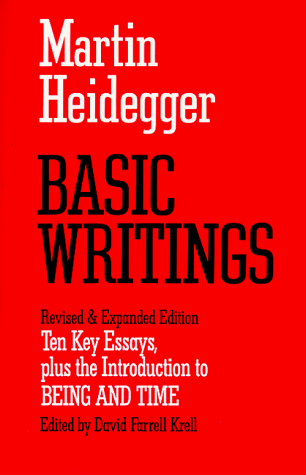
Being and Time
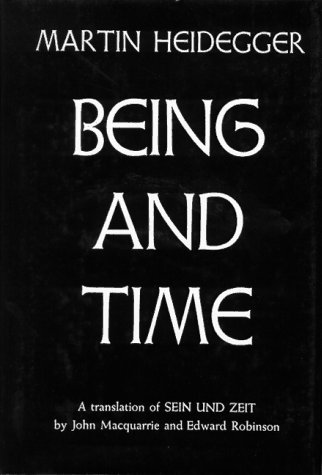
"Being and Time" fundamentally explores the question of Being itself, not as an abstract concept, but as it relates to human existence, or Dasein. Heidegger meticulously analyzes the structures of Dasein's everydayness, revealing how our being-in-the-world is characterized by temporality, care, anxiety, and being-towards-death. It’s an intricate philosophical journey to understand what it means *to be*.
This seminal work shares a deep kinship with "Basic Writings" because the latter largely comprises essential essays and lectures that either foreshadow, distill, or expand upon the core themes of "Being and Time." Many pieces within "Basic Writings" delve into the same existential and ontological concerns, presenting different facets or more accessible entry points to Heidegger's complex thought on Being, truth, and language.
The profound insights Heidegger offers into the nature of human existence, our relationship with time, and the structures of meaning in our lives will be highly valuable. It offers a powerful framework for understanding not just philosophy, but also the fundamental aspects of human experience, identity, and the very act of existing, prompting profound self-reflection and a new way of conceiving reality.
Being and Time
"Being and Time" fundamentally explores the question of Being itself, not as an abstract concept, but as it relates to human existence, or Dasein. Heidegger meticulously analyzes the structures of Dasein's everydayness, revealing how our being-in-the-world is characterized by temporality, care, anxiety, and being-towards-death. It’s an intricate philosophical journey to understand what it means *to be*.
This seminal work shares a deep kinship with "Basic Writings" because the latter largely comprises essential essays and lectures that either foreshadow, distill, or expand upon the core themes of "Being and Time." Many pieces within "Basic Writings" delve into the same existential and ontological concerns, presenting different facets or more accessible entry points to Heidegger's complex thought on Being, truth, and language.
The profound insights Heidegger offers into the nature of human existence, our relationship with time, and the structures of meaning in our lives will be highly valuable. It offers a powerful framework for understanding not just philosophy, but also the fundamental aspects of human experience, identity, and the very act of existing, prompting profound self-reflection and a new way of conceiving reality.
The Question Concerning Technology and Other Essays

"The Question Concerning Technology and Other Essays" probes the essence of modern technology, moving beyond its instrumental function to explore how it shapes our understanding of reality, our place in the world, and even our being. Heidegger argues that technology is not a neutral tool but a fundamental way of revealing and ordering existence, which carries profound implications for humanity. The collection also includes essays on art, language, and the nature of truth, all interconnected by his overarching philosophical concerns.
This collection mirrors "Basic Writings" in offering a foundational insight into Heidegger's core philosophical project. Both works present a critical engagement with Western metaphysics and a deep inquiry into fundamental concepts like being, truth, and human existence. They act as essential entry points into his challenging yet rewarding thought, showcasing his distinctive phenomenological approach and his concern with the historical unfolding of understanding.
Individuals interested in the philosophical underpinnings of modern life and the impact of technology on human experience will find immense value in this book. It challenges conventional assumptions, prompting a deeper reflection on how we define ourselves and our relationship with the world. Its insightful analysis provides a unique lens through which to understand contemporary issues, fostering a more critical and nuanced perspective.
The Question Concerning Technology and Other Essays
"The Question Concerning Technology and Other Essays" probes the essence of modern technology, moving beyond its instrumental function to explore how it shapes our understanding of reality, our place in the world, and even our being. Heidegger argues that technology is not a neutral tool but a fundamental way of revealing and ordering existence, which carries profound implications for humanity. The collection also includes essays on art, language, and the nature of truth, all interconnected by his overarching philosophical concerns.
This collection mirrors "Basic Writings" in offering a foundational insight into Heidegger's core philosophical project. Both works present a critical engagement with Western metaphysics and a deep inquiry into fundamental concepts like being, truth, and human existence. They act as essential entry points into his challenging yet rewarding thought, showcasing his distinctive phenomenological approach and his concern with the historical unfolding of understanding.
Individuals interested in the philosophical underpinnings of modern life and the impact of technology on human experience will find immense value in this book. It challenges conventional assumptions, prompting a deeper reflection on how we define ourselves and our relationship with the world. Its insightful analysis provides a unique lens through which to understand contemporary issues, fostering a more critical and nuanced perspective.
Poetry, Language, Thought
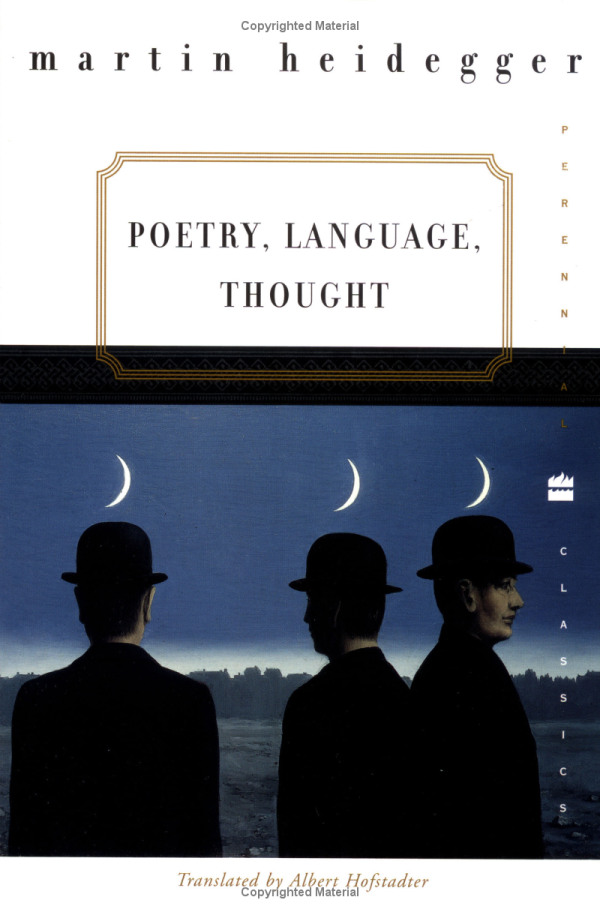
"Poetry, Language, Thought" delves into how language, art (especially poetry), and philosophical thinking intertwine to reveal profound truths about human existence and our relationship with the world. Heidegger explores how our understanding of "being" is shaped by the words we use and the artistic expressions we create, moving beyond mere communication to examine language as a fundamental mode of disclosure. He posits that poetry, in particular, offers a unique path to understanding reality, not just describing it.
This collection mirrors "Basic Writings" in its engagement with Heidegger's core philosophical concerns, particularly his inquiries into being, truth, and the nature of human existence (Dasein). Both works showcase his distinctive phenomenological approach, emphasizing the importance of lived experience and challenging traditional metaphysical assumptions. They both feature his characteristic dense, evocative prose and his relentless pursuit of fundamental questions about what it means to be.
The book will appeal to those interested in the philosophy of art, aesthetics, linguistics, and existentialism. It offers a sophisticated yet accessible entry point into Heidegger's later thought, demonstrating the practical application of his abstract concepts to concrete human experiences like creating art and speaking. Its exploration of the power of language and poetry provides insights valuable for anyone seeking a deeper appreciation of creative expression and its capacity to illuminate our world.
Poetry, Language, Thought
"Poetry, Language, Thought" delves into how language, art (especially poetry), and philosophical thinking intertwine to reveal profound truths about human existence and our relationship with the world. Heidegger explores how our understanding of "being" is shaped by the words we use and the artistic expressions we create, moving beyond mere communication to examine language as a fundamental mode of disclosure. He posits that poetry, in particular, offers a unique path to understanding reality, not just describing it.
This collection mirrors "Basic Writings" in its engagement with Heidegger's core philosophical concerns, particularly his inquiries into being, truth, and the nature of human existence (Dasein). Both works showcase his distinctive phenomenological approach, emphasizing the importance of lived experience and challenging traditional metaphysical assumptions. They both feature his characteristic dense, evocative prose and his relentless pursuit of fundamental questions about what it means to be.
The book will appeal to those interested in the philosophy of art, aesthetics, linguistics, and existentialism. It offers a sophisticated yet accessible entry point into Heidegger's later thought, demonstrating the practical application of his abstract concepts to concrete human experiences like creating art and speaking. Its exploration of the power of language and poetry provides insights valuable for anyone seeking a deeper appreciation of creative expression and its capacity to illuminate our world.
Parmenides
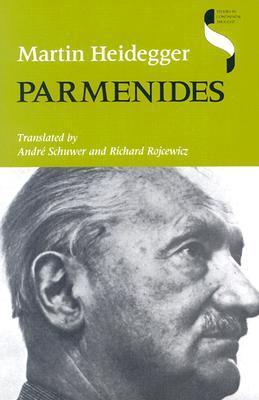
Heidegger’s *Parmenides* offers a meticulously detailed, multi-faceted engagement with the pre-Socratic philosopher Parmenides, specifically his fragmented poem *On Nature*. Rather than a simple exegesis, Heidegger dissects Parmenides' understanding of Being, truth, and appearance, contending that Parmenides glimpsed a profound insight into the unhiddenness (alétheia) of Being, a concept later obscured by Western metaphysics. It’s an exploration of the fundamental Greek experience of truth and its subsequent transformation.
This work resonates with *Basic Writings* due to its sustained focus on the question of Being, truth, and the history of Western philosophy. Both collections showcase Heidegger’s characteristic method of returning to foundational texts to unearth their forgotten meanings and trace the trajectory of metaphysical thought. The emphasis on uncovering original experience and the hermeneutic approach to pivotal philosophical moments forms a strong thematic and methodological link.
An audience interested in the origins of Western philosophy and Heidegger’s unique interpretation of these foundational thinkers will discover significant depth here. Those seeking to understand how Heidegger unpacks the early Greek understanding of Being, and how this relates to his own philosophical project, will find it invaluable. It provides a crucial lens through which to comprehend his broader critiques of metaphysics.
Parmenides
Heidegger’s *Parmenides* offers a meticulously detailed, multi-faceted engagement with the pre-Socratic philosopher Parmenides, specifically his fragmented poem *On Nature*. Rather than a simple exegesis, Heidegger dissects Parmenides' understanding of Being, truth, and appearance, contending that Parmenides glimpsed a profound insight into the unhiddenness (alétheia) of Being, a concept later obscured by Western metaphysics. It’s an exploration of the fundamental Greek experience of truth and its subsequent transformation.
This work resonates with *Basic Writings* due to its sustained focus on the question of Being, truth, and the history of Western philosophy. Both collections showcase Heidegger’s characteristic method of returning to foundational texts to unearth their forgotten meanings and trace the trajectory of metaphysical thought. The emphasis on uncovering original experience and the hermeneutic approach to pivotal philosophical moments forms a strong thematic and methodological link.
An audience interested in the origins of Western philosophy and Heidegger’s unique interpretation of these foundational thinkers will discover significant depth here. Those seeking to understand how Heidegger unpacks the early Greek understanding of Being, and how this relates to his own philosophical project, will find it invaluable. It provides a crucial lens through which to comprehend his broader critiques of metaphysics.
Basic Writings of Nietzsche

"Basic Writings of Nietzsche" consolidates essential works from the influential German philosopher, Friedrich Nietzsche. This collection offers a foundational understanding of his radical ideas on morality, truth, the will to power, and the revaluation of values. It's a journey into a mind challenging traditional Western thought and religious dogma, focusing on individual strength and the creation of meaning.
This compilation resonates with Heidegger's "Basic Writings" due to its similar purpose: providing accessible entry points to complex philosophical systems. Both books present core tenets from thinkers who profoundly questioned existence, subjectivity, and the nature of reality, albeit with different approaches and conclusions. They serve as excellent introductions to notoriously challenging philosophical figures.
This collection provides invaluable insights into the origins of postmodern thought and existentialism, making it crucial for understanding Western intellectual history. Engaging with Nietzsche's provocative ideas encourages critical self-reflection and a deeper inquiry into one's own values and beliefs, offering a potent intellectual exercise for anyone seeking to broaden their philosophical horizons.
Basic Writings of Nietzsche
"Basic Writings of Nietzsche" consolidates essential works from the influential German philosopher, Friedrich Nietzsche. This collection offers a foundational understanding of his radical ideas on morality, truth, the will to power, and the revaluation of values. It's a journey into a mind challenging traditional Western thought and religious dogma, focusing on individual strength and the creation of meaning.
This compilation resonates with Heidegger's "Basic Writings" due to its similar purpose: providing accessible entry points to complex philosophical systems. Both books present core tenets from thinkers who profoundly questioned existence, subjectivity, and the nature of reality, albeit with different approaches and conclusions. They serve as excellent introductions to notoriously challenging philosophical figures.
This collection provides invaluable insights into the origins of postmodern thought and existentialism, making it crucial for understanding Western intellectual history. Engaging with Nietzsche's provocative ideas encourages critical self-reflection and a deeper inquiry into one's own values and beliefs, offering a potent intellectual exercise for anyone seeking to broaden their philosophical horizons.
Being and Nothingness

Sartre’s "Being and Nothingness" explores the fundamental nature of human existence, arguing that consciousness is a "nothingness" – a freedom unconstrained by pre-given essence. We are condemned to be free, constantly choosing our being through our actions, and thus bear full responsibility for defining ourselves in a world devoid of inherent meaning. This challenging work delves into concepts like bad faith, alienation, and the "look" of the other, dissecting the anxieties and responsibilities inherent in human subjectivity.
This existentialist magnum opus shares a profound kinship with Heidegger's "Basic Writings" due to their shared focus on the nature of "Being." Both philosophers grapple with the question of existence, the meaning of Dasein (human being), and the structures of consciousness. While their conclusions differ significantly – Heidegger stressing the world's revelatory potential and Sartre emphasizing radical freedom – their foundational inquiries into what it *means* to be are deeply intertwined, making them essential companion pieces for understanding 20th-century continental philosophy.
This book offers a profound opportunity for introspection and critical self-reflection. It provides a powerful framework for understanding human freedom, responsibility, and the anxieties of living in a world without absolute values. Engaging with Sartre’s arguments can illuminate personal choices, societal pressures, and the very act of self-creation, fostering a deeper, more nuanced appreciation for the complexities of human experience and the burden of our inherent freedom.
Being and Nothingness
Sartre’s "Being and Nothingness" explores the fundamental nature of human existence, arguing that consciousness is a "nothingness" – a freedom unconstrained by pre-given essence. We are condemned to be free, constantly choosing our being through our actions, and thus bear full responsibility for defining ourselves in a world devoid of inherent meaning. This challenging work delves into concepts like bad faith, alienation, and the "look" of the other, dissecting the anxieties and responsibilities inherent in human subjectivity.
This existentialist magnum opus shares a profound kinship with Heidegger's "Basic Writings" due to their shared focus on the nature of "Being." Both philosophers grapple with the question of existence, the meaning of Dasein (human being), and the structures of consciousness. While their conclusions differ significantly – Heidegger stressing the world's revelatory potential and Sartre emphasizing radical freedom – their foundational inquiries into what it *means* to be are deeply intertwined, making them essential companion pieces for understanding 20th-century continental philosophy.
This book offers a profound opportunity for introspection and critical self-reflection. It provides a powerful framework for understanding human freedom, responsibility, and the anxieties of living in a world without absolute values. Engaging with Sartre’s arguments can illuminate personal choices, societal pressures, and the very act of self-creation, fostering a deeper, more nuanced appreciation for the complexities of human experience and the burden of our inherent freedom.
Philosophy of Existence
Karl Jaspers' "Philosophy of Existence" explores the fundamental questions of human being, focusing on the individual's freedom, responsibility, and the search for authentic meaning in a world often perceived as absurd or indifferent. It delves into the experience of limit-situations—death, suffering, guilt, and struggle—as catalysts for confronting our finite nature and transcending mere objective understanding to achieve genuine selfhood.
This work resonates with Heidegger's "Basic Writings" due to their shared focus on existential phenomenology. Both thinkers grapple with the nature of being (Dasein for Heidegger, Existence for Jaspers) and how humans relate to it, emphasizing the lived experience over abstract theoretical constructs. They explore themes of authenticity, temporality, and the inherent thrownness of human existence into a world not of its own making.
The exploration of human existence, freedom, and the search for meaning offers profound insights into the human condition. Engaging with these concepts can foster a deeper understanding of one's own life, choices, and fundamental place in the world, providing a framework for confronting personal challenges and cultivating a more reflective and authentic way of living.
Philosophy of Existence
Karl Jaspers' "Philosophy of Existence" explores the fundamental questions of human being, focusing on the individual's freedom, responsibility, and the search for authentic meaning in a world often perceived as absurd or indifferent. It delves into the experience of limit-situations—death, suffering, guilt, and struggle—as catalysts for confronting our finite nature and transcending mere objective understanding to achieve genuine selfhood.
This work resonates with Heidegger's "Basic Writings" due to their shared focus on existential phenomenology. Both thinkers grapple with the nature of being (Dasein for Heidegger, Existence for Jaspers) and how humans relate to it, emphasizing the lived experience over abstract theoretical constructs. They explore themes of authenticity, temporality, and the inherent thrownness of human existence into a world not of its own making.
The exploration of human existence, freedom, and the search for meaning offers profound insights into the human condition. Engaging with these concepts can foster a deeper understanding of one's own life, choices, and fundamental place in the world, providing a framework for confronting personal challenges and cultivating a more reflective and authentic way of living.
Existentialism from Dostoevsky to Sartre

"Existentialism from Dostoevsky to Sartre" is a foundational anthology that presents key philosophical texts exploring existential themes. It gathers seminal essays and excerpts from influential writers and thinkers like Kierkegaard, Nietzsche, Camus, and, of course, Dostoevsky and Sartre. The book delves into concepts such as freedom, responsibility, anxiety, authenticity, and the search for meaning in a seemingly indifferent world, offering a comprehensive overview of existentialist thought through its primary sources.
This collection shares a significant kinship with Heidegger's "Basic Writings" by serving as an indispensable gateway to complex philosophical movements. Both books provide direct access to the original arguments and perspectives of their respective philosophical traditions without extensive interpretive mediation. While Heidegger focuses on his own profound exploration of Being and time, Kaufmann's anthology broadens the scope to reveal the diverse intellectual landscape that wrestled with similar questions about human existence and its fundamental nature.
This book will appeal to those seeking a direct encounter with the foundational texts of existentialism. It offers an invaluable resource for understanding the historical development and diverse expressions of this profoundly influential philosophy. Its curated selection allows for a richer, more nuanced appreciation of existentialist ideas, making it essential for students, academics, and anyone interested in the human condition.
Existentialism from Dostoevsky to Sartre
"Existentialism from Dostoevsky to Sartre" is a foundational anthology that presents key philosophical texts exploring existential themes. It gathers seminal essays and excerpts from influential writers and thinkers like Kierkegaard, Nietzsche, Camus, and, of course, Dostoevsky and Sartre. The book delves into concepts such as freedom, responsibility, anxiety, authenticity, and the search for meaning in a seemingly indifferent world, offering a comprehensive overview of existentialist thought through its primary sources.
This collection shares a significant kinship with Heidegger's "Basic Writings" by serving as an indispensable gateway to complex philosophical movements. Both books provide direct access to the original arguments and perspectives of their respective philosophical traditions without extensive interpretive mediation. While Heidegger focuses on his own profound exploration of Being and time, Kaufmann's anthology broadens the scope to reveal the diverse intellectual landscape that wrestled with similar questions about human existence and its fundamental nature.
This book will appeal to those seeking a direct encounter with the foundational texts of existentialism. It offers an invaluable resource for understanding the historical development and diverse expressions of this profoundly influential philosophy. Its curated selection allows for a richer, more nuanced appreciation of existentialist ideas, making it essential for students, academics, and anyone interested in the human condition.
Illuminations: Essays and Reflections

"Illuminations" gathers Walter Benjamin's insightful essays, exploring the interplay between art, technology, and society in the 20th century. He delves into topics like photography's impact on perception, the nature of storytelling, and the historical significance of cultural objects, often through a critical Marxist lens. It's an examination of how modernity reshapes human experience and our understanding of meaning.
This collection shares a foundational kinship with Heidegger's "Basic Writings" through its profound engagement with fundamental questions of existence, truth, and the human condition. Both philosophers seek to deconstruct conventional understandings of culture and being, offering rigorous, intellectually demanding inquiries into how we perceive and interact with the world, moving beyond superficial appearances to uncover deeper structures of thought and reality.
The intellectual rigor and profound insights offered within "Illuminations" make it a compelling read. It challenges established perspectives on art, history, and mass culture, encouraging a deeper, more critical engagement with the contemporary world. Its timeless observations on media and societal transformation continue to resonate, providing valuable frameworks for understanding our changing technological and cultural landscape.
Illuminations: Essays and Reflections
"Illuminations" gathers Walter Benjamin's insightful essays, exploring the interplay between art, technology, and society in the 20th century. He delves into topics like photography's impact on perception, the nature of storytelling, and the historical significance of cultural objects, often through a critical Marxist lens. It's an examination of how modernity reshapes human experience and our understanding of meaning.
This collection shares a foundational kinship with Heidegger's "Basic Writings" through its profound engagement with fundamental questions of existence, truth, and the human condition. Both philosophers seek to deconstruct conventional understandings of culture and being, offering rigorous, intellectually demanding inquiries into how we perceive and interact with the world, moving beyond superficial appearances to uncover deeper structures of thought and reality.
The intellectual rigor and profound insights offered within "Illuminations" make it a compelling read. It challenges established perspectives on art, history, and mass culture, encouraging a deeper, more critical engagement with the contemporary world. Its timeless observations on media and societal transformation continue to resonate, providing valuable frameworks for understanding our changing technological and cultural landscape.
Of Grammatology

"Of Grammatology" fundamentally challenges Western philosophical traditions by arguing that writing, rather than speech, is primary in shaping thought and meaning. Derrida deconstructs seemingly stable concepts like origin and presence, revealing how language inherently defers meaning and operates through a play of differences, often highlighting marginalized elements within established texts. He examines how this "trace" of writing underpins our understanding of reality and knowledge.
This book shares a foundational affinity with "Basic Writings" through its deep engagement with the nature of language, meaning, and being. Both authors scrutinize the presuppositions of Western metaphysics, particularly regarding the relationship between thought, experience, and their linguistic expression. Both works delve into the historical construction of philosophical concepts, aiming to uncover underlying structures and the limitations of traditional interpretations.
This book offers profound insights into how language constructs our world and understanding. It encourages a critical examination of inherited truths and empowers a more nuanced engagement with texts, both philosophical and everyday. Its rigorous analysis of meaning-making provides valuable tools for intellectual inquiry, prompting a re-evaluation of foundational ideas across disciplines.
Of Grammatology
"Of Grammatology" fundamentally challenges Western philosophical traditions by arguing that writing, rather than speech, is primary in shaping thought and meaning. Derrida deconstructs seemingly stable concepts like origin and presence, revealing how language inherently defers meaning and operates through a play of differences, often highlighting marginalized elements within established texts. He examines how this "trace" of writing underpins our understanding of reality and knowledge.
This book shares a foundational affinity with "Basic Writings" through its deep engagement with the nature of language, meaning, and being. Both authors scrutinize the presuppositions of Western metaphysics, particularly regarding the relationship between thought, experience, and their linguistic expression. Both works delve into the historical construction of philosophical concepts, aiming to uncover underlying structures and the limitations of traditional interpretations.
This book offers profound insights into how language constructs our world and understanding. It encourages a critical examination of inherited truths and empowers a more nuanced engagement with texts, both philosophical and everyday. Its rigorous analysis of meaning-making provides valuable tools for intellectual inquiry, prompting a re-evaluation of foundational ideas across disciplines.
More Books to Explore
Discover more titles that expand on these ideas and themes.
Being and Time
The Question Concerning Technology and Other Essays
Poetry, Language, Thought
Parmenides
Basic Writings of Nietzsche
Being and Nothingness