10 Books Similar to "Always Know What To Say - Easy Ways To Approach And Talk To Anyone"
by Peter W. Murphy
How to Talk to Anyone: 92 Little Tricks for Big Success in Relationships
"How to Talk to Anyone: 92 Little Tricks for Big Success in Relationships" offers a practical guide to mastering social interactions. It breaks down various communication techniques into actionable, digestible advice, focusing on everything from making powerful first impressions to building rapport and navigating conversations effectively. The book emphasizes confidence-building and strategic verbal and non-verbal cues for stronger personal and professional connections.
This book aligns closely with "Always Know What To Say" by Peter W. Murphy in its fundamental goal: empowering individuals to communicate more confidently and competently. Both titles offer concrete strategies for overcoming social awkwardness, initiating conversations gracefully, and maintaining engaging dialogue. They share a similar "how-to" approach, demystifying social dynamics through practical tips rather than abstract theories.
This book will appeal to anyone seeking to enhance their interpersonal skills. It provides tangible methods for improving social comfort and effectiveness, whether in networking, dating, or everyday interactions. The actionable advice gives individuals the tools to confidently approach new people, engage in meaningful exchanges, and ultimately forge more successful relationships in all aspects of life.
How to Talk to Anyone: 92 Little Tricks for Big Success in Relationships
"How to Talk to Anyone: 92 Little Tricks for Big Success in Relationships" offers a practical guide to mastering social interactions. It breaks down various communication techniques into actionable, digestible advice, focusing on everything from making powerful first impressions to building rapport and navigating conversations effectively. The book emphasizes confidence-building and strategic verbal and non-verbal cues for stronger personal and professional connections.
This book aligns closely with "Always Know What To Say" by Peter W. Murphy in its fundamental goal: empowering individuals to communicate more confidently and competently. Both titles offer concrete strategies for overcoming social awkwardness, initiating conversations gracefully, and maintaining engaging dialogue. They share a similar "how-to" approach, demystifying social dynamics through practical tips rather than abstract theories.
This book will appeal to anyone seeking to enhance their interpersonal skills. It provides tangible methods for improving social comfort and effectiveness, whether in networking, dating, or everyday interactions. The actionable advice gives individuals the tools to confidently approach new people, engage in meaningful exchanges, and ultimately forge more successful relationships in all aspects of life.
Exactly What to Say: The Magic Words for Influence and Impact

"Exactly What to Say: The Magic Words for Influence and Impact" by Phil M. Jones distills communication into actionable, pre-scripted phrases designed to overcome common objections and guide conversations toward desired outcomes. It's less about general social skills and more about tactical language for business and influence, providing specific word choices to navigate sales, negotiations, and everyday interactions with greater effectiveness.
This book shares a foundational philosophy with "Always Know What To Say" by Peter W. Murphy: both emphasize the power of intentional language to shape interpersonal dynamics. While Murphy focuses on initiating and maintaining conversations, Jones zeroes in on persuasion and impact, offering concrete tools that complement Murphy's broader approach to social ease. Both offer practical, easy-to-implement advice for improving conversational abilities.
Individuals seeking to enhance their persuasive communication and gain more control over conversational trajectories will find significant value here. It offers a toolkit of proven phrases that streamline interactions, reduce friction, and increase the likelihood of achieving specific objectives, making complex social dynamics feel more manageable and predictable.
Exactly What to Say: The Magic Words for Influence and Impact
"Exactly What to Say: The Magic Words for Influence and Impact" by Phil M. Jones distills communication into actionable, pre-scripted phrases designed to overcome common objections and guide conversations toward desired outcomes. It's less about general social skills and more about tactical language for business and influence, providing specific word choices to navigate sales, negotiations, and everyday interactions with greater effectiveness.
This book shares a foundational philosophy with "Always Know What To Say" by Peter W. Murphy: both emphasize the power of intentional language to shape interpersonal dynamics. While Murphy focuses on initiating and maintaining conversations, Jones zeroes in on persuasion and impact, offering concrete tools that complement Murphy's broader approach to social ease. Both offer practical, easy-to-implement advice for improving conversational abilities.
Individuals seeking to enhance their persuasive communication and gain more control over conversational trajectories will find significant value here. It offers a toolkit of proven phrases that streamline interactions, reduce friction, and increase the likelihood of achieving specific objectives, making complex social dynamics feel more manageable and predictable.
Read People Like a Book: How to Analyze, Understand, and Predict People’s Emotions, Thoughts, Intentions, and Behaviors

"Read People Like a Book" by Patrick King offers a practical framework for deciphering human behavior. It delves into non-verbal cues, communication patterns, and psychological principles to help individuals better understand the motivations, feelings, and underlying thoughts of those around them. The book provides actionable strategies for interpreting body language, vocal tones, and conversational nuances, ultimately aiming to enhance one's ability to predict how others might react or what their true intentions are.
This book shares significant common ground with Peter W. Murphy's "Always Know What To Say" because both titles are fundamentally concerned with improving interpersonal communication and social acumen. While Murphy focuses on initiating and sustaining conversations, King’s work complements this by teaching the crucial skill of active interpretation—understanding the silent signals that precede and accompany spoken words, thereby making discussions more meaningful and effective.
The insights offered will appeal to anyone seeking to navigate social interactions with greater confidence and insight. Acquiring the ability to accurately "read" others can profoundly improve personal relationships, enhance professional negotiations, and foster a deeper, more empathetic understanding of the human condition. It empowers individuals to respond appropriately, build rapport more efficiently, and avoid miscommunications, proving invaluable in virtually any social or professional setting.
Read People Like a Book: How to Analyze, Understand, and Predict People’s Emotions, Thoughts, Intentions, and Behaviors
"Read People Like a Book" by Patrick King offers a practical framework for deciphering human behavior. It delves into non-verbal cues, communication patterns, and psychological principles to help individuals better understand the motivations, feelings, and underlying thoughts of those around them. The book provides actionable strategies for interpreting body language, vocal tones, and conversational nuances, ultimately aiming to enhance one's ability to predict how others might react or what their true intentions are.
This book shares significant common ground with Peter W. Murphy's "Always Know What To Say" because both titles are fundamentally concerned with improving interpersonal communication and social acumen. While Murphy focuses on initiating and sustaining conversations, King’s work complements this by teaching the crucial skill of active interpretation—understanding the silent signals that precede and accompany spoken words, thereby making discussions more meaningful and effective.
The insights offered will appeal to anyone seeking to navigate social interactions with greater confidence and insight. Acquiring the ability to accurately "read" others can profoundly improve personal relationships, enhance professional negotiations, and foster a deeper, more empathetic understanding of the human condition. It empowers individuals to respond appropriately, build rapport more efficiently, and avoid miscommunications, proving invaluable in virtually any social or professional setting.
Crucial Conversations: Tools for Talking When Stakes are High
"Crucial Conversations" focuses on navigating high-stakes discussions effectively by providing practical tools to maintain dialogue and achieve positive outcomes. It's about how to speak persuasively, listen actively, and manage emotions when opinions differ and the consequences are significant, whether in professional or personal settings.
This book shares common ground with "Always Know What To Say" by offering actionable strategies for communication mastery. Both titles empower individuals to engage confidently in conversations, ensuring their message is heard and understood, particularly in situations that might otherwise lead to conflict or misunderstanding. They demystify the art of effective interaction.
The value of "Crucial Conversations" lies in its ability to transform challenging interactions into productive exchanges. It offers concrete methods for anyone seeking to improve their influence, resolve conflicts constructively, and build stronger relationships, ultimately fostering environments where critical issues are addressed with clarity and respect.
Crucial Conversations: Tools for Talking When Stakes are High
"Crucial Conversations" focuses on navigating high-stakes discussions effectively by providing practical tools to maintain dialogue and achieve positive outcomes. It's about how to speak persuasively, listen actively, and manage emotions when opinions differ and the consequences are significant, whether in professional or personal settings.
This book shares common ground with "Always Know What To Say" by offering actionable strategies for communication mastery. Both titles empower individuals to engage confidently in conversations, ensuring their message is heard and understood, particularly in situations that might otherwise lead to conflict or misunderstanding. They demystify the art of effective interaction.
The value of "Crucial Conversations" lies in its ability to transform challenging interactions into productive exchanges. It offers concrete methods for anyone seeking to improve their influence, resolve conflicts constructively, and build stronger relationships, ultimately fostering environments where critical issues are addressed with clarity and respect.
The 16 Undeniable Laws of Communication: Apply Them and Make the Most of Your Message

"The 16 Undeniable Laws of Communication" distills fundamental principles for effective information exchange. Maxwell outlines practical, actionable communication strategies, emphasizing clarity, connection, and impact. It’s a guide to intentionally crafting and delivering messages that resonate and achieve desired outcomes, moving beyond mere speaking to genuine understanding and influence.
This book aligns with "Always Know What To Say" in its focus on empowering individuals with practical communication tools. Both texts aim to equip their audience with the confidence and techniques to navigate social and professional interactions successfully, whether initiating conversations or structuring impactful presentations. They share the common goal of demystifying effective communication.
Individuals seeking to refine their interpersonal skills and elevate their persuasive abilities will find immense value. The concise, law-based structure offers a clear blueprint for improvement, making it accessible for immediate application. It delivers a framework for consistent, strategic communication that can profoundly enhance professional relationships and personal influence.
The 16 Undeniable Laws of Communication: Apply Them and Make the Most of Your Message
"The 16 Undeniable Laws of Communication" distills fundamental principles for effective information exchange. Maxwell outlines practical, actionable communication strategies, emphasizing clarity, connection, and impact. It’s a guide to intentionally crafting and delivering messages that resonate and achieve desired outcomes, moving beyond mere speaking to genuine understanding and influence.
This book aligns with "Always Know What To Say" in its focus on empowering individuals with practical communication tools. Both texts aim to equip their audience with the confidence and techniques to navigate social and professional interactions successfully, whether initiating conversations or structuring impactful presentations. They share the common goal of demystifying effective communication.
Individuals seeking to refine their interpersonal skills and elevate their persuasive abilities will find immense value. The concise, law-based structure offers a clear blueprint for improvement, making it accessible for immediate application. It delivers a framework for consistent, strategic communication that can profoundly enhance professional relationships and personal influence.
You Say More Than You Think: Use the New Body Language to Get What You Want!, the 7-day Plan
"You Say More Than You Think" by Janine Driver delves into the often-unconscious language of nonverbal communication. It teaches you how to decipher body language signals—both your own and others'—to gain a deeper understanding of intentions and emotions. Driver presents a practical, week-long plan to help you consciously apply these insights to improve your interactions and achieve desired outcomes in various personal and professional settings.
This book shares a foundational commonality with "Always Know What To Say" in its objective to enhance interpersonal effectiveness. While Murphy focuses on verbal strategies for initiating and maintaining conversations, Driver complements this by addressing the nonverbal cues that constantly accompany and often overshadow spoken words. Both aim to equip individuals with tools for more impactful and successful communication.
The book will appeal to individuals seeking to elevate their communication skills beyond just verbal rhetoric. Its practical, actionable plan offers a clear path to understanding and leveraging nonverbal cues for improved relationships, negotiation, and overall social intelligence. The insights it provides are invaluable for anyone wanting to navigate social landscapes with greater awareness and influence.
You Say More Than You Think: Use the New Body Language to Get What You Want!, the 7-day Plan
"You Say More Than You Think" by Janine Driver delves into the often-unconscious language of nonverbal communication. It teaches you how to decipher body language signals—both your own and others'—to gain a deeper understanding of intentions and emotions. Driver presents a practical, week-long plan to help you consciously apply these insights to improve your interactions and achieve desired outcomes in various personal and professional settings.
This book shares a foundational commonality with "Always Know What To Say" in its objective to enhance interpersonal effectiveness. While Murphy focuses on verbal strategies for initiating and maintaining conversations, Driver complements this by addressing the nonverbal cues that constantly accompany and often overshadow spoken words. Both aim to equip individuals with tools for more impactful and successful communication.
The book will appeal to individuals seeking to elevate their communication skills beyond just verbal rhetoric. Its practical, actionable plan offers a clear path to understanding and leveraging nonverbal cues for improved relationships, negotiation, and overall social intelligence. The insights it provides are invaluable for anyone wanting to navigate social landscapes with greater awareness and influence.
Flirting for Success: The Art of Building Rapport
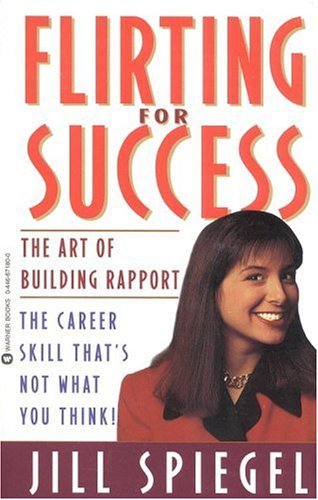
"Flirting for Success: The Art of Building Rapport" by Jill Spiegel explores the art of making connections and influencing people through charm and strategic communication. It's not about romantic advances, but rather leveraging positive, engaging interactions to foster rapport in professional and social settings. The book provides practical techniques for initiating conversations, active listening, and projecting confidence to build strong relationships.
This book shares common ground with Peter W. Murphy's "Always Know What To Say" as both focus on empowering individuals with practical communication skills. While Murphy’s book emphasizes approaching and conversing with anyone, Spiegel's offers a more nuanced approach to developing connections through a subtle, positive demeanor, essentially using "flirting" as a metaphor for engaging and establishing a comfortable, productive dynamic. Both aim to reduce social anxiety and improve interpersonal effectiveness.
The strategies offered will appeal to anyone seeking to enhance their social and professional interactions. Individuals looking to network more effectively, improve client relations, or simply feel more at ease in new social situations will find value in Spiegel's actionable advice. The focus on building genuine rapport provides tools for navigating various social landscapes with grace and influence.
Flirting for Success: The Art of Building Rapport
"Flirting for Success: The Art of Building Rapport" by Jill Spiegel explores the art of making connections and influencing people through charm and strategic communication. It's not about romantic advances, but rather leveraging positive, engaging interactions to foster rapport in professional and social settings. The book provides practical techniques for initiating conversations, active listening, and projecting confidence to build strong relationships.
This book shares common ground with Peter W. Murphy's "Always Know What To Say" as both focus on empowering individuals with practical communication skills. While Murphy’s book emphasizes approaching and conversing with anyone, Spiegel's offers a more nuanced approach to developing connections through a subtle, positive demeanor, essentially using "flirting" as a metaphor for engaging and establishing a comfortable, productive dynamic. Both aim to reduce social anxiety and improve interpersonal effectiveness.
The strategies offered will appeal to anyone seeking to enhance their social and professional interactions. Individuals looking to network more effectively, improve client relations, or simply feel more at ease in new social situations will find value in Spiegel's actionable advice. The focus on building genuine rapport provides tools for navigating various social landscapes with grace and influence.
Difficult Conversations: How to Discuss What Matters Most

"Difficult Conversations" delves into the intricate dynamics of high-stakes discussions, offering a framework to navigate interactions where emotions run high and differing perspectives clash. It breaks down complex conversations into understandable components, providing practical strategies for identifying underlying intentions, managing emotional responses, and striving for constructive outcomes rather than simply "winning."
Both books share a core objective: to empower individuals with the tools to communicate more effectively, particularly in challenging social or professional settings. While Murphy's book offers a broader scope on initiating conversations, Stone's work hones in on the specific mastery of difficult dialogues, providing a deeper dive into the psychological and tactical aspects of navigating conflict and sensitive topics.
This book will appeal to individuals seeking to master the art of crucial conversations, whether in personal relationships, professional negotiations, or leadership roles. Its structured approach to understanding the 'what happened,' 'feelings,' and 'identity' accounts of a difficult conversation offers profound insights, leading to more productive exchanges, reduced conflict, and stronger, more authentic connections.
Difficult Conversations: How to Discuss What Matters Most
"Difficult Conversations" delves into the intricate dynamics of high-stakes discussions, offering a framework to navigate interactions where emotions run high and differing perspectives clash. It breaks down complex conversations into understandable components, providing practical strategies for identifying underlying intentions, managing emotional responses, and striving for constructive outcomes rather than simply "winning."
Both books share a core objective: to empower individuals with the tools to communicate more effectively, particularly in challenging social or professional settings. While Murphy's book offers a broader scope on initiating conversations, Stone's work hones in on the specific mastery of difficult dialogues, providing a deeper dive into the psychological and tactical aspects of navigating conflict and sensitive topics.
This book will appeal to individuals seeking to master the art of crucial conversations, whether in personal relationships, professional negotiations, or leadership roles. Its structured approach to understanding the 'what happened,' 'feelings,' and 'identity' accounts of a difficult conversation offers profound insights, leading to more productive exchanges, reduced conflict, and stronger, more authentic connections.
The Coaching Habit: Say Less, Ask More & Change the Way You Lead Forever
"The Coaching Habit" focuses on transforming leadership and communication by encouraging a "less telling, more asking" approach. It introduces seven essential coaching questions designed to help individuals lead more effectively, foster greater engagement, and solve problems collaboratively. The book provides practical frameworks for shifting from a directive style to one that empowers others and cultivates self-sufficiency.
This book shares a core philosophy with "Always Know What To Say" by emphasizing intentional and effective communication. Both titles aim to equip individuals with tools to navigate interactions skillfully, move beyond awkwardness or ineffective exchanges, and build stronger, more productive relationships through strategic dialogue. They both advocate for a proactive approach to communication.
This book will appeal to managers, leaders, and anyone seeking to enhance their interpersonal skills. Its practical, actionable advice offers a clear path to improving communication, fostering growth in others, and ultimately achieving better outcomes in both professional and personal spheres. It provides tangible techniques for impactful conversations.
The Coaching Habit: Say Less, Ask More & Change the Way You Lead Forever
"The Coaching Habit" focuses on transforming leadership and communication by encouraging a "less telling, more asking" approach. It introduces seven essential coaching questions designed to help individuals lead more effectively, foster greater engagement, and solve problems collaboratively. The book provides practical frameworks for shifting from a directive style to one that empowers others and cultivates self-sufficiency.
This book shares a core philosophy with "Always Know What To Say" by emphasizing intentional and effective communication. Both titles aim to equip individuals with tools to navigate interactions skillfully, move beyond awkwardness or ineffective exchanges, and build stronger, more productive relationships through strategic dialogue. They both advocate for a proactive approach to communication.
This book will appeal to managers, leaders, and anyone seeking to enhance their interpersonal skills. Its practical, actionable advice offers a clear path to improving communication, fostering growth in others, and ultimately achieving better outcomes in both professional and personal spheres. It provides tangible techniques for impactful conversations.
Never Eat Alone: And Other Secrets to Success, One Relationship at a Time
"Never Eat Alone" champions the power of cultivating meaningful relationships as the cornerstone of career and life success. It’s a practical guide to networking, not as a transactional chore, but as a genuine investment in fostering connections built on generosity, mutual support, and authentic engagement. Ferrazzi details actionable strategies for building a robust personal and professional network, emphasizing proactive outreach, thoughtful follow-up, and demonstrating genuine interest in others.
This book shares significant common ground with "Always Know What To Say" because both fundamentally address the critical skill of effective communication in social and professional settings. While Murphy focuses on the immediate mechanics of initiating and sustaining conversations, Ferrazzi provides a broader strategic framework for leveraging those interactions to build lasting relationships that yield tangible benefits. Both books empower individuals to overcome social apprehension and engage with others more confidently and insightfully.
Individuals seeking to enhance their interpersonal skills and strategic networking will find this book particularly valuable. It offers a compelling argument for prioritizing relationship-building and equips one with practical techniques to transform casual acquaintances into strong alliances. Its principles are highly applicable to anyone looking to advance their career, expand their opportunities, or simply enrich their personal life through deeper connections.
Never Eat Alone: And Other Secrets to Success, One Relationship at a Time
"Never Eat Alone" champions the power of cultivating meaningful relationships as the cornerstone of career and life success. It’s a practical guide to networking, not as a transactional chore, but as a genuine investment in fostering connections built on generosity, mutual support, and authentic engagement. Ferrazzi details actionable strategies for building a robust personal and professional network, emphasizing proactive outreach, thoughtful follow-up, and demonstrating genuine interest in others.
This book shares significant common ground with "Always Know What To Say" because both fundamentally address the critical skill of effective communication in social and professional settings. While Murphy focuses on the immediate mechanics of initiating and sustaining conversations, Ferrazzi provides a broader strategic framework for leveraging those interactions to build lasting relationships that yield tangible benefits. Both books empower individuals to overcome social apprehension and engage with others more confidently and insightfully.
Individuals seeking to enhance their interpersonal skills and strategic networking will find this book particularly valuable. It offers a compelling argument for prioritizing relationship-building and equips one with practical techniques to transform casual acquaintances into strong alliances. Its principles are highly applicable to anyone looking to advance their career, expand their opportunities, or simply enrich their personal life through deeper connections.
More Books to Explore
Discover more titles that expand on these ideas and themes.
How to Talk to Anyone: 92 Little Tricks for Big Success in Relationships
Exactly What to Say: The Magic Words for Influence and Impact
Read People Like a Book: How to Analyze, Understand, and Predict People’s Emotions, Thoughts, Intentions, and Behaviors
Crucial Conversations: Tools for Talking When Stakes are High
The 16 Undeniable Laws of Communication: Apply Them and Make the Most of Your Message
You Say More Than You Think: Use the New Body Language to Get What You Want!, the 7-day Plan