10 Books Similar to "A World Out of Time"
by Larry Niven

A Gift from Earth

"A Gift from Earth" explores a future colony on the planet Mount Lookitthat, rigidly stratified by birthright and governed by the "Board." Those born with physical defects are deemed "organlegger" class, subject to involuntary organ donation for the privileged "Captains." The narrative follows the attempts of a few individuals to subvert this brutal system and achieve personal freedom against overwhelming societal control.
Both novels showcase Niven's characteristic exploration of societal structures pushed to their logical, often dystopian, extremes. The shared theme of rigid, hierarchical societies where individual autonomy is severely curtailed, often for the perceived greater good or survival of the ruling class, is pronounced. Niven's detailed world-building, where the implications of scientific and social constructs are meticulously thought through, is also a strong parallel.
This book offers a compelling examination of ethical dilemmas surrounding individual rights versus collective necessity, and the consequences of absolute power. Its exploration of human resilience in the face of oppression, and the complexities of revolution, provides rich material for contemplation. It stands as a thought-provoking piece of classic science fiction, revealing the potential pitfalls of technological and social advancement without corresponding ethical oversight.
A Gift from Earth
"A Gift from Earth" explores a future colony on the planet Mount Lookitthat, rigidly stratified by birthright and governed by the "Board." Those born with physical defects are deemed "organlegger" class, subject to involuntary organ donation for the privileged "Captains." The narrative follows the attempts of a few individuals to subvert this brutal system and achieve personal freedom against overwhelming societal control.
Both novels showcase Niven's characteristic exploration of societal structures pushed to their logical, often dystopian, extremes. The shared theme of rigid, hierarchical societies where individual autonomy is severely curtailed, often for the perceived greater good or survival of the ruling class, is pronounced. Niven's detailed world-building, where the implications of scientific and social constructs are meticulously thought through, is also a strong parallel.
This book offers a compelling examination of ethical dilemmas surrounding individual rights versus collective necessity, and the consequences of absolute power. Its exploration of human resilience in the face of oppression, and the complexities of revolution, provides rich material for contemplation. It stands as a thought-provoking piece of classic science fiction, revealing the potential pitfalls of technological and social advancement without corresponding ethical oversight.
The World of Ptavvs

"The World of Ptavvs" centers on Kzanol, an ancient, telepathic, and genocidal alien from a long-dead empire, accidentally reawakened from stasis on Earth. His escape unleashes a desperate interspecies chase across space and through time, as humans and his former enemies attempt to recapture or destroy him before he can rebuild his devastating power and resume his species' millennia-old war. The narrative explores themes of ancient evils, the potential for cosmic conflict, and humanity's raw encounter with a truly alien intelligence.
This novel shares several key thematic and structural similarities with "A World Out of Time." Both books involve protagonists—often human—contending with colossal, ancient alien intelligences or artifacts that deeply impact their present reality. There's a common thread of confronting the vastness of cosmic history and the humbling, often terrifying, implications of long-lost civilizations. Both works also feature the quintessential Niven touch of advanced technology interacting with primeval drives and the constant threat of extinction.
The appeal of "The World of Ptavvs" lies in its compelling blend of thrilling space opera, hard science fiction concepts, and a genuinely menacing antagonist. It offers a glimpse into Niven's early brilliance in crafting plausible alien biologies and societies, alongside high-stakes adventure and moral dilemmas. The exploration of telepathy and the sheer alienness of Kzanol provide intellectual stimulation, while the relentless pursuit and the looming threat of universal war deliver undeniable excitement and lasting impact.
The World of Ptavvs
"The World of Ptavvs" centers on Kzanol, an ancient, telepathic, and genocidal alien from a long-dead empire, accidentally reawakened from stasis on Earth. His escape unleashes a desperate interspecies chase across space and through time, as humans and his former enemies attempt to recapture or destroy him before he can rebuild his devastating power and resume his species' millennia-old war. The narrative explores themes of ancient evils, the potential for cosmic conflict, and humanity's raw encounter with a truly alien intelligence.
This novel shares several key thematic and structural similarities with "A World Out of Time." Both books involve protagonists—often human—contending with colossal, ancient alien intelligences or artifacts that deeply impact their present reality. There's a common thread of confronting the vastness of cosmic history and the humbling, often terrifying, implications of long-lost civilizations. Both works also feature the quintessential Niven touch of advanced technology interacting with primeval drives and the constant threat of extinction.
The appeal of "The World of Ptavvs" lies in its compelling blend of thrilling space opera, hard science fiction concepts, and a genuinely menacing antagonist. It offers a glimpse into Niven's early brilliance in crafting plausible alien biologies and societies, alongside high-stakes adventure and moral dilemmas. The exploration of telepathy and the sheer alienness of Kzanol provide intellectual stimulation, while the relentless pursuit and the looming threat of universal war deliver undeniable excitement and lasting impact.
Protector

"Protector" delves into the human journey of evolution, specifically focusing on the advanced "Pak" race and their two distinct life stages: the childlike "Child" and the hyper-intelligent, protective "Protector." The narrative explores humanity's ultimate destiny through the lens of a protagonist who encounters and ultimately embodies aspects of this alien biology, facing existential choices regarding survival and the future of his species.
Both novels share a profound exploration of human potential and the biological imperative for self-preservation, often depicted through radical evolutionary changes and extended lifespans. They feature protagonists who undergo transformative physical and intellectual modifications, pushing the boundaries of what it means to be human and what drives a species to survive across vast stretches of time and space. The concept of an ancient, highly evolved, yet often alien form of intelligence guiding or manipulating humanity is central to both narratives.
This book offers a thought-provoking examination of destiny, genetics, and the ultimate struggle for species survival. It appeals to those fascinated by deep time, biological determinism, and the philosophical implications of radical human evolution. The novel's strength lies in its intellectual depth and its ability to present complex scientific and ethical dilemmas in a compelling, character-driven story.
Protector
"Protector" delves into the human journey of evolution, specifically focusing on the advanced "Pak" race and their two distinct life stages: the childlike "Child" and the hyper-intelligent, protective "Protector." The narrative explores humanity's ultimate destiny through the lens of a protagonist who encounters and ultimately embodies aspects of this alien biology, facing existential choices regarding survival and the future of his species.
Both novels share a profound exploration of human potential and the biological imperative for self-preservation, often depicted through radical evolutionary changes and extended lifespans. They feature protagonists who undergo transformative physical and intellectual modifications, pushing the boundaries of what it means to be human and what drives a species to survive across vast stretches of time and space. The concept of an ancient, highly evolved, yet often alien form of intelligence guiding or manipulating humanity is central to both narratives.
This book offers a thought-provoking examination of destiny, genetics, and the ultimate struggle for species survival. It appeals to those fascinated by deep time, biological determinism, and the philosophical implications of radical human evolution. The novel's strength lies in its intellectual depth and its ability to present complex scientific and ethical dilemmas in a compelling, character-driven story.
Tales of Known Space: The Universe of Larry Niven

"Tales of Known Space" is a comprehensive anthology gathering many of Niven's foundational short stories and novellas set within his expansive Known Space universe. It explores humanity's first encounters with alien species, deep space exploration, and the ethical dilemmas of advanced technology, often featuring iconic characters like Louis Wu and Nessus. The collection illuminates the intricate history and physics that define this meticulously constructed future.
This collection mirrors "A World Out of Time" in its shared universe and thematic continuity. Both delve into classic hard science fiction concepts: the challenges of interstellar travel, the impact of extreme longevity, and humanity's place within a vast, sometimes indifferent, cosmos. The scientific rigor and speculative imagination that hallmark Niven's longer works are equally present and observable in these earlier, shorter pieces.
This book offers a deeper appreciation of Niven's universe. It provides crucial backstory and expands upon the lore glimpsed in his novels, enriching the understanding of character motivations and the grand narrative design. The concise nature of the stories allows for an immediate engagement with Niven’s signature blend of scientific extrapolations and compelling adventure, making it an excellent entry point or a satisfying revisit for longtime fans.
Tales of Known Space: The Universe of Larry Niven
"Tales of Known Space" is a comprehensive anthology gathering many of Niven's foundational short stories and novellas set within his expansive Known Space universe. It explores humanity's first encounters with alien species, deep space exploration, and the ethical dilemmas of advanced technology, often featuring iconic characters like Louis Wu and Nessus. The collection illuminates the intricate history and physics that define this meticulously constructed future.
This collection mirrors "A World Out of Time" in its shared universe and thematic continuity. Both delve into classic hard science fiction concepts: the challenges of interstellar travel, the impact of extreme longevity, and humanity's place within a vast, sometimes indifferent, cosmos. The scientific rigor and speculative imagination that hallmark Niven's longer works are equally present and observable in these earlier, shorter pieces.
This book offers a deeper appreciation of Niven's universe. It provides crucial backstory and expands upon the lore glimpsed in his novels, enriching the understanding of character motivations and the grand narrative design. The concise nature of the stories allows for an immediate engagement with Niven’s signature blend of scientific extrapolations and compelling adventure, making it an excellent entry point or a satisfying revisit for longtime fans.
Ringworld
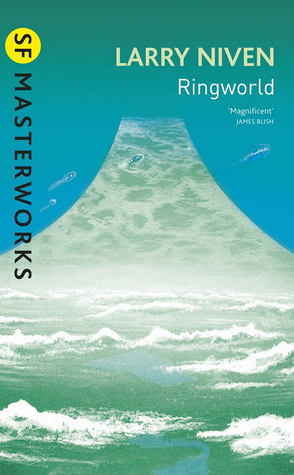
"Ringworld" centers on a unique alien artifact: a massive, artificial ring-shaped world encircling a star. A diverse crew, led by the human Louis Wu, embarks on an expedition to explore this colossal structure, encountering its varied inhabitants, technological marvels, and existential dangers. The narrative delves into the mysteries of the Ringworld's creation and purpose, pushing the boundaries of engineering, astrophysics, and societal design.
Both novels exemplify Niven's signature hard science fiction approach to grand, artificial megastructures. Like "A World Out of Time," "Ringworld" features protagonists confronting alien civilizations and technologies far beyond human comprehension, forcing them to unravel profound scientific and sociological puzzles. The scale of the environments and the deep exploration of their operational principles are core commonalities.
This book captivates with its unparalleled world-building and the sheer imaginative scale of the Ringworld itself. It offers a thought-provoking exploration of advanced engineering, biological evolution under extreme conditions, and the ethical implications of technological advancement. Its enduring appeal lies in its grand scope, intricate scientific details, and the compelling journey of discovery it presents.
Ringworld
"Ringworld" centers on a unique alien artifact: a massive, artificial ring-shaped world encircling a star. A diverse crew, led by the human Louis Wu, embarks on an expedition to explore this colossal structure, encountering its varied inhabitants, technological marvels, and existential dangers. The narrative delves into the mysteries of the Ringworld's creation and purpose, pushing the boundaries of engineering, astrophysics, and societal design.
Both novels exemplify Niven's signature hard science fiction approach to grand, artificial megastructures. Like "A World Out of Time," "Ringworld" features protagonists confronting alien civilizations and technologies far beyond human comprehension, forcing them to unravel profound scientific and sociological puzzles. The scale of the environments and the deep exploration of their operational principles are core commonalities.
This book captivates with its unparalleled world-building and the sheer imaginative scale of the Ringworld itself. It offers a thought-provoking exploration of advanced engineering, biological evolution under extreme conditions, and the ethical implications of technological advancement. Its enduring appeal lies in its grand scope, intricate scientific details, and the compelling journey of discovery it presents.
The Gripping Hand

"The Gripping Hand" is a science fiction novel that continues the adventures of Rick Schumann, an astronaut who has spent over a century in relativistic travel. The narrative explores his efforts to adapt to a vastly changed future Earth and to navigate complex political and social landscapes, all while confronting enduring challenges posed by accelerated technological advancement and humanity's expansion into space. The plot involves intricate diplomacy, the ramifications of extended lifespans, and the unraveling of a galaxy-spanning mystery.
The novel shares significant thematic and narrative parallels with "A World Out of Time." Both books thrust their protagonists into a future vastly altered by extreme time dilation and technological evolution, forcing them to grapple with societal shifts, personal obsolescence, and the search for purpose in a changed world. Niven’s characteristic hard science fiction approach, focusing on believable physics and the logical extensions of current scientific understanding, is prominent in both works. They both explore the ethical ambiguities of future technologies and the psychological impact of profound temporal displacement.
This book will appeal to those who appreciate thought-provoking science fiction that grounds its imaginative concepts in plausible scientific principles. Its exploration of identity, the future of humanity, and the complexities of interstellar relations offers a rich tapestry for contemplation. The narrative’s blend of adventure, political intrigue, and philosophical musings provides an engaging and intellectually stimulating experience, offering fresh perspectives on timeless human concerns against a backdrop of grand scientific speculation.
The Gripping Hand
"The Gripping Hand" is a science fiction novel that continues the adventures of Rick Schumann, an astronaut who has spent over a century in relativistic travel. The narrative explores his efforts to adapt to a vastly changed future Earth and to navigate complex political and social landscapes, all while confronting enduring challenges posed by accelerated technological advancement and humanity's expansion into space. The plot involves intricate diplomacy, the ramifications of extended lifespans, and the unraveling of a galaxy-spanning mystery.
The novel shares significant thematic and narrative parallels with "A World Out of Time." Both books thrust their protagonists into a future vastly altered by extreme time dilation and technological evolution, forcing them to grapple with societal shifts, personal obsolescence, and the search for purpose in a changed world. Niven’s characteristic hard science fiction approach, focusing on believable physics and the logical extensions of current scientific understanding, is prominent in both works. They both explore the ethical ambiguities of future technologies and the psychological impact of profound temporal displacement.
This book will appeal to those who appreciate thought-provoking science fiction that grounds its imaginative concepts in plausible scientific principles. Its exploration of identity, the future of humanity, and the complexities of interstellar relations offers a rich tapestry for contemplation. The narrative’s blend of adventure, political intrigue, and philosophical musings provides an engaging and intellectually stimulating experience, offering fresh perspectives on timeless human concerns against a backdrop of grand scientific speculation.
Footfall

"Footfall" depicts a devastating alien invasion of Earth by an elephantine species known as the Fith. The narrative unfolds through multiple perspectives – military leaders, scientists, politicians, and ordinary citizens – showcasing humanity's desperate struggle for survival, the ethical dilemmas of warfare, and the ingenuity required to overcome a technologically superior foe. It's a high-stakes, realistic examination of first contact combined with a war story.
The similarity to "A World Out of Time" lies in Niven's characteristic approach to monumental threats and humanity's response. Both novels feature the extinction-level potential of an external force, requiring humanity to unite, innovate, and make profound sacrifices. They share Niven's hard science fiction sensibilities, exploring believable technological solutions and the psychological impact of unprecedented crises, alongside a focus on intricate world-building and logical extrapolation.
This novel will appeal to those who appreciate meticulously crafted hard science fiction and stories of human resilience against overwhelming odds. It offers a gripping exploration of humanity's capacity for both cruelty and courage, presenting a scientifically plausible invasion scenario. The intricate details of alien biology and technology, coupled with the profound ethical questions raised by a global conflict, provide a thought-provoking and immersive experience.
Footfall
"Footfall" depicts a devastating alien invasion of Earth by an elephantine species known as the Fith. The narrative unfolds through multiple perspectives – military leaders, scientists, politicians, and ordinary citizens – showcasing humanity's desperate struggle for survival, the ethical dilemmas of warfare, and the ingenuity required to overcome a technologically superior foe. It's a high-stakes, realistic examination of first contact combined with a war story.
The similarity to "A World Out of Time" lies in Niven's characteristic approach to monumental threats and humanity's response. Both novels feature the extinction-level potential of an external force, requiring humanity to unite, innovate, and make profound sacrifices. They share Niven's hard science fiction sensibilities, exploring believable technological solutions and the psychological impact of unprecedented crises, alongside a focus on intricate world-building and logical extrapolation.
This novel will appeal to those who appreciate meticulously crafted hard science fiction and stories of human resilience against overwhelming odds. It offers a gripping exploration of humanity's capacity for both cruelty and courage, presenting a scientifically plausible invasion scenario. The intricate details of alien biology and technology, coupled with the profound ethical questions raised by a global conflict, provide a thought-provoking and immersive experience.
Lucifer's Hammer
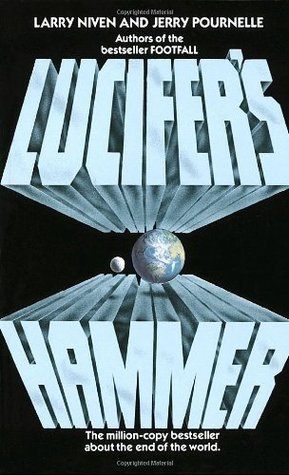
"Lucifer's Hammer" chronicles humanity's struggle for survival after a massive comet strikes Earth, plunging civilization into a new dark age. The narrative follows various perspectives as individuals, communities, and governments grapple with devastating natural disasters, social breakdown, and the brutal challenges of rebuilding a functioning society from scratch, emphasizing resource scarcity, political maneuvering, and the brutal nature of human survival instincts.
The similarity to "A World Out of Time" lies in the prevalent themes of human resourcefulness and adaptation in the face of catastrophic odds. Both novels explore the long-term consequences of existential threats, forcing characters to confront fundamental questions about humanity's future and the lengths to which people will go to preserve their species, often requiring radical shifts in established societal norms and technological reliance.
This book offers a compelling exploration of post-apocalyptic resilience and the intricate dynamics of societal collapse and rebirth. Its vivid portrayal of human ingenuity, desperation, and the stark realities of survival against an indifferent universe makes it a thought-provoking read, providing insights into potential societal reactions to global crises and the enduring power of the human spirit.
Lucifer's Hammer
"Lucifer's Hammer" chronicles humanity's struggle for survival after a massive comet strikes Earth, plunging civilization into a new dark age. The narrative follows various perspectives as individuals, communities, and governments grapple with devastating natural disasters, social breakdown, and the brutal challenges of rebuilding a functioning society from scratch, emphasizing resource scarcity, political maneuvering, and the brutal nature of human survival instincts.
The similarity to "A World Out of Time" lies in the prevalent themes of human resourcefulness and adaptation in the face of catastrophic odds. Both novels explore the long-term consequences of existential threats, forcing characters to confront fundamental questions about humanity's future and the lengths to which people will go to preserve their species, often requiring radical shifts in established societal norms and technological reliance.
This book offers a compelling exploration of post-apocalyptic resilience and the intricate dynamics of societal collapse and rebirth. Its vivid portrayal of human ingenuity, desperation, and the stark realities of survival against an indifferent universe makes it a thought-provoking read, providing insights into potential societal reactions to global crises and the enduring power of the human spirit.
Eon

"Eon" centers on the discovery of a 300-kilometer-long asteroid, dubbed the "Thistledown," orbiting Earth. Inside, researchers uncover a vast, habitable, seven-chambered tunnel system. This megastructure proves to be a portal, not just to distant points in space, but also to Earth's future, revealing a history far more complex and perilous than imagined. The narrative explores the political and scientific ramifications of this discovery, alongside the personal journeys of those who traverse its enigmatic corridors.
The resemblance to "A World Out of Time" lies in their shared exploration of extreme temporal displacement and the profound societal and individual consequences. Both novels feature protagonists journeying into vastly altered futures, encountering civilizations and technologies shaped by millennia of evolution. They similarly depict the disorienting experience of navigating advanced, alien-like societies that originated from Earth, forcing a re-evaluation of humanity's past, present, and potential trajectory.
"Eon" offers a compelling blend of hard science fiction, geopolitical intrigue, and philosophical musings on destiny and free will. It presents a meticulously crafted future history and a stunning technological vision, satisfying those who appreciate intellectual depth alongside grand-scale adventure. The novel provides valuable insights into the potential trajectory of humanity and the ethical dilemmas inherent in encountering powerful, future knowledge.
Eon
"Eon" centers on the discovery of a 300-kilometer-long asteroid, dubbed the "Thistledown," orbiting Earth. Inside, researchers uncover a vast, habitable, seven-chambered tunnel system. This megastructure proves to be a portal, not just to distant points in space, but also to Earth's future, revealing a history far more complex and perilous than imagined. The narrative explores the political and scientific ramifications of this discovery, alongside the personal journeys of those who traverse its enigmatic corridors.
The resemblance to "A World Out of Time" lies in their shared exploration of extreme temporal displacement and the profound societal and individual consequences. Both novels feature protagonists journeying into vastly altered futures, encountering civilizations and technologies shaped by millennia of evolution. They similarly depict the disorienting experience of navigating advanced, alien-like societies that originated from Earth, forcing a re-evaluation of humanity's past, present, and potential trajectory.
"Eon" offers a compelling blend of hard science fiction, geopolitical intrigue, and philosophical musings on destiny and free will. It presents a meticulously crafted future history and a stunning technological vision, satisfying those who appreciate intellectual depth alongside grand-scale adventure. The novel provides valuable insights into the potential trajectory of humanity and the ethical dilemmas inherent in encountering powerful, future knowledge.
In the Ocean of Night

"In the Ocean of Night" centers on Nigel Walmsley, an astronaut haunted by a past mission where he encountered a relic of an ancient, alien civilization. His life becomes entangled in a subsequent crisis when a rogue comet threatens Earth and humanity's response is unexpectedly complicated by another, more profound, extraterrestrial enigma suggesting a far older, grander intelligence at play. The narrative explores humanity's fragile place in a universe teeming with mysteries.
This novel shares a remarkable thematic kinship with Niven's "A World Out of Time." Both books delve deep into the profound implications of encountering incredibly ancient, advanced extraterrestrial civilizations whose motivations and technologies are almost incomprehensible. They explore themes of vast cosmic scales, the isolation of humanity, and the potential for transcendence or destruction inherent in such discoveries, often involving journeys to distant or altered environments to uncover these secrets.
It will appeal to those who appreciate 'hard' science fiction that rigorously explores the scientific and philosophical ramifications of first contact and humanity's destiny among the stars. The thoughtful speculation about alien life, the challenges of interstellar travel, and the existential questions posed by cosmic encounters offer both intellectual stimulation and a sense of wonder, making it a valuable read for anyone seeking intellectually robust and thought-provoking space operas.
In the Ocean of Night
"In the Ocean of Night" centers on Nigel Walmsley, an astronaut haunted by a past mission where he encountered a relic of an ancient, alien civilization. His life becomes entangled in a subsequent crisis when a rogue comet threatens Earth and humanity's response is unexpectedly complicated by another, more profound, extraterrestrial enigma suggesting a far older, grander intelligence at play. The narrative explores humanity's fragile place in a universe teeming with mysteries.
This novel shares a remarkable thematic kinship with Niven's "A World Out of Time." Both books delve deep into the profound implications of encountering incredibly ancient, advanced extraterrestrial civilizations whose motivations and technologies are almost incomprehensible. They explore themes of vast cosmic scales, the isolation of humanity, and the potential for transcendence or destruction inherent in such discoveries, often involving journeys to distant or altered environments to uncover these secrets.
It will appeal to those who appreciate 'hard' science fiction that rigorously explores the scientific and philosophical ramifications of first contact and humanity's destiny among the stars. The thoughtful speculation about alien life, the challenges of interstellar travel, and the existential questions posed by cosmic encounters offer both intellectual stimulation and a sense of wonder, making it a valuable read for anyone seeking intellectually robust and thought-provoking space operas.
More Books to Explore
Discover more titles that expand on these ideas and themes.
A Gift from Earth
The World of Ptavvs
Protector
Tales of Known Space: The Universe of Larry Niven
Ringworld
The Gripping Hand