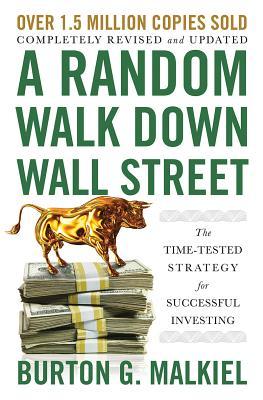
10 Books Similar to "A Random Walk Down Wall Street: The Time-Tested Strategy for Successful Investing"
by Burton G. Malkiel
The Bogleheads' Guide to Investing
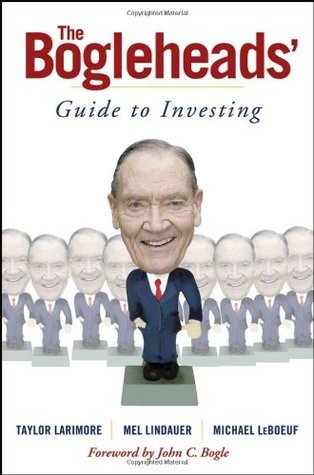
"The Bogleheads' Guide to Investing" serves as a practical, accessible manual for individual investors, distilling the core principles of successful, long-term investing into actionable advice. It champions a low-cost, diversified, and passive investment approach, primarily through index funds, as the most effective strategy for building wealth over time, emphasizing discipline and avoiding market timing.
Both books advocate for a passive investment strategy and strongly dismiss the notion that active fund management or market timing consistently outperform. They share the fundamental belief that attempting to beat the market is largely futile, expensive, and detrimental to long-term returns, instead promoting broad market exposure through low-cost index funds as the optimal path to financial success.
This guide will resonate with anyone seeking a clear, no-nonsense roadmap to financial independence. Its practical, step-by-step guidance, combined with the proven efficacy of its investment philosophy, offers immense value, empowering individuals to take control of their financial future with confidence and a well-defined strategy.
The Bogleheads' Guide to Investing
"The Bogleheads' Guide to Investing" serves as a practical, accessible manual for individual investors, distilling the core principles of successful, long-term investing into actionable advice. It champions a low-cost, diversified, and passive investment approach, primarily through index funds, as the most effective strategy for building wealth over time, emphasizing discipline and avoiding market timing.
Both books advocate for a passive investment strategy and strongly dismiss the notion that active fund management or market timing consistently outperform. They share the fundamental belief that attempting to beat the market is largely futile, expensive, and detrimental to long-term returns, instead promoting broad market exposure through low-cost index funds as the optimal path to financial success.
This guide will resonate with anyone seeking a clear, no-nonsense roadmap to financial independence. Its practical, step-by-step guidance, combined with the proven efficacy of its investment philosophy, offers immense value, empowering individuals to take control of their financial future with confidence and a well-defined strategy.
One Up On Wall Street: How to Use What You Already Know to Make Money in the Market

"One Up On Wall Street" champions the idea that individual investors possess a unique advantage: they can discover promising investments through everyday observations and experiences, rather than relying solely on professional analysis. Peter Lynch, its author, encourages people to trust their "insider" knowledge as a consumer, identifying companies whose products and services they understand and appreciate.
Both books advocate for a pragmatic, long-term approach to investing, steering clear of speculative fads. While Malkiel emphasizes the difficulty of consistently beating the market due to its inherent randomness, Lynch provides a framework for how an individual *might* identify undervalued companies, albeit acknowledging the market's efficiency. They both promote diligence, research, and a disciplined mindset over trying to time the market.
This book will appeal to those seeking actionable strategies to engage with the stock market without succumbing to complex financial jargon or costly professional advice. It empowers individuals to leverage their existing knowledge and everyday insights, making investing feel accessible and demystified, ultimately proving valuable for building a confident, independent investment approach.
One Up On Wall Street: How to Use What You Already Know to Make Money in the Market
"One Up On Wall Street" champions the idea that individual investors possess a unique advantage: they can discover promising investments through everyday observations and experiences, rather than relying solely on professional analysis. Peter Lynch, its author, encourages people to trust their "insider" knowledge as a consumer, identifying companies whose products and services they understand and appreciate.
Both books advocate for a pragmatic, long-term approach to investing, steering clear of speculative fads. While Malkiel emphasizes the difficulty of consistently beating the market due to its inherent randomness, Lynch provides a framework for how an individual *might* identify undervalued companies, albeit acknowledging the market's efficiency. They both promote diligence, research, and a disciplined mindset over trying to time the market.
This book will appeal to those seeking actionable strategies to engage with the stock market without succumbing to complex financial jargon or costly professional advice. It empowers individuals to leverage their existing knowledge and everyday insights, making investing feel accessible and demystified, ultimately proving valuable for building a confident, independent investment approach.
The Little Book That Builds Wealth: The Knockout Formula for Finding Great Investments

"The Little Book That Builds Wealth" distills the concept of an economic moat – a sustainable competitive advantage – into actionable insights for investors. Pat Dorsey explains how businesses create and maintain these moats through intangible assets, high switching costs, network effects, and cost advantages, enabling them to generate superior returns over the long term. It's a practical guide to identifying companies built to last.
This book shares common ground with "A Random Walk Down Wall Street" in its emphasis on long-term, fundamentally sound investing principles over speculative trading. While Malkiel debunks market timing and stock picking in generally, Dorsey offers a framework for *how* to pick stocks effectively, focusing on intrinsic value and sustainable business models, echoing Malkiel's underlying message of prudent, research-driven investment. Both advocate for a disciplined approach to wealth creation.
This book will appeal to those seeking a clear, accessible methodology for identifying quality investments. It offers a powerful lens through which to evaluate companies, moving beyond superficial metrics to understand the core drivers of enduring profitability. Its value lies in empowering investors to make more informed decisions, fostering a deeper understanding of business sustainability, and ultimately, building a robust portfolio.
The Little Book That Builds Wealth: The Knockout Formula for Finding Great Investments
"The Little Book That Builds Wealth" distills the concept of an economic moat – a sustainable competitive advantage – into actionable insights for investors. Pat Dorsey explains how businesses create and maintain these moats through intangible assets, high switching costs, network effects, and cost advantages, enabling them to generate superior returns over the long term. It's a practical guide to identifying companies built to last.
This book shares common ground with "A Random Walk Down Wall Street" in its emphasis on long-term, fundamentally sound investing principles over speculative trading. While Malkiel debunks market timing and stock picking in generally, Dorsey offers a framework for *how* to pick stocks effectively, focusing on intrinsic value and sustainable business models, echoing Malkiel's underlying message of prudent, research-driven investment. Both advocate for a disciplined approach to wealth creation.
This book will appeal to those seeking a clear, accessible methodology for identifying quality investments. It offers a powerful lens through which to evaluate companies, moving beyond superficial metrics to understand the core drivers of enduring profitability. Its value lies in empowering investors to make more informed decisions, fostering a deeper understanding of business sustainability, and ultimately, building a robust portfolio.
Beating the Street
*Beating the Street* by Peter Lynch demystifies stock market investing through the lens of everyday observation. Lynch, a legendary fund manager, advocates for "investing in what you know" – identifying promising companies by analyzing products and services encountered in daily life, rather than relying solely on complex financial models. He shares practical advice on company analysis, portfolio management, and avoiding common investor pitfalls.
Both *Beating the Street* and *A Random Walk Down Wall Street* share a fundamental belief in accessible investing principles for the individual. While Malkiel emphasizes market efficiency and the challenges of outperforming it, Lynch provides a practical, almost intuitive, methodology for attempting to do just that. Both authors equip the reader with a logical framework for approaching investment decisions, demystifying a seemingly complex world.
The book will appeal to those seeking actionable, common-sense strategies for personal investing. Its focus on identifiable businesses and clear explanations empowers individuals to become more confident and informed participants in the stock market, offering a refreshing counterpoint to more abstract financial theories. It provides a valuable roadmap for building a nuanced understanding of investment opportunities.
Beating the Street
*Beating the Street* by Peter Lynch demystifies stock market investing through the lens of everyday observation. Lynch, a legendary fund manager, advocates for "investing in what you know" – identifying promising companies by analyzing products and services encountered in daily life, rather than relying solely on complex financial models. He shares practical advice on company analysis, portfolio management, and avoiding common investor pitfalls.
Both *Beating the Street* and *A Random Walk Down Wall Street* share a fundamental belief in accessible investing principles for the individual. While Malkiel emphasizes market efficiency and the challenges of outperforming it, Lynch provides a practical, almost intuitive, methodology for attempting to do just that. Both authors equip the reader with a logical framework for approaching investment decisions, demystifying a seemingly complex world.
The book will appeal to those seeking actionable, common-sense strategies for personal investing. Its focus on identifiable businesses and clear explanations empowers individuals to become more confident and informed participants in the stock market, offering a refreshing counterpoint to more abstract financial theories. It provides a valuable roadmap for building a nuanced understanding of investment opportunities.
You Can Be a Stock Market Genius: Uncover the Secret Hiding Places of Stock Market Profits

Joel Greenblatt's "You Can Be a Stock Market Genius" provides a practical guide to uncovering profitable investment opportunities often overlooked by mainstream analysis. It focuses on special situations like spin-offs, bankruptcies, mergers, and recapitalizations, detailing how individual investors can exploit these less efficient corners of the market for significant gains. The book emphasizes a deep dive into company fundamentals and event-driven analysis rather than broad market trends.
This book shares conceptual kinship with Burton Malkiel's "A Random Walk Down Wall Street" in its challenge to conventional wisdom and its exploration of market efficiency (or inefficiency). While Malkiel highlights the difficulty of consistently beating the market through traditional analysis, Greenblatt effectively demonstrates specific scenarios where such outperformance is achievable, thereby offering a nuanced perspective on market predictability and the potential for active management in niche areas.
This book offers a unique opportunity for those seeking actionable strategies beyond passive investing. It equips investors with a framework for identifying and analyzing complex corporate events, potentially leading to substantial returns for those willing to do the thorough research. It’s a compelling resource for anyone aiming to understand and capitalize on hidden value in the stock market.
You Can Be a Stock Market Genius: Uncover the Secret Hiding Places of Stock Market Profits
Joel Greenblatt's "You Can Be a Stock Market Genius" provides a practical guide to uncovering profitable investment opportunities often overlooked by mainstream analysis. It focuses on special situations like spin-offs, bankruptcies, mergers, and recapitalizations, detailing how individual investors can exploit these less efficient corners of the market for significant gains. The book emphasizes a deep dive into company fundamentals and event-driven analysis rather than broad market trends.
This book shares conceptual kinship with Burton Malkiel's "A Random Walk Down Wall Street" in its challenge to conventional wisdom and its exploration of market efficiency (or inefficiency). While Malkiel highlights the difficulty of consistently beating the market through traditional analysis, Greenblatt effectively demonstrates specific scenarios where such outperformance is achievable, thereby offering a nuanced perspective on market predictability and the potential for active management in niche areas.
This book offers a unique opportunity for those seeking actionable strategies beyond passive investing. It equips investors with a framework for identifying and analyzing complex corporate events, potentially leading to substantial returns for those willing to do the thorough research. It’s a compelling resource for anyone aiming to understand and capitalize on hidden value in the stock market.
Margin of Safety: Risk-Averse Value Investing Strategies for the Thoughtful Investor

"Margin of Safety" delves into the core tenets of value investing, emphasizing a rigorous, disciplined approach to identifying undervalued assets. Klarman advocates for a deep understanding of a business's intrinsic worth, investing only when the market price offers a substantial discount to that value. This "margin of safety" acts as a protective buffer against unforeseen events and investment miscalculations, prioritizing capital preservation above all else.
Both books champion a rational, long-term perspective on investing, urging a skepticism of market fads and speculative bubbles. While Malkiel highlights the efficiency of markets and the difficulty of consistently outperforming them, Klarman provides a framework for how thoughtful analysis and a disciplined approach *can* lead to superior long-term results by exploiting mispricings. They share a fundamental belief in the power of compound interest and the dangers of emotional decision-making.
This book offers a compelling blueprint for navigating the complexities of financial markets with prudence and strategic foresight. Its timeless principles guide investors toward financially sound choices, fostering a deep appreciation for research and risk management. It provides actionable insights for anyone seeking to build wealth sustainably and avoid common investing pitfalls.
Margin of Safety: Risk-Averse Value Investing Strategies for the Thoughtful Investor
"Margin of Safety" delves into the core tenets of value investing, emphasizing a rigorous, disciplined approach to identifying undervalued assets. Klarman advocates for a deep understanding of a business's intrinsic worth, investing only when the market price offers a substantial discount to that value. This "margin of safety" acts as a protective buffer against unforeseen events and investment miscalculations, prioritizing capital preservation above all else.
Both books champion a rational, long-term perspective on investing, urging a skepticism of market fads and speculative bubbles. While Malkiel highlights the efficiency of markets and the difficulty of consistently outperforming them, Klarman provides a framework for how thoughtful analysis and a disciplined approach *can* lead to superior long-term results by exploiting mispricings. They share a fundamental belief in the power of compound interest and the dangers of emotional decision-making.
This book offers a compelling blueprint for navigating the complexities of financial markets with prudence and strategic foresight. Its timeless principles guide investors toward financially sound choices, fostering a deep appreciation for research and risk management. It provides actionable insights for anyone seeking to build wealth sustainably and avoid common investing pitfalls.
The Intelligent Investor
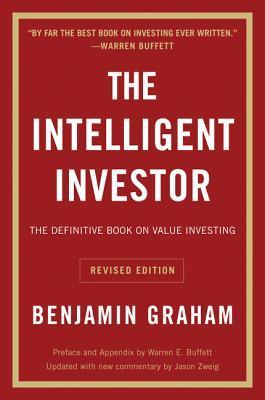
"The Intelligent Investor" fundamentally guides prudent investment decisions through a value investing lens. Graham champions a methodical, disciplined approach, focusing on diligent research to identify undervalued securities and cultivating a "margin of safety" to protect against unforeseen circumstances. It's less about predicting market swings and more about understanding intrinsic business value.
This classic shares a core philosophical alignment with "A Random Walk Down Wall Street" by advocating for a long-term, rational, and evidence-based investment strategy over speculative gambling. Both books emphasize the futility of trying to consistently beat the market through active trading and instead promote a patient, diversified, and cost-effective approach to wealth building.
This book offers enduring wisdom for anyone seeking a robust framework for financial decision-making. Its emphasis on risk management, emotional discipline, and a fundamental understanding of business economics provides a timeless blueprint for achieving financial security, making it an invaluable resource for both novice and experienced investors.
The Intelligent Investor
"The Intelligent Investor" fundamentally guides prudent investment decisions through a value investing lens. Graham champions a methodical, disciplined approach, focusing on diligent research to identify undervalued securities and cultivating a "margin of safety" to protect against unforeseen circumstances. It's less about predicting market swings and more about understanding intrinsic business value.
This classic shares a core philosophical alignment with "A Random Walk Down Wall Street" by advocating for a long-term, rational, and evidence-based investment strategy over speculative gambling. Both books emphasize the futility of trying to consistently beat the market through active trading and instead promote a patient, diversified, and cost-effective approach to wealth building.
This book offers enduring wisdom for anyone seeking a robust framework for financial decision-making. Its emphasis on risk management, emotional discipline, and a fundamental understanding of business economics provides a timeless blueprint for achieving financial security, making it an invaluable resource for both novice and experienced investors.
Value Investing: From Graham to Buffett and Beyond

"Value Investing: From Graham to Buffett and Beyond" meticulously dissects the principles of value investing. It systematically traces the evolution of this disciplined approach, starting with Benjamin Graham's foundational concepts of intrinsic value and margin of safety, and extending through the modern interpretations and applications practiced by legendary investors like Warren Buffett. The book emphasizes rigorous financial analysis, understanding a business's true worth, and purchasing assets for less than that value, thereby mitigating risk and generating long-term returns.
This work shares a foundational premise with "A Random Walk Down Wall Street" by critically examining and guiding investors toward prudent, long-term strategies, rather than speculative or short-term trading. While Malkiel's book champions passive index investing due to market efficiency, Greenwald's work offers a complementary, active approach that also stresses thorough research and avoiding emotional decisions, albeit through identifying undervalued individual securities. Both aim to demystify investing and empower individuals with knowledge to avoid common pitfalls.
Individuals seeking a deeper understanding of fundamental analysis and a time-tested active investment philosophy will find this book immensely appealing. It equips them with the analytical tools and historical context needed to evaluate companies and make informed investment decisions, offering a powerful alternative or supplement to passive strategies. Its thorough exploration of intrinsic value and risk management provides a robust framework for building wealth strategically and confidently over time.
Value Investing: From Graham to Buffett and Beyond
"Value Investing: From Graham to Buffett and Beyond" meticulously dissects the principles of value investing. It systematically traces the evolution of this disciplined approach, starting with Benjamin Graham's foundational concepts of intrinsic value and margin of safety, and extending through the modern interpretations and applications practiced by legendary investors like Warren Buffett. The book emphasizes rigorous financial analysis, understanding a business's true worth, and purchasing assets for less than that value, thereby mitigating risk and generating long-term returns.
This work shares a foundational premise with "A Random Walk Down Wall Street" by critically examining and guiding investors toward prudent, long-term strategies, rather than speculative or short-term trading. While Malkiel's book champions passive index investing due to market efficiency, Greenwald's work offers a complementary, active approach that also stresses thorough research and avoiding emotional decisions, albeit through identifying undervalued individual securities. Both aim to demystify investing and empower individuals with knowledge to avoid common pitfalls.
Individuals seeking a deeper understanding of fundamental analysis and a time-tested active investment philosophy will find this book immensely appealing. It equips them with the analytical tools and historical context needed to evaluate companies and make informed investment decisions, offering a powerful alternative or supplement to passive strategies. Its thorough exploration of intrinsic value and risk management provides a robust framework for building wealth strategically and confidently over time.
The Most Important Thing: Uncommon Sense for the Thoughtful Investor

Howard Marks' "The Most Important Thing" distills decades of investment wisdom into twenty concise essays, each focusing on a critical aspect of successful investing. It champions a nuanced, probabilistic approach over dogmatic rules, emphasizing independent thinking, recognizing market cycles, and understanding intrinsic value. Marks empowers investors to make thoughtful decisions by dissecting psychological biases, risk management, and the importance of second-level thinking.
This book shares conceptual DNA with "A Random Walk Down Wall Street" in its dedication to demystifying the market and fostering rational decision-making. Both authors challenge conventional wisdom, encouraging a long-term perspective rooted in fundamental analysis rather than speculative fads. While Malkiel focuses on market efficiency and passive investing, Marks complements this by delving into the behavioral aspects and cyclical nature that dictate market opportunities and risks, providing a deeper dive into qualitative factors.
Anyone seeking a deeper intellectual engagement with investing will find immense value in Marks' work. It offers a framework for understanding market complexities, navigating uncertainty, and cultivating the mindset of a successful long-term investor. The book serves as a vital guide for developing a robust investment philosophy, moving beyond simplistic advice to embrace the art and science of thoughtful capital allocation.
The Most Important Thing: Uncommon Sense for the Thoughtful Investor
Howard Marks' "The Most Important Thing" distills decades of investment wisdom into twenty concise essays, each focusing on a critical aspect of successful investing. It champions a nuanced, probabilistic approach over dogmatic rules, emphasizing independent thinking, recognizing market cycles, and understanding intrinsic value. Marks empowers investors to make thoughtful decisions by dissecting psychological biases, risk management, and the importance of second-level thinking.
This book shares conceptual DNA with "A Random Walk Down Wall Street" in its dedication to demystifying the market and fostering rational decision-making. Both authors challenge conventional wisdom, encouraging a long-term perspective rooted in fundamental analysis rather than speculative fads. While Malkiel focuses on market efficiency and passive investing, Marks complements this by delving into the behavioral aspects and cyclical nature that dictate market opportunities and risks, providing a deeper dive into qualitative factors.
Anyone seeking a deeper intellectual engagement with investing will find immense value in Marks' work. It offers a framework for understanding market complexities, navigating uncertainty, and cultivating the mindset of a successful long-term investor. The book serves as a vital guide for developing a robust investment philosophy, moving beyond simplistic advice to embrace the art and science of thoughtful capital allocation.
F Wall Street: Joe Ponzio's No-Nonsense Approach to Value Investing For the Rest of Us
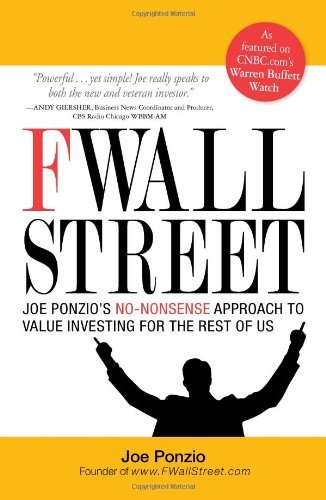
"F Wall Street" demystifies value investing, offering a pragmatic, accessible guide for individual investors. Joe Ponzio cuts through financial jargon, empowering readers to identify undervalued companies and make informed investment decisions independently, rather than relying on traditional Wall Street advice. He emphasizes fundamental analysis and long-term thinking, providing a clear roadmap for building wealth through disciplined investment.
This book shares foundational similarities with Malkiel's "A Random Walk Down Wall Street" in its core message: successful investing doesn't require insider knowledge or complex strategies. Both authors advocate for a rational, evidence-based approach, challenging the notion that outperforming the market is consistently achievable through active trading or stock picking based on speculation. Ponzio's value investing framework aligns with Malkiel's emphasis on long-term growth and avoiding behavioral biases.
The straightforward, no-nonsense approach of "F Wall Street" makes it highly appealing. It provides actionable strategies that can be immediately applied, offering tangible value to anyone seeking to take control of their finances and build a robust investment portfolio without succumbing to market hype or costly financial advisors. The emphasis on independent analysis and understanding the true value of assets fosters confidence and financial literacy.
F Wall Street: Joe Ponzio's No-Nonsense Approach to Value Investing For the Rest of Us
"F Wall Street" demystifies value investing, offering a pragmatic, accessible guide for individual investors. Joe Ponzio cuts through financial jargon, empowering readers to identify undervalued companies and make informed investment decisions independently, rather than relying on traditional Wall Street advice. He emphasizes fundamental analysis and long-term thinking, providing a clear roadmap for building wealth through disciplined investment.
This book shares foundational similarities with Malkiel's "A Random Walk Down Wall Street" in its core message: successful investing doesn't require insider knowledge or complex strategies. Both authors advocate for a rational, evidence-based approach, challenging the notion that outperforming the market is consistently achievable through active trading or stock picking based on speculation. Ponzio's value investing framework aligns with Malkiel's emphasis on long-term growth and avoiding behavioral biases.
The straightforward, no-nonsense approach of "F Wall Street" makes it highly appealing. It provides actionable strategies that can be immediately applied, offering tangible value to anyone seeking to take control of their finances and build a robust investment portfolio without succumbing to market hype or costly financial advisors. The emphasis on independent analysis and understanding the true value of assets fosters confidence and financial literacy.
More Books to Explore
Discover more titles that expand on these ideas and themes.
The Bogleheads' Guide to Investing
One Up On Wall Street: How to Use What You Already Know to Make Money in the Market
The Little Book That Builds Wealth: The Knockout Formula for Finding Great Investments
Beating the Street
You Can Be a Stock Market Genius: Uncover the Secret Hiding Places of Stock Market Profits
Margin of Safety: Risk-Averse Value Investing Strategies for the Thoughtful Investor