10 Books Similar to "1984"
by George Orwell

Animal Farm
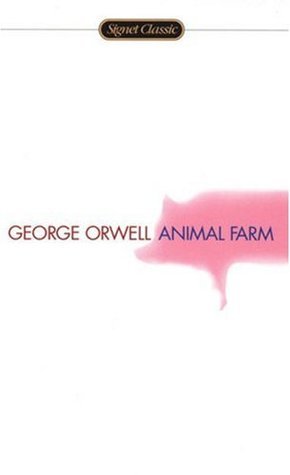
"Animal Farm" is a satirical novella depicting a group of farm animals who overthrow their human farmer, hoping to create a society where all animals are equal, free, and happy. However, their revolution is gradually corrupted by the pigs, particularly Napoleon, who skillfully manipulate the other animals and seize absolute power, ultimately establishing a totalitarian regime even more oppressive than the one they rebelled against.
Its similarity to "1984" lies in their shared exploration of totalitarianism, propaganda, and the manipulation of truth. Both novels expose how revolutionary ideals can be twisted and exploited by those seeking power, using fear, revisionist history, and psychological control to maintain dominance over a subjugated populace. The gradual erosion of individual freedom and critical thought is a central theme in both works.
This book appeals due to its accessible allegorical nature, making complex political concepts understandable through the guise of animal characters. Its timeless critique of power, corruption, and the dangers of unchallenged authority remains profoundly relevant, offering valuable insights into historical events and contemporary political landscapes. It serves as a potent reminder of the vigilance required to preserve liberty and truth.
Animal Farm
"Animal Farm" is a satirical novella depicting a group of farm animals who overthrow their human farmer, hoping to create a society where all animals are equal, free, and happy. However, their revolution is gradually corrupted by the pigs, particularly Napoleon, who skillfully manipulate the other animals and seize absolute power, ultimately establishing a totalitarian regime even more oppressive than the one they rebelled against.
Its similarity to "1984" lies in their shared exploration of totalitarianism, propaganda, and the manipulation of truth. Both novels expose how revolutionary ideals can be twisted and exploited by those seeking power, using fear, revisionist history, and psychological control to maintain dominance over a subjugated populace. The gradual erosion of individual freedom and critical thought is a central theme in both works.
This book appeals due to its accessible allegorical nature, making complex political concepts understandable through the guise of animal characters. Its timeless critique of power, corruption, and the dangers of unchallenged authority remains profoundly relevant, offering valuable insights into historical events and contemporary political landscapes. It serves as a potent reminder of the vigilance required to preserve liberty and truth.
George Orwell Omnibus: The Complete Novels: Animal Farm, Burmese Days, A Clergyman's Daughter, Coming up for Air, Keep the Aspidistra Flying, and Nineteen Eighty-Four

"George Orwell Omnibus" collects all six of Orwell's complete novels, offering a comprehensive look at his literary output beyond his most famous works. It includes the allegorical "Animal Farm," the dystopian "Nineteen Eighty-Four," and lesser-known but equally insightful titles like "Burmese Days" which critiques colonialism, and "Keep the Aspidistra Flying," exploring economic struggle and societal expectations. This collection provides a panoramic view of Orwell's recurring thematic concerns, showcasing his evolution as a social critic and storyteller.
This omnibus is similar to "1984" because it presents the broader context of Orwell's engagement with power, social injustice, and the human condition. While "1984" is his definitive statement on totalitarianism and psychological control, the other novels explore related anxieties: oppressive systems in "Burmese Days," manipulation of truth in "Animal Farm," and individual disillusionment against larger societal forces in "A Clergyman's Daughter" and "Coming Up for Air." It's a journey through the intellectual landscape that shaped "1984"'s stark vision.
This collection appeals to those seeking a deeper understanding of one of the 20th century's most influential authors and will prove valuable for its complete portrayal of Orwell's literary genius. It allows for a holistic appreciation of his critique of political ideologies, societal structures, and personal freedom. Engaging with these diverse narratives enriches one's perspective on enduring questions of authority, truth, and the individual's place in a complex world.
George Orwell Omnibus: The Complete Novels: Animal Farm, Burmese Days, A Clergyman's Daughter, Coming up for Air, Keep the Aspidistra Flying, and Nineteen Eighty-Four
"George Orwell Omnibus" collects all six of Orwell's complete novels, offering a comprehensive look at his literary output beyond his most famous works. It includes the allegorical "Animal Farm," the dystopian "Nineteen Eighty-Four," and lesser-known but equally insightful titles like "Burmese Days" which critiques colonialism, and "Keep the Aspidistra Flying," exploring economic struggle and societal expectations. This collection provides a panoramic view of Orwell's recurring thematic concerns, showcasing his evolution as a social critic and storyteller.
This omnibus is similar to "1984" because it presents the broader context of Orwell's engagement with power, social injustice, and the human condition. While "1984" is his definitive statement on totalitarianism and psychological control, the other novels explore related anxieties: oppressive systems in "Burmese Days," manipulation of truth in "Animal Farm," and individual disillusionment against larger societal forces in "A Clergyman's Daughter" and "Coming Up for Air." It's a journey through the intellectual landscape that shaped "1984"'s stark vision.
This collection appeals to those seeking a deeper understanding of one of the 20th century's most influential authors and will prove valuable for its complete portrayal of Orwell's literary genius. It allows for a holistic appreciation of his critique of political ideologies, societal structures, and personal freedom. Engaging with these diverse narratives enriches one's perspective on enduring questions of authority, truth, and the individual's place in a complex world.
We
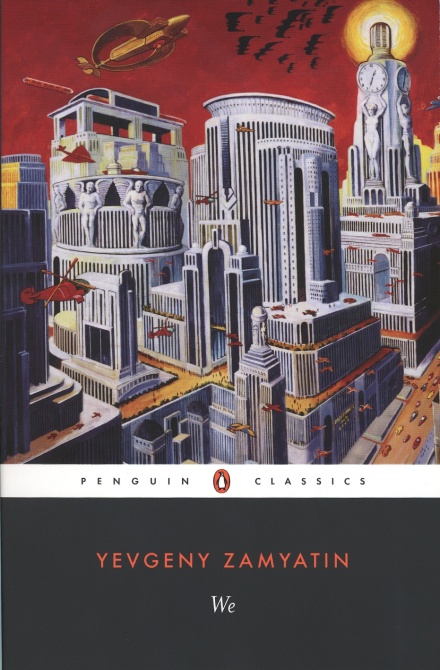
"We" by Yevgeny Zamyatin depicts a dystopian future where citizens, known only by numbers, live under the absolute control of the One State. Their lives are meticulously regimented, from work to sex, all dictated by mathematical precision and the pursuit of ultimate conformity and happiness through the eradication of individuality. The protagonist, D-503, an engineer involved in building a spacecraft to spread the State's ideology, begins to experience forbidden emotions and question the very foundations of his society after encountering a rebellious woman, I-330.
The parallels with "1984" are striking. Both novels feature totalitarian regimes that meticulously control every aspect of their citizens' lives, employing pervasive surveillance and psychological conditioning to maintain power. Both protagonists, Winston Smith and D-503, are members of the ruling apparatus who eventually rebel against the system, driven by a desire for individual thought and human connection. The themes of state-imposed 'truth,' the suppression of personal freedom, and the inherent conflict between individuality and collectivism are central to both narratives.
This novel offers profound insights into the dangers of unchecked state power and the enduring human need for freedom and self-expression. It serves as a foundational text in dystopian literature, providing a chillingly prescient warning against ideological extremism and the dehumanizing potential of technology when wielded by oppressive forces. It provides a unique lens through which to explore the psychological impact of totalitarianism and the quiet courage required to resist.
We
"We" by Yevgeny Zamyatin depicts a dystopian future where citizens, known only by numbers, live under the absolute control of the One State. Their lives are meticulously regimented, from work to sex, all dictated by mathematical precision and the pursuit of ultimate conformity and happiness through the eradication of individuality. The protagonist, D-503, an engineer involved in building a spacecraft to spread the State's ideology, begins to experience forbidden emotions and question the very foundations of his society after encountering a rebellious woman, I-330.
The parallels with "1984" are striking. Both novels feature totalitarian regimes that meticulously control every aspect of their citizens' lives, employing pervasive surveillance and psychological conditioning to maintain power. Both protagonists, Winston Smith and D-503, are members of the ruling apparatus who eventually rebel against the system, driven by a desire for individual thought and human connection. The themes of state-imposed 'truth,' the suppression of personal freedom, and the inherent conflict between individuality and collectivism are central to both narratives.
This novel offers profound insights into the dangers of unchecked state power and the enduring human need for freedom and self-expression. It serves as a foundational text in dystopian literature, providing a chillingly prescient warning against ideological extremism and the dehumanizing potential of technology when wielded by oppressive forces. It provides a unique lens through which to explore the psychological impact of totalitarianism and the quiet courage required to resist.
Swastika Night
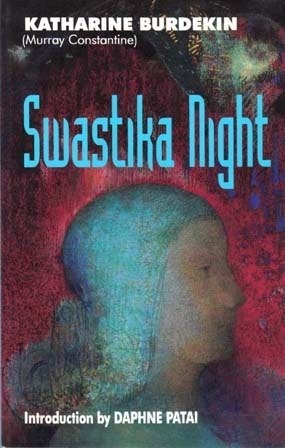
"Swastika Night" depicts a dystopian future, seven centuries after Hitler's rise, where a perpetually warring Nazi empire rules Europe. Women are systematically degraded to mere breeders, stripped of their humanity and rights, while men worship Hitler as an infallible God. The story follows a British tourist witnessing this horrifying reality, uncovering hidden histories, and grappling with the grotesque manipulation of truth and gender.
The parallels with "1984" are striking, particularly in their shared exploration of totalitarian control and psychological manipulation. Both novels feature all-encompassing, oppressive regimes that rewrite history, suppress individual thought, and enforce rigid social hierarchies. "Swastika Night" mirrors "1984's" theme of truth distortion and the dehumanizing effects of authoritarianism, but with a unique focus on gender-based oppression and the deliberate historical erasure of women's contributions.
This book offers a potent and timely examination of how power structures can exploit belief systems and gender roles to maintain absolute control. It serves as a profound warning about the dangers of historical revisionism and misogyny, prompting reflection on the fragility of truth and personal liberty. Its unsettling depiction of a world where women are systematically reduced to breeding machines resonates deeply, making it a valuable and thought-provoking read that enhances understanding of enduring societal vulnerabilities.
Swastika Night
"Swastika Night" depicts a dystopian future, seven centuries after Hitler's rise, where a perpetually warring Nazi empire rules Europe. Women are systematically degraded to mere breeders, stripped of their humanity and rights, while men worship Hitler as an infallible God. The story follows a British tourist witnessing this horrifying reality, uncovering hidden histories, and grappling with the grotesque manipulation of truth and gender.
The parallels with "1984" are striking, particularly in their shared exploration of totalitarian control and psychological manipulation. Both novels feature all-encompassing, oppressive regimes that rewrite history, suppress individual thought, and enforce rigid social hierarchies. "Swastika Night" mirrors "1984's" theme of truth distortion and the dehumanizing effects of authoritarianism, but with a unique focus on gender-based oppression and the deliberate historical erasure of women's contributions.
This book offers a potent and timely examination of how power structures can exploit belief systems and gender roles to maintain absolute control. It serves as a profound warning about the dangers of historical revisionism and misogyny, prompting reflection on the fragility of truth and personal liberty. Its unsettling depiction of a world where women are systematically reduced to breeding machines resonates deeply, making it a valuable and thought-provoking read that enhances understanding of enduring societal vulnerabilities.
Coming up for Air

"Coming Up for Air" follows George Bowling, a middle-aged insurance salesman, as he muses on his youth and the changes the world has undergone since WWI. Disillusioned with his mundane life and impending war, he revisits his childhood hometown, only to find it irrevocably altered, reflecting themes of lost innocence and a vanished past.
The novels share a core thematic concern for society's trajectory and the erosion of individual freedom. While not a dystopian allegory, "Coming Up for Air" anticipates the pervasive anxieties about impending totalitarianism and the loss of personal agency that define "1984." Both works explore how external forces, whether societal change or explicit repression, shape and often diminish the human spirit.
This book offers a poignant exploration of nostalgia, disillusionment, and the inexorable march of progress, even when that progress feels destructive. Its insights into personal memory, the nature of change, and the subtle ways society influences individual experience make it a valuable read for anyone interested in the human condition and the precursors to Orwell's more overt critiques of power.
Coming up for Air
"Coming Up for Air" follows George Bowling, a middle-aged insurance salesman, as he muses on his youth and the changes the world has undergone since WWI. Disillusioned with his mundane life and impending war, he revisits his childhood hometown, only to find it irrevocably altered, reflecting themes of lost innocence and a vanished past.
The novels share a core thematic concern for society's trajectory and the erosion of individual freedom. While not a dystopian allegory, "Coming Up for Air" anticipates the pervasive anxieties about impending totalitarianism and the loss of personal agency that define "1984." Both works explore how external forces, whether societal change or explicit repression, shape and often diminish the human spirit.
This book offers a poignant exploration of nostalgia, disillusionment, and the inexorable march of progress, even when that progress feels destructive. Its insights into personal memory, the nature of change, and the subtle ways society influences individual experience make it a valuable read for anyone interested in the human condition and the precursors to Orwell's more overt critiques of power.
Brave New World
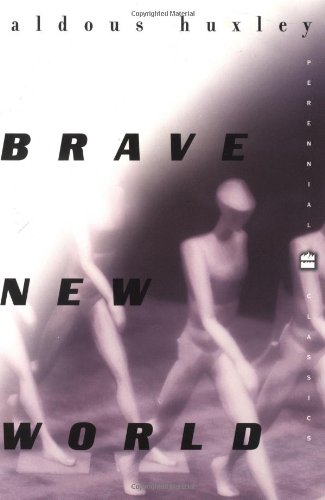
"Brave New World" explores a futuristic society where the population is engineered and conditioned from birth to fulfill predetermined roles, maintaining a superficial sense of happiness and stability through constant consumption, distractions, and a pervasive pleasure drug called Soma. Individuality and genuine emotion are suppressed in favor of collective conformity and technological control.
Both novels depict dystopian futures where powerful, centralized states control their citizens. While "1984" achieves this through fear, surveillance, and repression, "Brave New World" opts for control through pleasure, genetic manipulation, and psychological conditioning, highlighting two contrasting, yet equally chilling, methods of subjugation. Both effectively critique the erosion of personal freedom and the dangers of unchecked power.
This novel offers a profound meditation on the trade-offs between happiness and freedom, exploring how technological advancements and social engineering can subtly strip humanity of its essence. It serves as a compelling thought experiment, prompting reflection on our own societal values, the nature of contentment, and the potential pitfalls of a world prioritizing comfort and control over authentic human experience.
Brave New World
"Brave New World" explores a futuristic society where the population is engineered and conditioned from birth to fulfill predetermined roles, maintaining a superficial sense of happiness and stability through constant consumption, distractions, and a pervasive pleasure drug called Soma. Individuality and genuine emotion are suppressed in favor of collective conformity and technological control.
Both novels depict dystopian futures where powerful, centralized states control their citizens. While "1984" achieves this through fear, surveillance, and repression, "Brave New World" opts for control through pleasure, genetic manipulation, and psychological conditioning, highlighting two contrasting, yet equally chilling, methods of subjugation. Both effectively critique the erosion of personal freedom and the dangers of unchecked power.
This novel offers a profound meditation on the trade-offs between happiness and freedom, exploring how technological advancements and social engineering can subtly strip humanity of its essence. It serves as a compelling thought experiment, prompting reflection on our own societal values, the nature of contentment, and the potential pitfalls of a world prioritizing comfort and control over authentic human experience.
A Clockwork Orange

"A Clockwork Orange" chronicles the nihilistic escapades of Alex, a charismatic yet violent youth, and his "droogs" in a dystopian near-future. The narrative explores his eventual capture and subjection to "Ludovico's Technique," a controversial aversion therapy designed to eradicate his violent impulses. The brilliance lies in the ethical quandary it presents: is it truly moral to strip an individual of their capacity for choice, even if that choice is to inflict harm?
Its kinship with "1984" lies in their shared exploration of totalitarian control and the systematic subjugation of the individual. Both novels depict societies where governmental power aims to fundamentally alter human nature for the sake of order, questioning the very definition of freedom and the inherent cost of forced conformity. Winston Smith's re-education at the Ministry of Love mirrors Alex's conditioning, albeit with different methods and outcomes.
The enduring appeal and value of "A Clockwork Orange" stem from its provocative philosophical probing. It compels contemplation on free will, morality, and the societal implications of state-sanctioned psychological manipulation. The novel's dark mirror reflects uncomfortable truths about human nature and the allure of both chaos and absolute control, offering profound insights into the complex relationship between individual liberty and societal stability.
A Clockwork Orange
"A Clockwork Orange" chronicles the nihilistic escapades of Alex, a charismatic yet violent youth, and his "droogs" in a dystopian near-future. The narrative explores his eventual capture and subjection to "Ludovico's Technique," a controversial aversion therapy designed to eradicate his violent impulses. The brilliance lies in the ethical quandary it presents: is it truly moral to strip an individual of their capacity for choice, even if that choice is to inflict harm?
Its kinship with "1984" lies in their shared exploration of totalitarian control and the systematic subjugation of the individual. Both novels depict societies where governmental power aims to fundamentally alter human nature for the sake of order, questioning the very definition of freedom and the inherent cost of forced conformity. Winston Smith's re-education at the Ministry of Love mirrors Alex's conditioning, albeit with different methods and outcomes.
The enduring appeal and value of "A Clockwork Orange" stem from its provocative philosophical probing. It compels contemplation on free will, morality, and the societal implications of state-sanctioned psychological manipulation. The novel's dark mirror reflects uncomfortable truths about human nature and the allure of both chaos and absolute control, offering profound insights into the complex relationship between individual liberty and societal stability.
Burmese Days

"Burmese Days" is a novel set in 1920s colonial Burma, following John Flory, an English timber merchant disillusioned with the British Empire's imperialistic attitudes and the hypocrisy of the local European community. He grapples with racial prejudice, cultural misunderstanding, and his own moral compromises, all while navigating a complex social landscape and a doomed romantic pursuit.
The similarity to "1984" lies in their shared exploration of oppressive systems and individual struggle against them. While "1984" depicts a totalitarian future, "Burmese Days" portrays a different form of systematic oppression: the dehumanizing effects of colonialism, institutionalized racism, and the stifling conformity demanded by a rigid social structure. Both novels feature protagonists who are acutely aware of the injustice around them and find themselves isolated in their dissent, ultimately succumbing to the overwhelming forces of their respective worlds.
Curiosity about human nature and societal pressures will draw sophisticated readers to this book. It offers a powerful, unflinching critique of imperialism and its psychological toll, revealing how power corrupts and how individuals internalize or resist oppressive ideologies. The novel's nuanced portrayal of moral ambiguity and its timeless examination of belonging and alienation make it a valuable literary experience, providing profound insights into the complexities of human interaction within a restrictive environment.
Burmese Days
"Burmese Days" is a novel set in 1920s colonial Burma, following John Flory, an English timber merchant disillusioned with the British Empire's imperialistic attitudes and the hypocrisy of the local European community. He grapples with racial prejudice, cultural misunderstanding, and his own moral compromises, all while navigating a complex social landscape and a doomed romantic pursuit.
The similarity to "1984" lies in their shared exploration of oppressive systems and individual struggle against them. While "1984" depicts a totalitarian future, "Burmese Days" portrays a different form of systematic oppression: the dehumanizing effects of colonialism, institutionalized racism, and the stifling conformity demanded by a rigid social structure. Both novels feature protagonists who are acutely aware of the injustice around them and find themselves isolated in their dissent, ultimately succumbing to the overwhelming forces of their respective worlds.
Curiosity about human nature and societal pressures will draw sophisticated readers to this book. It offers a powerful, unflinching critique of imperialism and its psychological toll, revealing how power corrupts and how individuals internalize or resist oppressive ideologies. The novel's nuanced portrayal of moral ambiguity and its timeless examination of belonging and alienation make it a valuable literary experience, providing profound insights into the complexities of human interaction within a restrictive environment.
Darkness at Noon

Arthur Koestler's "Darkness at Noon" chronicles the interrogation and trial of an aging Bolshevik revolutionary, Rubashov, who, despite his fundamental loyalty to the Party, is coerced into confessing to fabricated crimes against the state. The novel delves into the psychological and philosophical torture inflicted upon him, forcing him to intellectually dismantle his own moral framework and publicly denounce himself for the perceived greater good of the totalitarian system he once helped build.
The similarity to "1984" lies in their shared exploration of totalitarian power's absolute control over individual thought and reality. Both novels depict regimes that demand not just obedience but an internal, ideological capitulation. While Orwell's Oceania uses physical and psychological brutality to achieve "doublethink," Koestler's Soviet-esque state employs intricate logical fallacies and historical revisionism to break its subjects, compelling them to betray their own conscience. Both Rubashov and Winston Smith struggle against systems designed to eradicate personal autonomy and historical truth.
This book offers a profound psychological and philosophical examination of how individuals can be broken by ideological machinery. It is valuable for anyone seeking to understand the mechanisms of authoritarian control and the deeply unsettling questions it raises about truth, loyalty, and human resilience. Its intellectual rigor provides a chilling counterpart to "1984," demonstrating another facet of totalitarianism's power to reshape and destroy the human spirit.
Darkness at Noon
Arthur Koestler's "Darkness at Noon" chronicles the interrogation and trial of an aging Bolshevik revolutionary, Rubashov, who, despite his fundamental loyalty to the Party, is coerced into confessing to fabricated crimes against the state. The novel delves into the psychological and philosophical torture inflicted upon him, forcing him to intellectually dismantle his own moral framework and publicly denounce himself for the perceived greater good of the totalitarian system he once helped build.
The similarity to "1984" lies in their shared exploration of totalitarian power's absolute control over individual thought and reality. Both novels depict regimes that demand not just obedience but an internal, ideological capitulation. While Orwell's Oceania uses physical and psychological brutality to achieve "doublethink," Koestler's Soviet-esque state employs intricate logical fallacies and historical revisionism to break its subjects, compelling them to betray their own conscience. Both Rubashov and Winston Smith struggle against systems designed to eradicate personal autonomy and historical truth.
This book offers a profound psychological and philosophical examination of how individuals can be broken by ideological machinery. It is valuable for anyone seeking to understand the mechanisms of authoritarian control and the deeply unsettling questions it raises about truth, loyalty, and human resilience. Its intellectual rigor provides a chilling counterpart to "1984," demonstrating another facet of totalitarianism's power to reshape and destroy the human spirit.
The Wanting Seed

Anthony Burgess's "The Wanting Seed" satirically portrays a future England grappling with government-mandated infertility and state control over reproduction to combat overpopulation. The narrative follows Tristram and Beatrice Foxe as they navigate a society that oscillates between encouraging homosexuality and celebrating procreation, leading to a breakdown of social order and a descent into cannibalism. It’s a chilling exploration of societal collapse brought on by extreme environmental and social engineering policies.
Like "1984," "The Wanting Seed" is a dystopian novel that critiques totalitarian control and its impact on individual liberty and human nature. Both books depict societies where the state manipulates truth, history, and even biological imperatives for its perceived greater good. While "1984" focuses on political oppression and thought control, "The Wanting Seed" delves into population control and the grotesque consequences of governmental overreach into the most intimate aspects of human life. The shared theme of a dehumanizing state apparatus makes them thematic cousins.
This book will appeal to those who appreciate incisive social commentary and thought-provoking explorations of humanity's darker potential. Its satirical edge and stark depiction of societal breakdown offer a valuable, if disturbing, lens through which to examine contemporary anxieties about climate, resources, and governmental power. It’s a profound reflection on the resilience and vulnerabilities inherent in human civilization.
The Wanting Seed
Anthony Burgess's "The Wanting Seed" satirically portrays a future England grappling with government-mandated infertility and state control over reproduction to combat overpopulation. The narrative follows Tristram and Beatrice Foxe as they navigate a society that oscillates between encouraging homosexuality and celebrating procreation, leading to a breakdown of social order and a descent into cannibalism. It’s a chilling exploration of societal collapse brought on by extreme environmental and social engineering policies.
Like "1984," "The Wanting Seed" is a dystopian novel that critiques totalitarian control and its impact on individual liberty and human nature. Both books depict societies where the state manipulates truth, history, and even biological imperatives for its perceived greater good. While "1984" focuses on political oppression and thought control, "The Wanting Seed" delves into population control and the grotesque consequences of governmental overreach into the most intimate aspects of human life. The shared theme of a dehumanizing state apparatus makes them thematic cousins.
This book will appeal to those who appreciate incisive social commentary and thought-provoking explorations of humanity's darker potential. Its satirical edge and stark depiction of societal breakdown offer a valuable, if disturbing, lens through which to examine contemporary anxieties about climate, resources, and governmental power. It’s a profound reflection on the resilience and vulnerabilities inherent in human civilization.
More Books to Explore
Discover more titles that expand on these ideas and themes.
Animal Farm
George Orwell Omnibus: The Complete Novels: Animal Farm, Burmese Days, A Clergyman's Daughter, Coming up for Air, Keep the Aspidistra Flying, and Nineteen Eighty-Four
We
Swastika Night
Coming up for Air
Brave New World