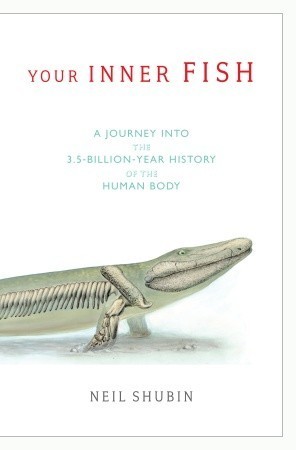
Your Inner Fish: a Journey into the 3.5-Billion-Year History of the Human Body
Book Description
What if the secrets of the human body lie buried deep in the distant past? In "Your Inner Fish," Neil Shubin embarks on an exhilarating expedition through 3.5 billion years of evolutionary history, revealing how our anatomy connects us to ancient creatures. From the depths of primordial waters to the intricate design of our bones, each chapter uncovers the astonishing legacy of our lineage. With vivid storytelling, Shubin invites you to explore the unbreakable bond between our present selves and the distant ancestors that shaped us. Will understanding our ancient origins redefine what it means to be human?
Quick Book Summary
In "Your Inner Fish," paleontologist Neil Shubin traces the profound evolutionary connections that link the human body to ancient organisms. By merging fossil discoveries with modern genetics and embryology, Shubin reveals how core aspects of human anatomy are adaptations inherited from distant ancestors. Beginning with the discovery of Tiktaalik, a fossil species bridging fish and land animals, the book explores transformations over hundreds of millions of years that gave rise to essential features like bones, limbs, and senses. Shubin’s accessible narrative illustrates how traits such as our hands, ears, and even hiccups are vestiges of evolutionary history. The book encourages readers to perceive their bodies as living records of life’s stunning journey, offering a fresh perspective on what it means to be human through the lens of deep time and interconnectedness with all life.



Summary of Key Ideas
Table of Contents
Discovering Origin Stories in Our Anatomy
Neil Shubin opens with his groundbreaking discovery of Tiktaalik, an ancient fish with limb-like fins, illuminating a pivotal transition from aquatic to terrestrial life. This fossil helps highlight the direct evolutionary lineage connecting fish to modern mammals, including humans. Shubin demonstrates how paleontology provides crucial clues to our physical structure, showing that even the arrangement of our limbs mirrors that of ancient species. These parallels suggest that our bodies are not isolated oddities but rather links in an ongoing evolutionary saga.
Evolutionary Evidence Hidden in Fossils and Genes
Exploring genetic and embryological evidence, the book delves into the deep similarities between human development and that of simpler organisms. The genes that direct our formation are often ancient and shared with seemingly distant creatures. For example, the genetic toolkit governing limb development in humans also orchestrates fin formation in fish. Shubin discusses how birth defects can sometimes appear as echoes of features from our evolutionary past, further reinforcing our deep biological connections to older organisms.
The Journey from Water to Land and Its Legacy
Comparative anatomy becomes a powerful tool as Shubin examines familiar body parts, tracing how features such as hands, teeth, and the inner ear evolved from earlier forms. He explains, for example, that the architecture of our jaw and hearing apparatus reflects modifications of fish gill bones and jaws. This section not only underscores the commonalities we share with other animals, but also helps readers understand why certain structures in the human body are prone to dysfunction—they weren’t originally designed for their current tasks.
Comparative Anatomy Illuminates Human Traits
The journey from water to land is a recurring theme, illustrating challenges like gravity, breathing air, and conserving water. Our lungs, limbs, and even mechanisms like hiccups are legacy adaptations from aquatic ancestors. Shubin underscores how these ancient solutions, while ingenious, remain implicated in present-day medical vulnerabilities, such as back pain or hernias, because our basic structure still carries marks of previous environmental demands.
How Ancient Adaptations Shape Modern Health
By connecting evolutionary history to human health and identity, Shubin expands the reader’s view of what it means to be human. He concludes that understanding our evolutionary lineage equips us to better grasp medical issues, appreciate our innate adaptability, and recognize our profound kinship with all living things. "Your Inner Fish" ultimately reframes the human experience as one chapter in nature’s long and interconnected narrative, inspiring a sense of wonder and shared biological heritage.
Download This Summary
Get a free PDF of this summary instantly — no email required.