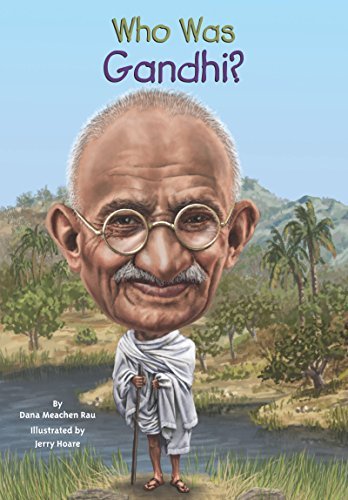
Who Was Gandhi?
Book Description
His name is synonymous with peace, yet his life was a relentless battle against injustice. "Who Was Gandhi?" unveils the gripping story of a man who inspired millions with his daring vision of nonviolent resistance. From the dusty streets of India to the grand stage of global change, experience the transformative power of one voice challenging an empire. Secrets of his philosophy and unwavering spirit unfold, showcasing a journey marked by triumph and sacrifice. As the fight for freedom heats up, will his dream of unity prevail? Step into the passion of a legacy that still resonates today—are you ready to discover the truth behind the icon?
Quick Book Summary
"Who Was Gandhi?" by Dana Meachen Rau introduces young readers to the extraordinary life of Mohandas Karamchand Gandhi, the leader whose philosophy of nonviolent resistance transformed India’s struggle for independence. The book traces Gandhi's life from his early years in India, his experiences of racism in South Africa, and his relentless campaign to free India from British rule. Through engaging storytelling, Rau highlights Gandhi’s powerful principles, personal sacrifices, and the impact of his actions not only in India but around the world. The biography sheds light on how Gandhi’s courage, unique strategies, and dream of unity left a lasting legacy that continues to inspire movements for justice and peace globally.




Summary of Key Ideas
Table of Contents
Early Influences and Formative Years
Mohandas Gandhi grew up in India as the son of a local official, experiencing both privilege and the strict traditions of his culture. His formative years were influenced by his family’s emphasis on honesty, compassion, and community service. Sent to London for his legal studies, Gandhi confronted new cultures and ideas, which shaped his values. These early experiences laid the foundation for his commitment to truth and self-discipline, elements that became central to his future philosophy.
Discovery and Practice of Nonviolent Resistance
After completing his studies, Gandhi traveled to South Africa to work, where he faced discrimination for the first time. Shocked by the treatment of Indians under British colonial rule, he began organizing the local community, pioneering the practice of satyagraha, or nonviolent resistance. This powerful approach enabled oppressed people to demand justice without resorting to violence. Gandhi’s powerful example made him a respected leader among Indians in South Africa and caught the attention of activists worldwide.
Challenges and Sacrifices in the Fight for Freedom
Returning to India, Gandhi was soon drawn into the struggle against British colonialism. He led efforts urging millions to boycott British goods, launch peaceful protests, and undertake marches like the famous Salt March. Despite frequent arrests and the hardship of long imprisonments, Gandhi’s unwavering commitment to nonviolent action mobilized people across religions and backgrounds. He faced numerous personal sacrifices, including long fasts and even threats to his own life, but remained resolute in his pursuit of independence and unity.
Legacy of Peace and Global Impact
Gandhi’s methods and ideals ignited change beyond India’s borders. His belief in peaceful protest inspired civil rights leaders such as Martin Luther King Jr. and Nelson Mandela. Gandhi’s vision of an inclusive, harmonious society challenged social divisions and promoted human dignity. Even after his assassination in 1948, the legacy of his words and deeds continues to shape global movements for justice, peace, and reconciliation.
Through clear storytelling, Rau reveals that Gandhi was not only a political figure but also a symbol of hope and transformation. The biography illustrates how one person’s courage, compassion, and steadfast commitment to nonviolence can alter the course of history. Young readers learn that Gandhi’s enduring dream of respect, equality, and unity remains relevant and that his example demonstrates the power of peaceful change, regardless of the challenges faced.
Download This Summary
Get a free PDF of this summary instantly — no email required.