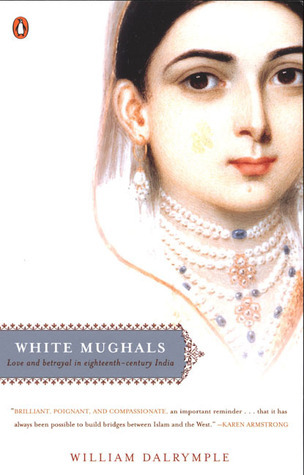
White Mughals: Love and Betrayal in Eighteenth-Century India
Book Description
Love blossoms in the chaos of a crumbling empire, where danger lurks behind every romance and betrayal waits in the shadows. Set against the opulent backdrop of 18th-century India, ‘White Mughals’ weaves a tale of passion between a British officer and an Indian noblewoman, challenging the fierce tides of culture and loyalty. As worlds collide, political intrigue intensifies and hearts are torn apart by ambition and betrayal. Can love survive when empires clash? Journey through this poignant narrative that asks: what sacrifices will one make for a love that defies all boundaries?
Quick Book Summary
"White Mughals" by William Dalrymple is a meticulously researched exploration of love, cultural fusion, and political intrigue in late-18th-century India. At its heart is the real-life romance between James Achilles Kirkpatrick, a British Resident at the court of Hyderabad, and Khair-un-Nissa, a Muslim noblewoman. Their union, both passionate and controversial, becomes a lens through which Dalrymple examines the nuances of colonial relationships, the porous boundaries between cultures, and the impact of imperial power dynamics. Against a backdrop of a declining Mughal empire and the expanding British East India Company, the book reveals how personal stories unfolded amidst broader historical forces, ultimately exposing the fragility of love when empires clash and societies harden their boundaries.


Summary of Key Ideas
Table of Contents
Cross-Cultural Romance in Colonial India
Dalrymple opens with the captivating romance between James Kirkpatrick, the British Resident of Hyderabad, and Khair-un-Nissa, a teenage Muslim noblewoman. Their union was extraordinary: Kirkpatrick converted to Islam and married her in a secret ceremony, embodying the nuanced and intimate exchanges that occurred between British and Indian elites during this period. The author's nuanced storytelling captures the beauty, challenges, and hopes surrounding their relationship, making their personal story central to the larger historical narrative.
Fluid Identities and Cultural Assimilation
The book illustrates how, far from the rigid lines drawn in modern times, the late 18th and early 19th centuries in India saw considerable cultural fusion. Many British officers adopted Indian customs, dressed in local attire, participated in courtly rituals, and, in some cases, like Kirkpatrick, embraced new religions. Dalrymple vividly describes how this era allowed for a unique hybridity, producing 'White Mughals'—Europeans who assimilated to Indian society in ways that would soon become unthinkable.
The Politics of Empire and Power
Set against this backdrop of cultural exchange is the inexorable rise of the British East India Company. Dalrymple details how the Company’s growing political and military dominance brought increasing scrutiny and control over its officers' personal lives. As imperial strategies shifted towards rigid segregation and racial hierarchies, the very possibility of cross-cultural unions like Kirkpatrick and Khair-un-Nissa’s began to fade, marking a turning point in British colonial attitudes.
Religious and Social Tensions
Religious and social tensions are intricately woven into the narrative. Dalrymple examines the opposition the lovers faced from both British and Indian communities. Conversions, mixed marriages, and hybrid customs were increasingly condemned by Company officials and Indian traditionalists alike. This growing intolerance not only doomed many personal relationships but also signaled a fundamental shift in colonial society, away from negotiation and fluidity towards exclusion and rigidity.
Legacy and Changing Attitudes
In the closing sections, Dalrymple reflects on the legacy of Kirkpatrick and Khair-un-Nissa’s tragic love story. He situates their experience within the broader context of colonial history, showing how the brief era of cultural openness was eclipsed by Victorian attitudes of racial and cultural superiority. The book invites readers to reconsider preconceived notions about empire, emphasizing how quickly societies can harden their boundaries and how much is lost when openness gives way to division.
Download This Summary
Get a free PDF of this summary instantly — no email required.