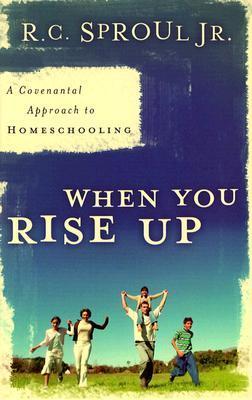
When You Rise Up: A Covenant Approach to Homeschooling
Book Description
Imagine a world where education transcends the ordinary and becomes a faithful journey infused with purpose. In "When You Rise Up," R.C. Sproul Jr. unveils a transformative vision for homeschooling, intricately woven with covenant theology and deeper spiritual truths. This isn’t just about books and lessons; it’s about building a legacy steeped in faith and cultivating minds and hearts for God's kingdom. Each page ignites a passion for nurturing the next generation in the shadow of divine promise. Are you ready to embark on an educational adventure that could forever change the course of your family’s legacy?
Quick Book Summary
"When You Rise Up" by R.C. Sproul Jr. offers a theologically grounded approach to homeschooling, emphasizing that educating one’s children is a central and sacred parental responsibility. Rather than focusing on academic achievements alone, Sproul urges parents to see education as a covenantal call—a spiritual act of obedience and discipleship. He challenges the prevailing cultural notions of education, arguing that Christian parents must shape their children’s hearts and minds deeply rooted in God's Word. The book provides a compelling case for why Christian families should consider homeschooling, the biblical mandate behind it, and how such a commitment can foster generational faithfulness. Through practical wisdom and scriptural insight, Sproul reframes family education as a God-given opportunity to raise children who will know, love, and serve God throughout their lives.




Summary of Key Ideas
Table of Contents
Biblical Mandate for Parental Education
Sproul begins by asserting that the education of children is fundamentally the responsibility of parents, rooted in the clear teachings of Scripture. He references Deuteronomy 6 and other biblical passages that place the burden of raising children squarely on parents, not the state or church institutions. For Sproul, true education is inseparable from discipleship, and he calls on parents to take this charge seriously, emphasizing that daily instruction should occur within the home, integrated into the family’s natural rhythms.
Covenant Theology and Generational Faithfulness
Central to Sproul’s argument is the concept of covenant theology—the idea that God enters into binding, generational relationships with His people. Homeschooling, therefore, becomes more than an educational decision; it is a covenantal act that aligns with God’s unfolding promises. Sproul writes that by teaching their children at home, Christian parents can intentionally pass down faith, values, and worldview, thereby strengthening each generation’s connection to God’s purposes. This transmission of faith becomes the foundation for enduring obedience and kingdom work across future generations.
Critique of Secular Schooling
Sproul critically examines secular models of education, arguing that public schooling is inherently flawed from a biblical perspective. He contends that the state’s educational agenda is often antagonistic to Christian values, subtly shaping students’ worldviews in ways that oppose biblical truth. By exposing these influences, Sproul urges parents to reject passive participation in secular systems and instead actively pursue educational models that nurture and affirm the Christian faith in every subject and lesson.
Practical Aspects of Homeschooling
Moving beyond theology, Sproul offers practical guidance for families considering or practicing homeschooling. He addresses common challenges such as curriculum choices, discipline, maintaining order, and balancing academic rigor with spiritual growth. Throughout, Sproul encourages a flexible, relationship-based approach that leverages the unique strengths of each family and child. He reminds parents that the process of homeschooling is as important as the content, and that love, consistency, and prayer are indispensable components of effective education.
Building a Spiritual Legacy
Ultimately, Sproul sees homeschooling as a sacred avenue for building a spiritual legacy. By dedicating themselves to the daily, intentional discipleship of their children, parents can leave a lasting impact that extends beyond academics. Sproul calls his readers to embrace the high calling of raising godly offspring who are equipped to serve both their present communities and the broader mission of God’s kingdom. In doing so, families fulfill their covenantal responsibilities and contribute to the renewal of faith and culture.
Download This Summary
Get a free PDF of this summary instantly — no email required.