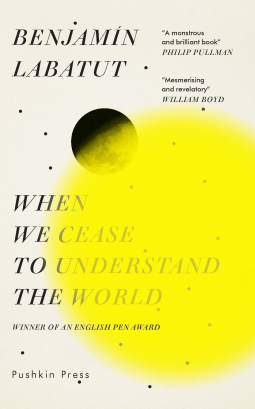
When We Cease to Understand the World
Book Description
What happens when the boundaries of science blur with the surreal? In "When We Cease to Understand the World," Benjamín Labatut plunges into the minds of iconic thinkers whose groundbreaking discoveries dance dangerously close to madness. Each chapter unfolds like a gripping saga, intertwining their triumphs and tragedies with the haunting question of knowledge's cost. Mysterious and thought-provoking, the narrative weaves history and imagination, challenging perceptions of reality and morality. As the veil lifts on the shadows of genius, one must ask: How far are we willing to go in our pursuit of truth, and at what price?
Quick Book Summary
"When We Cease to Understand the World" by Benjamín Labatut blurs the boundaries between fact and fiction to explore the lives and minds of some of the twentieth century's most brilliant scientists and mathematicians. Through a series of interconnected narratives, Labatut examines the profound discoveries that reshaped human understanding—and the personal, sometimes destructive, consequences for their creators. The book dives into the paradoxes and obsessions that accompany the pursuit of knowledge, illustrating how curiosity and genius can edge into madness. By entwining historical reality with speculative storytelling, Labatut not only reflects on the moral ambiguities of scientific breakthroughs but also delves into the mystery, wonder, and terror that arise when humanity approaches the limits of comprehension.




Summary of Key Ideas
Table of Contents
The Thin Line Between Genius and Madness
Labatut opens his book by tracing scientific discovery's transformative power, often focused on pivotal figures like Fritz Haber, whose work on artificial nitrogen helped feed the world but also unleashed weapons of mass destruction. This duality showcases science's capacity to both save and endanger humanity, challenging the very notion of progress. The narrative interlaces precise historical details with lyrical, unsettling prose, immersing readers in the exhilarating yet perilous landscape of intellectual breakthroughs.
Moral Ambiguities of Scientific Progress
The book delves deeply into the personal dimensions of genius, particularly how minds like Erwin Schrödinger, Werner Heisenberg, and Alexander Grothendieck grappled with the overwhelming implications of their insights. Their mathematical and physical discoveries strained the boundaries of imagination, often leading them to experiences of existential crisis and emotional turmoil. Labatut presents these stories as both cautionary tales and glimpses into the creative agony that can accompany groundbreaking knowledge.
The Interplay of Reality and Imagination
Labatut masterfully intertwines reality and invention, blending fact and fiction to create a narrative that is both historically grounded and eerily surreal. This stylistic choice blurs the lines between what actually happened and what might have occurred in the recesses of these scientists' minds, amplifying the sense of the uncanny. Through this method, Labatut reflects on how the quest for deeper understanding can destabilize the very reality it seeks to explain.
The Personal Cost of Discovery
The book continually raises ethical quandaries associated with scientific ambition. Each protagonist wrestles with the consequences of their discoveries—whether in weaponry, mathematics, or quantum uncertainty. Labatut's portrayal forces readers to consider the responsibility that comes with knowledge and the unpredictable impacts that theoretical pursuits can have on society and the individual psyche alike.
Limits of Human Understanding
Ultimately, "When We Cease to Understand the World" contemplates the limitations of human comprehension. As the boundaries of science dissolve into paradox and ambiguity, the book asks what price we pay for peering too deeply into the universe’s secrets. By weaving together history and imaginative speculation, Labatut leaves the reader with lingering questions about the value and danger inherent in the relentless pursuit of truth, suggesting that some mysteries, once uncovered, may threaten the stability of the world—and the mind.
Download This Summary
Get a free PDF of this summary instantly — no email required.