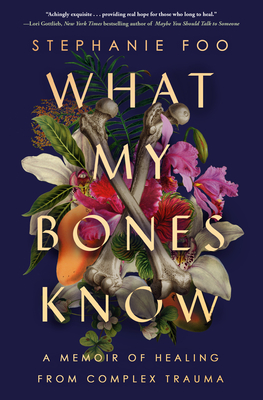
What My Bones Know: A Memoir of Healing from Complex Trauma
Book Description
What if the body held secrets that words could never express? In *What My Bones Know*, Stephanie Foo embarks on a harrowing journey through the labyrinth of her own mind, unearthing the profound impacts of complex trauma. With gripping authenticity, she confronts the shadows of her past, navigating a world shaped by pain, resilience, and the search for healing. Each revelation is a step toward reclaiming her life, as she battles to understand how trauma intertwines with identity and survival. Can the heart truly mend when the scars run so deep?
Quick Book Summary
"What My Bones Know" by Stephanie Foo is a deeply personal memoir that explores the lingering effects of complex PTSD rooted in childhood abuse and neglect. Foo, a journalist, delves into her painful past, examining how trauma has permeated every facet of her identity, relationships, and sense of self. Determined to break free from cycles of pain and gain agency over her life, Foo embarks on a journey to understand her diagnosis, seeking out therapy, research, and community. Honest, vulnerable, and courageous, Foo’s narrative sheds light on the challenges of living with invisible wounds while offering hope and testament to the transformative power of healing. Her story is a testament to resilience and a call for compassion toward those reclaiming their lives from trauma’s grasp.




Summary of Key Ideas
Table of Contents
Understanding Complex PTSD and its Roots
Stephanie Foo begins by recounting her childhood in Malaysia and the United States, marked by emotional and physical abuse from her parents. Foo’s experiences are not isolated incidents but a persistent environment of terror, leading to a deep mistrust of adults and authority. She describes how these traumas were formative, laying the groundwork for complex PTSD, also known as C-PTSD. Foo’s early attempts to cope involved suppressing memories and striving for perfection in her adult life, especially in her career as a journalist, yet the wounds remained simmering beneath the surface.
The Interplay between Trauma and Identity
Upon finally receiving a diagnosis of complex PTSD, Foo is both devastated and relieved. The diagnosis provides validation yet also introduces a daunting process of unlearning shame and confronting her history. She becomes determined to understand the science and psychology behind her pain. Through personal research, conversations with experts, and engagement with mental health literature, Foo unpacks the unique features of complex trauma—how it reshapes the brain, limits emotional regulation, and alters a person’s worldview in pervasive ways.
Pathways to Healing and Recovery
Foo’s healing process is multifaceted, characterized by trial, error, and ongoing discovery. She explores multiple therapeutic modalities, including EMDR and somatic therapy, and grapples with setbacks, such as feelings of failure or reliving trauma during the healing process. Importantly, she acknowledges that there are no easy solutions or linear progressions. Foo also profiles the practices of self-care and mindfulness, which help her begin to rewire her responses to stress and rebuild a fractured sense of safety within her own body.
The Importance of Community and Connection
Community emerges as a crucial component in Foo’s recovery. Isolating by instinct, she learns to rely on friends, partners, and support groups who offer acceptance and understanding. Foo also finds strength in cultural reconnection, seeking wisdom from her ancestral roots and embracing the complexities of her identity as an Asian American woman. Through vulnerability, Foo discovers that sharing her pain with others lessens its oppressive hold, transforming shame into a source of communal empathy and advocacy.
Redefining Resilience and Self-Compassion
The memoir concludes with a nuanced redefinition of resilience. Foo rejects the myth that healing means erasing scars or achieving perpetual happiness. Rather, she comes to value adaptability, compassion for herself, and the courage to persist in the face of adversity. Healing, Foo suggests, is an ongoing, imperfect journey guided by curiosity, courage, and the choice to fiercely love oneself despite the legacy of trauma. Her narrative resonates as a testament to persistence and hope for others similarly navigating the long road to recovery.
Download This Summary
Get a free PDF of this summary instantly — no email required.