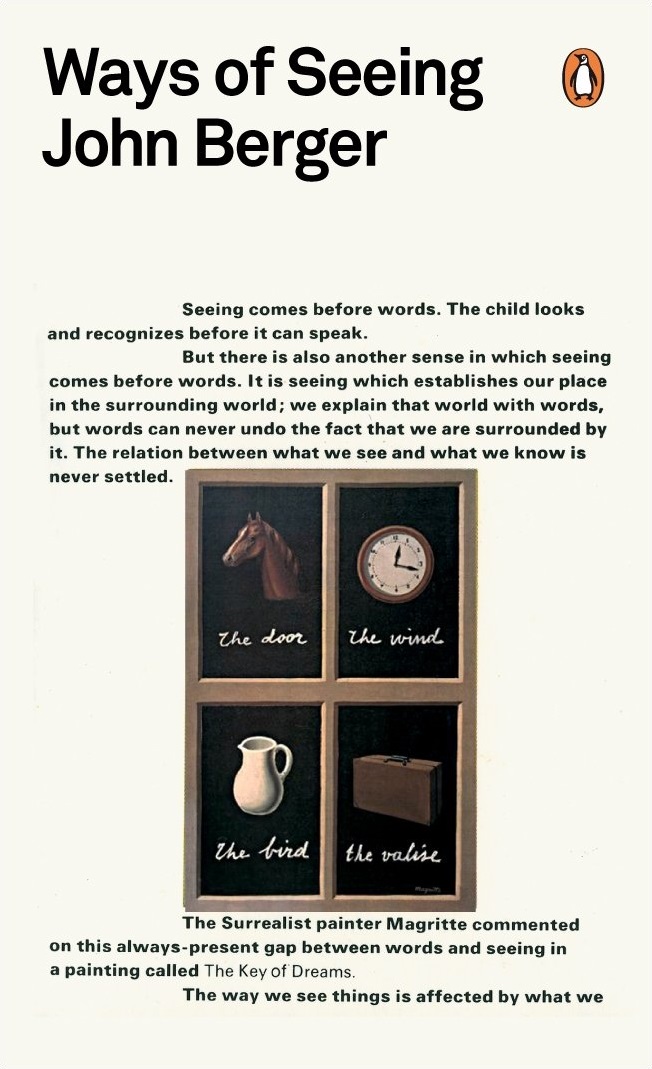
Ways of Seeing
Book Description
Imagine gazing at a painting, but instead of merely admiring it, you unravel the threads of society hidden within. John Berger’s 'Ways of Seeing' challenges the way art is perceived, revealing the power dynamics that shape our understanding of visuals. Through striking critiques and stunning imagery, he exposes how culture, context, and capitalism distort what we see—and what we think we know. This groundbreaking exploration beckons readers to question every image that crosses their path. What truths lie hidden in the art that surrounds us?
Quick Book Summary
"Ways of Seeing" by John Berger fundamentally redefines how we look at art and images, arguing that what we see is deeply influenced by our social and cultural conditioning. The book explores the relationship between the viewer and the viewed, unmasking the hidden ideologies embedded within visual art. Berger dissects how museums, advertising, and media shape our perceptions, exposing the gendered gaze and the role of reproduction in altering art’s original meaning. Through essays and images, he highlights how capitalism and historical context inform what is valued and how art is commercialized. Ultimately, Berger encourages readers not just to see, but to critically question the art and images that surround them, advocating for a more conscious and democratic way of experiencing visual culture.




Summary of Key Ideas
Table of Contents
The Impact of Context and Reproduction on Art
Berger begins by asserting that seeing is not a passive act, but shaped by learned habits and cultural context. He explains that perception is not purely visual—it is modified by knowledge, experience, and power structures. The book opens with the transformation of art through camera reproduction, claiming that technology liberates images from their original settings but also strips them of their unique context. This mechanical reproduction allows images to be used for any purpose, altering their intended meaning and our engagement with them.
The Male Gaze and Objectification
Berger devotes significant attention to the impact of context, particularly the way art is framed and presented in galleries, books, and advertisements. He argues that the meaning of a painting changes when it is removed from its original location and displayed elsewhere. Labels, captions, and placement influence what viewers notice and value. He warns that the commercialization and commodification of art under capitalism dilute its original power, often serving the interests of the elite rather than the public.
The Role of Art in Capitalist Society
A key section explores the concept of the male gaze, particularly in the portrayal of women in Western art. Berger claims that women are depicted as objects to be looked at, their primary purpose becoming visual pleasure for the male viewer. He distinguishes between "men act and women appear," highlighting the power imbalance and the reduction of women to passive subjects. The tradition of female nudes is presented as an example of how art reflects and reinforces patriarchal values.
Challenging Traditional Art Criticism
Berger challenges traditional art criticism and the authority of the expert elite who dictate taste and meaning. He calls for a more democratic approach to interpreting art, one that involves ordinary people and their perspectives. Instead of relying solely on academic jargon and established canons, Berger urges readers to trust their own experiences and interpretations, thereby breaking down barriers between "high" and "low" culture.
The Power of Visual Language
The book culminates by exploring the power of images in contemporary consumer society. Berger analyzes the symbolic roles that images play in advertising, controlling desires and aspirations. He argues that visual language is not neutral; rather, it is loaded with ideological and commercial intentions. By exposing these mechanisms, Berger empowers readers to become more conscious and critical viewers—transforming not just how art is understood, but how everyday images are consumed and interpreted.
Download This Summary
Get a free PDF of this summary instantly — no email required.