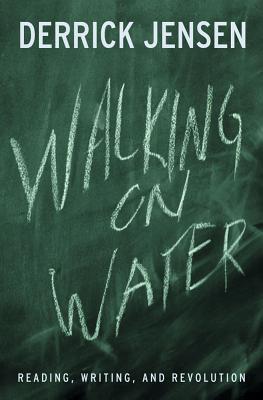
Walking on Water: Reading, Writing, and Revolution
Book Description
Words have the power to ignite revolutions and shatter complacency. In "Walking on Water: Reading, Writing, and Revolution," Derrick Jensen dives into the raw and untamed connection between literature, activism, and the human spirit. With piercing insight, he unpacks how stories can awaken dormant hearts and challenge the status quo. This gripping exploration examines the role of the writer and reader in a world teetering on the brink of collapse. As tensions rise and societal pressures mount, can the pen truly become mightier than the sword? What if our most potent weapon against apathy is simply the courage to tell the truth?
Quick Book Summary
"Walking on Water: Reading, Writing, and Revolution" by Derrick Jensen explores the transformative power of stories and the purpose of writing in a world craving change. Jensen, drawing from his experiences teaching writing, challenges the conventions of traditional education, arguing that true learning thrives on authenticity, emotional engagement, and rebellion against oppressive norms. He urges writers and readers alike to embrace vulnerability, pursue truth, and recognize the revolutionary potential within literature. The book intertwines personal anecdotes, philosophical reflections, and social critique, making a compelling case that the act of honest storytelling—particularly in fraught times—can awaken empathy, disrupt entrenched power structures, and inspire meaningful action. Ultimately, Jensen asserts that reading and writing are not merely academic exercises but essential acts of courage and resistance that can reshape the world.


Summary of Key Ideas
Table of Contents
The Transformative Power of Storytelling
Jensen begins by examining the elemental force of storytelling, proposing that stories shape consciousness and possess the capacity to awaken slumbering empathy or outrage. He recounts personal breakthroughs in his own writing and teaching, underscoring how stories not only transmit values but also provide blueprints for resistance and liberation. Narratives, Jensen argues, hold a mirror to the structures that govern both inner and outer worlds, making literature a vehicle for both personal and cultural transformation.
Challenging Traditional Models of Education
The book pivots to a critique of traditional educational systems, highlighting how rigid curricula and standardized metrics often quash creativity and authentic expression. Jensen shares candid observations from his classrooms, revealing how fear and conformity inhibit students from taking risks. He calls for a pedagogy rooted in trust, exploration, and genuine connection, asserting that meaningful teaching is a revolutionary act when it empowers individuals to think and feel beyond imposed boundaries.
Writing as an Act of Rebellion and Truth-Telling
Central to Jensen’s philosophy is writing as an act of rebellion and truth-telling. He insists that honest writing can destabilize calcified assumptions and provoke social awakening. Through vulnerability and the courage to defy expectations, writers can disrupt the complacency that maintains oppressive systems. Jensen prompts his readers to recognize the stakes of silence and the liberating force of speaking honestly, even—especially—when the truth is inconvenient.
The Emotional and Spiritual Dimensions of Creativity
Jensen further explores the emotional and spiritual dimension inherent in the act of creation. For him, true writing emerges not just from intellect but from the full spectrum of human experience—joy, grief, anger, hope. He encourages both writers and teachers to embrace imperfection, to foster spaces where the messy, raw process of creativity is honored. This embrace of vulnerability, he suggests, is itself a subversive act in societies obsessed with control and order.
Literature’s Role in Social and Political Change
Finally, the book contemplates the unique role of literature in driving cultural and political movements. Jensen interlaces historical examples and contemporary struggles to argue that stories can incite consciousness and disrupt entrenched power relations. The revolutionary potential of literature, he contends, lies in its capacity to connect people, inspire collective action, and expand the realm of the possible. Ultimately, "Walking on Water" posits that in the hands of those brave enough to wield it, language can spark revolutions and heal fractured communities.
Download This Summary
Get a free PDF of this summary instantly — no email required.