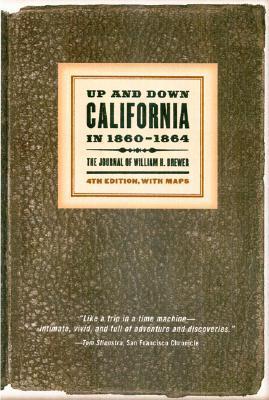
Up and Down California in 1860-1864: The Journal of William H. Brewer
Book Description
A young nation on the brink of chaos unfolds through the eyes of a tireless explorer. William H. Brewer’s meticulous journal captures the breathtaking beauty and harsh realities of California between 1860 and 1864. Every page reveals encounters with rugged landscapes, vibrant cultures, and the tensions of a society divided. Brewer’s vivid descriptions pull you into the heart of pioneering discoveries and perilous adventures, against the backdrop of the Civil War. As he charts the terrain, he grapples with ambition, loyalty, and the unyielding spirit of a people forging their destiny. What truths will emerge from an untamed land caught in conflict?
Quick Book Summary
"Up and Down California in 1860-1864: The Journal of William H. Brewer" is an extraordinary first-hand account of California during its formative years, blending adventure, scientific discovery, and social observation. Brewer, part of the pioneering California State Geological Survey, chronicles his travels across a wild and shifting landscape, capturing the awe-inspiring geography and remarkable biodiversity he encounters. His journal conveys both the physical trials of exploring remote regions and his deep fascination with nature's wonders. Amidst this, Brewer documents frontier settlements, Native American and immigrant communities, and the political turbulence brought on by the Civil War. The narrative not only illuminates the state’s natural history but also the resilience and aspirations of its diverse inhabitants. Through Brewer’s keen observations, readers experience the challenges and hopes of a nascent society striving to define itself in tumultuous times.




Summary of Key Ideas
Table of Contents
Exploration and Scientific Discovery
William H. Brewer’s journal is a vivid record of systematic scientific exploration in California during a transformative era. As chief assistant on Josiah Whitney’s State Geological Survey, Brewer documents methodical fieldwork, mapping the state’s complex geography and classifying its geological structures, flora, and fauna. His dedication to documenting new species and geological phenomena not only advanced knowledge but also reflected the era’s spirit of discovery. These exhaustive explorations required perseverance and ingenuity in an environment that was often unpredictable and unforgiving.
California’s Changing Landscapes and Peoples
Brewer situates his journeys within a vast and varied landscape, from sun-scorched valleys and towering Sierras to misty coastlines. He remarks on the ecological diversity, from towering redwoods to arid deserts, and notes signs of human habitation: remote mining camps, indigenous villages, and emerging towns. His observations chronicle the collision of natural beauty and the relentless push of settlement, as well as the deep impact of environmental change wrought by resource extraction and development.
Personal Trials and Growth on the Frontier
The journal also offers an intimate glimpse into Brewer’s inner life. Rigorous travel, unpredictable weather, and encounters with wild terrain tested his endurance, while moments of camaraderie offered solace. Brewer reflects on ambition, homesickness, and self-doubt, but also on moments of inspiration found in the vast landscapes. Growth comes through hardship, camaraderie, and the constant reevaluation of purpose amidst uncertainty.
Society and Conflict During the Civil War
Set against the turmoil of the Civil War, Brewer’s entries reflect the political currents flowing through California. He details encounters with settlers holding competing allegiances, tensions among communities, and the underlying anxiety about the nation's future. The period’s social dynamics—across class, ethnicity, and region—are delicately woven into his narrative, offering a ground-level view of national conflict’s reverberations in the West.
The Enduring Allure of Nature
Throughout, Brewer’s deep reverence for nature shines through. His lyrical accounts of sunsets, mountain vistas, and untouched wilds reveal a lasting spiritual connection to California’s wilderness. This enduring appreciation for the natural world, coupled with a hopeful vision of discovery, captures the essence of a nation and a man on the cusp of transformation.
Download This Summary
Get a free PDF of this summary instantly — no email required.