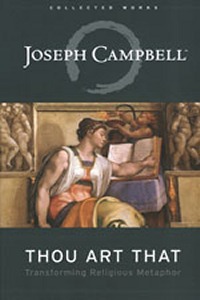
Thou Art That: Transforming Religious Metaphor
Book Description
Dive into a world where ancient myths explode with relevance! Joseph Campbell unveils the vibrant tapestry of religious metaphor, showing how these timeless symbols can transform our understanding of life itself. From the depths of spiritual longing to the heights of enlightenment, each concept bursts forth like a cinematic revelation, igniting passion and curiosity. Discover how these metaphors bind humanity across time and culture, urging the soul toward deeper knowledge. Can the wisdom of the ancients illuminate the path to our own modern struggles? The power to reshape perception awaits!
Quick Book Summary
In "Thou Art That: Transforming Religious Metaphor," Joseph Campbell explores the profound meanings behind religious symbols and myths, arguing that traditional faiths are often misunderstood when their metaphors are taken literally. Campbell eloquently demonstrates how metaphoric language in religion points not to external realities, but to inner spiritual truths and universal human experiences. He encourages readers to move beyond dogma and embrace the transformative power of myth, which offers guidance, connection, and self-knowledge. By decoding the ancient metaphors embedded in sacred texts and rituals, Campbell contends that individuals can find renewed relevance and deeper resonance in these stories, enriching both personal identity and collective human culture. The book challenges readers to see religious traditions as living dialogues that ignite spiritual growth and cross-cultural understanding.




Summary of Key Ideas
Table of Contents
The Function and Misinterpretation of Religious Metaphor
Joseph Campbell begins by highlighting how religious myths and metaphors have historically served as tools for expressing the inexpressible truths of human experience. He warns that the literal interpretation of religious stories strips them of their authentic spiritual power, diminishing their intended effect. Rather than conveying facts or historical events, religious symbols are meant to evoke psychological realities that connect us with the transcendent mysteries of existence.
Myth as a Bridge Between Cultures and Times
The book delves into the universality of myth, illustrating how cultures across the globe share remarkably similar symbolic motifs and narratives. These shared metaphors offer a common language that binds humanity, providing pathways for cross-cultural empathy and understanding. Campbell reveals how, when explored symbolically, ancient myths address contemporary existential concerns and offer potent lessons that transcend time and place.
The Journey from Literalism to Inner Experience
Through various examples, Campbell guides readers from external, dogmatic adherence toward the realm of inner experience. He contends that when religious stories are reconsidered as metaphors for inner journeys, rituals become transformative acts that foster personal growth. This shift in perspective reframes spiritual longing and enlightenment not as distant goals, but as immediate, ongoing processes available to everyone.
Personal Transformation Through Symbolic Understanding
Campbell emphasizes that embracing the true power of symbols enables individuals to find personal meaning in religious traditions without being confined by rigid dogma. This symbolic approach encourages a dynamic engagement with spirituality, allowing individuals to reinterpret and revitalize inherited stories as sources of personal wisdom and empowerment.
Redefining Spiritual Identity in Modern Life
Ultimately, Campbell calls for a reimagined spiritual identity—one grounded in recognition of the shared, metaphorical nature of religious narratives. He suggests that by understanding myths as living metaphors, we pave the way for deeper self-discovery and cross-cultural unity. In a world of increasing division, Campbell offers a vision for a more expansive, inclusive spiritual consciousness rooted in the timeless language of myth.
Download This Summary
Get a free PDF of this summary instantly — no email required.